Learning goals
We are learning to…
- identify some developments in Canada’s history of gender equality
- compare different text forms and their features
- research and organize content
- use transferable skills to identify and advocate for social justice
Success criteria
I am able to…
- read and summarize the accomplishments of various women who have inspired change in Canada
- compare different text forms and explain how the form impacts my comprehension as a reader
- collect and organize research information about a Canadian female changemaker
- critically think and communicate my thoughts and ideas for actions to make the world a more equitable place

Thinking about equality
Equality and justice are two things that we strive for (try to achieve) in our modern society.
Do you know what these two words mean?

Brainstorm
Brainstorm
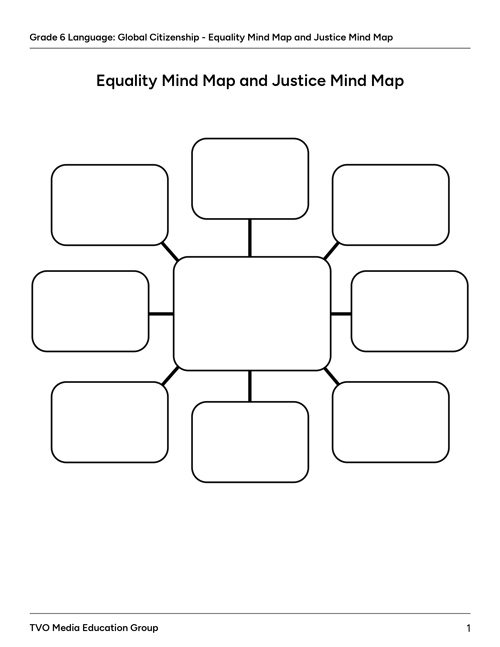
Use a method of your choice, brainstorm what you think the words equality and justice mean.
Consider using the following Mind Maps to help record your thinking. If possible, share your ideas with a partner.
Access the following Mind Maps to complete the activity.
When you are ready, press the Definitions button to review the meanings of the words.
Equality: Treating people the same way, regardless of individual differences
equality
Justice: Supporting what is fair and right
justice
How do the definitions compare to your thoughts and ideas on these words? Take a moment and add on, or make adjustments to, your notes.
In this learning activity, we will explore the themes of equality and justice as we learn about the contributions of several different women that have played an important role in Canadian society and history. Many amazing women have shaped Canada as we know it today. However, women are generally underrepresented in the documentation of Canadian history.
Brainstorm a list of famous or influential women that you have heard of. Record their names using a method of your choice. Why do you think women are sometimes underrepresented in history?

Women’s rights: A short history

Throughout history, many groups have fought long and hard for equality and justice when it comes to their rights. In many cases, this fight is still ongoing. This learning activity will explore one group in particular: those who identify as women.
Women have played an important role in the story of the past and how it shapes present-day Canada. Women's history on this land begins with Indigenous women. Over the centuries, settlers from around the world arrived, made homes, and contributed to shaping the land that would become Canada.
Women in Canada have held different roles in society. Just over 100 years ago, women were expected to do the work at home of raising children and performing domestic labour, even as paid work became more available. This was their expected role in society – to concern themselves only with household matters, whether their own household or the household of an employer.
Women’s rights were not always a reality and some are still being fought for today.

Pause and Reflect
Pause and reflect
Examine the following list of rights. Which of these rights do you think most women in Canada have today that they did not have in the past?
- the right to own property (such as a house or farm)
- the right to vote in a government election
- the right to be recognized as a person under the law
- the right to work if they so choose
- the right to hold public office (be a leader in the government)
Record your thoughts in a notebook or using a method of your choice. If possible, share your thoughts with a partner.
Once you’ve listed your thoughts, press the Answer button.
Many women did not have any of the rights listed previously because, as part of the process of colonization, founding governments in Canada built their laws to mirror European laws and ideas.
Prior to contact, Indigenous women had distinct roles and responsibilities within their communities. This did not mean that they had lesser rights than men. After contact, however, and with the changes to women’s rights brought by colonialism and colonial laws, many brave and courageous women had to work very hard to ensure that today, all Canadians who identify as women could have the rights previously listed and more.
Canadian female changemakers
Let’s explore a small sample of the many women throughout history that have fought for equality, justice, and women’s rights in Canada. As you explore each one, try to identify why their accomplishment was significant to Canada and significant to the population that identifies as female. Don’t forget to consider the time they lived in and what society would have been like at the time of their accomplishment.
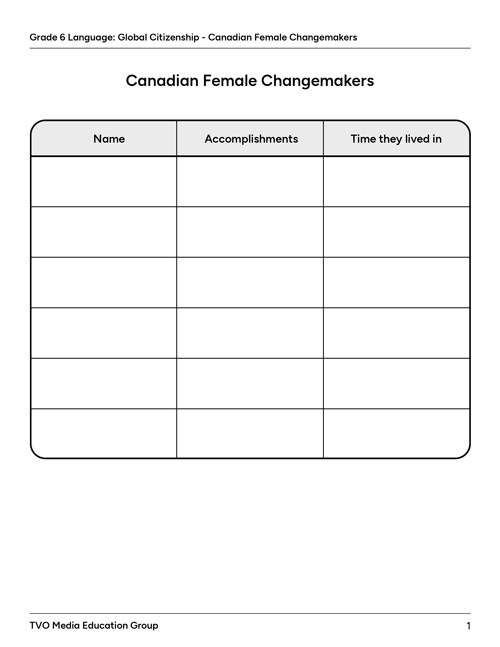
You may choose to use the following graphic organizer, or another method of your choice, to help you record notes on each Canadian female changemaker.
Access the following Canadian Female Changemakers graphic organizer to complete the activity.
Changemaker 1: Mary Ann Shadd
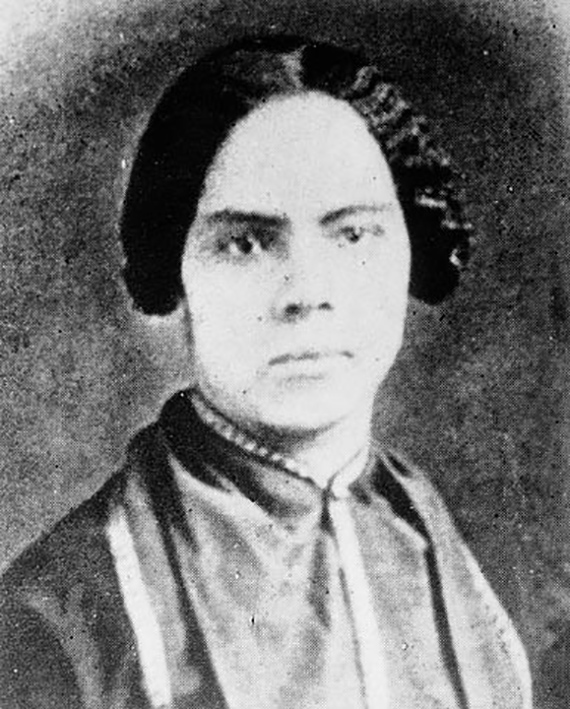
A photograph of Mary Ann Shadd Cary, taken between 1855 to 1860
In 1853, Mary Ann Shadd made history as the first Black woman to edit and publish a newspaper in North America.
Explore the following excerpt from the graphic novel Meet Mary Ann Shadd by Elizabeth MacLeod to learn more about why Mary Ann started her own newspaper. What were her reasons? What was her newspaper called?
Check out the following two pages from the graphic novel Meet Mary Ann Shadd to learn more about her accomplishments.
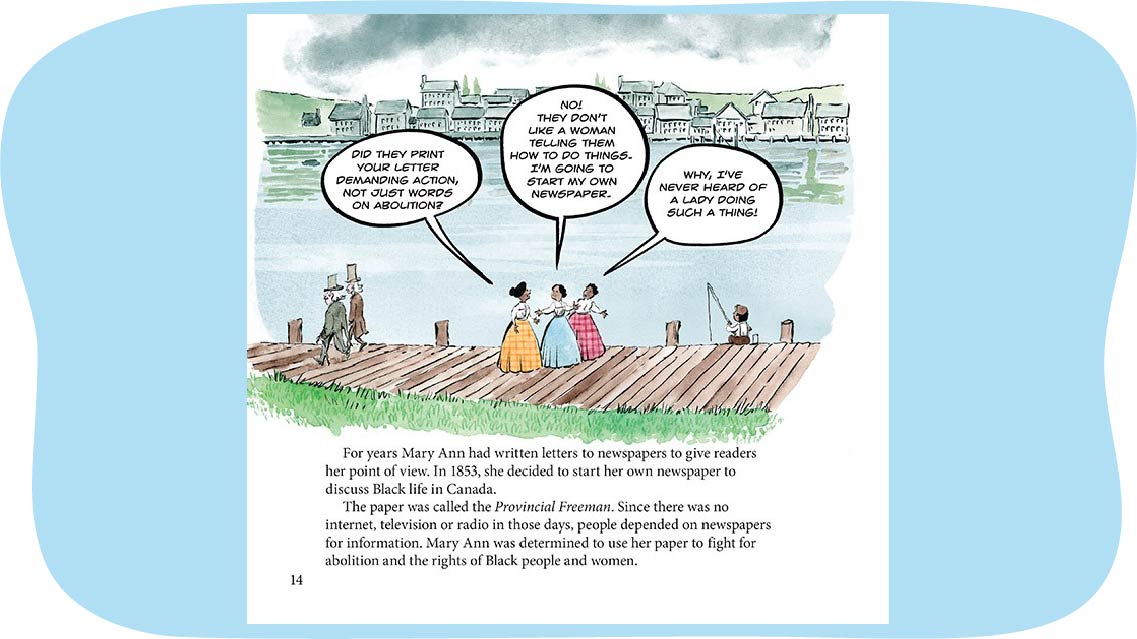
A graphic novel page with three Black women walking on a dock and discussing an issue. There is a caption at the bottom. Mary Ann Shadd and her two female friends are discussing her plans. The first woman says, “Did they print your letter demanding action, not just words on abolition?” Mary Ann Shadd responds, “No! They don’t like a woman telling them how to do things. I’m going to start my own newspaper.” Her other friend responds, “Why I’ve never heard of a lady doing such a thing!”
A caption following the graphic novel image states, ‘For years Mary Ann had written letters to newspapers to give readers her point of view. In 1853, she decided to start her own newspaper to discuss Black life in Canada.
The paper was called the Provincial Freeman. Since there was no internet, television or radio in those days, people depended on news papers for information. Mary Ann was determined to use her paper to fight for abolition and the rights of Black people and women.’
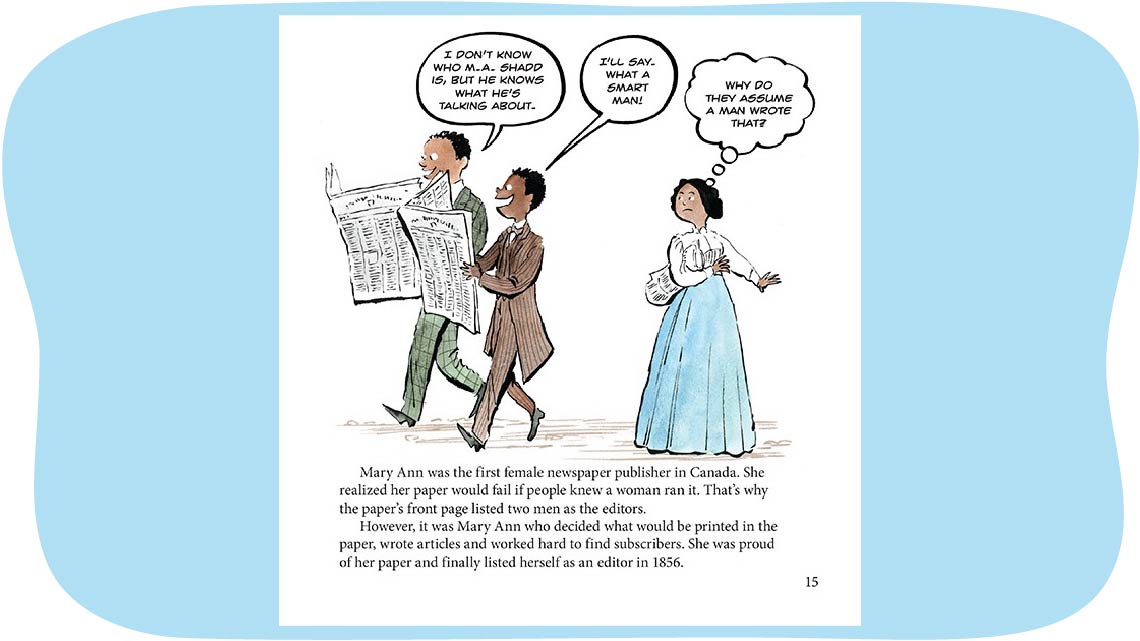
A graphic novel page with two Black men discussing the newspapers, with the Black female journalist Mary Ann Shadd nearby. The first man says, ‘I don’t know who M. A. Shadd is, but he knows what he’s talking about.’ The second man responds, ‘I’ll say – what a smart man!’ Mary Ann Shadd overhears the two men. She thinks to herself, ‘Why do they assume a man wrote that?’
The caption at the bottom of the page states, ‘Mary Ann was the first female newspaper publisher in Canada. She realized her paper would fail if people knew a woman ran it. That’s why the paper’s front page listed two men as the editors.
However, it was Mary Ann who decided what would be printed in the paper, wrote articles and worked hard to find subscribers. She was proud of her paper and finally listed herself as an editor in 1856.’
Being the first Black woman to start her own newspaper wasn’t Mary Ann’s only accomplishment! She was an active advocate of women’s rights, opened one of the first racially integrated schools in Canada, and was a strong advocate for abolishing slavery.
Abolishing means to formally put an end to something. It is often done by creating a new law.
Mary Ann Shadd is one of 37 women named by the Government of Canada as Women of Impact in Human Rights in Canada.
Changemaker 2: Maria Barile
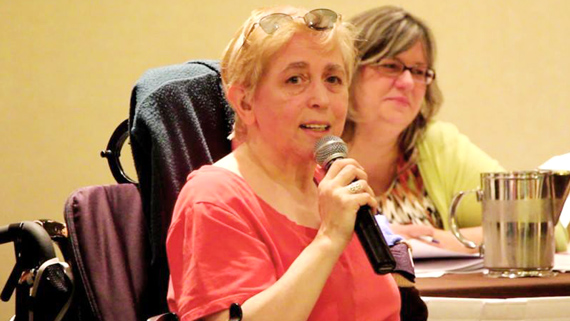
Maria Barile is one of 37 women named by the Government of Canada as Women of Impact in Human Rights. Read the following summary from the Government of Canada’s website to learn more about Maria Barile.
Maria Barile (1953 – 2013)
Maria Barile was an extraordinary woman
who
championed the rights of people with disabilities in Canada for more than 30 years.
A leader in the disability rights movement, she began her fight for social justice and the elimination of all forms of violence and discrimination against persons with disabilities, particularly women, in the early 1980s in Montreal.
Maria broke down barriers and misconceptions in education with her own achievements. After receiving a diploma from Dawson College, where she started the first support group for students with disabilities, she completed a qualifying year in order to be admitted to McGill University. She had to convince administrators that a hearing impairment and a neurological disorder would not prevent her from completing a degree. She finished the year at the top of her class and then went on to earn bachelor’s and master’s degrees in social sciences, writing a thesis on the dual oppression experienced by women with disabilities (“Femmes & handicap: la double oppression”).
Maria was one of the founders of DisAbled Women’s Network of Canada (DAWN) Canada and Action des femmes handicapées de Montréal (AFHM). She also co-founded and co-directed ADAPTECH, a research lab on adaptive technology and postsecondary education, where she was one of the most active researchers. She later founded ÉcoACCESS, her own consulting company, focused on universal accessibility and sustainable development.
Maria was also actively involved in the development of a national action plan to promote equal access and greater inclusion for vulnerable individuals. She spent her life helping others, and in her mother's later years was one of her caregivers.
Source: Government of Canada. (2021). Maria Barile (1953 – 2013) - Canada.ca. Retrieved November 22, 2024, from https://www.canada.ca/en/women-gender-equality/commemorations-celebrations/women-impact/human-rights/maria-barile.html
Changemaker 3: Mary Two-Axe Earley
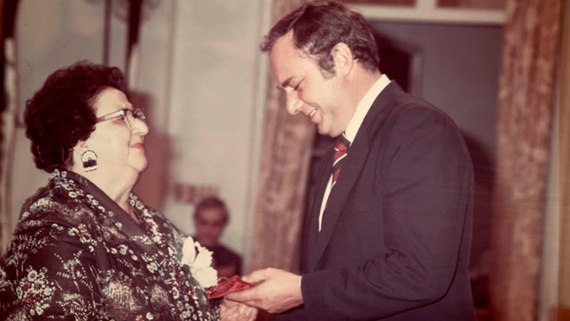
Mary Two Axe Early received the Governor General's awards for the ‘Persons Case.
Mary Two-Axe Earley, Mohawk from Kahnawà:ke, was one of the first woman in 1968 to advocate to the Canadian Government that the laws of the Indian Act be changed to give First Nations women, and their children, equal rights to status as First Nations men.
Status means people who are recognized by the government under the Indian Act are referred to as ‘Status Indians’ or ‘having status’ for short.
The laws of the Indian Act stated that if a First Nations woman married a non-Indigenous man, she and her children would lose their ‘Indian status’ and their home on their reserves. The same rule did not apply to Indigenous men who married non-Indigenous women.
Check out the following video clip from the documentary Mary Two-Axe Earley: I am Indian Again to hear recordings, in Mary’s own words, of why she was fighting for equality and change. Notice the reactions of the people listening to the recordings and consider your own reactions to Mary’s words.
Access the following video entitled Mary Two-Axe Earley: I am Indian Again to learn more about her successful advocacy.
In 1985, when the Indian Act was finally amended, Mary was the first First Nations woman to be given her status back.
To amend something means to be change a text to improve something or to make a correction. It often means a law is re-written.
It is important to remember that work was not done yet after Mary’s victory. Since then, two generations of First Nations women have been lobbying to fully eliminate gender discrimination in the Indian Act.
Mary Two-Axe Earley is one of 37 women named by the Government of Canada as Women of Impact in Human Rights in Canada.
Changemaker 4: Rosemary Brown
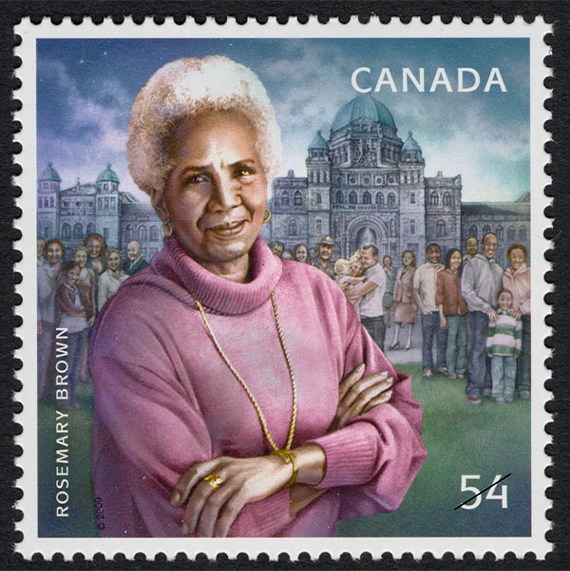
Rosemary Brown was the first Black Canadian woman elected to provincial office in British Columbia in 1972. She was also the first woman ever to run for the leadership of a Canadian federal political party in 1975.
Check out the following video clip from Historica Canada’s video series Women in Canadian History to learn about more of Rosemary Brown’s significant accomplishments. What were some of her accomplishments?
Changemaker 5: Hide Hyodo Shimizu
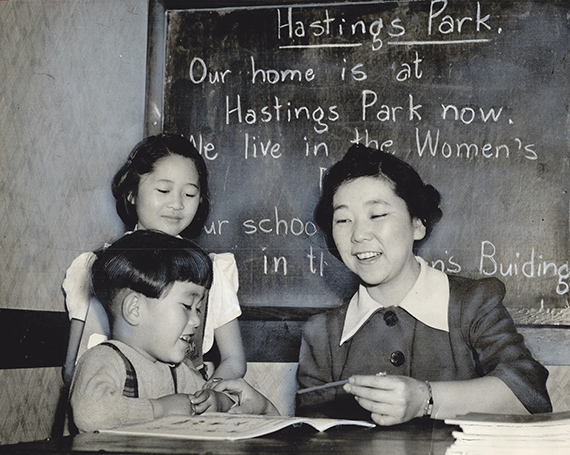
Hide Hyodo Shimizu teaching Japanese-Canadian children who were being expelled from coastal British Columbia to internment camps in 1942.
Hide Hyodo Shimizu is one of 37 women named by the Government of Canada as Women of Impact in Human Rights. Read the following summary taken from the Government of Canada’s website to learn more about Hide Hyodo Shimizu.
Hide Hyodo Shimizu (1908 – 1999)
Hide Hyodo Shimizu was an educator, activist and advocate for Japanese-Canadian rights and enfranchisement. Born in Vancouver, she was among the first Japanese-Canadians to receive a teaching certificate. Shimizu’s first teaching job, in 1926, required her to learn Japanese in order to communicate with her grade one class. In 1936, Shimizu addressed Parliament in an effort to have voting rights restored to Asian immigrants and their descendants. In 1941, when the Government of Canada stripped Japanese-Canadians of their rights and possessions and forced them into internment camps, Shimizu recruited 120 Japanese teachers, many students themselves, and established a system of schools for the 3,000 children interned in camps throughout British Columbia. Shimizu later lobbied the government for reparations to the many Japanese-Canadians who lost homes, businesses, jobs, property and more during the war. For her inspiration and invaluable contributions, she received numerous awards and honours, including the Order of Canada. The National Association of Japanese Canadians established a scholarship in Shimizu’s memory.
Source: (2021, December 13). Government of Canada. Canada.ca. https://www.canada.ca/en/women-gender-equality/commemorations-celebrations/women-impact/human-rights/hide-hyodo-shimizu.html. Retrieved on November 26, 2024.
Changemaker 6: Brielle Beardy-Linklater
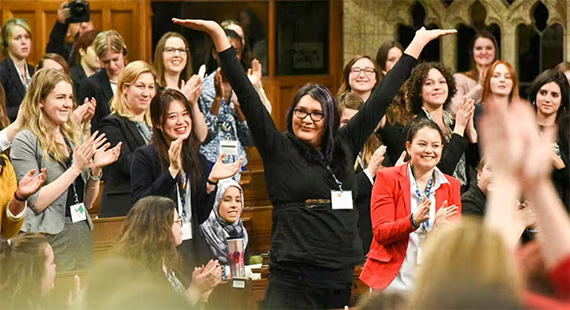
Brielle Beardy-Linklater filling a seat in the House of Commons along with 337 other women for the ‘338 Daughters of the Vote’ day in 2017.
On International Women’s Day in 2017, Brielle Beardy-Linklater, from Nisichawayasihk Cree Nation, made history by being the first transgender women to sit in Parliament.
A political activist and advocate, Brielle does a lot of work in Manitoba to educate Indigenous youth and fights for equality and the rights of both Indigenous Peoples and the LGBTQ+ community.
Why is Brielle’s accomplishment so significant?
Considering text form
The summaries of the changemakers included some different formats of text and information: some included video, some used informational text, and another explored a graphic novel.
Consider the following questions and record your answers using a method of your choice. If possible, share your thoughts with a partner.
- What were some of the different ways/formats that the information was presented in?
- Was there a form of text that was easier for you to understand or that you preferred? What was it about this format that you liked?
- How might graphics, pictures, or visuals impact an audience’s understanding of a text?
- In general, what format do you prefer to get your information in and why?

Student Wellness
Take a break!
Time for a body break! If possible, stretch your body and move around your space.

Grammar routine: Possessive nouns
We have been learning about equality and the rights of women. We usually use the phrase ‘women’s rights’ because we are talking about the rights that women have or possess.
To possess something means to own something or have something that belongs to you.
Nouns that show who or what something belongs to are called possessive nouns.
To make a noun possessive, we use an apostrophe.
Explore the following table. The possessive nouns are in bold.
| the rights that belong to women | women’s rights |
| the female changemakers from Canada | Canada’s female changemakers |
| the office that belonged to Rosemary Brown | Rosemary Brown’s office |
Press the following tabs to learn how to use apostrophes to show possession. To decide who or what possesses something, think about who owns or has the thing!
Add an apostrophe and then an “s.”
Examples:
- Maria’s sister
- women’s rights
- my grandmother’s cat
Just add an apostrophe to the end of the word.
Examples:
- the students’ project
- Indigenous Peoples’ rights
- my grandparents’ cat
Your turn!
In each following sentence, fill in the blank with the correct form of the possessive.
Select the correct answer, then press Check Answer to see how you did.

Putting it all together
Let’s check your skills with punctuating possessive nouns!
Check out each following sentence on the flashcard. For each sentence, determine if the apostrophe is used correctly. Try to explain each of your answers.
Sharing ‘Herstory’
The term ‘herstory’ is sometimes used to describe something in history told from a female perspective.
To consolidate your learning, choose one of the Canadian female changemakers that you learned about (or another of your choice) and conduct some research to learn more about her version of ‘herstory’.
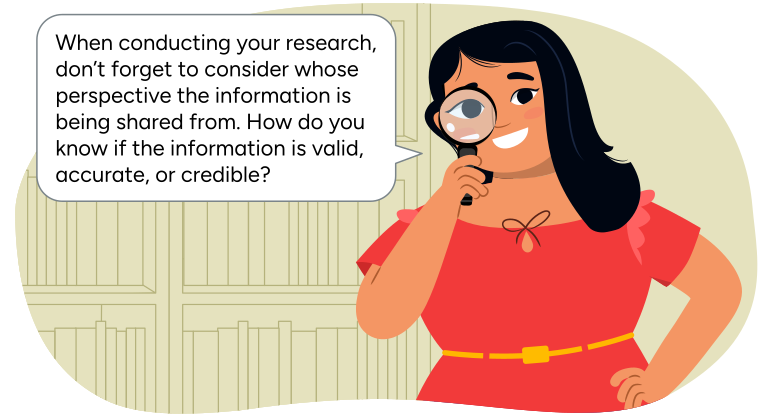
Before you begin your research, review the following research safety tips.
Research safety
When doing research on the Internet, it is important to stay safe and stay focused. You can use the acronym T.R.U.S.T. to help guide you as you do your research.
Press the following tabs to explore some research safety tips.
Think about your topic and develop specific questions to get better research results.
For example, if you’re working on the topic of recycling, you might start with a general question and make it more specific before beginning your research.
|
General Question: Why is recycling good for the environment? |
|
Specific Question: How does recycling help protect marine wildlife? |
Be patient while doing your research. Go through each website carefully, and take notes using a graphic organizer, or notebook. Record the websites used for specific information – it’s important to give credit to the creator of the content.
Consult more than one resource to help you determine if the information you gather is accurate and true.
Remember, research can take time. It helps to be focused and calm! Taking a break can help refresh our thinking and process new information.
It’s important to use reliable sources so that you can put together accurate and up-to-date information about your topic.
Websites ending with .com, .org, and .net can be purchased and used by any person.
The ending .org is usually used by non-profit organizations which may be trying to persuade rather than educate.
Websites ending in .edu are reserved for colleges and universities. Canadian websites have a .ca ending.
Consider the following questions when you are doing your reliability check. You might also ask a trusted adult or a peer for help if you are uncertain about a website.
- When was the resource published? (This might help you determine if the information is current)
- Who created the resource/website? What is their educational background or work experience?
- Who is the intended audience?
- Who benefits from this information being shared?
- Whose perspectives are represented? Whose perspectives are missing?
Do you understand all the words on the site? Can you decode their meaning?
Does what you’re reading make sense?
If not, it’s okay. Consider trying a different source. It’s important for you to understand the information that you read so that you can put it in your own words.
It’s important to stay safe while doing online research. If a website asks you for any personal information, close it and try a different website.
Personal information could include asking for your full name, email address, phone number, home address, photos, or school name. Do not provide any personal information and close the website.
Does the site have pop-up windows? These windows usually ask the user to click to “win a prize” or “check out information”. Do not click on the pop-ups and close the website.
Throughout the research process, feel free to check in with a peer or trusted adult.
If there is anything specific that makes you feel uncomfortable or worried while you are doing your research:
- pause and take a break
- speak to a trusted adult
As you gather information on your chosen Canadian female changemaker, consider how you will record your research findings. You may choose to use a graphic organizer, such as the following Canadian Female Changemaker Research Notes, or another method of your choice.
Press the Activity button to access the fillable and printable Canadian Female Changemaker Research Notes graphic organizer. You can also complete this activity in your notebook or using another method of your choice.
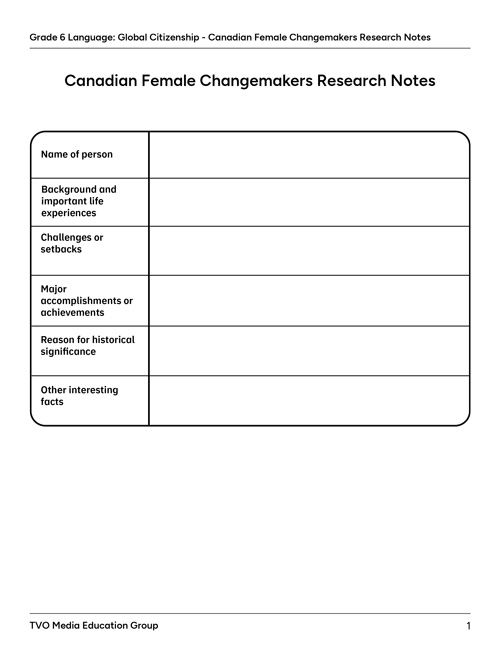
Press the Activity button to access the Canadian Female Changemaker Research Notes.
Activity(Opens in a new tab)Presenting information
Once your research is complete, how will you present the information you found?
Consider creating one of the following options, or another choose another format of your choice:
- written biography
- social media profile
- website
- slideshow presentation
- informational video
- infographic
Reflecting on and applying transferable skills
Transferable skills are abilities that can be used in a variety of situations.
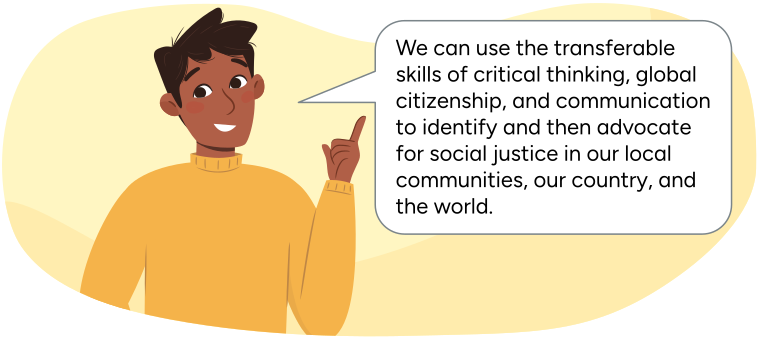
You can practise global citizenship by reflecting on and communicating about important issues.
Consider the following questions:
- Why are rights and equality important?
- How can we support help support the rights of others?
- If you could communicate one message about equality, what would it be? How would you communicate it and what audience would you want to share it with?
- How did applying these transferable skills help you find your voice and engage with this topic in a meaningful way?
Reflection
As you read through these descriptions, which sentence best describes how you are feeling about your understanding of this learning activity? Press the button that is beside this sentence.

I feel...
Now, record your ideas using a voice recorder, speech-to-text, or writing tool.