Learning goals
We are learning to…
- analyze how the knowledge and skills developed in this grade support learning in everyday life
- analyze how critical thinking can be used to support comprehension and communication, and apply it when exploring new texts and concepts
- generate and develop ideas about various topics including privilege, using a variety of strategies, and drawing on various resources, including our own lived experiences
Success criteria
I am able to…
- use various strategies to comprehend content and accurately respond to comprehension questions
- make predictions about the meaning of new vocabulary based on contextual clues and morphological knowledge
- explain how the concept of privilege has informed my understanding of global citizenship
What is global citizenship?
Explore the following carousel of images. What do all the images have in common? What do you wonder about the images?
Record your ideas orally, digitally, in print, or in another method of your choice.
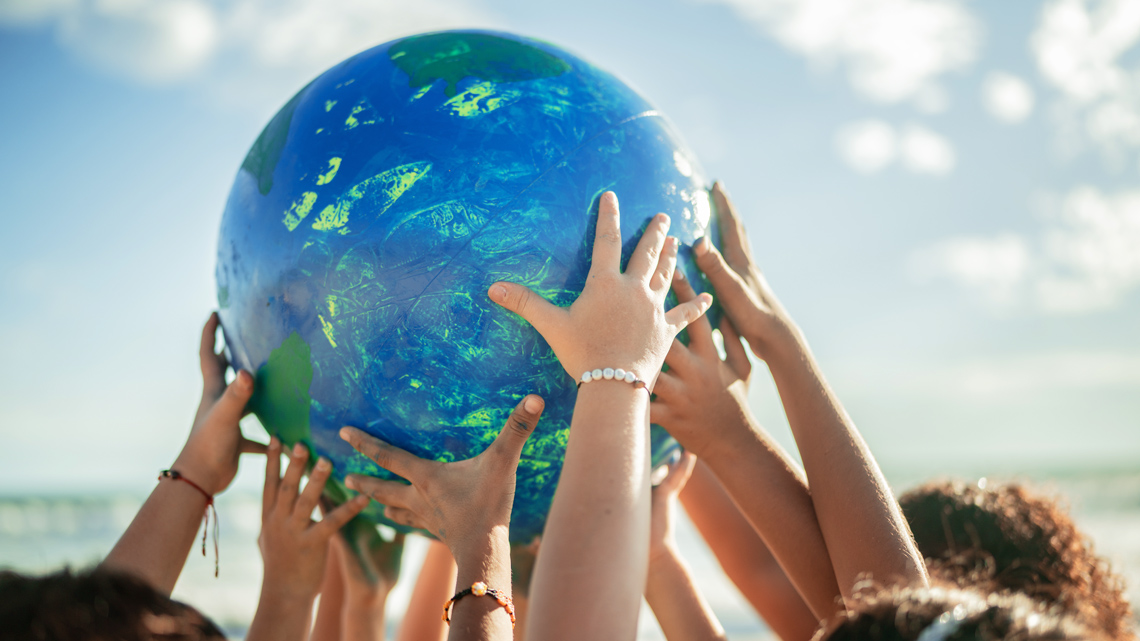
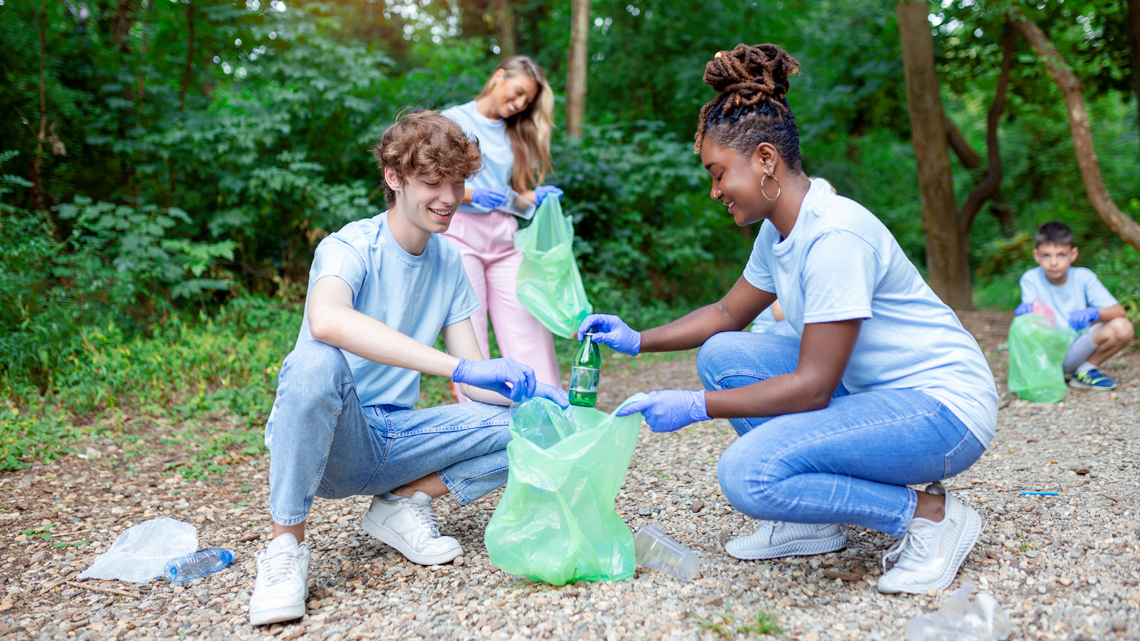

You may have noticed that all the images show people helping others and working together to take care of the world. This positive imagery is often used to show people coming together to work on a global issue– these are sometimes referred to as “global citizens”.

Student Success
Let’s think!
Have you heard the term “global citizen” before? If not, what does “global citizen” or “global citizenship” make you think of?
If the previous images suggest that “global citizenship” is about people coming together to work on a global issue, what is an example of an action that someone might take as a global citizen?
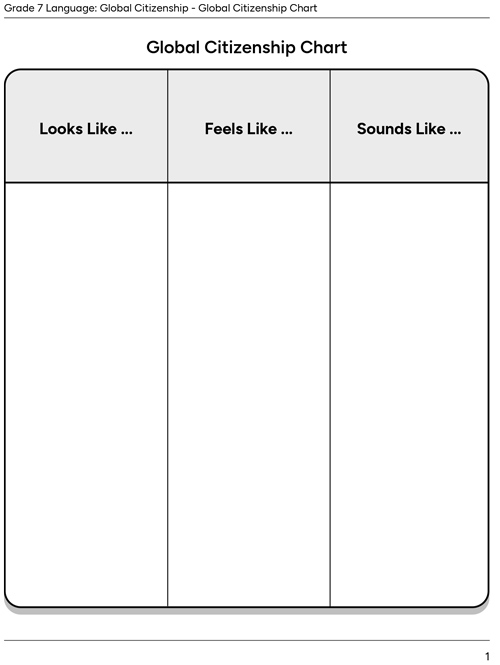
Brainstorm what it might look like, feel like, and sound like to be a global citizen using the fillable and printable Global Citizenship Chart in your notebook or using the following document. If you would like, you can use speech-to-text or audio recording tools to record your thoughts.
“A global community”
We live in a globalizedworld.
The concept of global citizenship is based on the belief that all individuals on Earth are part of one shared community, and everyone holds responsibility to address issues that affect the whole world.
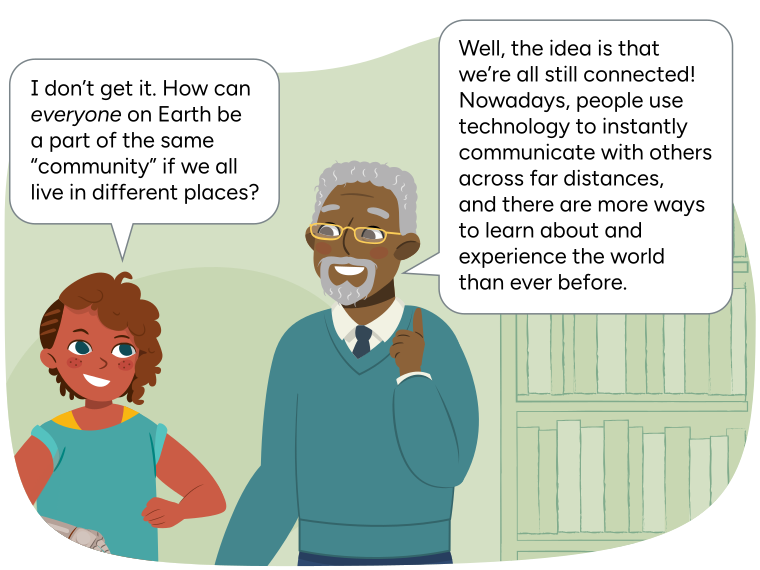
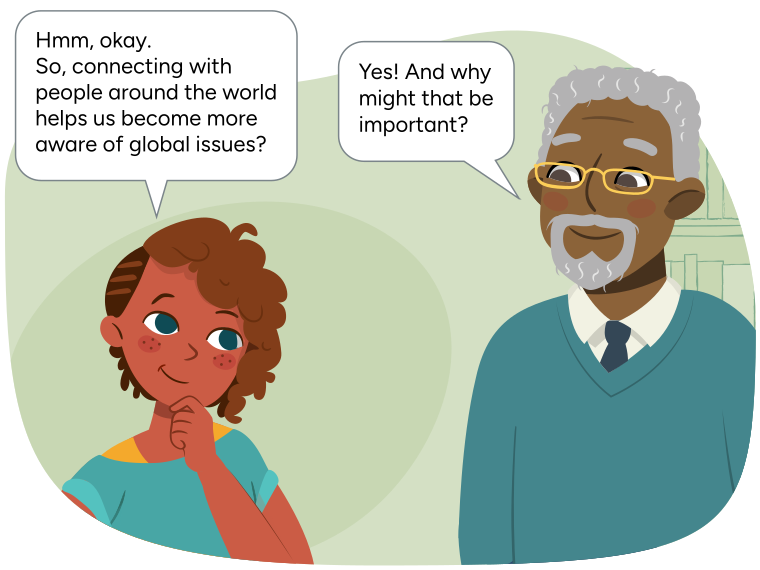
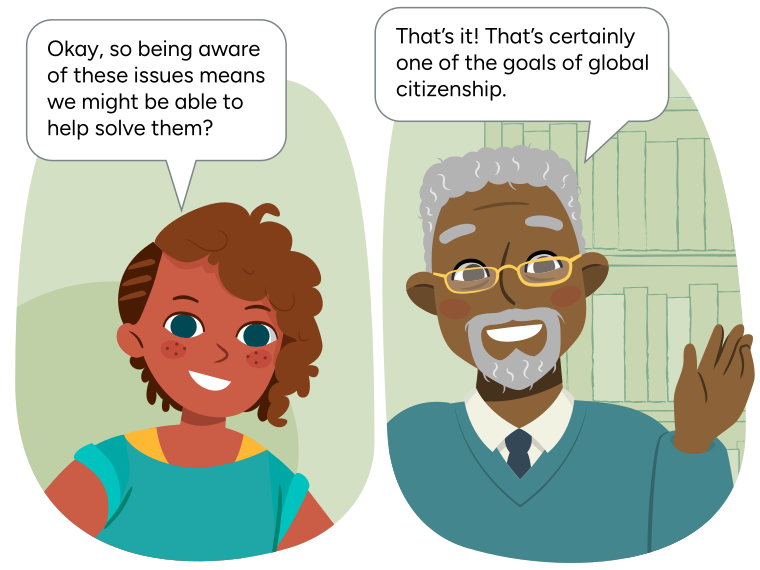
Gabby and Teacher Wilfred talking.
Image 1:
Gabby says: I don't get it. How can everyone on Earth be a part of the same "community" if we all live in different places?
Teacher Wilfred responds: Well, the idea is that we're all still connected! Nowadays, people use technology to instantly communicate with others across far distances, and there are more ways to learn about and experience the world than ever before.
Image 2:
Gabby says: Hmm, okay. So, connecting with people around the world helps us become more aware of global issues?
Teacher Wilfred responds: Yes! And why might that be important?
Image 3:
Gabby asks: Okay, so being aware of these issues means we might be able to help solve them?
Teacher Wilfred responds: That's it! That's certainly one of the goals of global citizenship.
Because of how people around the world are brought together by technology, travel, and trade, many people refer to our interconnected, modern world as a “global village”.
Explore the following video entitled The Global Village to learn more about the philosophy of interconnectedness.
Inequality
Even in the “global village” that connects all people on Earth, you may have noticed in the previous video that not all individuals share the same experience.
Some people may have direct access to the advantages of living in a globalized society, such as using the Internet, receiving an education (at home or abroad), or having the financial/physical ability to travel for fun.
When a wide range of other individuals don’t have these same advantages, however, the result is inequality.
Student Success
Try it!
Record three examples of inequality that you observed in the video in your notebook or another method of your choice.
Press the Hint button to help guide your answer.
- Unequal access to shelter means part of the community lives in substandard housing.
- 30% of the community would not have access to drinking water or electricity.
- Limited access to education in some places means many people cannot read or write.
Privilege
Inequality exists in the modern world in many different forms. This is an unfortunate result of how specific systems and structures are designed in society (that is politics, government, news media, entertainment, laws, education, and so on), which often benefits a very small group of people.
A person or a group’s level of advantage in society can be measured by their privilege.
Privilege is an unearned benefit or advantage that one receives in society based on factors beyond their control, such as ethnicity, physical appearance or ability, socioeconomicbackground, gender identity, faith, or sexual orientation.
Something important to remember about privilege in society is that, very often, it is not earned (no one “deserves” the level of privilege they are born with), which can cause tension between those who have special advantages and those who don’t.
Privilege even plays a role in global citizenship: those with access to an education and the resources to travel will have more opportunities to experience and learn more about the rest of the world. This awareness and mobility may also allow them to contribute more as a global citizen.
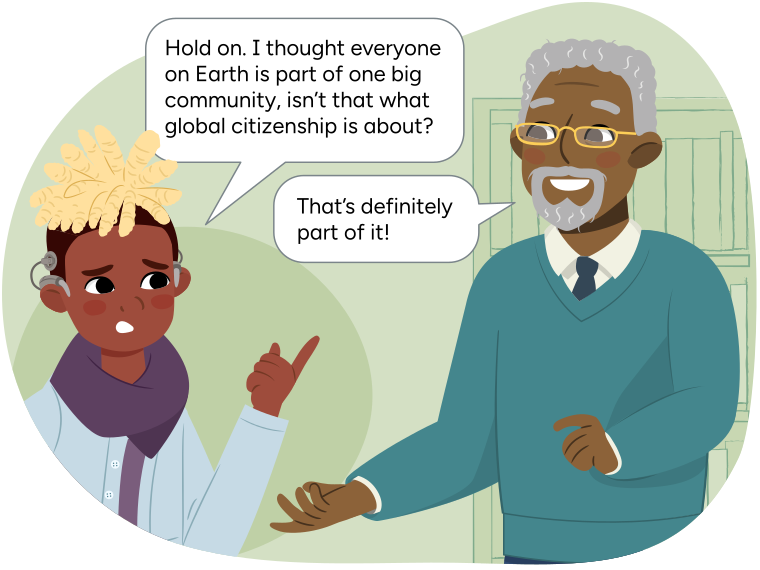
Marcel and Teacher Wilfred talking.
Image 1:
Marcel says: Hold on. I thought everyone on Earth is part of one big community, isn't that what global citizenship is about?
Teacher Wilfred responds: That's definitely part of it!
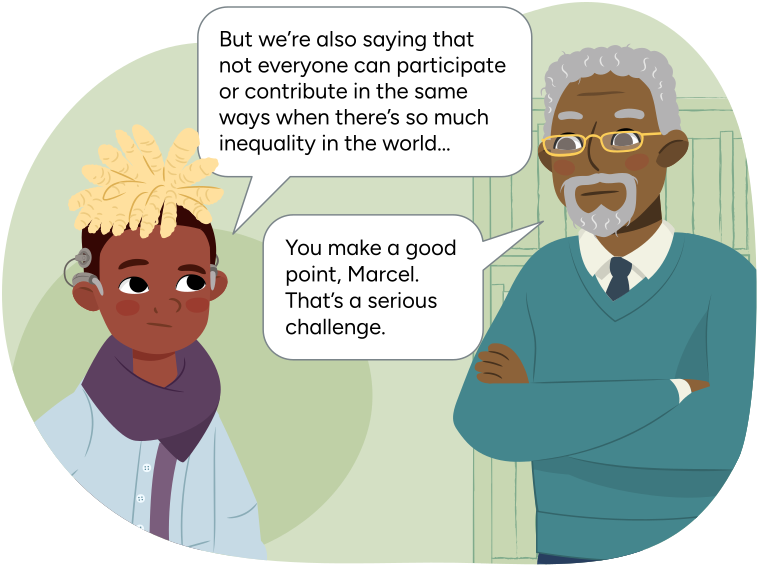
Image 2:
Marcel says: But we're also saying that not everyone can participate or contribute in the same ways when there's so much inequality in the world…
Teacher Wilfred responds: You make a good point, Marcel. That's a serious challenge.
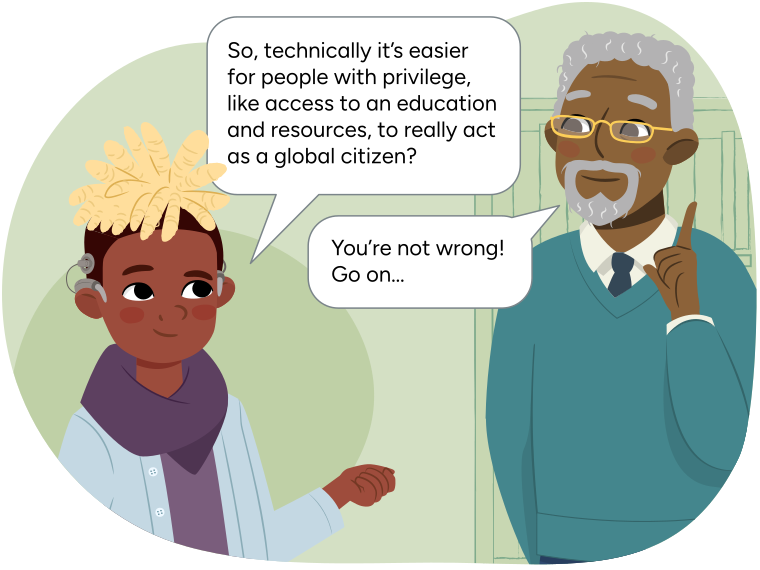
Image 3:
Marcel asks: So, technically it's easier for people with privilege, like access to an education and resources, to really act as a global citizen?
Teacher Wilfred responds: You're not wrong! Go on…
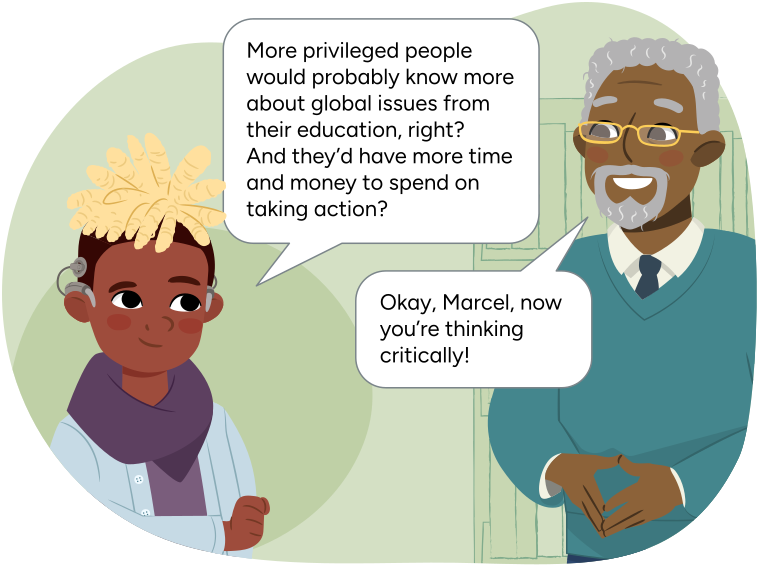
Image 4:
Marcel asks: More privileged people would probably know more about global issues from their education, right? And they'd have more time and money to spend on taking action?
Teacher Wilfred responds: Okay, Marcel, now you're thinking critically!"
Critical thinking
Critical thinking is about processing, questioning, and interpreting reliable information in order to come up with an informed opinion.
When we use critical thinking skills in the discussion of
global citizenship, we might notice that having access to
privileges like education, health, financial security, and
mobility (to name a few) will put certain individuals in a
much better position to:
- understand the political, economic, and social forces at play in the world
- engage in global and local initiatives to create change
- develop cross-cultural understanding and make responsible decisions

Pause and Reflect
Pause and reflect
How did you feel about the idea of “global citizenship” when it was introduced in the Minds On?
Has that opinion changed since we have analyzed the impact of privilege? Why, or why not?
When we consider the role of privilege in society, the purpose is not to dispute the concept of global citizenship.
In fact, reflecting on privilege, inequalities, different perspectives, and your own position within the world is at the heart of being a true global citizen!
In order to expand our worldview and consider other perspectives, we engage in the critical thinking process.
Critical thinking process
To express an informed opinion on a text, a work of art, or even a theory or concept like global citizenship, it is important to follow the steps of the critical thinking process. You may have already encountered this concept in other classes like Visual Arts, Drama, or Dance!
The critical thinking process is the active procedure of studying other perspectives on a topic or a text in order to help add meaning and depth to your own interpretation.
Check out the following interactive entitled The Critical Analysis Process to learn more about the five overall steps of the critical thinking process and what each stage involves.
So far in this learning activity, we have engaged with a few of these steps already.
Review the steps of the critical thinking process you have completed so far by matching each stage with the corresponding definition in the following activity.
You may have also noticed the Consideration of Cultural Context section in the critical thinking process diagram. This step is ongoing and should be revisited several times throughout the process. Considering cultural context is important because it helps us to recognize our own biases and engage with worldviews that may differ from our own. Ultimately, it allows us to think more deeply about the topic we are exploring.
Engaging in the critical thinking process
Engaging in the critical thinking process is an important part of your Intermediate Language Arts journey. Critical thinking skills not only help you to understand and respond to new concepts, but they also support your ability to make meaning from written texts, media, art, and more.

Did You Know?
Did you know?
The purpose of learning about privilege is not to cause feelings of guilt, shame, or embarrassment, although it is natural to feel that way. These advantages and disadvantages are built into larger social systems and norms so much that the inequalities seem natural or minor, and it is not one particular individual’s fault.
It can also be difficult to recognize privilege and how it shapes a person’s experience – even your own. As difficult as that can be, it is important to stay curious and committed to learning.
The process of recognizing and addressing privilege is a necessary and rewarding part of global citizenship. Being able to identify your privilege can help you to reduce its possible harm in society.

Prefixes and suffixes in new vocabulary
Throughout this discussion of global citizenship, you may have encountered some complex or unfamiliar terms. Using clues from what you’ve read and learned, record a definition of each of the following words in a method of your choice. Make note of any prefixes or suffixes attached to the base word!
Once finished, press the flip button to reveal the actual definition and add it to your vocabulary notebook, personal dictionary, portfolio, or another spot of your choice. Use the arrow keys to navigate between cards. Press on the audio button to hear the accompanying audio.
Putting it all together
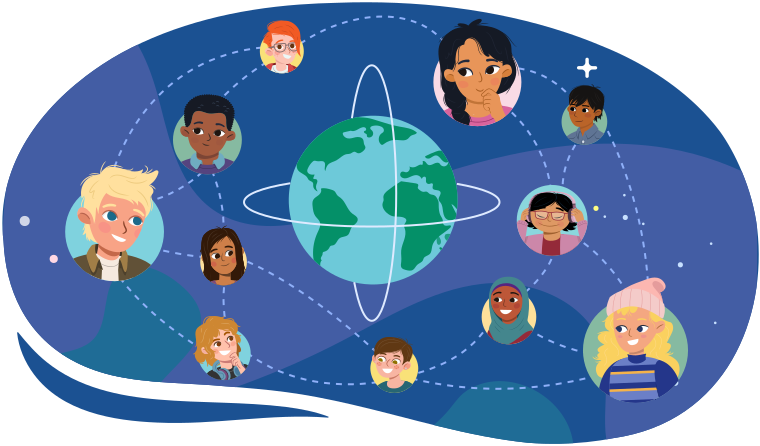
Throughout this unit, we will be using the critical thinking process to explore different ideas and texts. We will continue to examine the concept of global citizenship from different points of view and also keep track of the ways that our own opinions on the topic might evolve.

Test Your Skills
Try it!
Respond to the following prompts by writing 3-5 sentences and using three new vocabulary words. Record your ideas digitally, orally, or in print.
- Describe your first reaction to the term “global citizenship.” Was it clear? Hard to define? Why or why not?
- Did the discussion of privilege affect your interpretation of “global citizenship”? How?
Reflection
As you read the following descriptions, select the one that best describes your current understanding of the learning in this activity. Press the corresponding button once you have made your choice.

I feel...
Now, expand on your ideas by recording your thoughts using a voice recorder, speech-to-text, or writing tool.
When you review your notes on this learning activity later, reflect on whether you would select a different description based on your further review of the material in this learning activity.