Learning goals
We are learning to…
- analyze and explain how knowledge and skills developed in this grade support various subject areas and in everyday life, and describe how they enhance understanding and communication
- analyze text patterns, such as cause-and-effect in an expository text
- draft complex texts of various forms and genres, using a variety of media, tools, and strategies
- consolidate knowledge of sentence types and forms to identify and construct sentences
Success criteria
I am able to…
- analyze my knowledge on climate change and explain how this knowledge supports my understanding of other curricular areas and contributes my understanding and communication in everyday life
- read an expository text on the cause-and-effects of climate change, and possible solutions, and use various tools to check my comprehension
- collect notes in a graphic organizer about climate change and use these notes to write an informative essay following a provided structure

Brainstorming about climate change
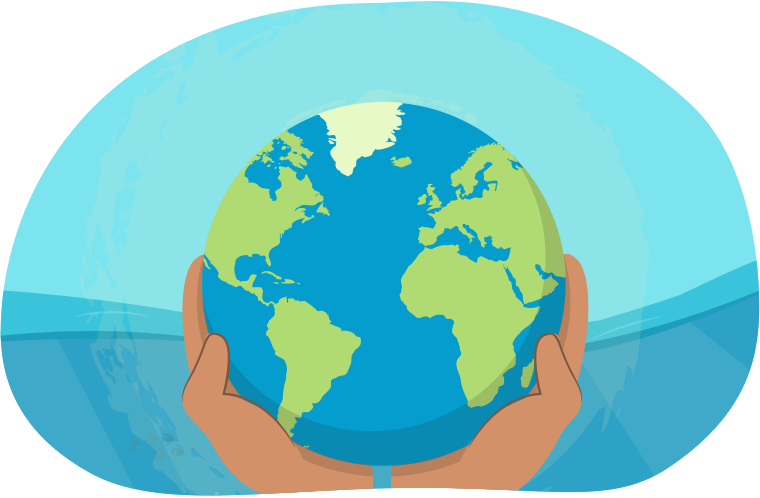
What is climate change? How are humans contributing? How are they helping?
In this learning activity you will be exploring the story of climate change, including the causes, effects, and possible solutions.
Rate your knowledge on a scale of 0-5 about climate change. 0 meaning you feel you don’t know very much, and 5 being you feel you know a lot about climate change.
Why did you give yourself this rating?
Explore the following interactive image to learn some true facts about climate change.

Causes and effects of climate change
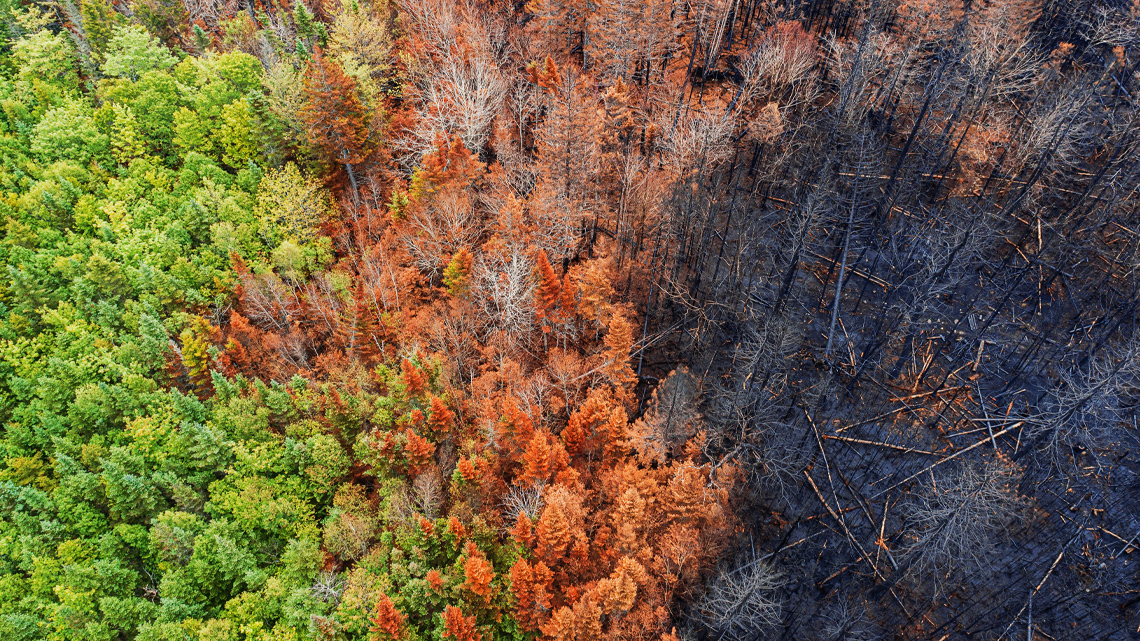
In this learning activity, you are going to be exploring the cause and effects of climate change, how it’s affecting our world, and what different groups are doing to help. You will navigate various sources that address the crisis of climate change.
While exploring multiple sources, it is a very useful strategy to take notes using a graphic organizer (or another method of your choice) about what you are learning. These notes will help you at the end to write an informative essay about the causes and effects of climate change and proposed solutions.
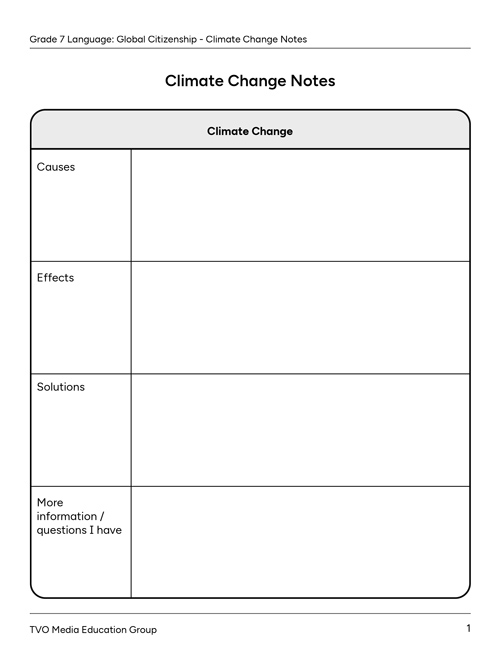
The following is a fillable or printable graphic organizer that you can use as you explore the texts in the next section.
Complete the fillable and printable Climate Change Notes document in your notebook or using the following document. If you would like, you can use speech-to-text or audio recording tools to record your thoughts.
Causes of climate change
Explore the following vocabulary related to climate change. Familiarize yourself with these words.
- emissions
- deforestation
- ecosystem
- extinction

Reading expository texts
Next you are going to read an expository text about climate change that highlights a cause-and-effect text pattern. An expository text, also considered an informational text, is a non-fiction text that gives true facts about something.
Here are some tips for analyzing a cause-and-effect expository text:
- Signal words: Pay attention to words that signal cause and effect, such as: because, since, as a result, therefore, or so.
- Organize: Use the graphic organizer provided, or another chart/diagram, for you to record the cause and effect and draw clear connections.
- Explore the sequence: Try to figure out the order in which events happened.
- Consider multiples: There may be one cause that has many effects, or many causes that leads to one effect.
- Ask questions: If something is unclear, ask questions and seek clarification.
- Author’s purpose: Consider the author purpose of the text.
The causes of climate change
Climate change is a global issue that is transforming our planet in a negative way. Humans have accelerated changes at a rate like never before. As humans, we need to understand what is causing climate change and how it is affecting Earth so that, as global citizens, we can address its impact on the environment, ecosystems, and the sustainability of the planet for future generations.
One of the biggest causes of climate change is the increased greenhouse gas emissions in the atmosphere. Greenhouse gas emissions get trapped in the atmosphere and are reflected to Earth, which causes increasing temperatures around the world. It is important to note that temperatures are not rising equally around the world. The Arctic is heating up twice as fast as anywhere else on Earth having damaging effects to sea levels and marine life.
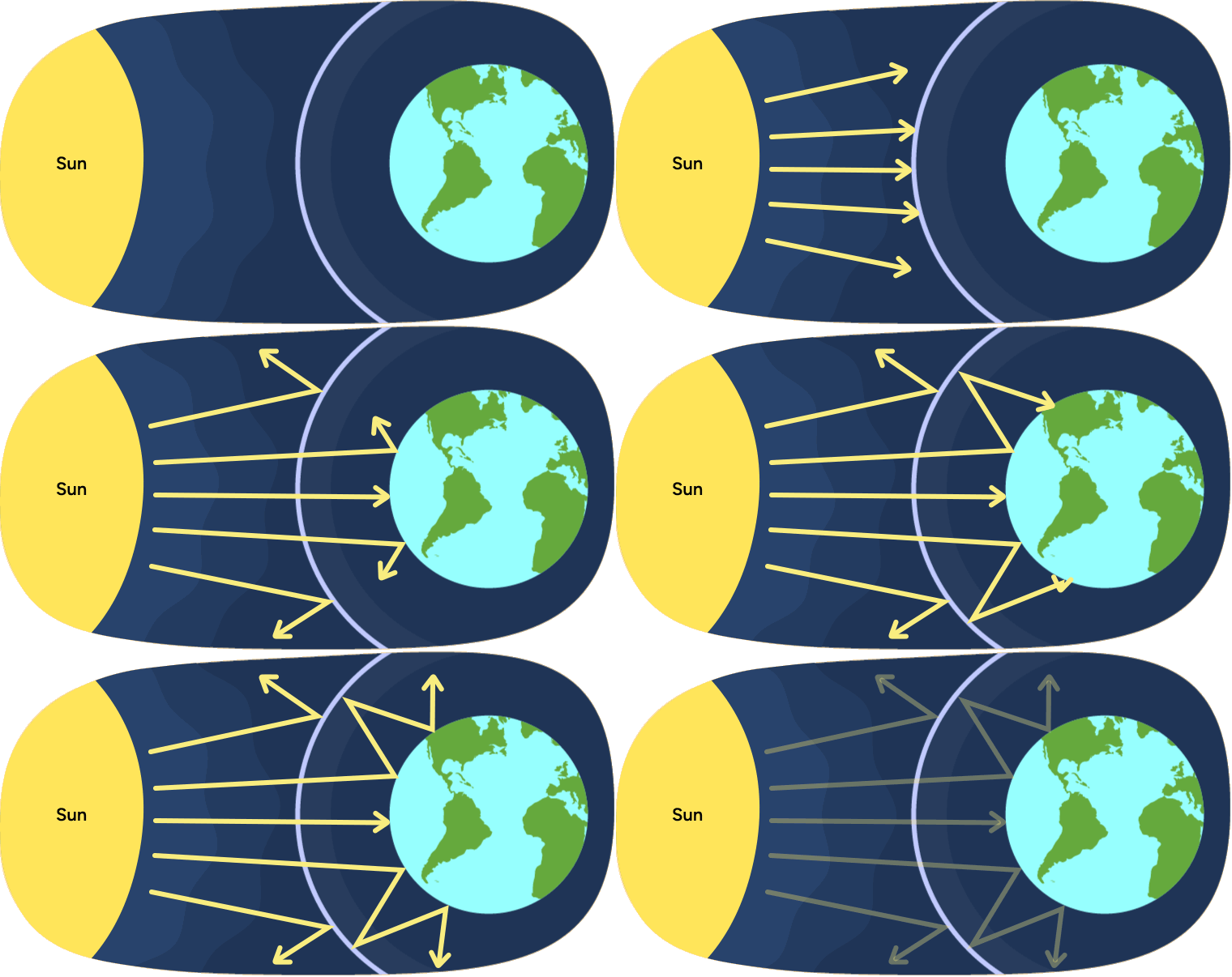
An animation showing rays from the sun travelling through space towards Earth. Some of the rays reflect off of Earth's atmosphere, some rays reflect off of Earth and become trapped within the atmosphere, and some of the rays are absorbed by the Earth.
Human activities, such as burning fossil fuels for energy and deforestation release significant amounts of gases into the atmosphere. Humans burn fossil fuels, such as coal, natural gas, and oil for transportation and electricity. Deforestation is the clearing of forests for agriculture purposes (farming), logging, mining, or development of urban cities.
Along with increasing the amount of greenhouse gases emitted into the atmosphere, deforestation has several other effects on the environment. Deforestation disrupts ecosystems, affects water cycles, impacts soil quality, and displaces animal and plant species. The loss of biodiversity has a ripple effect on food chains and ecosystems. Half of the animal species in the world are at risk of extinction due to climate change primarily due to changes in the land and oceans that you just explored.
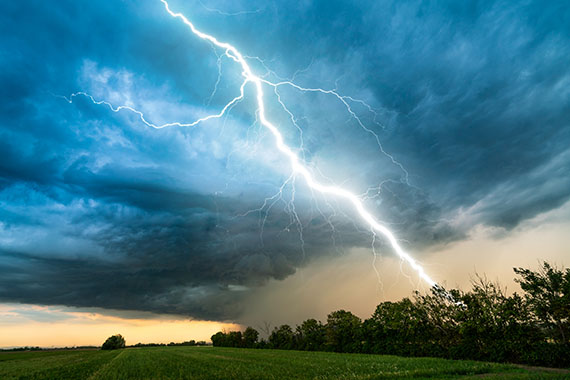
Climate change intensifies extreme weather events, including hurricanes, floods, wildfires, and droughts. These weather events have devastating consequences for communities, agriculture, and biodiversity. As the temperatures rise, the warmer air holds more moisture which makes topical storms stronger, wetter, and more capable to intensifying quickly.
The industrial process is another contributor to climate change. Industrial activities such as manufacturing, transportation, and energy production are major sources of greenhouse gas emissions. Factories often use machines and equipment that run on fossil fuels. Then products are often shipped via transportation methods such as planes, trains, and transports that burn fossil fuels to run. Products are sometimes manufactured with materials that are harmful for the environment as well. When disposed of improperly, the waste also contributes to climate change.
Review the vocabulary words again. Do you have a better understanding of their meaning?
- emissions
- deforestation
- ecosystem
- extinction
Climate change: ideas for solutions
Now that you have a better understanding of the cause and effects of climate change it is time to consider the possible solutions.
Renewable energy is one key way to address climate change. Renewable energy includes solar, biomass, hydroelectric, wind, and geothermal energy production. All of these forms of renewable energy use natural resources, such as wind and sunlight, that can be replenished and reduces the need to use non-renewable resources such as fossil fuels.
Explore the following flashcards to learn more about the types of renewable energy.
Renewable energy limitations
Renewable energy does have limitations. What if it isn’t sunny or windy? How can we store this energy to use later? Are these systems costly to install?
Let’s meet two Ontario teenagers, Aneka and Naila, who are working on innovative solutions to expand the capabilities of renewable energy.
What do Aneka and Naila identify as hurdles of renewable energy and what are they proposed as possible solutions?
Press Answer button to learn more.
Aneka identifies an issue of “supply and demand mismatch” in that people require energy during specific times when renewable resources, such as sunlight, are not available. She had recognized that energy storage is an important part of the solution and is creating a sustainable "flow battery” that can store energy for up to four hours to be used later.
Naila identified the issue that sources, such as solar panels are large and cannot be installed in all places. She is working on an innovative solution of transparent and flexible solar cells that can be used more effectively. For example, she talked about installing these solar cells on screens to charge devices and even cars.
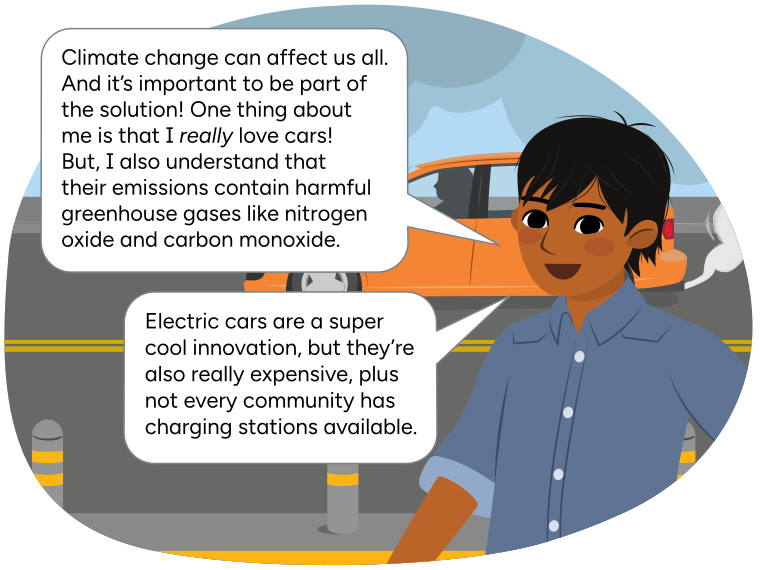
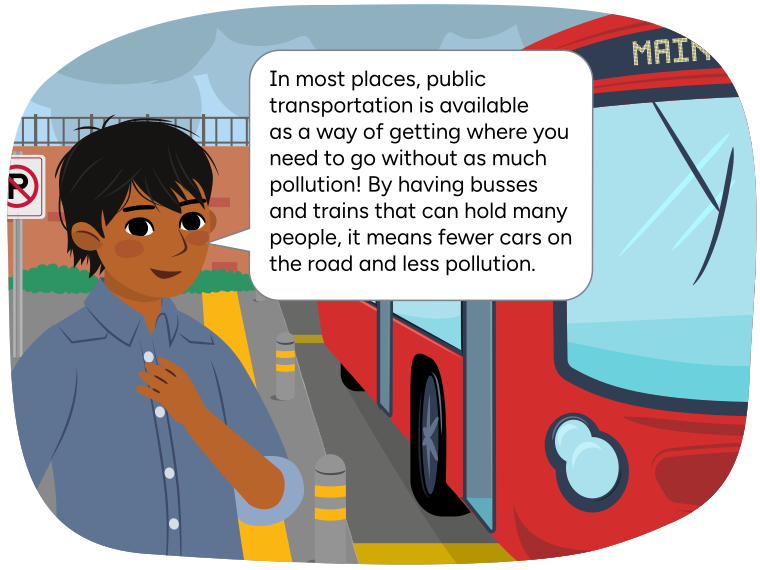
Image 1:
Antonio standing in front of a street with a car releasing emissions.Antonio is saying: Climate change can affect us all. And it's important to be part of the solution! One thing about me is that I really love cars! But, I also understand that their emissions contain harmful greenhouse gases like nitrogen oxide and carbon monoxide. Electric cars are a super cool innovation, but they're also really expensive, plus not every community has charging stations available.
Image 2:
Antonio standing next to a street with a public bus.Antonio is saying: In most places, public transportation is available as a way of getting where you need to go without as much pollution! By having busses and trains that can hold many people, it means fewer cars on the road and less pollution.
Writing for change
Before you begin your essay writing, let’s focus on understanding complex, compound, and complex-compound sentences. All types of sentence structures are important to know for your writing.

Complex and compound sentences
First, let’s review independent and dependent clauses. An independent clause is a sentence that can stand alone. A dependent clause is an incomplete simple sentence – while they might have a subject and predicate, there is often more information needed for comprehension.
Sort the following sentences into independent and dependent clauses.
Place the cards into categories that best match. Use the arrow buttons to navigate between cards.
Understanding independent and dependent clauses will help you to understand other sentence structures.
Press the following tabs to learn more about these sentence structures.
A compound sentence is made up of two or more independent clauses joined by a semicolon (;) or coordinating conjunction (for, and, nor, but, or, yet, so), usually preceded by a comma.
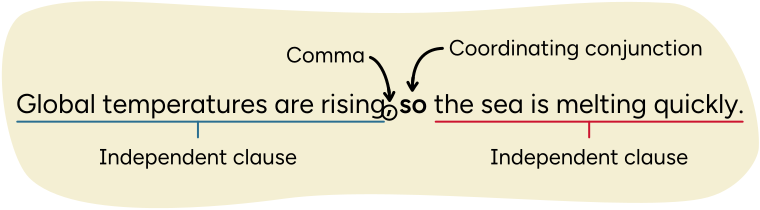
The compound sentence "Global temperatures are rising, so the sea is melting quickly," with the clauses, comma, and conjunction indicated. The independent clause "Global temperatures are rising" is followed by a comma and is connected by the coordinating conjunction "so" to the independent clause "the sea is melting quickly."
A complex sentence is made up of one independent clause and one or more dependent clauses and can sometimes be linked with subordinating conjunctions (after, although, before, since, if, while).
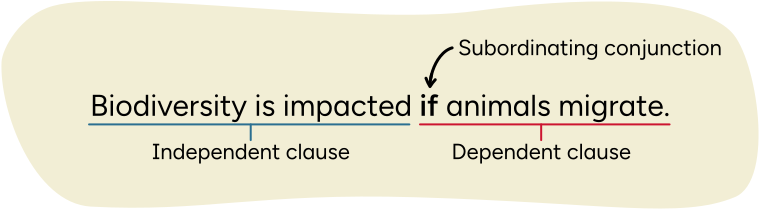
The complex sentence "Biodiversity is impacted if animals migrate," with the clauses and conjunction indicated. The independent clause "Biodiversity is impacted" is connected by the subordinating conjunction "if" to the independent clause "if animals migrate."
A compound-complex sentence is made up of two or more independent clauses and one or more dependent clauses.
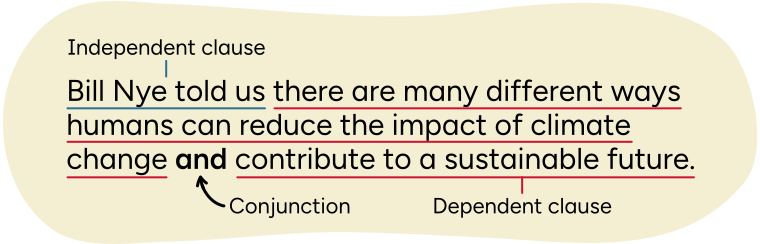
The compound-complex sentence "Bill Nye told us there are many different ways humans can reduce the impact of climate change and contribute to a sustainable future," with the clauses and conjunction indicated. The dependent clause "Bill Nye told us" is followed by the independent clause "there are many different ways humans can reduce the impact of climate change," which is connected by the conjunction "and" to the independent clause "contribute to a sustainable future."
Thesis statement
Using the research notes that you have obtained throughout this learning activity, you are going to write an informational essay in response to the following question:
How can understanding the cause and effects of climate change help individuals to contribute to a positive change?
To begin, you’ll need to write a thesis statement. A thesis statement is a sentence within the introduction paragraph that explains the topic and purpose of the essay. A compound-complex sentence is the ideal sentence structure to use for a thesis statement.
Begin by writing your thesis statement. Use the following criteria to help you:
Your thesis statement should …
- explain the main idea of your essay
- clearly state an answer to the purposed question
- include two independent clauses and one dependent clause
- include on conjunction word
- be clear and specific
Press Possible Thesis Statements to access two examples of thesis statements.
Example one:
By understanding the causes and effects of climate change, individuals have a better understanding of the issues at hand and can therefore present possible solutions that contribute to a positive, more sustainable future.
Example two:
It is important that humans understand the causes and effects of climate change and how they are impacting the world around us, so that they can present innovative solutions that will reduce the impacts of climate change and contribute to a more positive and sustainable world.
Work on your thesis statement until it is clear and concise.
Grammar review
Let’s review the grammar lesson on sentence structures you explored in this learning activity through a fill in the blank activity.
For each sentence, select the missing word from the drop-down menu. Press Check Answer to see how you did.
Climate change essay
Once you have a clear thesis statement, you should continue to write the remainder of your essay using the following structure.
Paragraph 1: Introduction
- Grab the readers attention by including a fact about climate change.
- Background information – what is climate change?
- Write your thesis statement – answer the prompt.
Paragraph 2-4: Body Paragraphs
- One paragraph that describes the causes of climate change and connects back to the thesis.
- One paragraph that describes the effects of climate change and connects back to the thesis.
- One paragraph that describes possible solutions explored and connects back to the thesis.
Paragraph 5: Conclusion
- Revisit prompt and answer again, re-wording thesis statement.
- Make a personal connection or statement regarding climate change and emphasize your learning.
- End with a “call to action” – something you are personally going to do, or something that others can do, to mitigate the effects of climate change.
Once you have completed and refined your essay, answer the following reflection questions.

Pause and Reflect
Pause and reflect
- Review your rating from the Minds On. Would you change your rating after writing your essay? What other questions do you still have about climate change?
- Think about what you’ve learned about climate change in this Language learning activity. Do you think this will help you in different subjects areas, like Science or Geography? How?
Record your ideas in your notebook, or in another method of your choice. If possible, discuss your answers with someone else.
Reflection
As you read the following descriptions, select the one that best describes your current understanding of the learning in this activity. Press the corresponding button once you have made your choice.

I feel...
Now, expand on your ideas by recording your thoughts using a voice recorder, speech-to-text, or writing tool.
When you review your notes on this learning activity later, reflect on whether you would select a different description based on your further review of the material in this learning activity.