Learning goals
We are learning to…
- explore the concepts of identity, self, and sense of belonging in texts and demonstrate an understanding of the contributions, lived experiences, and perspectives of many different people, including those in Canada
- share our experiences that connect with ideas and topics in new texts
- identify specific ideas in texts and make self-to-text, self-to-world and text-to-text connections
- brainstorm and develop ideas about various topics using simple strategies and resources, our own learning and our own experiences
- identify the point of view in our own texts
- make simple edits to draft texts using feedback from others and create a final version
- present our texts by using different strategies
Success criteria
I am able to…
- explore a Raven’s Quest video featuring Miles, who is Ojibwe and identify different that he shares about his about his background, community, culture and interests
- reflect and brainstorm on the different parts of my own identity
- create a draft presentation of my identity puzzle by sharing my point of view and making simple edits using feedback from others to create a final version
- present my identity puzzle by using different strategies
Let’s get started!
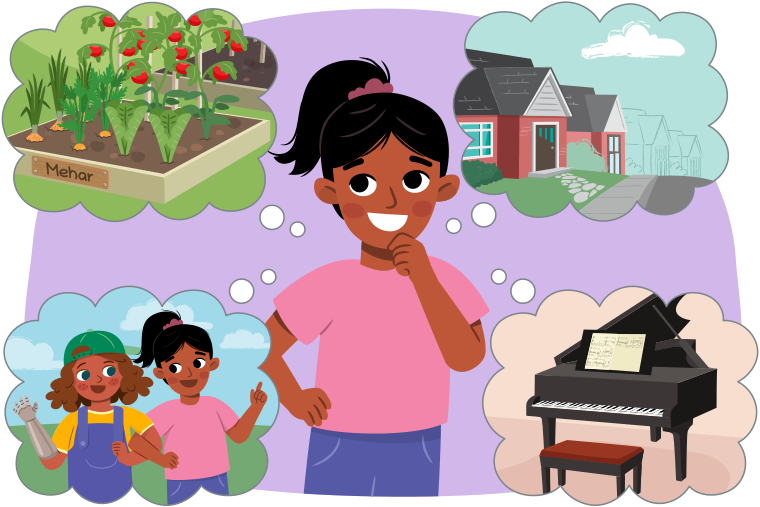
Explore the following questions. If possible, share your thoughts with a partner.
What are some of my favourite places?
Who are the people in my life?
What do I enjoy doing?
How do I see myself?
What groups or communities do I belong to?
What is identity?
Identity is all the things that describe who you are. Each person is unique and special and has their own way of describing themselves.
Identity can be shaped by many things.
Press the following tabs to learn more about different parts of identity.
Your name is a part of your identity. We use our names to introduce ourselves to others. Your name is an important part of how you see yourself and how others know you. Names might give clues about other parts of your identity.
Because names are so special, it is important to call others by the name they share with you and make sure to say their name correctly.
A community is a group of people that live, play, and work together.
A community can include many different places where people live, play, and work.
This might be:
- homes
- schools
- parks
- swimming pools
- outdoor sports areas
- cultural centres
- art centres
- sports centres
- community gardens
- libraries
- firehalls
- hospitals
What are some of the places in your community?
Your family is made up of the people who take care of each other. Families can be related to each other or have a strong emotional connection to each other.
Family can be the people in our community or in another country. Family can be all the people who are important in our lives.
Your friends are people that you share common interests with, like to spend time with, and trust with your feelings.
Who is in your family? Who are your friends?
Your personality describes your qualities that make you different from others.
Words that might describe someone’s personality might include friendly, funny, calm, adventurous, active, cheerful, caring.
What are some adjectives that describe your personality?
Your interests include hobbies, activities and things you enjoy doing or learning about. What are your interests and hobbies? How do your interests make you feel?
Culture may include:
- cultural background
- language(s)
- customs and traditions
- food
- art
- music
- dance
- religion
Exploring identity
When we talk about our identity, we often use the verb “to be”.
This verb helps us describe people, places, things, and ideas.
Some examples of the verb “to be” are:
- I am
- we are
- I was
- we were
- I have been
- I will
- we will
Explore the following image. Can you spot any forms of the verb “to be”?
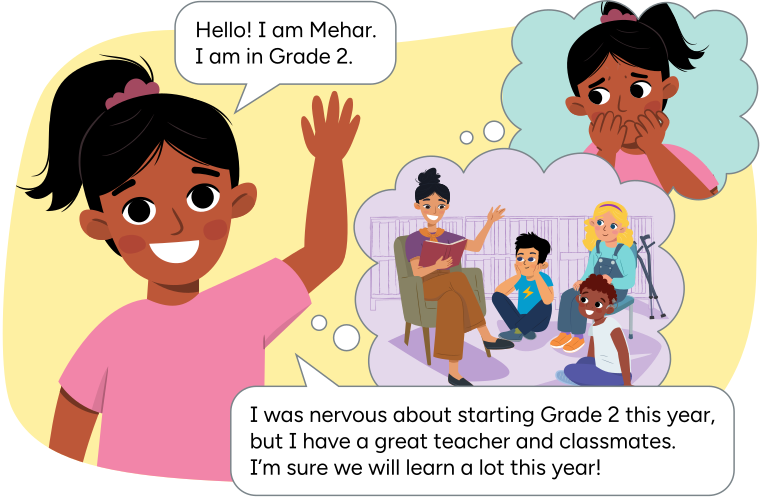
A student saying, "Hello! I am Mehar. I am in Grade 2. I was nervous about starting Grade 2 this year, but I have a great teacher and classmates. I'm sure we will learn a lot this year!"
Did you notice any forms of the verb “to be”?
Press the Answer button to see the answer.
- I am
- I was
- we will
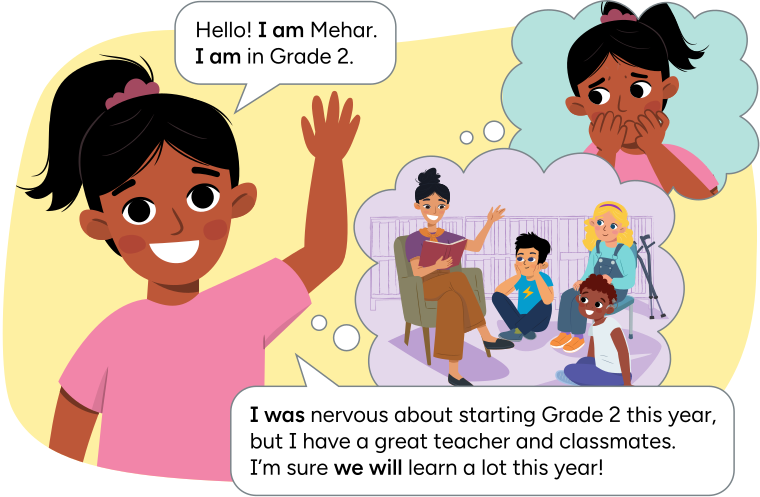
The words "I am" are highlighted in the phrases "I am Mehar" and "I am in Grade 2." The words "I was" are highlighted in the phrase "I was nervous." The words "we will" are highlighted in the phrase "we will learn a lot this year!"
All about Myles
Let’s learn all about Myles and his identity! Explore the following videos to learn more.
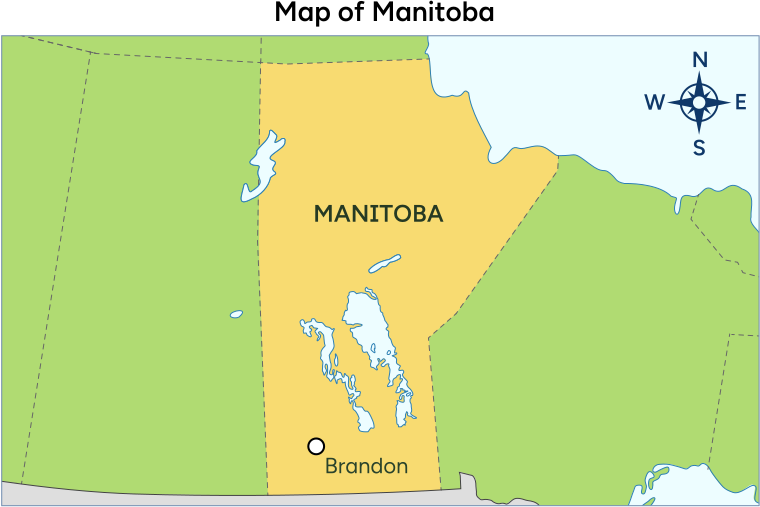
Where does Myles live?
Press Possible Answer button to learn more.
Myles lives in Brandon, Manitoba. He likes it because it’s not too big and not too small.
How many sisters does Myles have? What does he teach them?
Press Possible Answer button to learn more.
Myles has two younger sisters. He teaches them to make dream catchers.
Let’s learn some more about Myles.
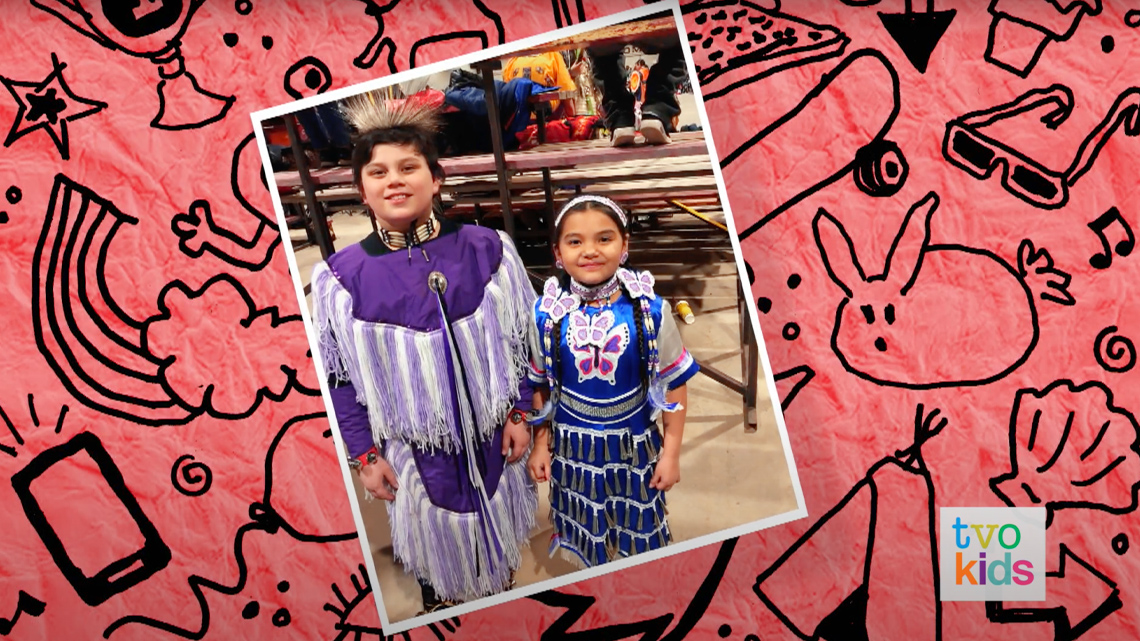
Myles shows us his room.
What do we learn about him?
Press Possible Answer button to learn more.
Myles loves red. He shows us his regalia.
Myles likes to do lots of fun things. Let’s learn about them.
What is one of Myles’ hobbies?
Press Possible Answer button to learn more.
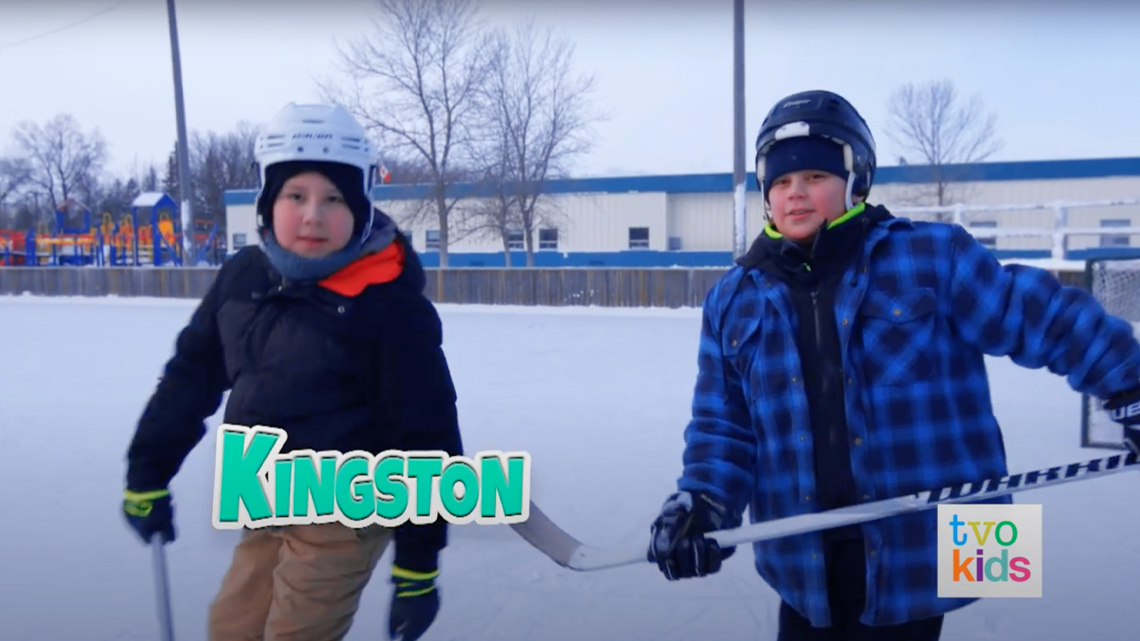
Myles shares that he loves to play hockey with his friend Kingston.
Myles likes Kingston because
- he’s a good friend
- they like to draw together
- sometimes he will teach him new things
What is a place in Myles’ community?
Press Possible Answer button to learn more.
Myles shares his school.
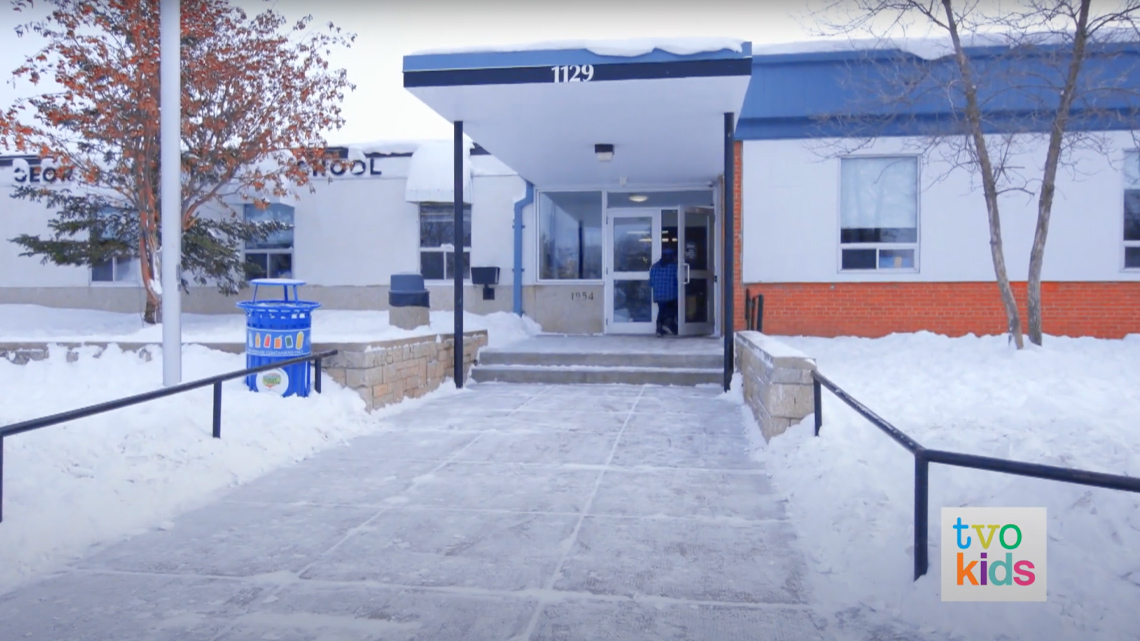
Let’s learn about Myles and his culture.
Myles shares his experience in a drum making workshop with Elder Barb.
Have you ever experienced something new that helps you learn more about your culture or other cultures?
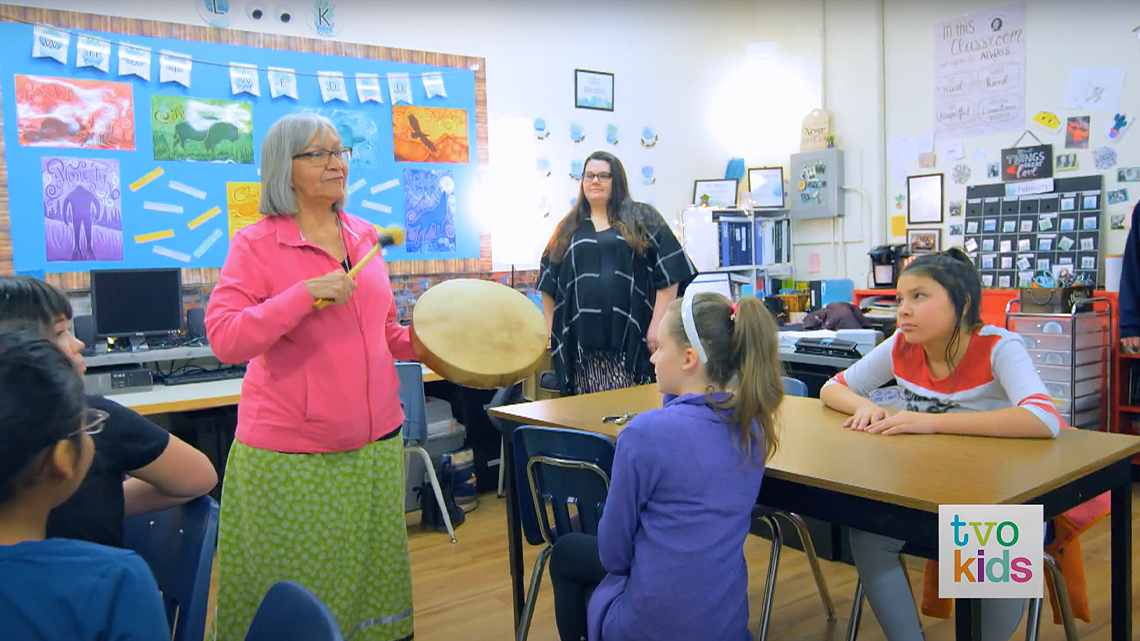
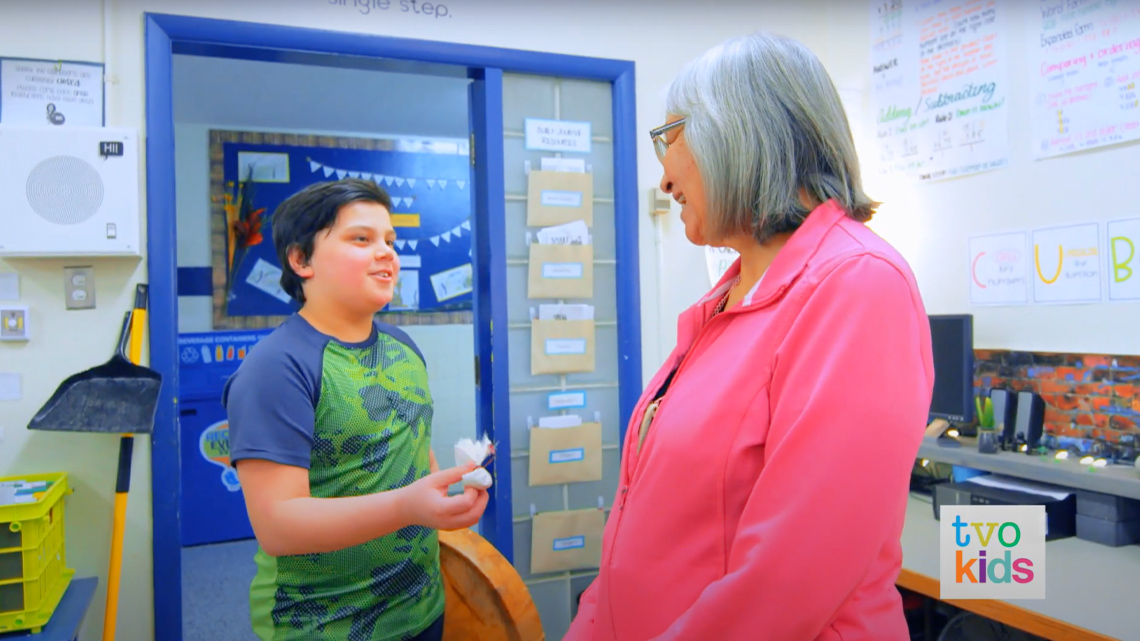
He shares that when an Elder helps you, you give them tobacco in his culture to show respect.
Students work on creating their own drum using a wooden frame.
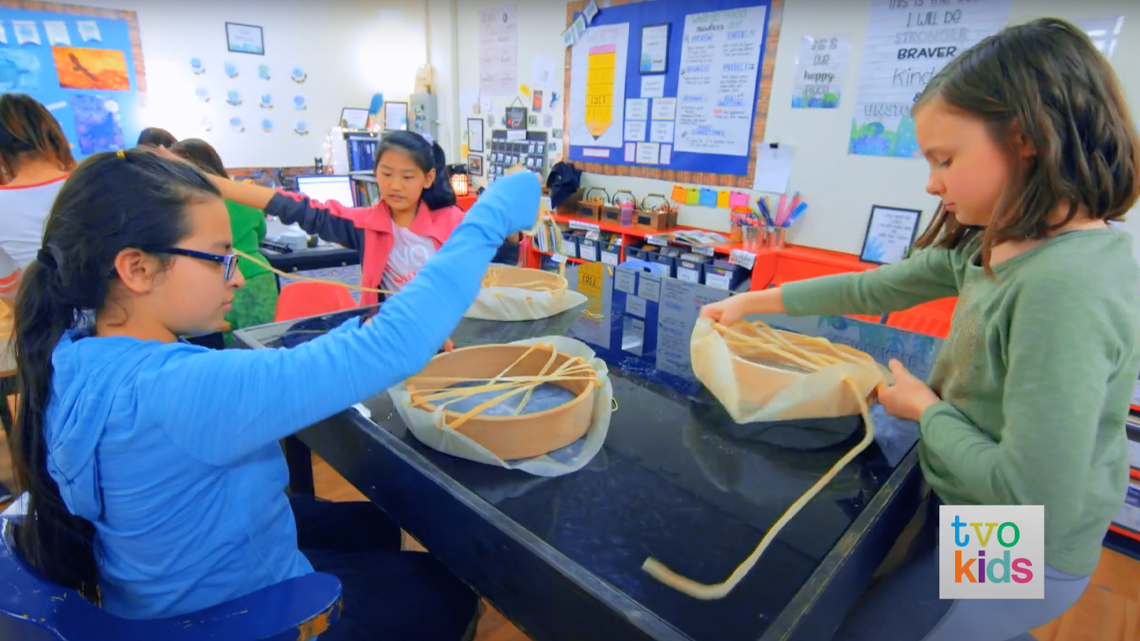
What are the steps to creating a drum?
Let’s look at the drums that Myles and his friends made!
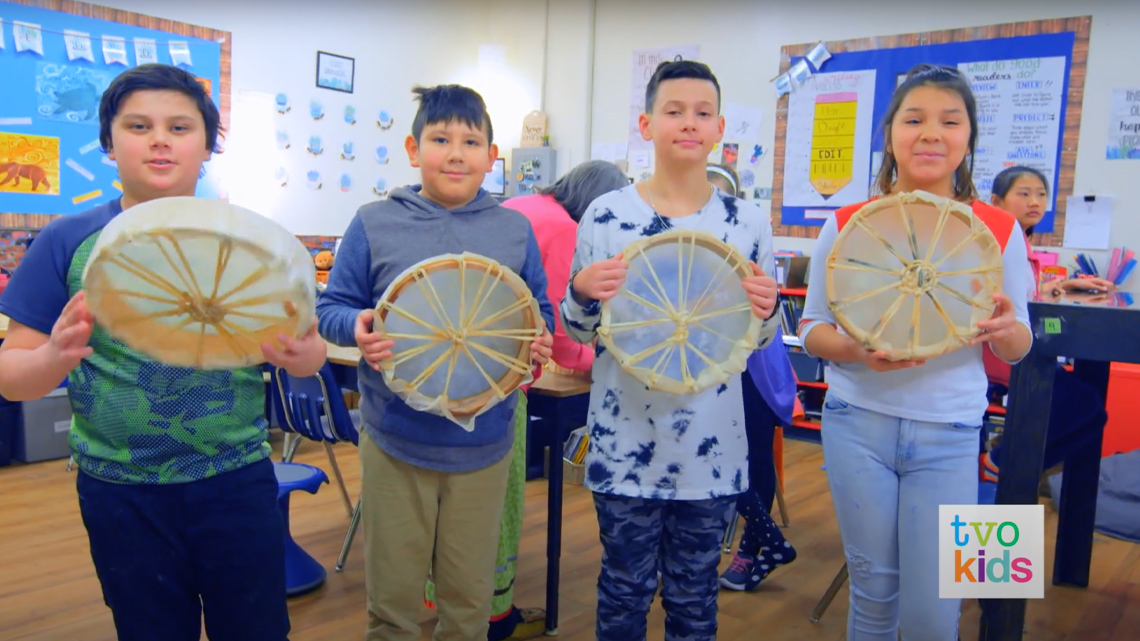
Myles shares that you gift the first drum you make to someone else.
How does Myles describe his drum?
Press Possible Answer button to learn more.
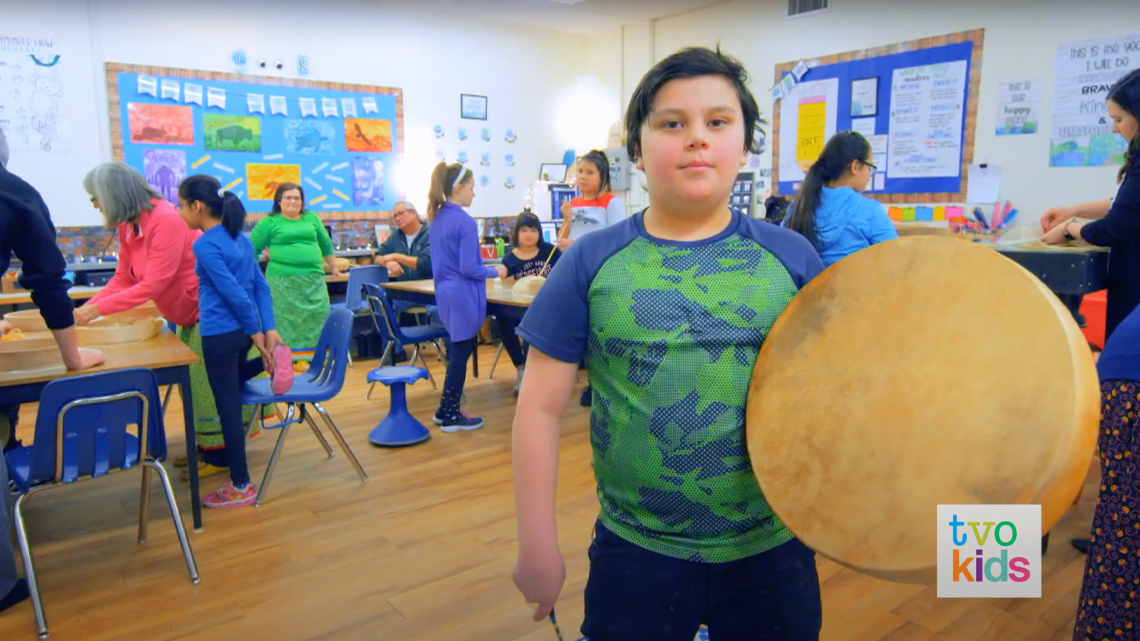
Myles's drum is made from moose hide. He explains that his drum is made of two spirits: animal spirit and tree spirit.
Let’s learn about the types of food that Myles makes.
What kind of food does Myles make at home?
Press Possible Answer button to learn more.
At home, Myles makes duck soup with his grandfather.
They use:
- duck
- potatoes
- flour
- salt
- pepper
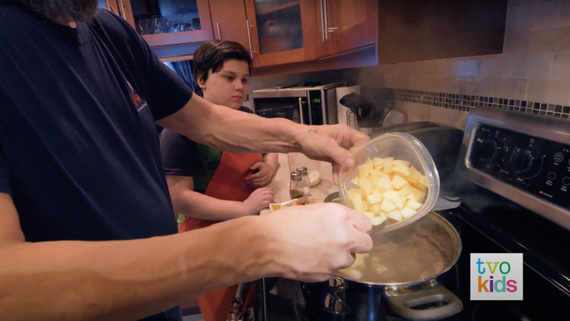
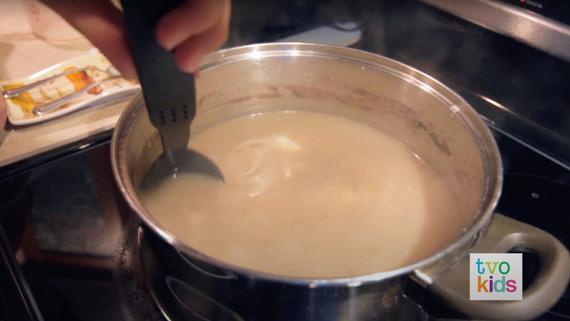
Myles’ family eats duck soup with fry bread!
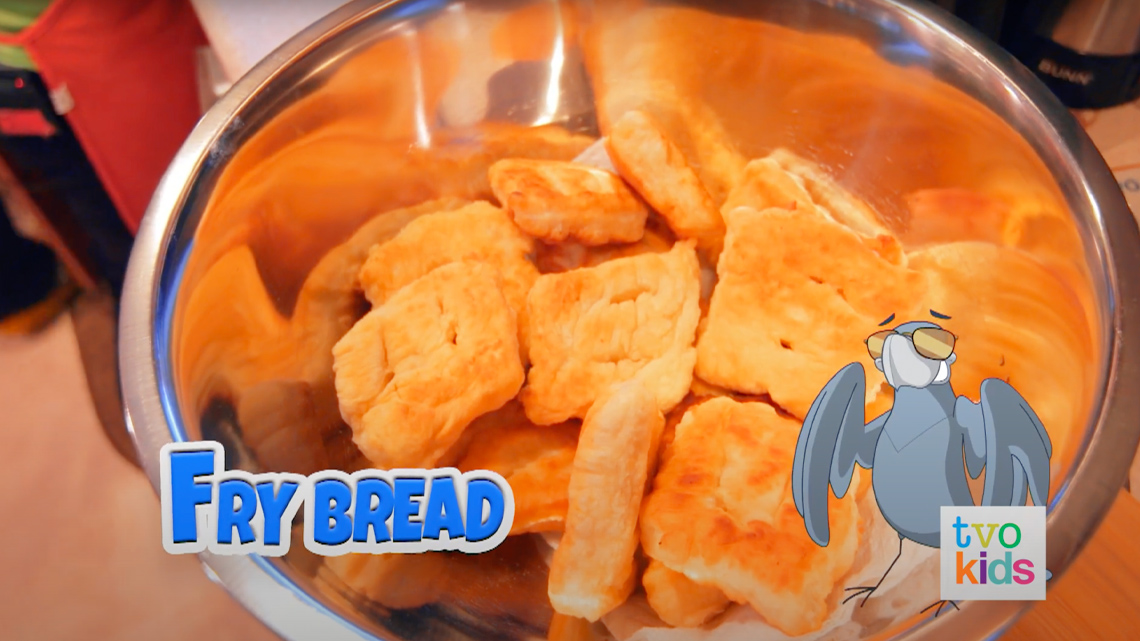
Is there something that you enjoy making with your own family or friends?
Share your thoughts with a partner, if possible.
Let’s explore Myles and his connection to animals.
Where does Myles go to see the white buffalos?
Press Possible Answer button to learn more.
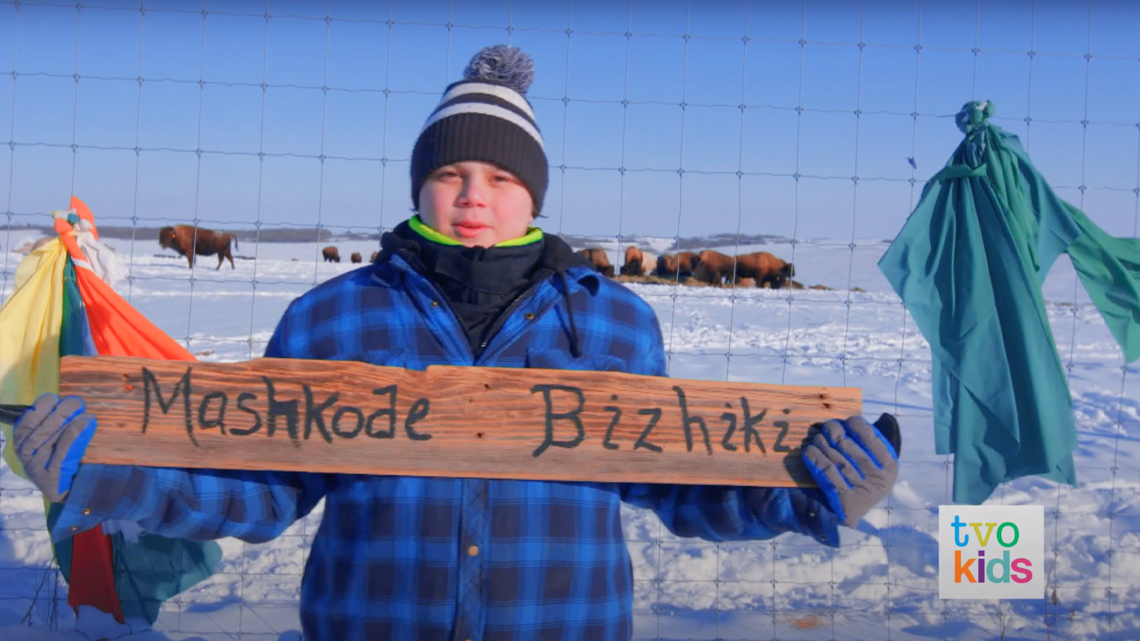
First Nations of Sioux Valley. Myles shares that there are white buffalos that are very rare and sacred.
Why does Myles visit the buffalos? How does he thank them? How does he feel when he sees them?
Press Possible Answer button to learn more.
Myles visits the buffalo when he needs help or guidance.
He spreads tobacco to thank the people and animals that are important to them.
He feels happy and strong when he sees the buffalo.
Did you notice that Myles’ shares the name for Buffalo in Ojibwe?
Let’s think about what Myles shared about his identity.
Press the following tabs to find out more.
- his home – where he lives with his two sisters and family
- outdoor hockey rink – where he plays with his friend Kingston
- school – where he takes a drum making workshop with Elder Barb
- First Nations of Sioux Valley – where Myles shares visits the buffalo when he needs help or guidance.
- his sisters and family
- his friend Kingston
- his classmates and teacher
- Elder Barb
What are some adjectives we might use to describe Myles’ personality?
Possible adjectives: friendly, calm, adventurous, caring.
Myles loves to play hockey.
Myles is Ojibwe and shares an Ojibwe word with us.
He creates dreamcatchers with his sisters.
He makes duck soup with his grandfather.
He shares his grass dance regalia.
He shares the buffalo at the First Nations of Sioux Valley. He shares that the white buffalos are sacred.

Grammar
A pronoun is a word used in place of a noun.
We can use personal pronouns for
- people or subjects
- objects
- possessives or what belongs to people
Singular
| Subject | Possessive | Object | |
|---|---|---|---|
| First person | I | my, mine | me |
| Second person | you | your, yours | you |
| Third person |
he she it |
his her, hers its |
him her it |
Plural
| subjects | Possessive | Object | |
|---|---|---|---|
| First person | we | our, ours | us |
| Second person | you | your, yours | you |
| Third person | they | their, theirs | them |
In the video, Myles different pronouns to describe himself, his family, and his community.
The following are some examples.
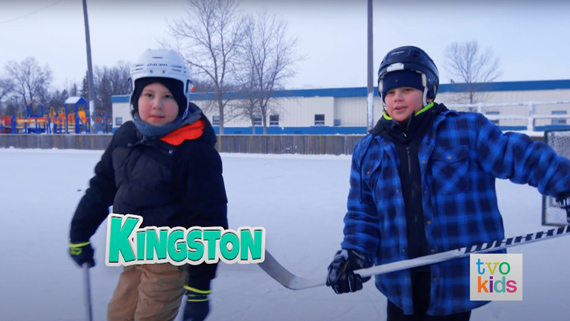
Meet my friend Kingston. We like to play hockey together.
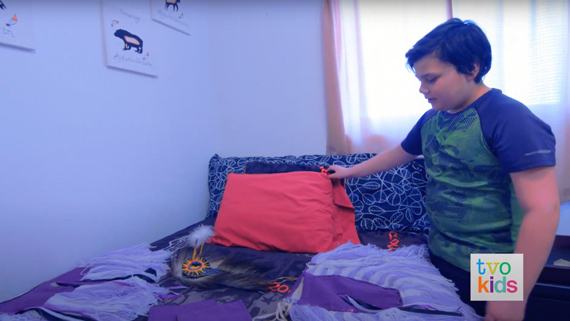
My favourite colour is red. That’s why I have some red on my bed.
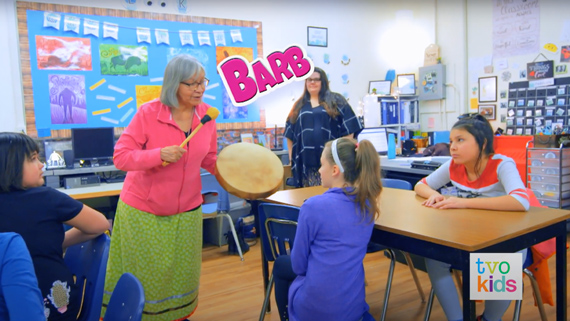
Barb is an Elder from our community. She’s helping us make drums today.
Your turn!
For each sentence, select the missing pronoun from the drop-down menu. Press Check Answer to see how you did.
Who am I
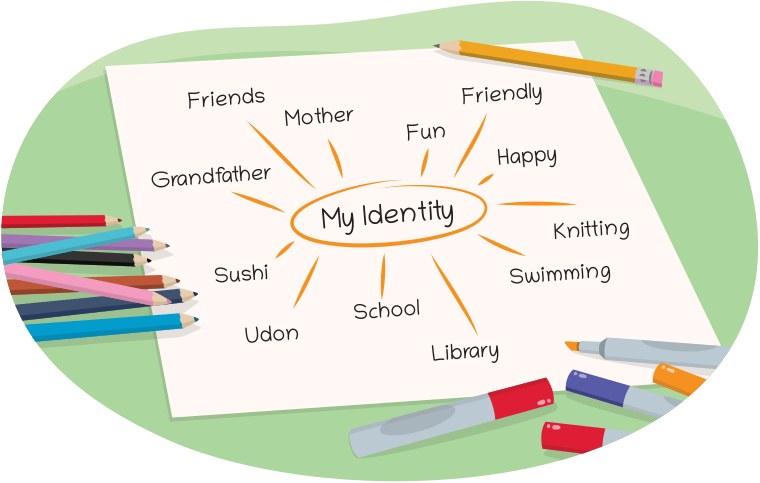
Time for you to think about your own identity! In your notebook or using another method of your choice, brainstorm ideas about your identity.
Your name
Add your full name. If you have any nicknames that you would like to include, feel free to add them too!
The important places in your community
What are some of the places in your community that are important to you?
Why are they important?
The important people in your life
Who are some of the special people in your life?
Why are they special to you?
Your actions, experiences, and personality
What are some adjectives that describe your personality?
Words that might describe someone’s personality might include friendly, funny, calm, adventurous, active, cheerful, caring.
You may also choose to add a kind action or experience that you have had.
Your hobbies and interests
What are your interests and hobbies?
How does your hobby or hobbies make you feel?
Your culture
What are some of the parts of your culture that you would like to share?
Press Hint button for some things that culture includes.
Culture may include:
- cultural background
- language(s)
- customs and traditions
- food
- art
- music
- dance
- religion
Putting it all together
Your identity is like a set of puzzle pieces. Each piece comes together to show who you are.
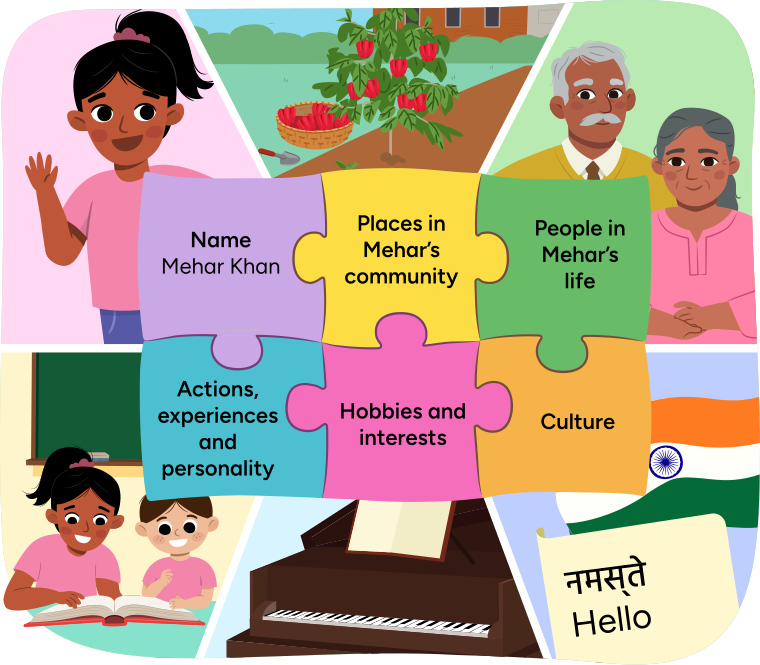
Student Mehar's identity represented as a puzzle made up of six pieces. The pieces are labelled Name; Places in Mehar's community; People in Mehar's life; Actions, experiences, and personality; Hobbies and interests; Culture.
Your task
You are going to create a puzzle that describes the different parts of your identity.
Look back at your brainstorm notes from the Action section. Use this information to create an identity puzzle.
Step 1: Review your brainstorm notes.
Step 2: Create simple sentences to share the parts of your identity. You can use any types of sentences you would like to include. (i.e. declarative, interrogative, exclamatory, etc.)
Step 3: Review your story.
- Make sure each new sentence starts with a capital letter.
- Use capital letters when using proper nouns.
- Make sure to use a period, question mark, or exclamation mark depending on the sentence you create.
- Check your spelling using a dictionary.
- Read your sentences out loud to make sure it makes sense (if possible, share with a partner for feedback).
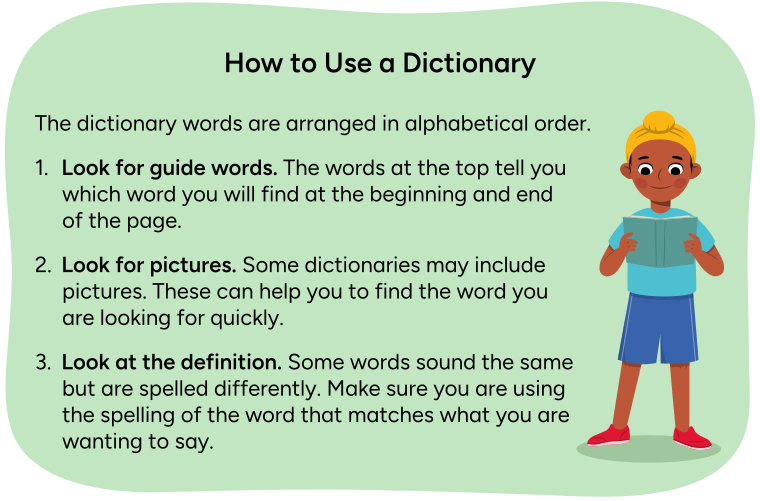
How to use a dictionary and an online dictionary.
The dictionary words are arranged in alphabetical order.
- Look for Guide Words. The words at the top tell you which word you will find at the beginning and end of the page.
- Look for pictures. Some dictionaries may include pictures. These can help you to find the word you are looking for quickly.
- Look at the definition. Some words sound the same but are spelled differently. Make sure you are using the spelling of the word that matches what you are wanting to say.
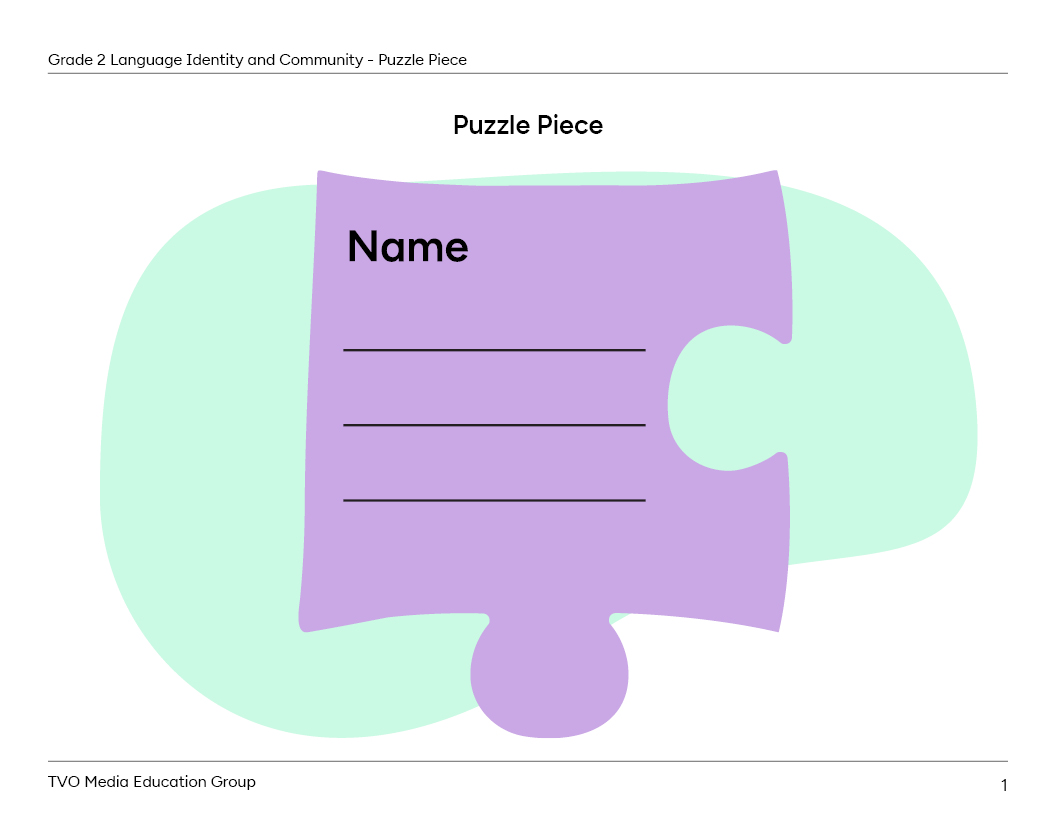
Step 4: Complete each puzzle piece by drawing pictures and using labels that describe that part of your identity
Complete the fillable and printable Puzzle Piece in your notebook or using the following document. If you would like, you can use speech-to-text or audio recording tools to record your thoughts.
Step 5: If possible, present your identity puzzle.
Consider how you might use facial expressions and gestures to help you share.
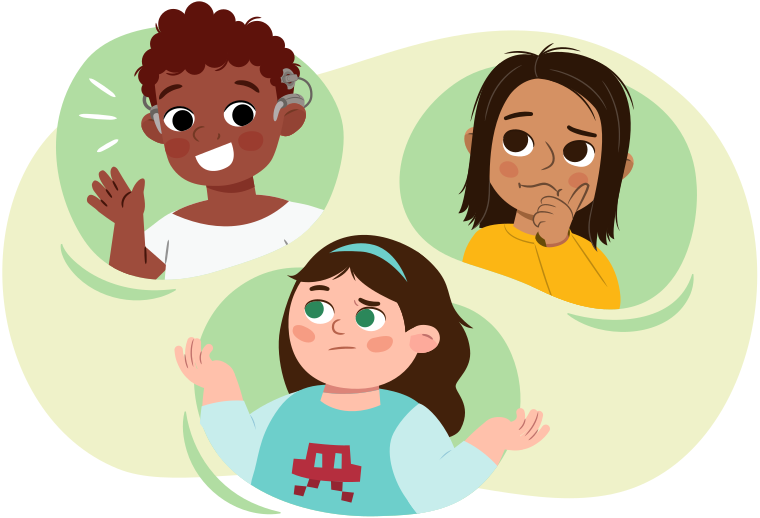
Three students. One is smiling and waving. One is looking thoughtful with her hand on her chin. One is looking puzzled and holding her hands out to each side.
Practice reading your presentation until you are comfortable reading it aloud.
Use the following checklist to help your practice effective speaking skills:
- Speak in a strong voice.
- Speak with expression.
- Speak at a speed that feels just right (not too fast or too slow).
Reflection
How do you feel about what you have learned in this activity? Which of the next four sentences best matches how you are feeling about your learning? Press the button that is beside this sentence.
I feel...
Now, record your ideas about your feelings using a voice recorder, speech-to-text, or writing tool.