Learning goals
We are learning to…
- identify connections between ideas in media texts and our own lived experiences
- apply a knowledge of words (including bases, prefixes, and suffixes) to read and spell words
- use digital and media tools to help the design process of a poster
Success criteria
I am able to…
- complete an Identity Puzzle with descriptions of my own personal identity after watching videos of other students explaining what is important to them
- identify free bases and bound bases in words
- create a poster with a variety of tools to communicate my personal identity
Who am I?
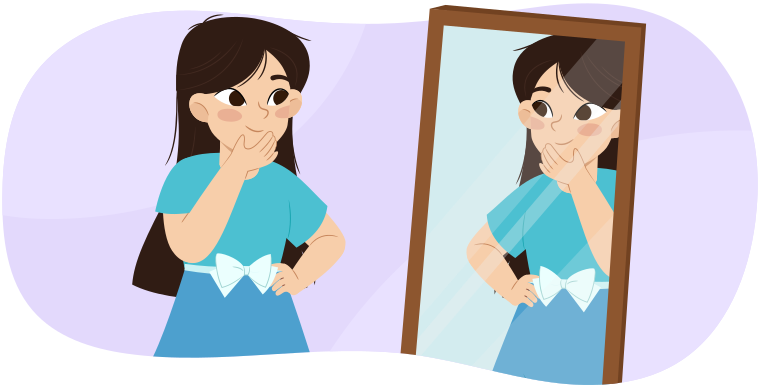
If you were asked to describe yourself, what are the first things that come to mind?
Would you think about things that can be seen in a mirror?
Features such as our height, hair colour, eye colour, or skin tone can be seen by others or by looking at our own reflection. But these only describe the outside. How would you describe your personal identity?
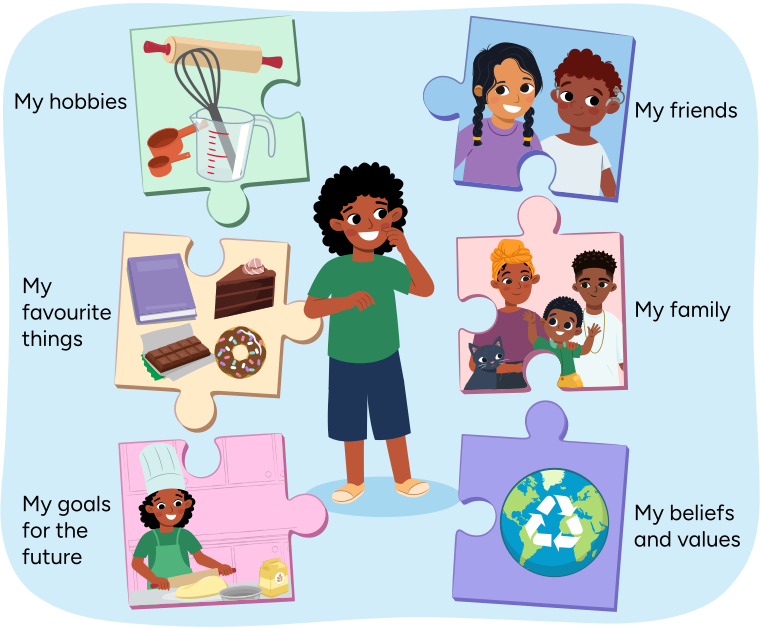
When we are asked to describe our personal identity, it includes all of the many puzzle pieces of what makes us who we are.
What are some important things about you?
If you were interviewing someone else about their personal identity, what kinds of questions would you ask them?
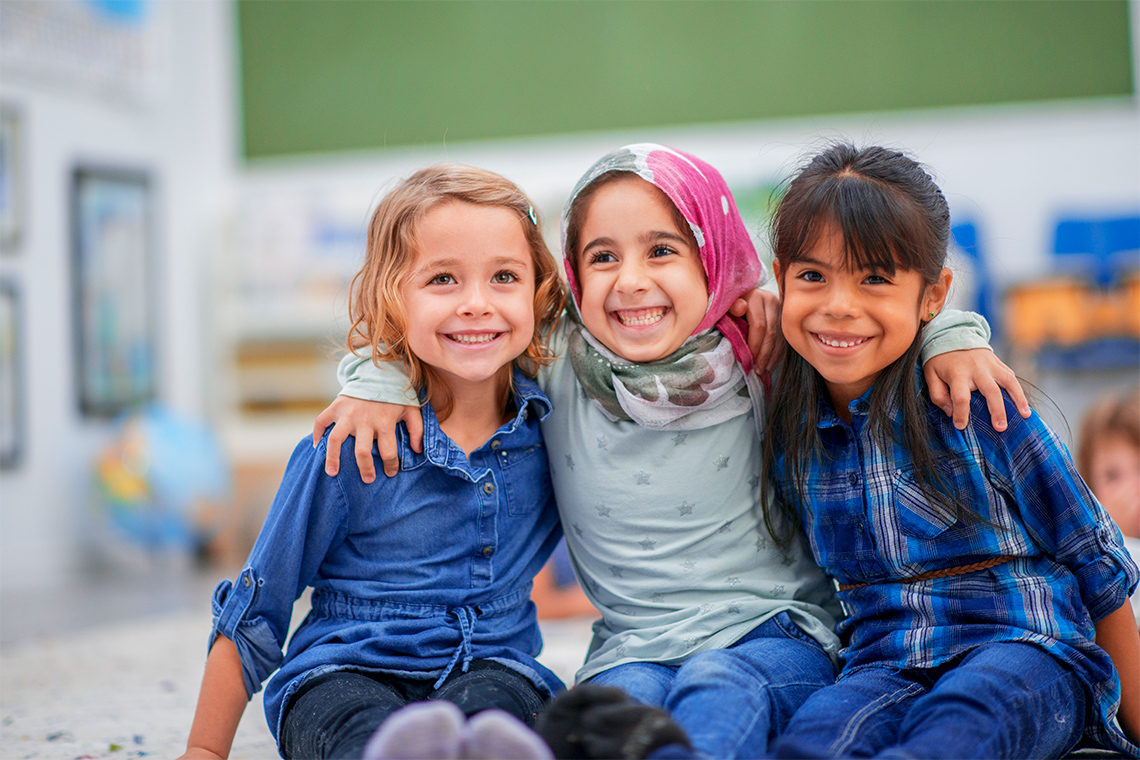
Consider the ideas in this image and what kinds of things you would include on your identity puzzle pieces.
Tiara’s identity puzzle pieces
Understanding identity
In the minds on section, you thought about the word identity, and how it means so much more than what can be seen in the mirror. Your identity is all of the parts that make you who you are.
Many things make up our identity, such as:
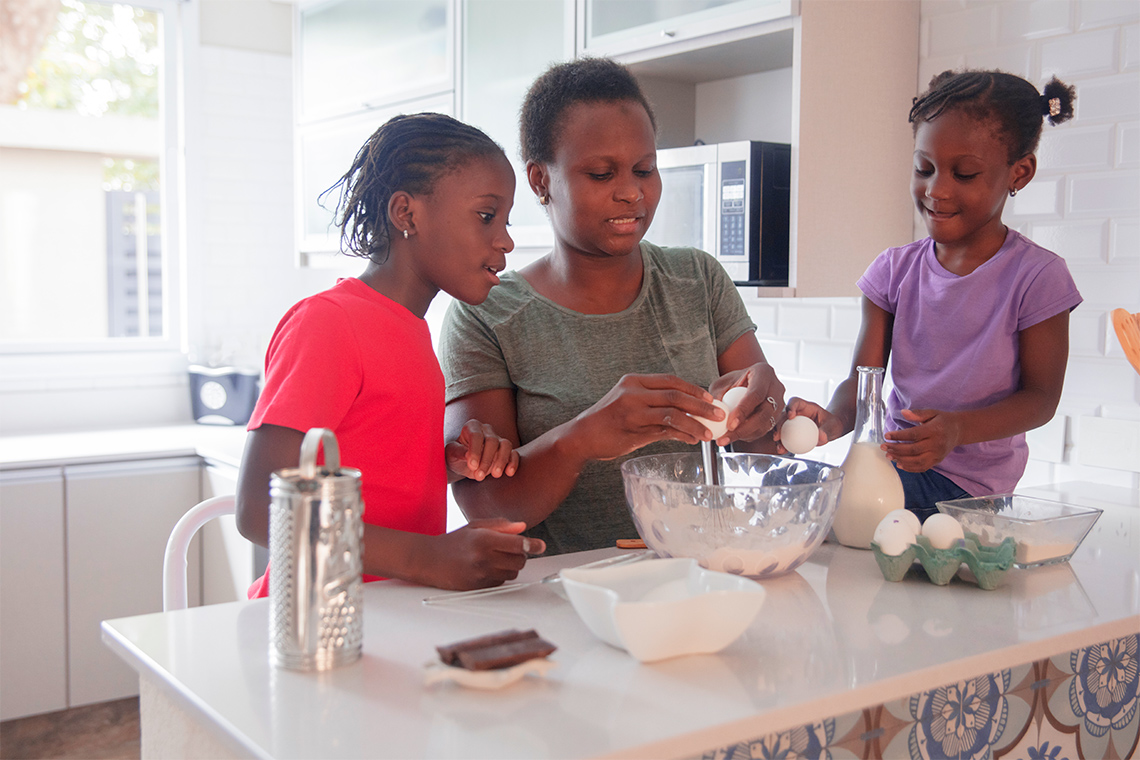
Your family
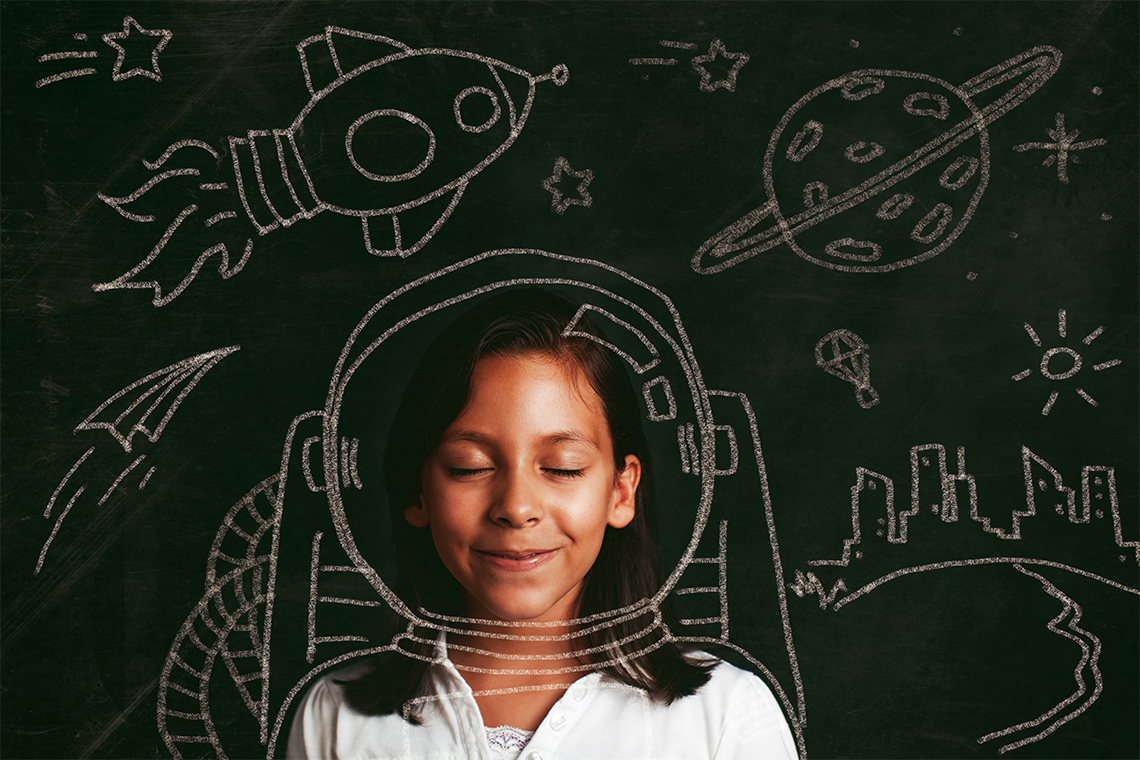
Your goals for the future
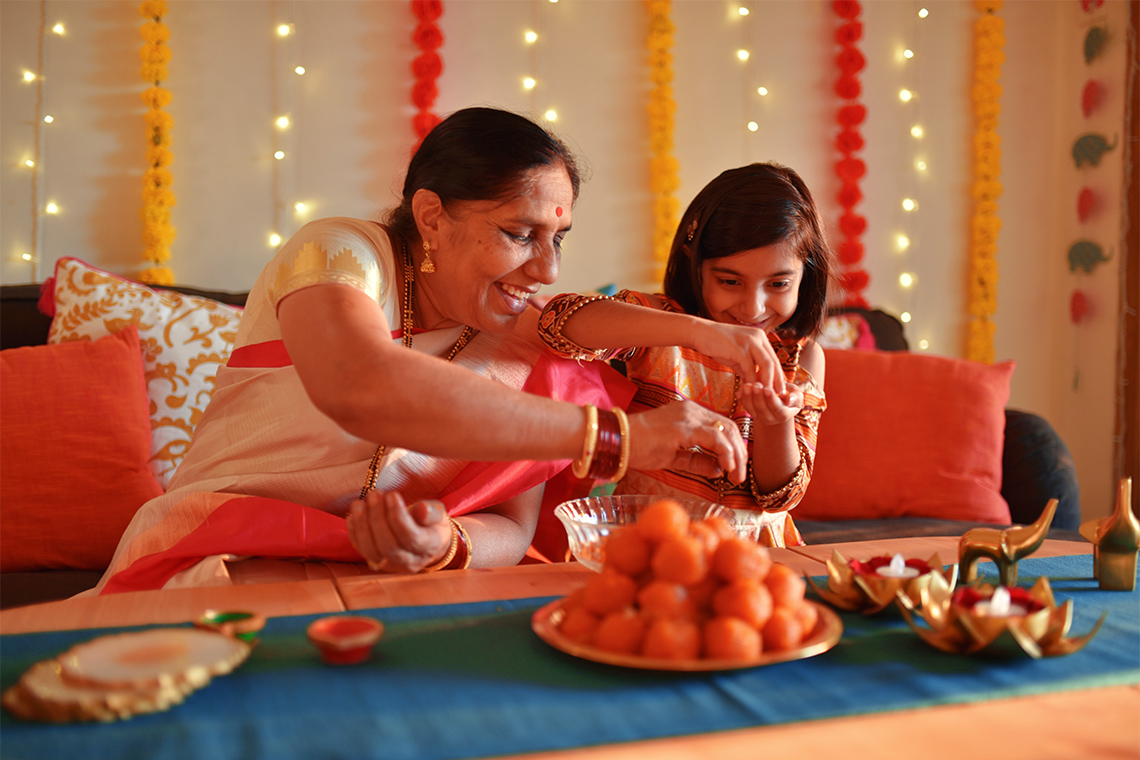
Your culture
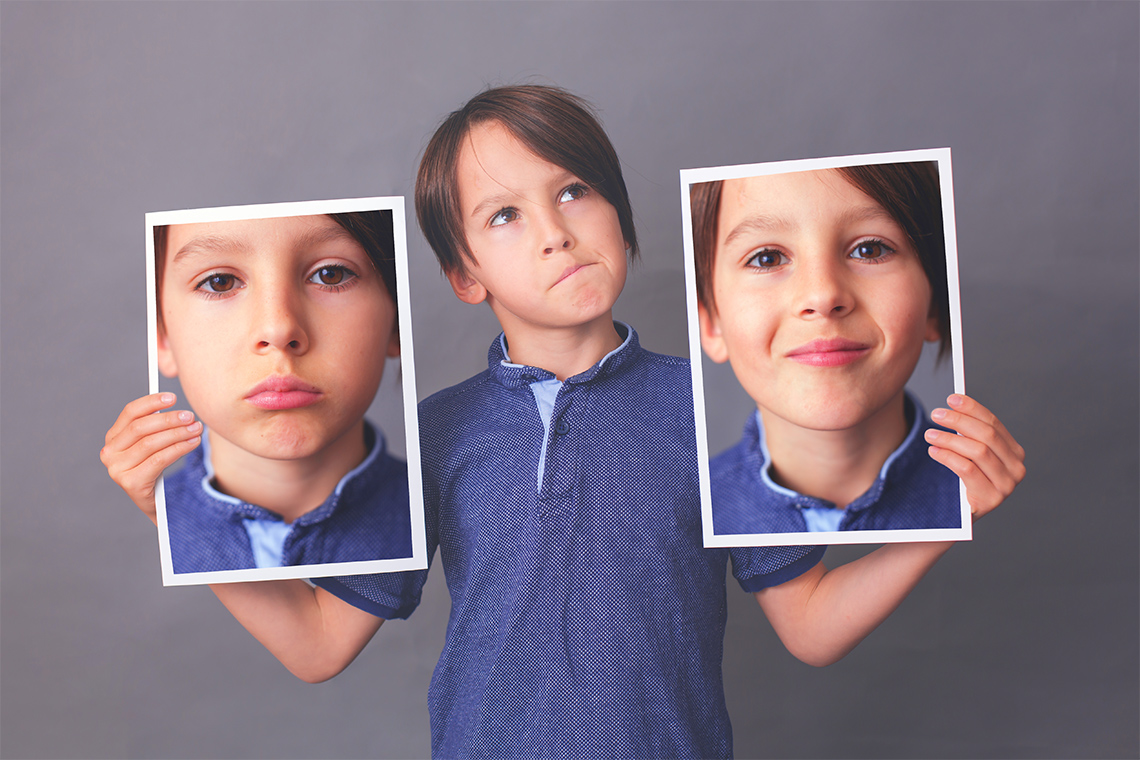
Things you like or don’t like
Your beliefs and values
Can you think of anything else that is a part of your identity?

Pause and Reflect
Pause and reflect
Write your own definition of the word identity in a journal of your choice. If possible, compare your definition with a learning partner.
Identity puzzle
You are going to meet some children and learn about parts of their unique identities.
Based on the information the children share in the videos, we will look at examples of what their identity puzzles could look like. Although people are more complex than what can be shared in a short video, we can explore these examples to help us understand the many things that make up our identities. Along the way, you will make connections to yourself and reflect on parts of your identity.
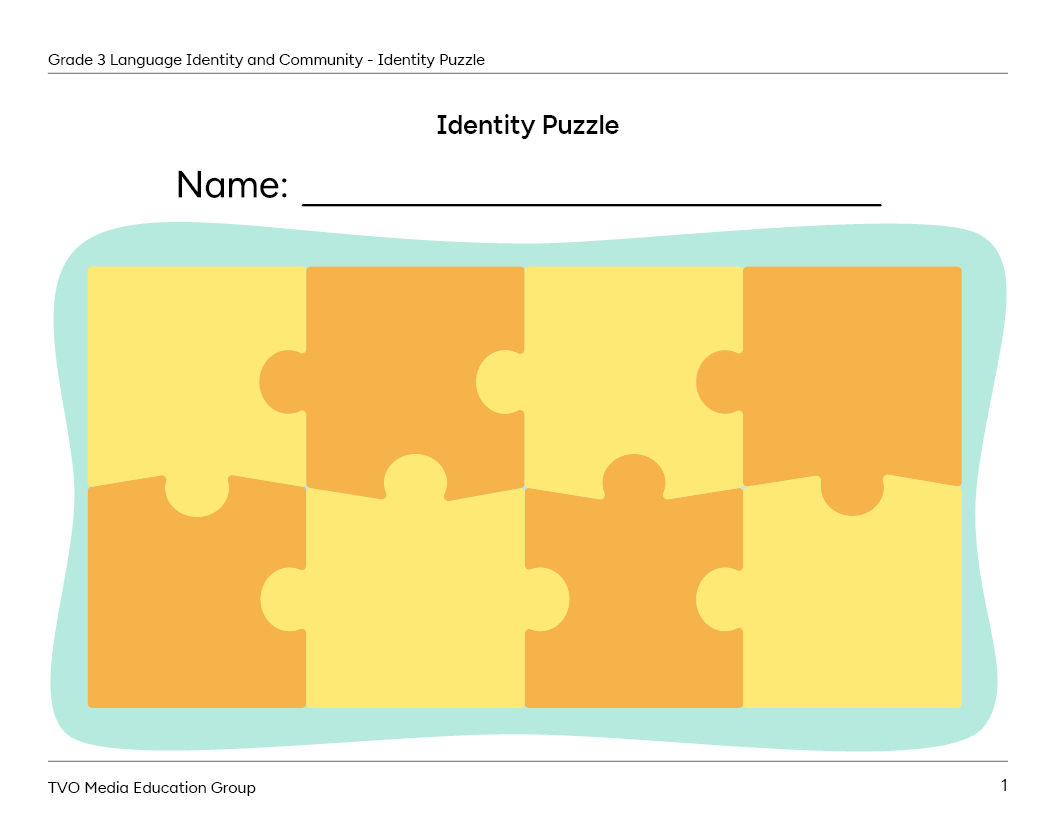
Throughout this lesson, use this fillable identity puzzle to record any ideas you have about your own personal identity, or copy it into a notebook of your choice. Take a moment now to write your name in the middle.
Vance
Meet Vance!
Vance is ten years old and lives in Brampton, Ontario. His culture and heritage are very important to him, and so are his goals. While watching this video, consider the following questions:
- What countries does Vance identify as part of his heritage?
- What important holiday does Vance observe in June?
- What artistic traditions from Vance’s heritage does he enjoy?
- What is an important goal that Vance has?
- Vance is a part of the BSA (Black Student Association) at his school. What social justice issues does the BSA focus on and how do they support students?
Let’s view this video and learn more about Vance.
Based on what Vance shared in this video, his identity puzzle might look something like this:
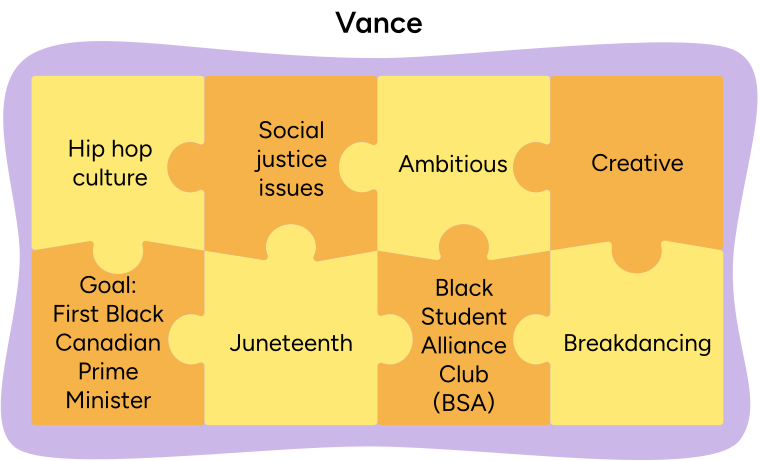
Vance's identity puzzle has eight pieces: hip hop culture, social justice issues, ambitious, creative, Juneteenth, goal: first Black Canadian Prime Minister, breakdancing, and Black Student Alliance Club (BSA).

Connections
Connect
Our heritage helps shape who we are, and our goals shape who we are going to become. What connections can you make to the ideas Vance shared?
Take a moment to update your personal identity puzzle. Place any ideas on the puzzle pieces where you feel they fit best. Only include what you are willing to share with others. Use the following prompts to help you decide what to include on your own identity puzzle:
- family or other important people in your life
- countries or cultures that are part of your heritage
- important holidays that you observe
- hobbies and extra-curricular activities that are important to you
- clubs or organizations you belong to
- social justice causes that are important to you
- goals that you have for the future
Yael
Meet Yeal!
Yael is twelve, and she is a member of the Jewish community. She is preparing for a religious celebration and tradition that is very important in her faith community.
First, let’s get to know a little bit about Yael and hear about what kind of celebration she is preparing for.
- What kinds of things does Yael enjoy?
- What are the clues Yael offered about her big celebration?
Let’s find out more about this special tradition!
- What did you learn about a Bat (or Bar) Mitzvah?
- What are some of the elements of a Bat Mitzvah?
Here’s a peek at Yael’s Bat Mitzvah.
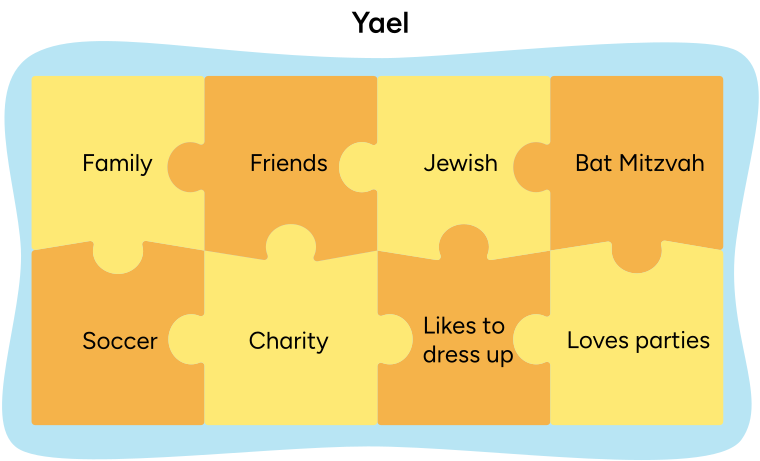
Based on what Yael shared with us in the video, her identity puzzle might look something like this:
Connections
Connect
Many religious or faith communities have special celebrations for important life events. It is also important to be active citizens in our community. What connections can you make to the ideas Yael shared?
Add any of the following to your identity puzzle. Place them on the puzzle where you feel they fit best. Only include what you are willing to share with others.
- religious traditions
- community celebrations
- good deeds, acts of charity, or volunteering
Completing your identity puzzle
Wow! Your identity puzzle probably has a lot of amazing content by now! There are still many more things about yourself that could be added to your puzzle.
The following list includes more ideas you could consider adding. Remember to only add things that you are comfortable sharing.
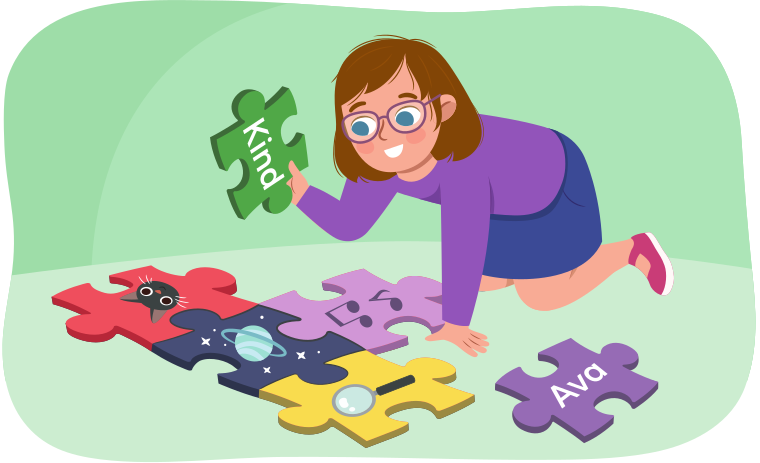
- What are your favourite things to play with?
- What languages do you speak?
- What are you learning to do?
- What makes you feel special?
- What are some words to describe you?
- What are things that you care about?
- What is the meaning of your name?
Knowing your gifts
Congratulations on creating an excellent identity puzzle. When you look at your puzzle, you can see the many amazing parts of you.
Knowing who you are helps you to be the best version of yourself and to be a strong active community member!
Your definition of “identity”
Revisit the definition of identity that you recorded in your journal at the start of this lesson. Has your understanding of the word changed or grown? Add any additional words or ideas to show how you understand the word now.
Bound bases and free bases
Just like the different parts that make up your personal identity, prefixes and suffixes are like the puzzle pieces added to words (or bases) to change the meaning.
Remember
Prefix: a part of a word that is added to the beginning of the word or base. For example, non- is the prefix in the word nonfiction and it means “not.” Nonfiction means a topic that is “not” fiction.
Other examples of prefixes: un-, pre-, dis-
Suffix: a part of a word that is added to the end of the word or base (e.g., -ful is the suffix in the word beautiful and it means “full of.” Beautiful means something that is “full of beauty.”)
Other examples of suffixes: -able, -ly, -ness
Examine the following words. Do you see something they all have in common?
- transferable – something that is able to be transferred
- nontransferable – something that is not able to be transferred
- to transfer – to share information (verb)
Press Show Answer button to learn more.
Transfer is the base of all of the words.
A base is the part of a word that has prefixes and suffixes added to it.
There are two types of bases: bound bases and free bases.
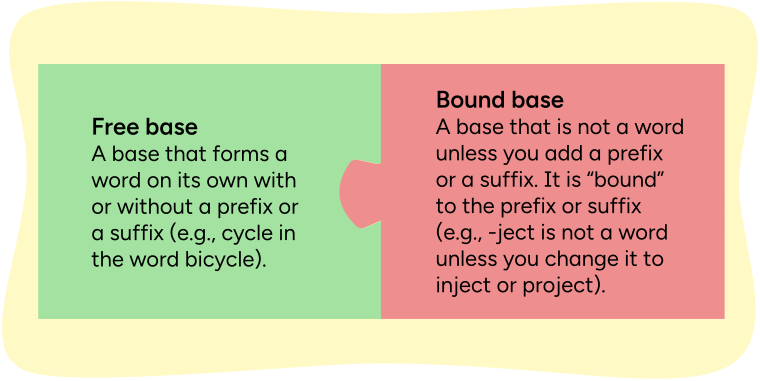
Two puzzle pieces that fit together. They have the definitions of 'free base' and 'bound base.'
Free base: A base that forms a word on its own with or without a prefix or suffix (e.g., cycle in the word bicycle).
Bound base: A base that is not a word unless you add a prefix or a suffix. It is 'bound' to the prefix or suffix (e.g. -ject is not a word unless you change it to inject or project).
Select the correct answer, then press Check Answer to see how you did.
Sort the following words depending on if the base is a bound base (not a word) or a free base (a word on its own). The base is included in brackets after each word for you.
Why is it helpful to understand suffixes, prefixes, and bases of words?
Understanding how words are put together helps us:
- spell new or challenging words when we’re writing
- understand new words when we’re reading
- pronounce longer words when we know the suffixes, prefixes, and the base
See if you can pick out the suffix, prefix, or base the next time you find a challenging word!
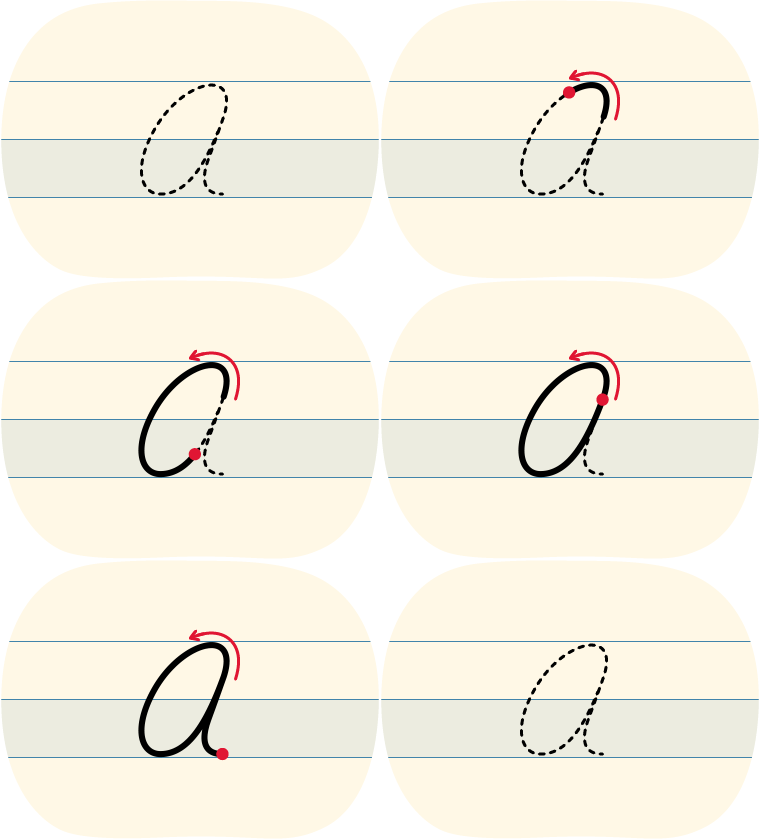
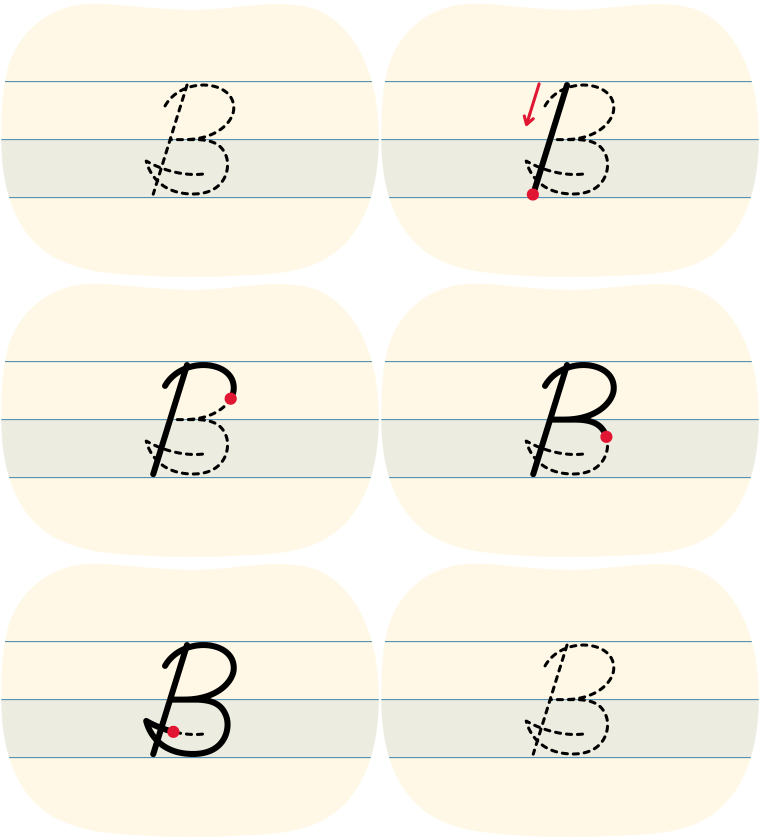
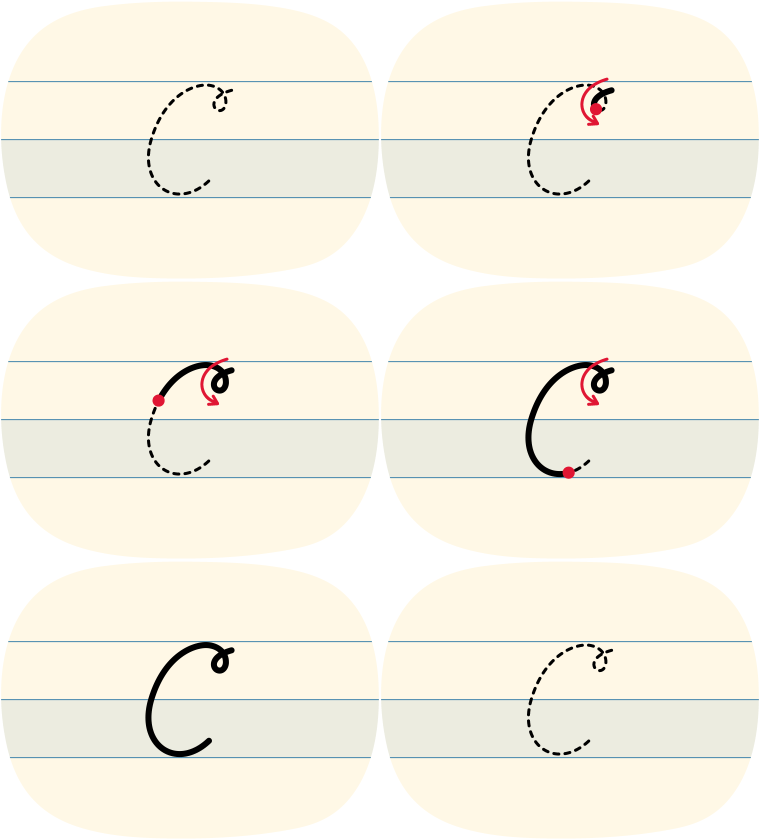
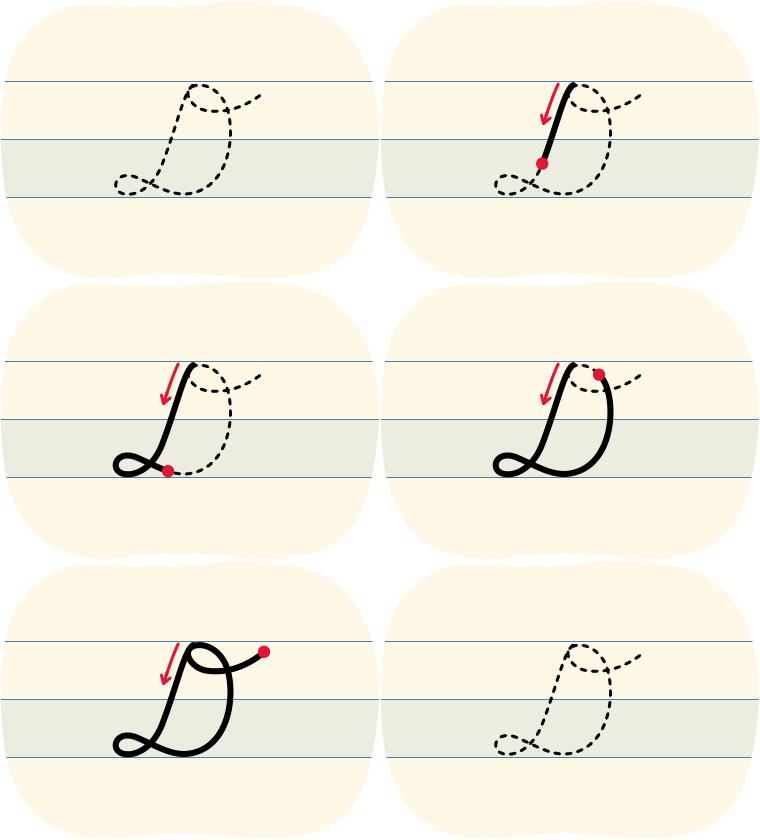
Cursive practice
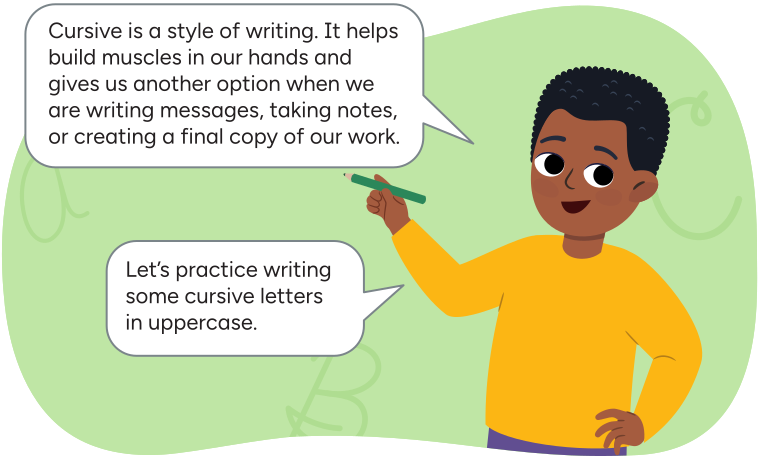
Arthur says, 'Cursive is a style of writing. It helps build muscles in our hands and gives us another option when we are writing messages, taking notes, or creating a final copy of our work.
Let's practice writing some cursive letters in uppercase.'
| Cursive | |
|---|---|
|
A |
 |
|
B |
 |
|
C |
 |
|
D |
 |
|
E |
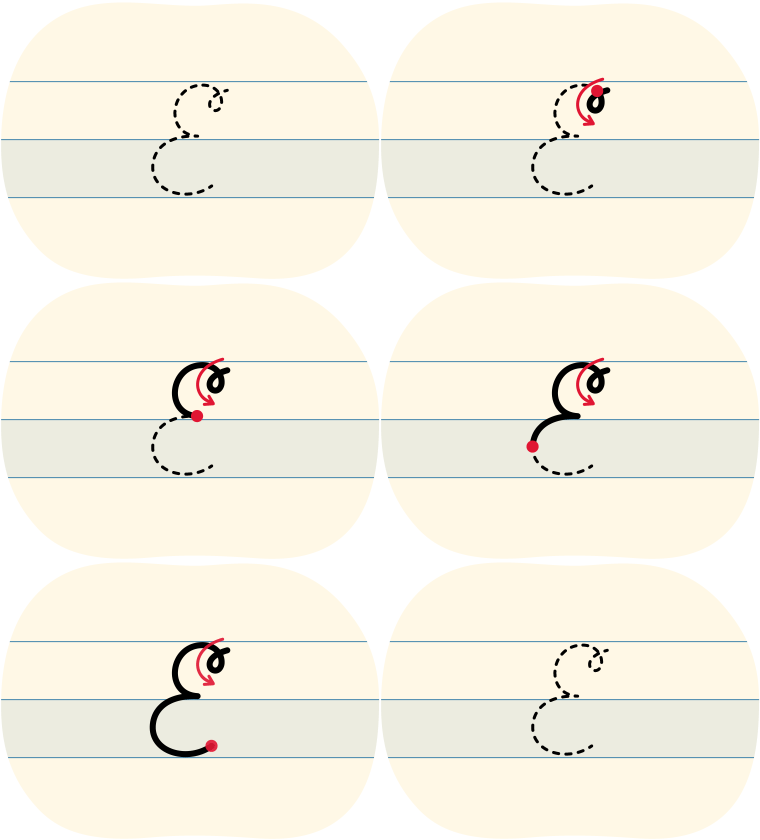 |
Before you begin, what do you notice about the shape of each cursive letter?
Press Possible Answer button to learn more.
The uppercase letters start at different levels. Some of the letters have loops and they each create a unique shape.
Tips for cursive letters
- Follow the arrows, sometimes when we write in uppercase we can start from the top, middle or the bottom.
- Try to keep the pencil on the page until you are done the letter.
- Create a finger space before you continue to the next letter.
- Try to press gently as you write so that your hand can move easily across the page.
Putting it all together
In this learning activity you have done some deep thinking about the many things that make up your identity. You also viewed videos of children sharing parts of their identities.
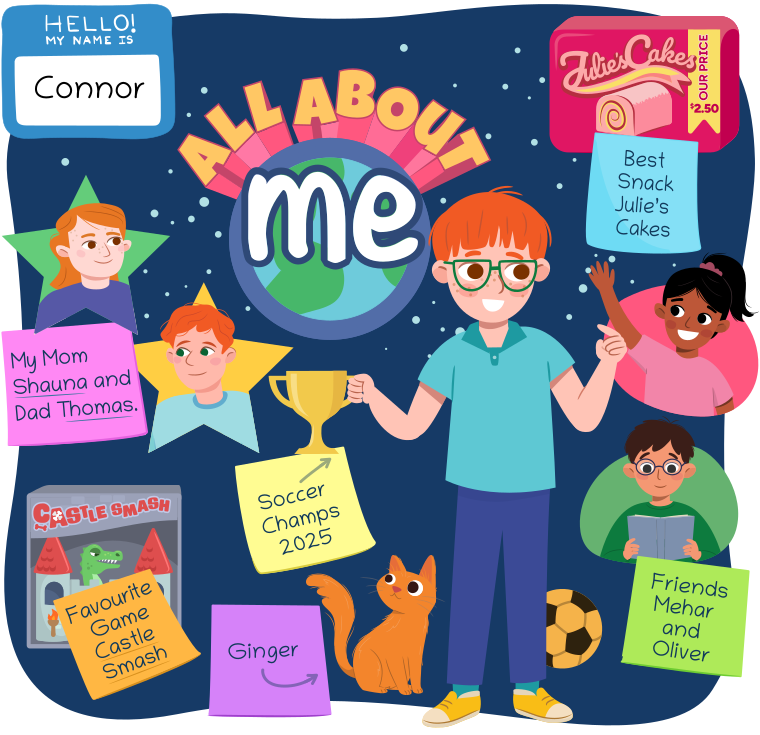
Now it is your turn. What parts of your identity would you like to share with others?
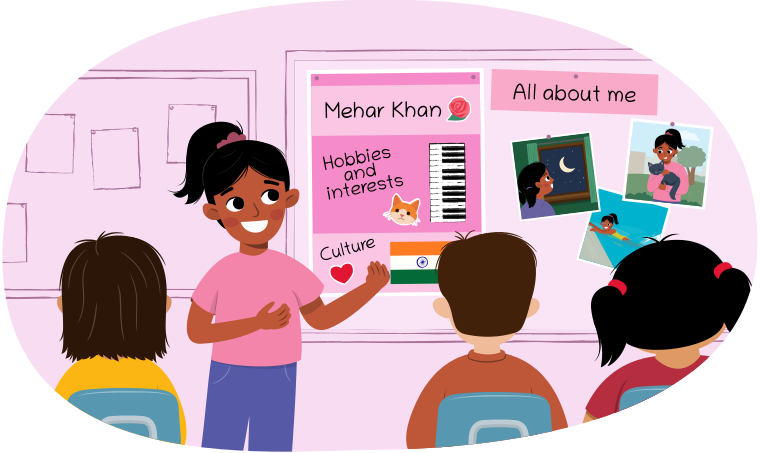
To consolidate your learning, you will create a poster that communicates parts of your identity. You will use your identity puzzle for the content of your poster.
A poster is an example of a visual or graphic text. This means that your poster will have a combination of text (words and sentences) and graphics (pictures and symbols).
You can use digital tools to create a digital poster, or you can use paper and art materials to create a physical poster.

Portfolio
Portfolio
1. Choose your content
Using your identity puzzle, place a checkmark or a star beside at least 7 different important pieces that show your identity. Think of an image you could draw or create for each word. Remember, you do not have to share any part of your identity that feels private.
2. Plan your layout
Layout is the way that the parts of a visual text are arranged. How do you want your poster to look? Which colours will you use? Which images will you add?
No matter how you plan to arrange your content, be sure that it is spaced evenly on the paper or digital page.
3. Design your poster
Use a computer application to create your digital poster, or use paper and drawing tools (e.g., pencil crayons, ruler, eraser) to create your physical poster.
4. Share your poster
You can hang your poster in a spot where others can see it, or you could share your poster with a learning partner, if possible.
Is your poster complete?
Check the following list to make sure your poster is complete.

Student Success
Think
- What helped you create this graphic text and communicate the important parts of your identity to others?
- How did an identity puzzle help you develop and organize your poster ideas?
- What strategies did you learn by creating this poster that you will be able to use in the future (e.g., Was it helpful to hear other students’ stories to help you develop your own ideas? Was it helpful to plan your poster before you started?).
- Why is it important to learn from others and explore different cultures while thinking about your own identity?
Write your responses to these questions in a journal of your choice and share them with a learning partner, if possible.
Reflection
How do you feel about what you have learned in this activity? Which of the next four sentences best matches how you are feeling about your learning? Press the button that is beside this sentence.
I feel...
Now, record your ideas about your feelings using a voice recorder, speech-to-text, or writing tool.