Learning goals
We are learning to…
- analyze poems about community and identity
- identify linking verbs
- draft poems that express our unique voice and lived experiences
Success criteria
I am able to…
- identity and analyze cultural elements about communities communicated in poems
- distinguish between action verbs and linking verbs
- draft one or more verses to describe my lived experiences of community
Thinking about community
Examine the following picture. What parts of this picture make you think of the word community?
Press the Community button to learn the definition of the word.
A community is a group of people that share something in common, or live, play, and work together.
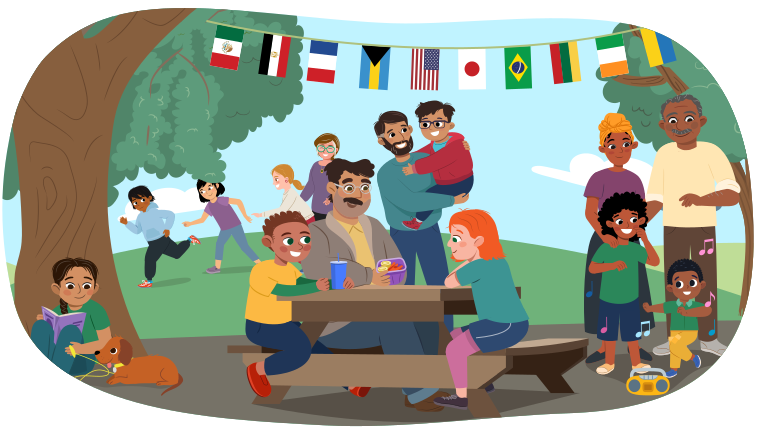
You may have observed
- different types of families
- people of diverse ages and cultures
- different types of flags
- dancing, conversations, and friendships
In this learning activity, you will explore different types of communities and consider what communities you are a part of. You will also create a poem that describes a community you belong to and what you value about it.
Many kinds of communities
Communities are groups of people who are connected by something they have in common.
There are many kinds of communities.
Check out the following flashcards to explore some examples of communities!
There are also communities within communities. For example, in your local neighbourhood community, you may belong to a club or be involved in sports. The groups of people who participate in those activities with you are also communities.

Pause and Reflect
Pause and reflect
What communities are you a part of? Write a list of your communities in a journal of your choice.
Learning communities

Reading Time
Reading time
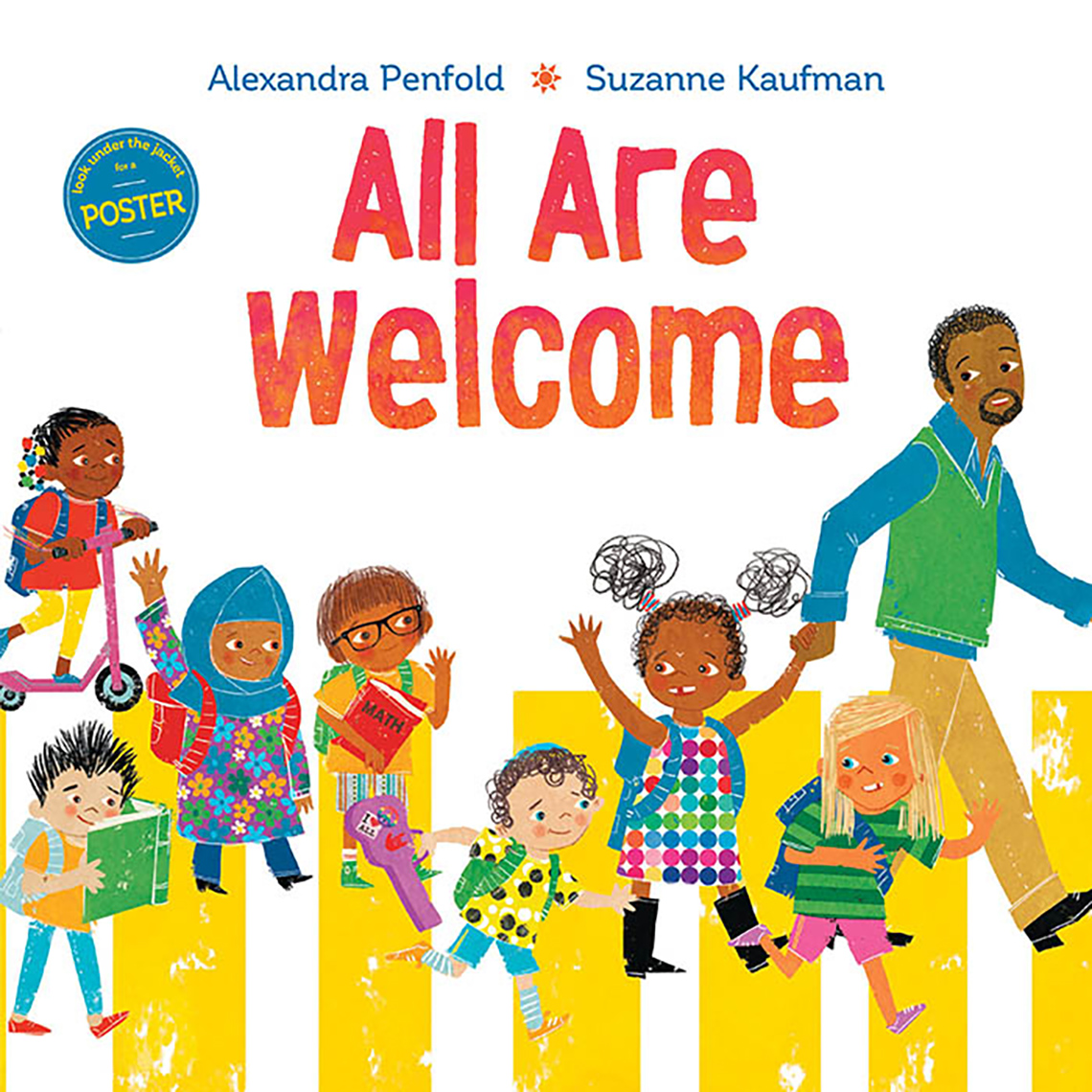
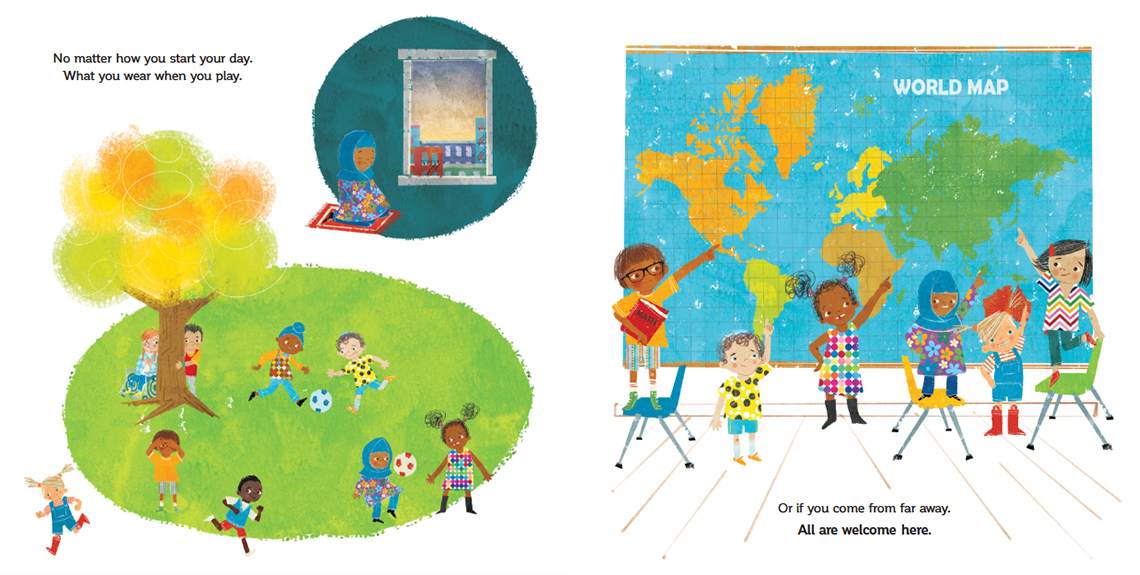
Read the following passage from the book All Are Welcome by Alexandra Penfold and illustrated by Suzanne Kaufman. As you read it, examine the images and consider what the author and illustrator are saying about schools and classroom communities.
- How do your own experiences connect to what this author is communicating about learning communities?
- In what ways is your learning community similar or different to the classroom or school in this book?
After reading
What are some of the important ideas from this passage about schools and learning communities? When you have an idea click to read some more suggested answers.
- Everyone is welcome in a classroom.
- Classroom communities are safe spaces.
- Members of a classroom community learn together and from each other.
- Members of a classroom community may come from many different places in the world.
Type of texts: reading rhyme
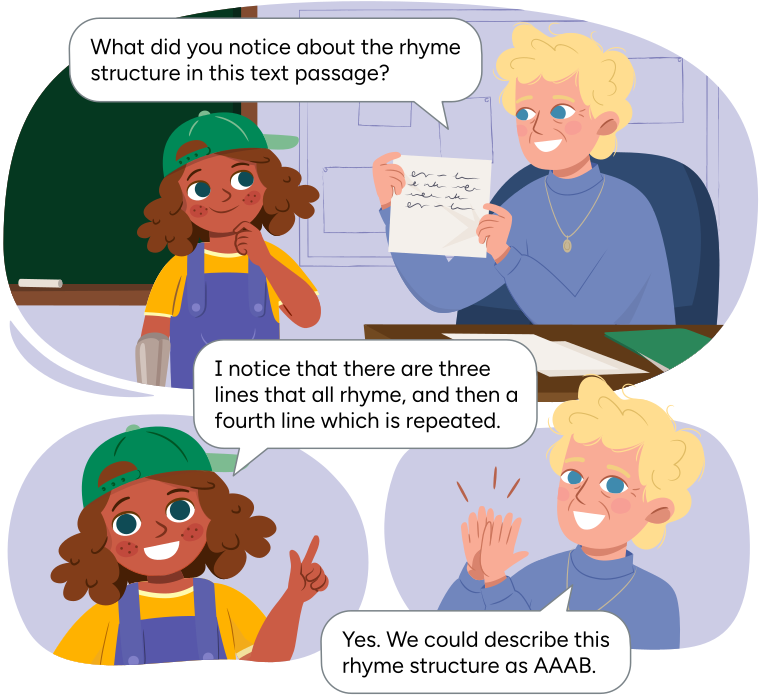
Librarian Amanda asks Gabby, 'What did you notice about the rhyme structure in this text passage?'
Gabby says, 'I notice that there are three lines that all rhyme, and then a fourth line which is repeated.'
Librarian Amanda says, 'Yes. We could describe this rhyme structure as AAAB.'

Try it
Try it!
Read the following text passage aloud and pay attention to how you use your voice. If possible, practice reading the poem to someone else, or use a voice recorder of your choice.
No matter how you start your day.
What you wear when you play.
Or if you come from far away.
All are welcome here.

Connections
Connections
Did you notice how the rhyming words all have the same vowel sound?
day
play
away
A repeating vowel sound in a text is called assonance.
Often words with assonance will not have the same ending. For example, even though the words day and obey are spelled differently, they are still rhyming words because they both have the same vowel sound (a).
Words with assonance also don’t have to be in a poem.
For example, find all of the words in this sentence that have a long e (ee or ea) sound:
Many people meet on the beach on a summer’s eve.
Click the Answer button to reveal the words that have a long e sound:
Many people meet on the beach on a summer’s eve.
There are 5 different ways of making the long e sound in this sentence.
Writers use assonance to add rhythm to their text. It also allows writers to emphasize different words.
Next time you read a text, watch for how writers use assonance in their writing!
Fluency self-assessment
Now listen to yourself read the passage one more time. Which of the following could you try working on next time to improve your fluency?
Press the Fluency Definition button to learn what fluency means.
Reading the words correctly, with an appropriate speed, and expression.
- I read all of the words correctly.
- My reading was not too fast and not too slow.
- My voice went up and down at appropriate spots to add interest for the listener.
- I was able to emphasize (or bring attention to) the rhyming words with my voice.
Cultural community
Now that you have thought about communities we learn in, let’s think about communities we live in.
“Up Home”
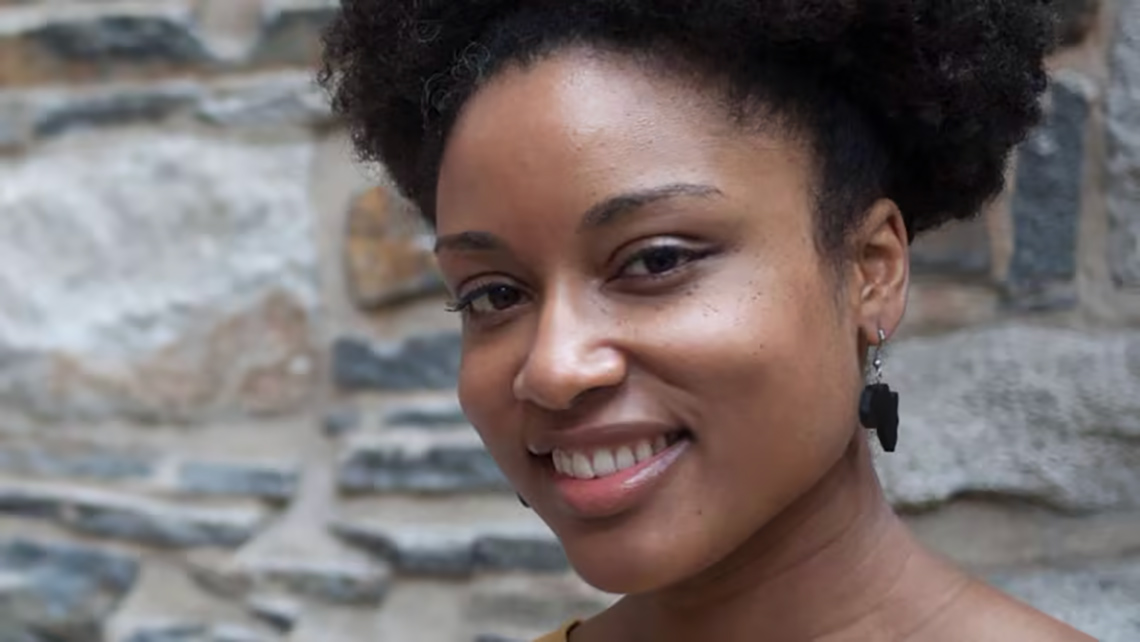
Author and poet Shauntay Grant wrote the book Up Home with illustrator Susan Tooke as a thank you poem to the community of North Preston. It tells about the history, landscape, culture, and people of a community that is very special to her.
The community of North Preston
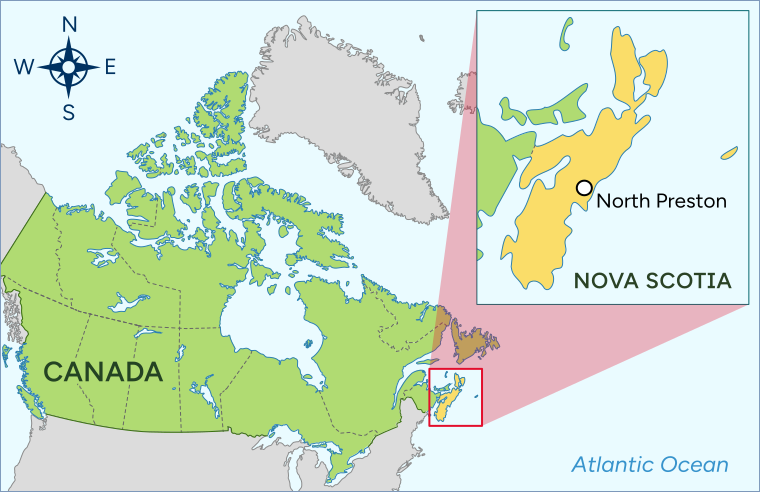
Sometimes, people living together in a community also share cultural similarities, like their history, religion, or language. An example of this is the community of North Preston, Nova Scotia.
North Preston was settled in the 1700s and 1800s by Black refugees, freedom seekers, and settlers who immigrated from parts of The United States of America and Jamaica. It is still one of the largest Black communities in Canada today.
Let’s check!
Select the correct answer, then press Check Answer to see how you did.

Brainstorm
Brainstorm
A community is a group of people that share something in common, or who live, play, or work together.
Examine the cover and the following illustrations from the book, “Up Home.”
How do you think this book might show community?
Write your ideas in a journal of your choice and share them with a learning partner, if possible.
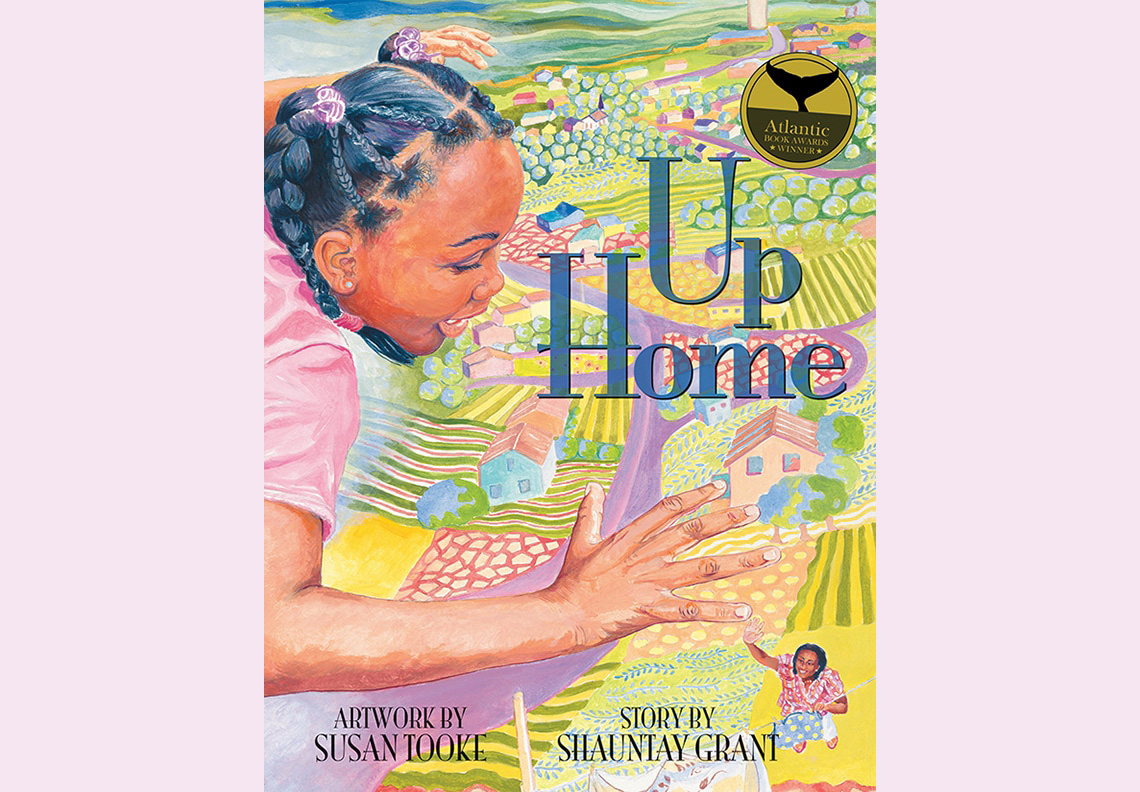
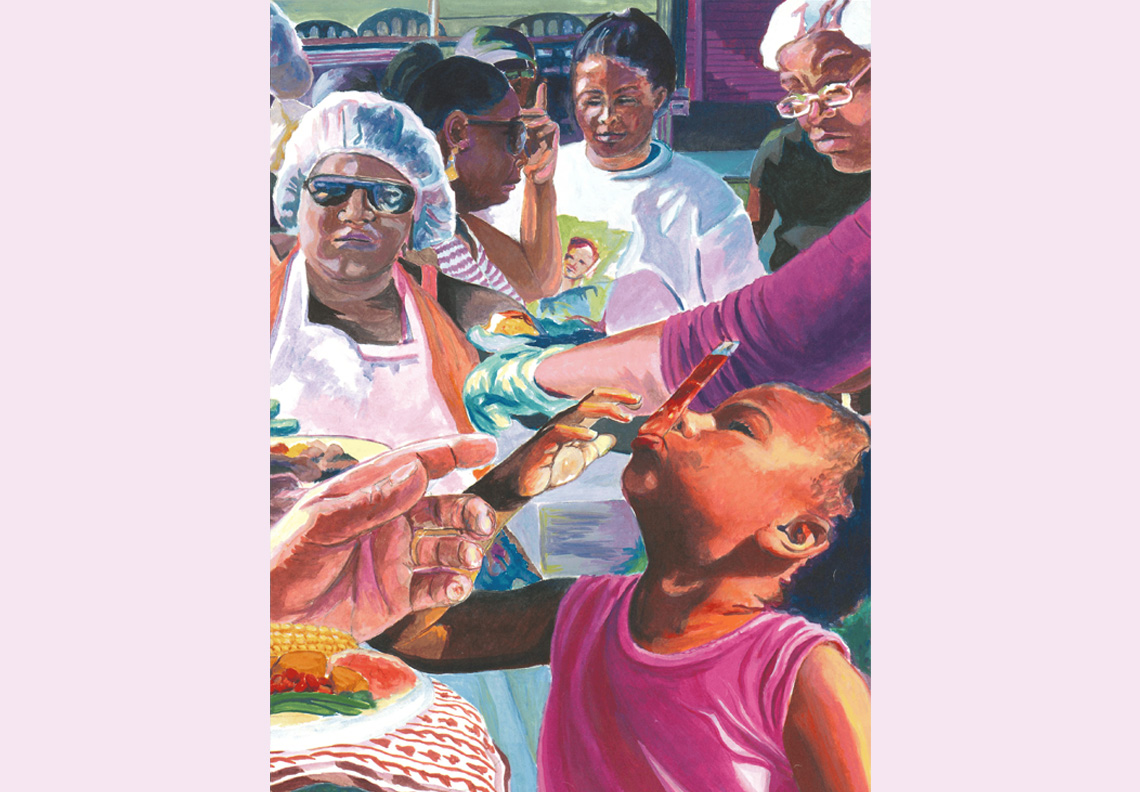
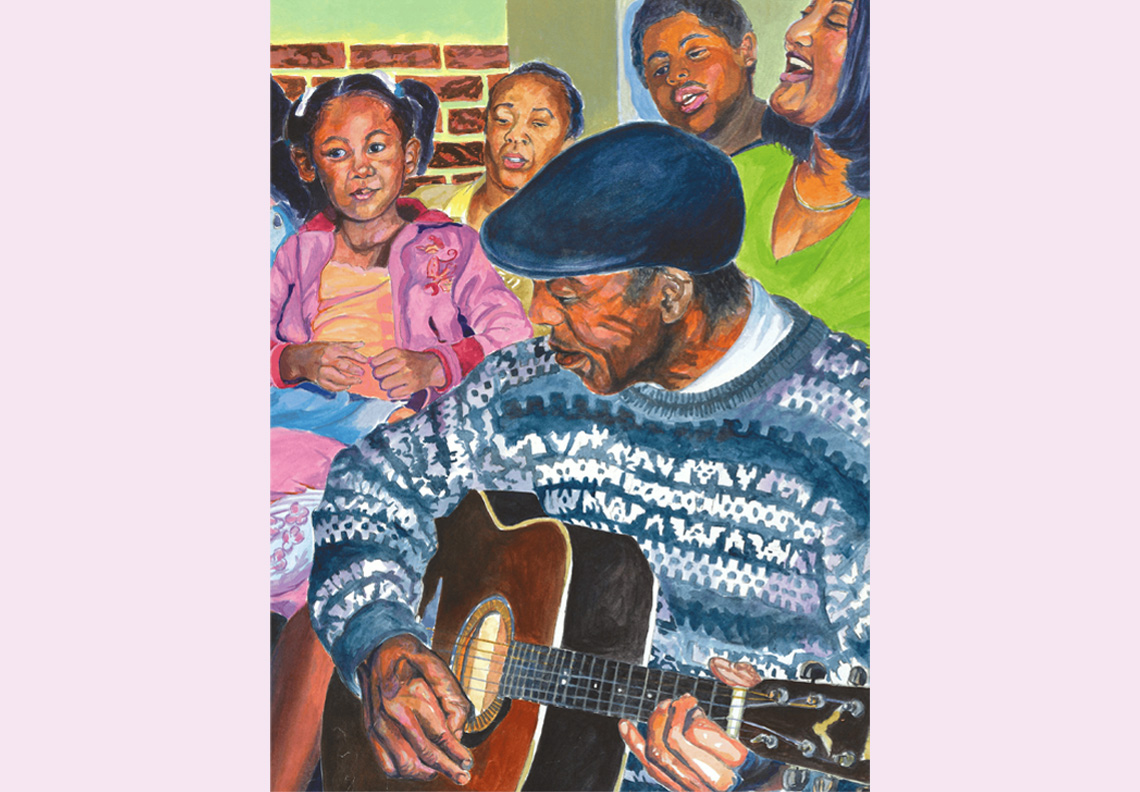
Image 1
The cover of the book Up Home by Shauntay Grant. The cover shows a large image of a young girl looking down. Below her, the view of a city filled with homes and trees. A woman waves at the young girl from below.
Image 2
Illustration from the book Up Home depicts a group of community members gathered together. In the centre of the illustration, a young girl in a pink shirt is shown eating something.
Image 3
An illustration from the book Up Home. In the illustration, a middle-aged man in a blue sweater is shown playing the guitar in front of a crowd of children and adults.
Descriptions of community in the book Up Home
Now that you’ve examined the images, let’s read an excerpt from the book.
Press Excerpt from Up Home button to access the excerpt.
“and I remember hearin’
about lakes freezin’ over
blueberries
mayflowers
roseberries
car top sleds
green apples
fried potatoes & baloney
corned beef & cabbage
molasses & bread
hittin' ball
drinkin’ brooks
big church meetings out in Cherry Brook
baptisms in the lake...”
The author describes several parts of community life in this excerpt:
- food
- faith (religion) and culture
- stories and history
- games and activities
In this excerpt, the author describes different plants, food, and activities from this community.
Read the text again and try to visualize all of these things in your mind.
Visualization is when we picture something in our minds by using our imagination. It is an important reading strategy because it helps us connect to the text and experience the story more deeply.
Types of texts
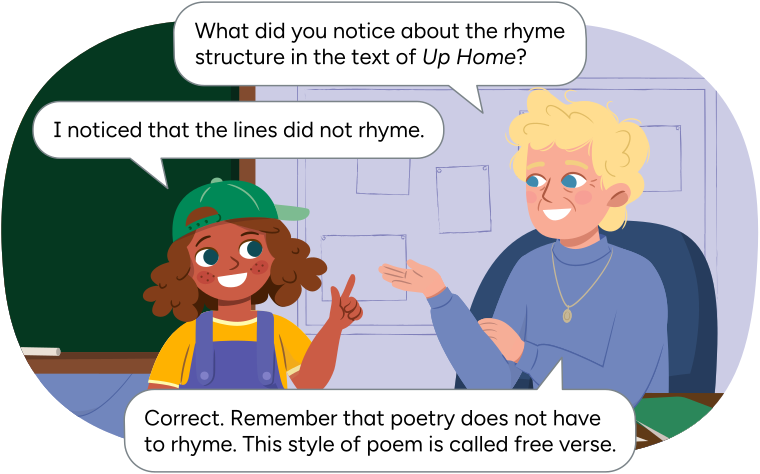
Librarian Amanda asks Gabby, 'What did you notice about the rhyme structure in the text of 'Up Home'?
Gabby says, 'I noticed that the lines did not rhyme.'
Librarian Amanda responds, 'Correct. Remember that poetry does not have to rhyme. This style of poem is called free verse.'
Making connections
In this learning activity, you have explored different types of communities.
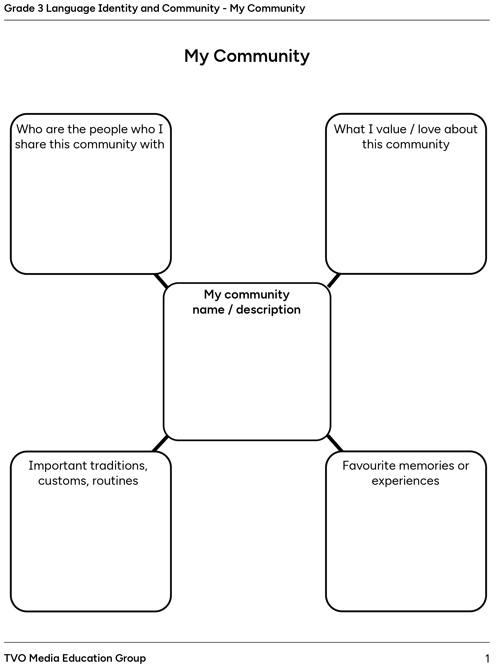
Take a moment to think of a community that you belong to. It may be a classroom community, or it may be in your local neighbourhood. It may be a faith community, or it may be a cultural community. Use the following fillable My Community Graphic Organizer to record information about your chosen community. If you would like, you can use speech-to-text or audio recording tools to record your thoughts.
Linking verbs
Verbs are often referred to as “action words” but verbs can also be words that express a state of being. These are called linking verbs.
The most common linking verbs are: is, are, were, and was.
Pause and Reflect
Pause and reflect
Examine the following example:
Spot is a dog.
Can you spot the linking verb?
Press the Answer button to check your answer .
Spot is a dog.
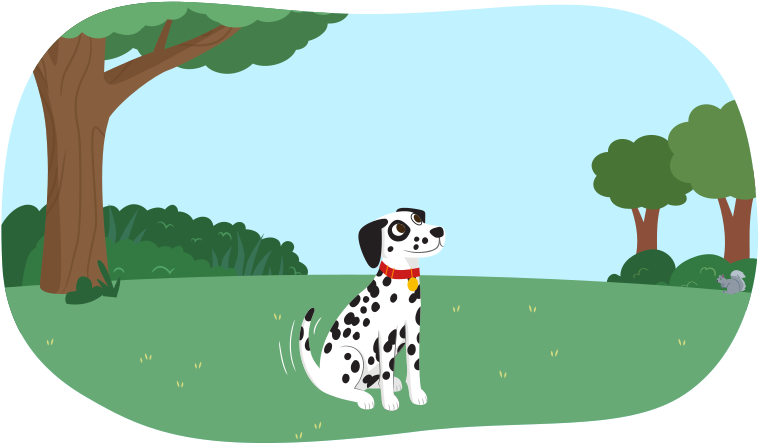
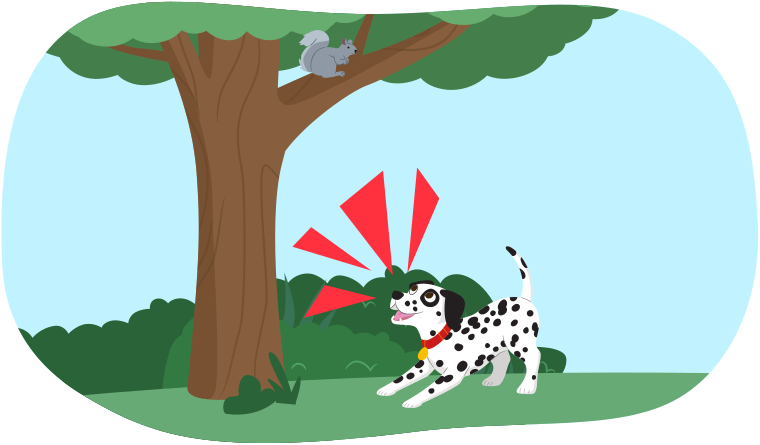
Spot is a dog. He barks at squirrels.
Can you spot the action verb?
Press the Answer button to check your answer.
He barks at squirrels.
Action verb: barks.
Let’s look for linking verbs and action verbs in a verse from the book, All Are Welcome:
“Or if you come from far away.
All are welcome here.”
Can you spot a linking verb in this text?
Can you spot an action verb in this text?
Press the Answer button to identify the linking verb and action verb in the verse you just read.
“Or if you come from far away”. (“Come” is an action verb)
All are welcome here. (“Are” is a linking verb)
Sort the following verbs into linking and action verbs.
Fill in a linking verb that makes sense for the sentence. Select the correct answer, then press Check Answer to see how you did.
What is a community?
Using the vocabulary and ideas that have been introduced to you, how would you describe a community?
Press the Helpful Vocabulary button for some ideas.
- community
- welcome
- different talents and abilities
- faith
- culture
- neighbourhood
- learn
In a journal of your choice, write down at least 3 sentences that explain what a community is. Then, share your explanation of what a community is with a learning partner or record yourself on a device of your choice.
Putting it all together
In the action phase of this learning activity, you reflected on the communities that you belong to. You also read texts about community which were written in verse.
To consolidate your learning, you will write one or more verses about a community that is special to you.
Try it!
Try it!
- Review your “My Community” organizer.
- Choose one or more ideas from your organizer that you would like to write about.
You do not need to include everything!
For example, you could choose to write a verse just about the special music or songs that are part of your community, or you could choose to write about the delicious food that is eaten in your community. - Brainstorm some adjectives (describing words) that relate to your selected ideas. Consider including details from the 5 senses:
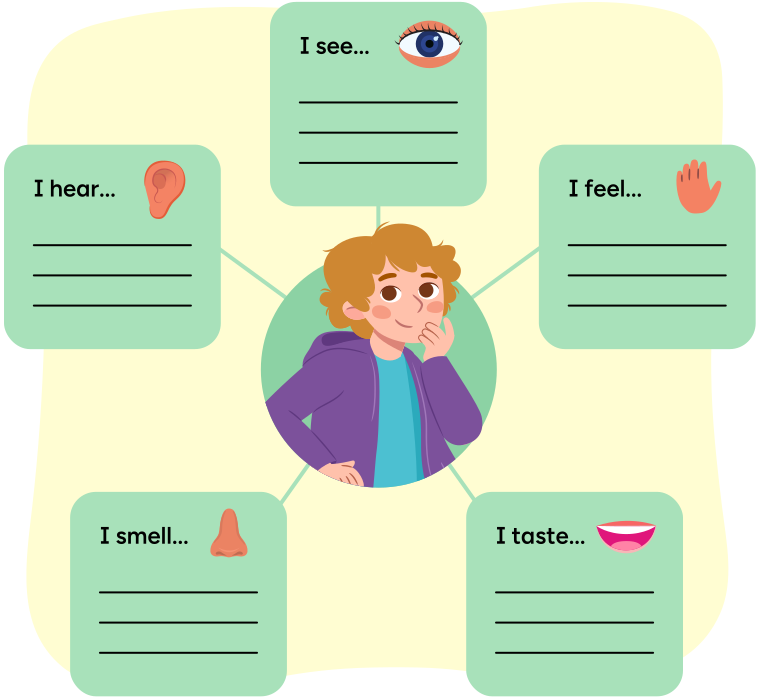
For example, if you were writing about special foods during a summer community event, you might describe the sweet taste of ice cream, or the heat of the corn on the cob, or the sound of your friends and family chatting during the get-together.
- Your verse should be at least 4 lines long, but feel free to add as many lines or verses as you wish. You can choose to use some rhyming words, or not.
- When you are happy with your verse, check your writing for any spelling errors.
The following verse has an ABAB rhyming scheme, but yours does not have to rhyme, or it could have a different rhyming scheme.
- “Steaming corn burning my fingers,
- Ice cream, sweet on my spoon,
- Friends and family gather and linger,
- Laughing under the silvery moon.”
- When you are happy with your verse, check your writing for any spelling errors.
- Publish your poem in a manner of your choosing or present it by reading it aloud, if possible.
Reflection
How do you feel about what you have learned in this activity? Which of the next four sentences best matches how you are feeling about your learning? Press the button that is beside this sentence.
I feel...
Now, record your ideas about your feelings using a voice recorder, speech-to-text, or writing tool.