Learning goals
We are able to…
- explore the concepts of identity, self, and sense of belonging in texts and demonstrate an understanding of the contributions, lived experiences, and perspectives of many different people, including those in Canada
- read and listen to texts by First Nations, Métis, and Inuit creators to show an understanding of different parts of First Nations, Métis, and Inuit histories, cultures, relationships, communities, groups, nations, and lived experiences
- use effective listening skills by expressing interest, asking a variety of questions, and restating what we heard
- identify explicit and implicit perspectives communicated in a text and provide examples and describe how these perspectives could influence an audience
- brainstorm and develop ideas about different topics using simple strategies, sources, our own learning, and our own experiences
Success criteria
I am able to…
- explore two Raven’s Quest videos featuring Peyton and Morgan and take notes on what they share about their Métis culture and community
- identify explicit and implicit perspectives in ourselves and those shared in the videos
- create three questions that would help me deepen my understanding of Métis culture
Notice and wonder
Explore the following flag.
Do you recognize this flag?
What do you notice? What do you wonder?
Share your thoughts with a partner, if possible.


Métis
The Métis flag was first introduced around 1815.

The white symbol in the middle of the flag is the infinity symbol. This symbol shares the way two cultures, European and First Nation, joined to create the Métis culture.
“Our flag represents the faith that the Métis culture shall live on forever. We are Indigenous to this country because we were born of the land long before Canada was a country.”
– Audrey Poitras, President, Métis Nation of Alberta
Source: Métis Nation of Alberta, URL: http://albertametis.com, Published 2020, Accessed 13/01/2025.
Métis means a person who self-identifies as Métis, is distinct from other Aboriginal peoples, is of historic Métis Nation ancestry, and is accepted by the Métis Nation.
The area known as the “historic Métis Nation Homeland” includes the three prairie provinces and extends into Ontario, British Columbia, Northwest Territories, and the northern United States.
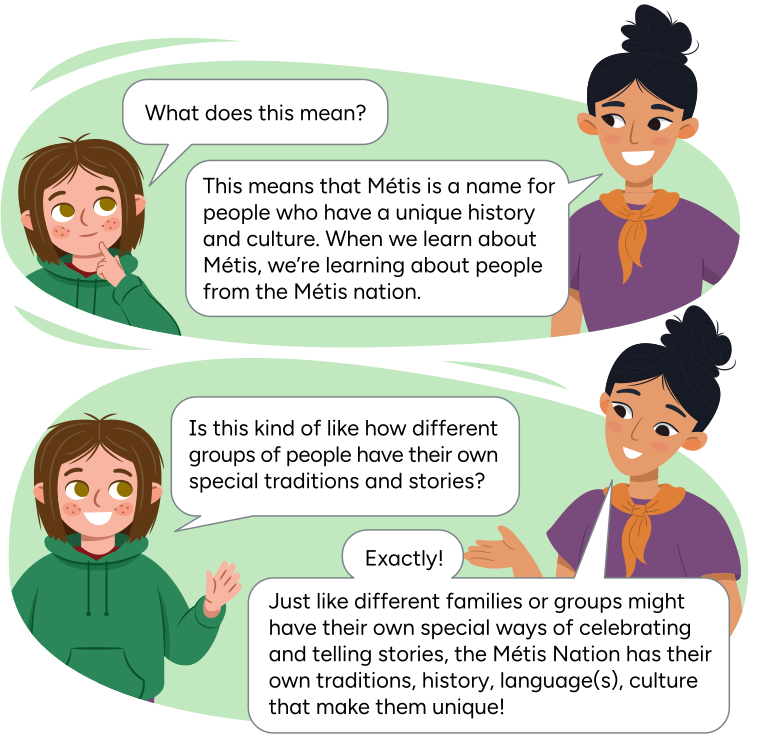 Description
A conversation between student Clara and teacher Chelsea.
In image 1:
Student Clara says, what does this mean?
Teacher Chelsea responds saying, this means that Métis is a name for people who have a unique history and culture. When we learn about Métis, we’re learning about people from the Métis nation.
In image 2:
Student Clara says, is this kind of like how different groups of people have their own special traditions and stories?
Teacher Chelsea responds saying, Exactly! Just like different families or groups might have their own special ways of celebrating and telling stories, the Métis Nation has their own traditions, history, language(s), culture that make them unique!
Taking notes
When we explore new information, we can take notes to help us remember different facts and ideas.

- We can take notes to help us record new information
- We can use words, drawings or short sentences when we take notes
- We should try and use our own words while taking notes
- We can record questions in our notes
Perspectives
Sometimes we know what our perspective is, and we can explain it to other people. We call this an explicit perspective.
The prefix ex- means out, so explicit perspectives are the ones that can be seen by others or easily explained.
Sometimes we don’t even realize we have a perspective on something! We call this an implicit perspective.
The prefix im- means inner, so implicit perspectives are the ones that are internal or that we might not even know are there.

Pause and Reflect
Pause and reflect
Why might it be important to learn about different perspectives?
Why do you think it might be important to learn about our own implicit perspectives?
Let’s meet Peyton!
Peyton is an 8-year-old Métis girl from Winnipeg, Manitoba. Peyton loves to jig and shares her experience learning and teaching a traditional Métis jig.
As you watch the following video, take notes of the information and perspective that Peyton shares.
Pause and Reflect
Reflection questions
Record your answers in a journal of your choice. If possible, share your answers with a learning partner.
- In what ways did this video increase your understanding of Métis culture?
- How might Peyton’s perspective and experiences help the people watching the video understand her Métis culture?
- Can you identify any of Peyton’s explicit or implicit perspectives?
- What questions might you ask Peyton to better understand her Métis culture and perspective?
Press Question for Peyton for an example of a question.
Peyton, are there any stories or teachings from your family that are special to you?
Let’s meet Morgan
Morgan is a 12-year-old Métis girl from East Selkirk, Manitoba. She shares different parts of her community and her culture in different ways, including traditional beadwork and Métis fiddle music.
As you watch the following video, take notes of the information and perspectives that Morgan shares.
Explore the following facts about Métis culture.
Did you know?
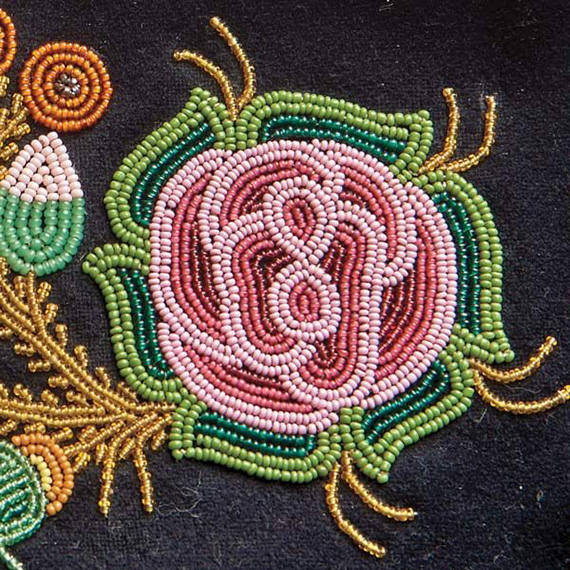
The Métis are known as The Flower Beadwork People by the Dakota and the Cree because the flower is a common symbol in their beadwork art and embroidery.
The Métis have worn sashes since the 1700s. It is an important symbol in Métis culture. The sash is also very practical.
It can be used in the following ways:
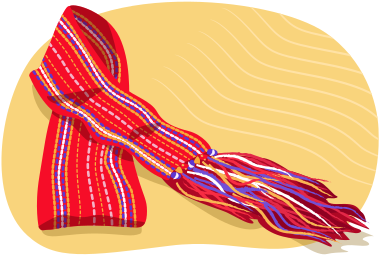
- to pull canoes
- attach a bag of materials to a person’s back
- as a dog harness
- as a towel or washcloth
- to carry safety supplies
Art forms in Métis communities, just like in First Nations and Inuit communities, are not only beautiful but used for different purposes.
Pause and Reflect
Reflection questions
Record your answers in a journal of your choice. If possible, share your answers with a learning partner.
- Did this video increase your understanding of Métis culture in any way?
- How might Morgan’s perspective and experiences help the people watching the video understand her Métis culture?
- Can you identify any of Morgan’s explicit or implicit perspectives?
- What questions might you ask Morgan to better understand her Métis culture and perspective?
Press Question for Morgan for an example of a question you might ask Morgan.
Morgan, how do you hope to continue your Métis traditions as you grow older?
Grammar time!

What are prepositions?
Examine the following image and sentence:

She put the book on the table.
In this sentence, the word on is a preposition.
What do you think prepositions show? Record your answer in a journal or using another method of your choice. Then press Sample Answer to check your thinking.
Prepositions show us where something is.
Examples of prepositions
Here are some examples of prepositions:
- in
- at
- on
- in front of
- next to
The following images illustrate these prepositions. Examine each image and read the sentence that goes with it.
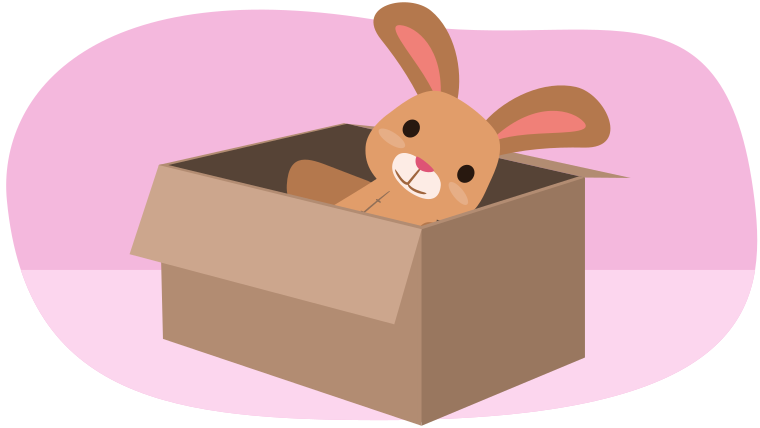
The toy is in the box.
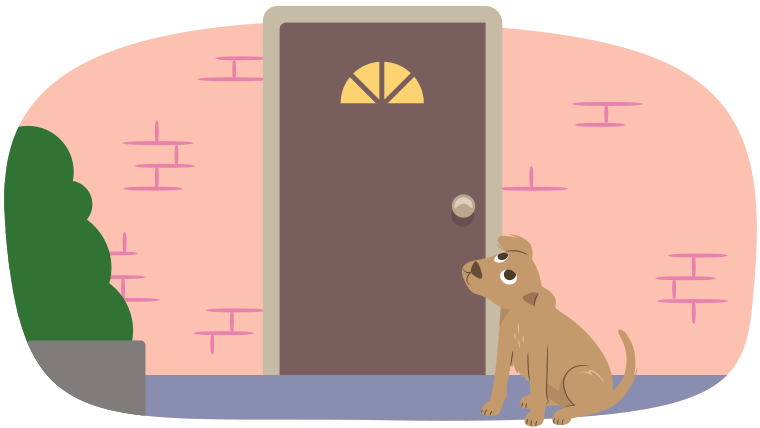
The dog is at the door.
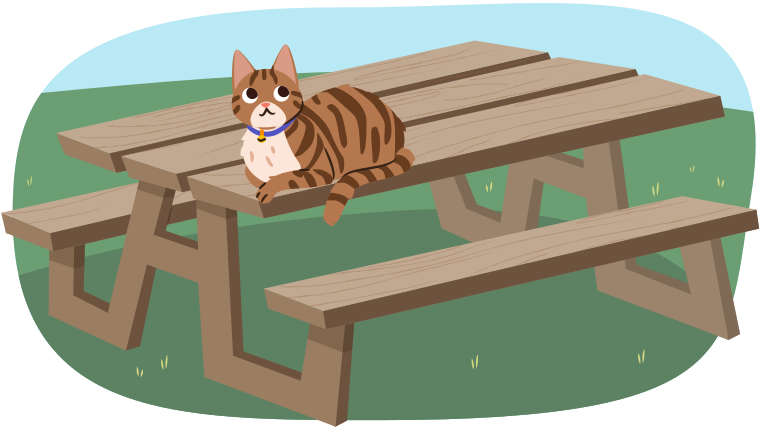
The cat is on the table.

The dog is in front of my brother.
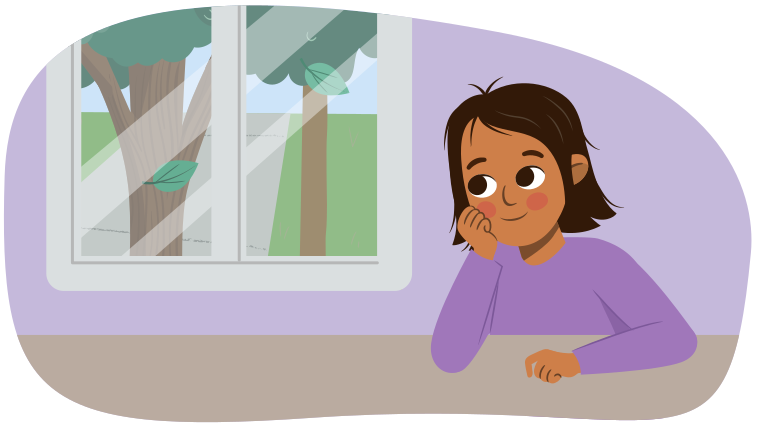
The girl is next to the window.
Check your understanding!
Now try these multiple-choice questions. Which preposition fits the picture? Select the correct answer, then press Check Answer to see how you did.
Good work! Now that you have a good understanding of prepositions, try practicing some letters in cursive!
Try it in cursive
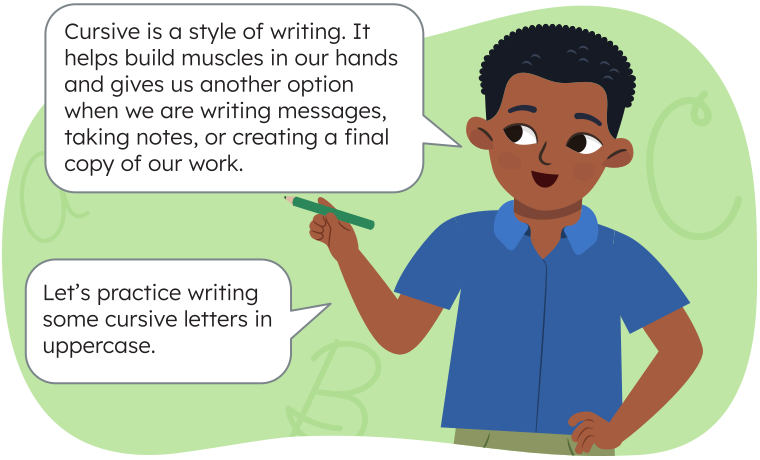
A student with speech bubbles, reading: Cursive is a style of writing. It helps builds muscles in our hands and gives us another option when we are writing messages, taking notes, or creating a final copy of our work. Let’s practice writing some cursive letters in uppercase.
| Cursive | |
|---|---|
| F | 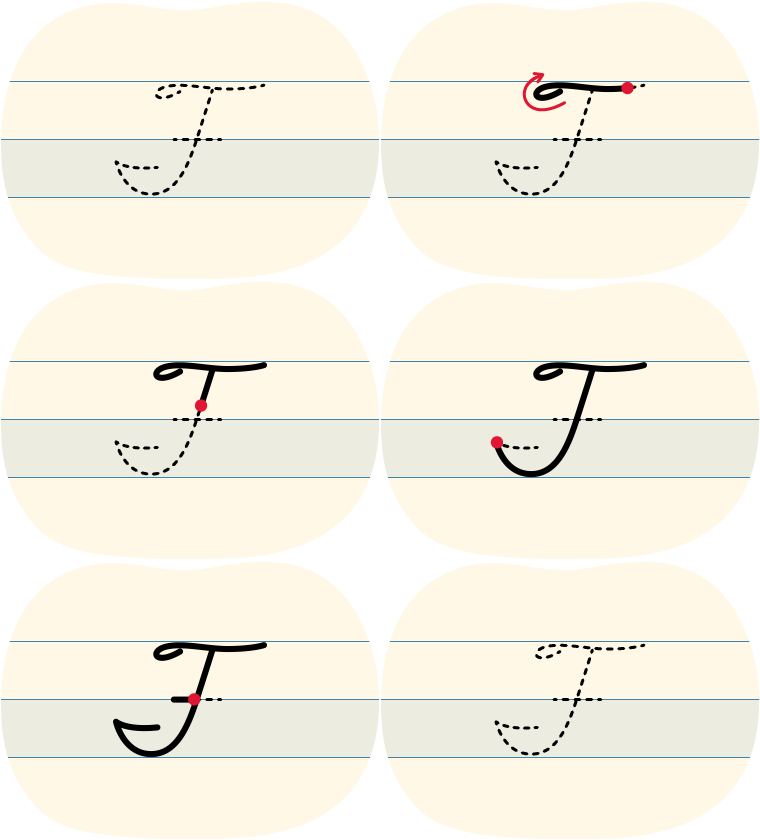 |
| G | 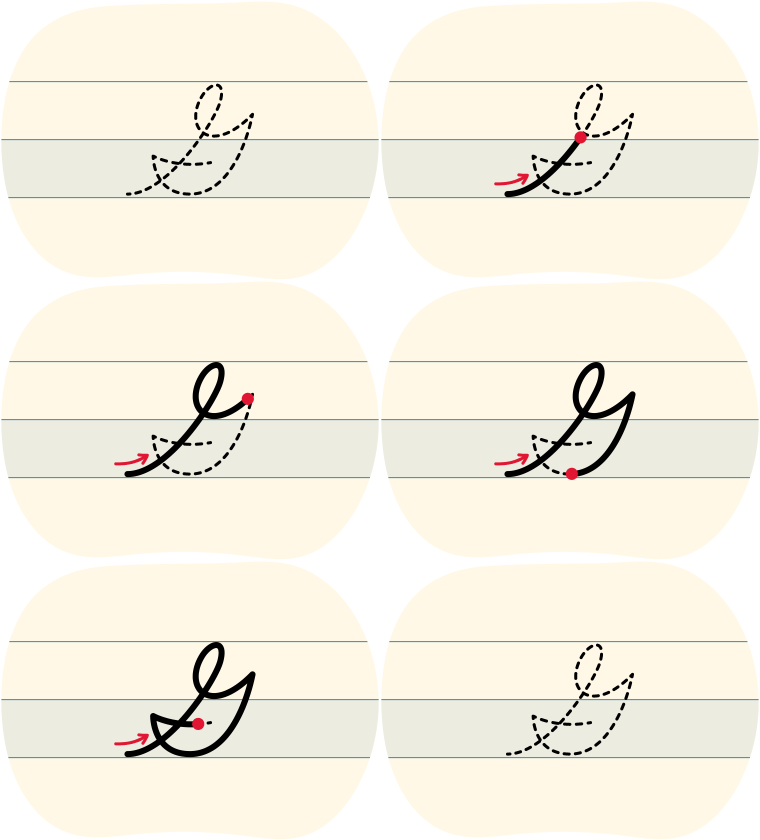 |
| H | 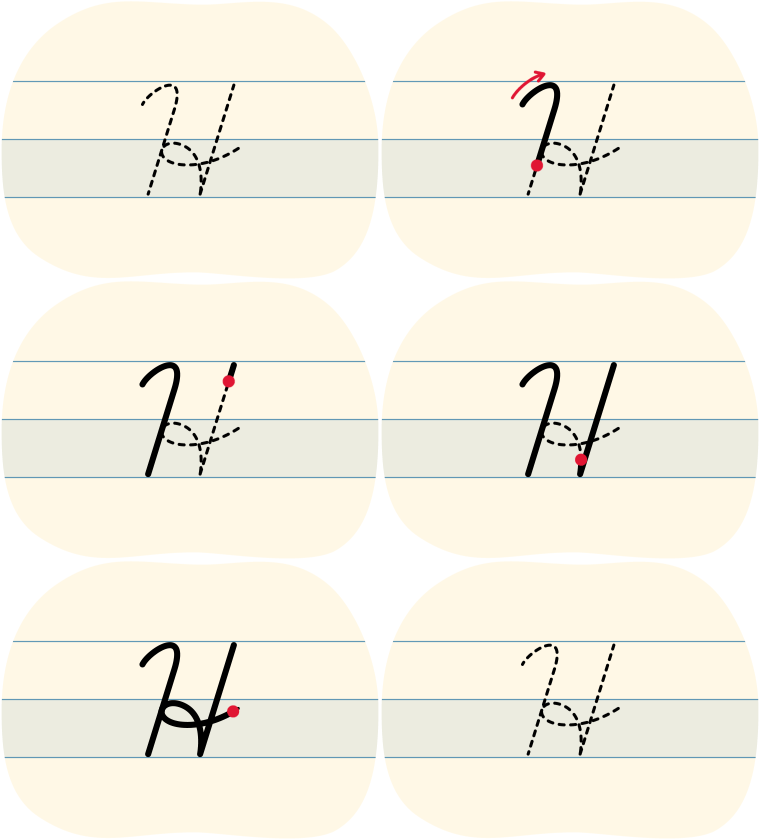 |
| I | 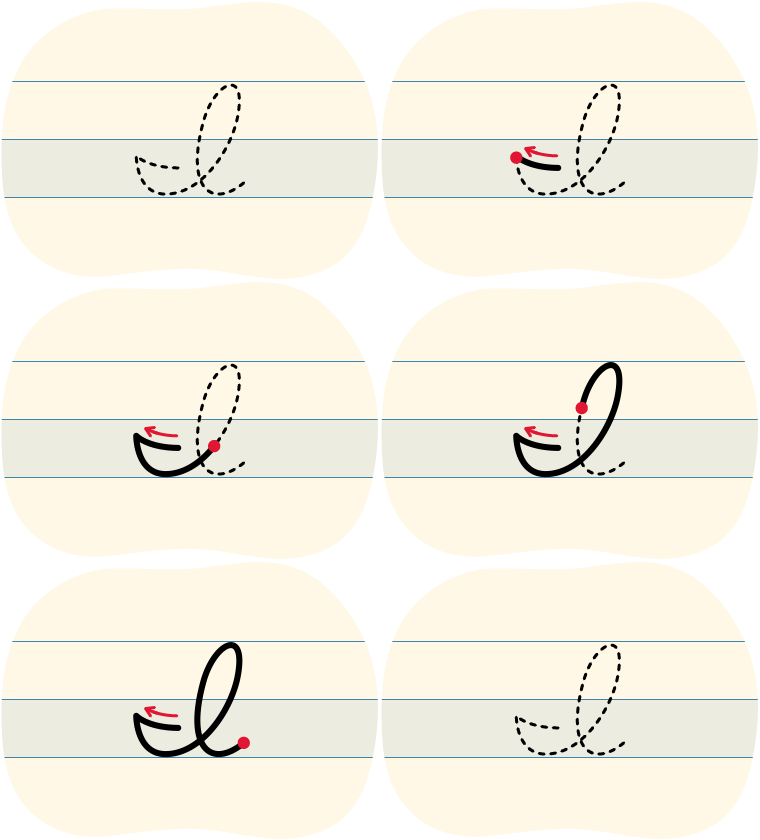 |
| J | 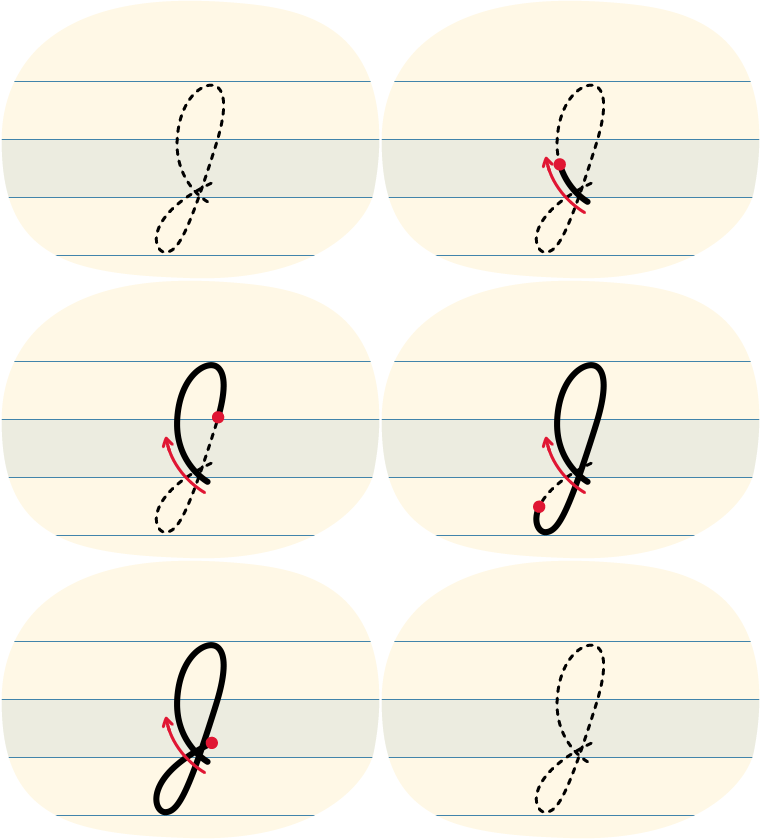 |
Before you begin, what do you notice about the shape of each cursive letter?
Press the Possible Answer button to learn more.
The uppercase letters start at different levels. Some of the letters have loops and they each create a unique shape.
Tips for cursive letters
- Follow the arrows, sometimes when we write in uppercase we can start from the top, middle or the bottom
- Try to keep the pencil on the page until you are done the letter
- Create a finger space before you continue to the next letter
- Try to press gently as you write so that your hand can move easily across the page


Making connections with thoughtful questions
Consider what you have learned about perspectives, symbols, and elements of the Métis culture.
Do you have any questions for Peyton or Morgan about their experiences or about Métis culture?
- How are Peyton and Morgan finding ways to continue the Métis history and culture in their lives today?
- What kinds of questions would help you better understand their perspectives?
- What would you like to know more about?
- What kinds of connections can you make between your own lived experiences and what Peyton and Morgan shared in the videos?
You will create three questions that you would like to ask Peyton and/or Morgan.
Tips for asking questions
- Be respectful of people’s perspectives and culture.
- Ask open-ended questions.
What is an open-ended question? Teacher Chiara explains.
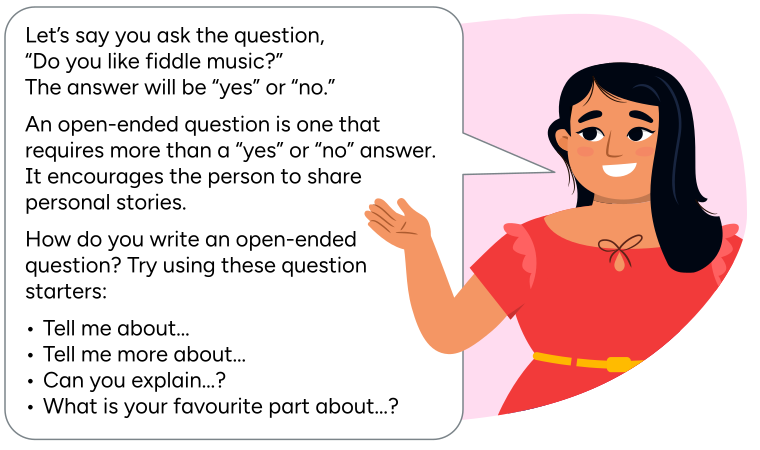
Teacher Chiara shares, 'Let's say you ask the question, "Do you like fiddle music?" The answer will be "yes" or "no."
An open-ended question is one that requires more than a "yes" or "no" answer. It encourages the person to share personal stories.
How do you write an open-ended question? Try using these question starters:
Tell me about…
Tell me more about…
Can you explain…?
What is your favourite part about…?'
Your task
Write three open-ended questions for Peyton and/or Morgan in a journal, or record them using the method of your choice. You may wish to use these question starters:
- Tell me about…
- Tell me more about…
- Can you explain…?
- What is your favourite part about…?

If possible, share your questions with a learning partner. Working with a partner is a great opportunity to clarifyyour questions and practise asking them. It may also help you think of more details to add.
Final reflections
You will now describe your personal thoughts and feelings about the ideas from the videos in this learning activity. In a journal of your choice, consider the following questions:
- How did you feel after hearing Peyton’s and Morgan’s stories?
- Did their experiences remind you of anything from your own life or culture? How does making these personal connections help you better understand their experiences?
- How could Peyton’s and Morgan’s perspectives influence the people watching or listening to their story?
- How does learning about different perspectives and cultures help us be more inclusive
- How do these ideas make you think about diversity and inclusion in Canada?
Reflection
How do you feel about what you have learned in this activity? Which of the next four sentences best matches how you are feeling about your learning? Press the button that is beside this sentence.

I feel...
Now, record your ideas about your feelings using a voice recorder, speech-to-text, or writing tool.