Learning goals
We are learning to…
- identify themes in Inuit identity and culture to better understand Inuit perspectives, ways of being, and diversity throughout regions of Canada
- gather, evaluate, and use information, considering various perspectives, and demonstrate learning
- use non-fiction text features to locate information quickly and efficiently in order to extend our learning
Success criteria
I am able to…
- identify unique elements of Inuit culture to better understand Inuit ways of being and diversity throughout regions of Canada
- create questions to extend my learning after considering Inuit perspectives
- find information quickly using non-fiction text features such as table of contents, glossary, and index
Inuit communities

Did You Know?
Did you know?
In Canada, the Inuit homeland is called Inuit Nanungat, which includes Nunavut, Inuvialuit (the coasts of the Northwest Territories and the Yukon), Nunavik (Northern Quebec), and Nunatsiavut (Newfoundland and Labrador).
The Inuit are original people from the Arctic and northern regions of Canada, Alaska, Russia, and Greenland.
Inuktitut is a language spoken by the Inuit.
As we work towards Truth and Reconciliation, information about lands and territories are constantly being updated. The following map was created using information available as of March 2022 from Inuit Tapiriit Kanatami.
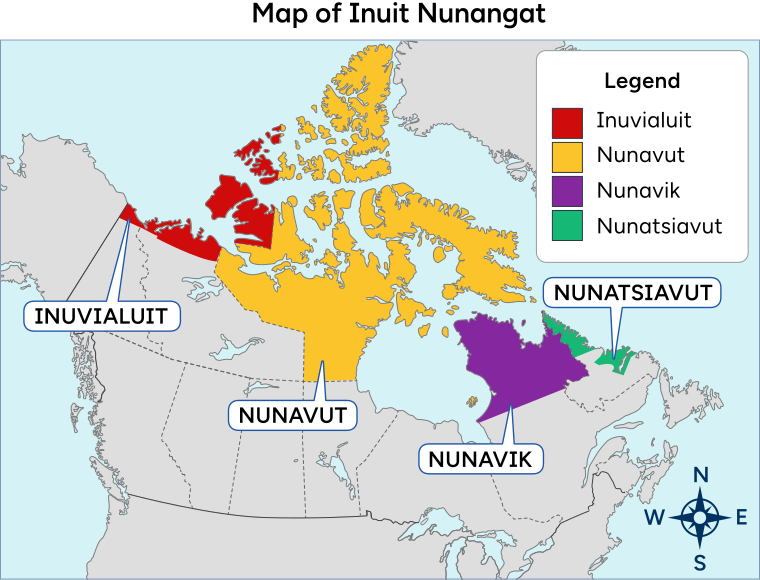
A map of Inuit Nunangat, with labelled provinces and territories, and a legend of Inuit Nunangat regions. There are four Inuit Nunangut regions: Inuvialuit (in the Yukon and the Northwest Territories), Nunavut, Nunavik (in Northern Quebec) and Nunatsiavut (in Labrador).
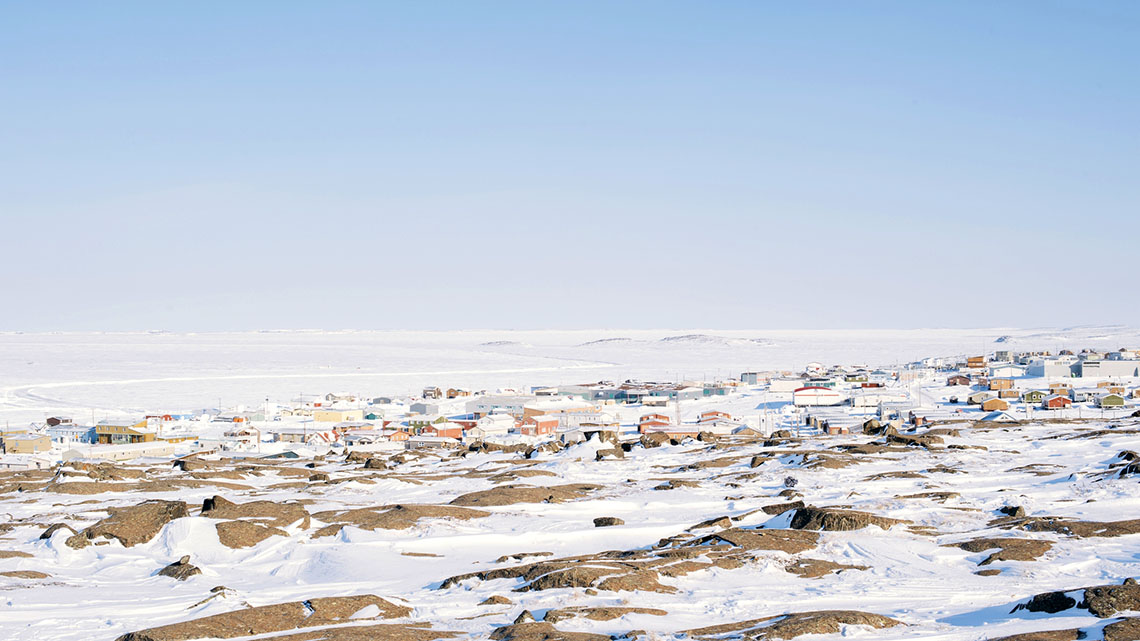
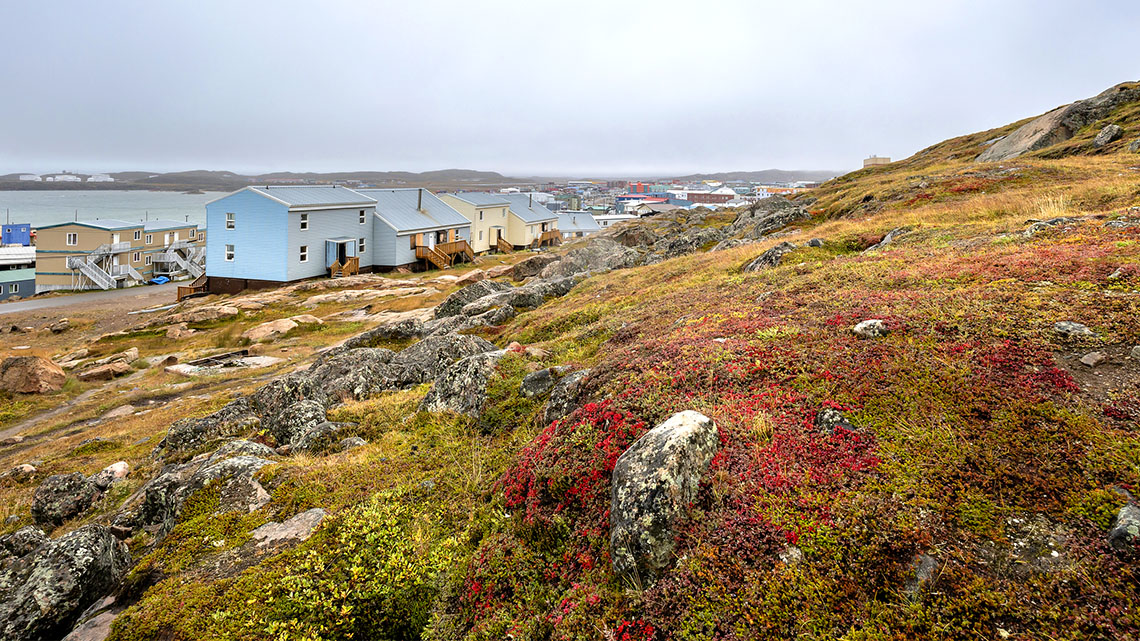
This region in northern Canada is called the tundra. The tundra is a part of the world where it is very cold, and the ground is often frozen. Usually there are no trees, but during the summer there are many small plants and flowers. Polar bears, arctic foxes, and seals are examples of animals that live in the tundra.
Inuit have learned to survive on the land and thrive in this harsh climate. Explore the following images of the Arctic in the summer and winter.

Pause and Reflect
Pause and reflect
Do you have questions about the Inuit or about the Arctic and northern regions of what is now commonly referred to as Canada?
Write down two of your questions in your notebook or in another method of your choice.

Exploring research methods with non-fiction text
In this learning activity, we will be exploring traditional ways of life for the Inuit through diverse forms of non-fiction text. Let’s check out how to we can learn to look for information in non-fiction texts.
Non-fiction texts are texts that are true. They have special features such as:
- table of contents
- glossary
- index
- headings/subtitles
- illustrations/photos
- captions
- bold and italicized words
These features help us find information quickly and easily.
Explore the following image for examples of non-fiction text features.
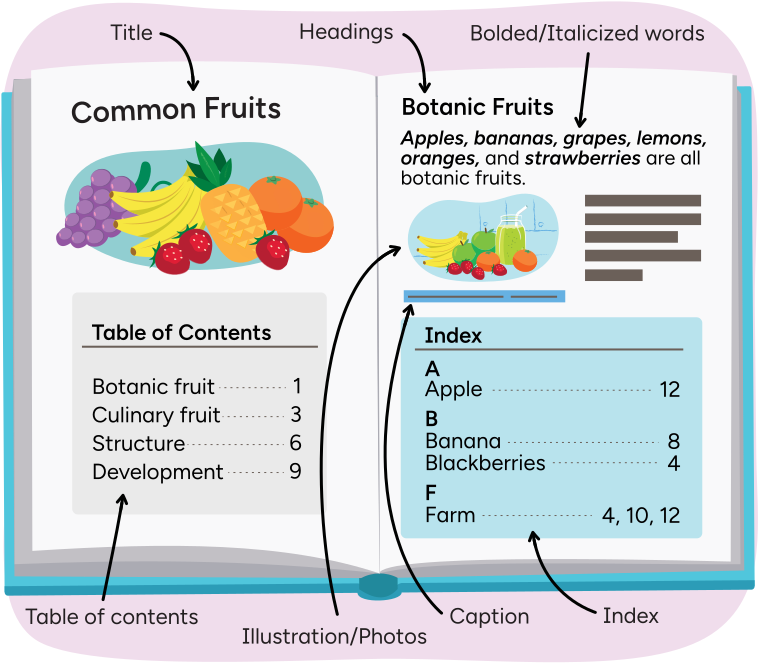
An example of a non-fiction text. It has a title. The table of contents has a list of the text's headings next to their page numbers where the headings are located.
There are headings for new sections. It includes illustrations and photos, with captions underneath them to explain the image.
In the text, there are bolded and italicized words to draw the audience's attention.There is an index, with an alphabetical list of important keywords, and the page numbers where those words can be found.
Now that we’ve explored how non-fiction texts can provide information, let’s check out some non-fiction resources to learn more about Inuit ways of life!
Inuit language of Inuktitut
What do you notice about the following image of a stop sign in Nunavut?
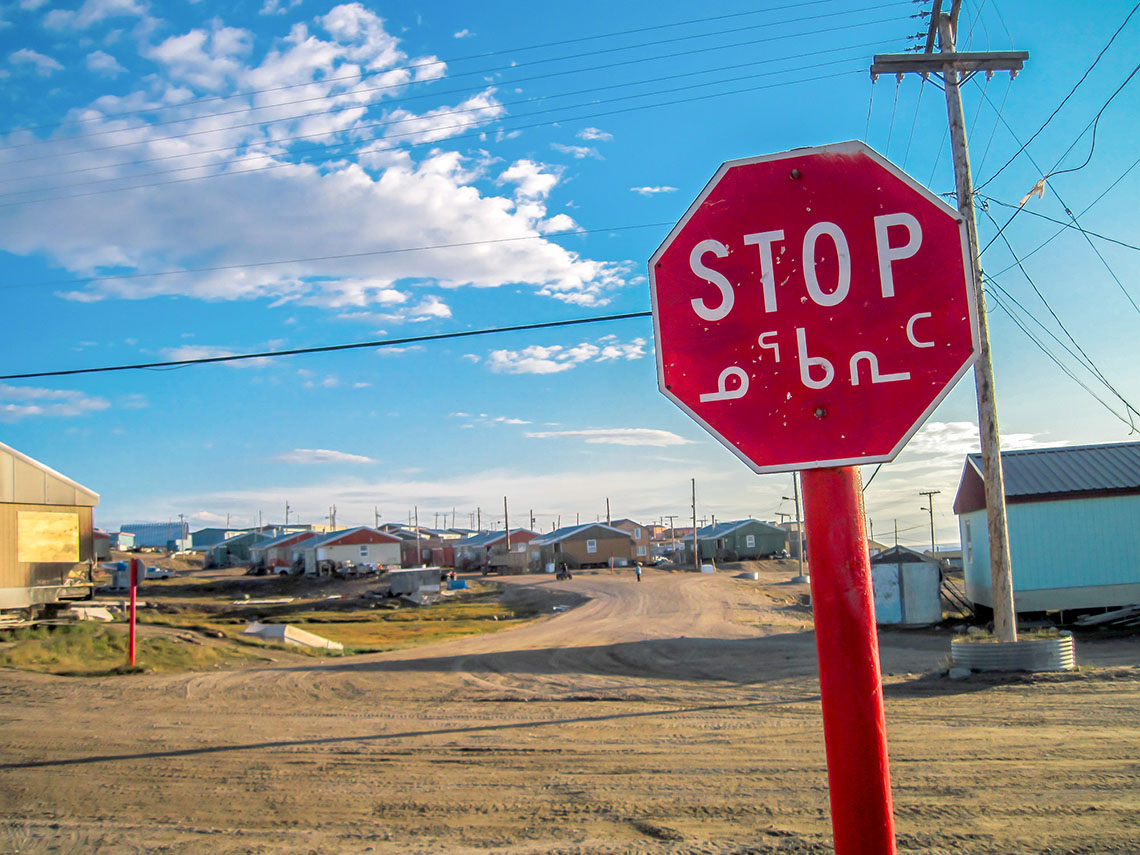
Press Answers button to learn more.
It is bilingual: Inuktitut (an Inuit language) and English.
Inuktitut and English use different alphabets.
Meet Papatsie! She is going to show us some of the ways she is connecting with her Inuit culture and language. Check out the following video entitled “Papatsie” to learn more.
Pause and Reflect
Pause and reflect
If you could ask Papatsie a question about the Inuit language of Inuktitut, what would you ask her? Write your question in your notebook or another method of your choice.
Non-fiction features: Table of contents
The table of contents is found at the beginning of a book and shows you what page to turn to for information.
The table of contents includes:
- chapters and content listed on the left side of the page
- page numbers listed on the right side of the page
- topics listed in the order they appear
Explore the following table of contents for a text about Inuit communities. What do you notice?
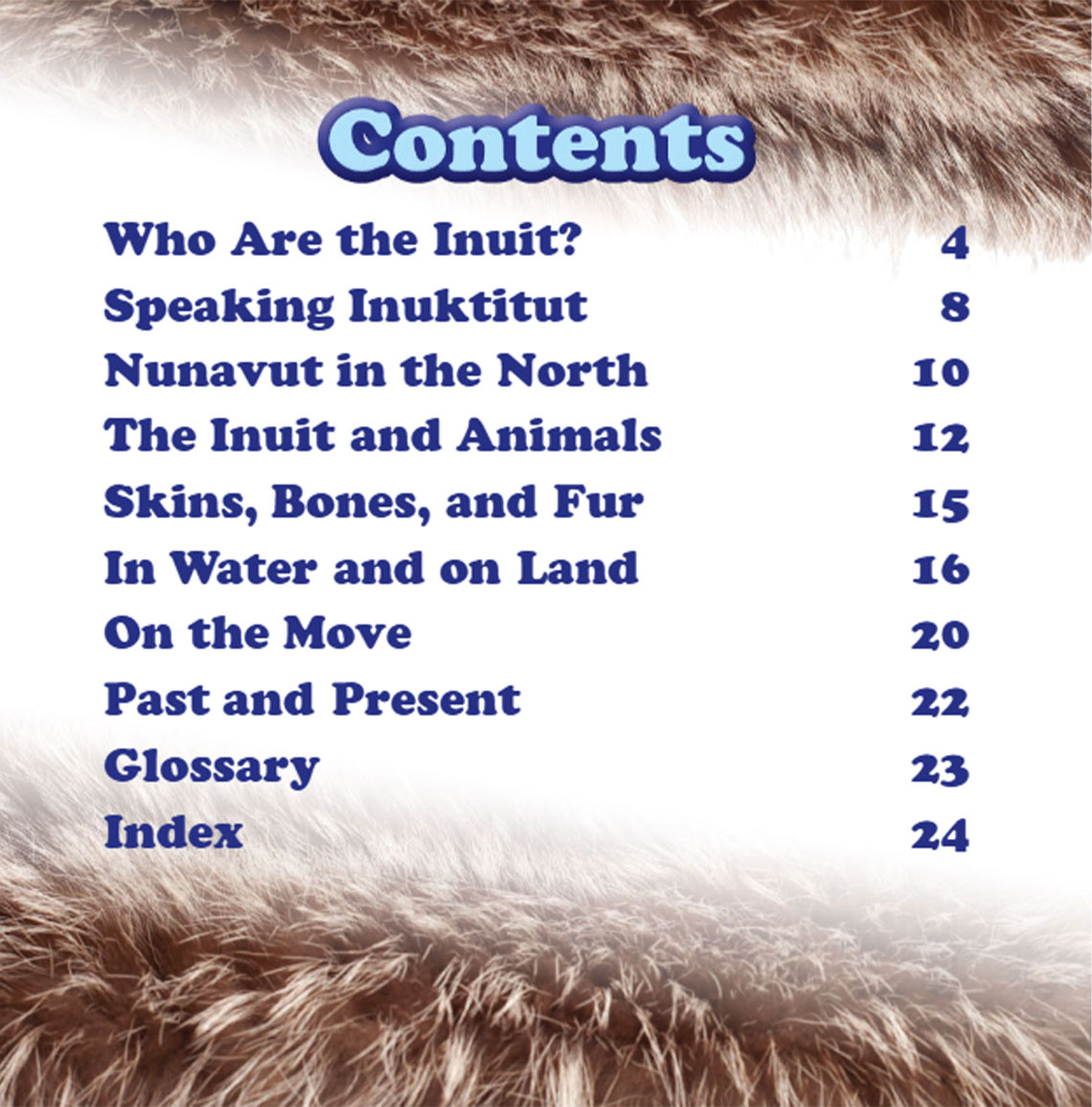
Press Answer button to learn more.
- The chapters and content are listed on the left.
- The page numbers are listed on the right.
- Topics are listed in the order they appear in the book.
The table of contents is found at the beginning of a book and shows you what page to turn to for information.
Using this table of contents, what page would you turn to if you wanted to learn more about the Inuit language of Inuktitut?
Press Answer button to learn more.
Speaking Inuktitut, page 8.
Traditional Inuit clothing
When something is traditional, it refers to the way things have been done for a very long time. These things might be the food people eat, songs they sing, or the customs that they practice.
In this learning activity, we are exploring traditional ways of life for the Inuit, and how young Inuit are keeping these practices alive. One way that traditions are used in contemporary Inuit life is through clothing.
Explore the following image of an Inuit mother and daughter wearing traditional Inuit parkas. What do you notice?
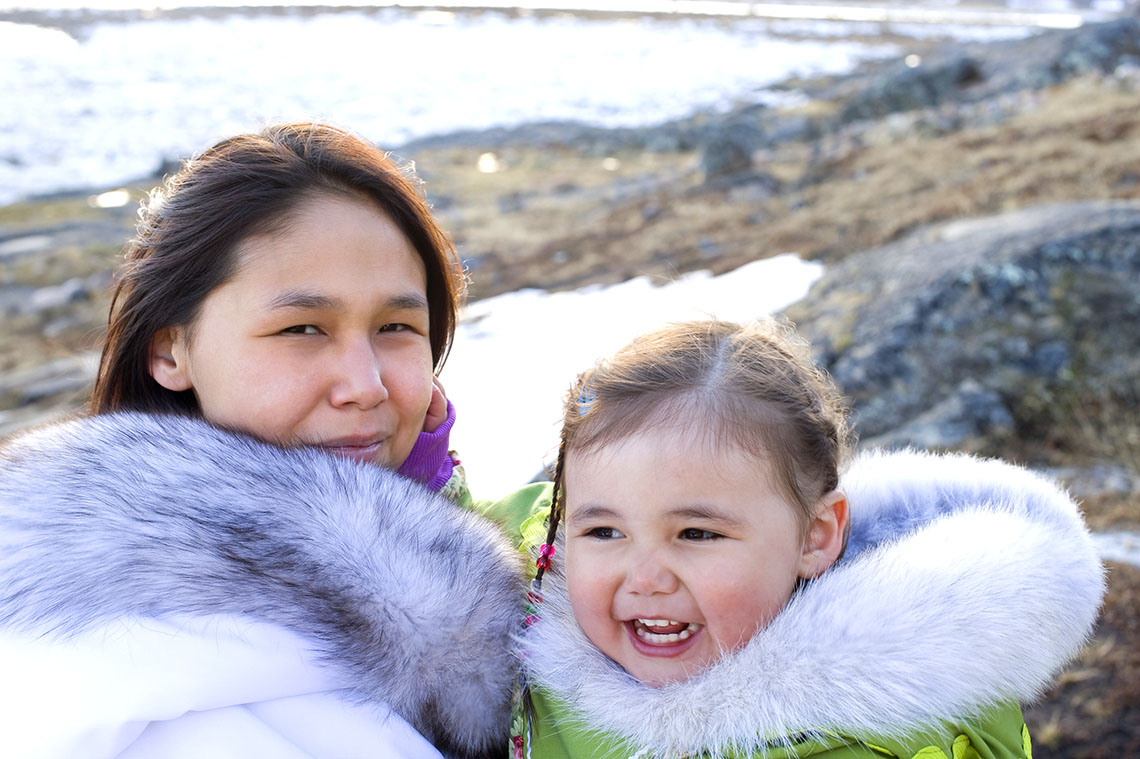
Why do you think Inuit clothing was traditionally made of fur?
Press Answer button to learn more.
- Fur was available to the Inuit in the environment.
- Fur kept people warm in the cold climate.
Check out the following video entitled “Papatsie” to learn more about Papatsie’s traditional clothing.
Check your understanding of the video in the following multiple choice question. Select the correct answer, then press Check Answer to see how you did.
Pause and Reflect
Pause and reflect
If you could ask Papatsie a question about Inuit clothing, what would you ask her? Write your question in your notebook or in another method of your choice.
Non-fiction features: Index
An index is found at the back of a book and shows the pages where specific information is found. Words are listed in alphabetical (ABC) order.
If a subject is found in the book more than once, several pages are listed. For example, in the following index, Arctic 4, 22 means that information about the Arctic can be found on both page 4 and page 22.
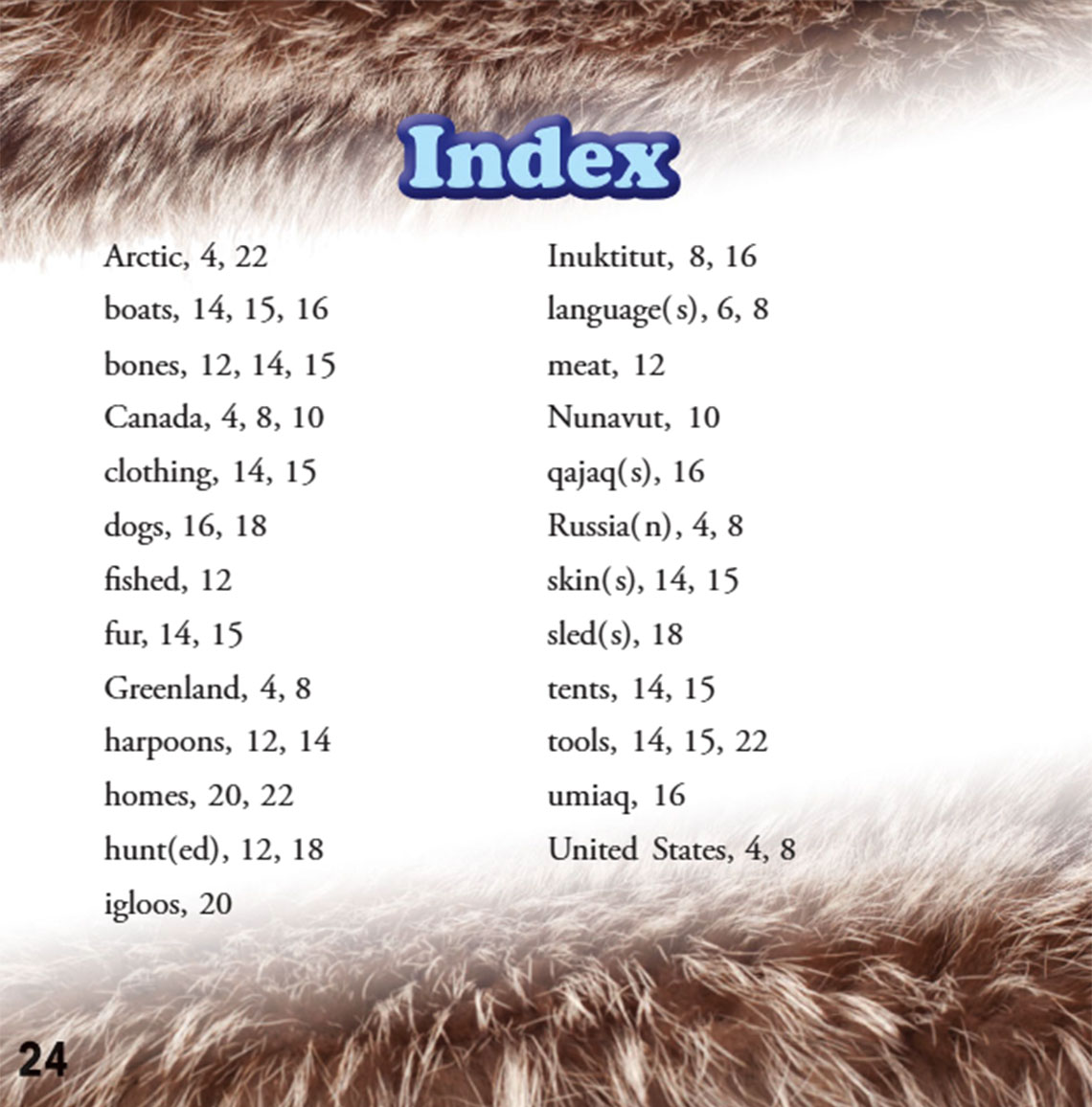
Using this index, what page would you turn to if you wanted to learn more about traditional Inuit clothing?
Press Answer button to learn more.
Pages 14, 15
Traditional Inuit food
Explore the following image. What examples do you notice of traditional Inuit food?
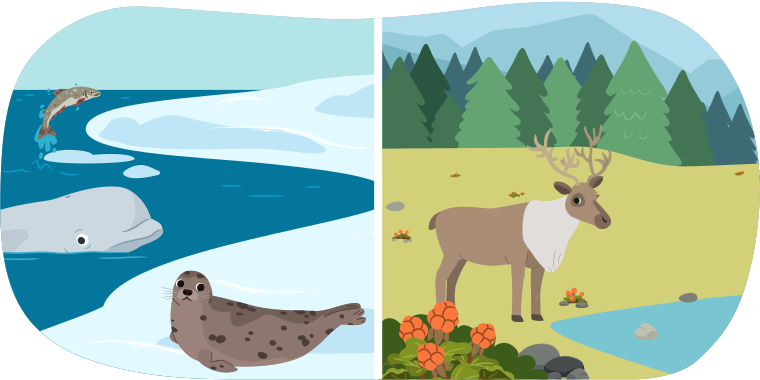
Press Answers button to learn more.
- seal
- fish
- whale
- caribou
- berries (e.g., cloudberries)
Why do you think these are examples of traditional Inuit food?
Press Answer button to learn more.
These were the animals and plants that were found in the Inuit’s environment.
Check out the following video entitled “Papatsie” to learn more about how Papatsie enjoys chicken fingers as well traditional Inuit snacks!
Pause and Reflect
Pause and reflect
If you could ask Papatsie a question about Inuit food, what would you ask her? Write your question in your notebook or in another method of your choice.
Non-fiction features: Glossary
A glossary is like a dictionary and lists important words found in the text. A glossary is especially helpful when there technical or subject specific words that might be new to the reader or words in other languages.
In a glossary
- words are listed in alphabetical (ABC) order
- each listed or important word is bolded
- each bolded word has a definition attached
Examine the following glossary. What do you notice?
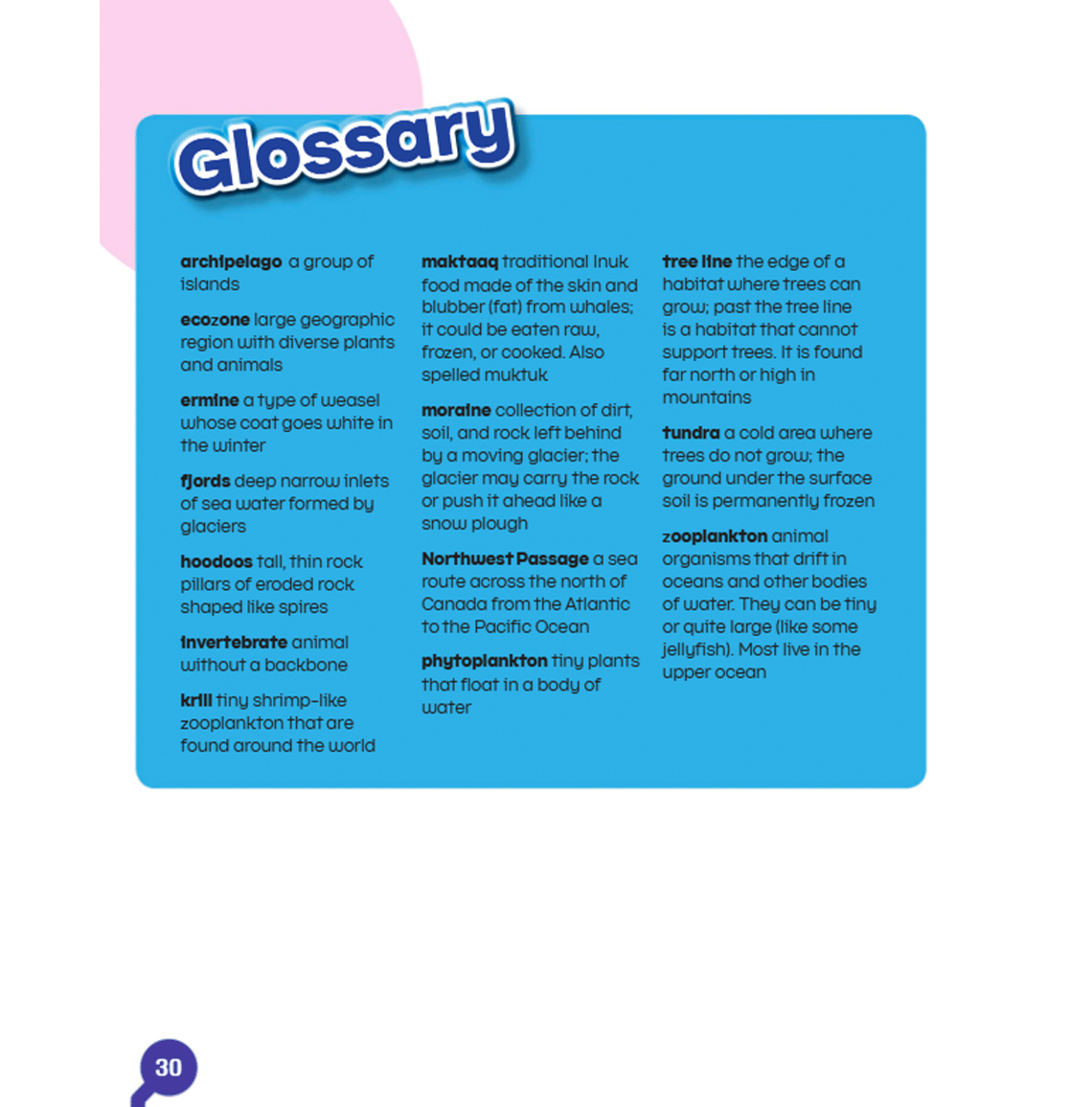
Using this glossary, what is maktaaq?
Press Answer button to learn more.
maktaaq: traditional Inuk food made of the skin and blubber (fat) from whales; it could be eaten raw, frozen, or cooked. Also spelled muktuk.
Throat singing
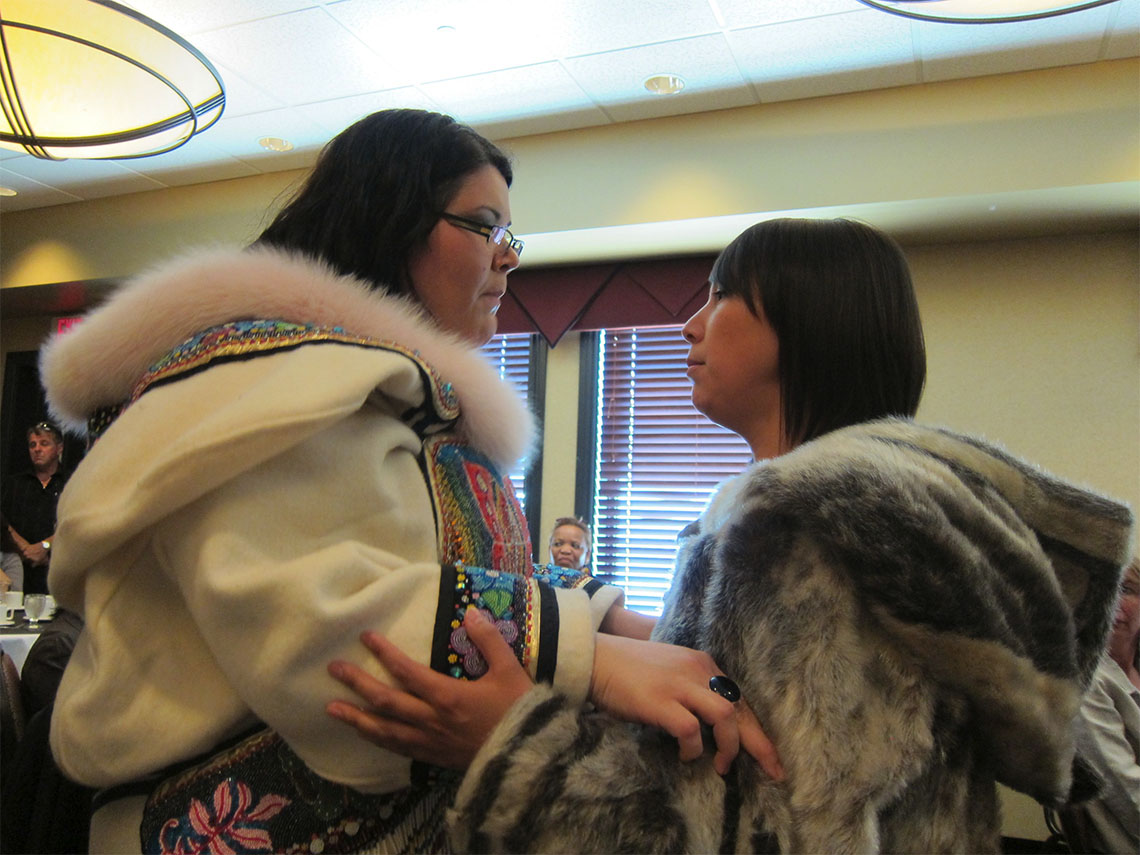
Have you ever heard of throat singing? Check out the following video entitled “Papatsie” to learn more about throat singing.
Check your understanding of throat singing in the following multiple choice questions. Select the correct answer, then press Check Answer to see how you did.
Who do you think will win Papatsie and Kendal’s throat singing competition? Check out the following video entitled “Papatsie” to find out.
Pause and Reflect
Pause and reflect
If you could ask Papatsie a question about throat singing, what would you ask her? Write your question in your notebook or in another method of your choice.
Features of non-fiction texts
Non-fiction texts often include the following features:
- titles
- subtitles or headings
- illustrations or photographs
- captions (descriptions of the illustrations)
- bold and italicized text to highlight important words
Examine the following pages from a non-fiction book. How could we use the features of non-fiction texts to find more information about Inuit throat singing?
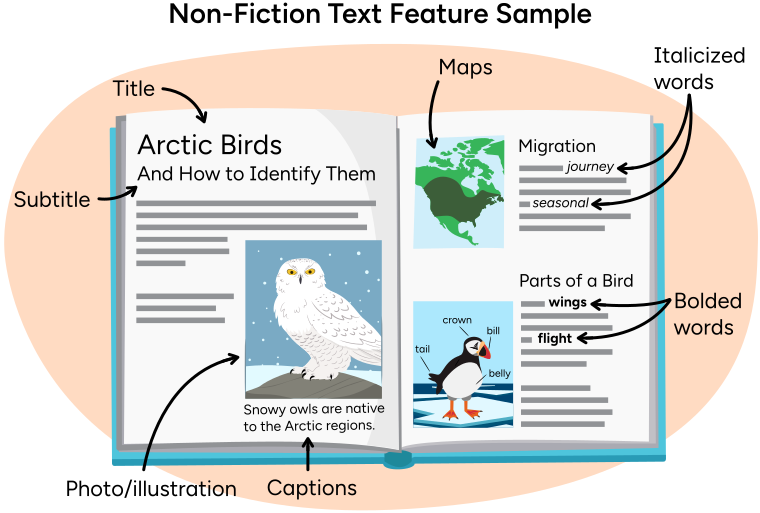
An example of a non-fiction text feature sample.
It begins with a title, followed by a subtitle and a section of text.
It has a labelled map image, a photo, and an illustration. One image has a caption below it. One image has an italicized caption above it.
Important words in the text sections are bolded.
Pause and Reflect
Pause and reflect
Consider what you learned from Papatsie’s perspective and her explanations about Inuit culture and traditions as you respond to the following questions.
- Can you describe any of your thoughts and feelings about the ideas shared in this learning activity?
- What have you learned from this information about the diversity of people in Canada?
Record your ideas in a method of your choice.

Social Emotional Learning
Social emotional learning
You’re doing great! It’s time for a short break before continuing onto the next part.

Simple and complex sentences
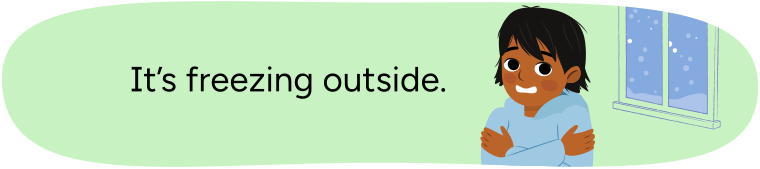
Let’s consider an example sentence: It's freezing outside.
This is a simple sentence. It has one idea.
Let's check out some more examples of simple sentences:
- Ella plays hockey.
- They will go to school.
- The dog is barking.
Complex sentences
Sentences are a bit like building blocks. We can add ideas!
Sometimes we take a simple sentence, and we add another “block” that gives us more information.
Let’s go back to the first simple sentence.
We can add a second idea to make it into a complex sentence. Check out the following example.
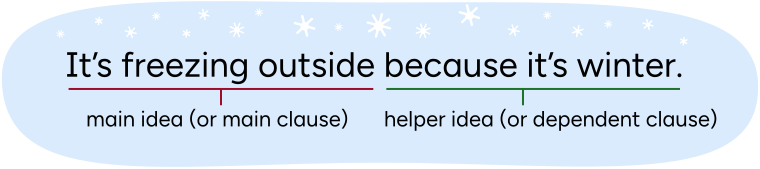
Example complex sentence: It's freezing outside because it's winter. 'It's freezing outside' is the main idea (or main clause.) 'because it's winter' is the helper idea (or dependent clause.)
The main idea is “It’s freezing outside.” This is a main clause. That means it can stand on its own as a complete sentence.
The helper idea is “because it’s winter.” This is a dependent clause. That means it gives us information about the main idea, but it can’t stand on its own as a complete sentence.
Check out another complex sentence.
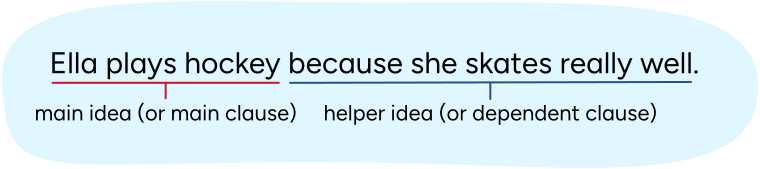
Example complex sentence: Elle plays hockey because she skates really well. 'Elle plays hockey' is the main idea (or main clause.) 'because she skates really well' is the helper idea (or dependent clause."
- Which part of this sentence is the main idea (or main clause)?
- Which part is the helper idea (or dependent clause)?
Press Answers button to learn more.
- The main idea (or main clause) is “Ella plays hockey.” This part can stand on its own as a complete sentence.
- The helper idea (or dependent clause) is “because she skates really well.” This part can’t stand on its own as a complete sentence. Its job is to give us more information about the main idea.
Let’s check!
Sort the following sentences into the correct category: simple sentence or complex sentence. Remember: simple sentences have just one idea, and complex sentences have more than one idea.
Place the cards into categories that best match. Use the arrow buttons to navigate between cards.
Adverbial clauses
Let’s explore “helper ideas”, or dependent clauses, that give us more information about the main idea.
Sometimes a dependent clause gives us more information about the verb in the main clause. In this case, it’s called an adverbial clause. For example, an adverbial clause might answer the question when or why.

Student Tips
Student tips
Do you see another word hiding in the word “adverbial”?
Adverbial has the word “adverb” in it. Do you remember what an adverb is?
An adverb describes a verb and gives more information – just like an adverbial clause.
Let’s start with a simple sentence:
- The cat sleeps.
Now we’ll make it into a complex sentence. We’ll add an adverbial clause that gives us more information about the verb “sleeps.” For example, the adverbial clause could tell us when the cat sleeps or why the cat sleeps.
| Complex sentence | Adverbial clause | What does it tell us about the verb? |
|---|---|---|
| The cat sleeps when her tummy is full. | when her tummy is full | Answers the question “when does the cat sleep”. |
| The cat sleeps because she is tired. | because she is tired | Answers the question “why does the cat sleep”. |
Your turn!
Now you will write some adverbial clauses by completing sentence starters! Follow this example:
- John gets good grades because…
- John gets good grades because he works hard.
Now complete the following sentences starters:
- Maria smiles a lot because…
- Fernando will call me when…
- My grandma visits whenever…
- I like pizza because…
There are lots of ways to finish these sentences. Press Sample Answers for some possibilities!
- Maria smiles a lot because she’s always happy.
- Fernando will call me when he finds his phone.
- My grandma visits whenever she gets a chance.
- I like pizza because it tastes so good!
Pause and Reflect
Pause and reflect

- Why is it important to learn about complex sentences and adverbial clauses?
- How does knowing about these grammar elements make you a better reader and a better writer?
Record your ideas in your notebook or in another method of your choice.
Creating a non-fiction text
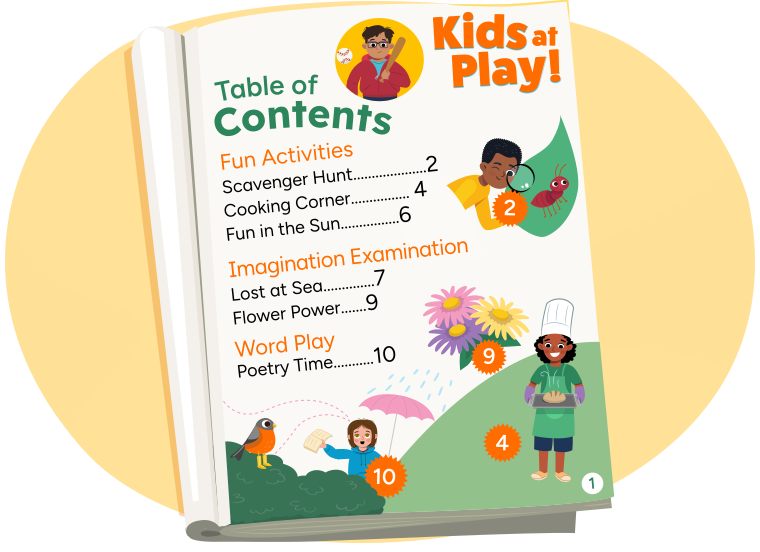
A page of non-fiction text with several text features.
The title is, 'Kids at Play!'
It has a table of contents with three sections: Fun Activities, Imagination Examination, and Word Play.
The 'Fun Activities' section has the subheadings 'Scavenger Hunt…2', 'Cooking Corner…4', and 'Fun in the Sun…6.' It lists the page numbers next to each subheadings. There is an image of a learner examining a bug which is also labelled with page number 2, and a learner cooking with the page number 4.
The 'Imagination Examination' section has the subheadings 'Lost at Sea…7' and 'Flower Power…9.' An image of flowers is also labelled with page number 9.
The 'Word Play' section has the subheading 'Poetry Time….10.' An image of a learner reciting poetry is labelled with page number 10.
In this learning activity, we explored ways to use non-fiction text features to help you find information quickly. Now it’s your turn to plan your own non-fiction book with these text features!
Choose a topic
What non-fiction topic are you an expert in? How to teach a dog tricks? Types of trees in your local park? The rules of badminton?
Begin by choosing a non-fiction topic for your book. Remember that non-fiction means it is true.
Student Tips
Student tips
Keep your topic specific, such as Types of Trees in My Local Park, instead of Types of Trees.
Plan your non-fiction book
Before you begin to write your non-fiction text features, make a plan for your non-fiction book. Complete the fillable and printable Brainstorming Graphic Organizer in your notebook or using the following document. If you would like, you can use speech-to-text or audio recording tools to record your thoughts.
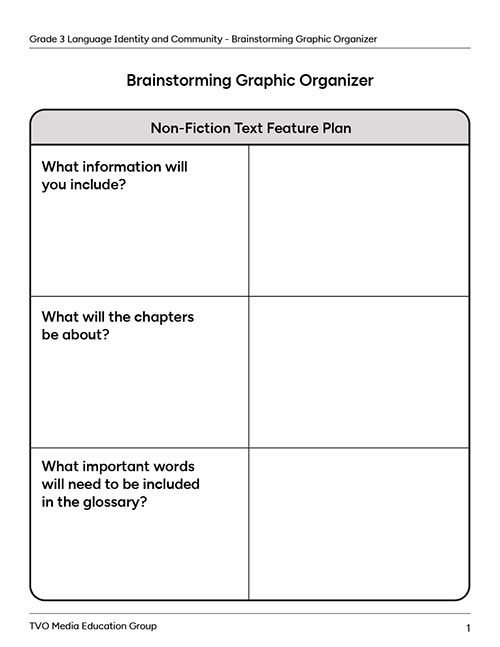
Press the Activity button to access the Brainstorming Graphic Organizer.
Activity(Opens in a new tab)Create your non-fiction book
In your notebook or another method of your choice, create three non-fiction text features for your book. Be sure to include the correct titles. These sections include:
- a table of contents
- a glossary
- an index
Use the following checklist when completing your non-fiction book.
Non-fiction book success criteria
Student Tips
Student tips
You may wish to look at the examples in the Action section to remember what a table of contents, glossary, and index look like.
Reflection
How do you feel about what you have learned in this activity? Which of the next four sentences best matches how you are feeling about your learning? Press the button that is beside this sentence.
I feel...
Now, record your ideas about your feelings using a voice recorder, speech-to-text, or writing tool.
Press ‘Discover More’ to extend your skills.
Discover More