Learning goals
We are learning to…
- reflect on the many different parts that make up our identities
- use a mind map to organize our thoughts and ideas
- set a purpose for engaging with oral texts
- identify and use proper adjectives
- understand the importance of celebrating identities
- plan, draft, revise, edit, and present a mind map about our identity
Success criteria
I am able to…
- think about and share the many different parts of my identity
- create and present a mind map about my own identity
- identify and set a purpose before exploring a video
- identify and use proper adjectives
- reflect on why it is important to celebrate my identity and the identities of others
Exploring your identity
What comes to mind when you think of the word "identity"?
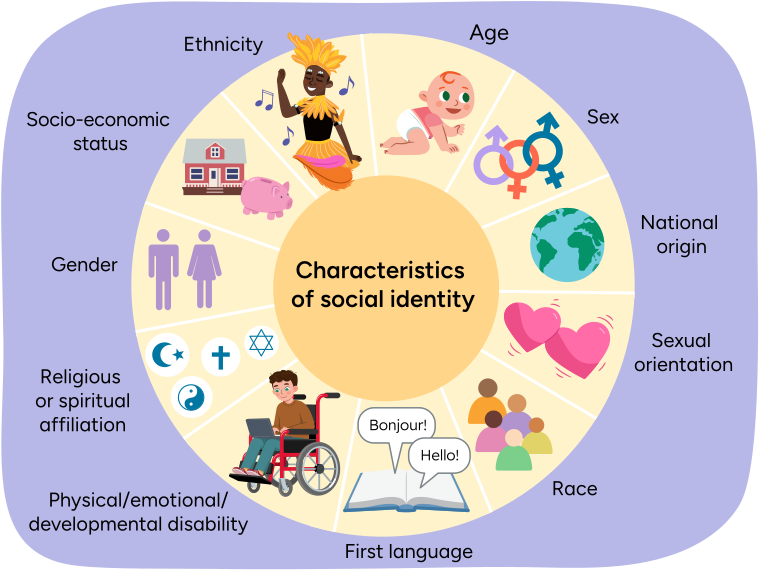
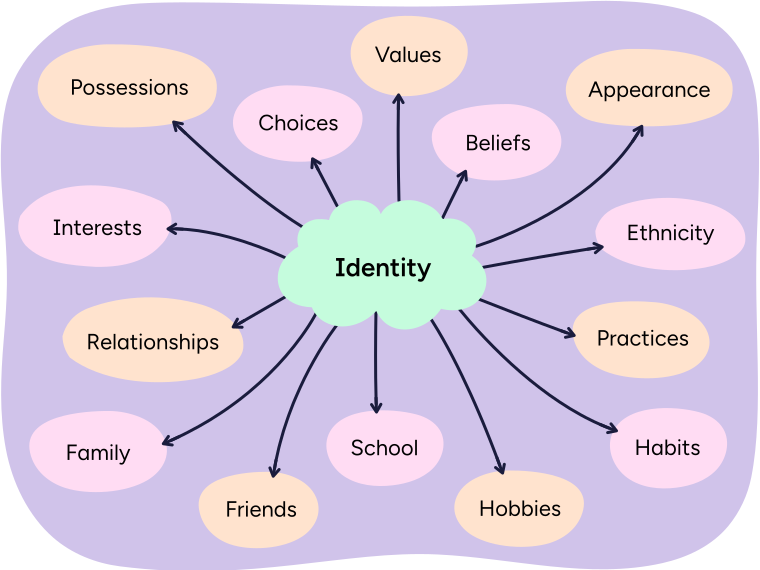
Explore the following identity wheel and consider the different parts of your identity.
To think more about what your identity means to you, explore the following poem.
Who Am I?
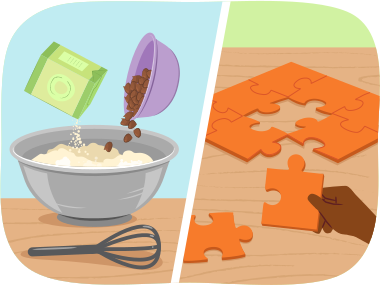
I am a mix of so many things,
Like ingredients in a pie
Or pieces of a puzzle.
I am unique and here’s why.
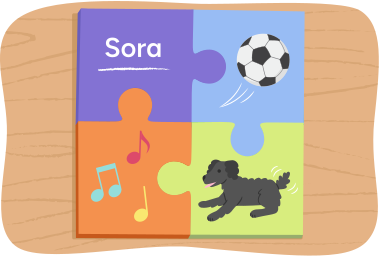
My characteristics, and my name
The things I love to do
All these pieces fit together
To make my identity, different from you.

My identity has values,
They help me find my way.
Honesty, courage, and kindness.
I try to use them every day.
No one else is just like me.
I am unique.
My identity is me.

Student Success
Think
What do you think makes you unique?
After reading the poem, what new thoughts or feelings do you have about your own identity?
Your identity
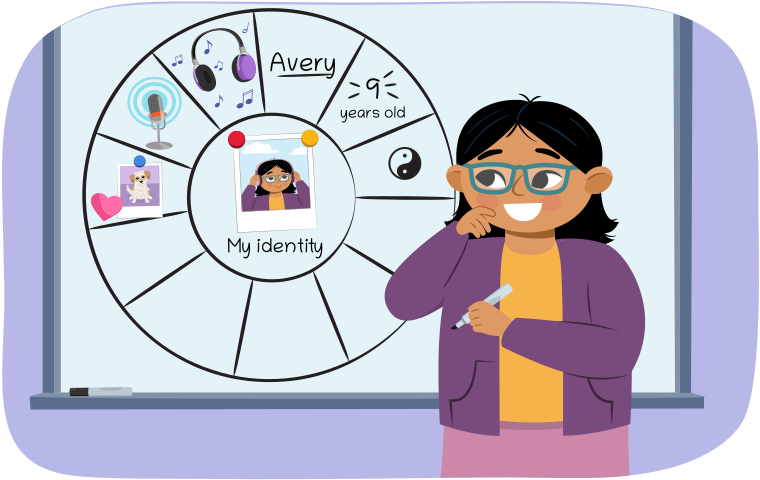
Your identity is all the things that make up who you are. It is a mix of your characteristics, beliefs, values, and other unique parts about you. You can think of your identity as pieces of a wheel, like in the image from the Minds On section. Each piece represents different things. These pieces could be your name, your gender, where you come from, or the language you speak. They might also represent your likes and hobbies. Once all the pieces are put together, it creates a picture of you!
Next, you will be exploring a video to learn more about identity and values.
Today’s vocabulary!
To get ready for the video, let’s preview some key vocabulary words.
Press the following tabs to learn more about these words.
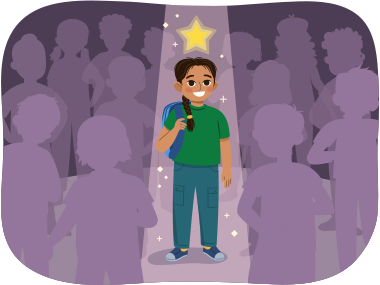
Something/someone that is one of a kind, and different from everything else.
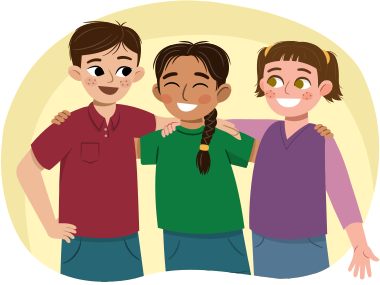
The ideas and beliefs that are important to you, like being fair, honest, and kind.
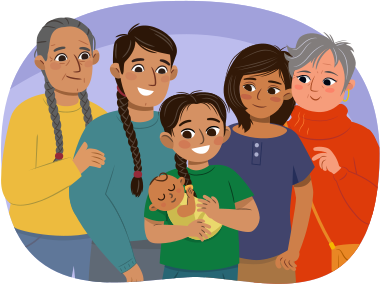
A group of people who share the same background, culture, or language.
Setting a purpose
Before getting into a video or any oral text, it is important to think about why you are exploring this video. This helps you set a purpose. Setting a purpose means that you decide what you want to learn or understand before you view/listen to the video. This way you can focus on the important parts of the video and understand it better. Without a purpose for exploring the video, you might miss the main idea and get lost in all the information that is being shared.
How to set a purpose for a video
- Think about why you are viewing/listening to the video. Is it to learn something new? What will you be learning about?
- Ask yourself, “What do I want to know?” For example, if the video is teaching about identity, you might ask “What does identity mean?” or “Why is knowing your identity important?”
- Focus on the answers. While you explore the video, keep your purpose and questions in mind. Focus on the parts of the video that answer your questions.
What do you think might be the purpose of the video titled “Identity and Values”? Is it to
- share a funny story
- teach you about stories
- share information about identity and values
Asking questions
The purpose of this video is to share information about identity and values. To help you focus on the purpose of this video, here are a few questions to keep in mind. As you explore the video, pay attention to the answers that will come up. You can pause the video to record your answers or revisit the video as needed.
- What are some things that make up your identity?
- What activities or questions can help you figure out what’s important to you?
- What are some examples of values?
- What can you gain from meeting people who have different values from you?
Check out the following video to learn more.
Learning check
Select the correct answer, then press Check Answer to see how you did.
Next, let’s try a sorting activity! Place the cards into categories that best match. Use the arrow buttons to navigate between cards.
Student Success
Think
Why might it be important to get to know people who have different values than you?
Values and identity
Some examples of values shown in the video are kindness, generosity, creativity, and honesty.
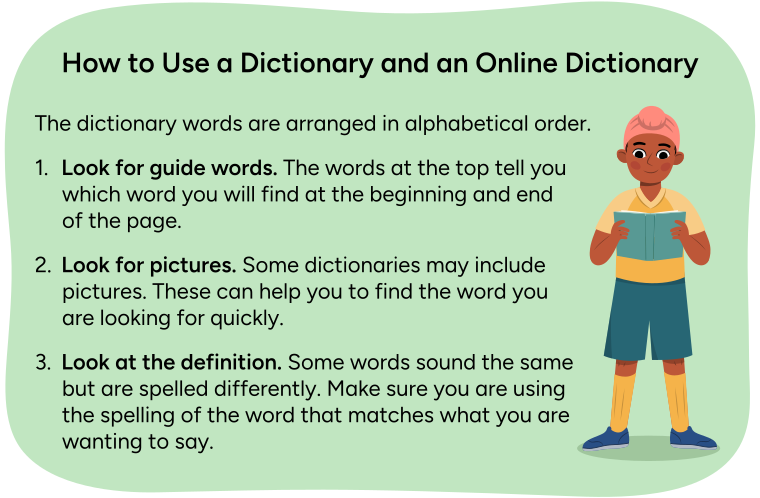
What do you think might be values that are important to you? Check out the following list of values in the word bank and choose the ones that show your identity. If you would like to learn more about the meanings of each of the values, you can ask a trusted adult to help you use a dictionary or consult the following image for a guide on how to use a dictionary. Record your list of values in your notebook or another method of your choice.
Word bank
- Honesty
- Kindness
- Respect
- Responsibility
- Courage
- Generosity
- Patience
- Fairness
- Creativity
- Sharing
- Friendship
- Helpfulness
- Curiosity
- Empathy
- Cooperation
Nationality vs. ethnicity
Nationality and ethnicity are both ways to describe where you come from, but they mean two different things.
Let’s take a closer look at their base words.
| Nationality | Ethnicity | |
|---|---|---|
| Base word | Nation | Ethnic |
| Definition of base word | A group of people who usually live in a specific country and share a common history, culture, language, or government. | A group of people who share a common cultural background, language, traditions, and sometimes a common ancestry. |
For example, someone could have Canadian nationality because they were born in Canada, but their ethnicity might be Korean because their family comes from Korea, and they celebrate Korean traditions.
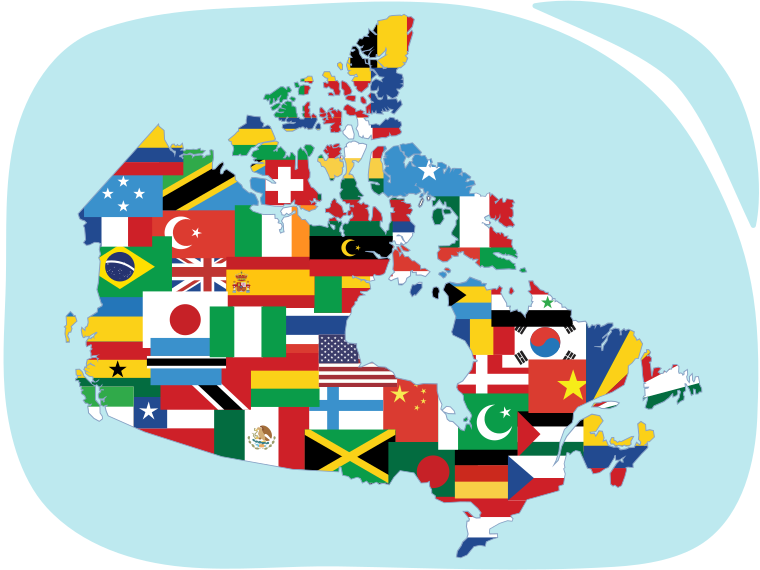
Ethnicity and nationality can both be parts of your identity.
Let’s build our skills with proper adjectives
When you describe parts of your identity, you might use your ethnicity, the language you speak, or your nationality. These words are proper adjectives. Proper adjectives come from proper nouns.
Press the following tabs to review some definitions.
The names of specific people, places, or things. For example, the name of a person, country, or book.
Word that describes a noun. For example: quiet, tall, soft.
The names of countries are proper nouns. You use a proper adjective when you describe the language, ethnicity, or nationality connected to that country.
For example:
Canada (proper noun) and Canadian (proper adjective)
Brazil (proper noun) and Brazilian (proper adjective)
France (proper noun) and French (proper adjective)
Capitalizing
Proper adjectives always begin with a capital letter because they come from proper nouns, which are always capitalized. This helps show that the adjective is talking about something specific.
For example:
Correct: We visited the Japanese garden.
Incorrect: We visited the japanese garden.
Let’s practice
Place the cards into categories that best match. Use the arrow buttons to navigate between cards.

Student Wellness
Take a break!
Great job so far! Take a few minutes to relax and stretch your muscles!

Your identity mind map
In this next part of the activity, you will be creating a mind map that shows the different parts of your identity.
What is a mind map?
Mind maps organize information so that it is easy for you to understand and share your ideas with others. It is a visual way to show your thoughts and ideas. A mind map can also help you brainstorm ideas before writing.
Check out the following example mind map with the topic of identity. As you explore the example, think about the different parts of a mind map.
How do you create a mind map?
Press the following tabs to follow the steps to create a mind map.
What will your mind map be about? In the center of your page, write down your topic. For this mind map, your topic will be you! You can write your name as your topic and add colours or even a small picture next to your name.
You can think of your mind map like a map with different roads connecting to ideas. Starting from your name, draw lines that stretch out to different parts of your page. At the end of each line, you will include a keyword that describes who you are.
You could include the following ideas:
- values
- ethnicity
- the languages you speak
- your favourite foods
- siblings
- cultural traditions,
- favorite hobbies, sports, and video games
- where you were born
- pets you have
These are just a few of the many things that make up your identity.
Challenge yourself to think of even more!
Expand on some of the keywords you chose by adding more details. These details can be images or phrases that explain the keywords about yourself.
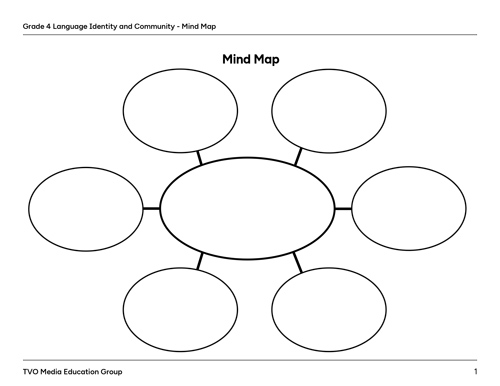
You can choose to draft your mind map in your notebook or use the printable and fillable Mind Map provided. If you would like, you can use speech-to-text or audio recording tools to record your thoughts.
Putting it all together
Now that you have created a draft of your mind map, use the following Self-Assess Checklist to edit and revise your work.
Self-assess checklist
Create a final draft of your mind map using a digital tool/app (approved by a trusted adult), your notebook, a video, or any other method of your choice.
Celebrating identities
Celebrating your identity is important. It means being proud of who you are and everything that makes you unique. Celebrating your identity can also encourage others to celebrate their identities. This can help everyone feel good about who they are and where they come from. Everyone has their own unique story, culture, and background. When we appreciate everyone’s differences, we can learn from each other and grow together. This helps create a community where everyone feels accepted and valued for who they are.
You can celebrate your identity by sharing your mind map with others. One way to do this is by presenting your mind map to your peers or a trusted adult.
Here are some presentation strategies to help you share and celebrate your identity.
Presenting my mind map
When you’ve completed your mind map, use the following steps to practice your oral presentation skills.
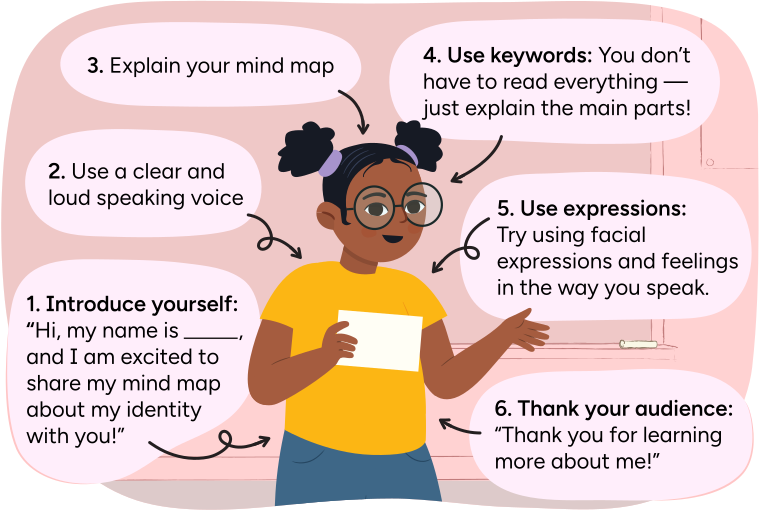
Practice presenting your mind map. This will help you feel more comfortable and confident when it’s time to present. After you present, ask your audience for feedback on how you can improve your presentation.

Pause and Reflect
Pause and reflect
- How can learning about your identity help you grow as a person?
- What do you think is the purpose of presenting your mind map?
- What presentation strategies do you think were the most helpful in sharing your mind map with your audience?
Reflection
As you read through these descriptions, which sentence best describes how you are feeling about your understanding of this learning activity? Press the button that is beside this sentence.

I feel...
Now, record your ideas using a voice recorder, speech-to-text, or writing tool.