Learning goals
We are learnin to…
- reflect on our names and identities
- make connections to an oral text
- plan, edit, revise, draft, and publish the story of our name
- identify and use pronouns as adjectives
Success criteria
I am able to…
- make connections between my name and my identity
- identify differences between surface and deep connections
- create a name story and share it with others
- identify and use pronouns as adjectives
Behind our names
What do you think is the purpose of having a name? Why do you think names might be important?
Names may help people to connect identity, family, culture, and community. They also might be symbols of who we are and how we choose to identify and understand ourselves.
Explore the following video titled What is Your Name Story and think about the story that might be behind your name.
After learning the stories of names in this video, take a moment to consider your thoughts on your own name. When you are ready, move on to the following questions.

Pause and Reflect
Pause and reflect
After learning the stories of names in this video, what questions might you have about your own name story?
How do you think your name is connected to who you are as a person?
Record your thoughts in your notebook, through an audio clip, drawing, or any method of your choice.
The meaning of a name
In the Minds On section, you explored the stories of some different names. Names are important to everyone because they are a part of our identity. Sometimes, names are chosen because they have a special meaning in one's family, community, or culture. Names might be connected to history or traditions. Every name has a story behind it. The story could be about what it means, why it was chosen, or who someone was named after.
Teach us your name
Explore the image of the following book cover. What do you notice and what do you wonder?
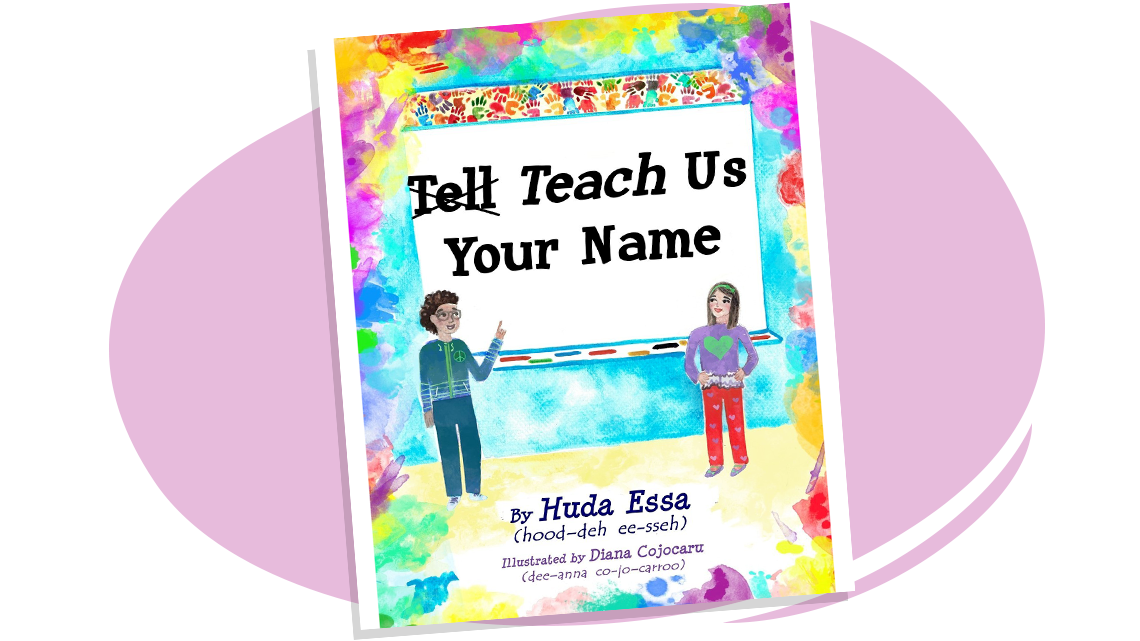
You might have noticed that the title of the book has crossed out the word “Tell” and replaced it with the word “Teach.” Why do you think this is an important change?
It is important to learn how to say everyone's name correctly as that is one way we can show respect for other people. When someone is called by a name that is incorrect or mispronounced, they could feel strange or even upset. When we say names correctly, we make sure everyone feels respected and accepted. It shows that we care about getting things right for them. This also helps us be more inclusive.
What does it mean to be inclusive?
Being inclusive means making sure everyone feels welcomed, valued, and respected, no matter who they are. It means we recognize and appreciate all our individual differences and make sure everyone has a chance to be included.
Explore the following video entitled Getting Students Names Right: Why It Matters to learn more about stories that share how people feel about their names being said incorrectly.
Pause and Reflect
Pause and reflect
After exploring the video, how do you think Keilani felt about their name being said incorrectly?
Why do you think it might be hurtful when someone’s name is said incorrectly?
Record your thinking in any method of your choice.
Making a connection
With the video you previously explored, you might have made some text connections.
Making text connections is a strategy that helps us understand an oral text. There are three different types of text connections we can make.
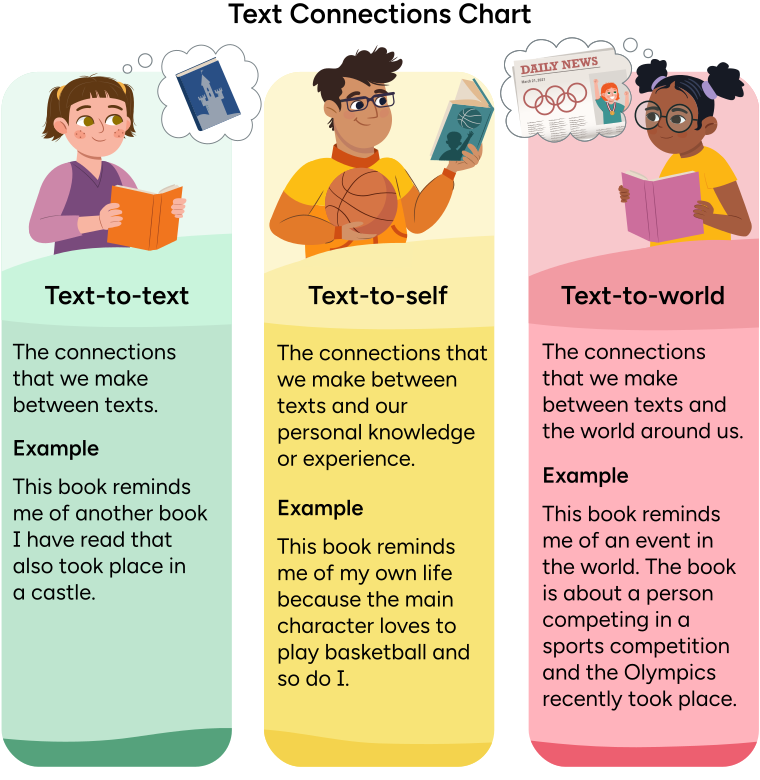
For each item, select the corresponding description.
Surface vs. deep connections
Text connections can be a surface connection or a deep connection. A surface connection might include a few details, but a deep connection provides a lot of details or information. A deep connection happens when you pause and think about why you are connecting to the text. When we explore a text and make a deep connection, it creates a deeper understanding of the information and ideas in the text.
In the following matching activity, there are two different examples of text-to-text connections. Can you tell which is one surface and which is one a deep connection?
For each item, select the corresponding description.
Pause and Reflect
Pause and reflect
How does making connections help you to make sure that you understand an oral text?
Pronunciation
Pronunciation is the way we say words or names. It’s how we make the sounds of the letters and put them together to say a word correctly. For example, in the English language when you say the word “cat,” you pronounce the letters c-a-t in a specific way.
Different languages have different sounds, which means that sometimes letters are pronounced differently depending on the language. For example, the letter ‘j’ is pronounced like an ‘h’ in Spanish, so a name like “José” would sound like “Ho-say.” If we don’t know the pronunciation of a word from a different language, it’s always important to ask. That way, we are being respectful of everyone’s language and culture.
How to practice pronouncing names correctly
- Listen carefully: Pay attention when someone tells you their name.
- Ask for help: If you’re not sure how to pronounce a name, it’s okay to ask the person to help you.
- Practice: Try saying the name a few times to get it right.
Let’s build our skills
Pronouns as adjectives
When you think about your name, you know that it is something that belongs to you. It is your name. The word “your” describe the connection the name has to you.
The word “your” is also a pronoun.
A pronoun is a word that takes the place of a noun in a sentence. We use pronouns to make our speech or writing clearer and less repetitive.
Press Examples of Pronouns button to learn more.
Examples of pronouns: I, You, He, She, It, We, They
For example:
Noun being repeated: "Maria likes Maria's cat. Maria's cat is very playful."
Using pronouns instead: "Maria likes her cat. It is very playful."
Check out the following video entitled Secret Identity where Zoey explains more about what pronouns are and how to use them.
Pronouns can also act like adjectives. This means that sometimes pronouns can also describe nouns, just like adjectives do.
Explore the following table to learn how pronouns can be used as adjectives and can help us talk about names and identity.
| Sentence | Pronoun | Noun being described |
|---|---|---|
| This is my name. | My | Describes the name (who it belongs to) |
| That is her pencil. | Her | Describes the pencil (who it belongs to). |
Let’s practice!
Now that you’ve explored how pronouns and nouns work, let’s check your learning! Select the correct answer, then press Check Answer to see how you did.
Great work! Take a moment and when you are ready, practice using pronouns as adjectives in your writing.

Try it
Try it!
Write three sentences using pronouns as adjectives to describe nouns related to your identity.
For example:
My name has five letters.
Our family has many traditions.
Let’s review!
Pronouns can be used as adjectives to show who something belongs to.
Pronouns can help us describe nouns and provide more information about them.
Name stories
Every name has a story, even if we don’t know all the details about it. The story of your name is just you! It’s your personality, your values, the things you love to do, and everything that makes you unique. In this next activity you are going to have an opportunity to celebrate your name by creating a name story.
Press the following tabs to learn more about the steps to create your name story.
Here are some suggestions for questions you can think about when planning your name story. If possible, you can ask a trusted adult for some help with these questions. Choose a few questions from the following list to help guide you along the way:
- Do you know if your name has a meaning?
- What does your name mean to you?
- Do you have a nickname? Where did it come from?
- How would you like to be called?
- Is there a different way of writing/pronouncing your name in another language?
- In which language do you like your name most?
- Is there a story connected to your name?
- Do you think your name shows your personality? How?
To help you organize your information, complete the fillable and printable Planning Template in your notebook or using the following document. If you would like, you can use speech-to-text or audio recording tools to record your thoughts.
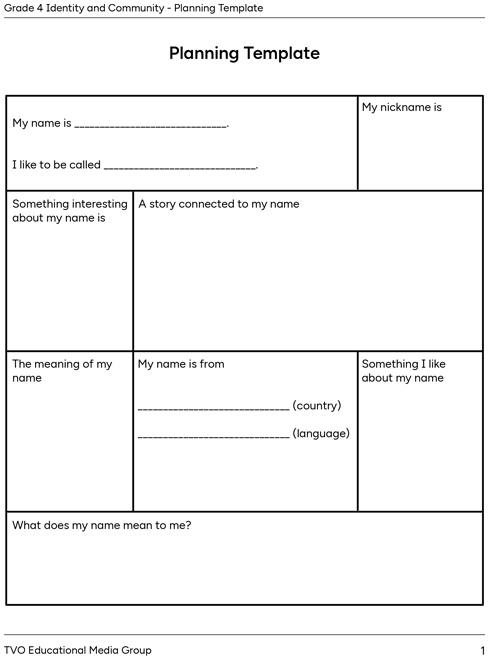
Once you have gathered and organized information and ideas about your name, it’s time to create your name story!
Complete the fillable and printable My Name Story Template in your notebook or using the following document. If you would like, you can use speech-to-text or audio recording tools to record your thoughts.
Think about everything you have discovered about your name and choose which information you feel is important to share for your name story.
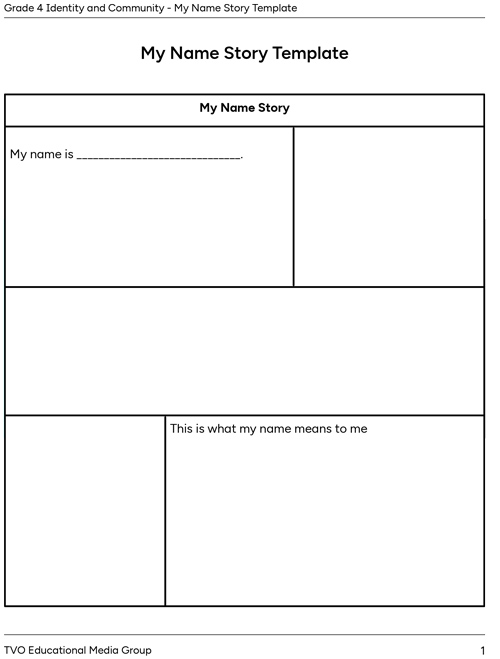
Now that you have created your very own name story, use the Self-Assess Checklist to help you edit and revise your work.
Self-Assess Checklist
Cursive practice
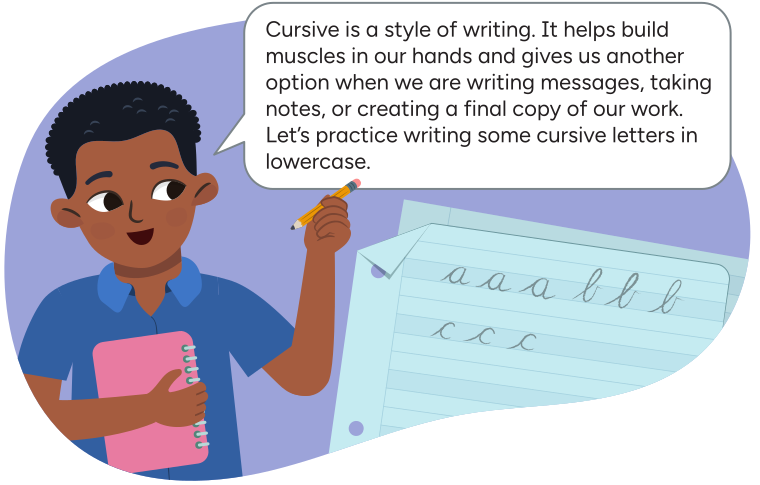
It’s your turn! Try writing your name in cursive.
Tips for cursive letters
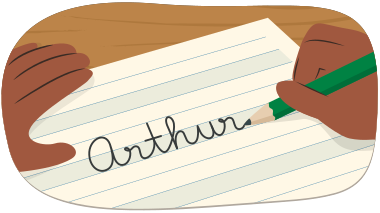
- When we write in lowercase, we always begin at the bottom
- When we write in uppercase we can start from the top or the bottom
- Try to keep the pencil on the page until you are done the word
- Create a finger space before you continue to the next word
- Try to press gently as you write so that your hand can move easily across the page
- Take your time to make sure that you are writing clearly and evenly

Cursive writing can be hard. But don’t worry, you can do it. All it takes is some practice!
Publishing your name story
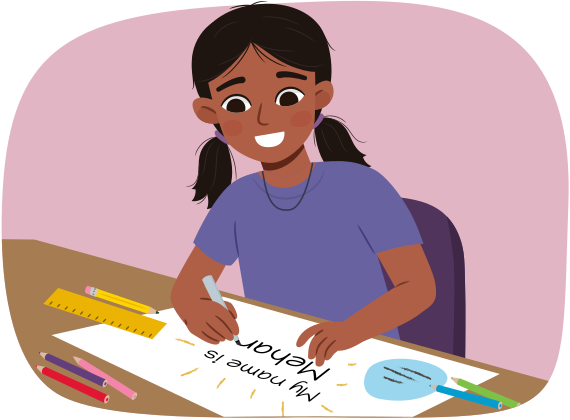
We have been exploring how your name is an important part of your identity. Your name represents who you are and your place in this world. Sharing your name story can be a way to celebrate your name and the unique parts of you.
Now that you’ve drafted, edited, and revised your name story, it’s time to publish! Create your final draft of your name story. You can use a digital tool/app (approved by a trusted adult), a poster, video/audio clip, or any method of your choice.
Pause and Reflect
Pause and reflect
In your notebook, or using another method of your choice, explain why the format that you chose to publish your name story was an effective way to share and celebrate your name.
Reflection
As you read through these descriptions, which sentence best describes how you are feeling about your understanding of this learning activity? Press the button that is beside this sentence.

I feel...
Now, record your ideas using a voice recorder, speech-to-text, or writing tool.