Learning goals
We are learning to…
- analyze the definition of a community and how it differs from a group of people
- select and use various reading comprehension strategies when reading a text
- summarize a text by finding the main idea and key details
- develop, plan, edit, revise, draft, and publish a paragraph
- identify and use complex and compound sentences
Success criteria
I am able to…
- share my learning about the definition of a community and why it is important
- select and use different reading comprehension strategies while reading a text
- summarize a text by finding the main idea and key details
- plan and create a paragraph that shares why communities are important to me
- identify and use complex and compound sentences
Thinking about community
A community is a group of people that can share things in common or live, play, and work together.
There are many kinds of communities. Explore the following carousel for examples of different communities.

Classroom communities (people who learn together)

Faith communities (people who worship together or share a belief system)

Cultural communities (people who share similar ancestry, language, traditions, food)
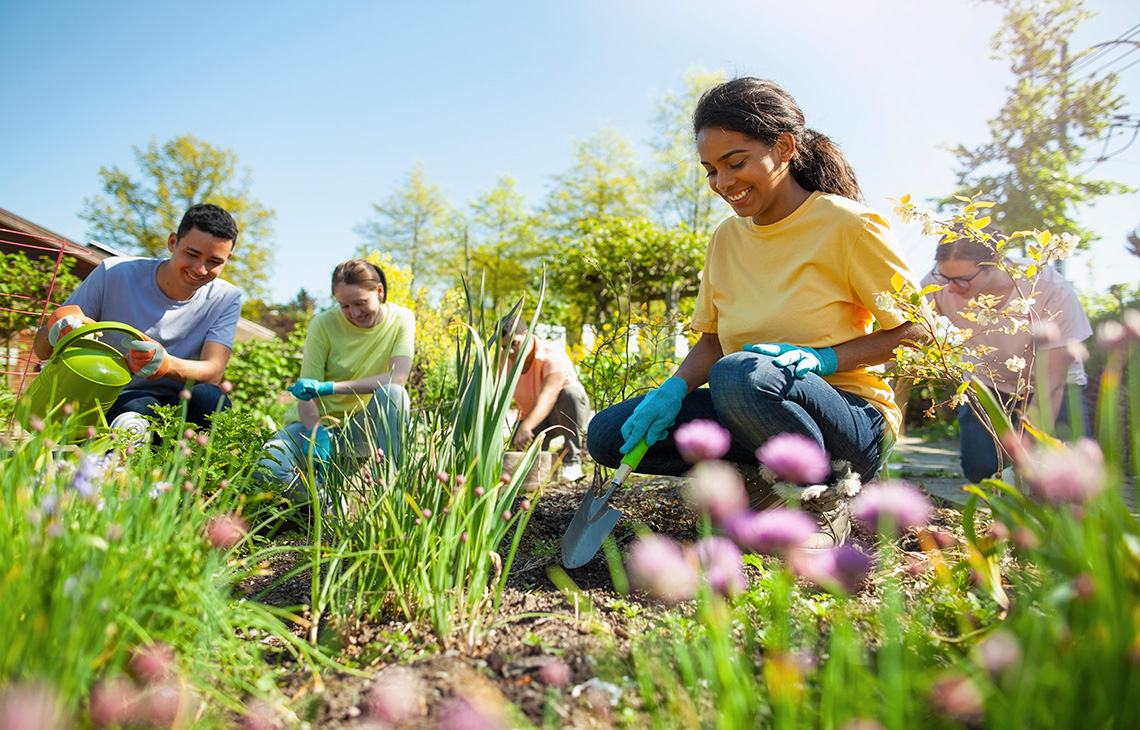
Neighbourhood communities (people who live in the same physical area)
What kinds of communities are you a part of? Record your answers in your notebook or another method of your choice.
Let’s explore the following video where you meet 13-year-old Jasmina! Jasmina and her family are Deaf and communicate by speaking ASL (American Sign Language). Even though they don't speak, they are living out loud, spending their days swimming, trampolining, and making slime!
As you explore the video, think about how families can be a community.

Student Success
Think
After checking out the video, how do you think a family is like a community? What are some ways that family members work together, just like people in a community?
Today’s vocabulary!
Building vocabulary is important. It’s not enough for us to just read a definition to understand a new word or term. To really understand, our brains need to think about it in different ways. Check out the definitions of the following vocabulary words.
Choose three vocabulary words from the list to explore further.
After you have selected your words, you will explore them further using one of the following graphic organizers. Explore the fillable and printable Graphic Organizer 1 - Personal Dictionary and Graphic Organizer 2 - Frayer Model and select the one you prefer.
Once you have selected your graphic organizer, complete the activity in your notebook or using the following document. If you would like, you can use speech-to-text or audio recording tools to record your thoughts.
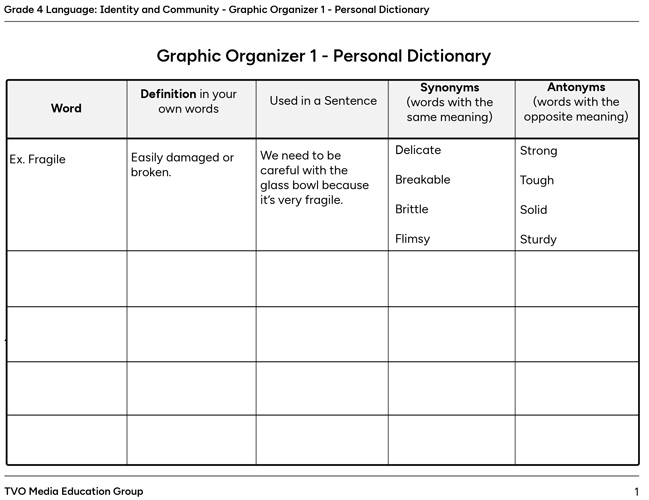
Press the Activity button to access the Graphic Organizer 1 - Personal Dictionary.
Activity(Opens in a new tab)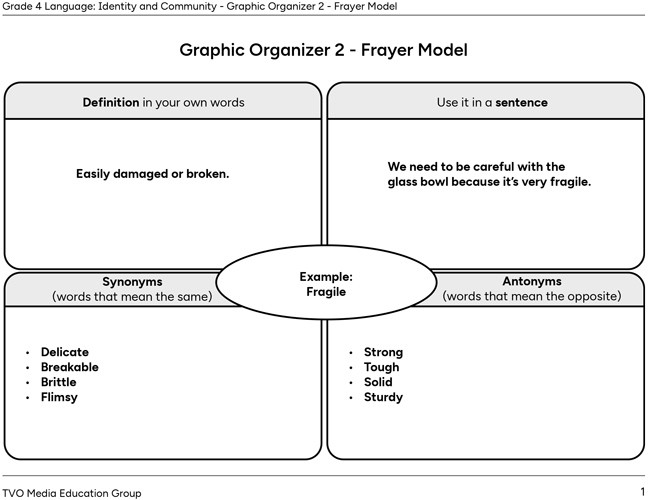
Press the Activity button to access the Graphic Organizer 2 - Frayer Model.
Activity(Opens in a new tab)Reading comprehension strategies
What are some of the strategies you use to understand different texts? For example, think about something you might have recently read.
Complete the fillable and printable Brainstorming Web in your notebook or using the following document. If you would like, you can use speech-to-text or audio recording tools to record your thoughts.
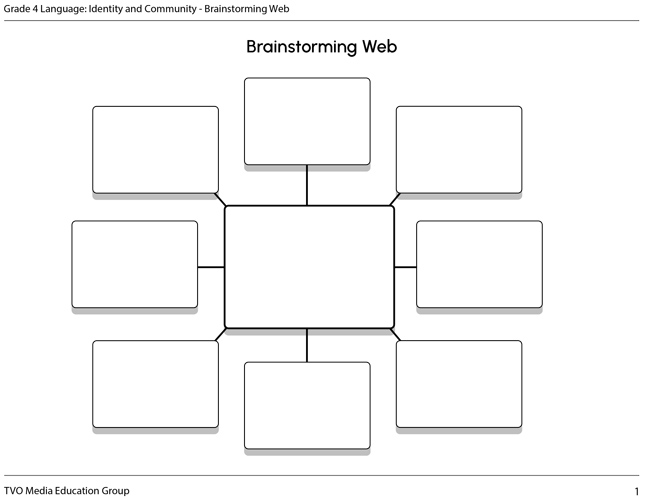
If possible, share your Brainstorming Web with a peer. Do you use similar or different strategies?
There are many strategies that we can use alone or together.
Press the following tabs for some examples of reading comprehension strategies.
Ask questions to help you understand the text.
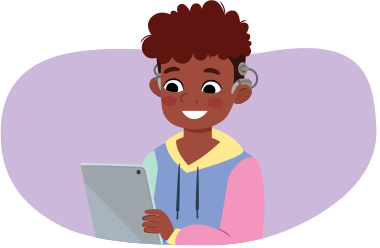
Use clues from the text and your own knowledge to understand what is happening in the text.
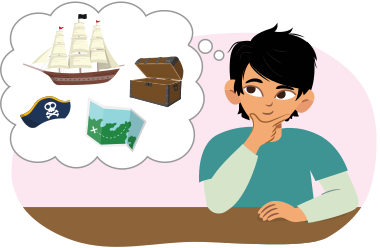
Create images in your mind to help you understand the text.
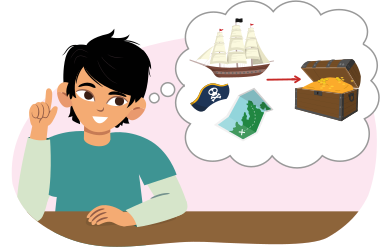
Connect the ideas in the text to what you already know.
Complete the fillable and printable Reading Comprehension Strategies Anchor Chart in your notebook or using the following document. If you would like, you can use speech-to-text or audio recording tools to record your thoughts.
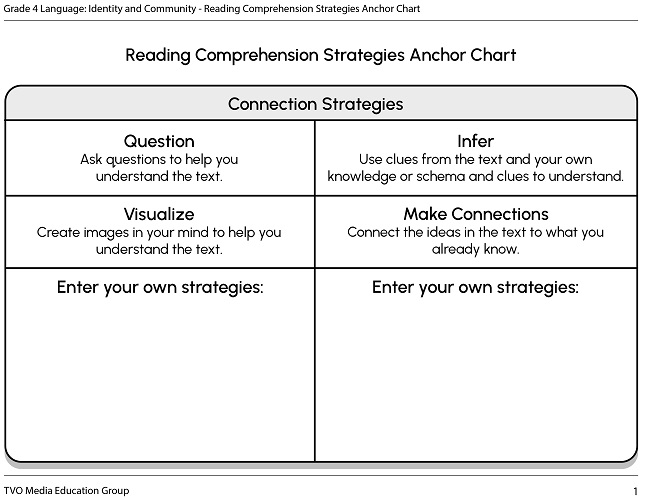
Press the Activity button to access the Reading Comprehension Strategies Anchor Chart.
Activity(Opens in a new tab)In the next part of this activity, you will be practicing your reading.
As you work through this learning activity and explore the importance of communities, we will be focusing on some reading comprehension strategies. These strategies can help you better understand the text. Look for tips and strategies to apply as you read, watch, or listen to each section.

Student Wellness
Take a break!
Great work! Take a moment to relax and stretch your arms before moving on to the next part of the learning activity.

Why is community important?
A community supports each other and works together to help each other grow. Communities are important because they celebrate cultures, diversity and inclusion, pass down traditions, and help you feel like you belong.
There are many kinds of communities, and they can help us to celebrate diversity (or differences) and allow us to learn new things about others. For example, people in our neighborhood community or classroom community may speak different languages or have different holidays and traditions. These differences make a community richer and more interesting.
Traditions can be another important part of a community. Traditions are special ways of doing things that are passed down from different generations. For example, celebrating holidays or cooking certain foods. These traditions can help us feel connected to our past and to each other.
Let’s pause here to use the reading comprehension strategy of Asking Questions!
Press Asking Questions button to learn more.
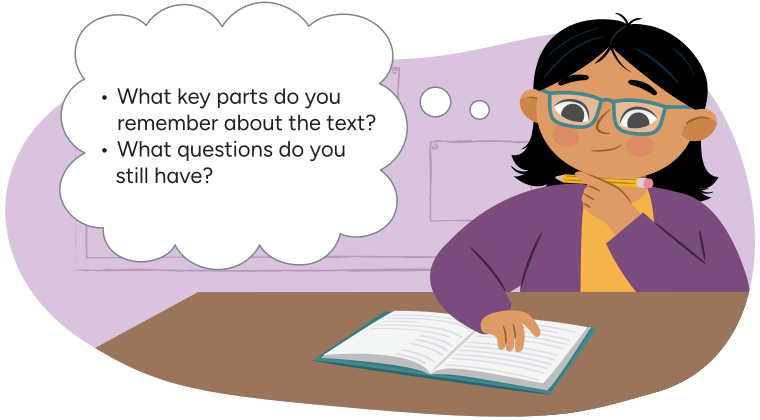
A student reading a book with a thought bubble consisting of the following two questions:
What key parts do you remember about the text?
What questions do you still have?
Jot down your thoughts or, if possible, share them with a partner.
A community shares many things, and culture is what makes each community unique. Culture can include the food we eat, the music we listen to, the languages we speak, and traditions we have.
Let’s pause here to use the reading comprehension strategy of Visualize!
Press the Visualize button to learn more.
Pause and take a moment to visualize what culture means to you. What pictures do you think of? Maybe it’s cultural foods, music, or festivals?
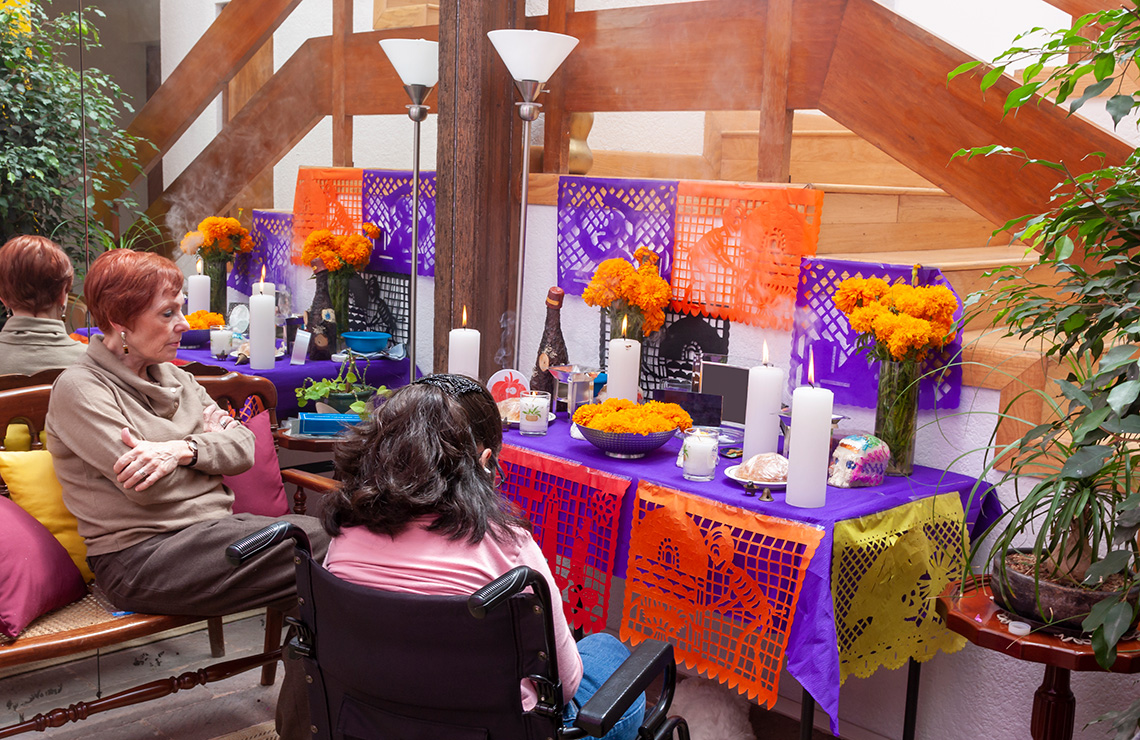
Culture can also include shared values, beliefs, and ideas. Communities can have a shared culture of values and beliefs and still have different cultures of languages and traditions. For example, a school community can be made up of people from different cultures who all share the same goal of learning and growing together.
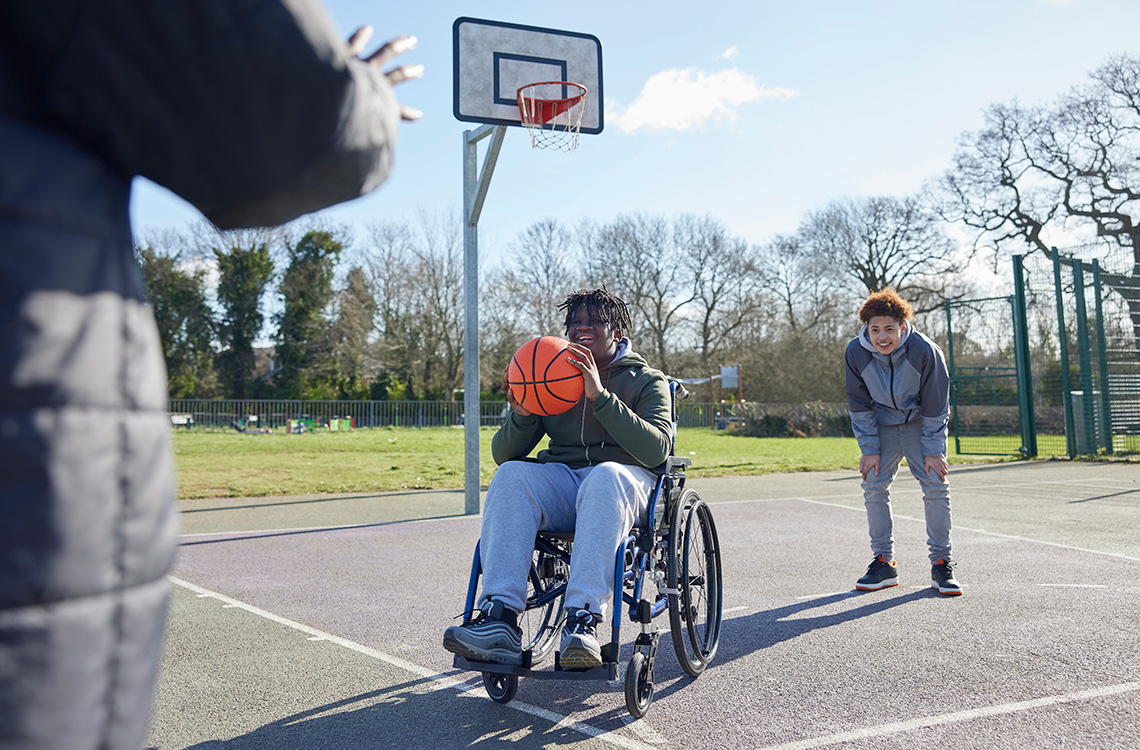
One of the most important things about a community is inclusion. Inclusion means making sure everyone feels welcome and accepted. Each member of the community has a chance to participate and contribute to the community in a meaningful way. Inclusion also helps everyone feel like they belong.
Check out the following video entitled Inclusion to learn more.
Let’s pause here to use the reading comprehension strategy of Make Connections!
Press the Make Connections button to learn more.
Can you think of any parts of your life where you see inclusion happening? Maybe at school in a team or club? What examples come to mind?

Pause and Reflect
Pause and reflect
You have been using many different strategies to read about communities. Which strategies did you find the most helpful? Explain your thinking in any method of your choice.
Writing a paragraph
Next you are going to share your learning about communities and why you think they are important by writing a paragraph. Think about what a community means to you. Is there a community that you are a part of that is important to you? Do the community members work together, support each other, and celebrate together?
Writing sentences and organizing them into a paragraph can be tricky but there are some tools that can help. As you grow as a writer, your sentences will also grow. Before you begin thinking about your paragraph let’s explore how to write compound and complex sentences.
Writing compound and complex sentences
Let’s review clauses
Examine the following interactive entitled Independent and Dependent Clauses to review clauses.
Conjunctions
Explore the following video entitled Conjunctions for Kids to learn about what conjunctions are and what they do in a sentence.
Now let’s review two types of conjunctions.
Coordinating conjunctions: A word that connects two simple sentences or ideas that are equally important (such as and, but, or).
Subordinating conjunctions: A word that connects a dependent clause to an independent clause (such as because, when, if, so). It shows how the two parts of the sentence are related to each other.
What are compound sentences?
A compound sentence is made up of two simple sentences (independent clauses) joined by a comma (,) and a coordinating conjunction (such as: and, but, or).
For example:
Simple Sentence (Independent Clause): I could go to the park.
Simple Sentence (Independent Clause): I could stay at home.
Coordinating Conjunction: or
Compound Sentence: I could go to the park, or I could stay at home.
Check out the following video entitled Compound-Complex Sentences to learn how to write a compound sentence.
Press How to Make a Compound Sentence button to learn more.
How to Make a Compound Sentence
- Take two simple sentences (independent clauses) that relate to each other.
- Add a comma and a conjunction to connect them.
| Simple sentences | Coordinating conjunction | Compound sentence |
|---|---|---|
|
Diversity brings different ideas. It makes our community more interesting. |
and |
Diversity brings different ideas, and it makes our community more interesting. |
|
Inclusion means welcoming everyone. Sometimes it can be hard to know what to do. |
but |
Inclusion means welcoming everyone, but sometimes it can be hard to know what to do. |
What are complex sentences?
A complex sentence is made up of one independent clause (a simple sentence) and one or more dependent clauses (a group of words that cannot stand alone as a sentence).
For example:
Simple sentence (independent clause): I fell asleep.
Dependent Clause: because I was tired
Subordinating Conjunction: because
Complex Sentence: I fell asleep because I was tired.
Check out the following video entitled Complex Sentences – Language Arts for Kids! to learn more about complex sentences.
Press How to Make a Complex Sentence button to learn more.
How to Make a Complex Sentence
- Start with a simple sentence (independent clause).
- Add a dependent clause that starts with a subordinating conjunction ("because", "when", "if", "or", "since").
Review the following table for some examples.
| Simple Sentence (independent clause) | Subordinating conjunctions | Complex sentence |
|---|---|---|
| Diversity is important. | because | Diversity is important because it helps us learn from different people. |
| We should include everyone | so | We should include everyone so that no one feels left out. |
Let’s practice!
Select the correct answer, then press the Check Answer button to see how you did.
Select the correct answer, then press Check Answer to see how you did.
Planning your paragraph
Another tool to help you with writing paragraphs can be to watch a how-to video.
Check out the following video entitled How to Write a Paragraph where Teacher Wynne shows you a fun way to organize your ideas.
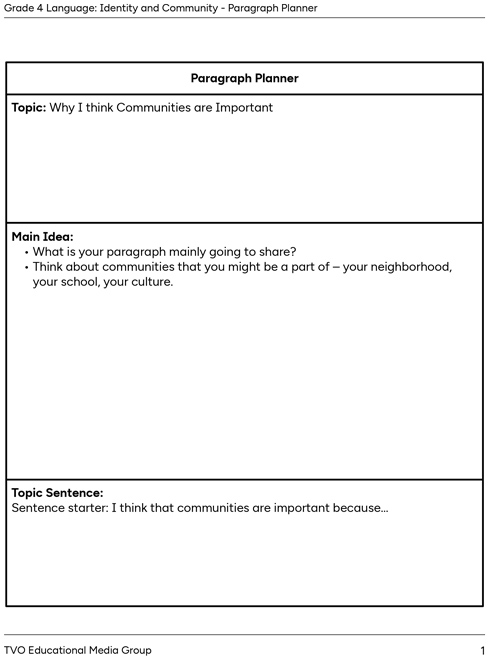
It’s time to plan your paragraph. First, think about the topic and main idea of your paragraph.
Topic: Why I Think Communities Are Important
Complete the fillable and printable Paragraph Planner in your notebook or using the following document. If you would like, you can use speech-to-text or audio recording tools to record your thoughts.
Use the prompts and questions to help you plan and organize your paragraph.
Draft your paragraph
Now it is time to put all your thoughts together and draft your paragraph!
You might choose to draft your paragraph by hand, using either print or cursive writing. Or you could choose to draft your paragraph digitally.
Check out the following tips for writing in cursive or typing.
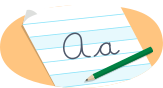
Cursive practice
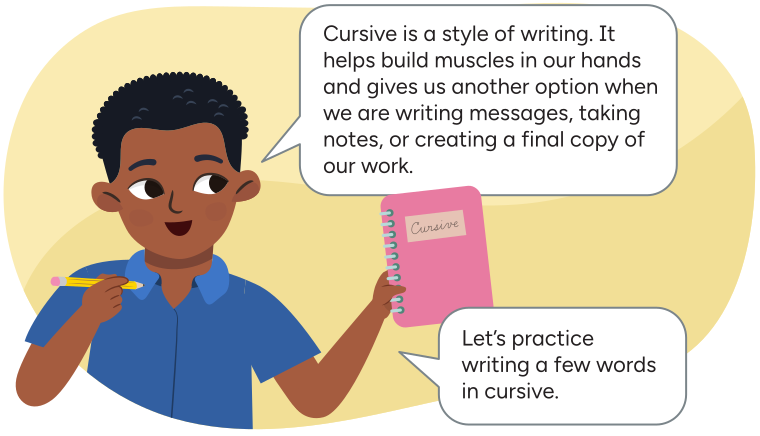
| community | diversity | inclusion |
Tips for cursive letters
- When we write in lowercase, we always begin at the bottom.
- When we write in uppercase we can start from the top or the bottom
- Try to keep the pencil on the page until you are done the word.
- Create a finger space before you continue to the next word.
- Try to press gently as you write so that your hand can move easily across the page.
- Take your time to make sure that you are writing clearly and evenly.

Cursive writing can be hard. But don’t worry, you can do it. All it takes is some practice!

Typing practice
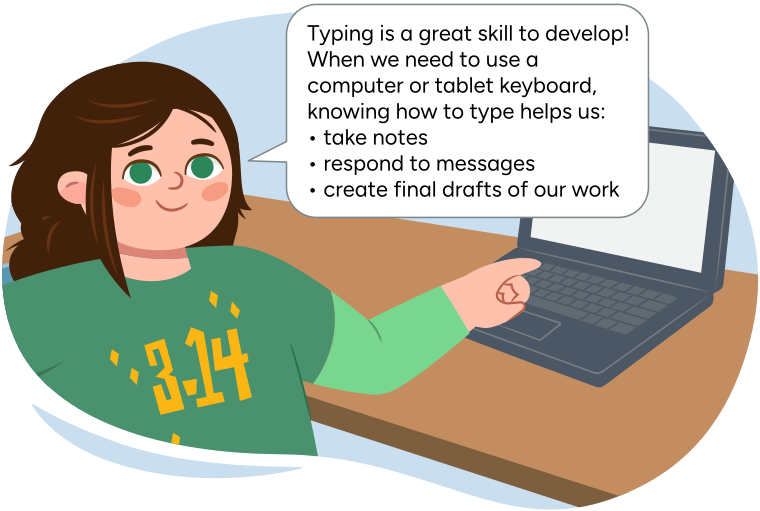
A student pointing towards a laptop with the following text in a speech bubble:
Typing is a great skill to develop! When we need to use a computer or tablet keyboard, knowing how to type helps us:
- take notes
- respond to messages
- create final drafts of our work.
We use specific muscles in our hands to type! It’s important to practice so that it becomes easier to type correctly without putting too much pressure on our hands and our wrist.
Tips for sitting while typing
When you are typing make sure:
- you sit with your knees bent and your feet flat on the ground
- you sit with your shoulders back
- you sit with your back straight
- you sit at eye level with the computer or tablet
- you sit with your keyboard at elbow level
For additional typing practice, check out the games Keyboard Climber 1 and Keyboard Climber 2!
Press the TVOKids button to access Keyboard Climber 1 and Keyboard Climber 2.
Revising and editing
It’s time to review your paragraph draft to make sure that it has all the pieces it needs to be complete, and to correct any errors.
Use the Self-Assess Checklist to self-assess your writing.
Self-Assess Checklist
Publishing your paragraph
You can create a final draft and publish your paragraph by typing it, writing, or using another method of your choice.
Reading fluency
In this learning activity, you learned about communities and why they are important. It can also be helpful to share your ideas about communities with others and compare any different ideas you might have. Practice sharing your ideas by reading your paragraph as if you were giving a short speech. You could read it to another person, practice reading it in front of a mirror, or voice record yourself and listen to it afterward.
Use the following checklist to ask yourself questions as you read out loud.
Do I …
Try reading your paragraph out loud multiple times to make sure you can answer “yes” to all of these questions.
Pause and Reflect
Pause and reflect
How do you think communicating your thoughts and ideas in this way can help you express your voice?
Reflection
As you read through these descriptions, which sentence best describes how you are feeling about your understanding of this learning activity? Press the button that is beside this sentence.
I feel...
Now, record your ideas using a voice recorder, speech-to-text, or writing tool.