Learning goals
We are learning to…
- demonstrate an understanding of treaties and how they are connected to promises and commitments
- use reading comprehension strategies to support understanding of a text
- explore Indigenous ways of knowing, doing, and being
- identity and use the author’s purpose in various texts
Success criteria
I am able to…
- share my learning about treaties and how they are connected to promises and commitments
- use reading comprehension strategies to help me better understand text
- explore the theme of Indigenous connections and relationships to land
- identify and use the author’s purpose in various texts
Thinking about commitment
Explore the following images and think about what might make them all similar. What connections do you notice between the images? Record your thinking in a method of your choice.
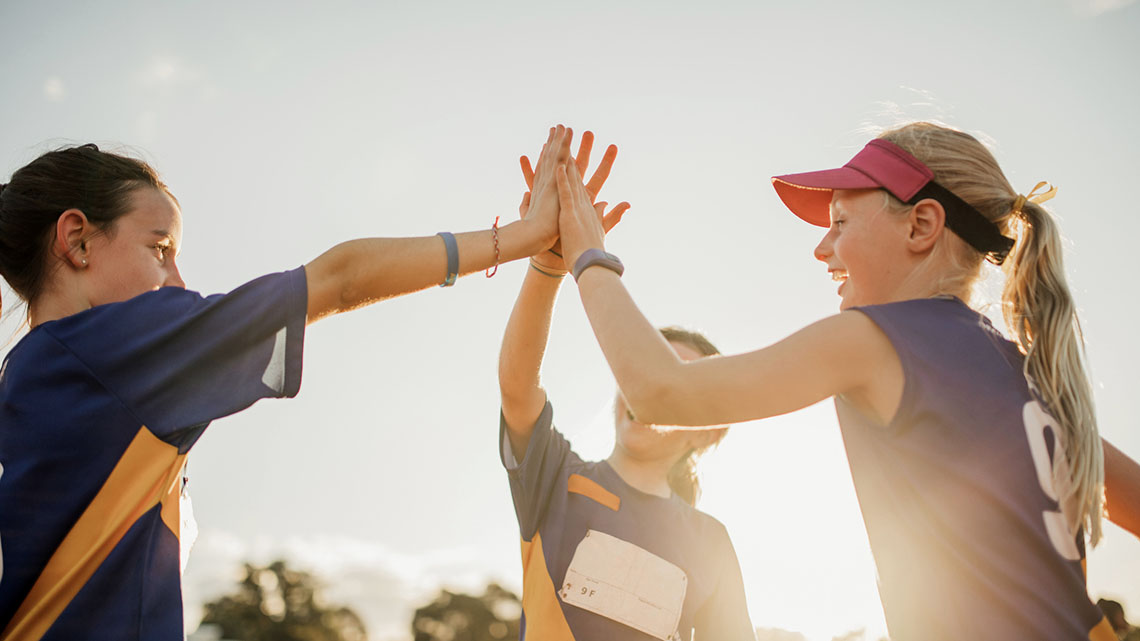
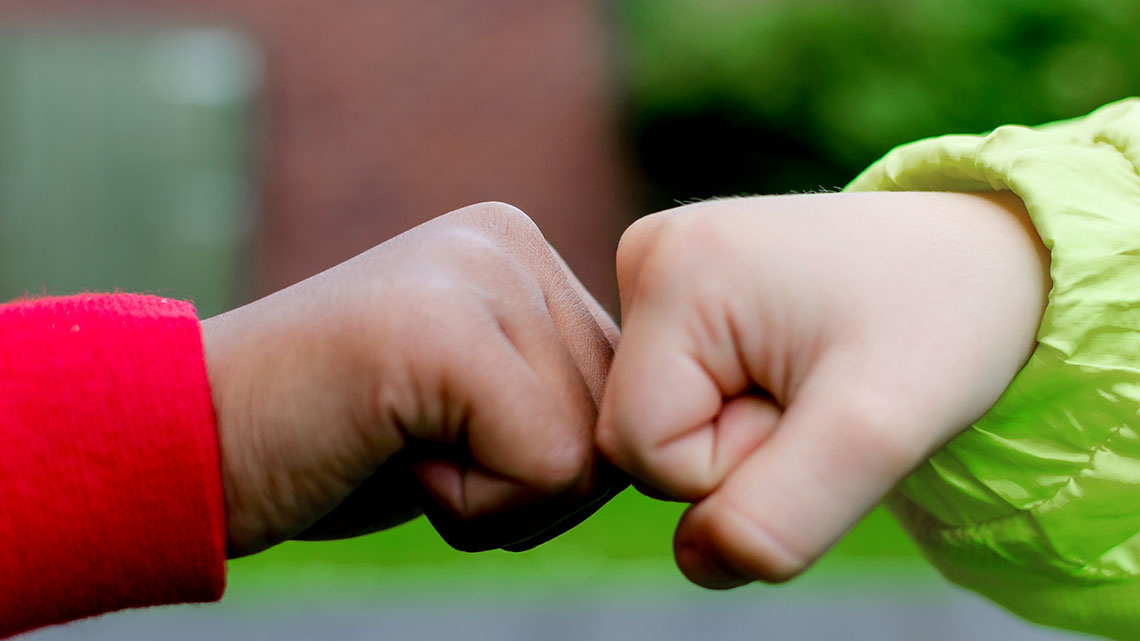
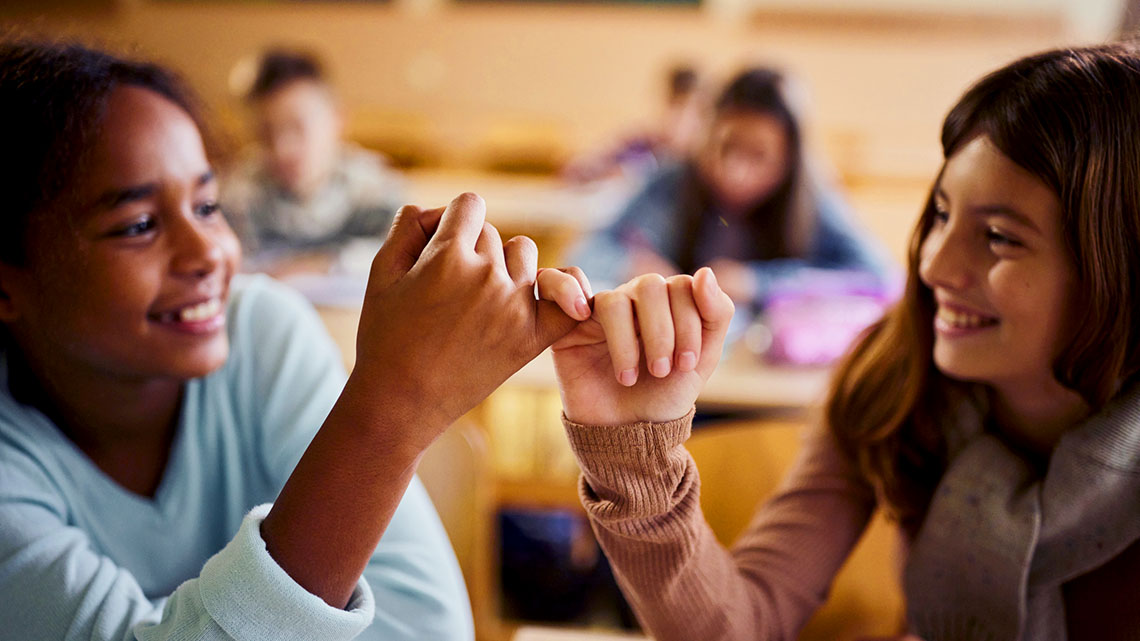
How do you think the word commitment connects to all the previous images explored?
Let’s explore the word “commitment.”

Commitment
Press the following tabs to find out more.
The main part of the word that gives its basic meaning. It can be a word all by itself.
A group of letters added to the end of a base word to form a new word or change it’s meaning.
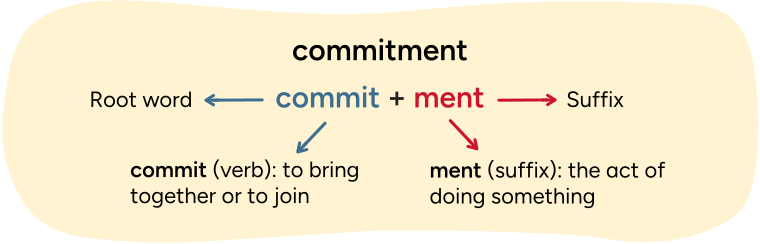
An anchor chart for the word "commitment". "Commit" is the root word and "ment" is the suffix. "Commit" is a verb that means to bring together to join; and "ment" is the act of doing something.
The word “commitment” means the act of committing to something or someone. You are being joined together with something or someone else.
For example, if you make a commitment to your team to show up to practice every day, that means you’ve joined together with your team and made a promise that you stick to, even if it gets hard.
Let’s look at a few more words that are related to the word commitment.
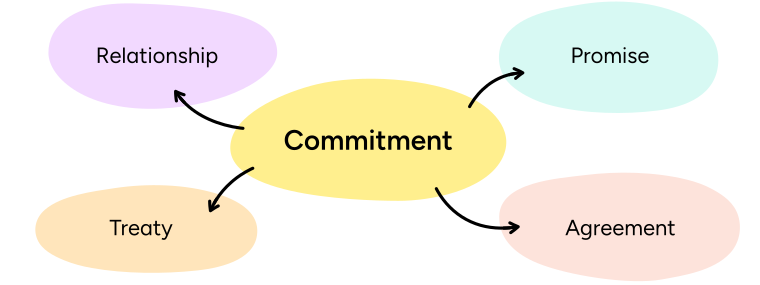
Explore the following definitions.

Student Success
Think
What do you think are some similarities between all four of these words?
Press Possible Answer button to learn more.
All these words are about how people connect with each other. They involve trust, communication, and a commitment to do something.
For promises, agreements, treaties, and relationships to work, everyone needs to believe that the other person will keep their word or act fairly. You also need communication.
Communication
Communication is the way two or more people or groups share information, ideas, or feelings with each other. It can be done by talking, writing, or using gestures. Communication helps everyone understand each other and work together.

Brainstorm
Brainstorm
Can you think of a promise, agreement, or commitment you made in your own life? Was it important to keep your promise, agreement, or commitment? How do you think an agreement can help people work together? Explain your thinking in a method of your choice.
Today’s vocabulary!
Press the following tabs to find out more.
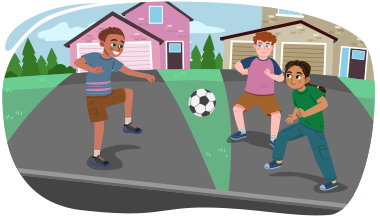
- a group of people who live in the same area
- a group of people with similar interests, customs, or beliefs that may or may not live together
Accept that something is true.
The original people of the land. Indigenous Peoples in Canada refers to First Nations, Inuit, and Métis peoples.
A way to acknowledge that particular lands are the traditional and/or treaty territories of specific Indigenous Peoples.
What is a treaty?
In the Minds On section, you explored how a treaty is a special agreement between two nations. In the next part of this activity, you will be reading and learning more about treaties.

Reading comprehension strategy
As you work your way through the reading you can try using think marks to help you better understand the text. Think marks are symbols or marks you can make as you explore a text to help you remember ideas, thoughts, feelings, or questions you might have. Think marks can help you stay engaged with the story or information and make it easier to share what you have read.
For example:
- You can use a question mark (?) to show you have a question. Maybe something is confusing, or you want to know more about it.
- You can use “RR” to show that you don’t understand this part and need to reread it.
- You can use a star (★) to show something that is important, like a main idea or key detail.
Every time you think of something, have a question, or feel a certain way, just use the symbol that matches your thought!
Explore the following graphic and think about the think marks you can use while reading your text.
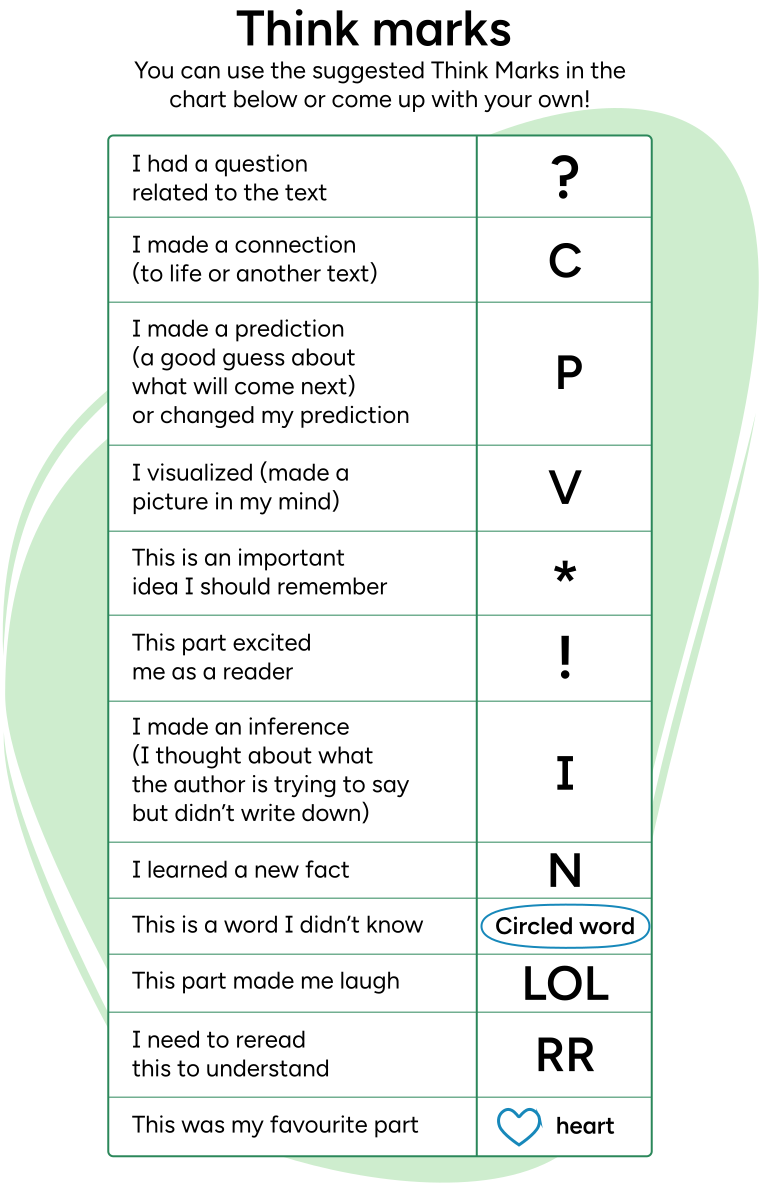
A chart titled "Think Marks" that describes the uses of various think marks. The following information is provided in this chart.
Heading: Think MarksYou can use the suggested Think Marks in the chart below or come up with your own
!? (question mark): I had a question related to the text
"C": I made a connection (to life or to another text)t
"P": I made a prediction (a good guess about what will come next) or changed my prediction
"V": I visualized (made a picture in my mind)
* (star or asterisk symbol): This is an important Idea I should remember
! (exclamation mark): This part excited me as a reader
"I": I made an inference (I thought about what the author is trying to say but didn't write down)
"N": I learned a new fact
Circled word: This is a word I didn't know
"LOL": This part made me laugh
"RR": This needed to reread this to understand
Heart symbol: This was my favourite par
Check out the following video to learn more about how to use think marks.
Press the Activity button to access What Is a Treaty printable document.
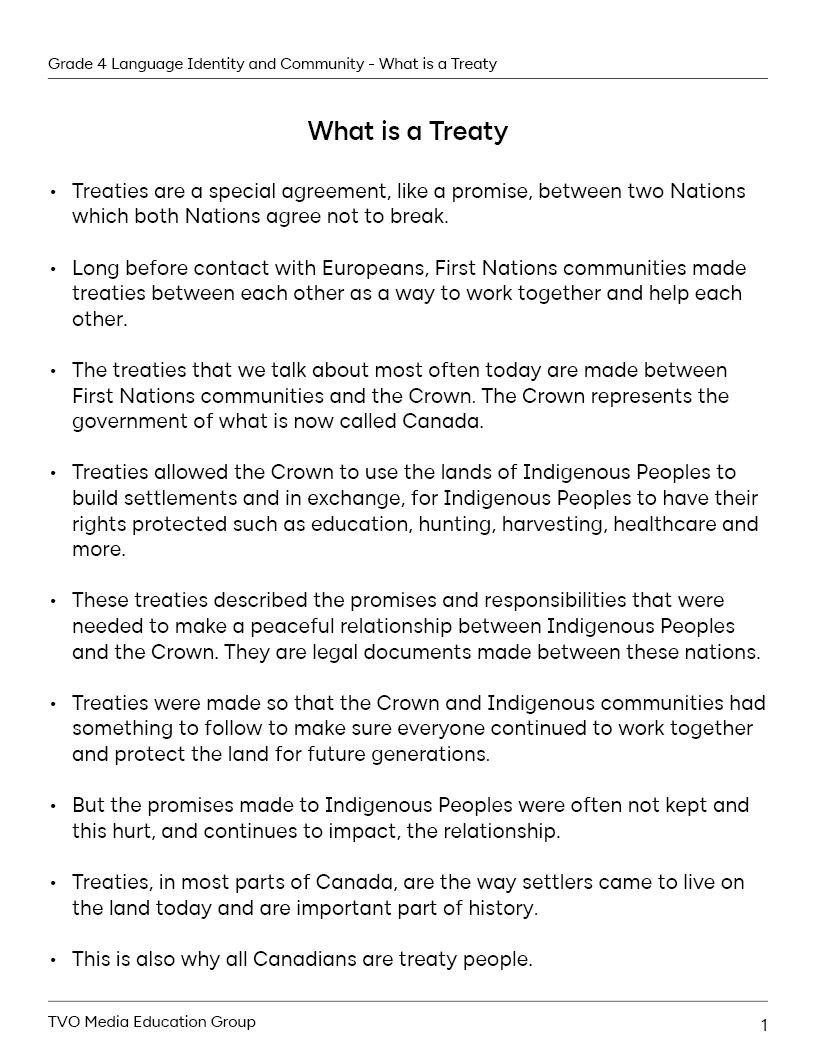
Another reading comprehension strategy is to use questions to check your understanding of the text. Answer the questions below to share what you learned from your reading.
Learning check
Select the correct answer, then press Check Answer to see how you did.
What do you think it means when the text says, "All Canadians are treaty people"?
Press Possible Answer button to learn more.
Everyone who lives in Canada is affected by treaties and should respect treaties.

Pause and Reflect
Pause and reflect
What questions might you still have about treaties?
How did using think marks and answering questions help with your understanding of the text?
Author’s purpose
An author's purpose is the reason why someone creates a text. It is the goal they have in mind when they create something for an audience to read, view or listen to. There are three main reasons to create a text. To remember these three reasons, you can think of a pie!
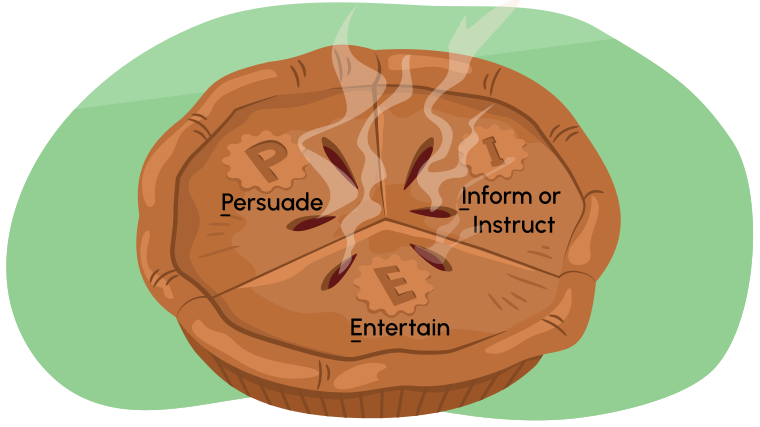
Press the following tabs to discover what the acronym PIE represents.
The author wants to convince you to believe something or to do something. For example, the purpose of a letter asking you to recycle might be to try to persuade you that recycling is important and something you should take part in.
The author wants to teach you something or give you knew information. For example, the purpose of a book written about animals is to teach you about different types of animals and where they live.
The author wants to share a story that you will enjoy. This could be a fairy tale, adventure movie, or a funny video that keeps your attention.

Connections
Make a connection
Think about a text you have recently read/listened to/viewed, such as a video, book, or website. What do you think might be the author’s purpose for this text?
Press the Activity button to access Author’s Purpose: PIE printable document.
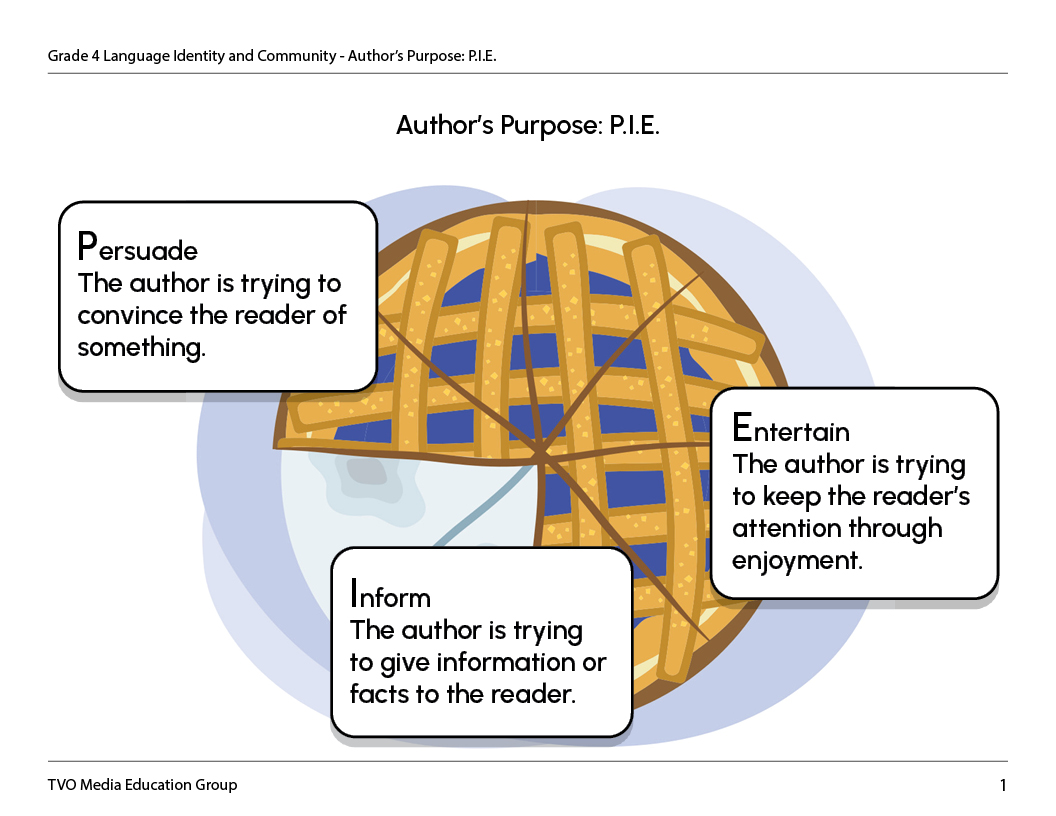
Why is knowing the purpose of a text important? Understanding the purpose of at text can change the way we understand a text. For example, if you know that the author’s purpose is to inform, then you know you could use the text to gather information about a specific topic for a research activity.
You can find out the purpose of a text by asking yourself questions like
- “What does the author want me to know about this?”
- “Why is the author telling me about this?”
Let’s practice identifying the purpose of a text.
Place the cards into categories that best match. Use the arrow buttons to navigate between cards.
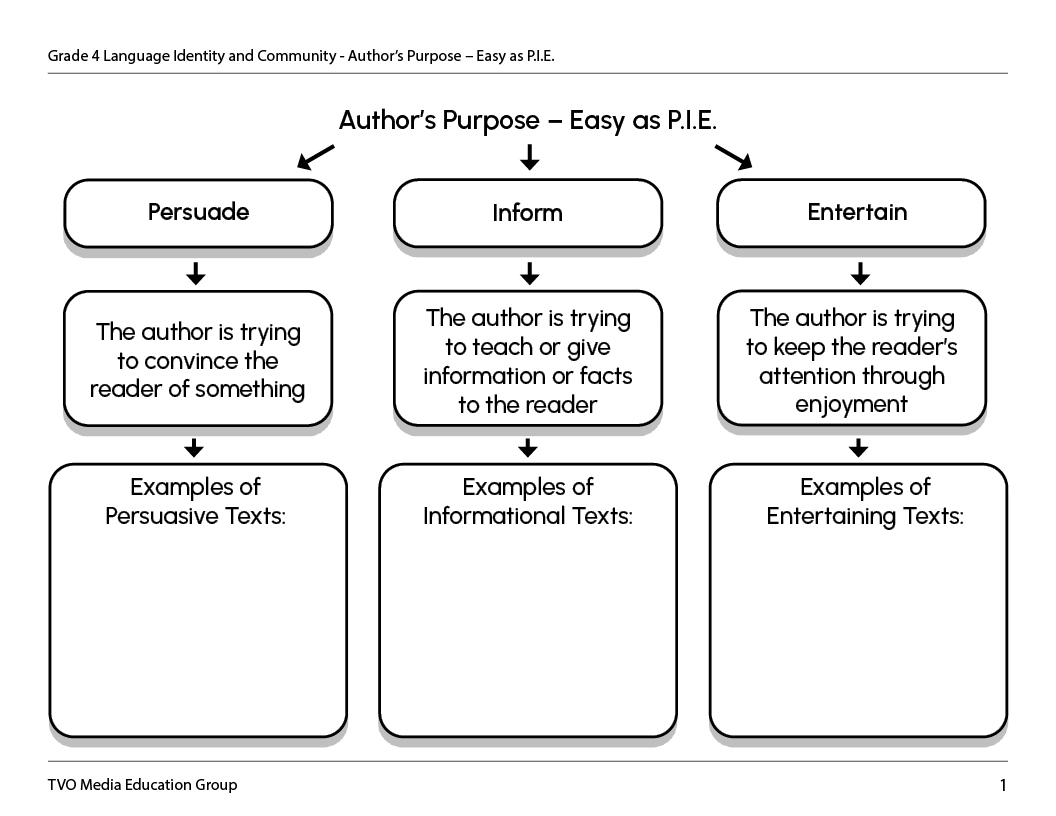
Select three digital and/or printed texts of your choice and identify the author’s purpose. For example, you could explore a book or audiobook, news article, textbook, comic book, pamphlet, or poster.
Press the Activity button to record your idea using the following Author’s Purpose – Easy as PIE fillable and printable document, or using a method of your choice.
Treaty is a promise
Portrait of Isaac Murdoch
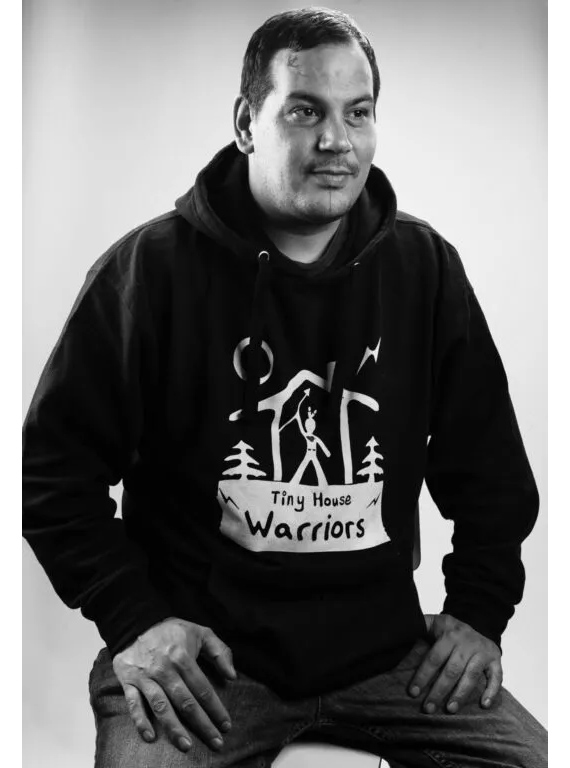
Next you will explore a video where you will meet Isaac Murdoch from the Serpent River First Nation. He is of the Fish Clan, and he is Ojibwe. Isaac spent many years learning from Elders and now he spends a lot of time as a storyteller. He loves spending time on the land, looking at his favorite plants, and gazing into the night sky. In the video, Isaac shares more about the importance of treaties.
Student Success
Think
What do you think might be the purpose of this video?
- to persuade
- to inform
- to entertain
Press Answer button to learn more.
The purpose of this video is to inform.
Words to know
Before getting into the video, let’s preview some words from the Ojibwe language that you will come across in the video.
Waawewadodowin – a sacred promise
Waawewadodowin
Watch the video once all the way through. Then, watch it a second time, but this time pause and record any new or unknown words in your notebook or any method of your choice. Ask a trusted adult to help you use a dictionary to find out the meaning of these words.
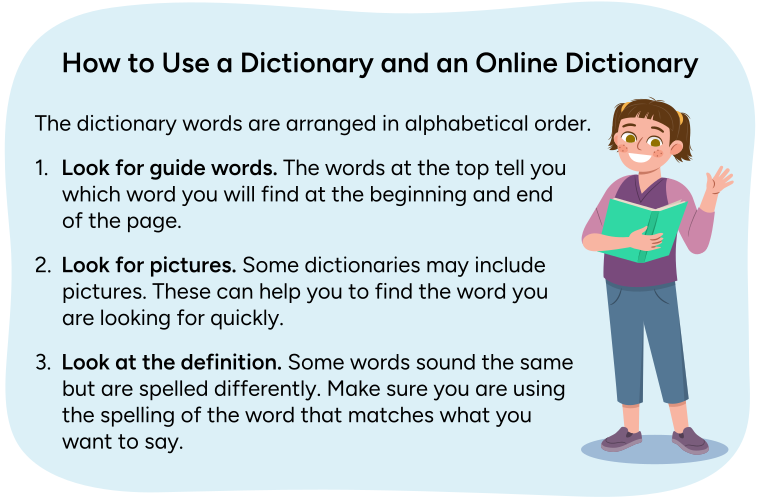
An illustration explaining how to use a dictionary. It reads: The dictionary words are arranged in alphabetical order. Step 1 is to look for guide words. The words at the top tell you which word you will find at the beginning and end of the page. Step 2 is to look for pictures. Some dictionaries may include pictures. These can help you to find the word you are looking for quickly. Look at the definition. Some words sound the same but are spelled differently. Make sure you are using the spelling of the word that matches what you want to say.
Explore the video entitled What is a Promise? by Anishinabek Nation.
Pause and Reflect
Pause and reflect
Reflect on the following questions. Press the Possible Answer buttons to learn more.
- How is the word “promise” described in this video?
Something very deep and important that connects to our hearts and the truth in our words.
- Why do you think promises are important to treaties and agreements?
A promise is based on trust and honesty. In agreements or treaties, promises are the base that everyone builds on. Promises help make agreements and treaties strong and trustworthy because everyone believes that the promises will be kept.
- Why do you think the video says that promises carry things into the future for the next generation?
When people make important promises in a treaty or agreement, they are also thinking about how these promises will affect future generations. Keeping promises makes sure that treaties will be respected and followed for years to come. This helps create a positive and fair future for everyone.
Why are treaties important today?
Treaties are important today because they are living agreements. A "living agreement" is like a promise that grows and changes over time. Imagine you and a friend make a promise to share your toys. If something new happens, like getting new toys or repairing an old toy, you might change how you share with each other.
In the same way, a living agreement, like a treaty, is a promise between nations that needs to be kept and adjusted as things might change. It changes to keep working well for everyone.
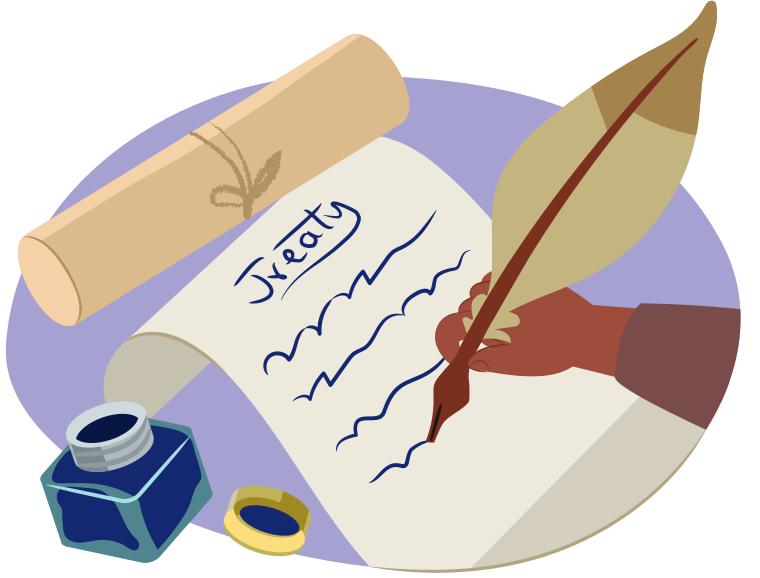
We know when a treaty is successful when First Nations children have the same access and equal opportunity to education, healthcare, and careers as everyone else. Treaties help build good relationships between First Nations and non-Indigenous people, and they are the basis for understanding each other’s rights and responsibilities. Today, there are still new treaties being discussed in Canada.
Acknowledging treaty land
A land acknowledgement is a way to recognizes that we are on treaty land. A land acknowledgement shows respect and recognize the connections and relationships Indigenous Peoples had, and continue to have, on this land. A land acknowledgement can be short or long. Before making a land acknowledgement, people need to learn about the land they are on. Besides giving the acknowledgment, people should also think about how they can follow the promises of the treaty made on this land, and help others do the same.
Putting it altogether
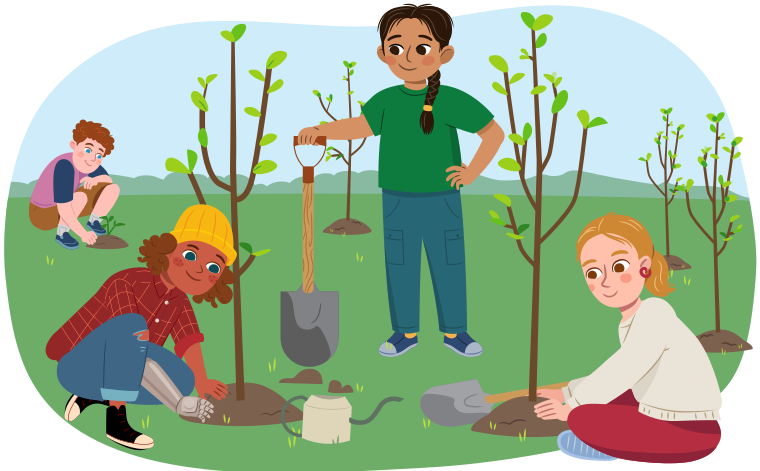
Each person’s connection to the land around us will be different, but we all have a shared responsibility to be respectful of the land and protect it for the future. This helps us to all be treaty people.
Pause and Reflect
Reflecting on land acknowledgments
Do you know the land acknowledgement for your school or where you live? If you don’t, how can you find out?
Think about the following questions and how you can add these aspects to the land acknowledgements you might already be using.
- What things do we appreciate about this land? What activities do we enjoy? What things do you do alone or with your family outside on the land?
- What can we promise to do for the land?
- What is our commitment? What do we want to continue doing or start doing?
Record your answers in your notebook, using an audio/video clip, drawing, or any other method of your choice.
Reflection
As you read through these descriptions, which sentence best describes how you are feeling about your understanding of this learning activity? Press the button that is beside this sentence.
I feel...
Now, record your ideas using a voice recorder, speech-to-text, or writing tool.