Learning goals
We are learning to …
- show an understanding of relationship between the form, message, and purpose of a text, audience, and the purpose for production
- read and comprehend various texts, using different reading strategies
- identify various elements of style in texts and analyze how each element helps create meaning and is appropriate for that form and genre
- make predictions using background knowledge, text features, and evidence from the text, and ask questions to check whether our predictions were correct
- generate and develop ideas about various topics, using a variety of strategies, and drawing on various resources, including our own lived experiences
Success criteria
I am able to …
- make predictions about the story Why the Cricket Chirps using background knowledge, text features, and evidence from the text
- explore origin tale characteristics and read and decode the story Why the Cricket Chirps
- analyze how the origin tale characteristics create meaning
- generate and develop ideas about various topics, using a variety of strategies, and drawing on various resources, including our own lived experiences

Today’s vocabulary!
Press the following tabs to learn more about today’s vocabulary.

The beginning or starting point of something. For example, the origin of a holiday tells you how it first began.
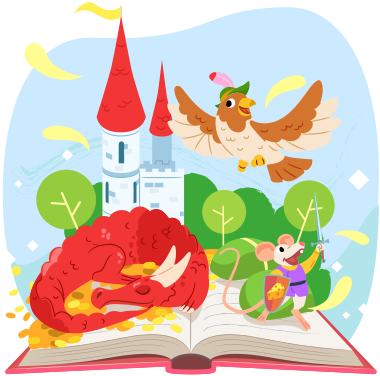
A made-up story or a story passed down from long ago. Tales might also teach a lesson or explain something.

Brainstorm
Brainstorm
Have you ever heard a story that explains why certain things in nature are the way they are? For example, why the sky is blue or why animals are certain colors? Think about a story like this you might already know and who you might have heard it from.
These types of stories are called origin tales or myths. They are special stories that explain how things came to be. Origin tales also help us understand and appreciate the culture and beliefs of a community. They can teach us about the values, traditions, and history of different groups of people.
Making predictions
Explore the title and the images on the cover of this story and think of the following:
- What do you think this story will be about?
- Where do you think this story takes place?
- What kind of characters do you think will be in this story?
- What clues does this cover give you about what happens in the story?
Record your thinking in any method of your choice.
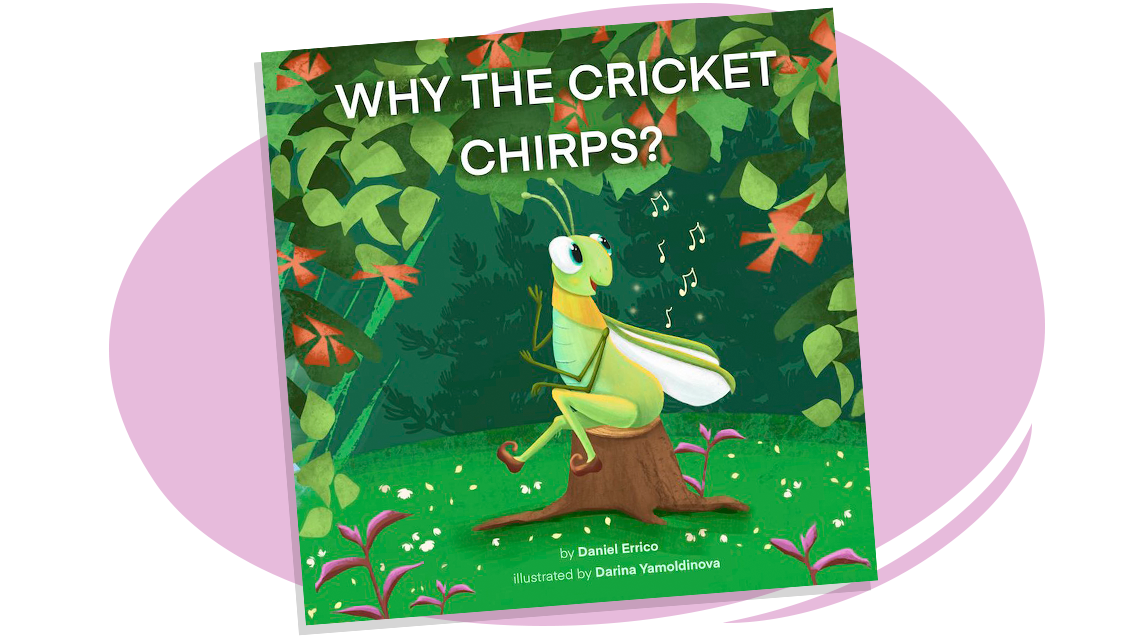
Cover of the book "Why the Cricket Chirps?" by Daniel Errico
Description
What’s in an origin tale?
Origin tales have certain characteristics that make them unique.
Explore the images below to learn more about the characteristics of origin tales.
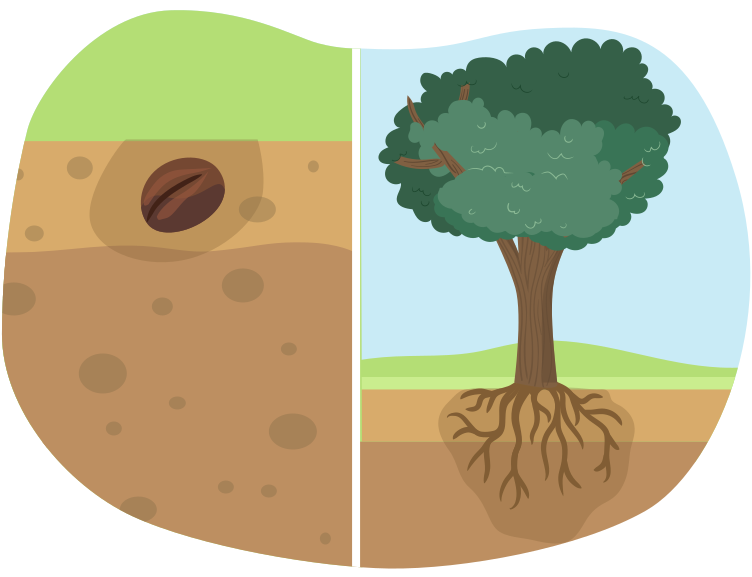
They explain the origins (the beginning or starting point) of something and the are usually connected to nature and the environment.
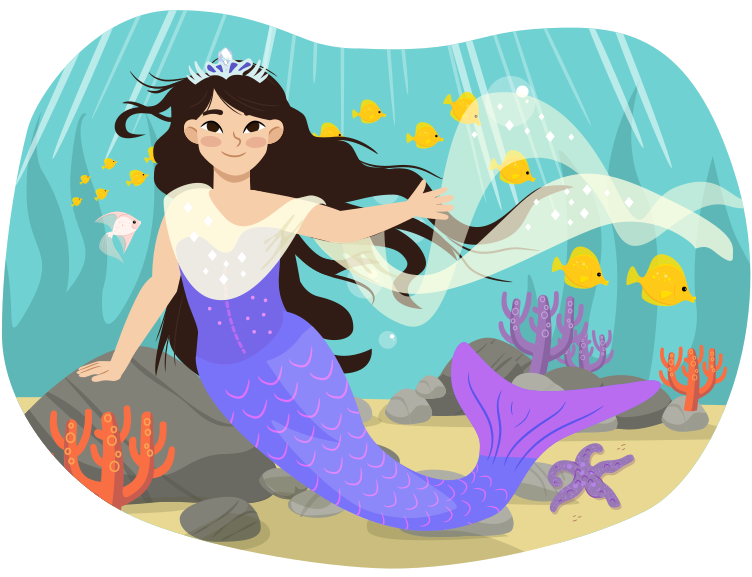
They often have animals or mythical creatures.
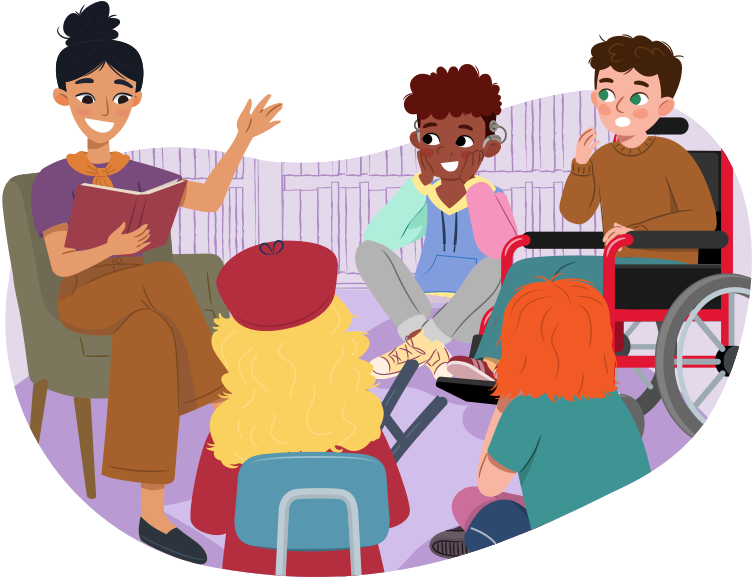
They are passed down through generations, usually through oral storytelling.
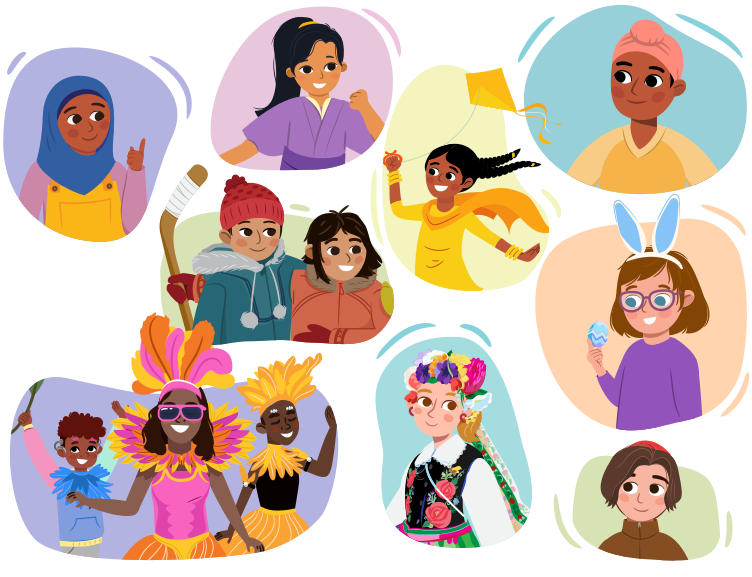
They show the values and beliefs of the culture they come from.

Reading practice
Multisyllabic words
When you are reading, you will come across some words that are long and difficult to read. These are called multi-syllabic words. It is important to learn how to decode all types of words, even tricky ones. This helps us become fluent readers. Multisyllabic words often hold a lot of the meaning in texts. If you can decode multisyllabic words, this will help you better understand what you’re reading.
Review the definitions below to help you with the strategies for decoding multisyllabic words.
Check out the following video to learn more about suffixes, prefixes, and root (base) words.
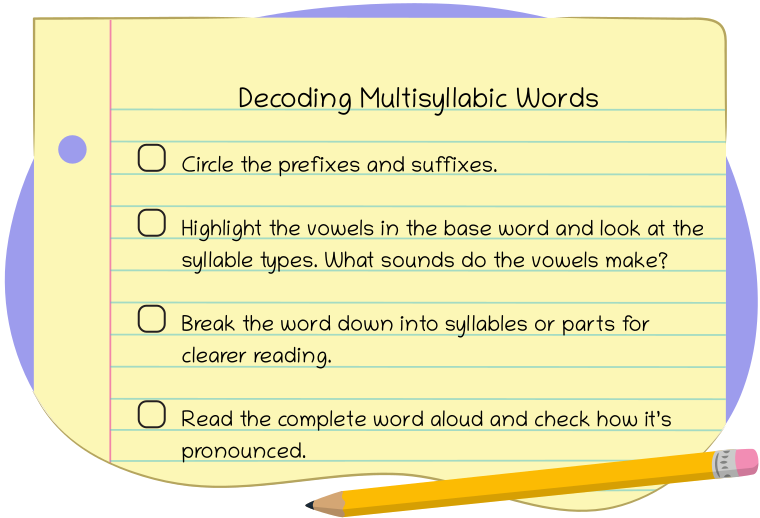
A piece of paper containing the following information.
Titled at the top of the paper: "Decoding Multi-Syllabic Words"
A checklist containing the following points:
- Circle the prefixes and suffixes
- Highlight the vowels in the base word and look at the syllable types. What sounds do the vowels make?
- Break the word down into syllables or parts for clearer reading.
- Read the complete word aloud and check how it's pronounced.
Use these strategies to help you with the story below. As you explore the story, think about the different characteristics of an origin tale and how they are included in this story.
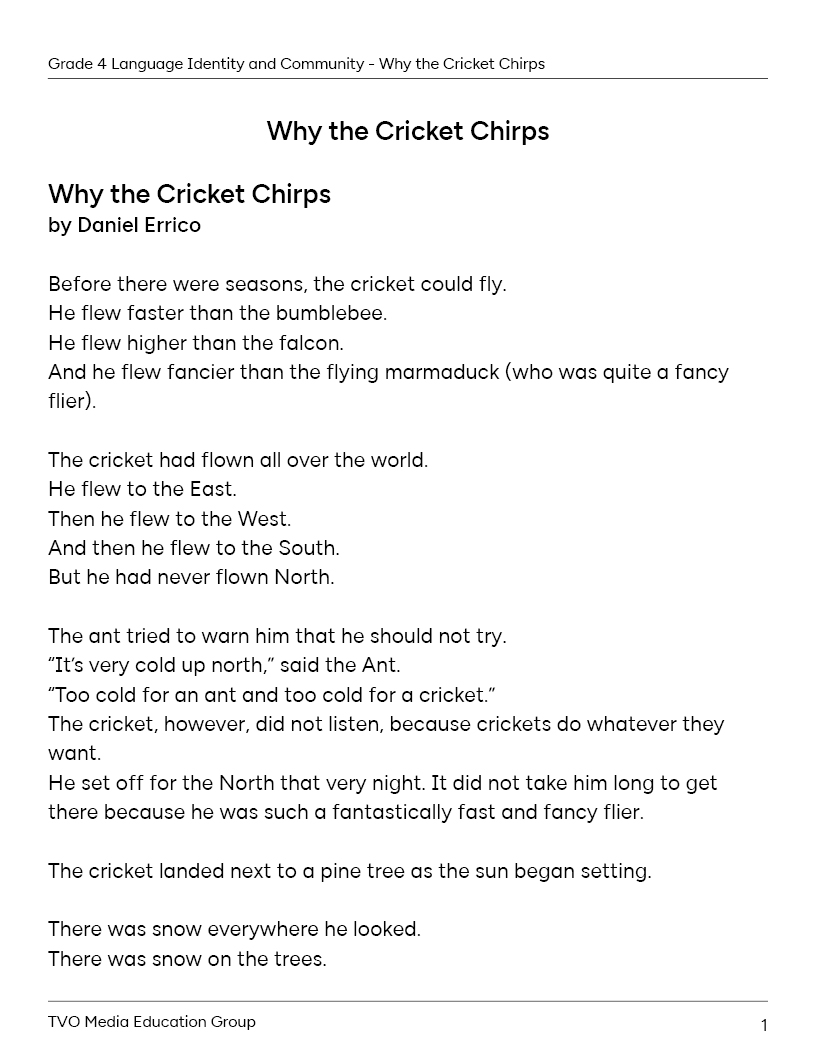
Identifying characteristics
Identify the origin tale characteristics from this story. Copy the fillable and printable Origin Tales Characteristics Chart in your notebook or by using any other method of your choice.
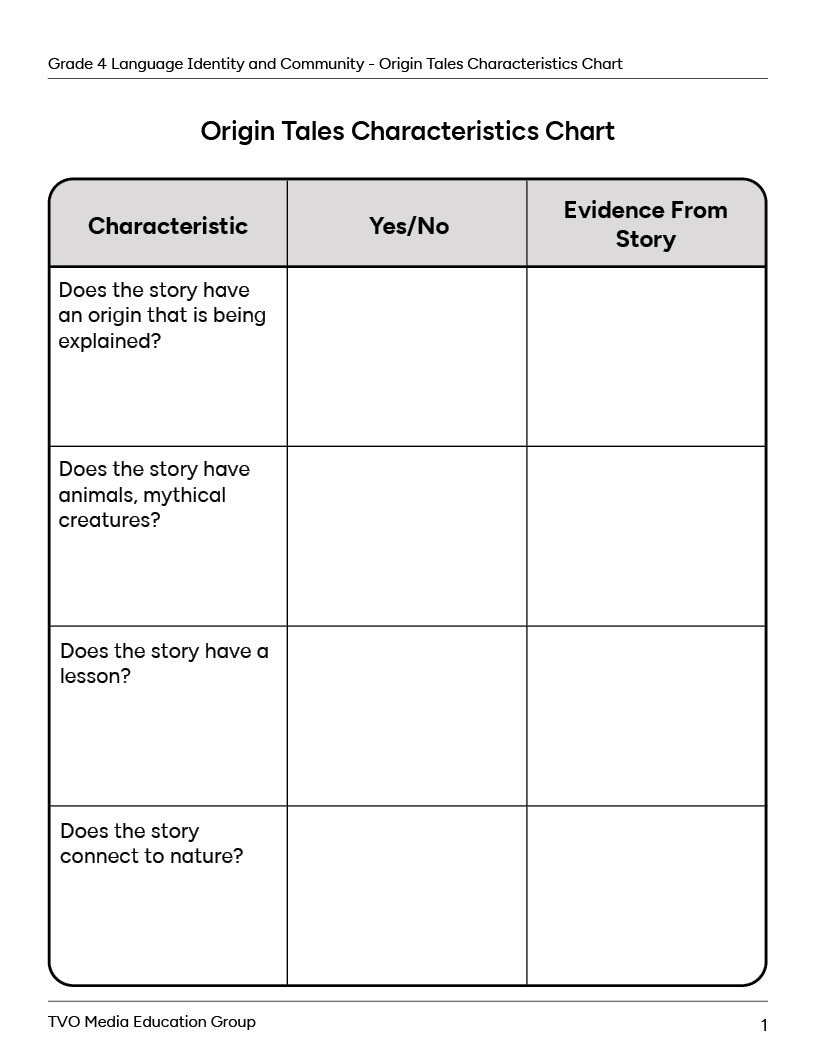
Press the Activity button to access the Origin Tales Characteristics Chart.
Activity(Opens in a new tab)Press to reveal a complete Characteristics of Origin Tales Chart and compare the answers with your own.
Characteristics of Origin Tales Chart
| Characteristic | Yes/No | Evidence from story |
|---|---|---|
|
Does the story have an origin that is being explained? |
Yes |
This story explains why the cricket chirps. |
|
Does the story have animals or mythical creatures? |
Yes |
The characters are the cricket, the ant, the moose, and the owl. |
|
Does the story have a lesson? |
Yes |
The story teaches the lesson that the cricket should have listened to the advice from the ant, the moose, and the owl, because they knew more about the cold weather in the North. Since the cricket did not listen, he faced some problems. |
|
Does the story connect to nature? |
Yes |
The story connects to nature by explaining the origin of the cricket's chirping sound and how it connects to the temperature. This helps people understand the weather. |
Symbols in our stories
What is a symbol?
A symbol can include an action, an object, or an event. It represents an idea, an object, or a relationship.
Let’s explore the following symbols. What idea, object, or relationship might each symbol represent?
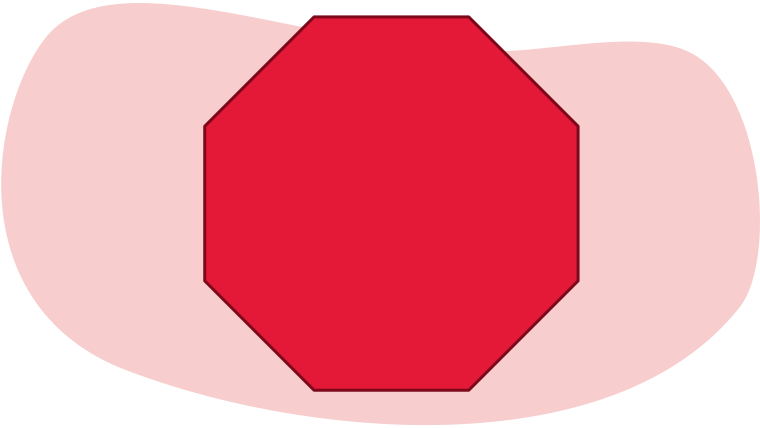
The symbol is a red octagon. What idea might the symbol represent?

The symbol is a heart. What feeling might the symbol represent?
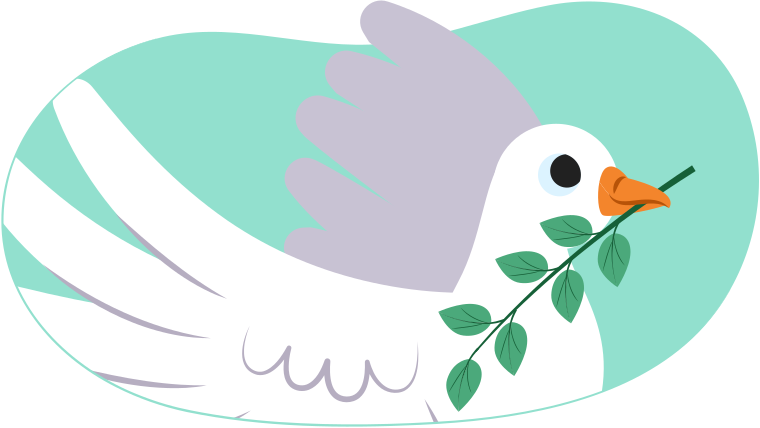
The symbol is a dove. What idea might the symbol represent?
Did you guess what the symbols might represent?
Press Answer to learn about what the three symbols represent.
- Red octagon = Stop
- Heart = Love
- Dove = Peace
Can you name some other symbols that you know about?
How are symbols used in stories
Stories use symbols to add deeper meanings, help show the story’s message, and reflect cultural values and beliefs. In origin tales, symbols can explain how certain things came to be or teach important lessons. For example, a mountain could symbolize strength, or an animal could symbolize a value like honesty.
Explore the following ideas and feelings. For each, choose a symbol that might represent that idea or feeling for you. If you can think of more than one symbol, record them all. Some symbol ideas have been provided for you to help you get started.
You can record your symbols in a method of your choice or use the following chart.
Complete the Symbol Chart in your notebook or using the following fillable and printable document. If you would like, you can use speech-to-text or audio recording tools to record your thoughts.
| Idea/feeling | Symbols that could represent the idea/feeling |
|---|---|
| Power | e.g. Eagle |
| Growth | e.g. Tree |
| Danger | |
| Life | |
| Hope | |
| Happiness |
Complete Symbol Chart in your notebook or using the following fillable and printable document.
Press the Activity button to access the Symbol Chart.
Using descriptive language
Descriptive language helps readers visualize the story and understand how characters are feeling or where the story takes place. Adjectives and adverbs are often used to add description to stories and make them come to life.
Adjectives describe nouns (a person, place, or thing).
Adverbs describe verbs or adjectives in a sentence. Adverbs give more detail about how, when, where, or how much something happens. Adverbs can answer questions like:
- How? (quickly, carefully)
- When? (yesterday, soon)
- Where? (here, everywhere)
- How much? (very, quite)
Explore the following example passage from Why Does the Cricket Chirp and identify adjectives and adverbs that are being used.
"He decided to rest on a pile of twigs. He was sleepier than he had ever been, from all the remarkably fast and fancy flying. The cricket slept all through the night until morning. When he woke up he was ready to go home and tell the ant about his trip. He hopped high in the air to start flying, but he couldn’t."
What adjectives and adverbs did you notice? How did they help you visualize (picture) the story?
Create your own descriptions
Select a section of the story Why Does the Cricket Chirp and add or replace the adjectives and adverbs in that section. How does the scene change? How does it remain the same?
Complete your description in your notebook or use any other method of your choice.
If you need help coming up with descriptive words, ask a trusted adult or peer to help you use a thesaurus to find some synonyms.

Synonym
A synonym is a word which means the same as another word.
For example: Happy and joyful are synonyms. They mean the same thing but use different words.
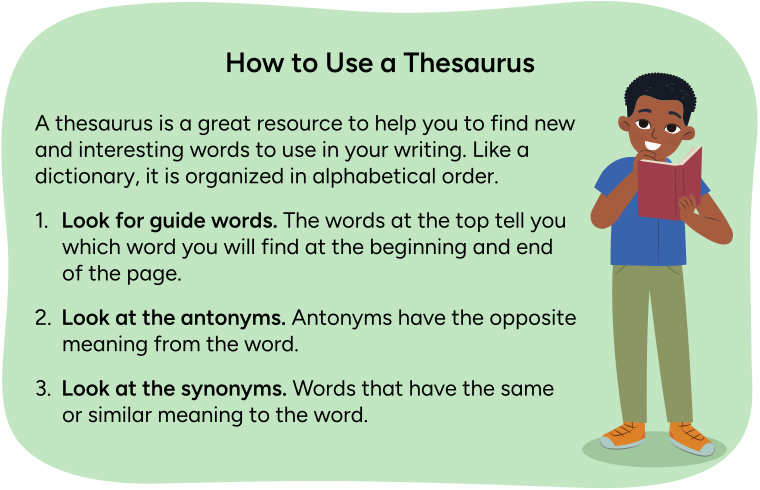
You can also check out this video exploring synonyms and how they can make your writing more interesting and exciting!

Putting it all together

Brainstorm
Brainstorm
We explored many different ways to make writing more interesting and descriptive.
If you were to create your own story, what would be your main idea or message?
What kind of writing strategies would you use to help the reader make connections and visualize different parts of your story?
Brainstorm and record your thoughts using a method of your choice. If possible, share your thoughts with a partner.

Pause and Reflect
Pause and reflect
- Why do you think myths and origin tales are important to communities?
- How do you think origin tales help keep a culture’s history and traditions alive?
Record your thinking in any method of your choice.
Reflection
As you read through these descriptions, which sentence best describes how you are feeling about your understanding of this learning activity? Press the button that is beside this sentence.

I feel...
Now, record your ideas using a voice recorder, speech-to-text, or writing tool.