Learning goals
We are learning to…
- demonstrate an understanding of biographies and autobiographies
- identify the characteristics of a biography
- identify first- and third-person point of view in a text
- identify and use past tense in a text
- develop, draft, and publish a biopoem
Success criteria
I am able to…
- share my learning about biographies and autobiographies
- identify the characteristics of a biography
- identify and use third-person and first-person point of view
- develop, draft, and publish a biopoem using a graphic organizer

What is a biography?
Think about the word “biography.”
Maybe you’ve heard the word before, or maybe it’s your first time coming across this.
Try to think of the smallest parts of the word “biography.”
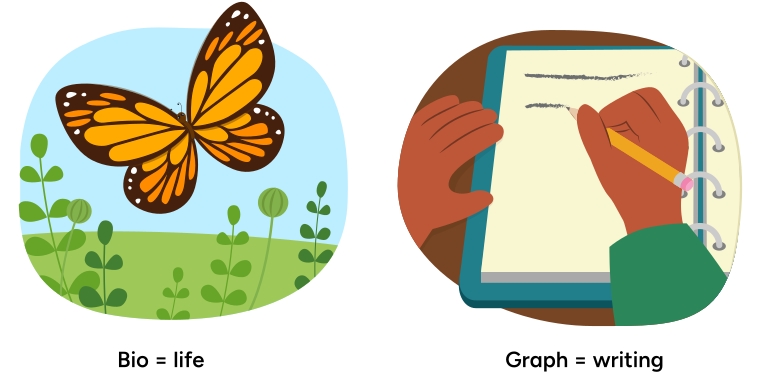
Now that you’ve broken the word down into smaller words, what do you think a biography is?
A biography is the story about someone’s life, written by another person. It tells important details about the person, like where they were born, what they did during their life and lots of other information about them. Reading a biography helps us learn about a person's life and their achievements.
Explore the images below. Do you recognize any of the individuals? If you recognize them, think about why you recognize them.

Malala Yousafzai. Pakistani activist for female education and the youngest person to win a Nobel Peace Prize.
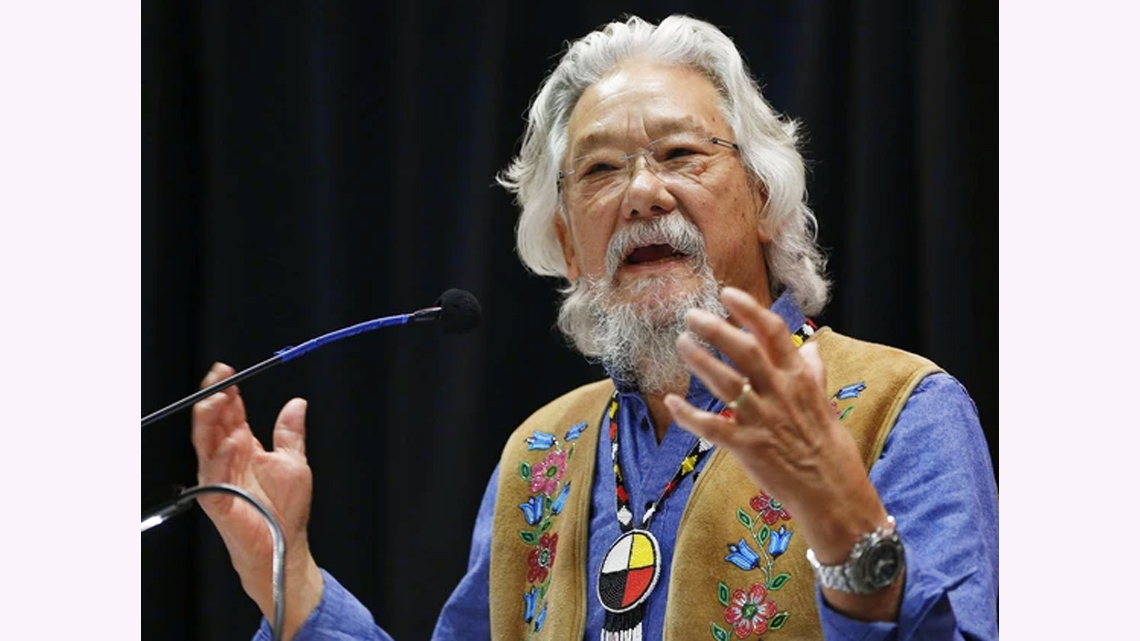
David Suzuki. Canadian academic, science broadcaster, and environmental activist.
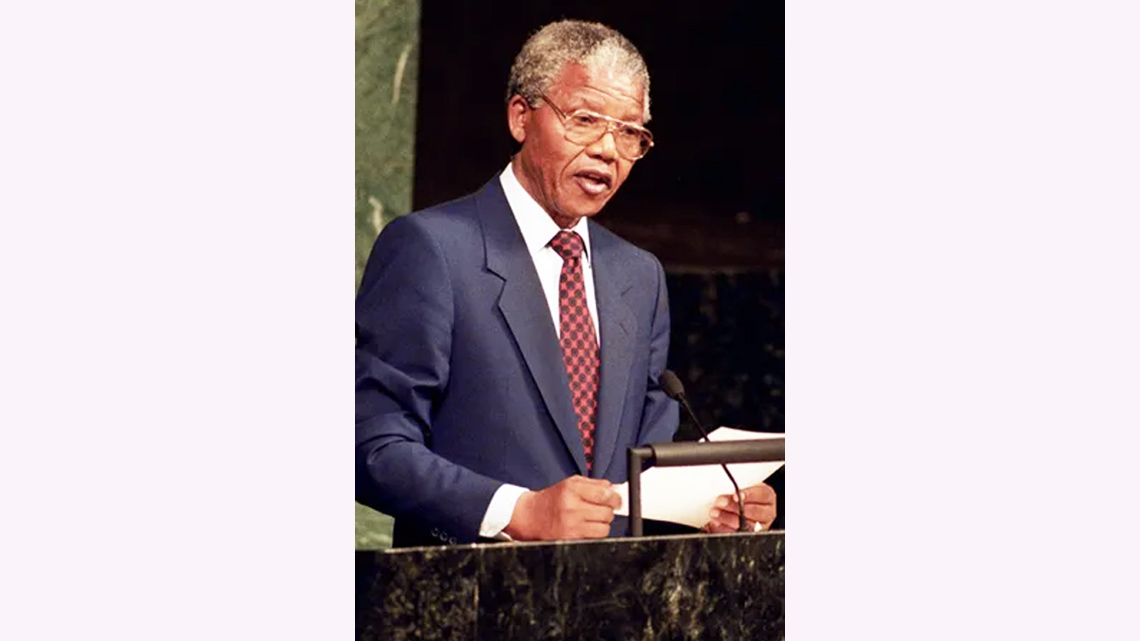
Nelson Mandela. South African revolutionary and political leader who served as President of South Africa from 1994 to 1999.
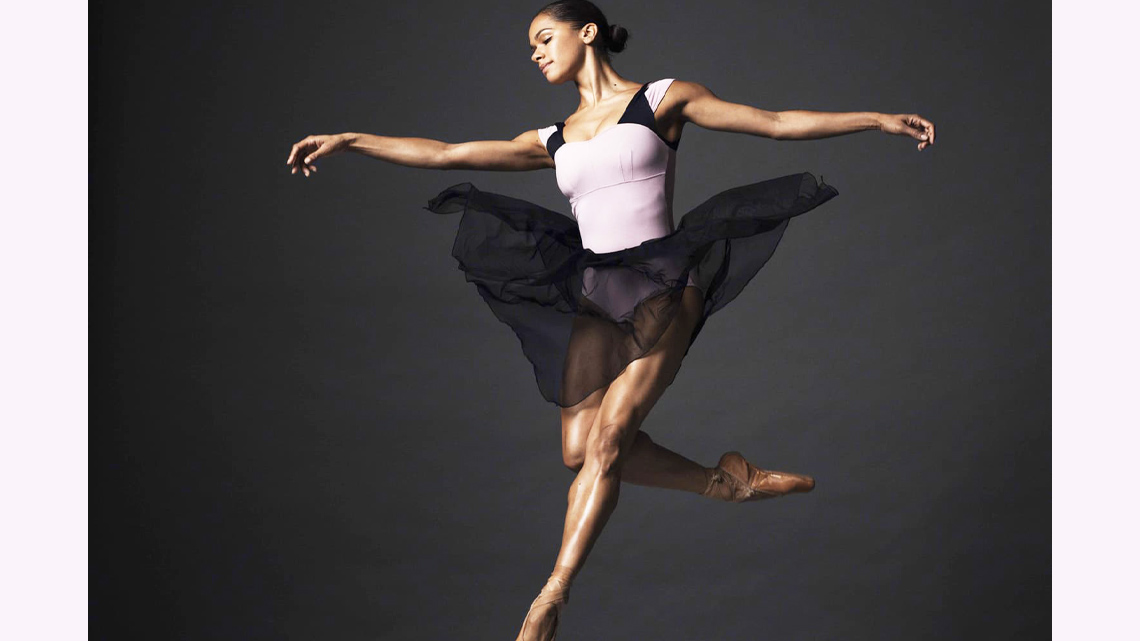
Misty Copeland. First African American woman promoted to principal dancer in the American Ballet Theatre.
The people in these images are people who accomplished many things and contributed to their community and the world. They all have a biography written about them. Think about any biographies that you might have already read or had read to you. Who were they about and what did you learn?

Meet Terry Fox
Explore the cover of the book Meet Terry Fox below.
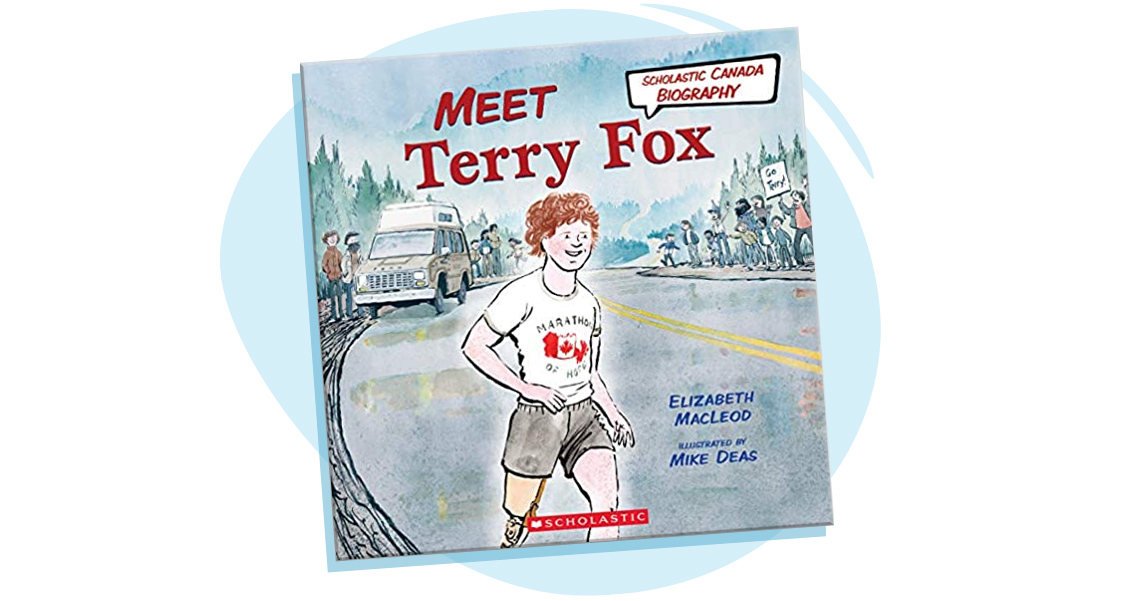
What are some clues that tell you that this book is a biography
What can you infer about Terry Fox just by the cover of this book?
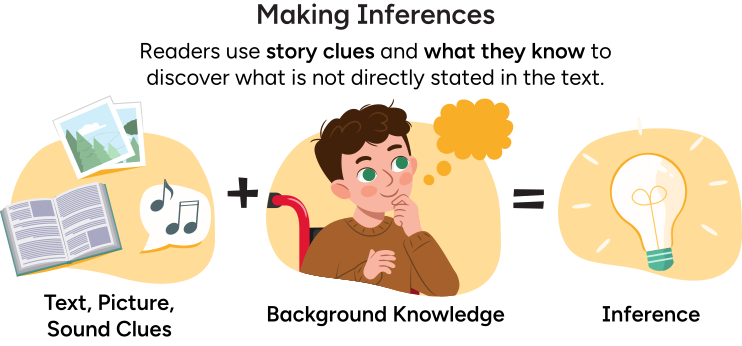
An illustration titled "Making Inferences" that describes how readers use story clues and what they know to discover what is not directly stated in the text.
The illustration shows that text, picture, and sound clues, combined with the reader's background knowledge is equal to an inference made about the text.
Press Possible Answers button to learn more.
- I notice a Canadian flag on his t-shirt, so I infer that Terry Fox is Canadian.
- I notice Terry Fox is running with people cheering him on, so I infer that he might be a famous athlete.
Reading practice!
Let’s learn more about Terry Fox by reading a short biography.
Pre-reading activity
Before you begin, it’s important to ask what information you would like to learn. Think about the following questions as you read and record the answers as you find them in the text. You can use your notebook or any other method of your choice to do this.
- Where and when was Terry Fox born?
- What happened to Terry Fox when he was 18 years old?
- What was Terry Fox’s big idea called?
- How does Terry Fox’s story still inspire people today?

Words to know
As you read the text, record any other words that you do not know. You can use a dictionary or online dictionary as a tool to help you find the meaning of these words. Ask a trusted adult for help if needed.
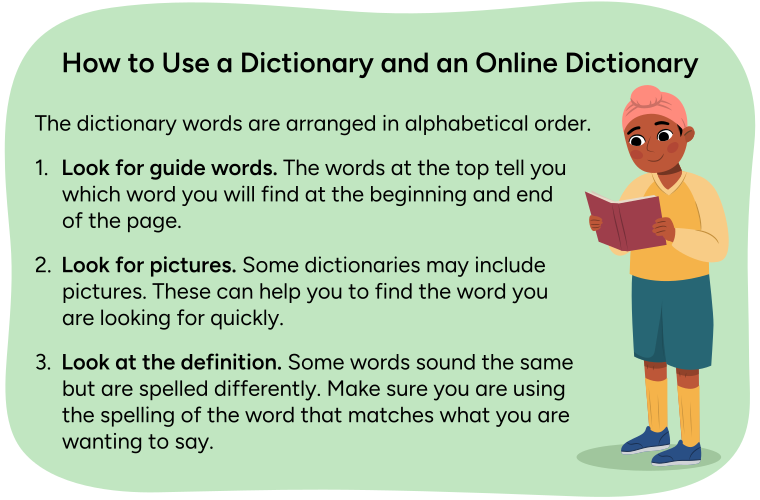
An illustration explaining how to use a dictionary. It reads: The dictionary words are arranged in alphabetical order. Step 1 is to look for guide words. The words at the top tell you which word you will find at the beginning and end of the page. Step 2 is to look for pictures. Some dictionaries may include pictures. These can help you to find the word you are looking for quickly. Step 3 is to look at the definition. Some words sound the same but are spelled differently. Make sure you are using the spelling of the word that matches what you are wanting to say.
Terry Fox: A Canadian hero
Terry Fox was a brave young person from Canada who became a hero for many people. He was born on July 28, 1958, in Winnipeg, Manitoba. As a teenager, he loved to run and play sports like basketball. When Terry was 18 years old, doctors told him he had cancer in his leg. To save his life, they had to remove the leg and later replaced it with a prosthetic leg.

Did You Know?
Did you know?
Sometimes people might have health concerns with their arms, legs, or another part of their body, so they need to be removed. Sometimes people are born this way. When that happens, a prosthetic can be used in place of what is missing. People of all ages and abilities might use a prosthetic to help them do things they enjoy, like walking, playing sports, or spending time with friends and family. It allows them to take part in the things they love and stay active, just like Terry Fox did when he used his prosthetic leg to run across Canada.

Even though this was a very hard time in his life, Terry decided he wanted to help others with cancer. He came up with an idea called the "Marathon of Hope." Terry planned to run all the way across Canada to raise money for cancer research. He hoped that this would help people in the future that have cancer like him.
Terry started his run on April 12, 1980, in St. John’s, Newfoundland. Every day, he ran about 42 kilometers (26 miles). People all over Canada heard about Terry Fox and were inspired by his story. They started to cheer him on as he ran and donated money for cancer research.
After running for 143 days and covering 5,373 kilometers (3,339 miles), just outside of Thunder Bay, Ontario, Terry had to stop because the cancer had spread to his lungs. Terry passed away on June 28, 1981, but his dream of finding a cure for cancer did not stop there.
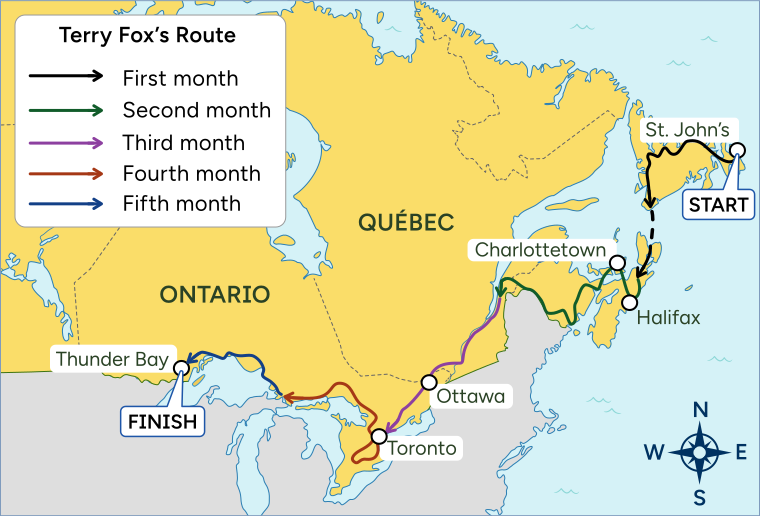
This map shows the route that Terry fox took as he ran the Marathon of Hope.
Today, people around the world continue to uphold Terry Fox’s dream for the future. They participate in the annual Terry Fox Run and raise millions of dollars for cancer research. Terry Fox showed that one person can make a big difference. He continues to inspire people everywhere.

Pause and Reflect
Pause and reflect
The title of this biography is “Terry Fox: A Canadian Hero.” Why do you think Terry Fox is considered a hero? Explain your thinking in any method of your choice.
Characteristics of a biography
Explore the graphic below to learn more about the characteristics of a biography.
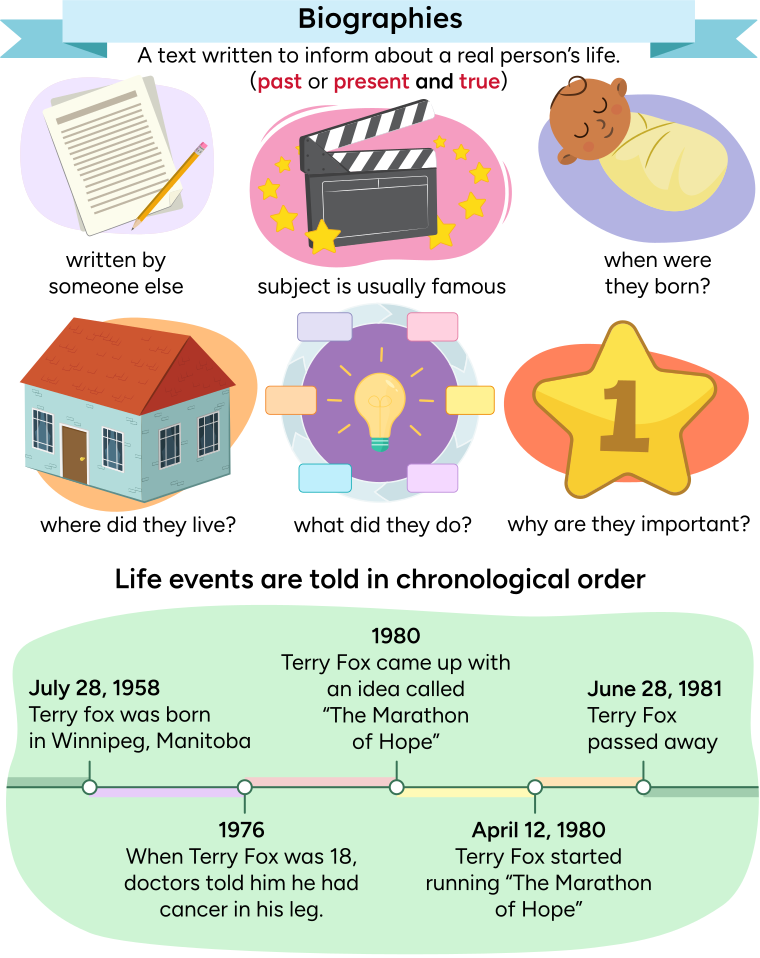
An infographic that explains the characteristics of a biography. The following information is presented in this infographic.
Title: Biographies
Definition of biography: a text written to inform about a real person's life (past or present and true).
Characteristics of a biography: they are written by someone else, the subject is usually famous, and it provides answers to the following questions: when were they born; where did they live; what did they do; why they're important?
Life events are told in chronological order.
An example timeline shows the chronological events of Terry Fox's life in the following order:
July 28, 1958: Terry Fox was born in Winnipeg, Manitoba.
1976: When Terry Fox was 18, doctors told him he had cancer in his leg.
1980: Terry Fox came up with an idea called "The Marathon of Hope"
April 12, 1980: Terry Fox started running "The Marathon of Hope"
June 28, 1981: Terry Fox passed away.
The biography you explored about Terry Fox shares the main parts of his life. This includes where and when he was born, the impacts he made, and other challenges and achievements. These are all key characteristics of a biography.
A biography also includes the person’s life events in chronological order. This means putting events or things in the way they happened, from the beginning to the end. You can also think of it as a timeline.
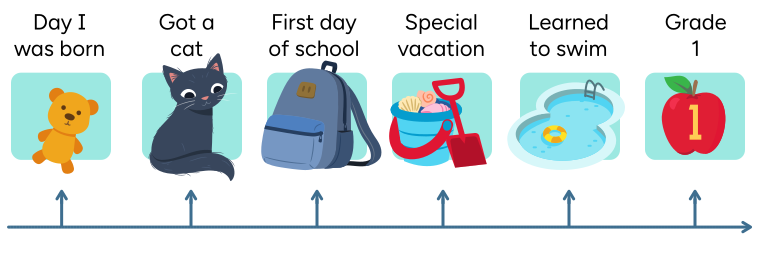
An illustration that shows an example of a person's life events arranged in chronological order. The following events are arranged in order from left to right of the timeline:
day I was born
got a cat
first day of school
special vacation
learned to swim
grade 1
Think about the life events that were shared in Terry Fox’s biography above.
Place the events below in chronological order.
Identifying perspectives
A perspective is the way someone sees or thinks about something. Different people might have different perspectives about the same situation. This is because they may have different feelings, ideas, and experiences.
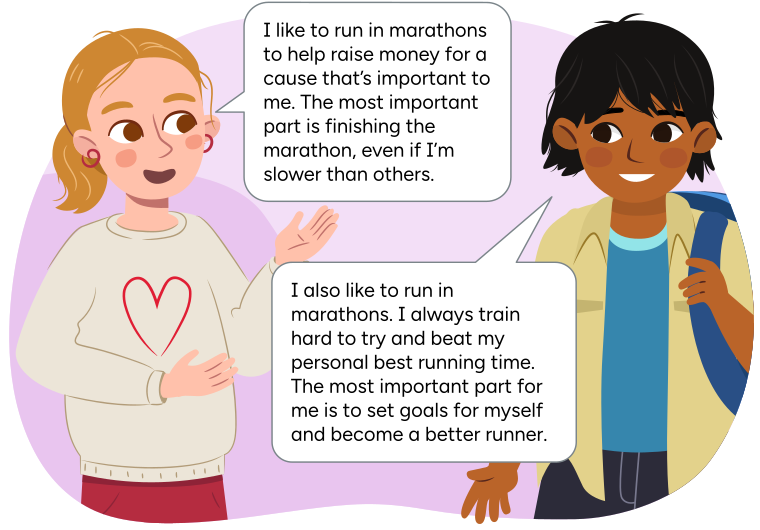
Two students having a conversation. The first students says, “I like to run in marathons to help raise money for a cause that’s important to me. The most important part is finishing the marathon, even if I’m slower than others.” The second student says, “I also like to run in marathons. I always train hard to try and beat my personal best running time. The most important part for me is to set goals for myself and become a better runner.”
Why do you think it might be important to learn about different perspectives? How can this help you grow as a person?
Point of view
We have been learning about biographies and their characteristics. A biography tells the true story of an individual, but it is always written by someone else. It is written in a third-person point of view. In storytelling, the point of view signals what perspectives are being shared in the story.
A point of view is about who is telling the story.
A perspective is about how a person, or a character, feels and thinks about what is happening in the story.
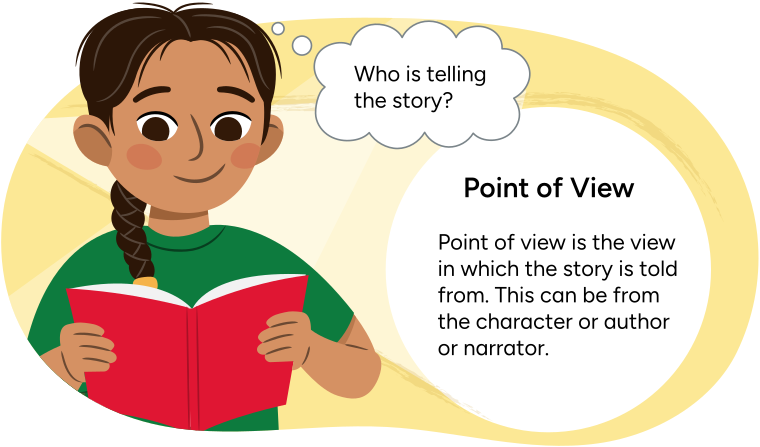
A student thinking "Who is telling the story" while reading a book, with the following text describing "Point of View".
Point of view is the view in which the story is told from. This can be from the character or author or narrator.
There are three different points of view that are used in writing. In this activity we are going to focus on the first-person and third-person points of view.
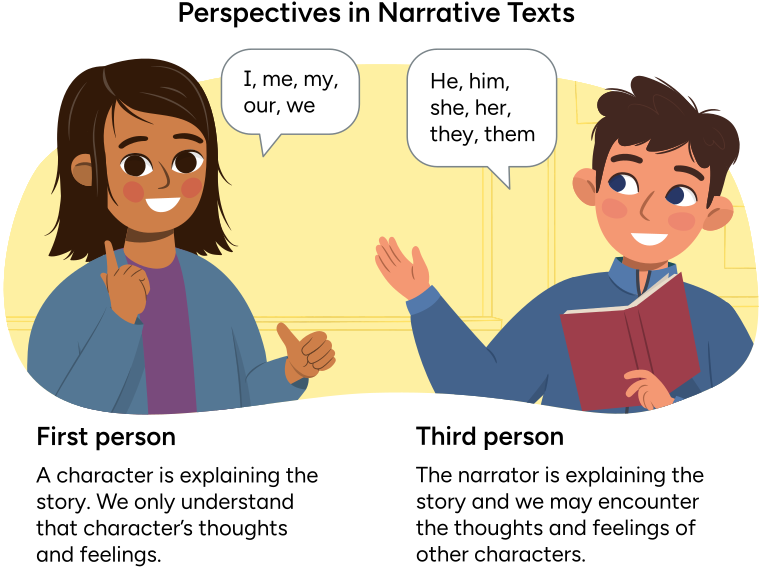
An illustration that explains the difference between first person and third person, with the title "Perspectives in Narrative Texts."
First person: A character is explaining the story. We only understand that character's thoughts and feelings. First person texts use words like I, me, my, our, we.
Third person: The narrator is explaining the story and we may encounter the thoughts and feelings of other characters. Third person texts use words like he, him, she, her, they, them.
The third-person point of view is used in a biography because the author is writing about someone else. Using this point of view also makes it easier to include details from different people and viewpoints. This can help create an all-around bigger picture of the person’s life.
For example: In Terry Fox’s biography, the author wrote that Terry Fox continues to inspire people today to raise money for cancer research. This gives a bigger picture of how Terry Fox impacted other people.
A third-person point of view uses third-person pronouns like, “she,” “her,” “herself,” “he,” “his,” “himself,” and “they,” “them,” “themselves.”
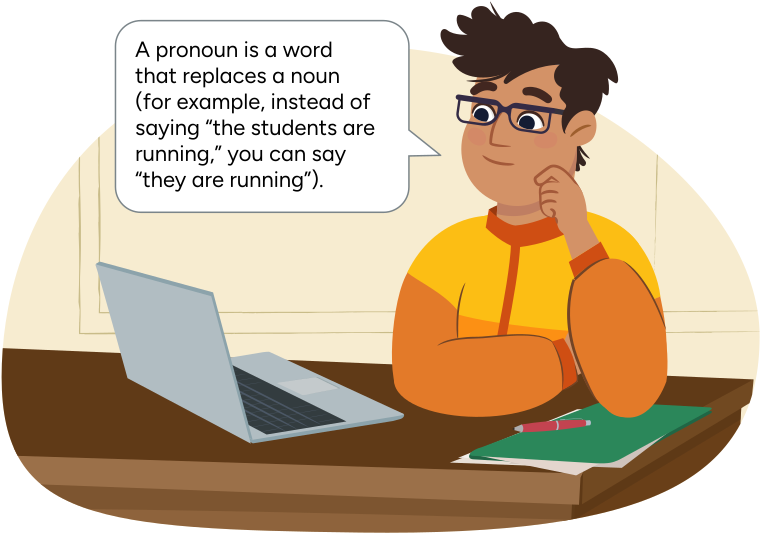
Consider this passage from Terry Fox’s biography and think about the pronouns that are being used.
“Even though this was a very had time in his life, Terry decided he wanted to help others with cancer. He came up with an idea called the "Marathon of Hope.""
These pronouns tell you that this text is written in the third-person point of view.
Autobiography
We have been learning that a biography tells the story of someone’s life. What do you think an autobiography is?
The word autobiography uses the prefix “auto” which means “self.”
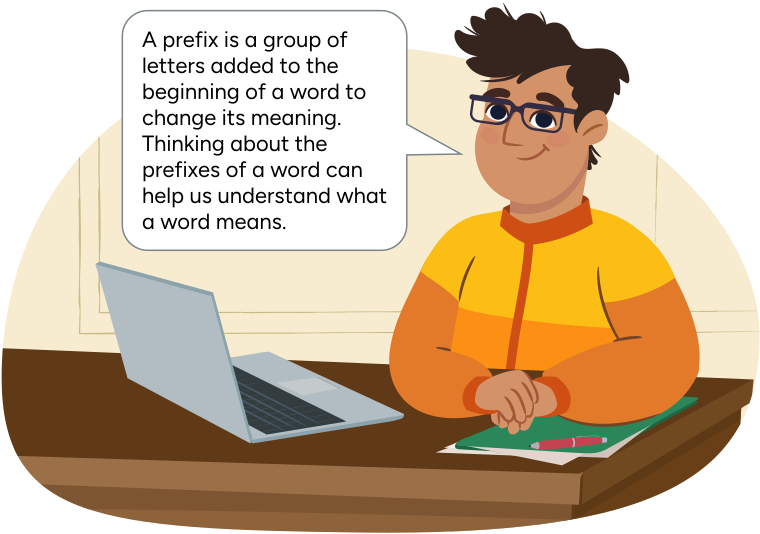
We have learned that a biography is the story of a person’s life. So, an autobiography is the story of your own life.
An autobiography is a great way to share information about yourself because:
- it helps you to reflect on your past experiences
- it gives you an opportunity to share your unique perspectives and memories
- it can inspire others by sharing your challenges and successes
Your autobiography is a journey through your life, told by the person who is living it: you!
Unlike a biography, an autobiography is always written in the first person (from the author’s point of view). This means that you will use first-person pronouns such as I, me, and we.
Let’s practice!
Read the sentences and choose whether the point of view is first-person or third-person.
Select the correct answer, then press Check Answer to see how you did.
Past tense
Another important characteristic of an autobiography is that it is written in the past tense. Past tense is a way of talking about things that have already happened. When you use past tense, you describe events or actions that took place in the past.
Past tense is used in an autobiography because the author is sharing events and experiences in their life that already happened.
Consider the example passage of an autobiography below and think about how past tense is being used.
“My name is Lucas, and I grew up in a small town. When I was five years old, I learned how to ride a bike. I went to school every day and played outside a lot.”
My biopoem!
An autobiography can be a great way to share about who you are and the things you have done. Another way to share about yourself is with a biopoem!
A biopoem is a type of poem that describes a person by talking about their characteristics, feelings, and experiences. It's a creative way to share about yourself and your life. A biopoem can follow a pattern but usually does not rhyme.
The interesting part about a biopoem is that even if it is about yourself, you can write it in a third-person point of view. This means you are imagining looking at yourself from the outside. It can be fun to imagine how someone else might describe you, and it can give you a chance to be creative with how you show yourself to the world.
Check out the example of a bio poem below.
Samira
Caring, funny, creative
Who loves black cats and great books
Who wonders if there is life on other planets
Who fears spiders and horror movies
Who feels happy when she is swimming in a river
Who would like to hike up a tall mountain
Who dreams of becoming an artist one day!
Samira
Planning
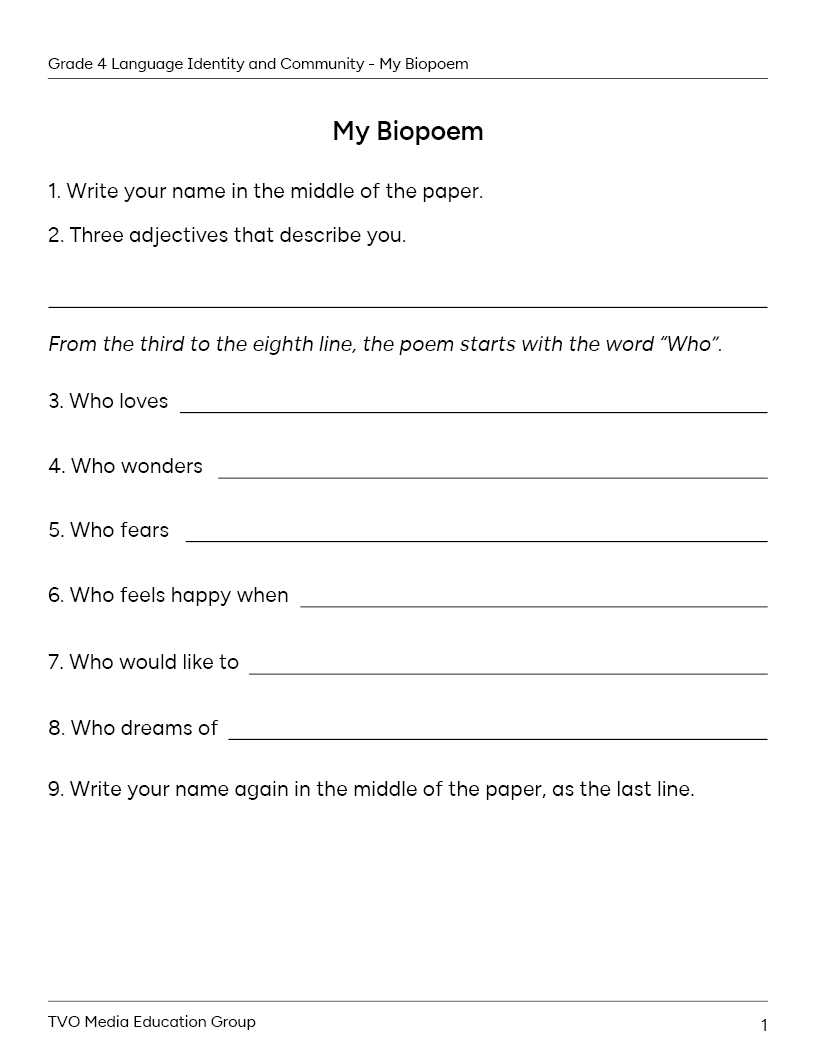
To create your biopoem, answer the questions in the graphic organizer provided below.
Drafting and editing
Draft your bio poem by using the fillable and printable My Biopoem template provided. Or use any other method of your choice.
As you come up with the lines of your poem, you might need some help with spelling some words. It can be helpful to think of some spelling patterns that you might already know. Explore the following graphic to review some spelling patterns you might come across.
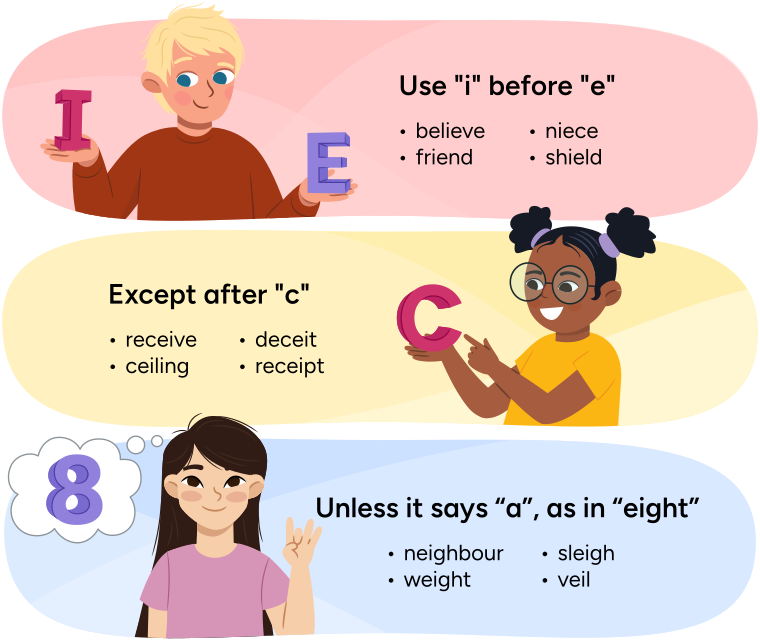
A chart that explains the following common spelling patterns:
Use "i" before "e"
Examples: Believe, Friend, Niece, Shield
Except after "c"
Examples: Receive, Ceiling, Deceit, Receipt
Unless it says a, as in eight
Examples: Neighbour, Weight, Sleigh, Veil
Use the following success criteria checklist for a biopoem to make sure you included all the necessary parts.
Success criteria

Putting it altogether
Now that you’ve planned and drafted your biopoem, you can think about how you would like to publish it.
What format can you use to publish your biopoem so that you can easily share it with others?
- digital tool/app
- poster
- in your notebook
- audio clip
- video clip
- speech
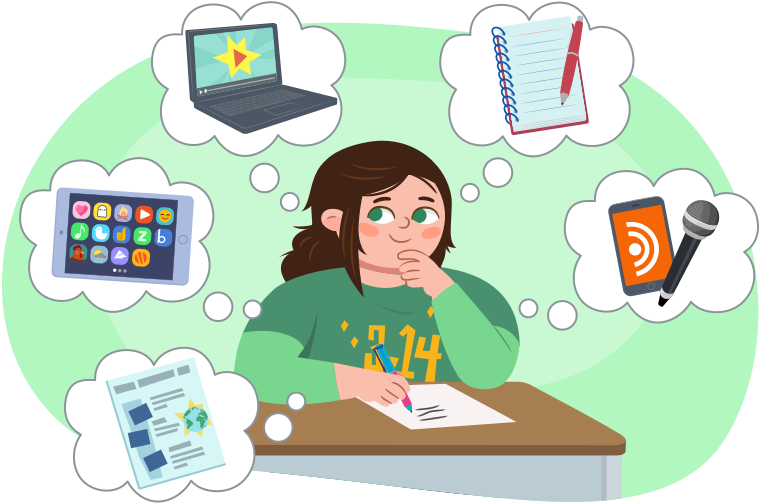
Choose a publishing format of your choice. If possible, share your biopoem with a peer or trusted adult so that they can learn more about you!

Student Success
Think
- What did you learn about yourself while writing your biopoem?
- What strategies did you gain from this learning activity that helped you develop and create your biopoem?
- How might sharing your biopoem with others help them understand you better?
Reflection
As you read through these descriptions, which sentence best describes how you are feeling about your understanding of this learning activity? Press the button that is beside this sentence.

I feel...
Now, record your ideas using a voice recorder, speech-to-text, or writing tool.