Learning goals
We are learning to…
- understand and explore the concepts of identity, self, and sense of belonging through culturally responsive and relevant texts
- make inferences using explicit and implied information from texts
- gather and record information from a variety of sources
- develop and apply oral and non-verbal communication skills
Success criteria
I am able to…
- identify and explain messages about diversity and inclusion in texts
- describe insights or messages expressed in different texts
- conduct interviews and research to share an oral story about a name
- communicate how the purpose, audience, and format of my oral story influences the strategies I use to communicate my intended message
What’s in a name?
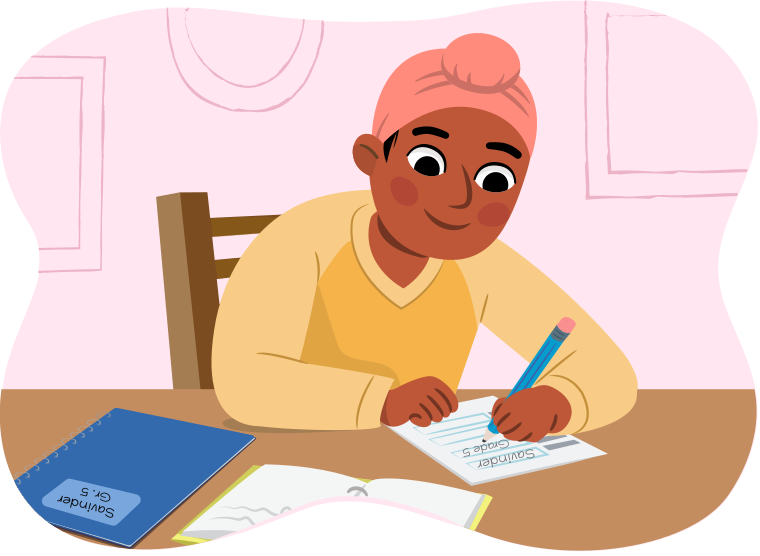
Has anyone ever called you by the wrong name, or mispronounced your name? How did you respond? How did you feel?
Or have you ever mispronounced somebody else’s name? How did you correct your error?

Brainstorm
Think about it
Consider the following questions. Record your thinking in a notebook or using another method of your choice. If possible, share your thoughts with a partner.
- Why are names important?
- How do names connect to someone’s identity?
- How might someone feel if their name is mispronounced?
- What could you do if you don’t know how to pronounce someone’s name?
- What could you do if you learned you mispronounced someone's name?
In this learning activity, you will consider the importance of respecting names and pronouns, and you will have the opportunity to explore the meaning of your name and how it connects to your identity.
The importance of a name

Did You Know?
Did you know?
Did you know that having a name is a human right? It is Article 7 in the United Nations Convention on the Rights of the Child. Everyone has the right to have a name, and for it to be recognized.
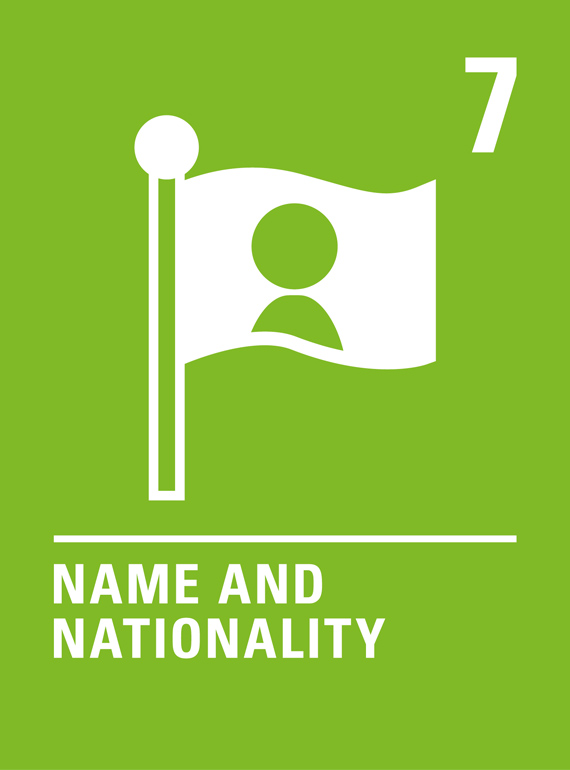
The image for Article 7 in the United Nations Convention on the Rights of the Child. A green background with white text that reads: Name and Nationality. There is an image of a flag above the text and the number 7 in the corner.
Having a name and being known by that name is a human right. That means that addressing people correctly is not just a kind thing to do – it's one of the many ways we respect and uphold each other’s rights as people.
Names and identity
Addressing someone by their name shows respect for that person and their identity.
Names are not neutral; they are carefully chosen representations of who and what we are. They have personal, cultural, religious, familial, and historical meaning.
Because names reflect a person’s identity, not caring to learn how to pronounce someone’s name, or saying it wrong on purpose, is basically communicating that that person, and their identity, don’t matter.
This is a type of microaggression.
Microaggressions are everyday, subtle (not very obvious) actions that show bias towards persons in historically marginalized groups. They can be verbal or non-verbal, intentional or unintentional.
For example: a person claims it’s “too hard” to learn the name of someone who speaks a different language or has a different ethnicity than them. This is an example of a racial microaggression.

Let’s read!
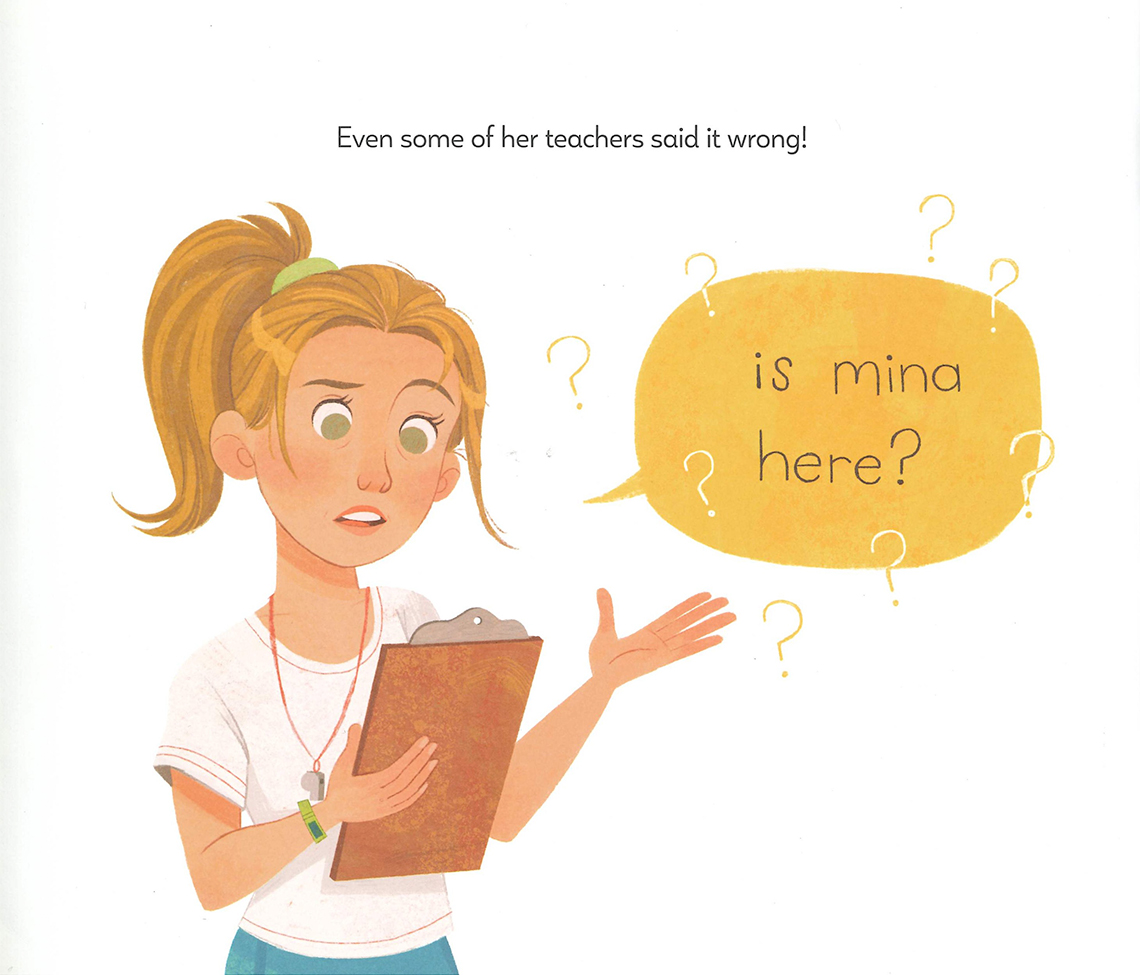
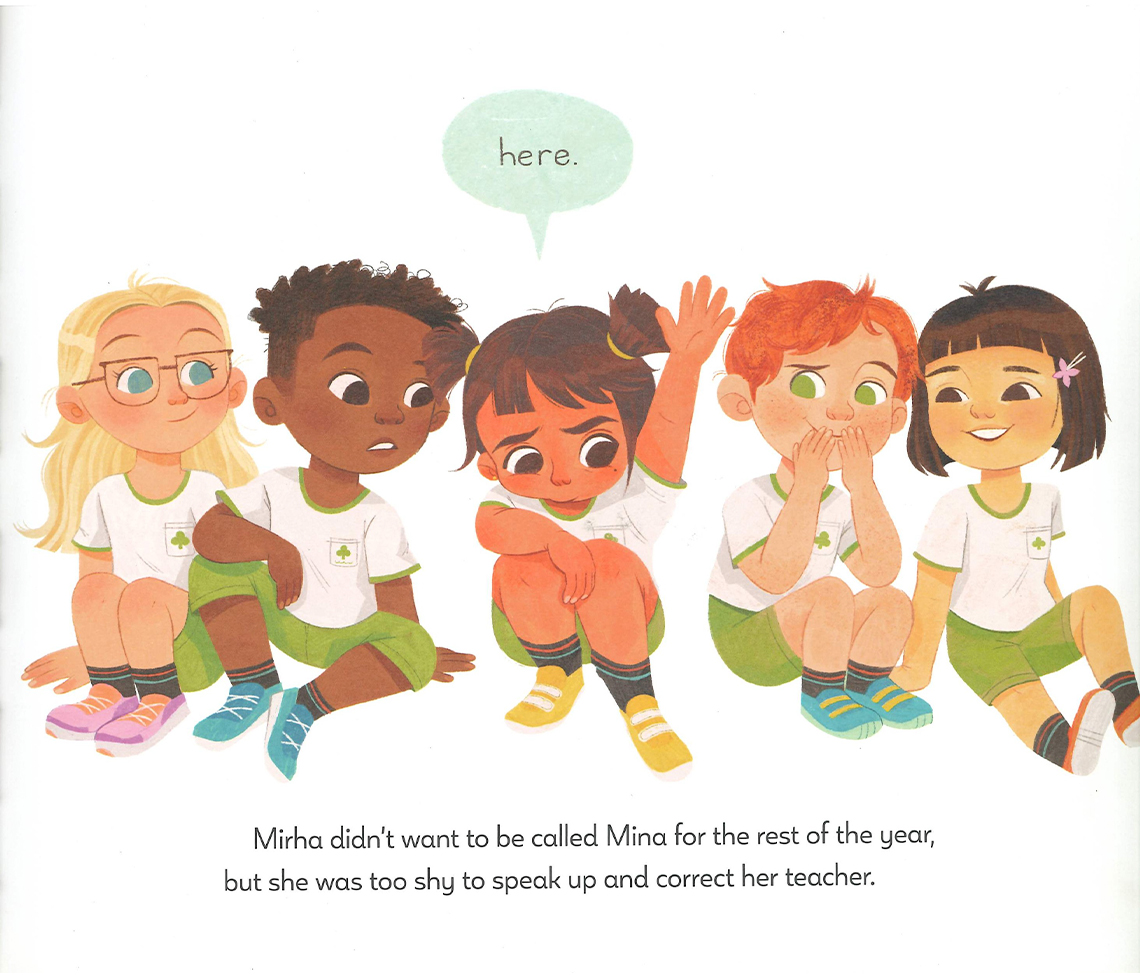
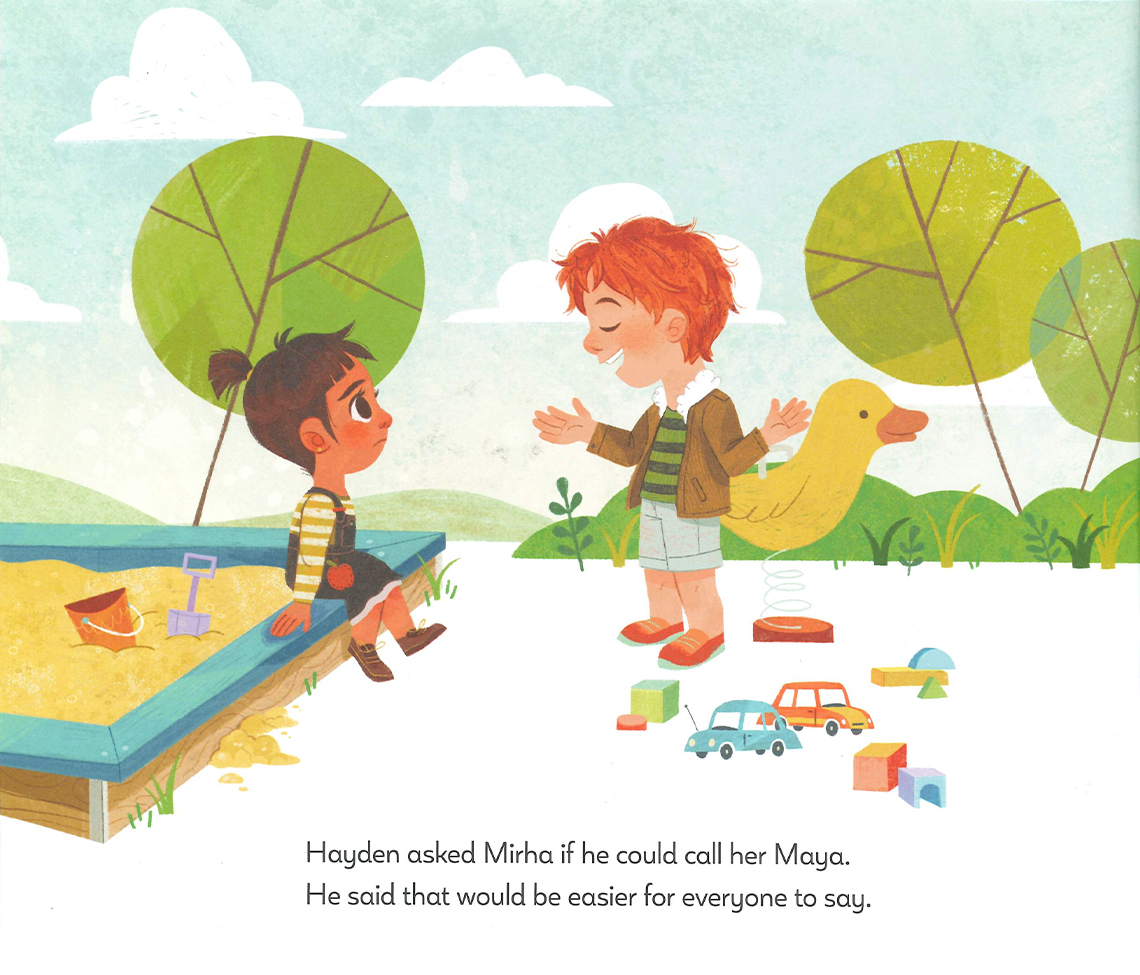
Read an excerpt from the children’s picture book, That’s Not My Name! by Pakistani-Canadian author and illustrator Anoosha Syed. In this excerpt, main character Mirha has just finished introducing herself to her new teachers and classmates on the first day of school and many people are not saying her name properly. Can you identify an example of a microaggression in this section of the text?

Pause and reflect
Pause and reflect
Recall that microaggressions are everyday, subtle, not very obvious, actions that show bias towards persons in historically marginalized groups. They can be verbal or non-verbal, intentional or unintentional.
In a notebook or using another method of your choice, record any examples of microaggressions that you observed in the excerpt of the book That’s Not My Name! by Anoosha Syed.
When you are finished, press the Sample Answer button to preview some possible responses.
An example of a microaggression in the text is when everyone is saying Mirha’s name differently and no one stops to ask her what the correct pronunciation is.
An example of a racial microaggression in the text is when Hayden asks if he can change Mirha’s name to “Maya” because it’s easier to say.
Nicknames: not cute
Nicknames can sometimes be fun or playful, or a sign of endearment between people who share a close relationship. But when nicknames are created by people to avoid having to learn someone’s full name because it’s from a different language or culture than theirs, it’s a microaggression.
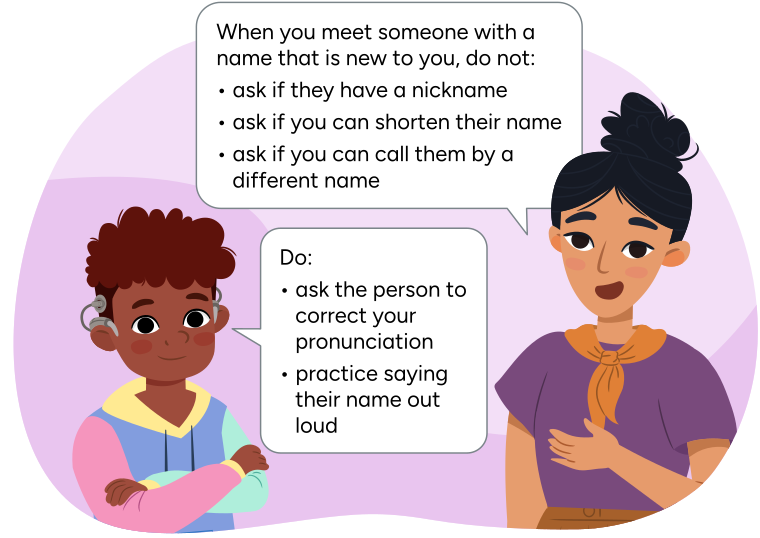
A teacher and student having a conversation: The teacher says: When you meet someone with a name that is new to you, do not: ask if they have a nickname, ask if you can shorten their name, ask if you can call them by a different name.
The student says: Do ask the person to correct your pronunciation, practice saying their name out loud.
Names and gender identity
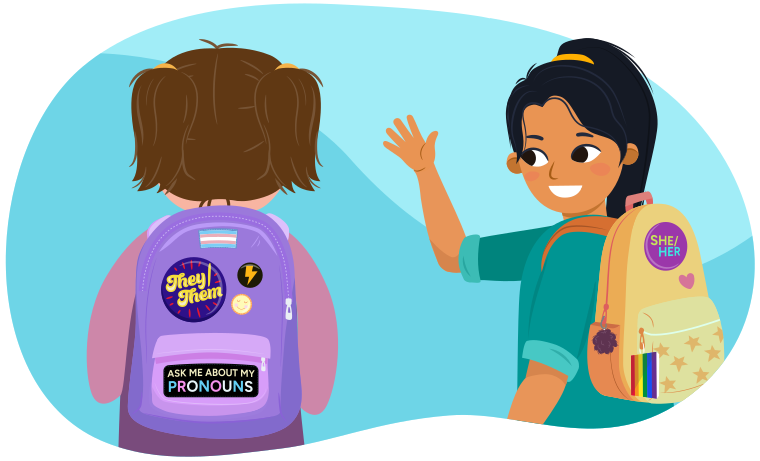
A person’s name can also reflect things about their personal identity. Sometimes people change their name if their birth name doesn’t fit their identity or lived experience.
One reason for a person to change their name might be that the names and/or pronouns chosen for them at birth do not reflect their gender identity. Changing their name and/or pronouns is an important part of honouring and expressing who they are.
It is important not to assume a person’s gender or pronouns based on their appearance or name. Offering or identifying your pronouns when first meeting someone is an important way of making space for other people to feel comfortable identifying their pronouns to you.
Referring to someone by the wrong pronouns after learning their pronouns is known as misgendering. Using someone’s birth name after another name, especially with different gender indicators, has been offered is known as deadnaming. These are both types of microaggressions.
Kids Help Phone offers some advice if you accidentally misgender or deadname a person:
- correct yourself
- apologize
- thank the person for correcting you (if they brought it to your attention)
How does it feel to be misgendered? Let’s read a passage from the novel Melissa by Alex Gino. Melissa is a transgender girl in the fourth grade who the world sees as a boy named George. Throughout most of the book, Melissa has not yet shared this part of herself with anyone else, so nobody knows her pronouns or what she calls her “private name.”
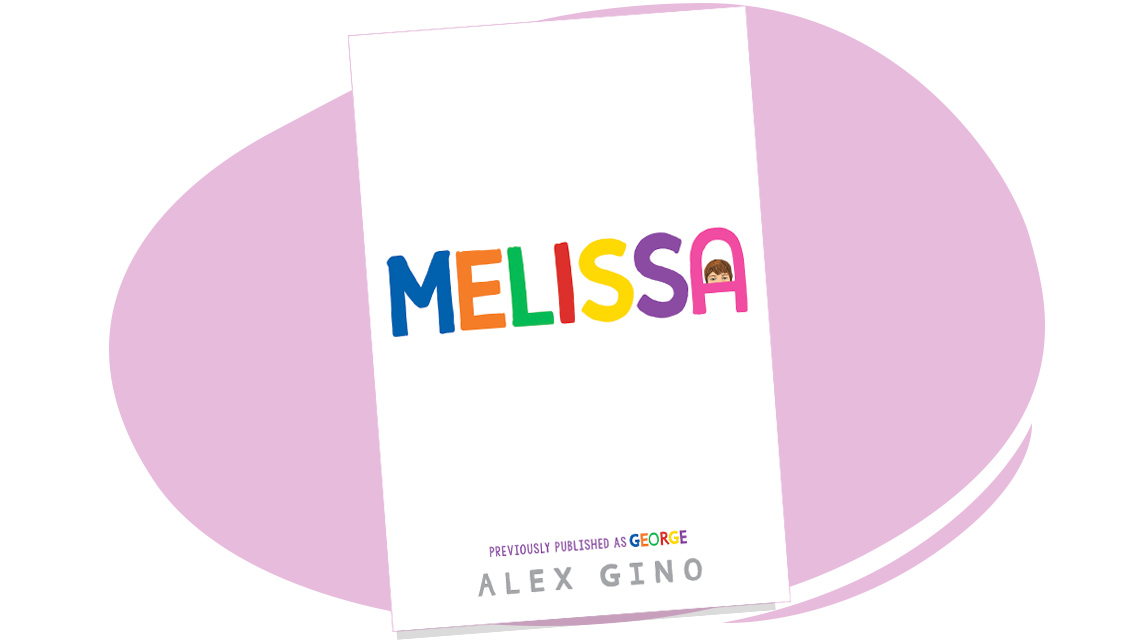
In the following excerpt from the book, she has just been teased for crying "like a girl" over a book by male classmates when her teacher unknowingly misgenders her. As you read, notice the emotions Melissa experiences.
Access the following Melissa Excerpt to complete the activity.
Brainstorm
Post-reading
A simile is a figure of speech that compares two unlike things using "like" or "as" to make the comparison.
The author used a simile to describe one of Melissa's emotions in this passage. Can you identify the simile and what it means?
When you’re ready, press the Check Answer button to compare your answer to a modeled one.
The author uses a simile in the sentence: “The word “man” hit like a pile of rocks falling on George’s skull.” They use this simile to describe how Melissa feels when her teacher uses the word “man” in reference to her. It is meant to mean that the use of the word “man” hurt Melissa as badly as a pile of rocks would hurt if they landed on her head.
In a notebook, or using another method of your choice, record your answer to the following questions.
- Melissa was upset before her teacher used the word “man” to refer to her in the future tense. Why do you think the use of this word felt “a hundred times worse than boy”?
- Explain why Melissa never drinks from the water fountains at school.
When you are done, press the Possible Answers button to check your understanding of the text.
- Answers will vary. One could hypothesize that the word “man” makes Melissa realize how awful it would feel to be an adult and still be seen as the wrong gender. Living as the wrong person is hard, and she can’t imagine doing it for her whole life.
- Melissa hates the boys' washroom and all that it represents. She feels uncomfortable using it. She avoids drinking water while at school so she never has to use the bathroom.
Thinking critically
Author Alex Gino chose to write the book Melissa in the third-person point of view.
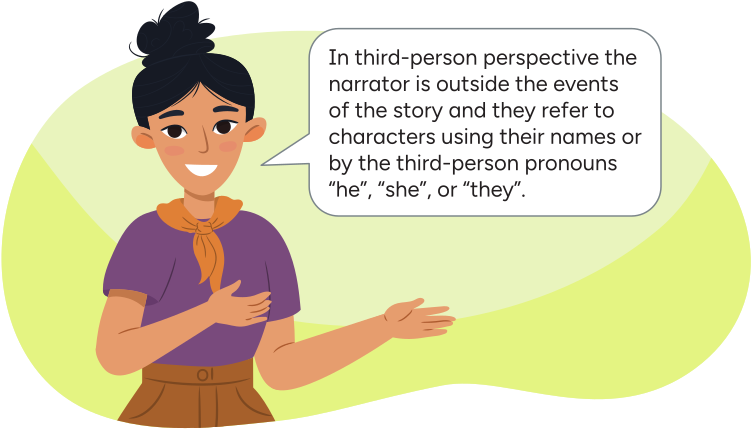
A teacher says: In third-person perspective the narrator is outside the events of the story and they refer to characters using their names or by the third-person pronouns "he", "she", or "they".

Pause and Reflect
Pause and reflect
In a notebook or using another method of your choice, answer the following question. If possible, share your thoughts with a partner.
Why is the third-person point of view the best choice for telling Melissa’s story?
When you are done, press Sample Answer to check your understanding.
A possible answer could be:
The third-person point of view uses the name the rest of the world knows, George, as well as her pronouns she/her. This helps the reader see the contrast between who the world sees her as, and who she sees herself as.
If it were written from her point-of-view (first person) the reader would only see “I” and “me”, and lose awareness of the transition Melissa is in.
If it were written from another character’s point-of-view (second person) it would only refer to her as George, and it would misgender her pronouns as well.

Exploring pronouns
Personal pronouns are words used to refer to people or things in a sentence.
There are several kinds of pronouns. Press the following tabs to learn more.
Subjective pronouns (or subject pronouns) are used as the subject of a sentence. They perform the action of the verb.
Explore the following table:
| Subject pronoun | Sample sentence |
|---|---|
| I | I love video games. |
| you | You love video games too. |
| he | He prefers soccer. |
| she | She also likes soccer. |
| it | It looks like a skunk. |
| we | We don’t like skunks. |
| they | They scare us. |
Objective pronouns (or object pronouns) are used as the object of a verb or preposition in a sentence. They receive the action of the verb or show the relationship with the preposition.
Explore the following table:
| Object pronoun | Sample sentence |
|---|---|
| me | Come to the store with me. |
| you | I’ll wait for you. |
| him | I threw the ball to him. |
| her | Chris threw the ball to her. |
| it | Soccer? I enjoy it. |
| us | Mrs. Mistry reads us a book. |
| them | We are going to ask them. |
Possessive pronouns show ownership or belonging. They can be placed before a noun or they can replace a noun.
The following possessive pronouns come before a noun:
| Possessive pronoun | Sample sentence |
|---|---|
| my | It’s my bike. |
| your | It’s your book. |
| his | He lent me his pen. |
| her | She lent me her eraser. |
| our | Our cookies taste the best! |
| their | Their muffins are on the table. |
The following possessive pronouns replace a noun:
| Possessive pronoun | Sample sentence |
|---|---|
| mine | The sweater? It’s mine. |
| yours | The mittens are yours. |
| his | The poem? It’s his. |
| hers | The short story is hers. |
| ours | The chocolate cookies? They’re ours. |
| theirs | The muffins are theirs. |
Reflexive and intensive pronouns are “self” words: myself, yourself, himself, herself, itself, ourselves, themselves, yourselves.
They are used when the pronoun has already been used in an earlier part of a sentence.
Reflexive pronouns
A reflexive pronoun is used to show that the object of a verb is the same as its subject. In other words, the same person or things is performing the action and receiving it.
Explore the following table:
| Reflexive pronoun | Sample sentence |
|---|---|
| myself | I taught myself to play soccer. |
| yourself | Help yourself to juice. |
| himself | My dog saw himself in the mirror. |
| herself | Ella told herself to stay strong! |
Intensive pronouns
An intensive pronoun emphasizes the subject of the sentence.
Explore the following table:
| Intensive pronoun | Sample sentence |
|---|---|
| myself | I myself prefer movies. |
| yourself | You yourself said the same thing! |
| themselves | They made the oatmeal cookies themselves. |
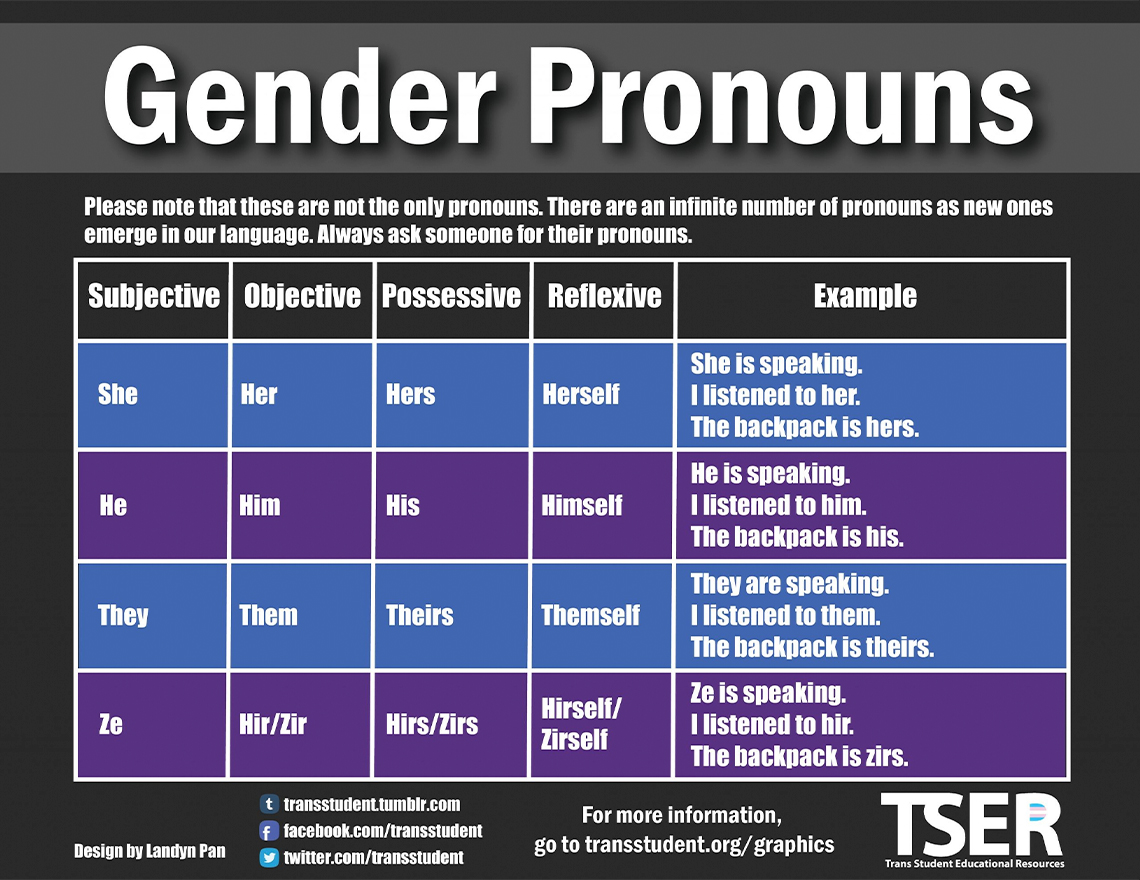
Gender pronouns
So far you have seen two ways of referring to someone in the third person:
- he
- she
However, gender is not binary, meaning not all people fit into male and female categories. Individuals might use pronouns other than “he” and “she” to reflect their personal identity.
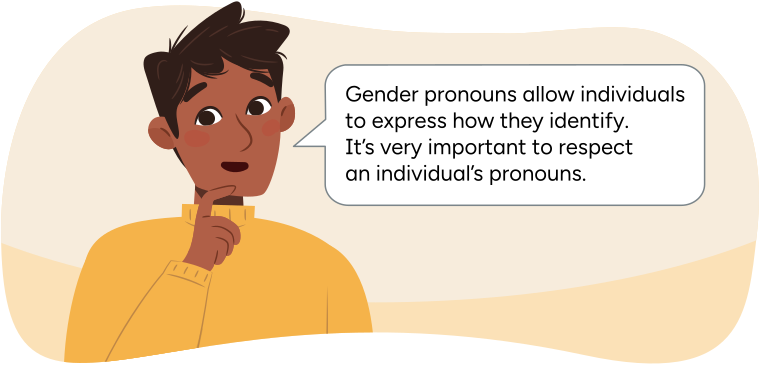
Infographic: gender pronouns
To learn about some of the pronouns that are used today, you are going to explore an infographic created by the Trans Student Educational Resources.
Your turn!
Check your understanding by completing the following multiple-choice questions.
Select the correct answer, then press Check Answer to see how you did.
Vocabulary review
Let’s review some of the vocabulary that has been featured throughout this learning activity.
Match each word with its corresponding meaning.
Putting it all together
In this learning activity, you have considered the importance of names, and how names can represent important parts of people’s identity.
To consolidate your learning, you will learn and share the story of your name or the name of someone that you know. Please note: we must always get permission from someone before sharing their stories.
Gather information from people in your life and then communicate the story orally. Formats to consider for sharing your story could include: a recorded speech, a podcast, an interview, or as spoken word poetry.
Press the following tabs to access guiding questions to help you gather the information needed to tell the story of your name or the name of a person that has given you their permission.
- What is your full name?
- How is your name pronounced?
- Do people sometimes mispronounce or miswrite your name?
- Are there different ways of writing or saying your name in different languages? If so, which version do you prefer using?
- Do different people use different versions of your name?
- How would you like to be called?
- Who chose your name?
- Are there cultural or language origins of your name?
- How/why was it chosen?
- Were you named after someone or something?
- Does your name have a special meaning?
- Interview trusted people either in person or using digital tools.
- Consult artifacts such as photos or items like keepsakes.
- Complete additional digital research as needed to gather additional information about the history or meaning of the name.
When telling your story, use vocal techniques to capture your audience’s attention such as
- voice expression
- gestures
- pausing
- using interesting vocabulary
- using descriptive adjectives and adverbs
- if working with a partner, actively listening as your partner speaks
- show interest in what they are saying
- asking questions to encourage them to elaborate or to clarify parts of their story
Some things to consider before sharing your oral story:
- Why are you sharing this story? Why is it important?
- Who will your audience be?
- Does the format you’ve chosen to share your story in require formal or informal speech?
- How will purpose, audience and format impact how you share your story?
Reflection
Consider the following questions. Record your answers using a method of your choice or, if possible, share them orally with a partner or teacher.
- Did you learn anything new about yourself and your skills as a language learner?
- Are you satisfied with your oral communication skills in the final product?
- What oral communication skills would you like to focus on improving next time?
- Are you satisfied with the digital tools and techniques you used in producing your final product?
- What skills would you focus on for future projects, to improve as a text creator?
Reflection
As you read through these descriptions, which sentence best describes how you are feeling about your understanding of this learning activity? Press the button that is beside this sentence.
I feel...
Now, record your ideas using a voice recorder, speech-to-text, or writing tool.