Learning goals
We are learning to…
- understand the historical contexts and lived experiences of diverse Canadians
- apply comprehension strategies before, during, and after reading, listening to, and viewing a variety of texts
- summarize main ideas and supporting details from various text sources
- reflect on our learning to improve our skills and comprehension
Success criteria
I am able to…
- identify messages related to diversity and inclusion in texts about the experiences of Japanese Canadians up to the end of World War II
- use strategies – such as asking questions and consulting other texts and sources of information – to confirm my understanding of texts
- summarize three or more key details from texts explored on the Japanese Canadian experience and the resilience of the community up to the end of World War II
- reflect on the strategies and tools that helped me understand content, and summarize my learning

Pictures can tell a story
Images are often used with text to help communicate meaning and messages. But without text or context, images are more subject to interpretation (open to different meanings). In other words, the audience needs to use critical thinking skills to analyze the message and meaning.
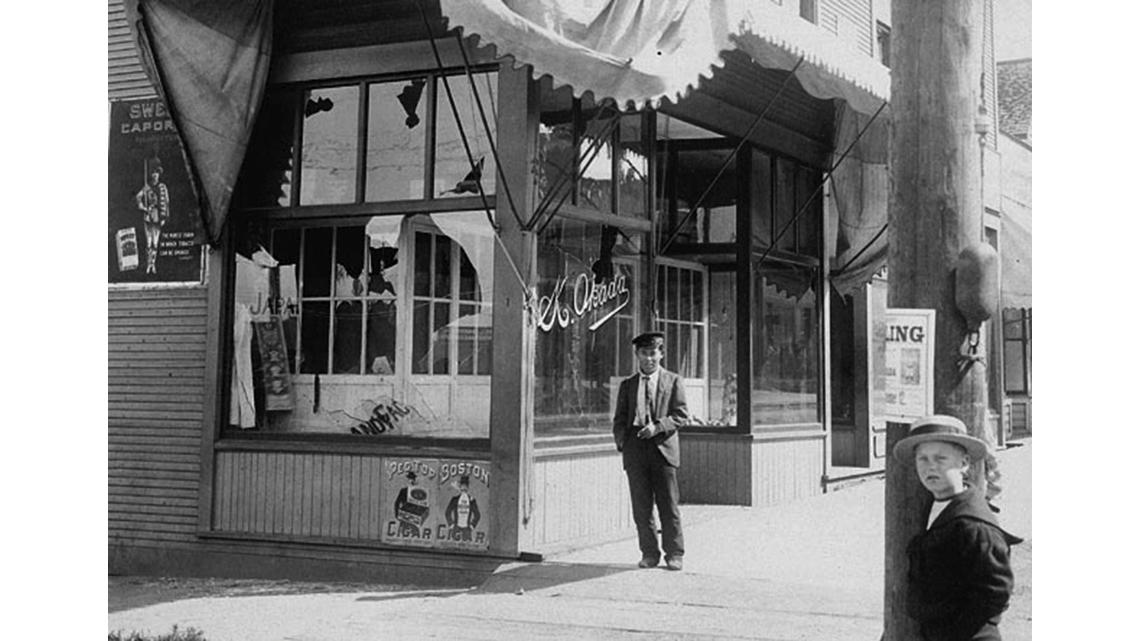
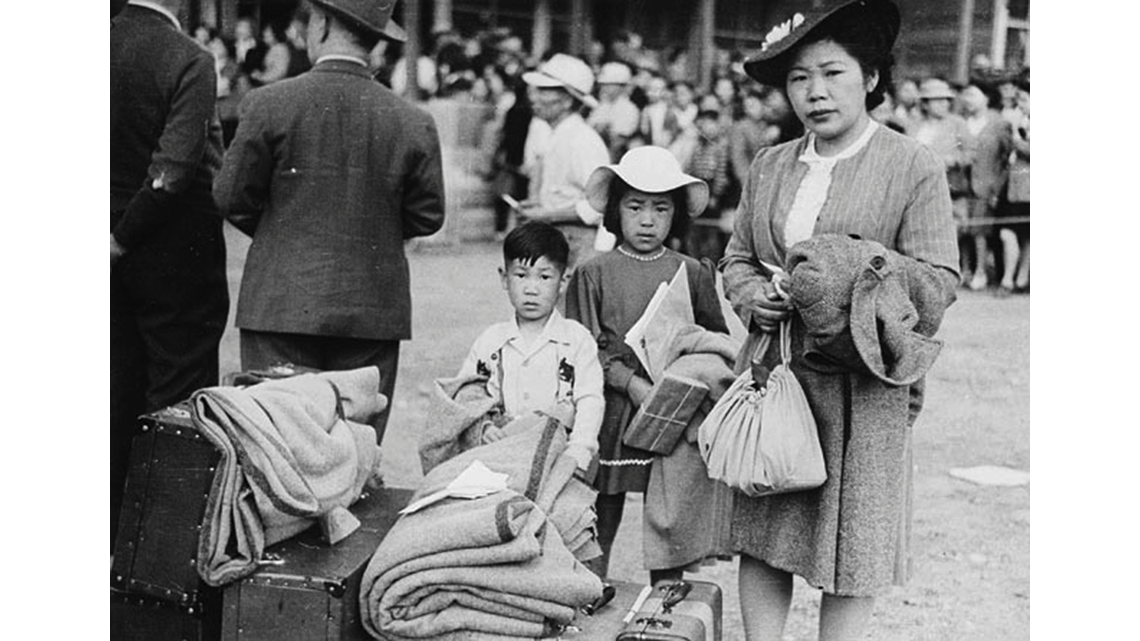
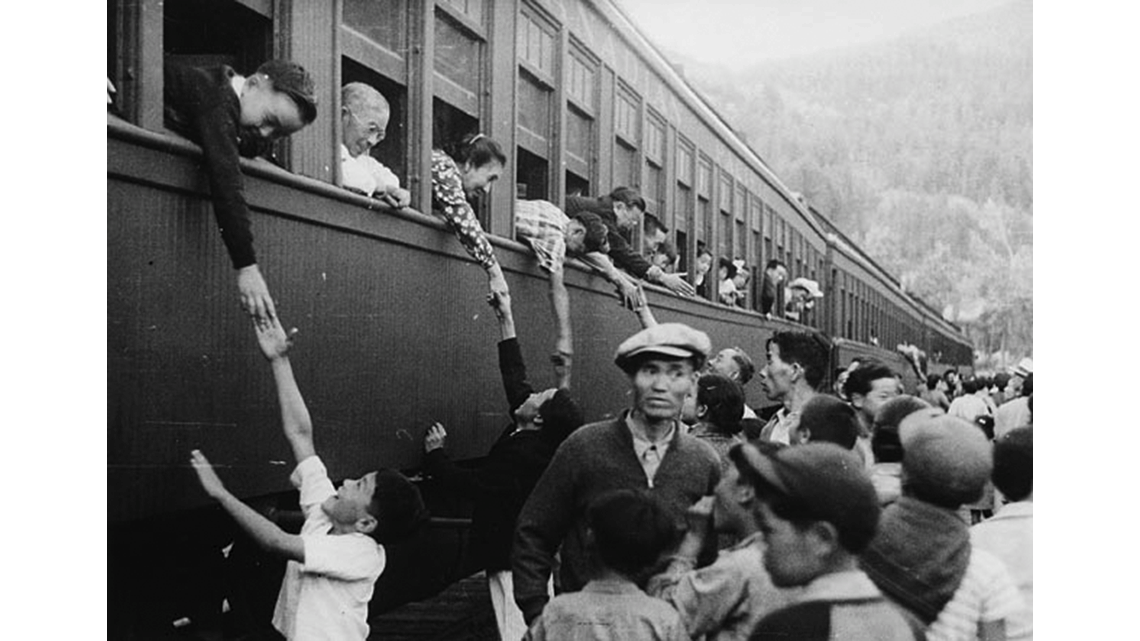
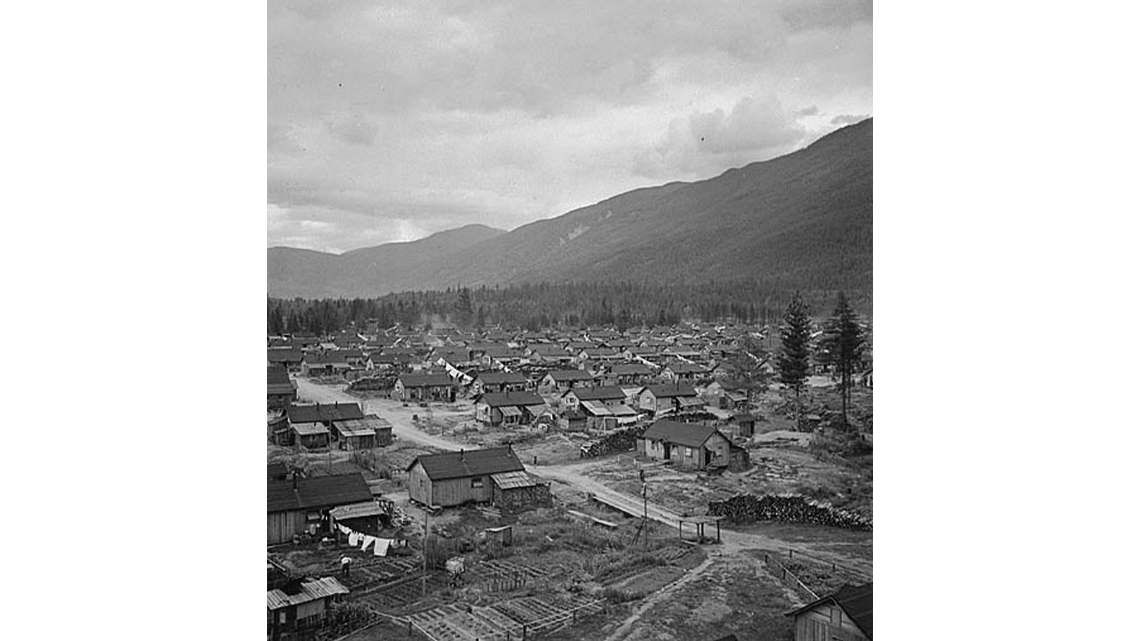
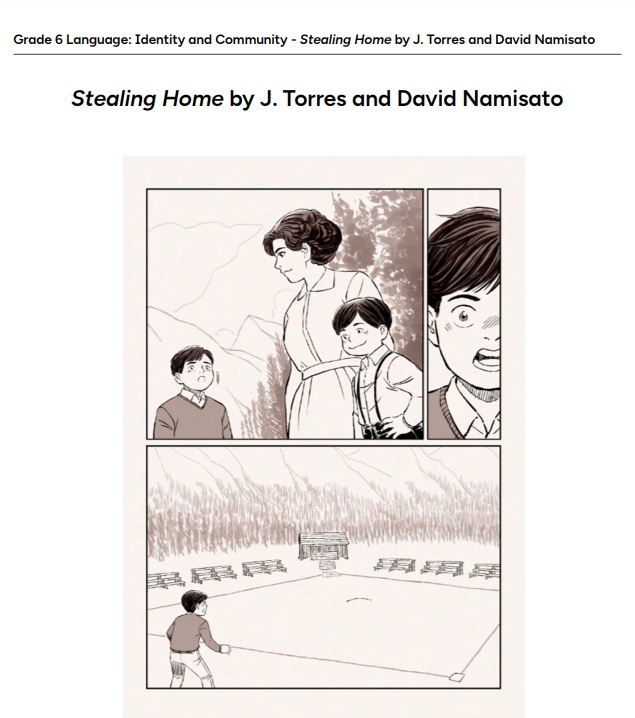
The following images are part of a story from Canada’s past. Examine them closely.

Pause and Reflect
Making predictions

What do you think the story told by these images might be? Examine the images again if necessary.
Canada and discrimination
Canada hasn’t always treated everyone with respect. Can you think of some examples of discrimination that you have learned about in the past?
The images you explored are one example of discrimination against a group of people in Canada. They represent the period between 1942 and 1949 when Japanese Canadians were targeted, mistreated, and had their human rights violated by the government of Canada.
Pause and Reflect
Reflection questions
Consider the following questions:
- How does discrimination like this happen?
- How do communities persevere, recover, and heal after such unfair and unjust treatment?
Record your answers in your notebook or using another method of your choice.
In this learning activity, you will explore the answers to these questions. You will also consider the role of the current Canadian government in repairing harm done in the past.

Reading for meaning
In this learning activity, we will work on reading skills. We will use strategies to improve our understanding of texts, and to check our comprehension while reading.

Reading-comprehension strategies
As you read through the texts in this learning activity, consider using some of the strategies shown on the following flashcards.
Pause and Reflect
What works for you?
Record your answer to the following questions in your notebook, or using another method of your choice.
Have you used any of these strategies before?
- If you have, which did you find helpful? Explain.
- If you haven’t, which do you think will be the most helpful? Explain.
As you work through the learning activity, note which strategies are working best for you.
Early immigration of Japanese Canadians
Beginning in the late 1870s, many Japanese began immigrating to the West Coast of the recently founded country of Canada.
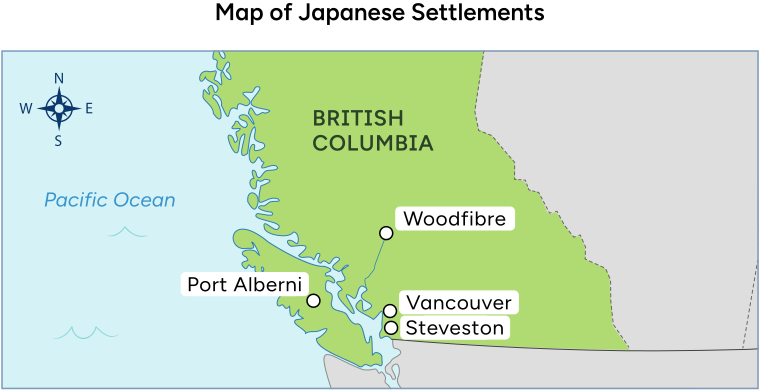
Four Japanese settlements on the West Coast of Canada: Vancouver, Steveston, Woodfibre, and Port Alberni
The natural resources of the Pacific Coast offered opportunities like fishing, mining, and farming to newcomers. Japanese farmers and fishers had transferable skills that let them start a new life in North America.
Canada needed labourers to help build parts of the newly formed country. However, the Canadian government did not want labourers from certain countries to stay and become Canadian citizens.
Early discrimination
There were strict rules and policies limiting how many people could immigrate to Canada from certain countries. Discriminatory laws, such as the 1895 Provincial Voters Act, limited the rights of Japanese Canadians (and other groups) so that they would want to leave Canada. This act prevented Japanese Canadians from voting in elections, and people who were not registered voters were unable to have certain jobs, such as pharmacist, lawyer, and teacher.
Crunching the numbers
The Canada government was unwelcoming, and so were many Canadian citizens. Despite this, Japanese communities grew. Let’s explore some quantitative facts.
- By 1911, more than 9000 Japanese immigrants had settled in Canada.
- At least 8500 of those individuals lived in British Columbia.
- Around 3000 settled in the city of Vancouver.

Japanese immigration: Key terms
- Isseis: The first generation of Japanese immigrants to North American. Isseis are born in Japan.
- Niseis: The second generation, or children of the Isseis. Niseis are born in North America.
The Vancouver community was known as Nihonmachi or “Japan Town” to the Isseis (the first generation). To the Niseis (the second generation), it was known as “Little Tokyo” or “Powell Street,” named after its main street.
A united community
The Powell Street neighbourhood was a self-sufficient community with strong cultural roots. The Japanese language, customs, and traditional celebrations tied the community together.
Comprehension check

Consider these questions:
- What attracted early Japanese immigrants to the Pacific Coast of Canada?
- Where was the first and largest Japanese Canadian community located?
- Do you have any questions about the text?
Record your answers in a notebook or using another method of your choice.
When you have finished, press Possible Answers to check your understanding.
- The job opportunities connected to the many natural resources of the Pacific Coast of Canada attracted early Japanese immigrants. They were able to apply their skills of fishing, mining, and farming in the relatively new country of Canada.
- The first and largest Japanese Canadian community was located in Vancouver, British Columbia. This community was known as “Little Tokyo” or “Powell Street.”
The power of baseball
Language, food, traditions, and religion are some of the things that can create a sense of
community. So are recreation,
entertainment, and sport.

By the 1900s, baseball (or besuboru in Japanese) was the unofficial sport of Japan. In Canada, baseball formed a bridge between Japanese and Canadian cultures.
Issei (first generation) parents in Canada passed on their love of the game to their Nisei children and encouraged the teenage boys of Powell Street to play baseball as a pastime.
A baseball field was created in Oppenheimer Park, the playground in the middle of Vancouver’s “Japan Town.”
Amateur teams from different Japanese neighbourhoods played each other at Powell Grounds while the community gathered to watch. It was a chance for people to relax after a long workday. They could come together and bond as a community.
The Asahi baseball team
In time, a sports club that started for young boys became a proper baseball team called the Asahi Baseball Club.
By 1918, the Asahi team was known as the best of all of Vancouver’s Japanese baseball teams. Because the Asahi players were so skilled, they began playing in a Vancouver baseball league at Powell Grounds that previously had not included any racially diverse teams or players. It was the first time a Japanese team had been part of a city league, which had consisted of only white males up until that point.
Baseball gave the Asahi players a way to temporarily escape some of the racism and discrimination they faced in broader Canadian society, as they played on an equal footing with white Canadians on the field. However, it wasn’t a complete escape: players still experienced racist comments from opponents and local newspapers.
Comprehension check

To check your understanding of what you’ve read, pause to record any questions you might have about the text. How could you go about getting answers to the questions that you have? Here are some ideas:
- Ask someone else, if possible (like a partner, teacher, or trusted adult).
- Consult other resources on the same subject to see if they clarify ideas, or word things differently.
- Do some research with the guidance of a trusted adult.
Discrimination and racism during World War II
You have seen that Japanese Canadians experienced racism from the beginning. When World War II began in 1939, racism and discrimination increased because Japan was one of the countries that was fighting against Canada and its allies.
The War Measures Act
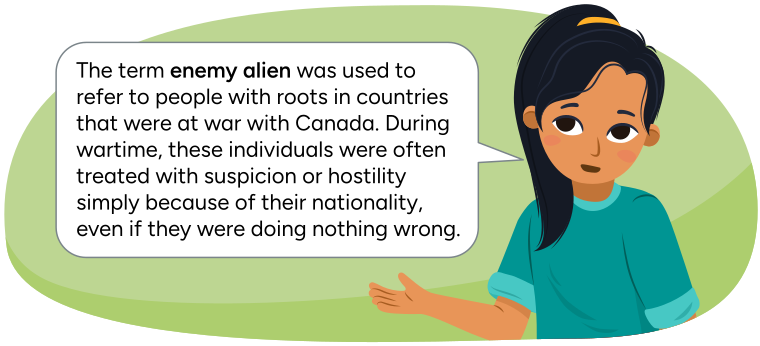
In 1941, the Canadian government passed the War Measures Act, which declared that all persons of Japanese descent were enemy aliens and began treating them as threats to Canadian society.
Internment camps
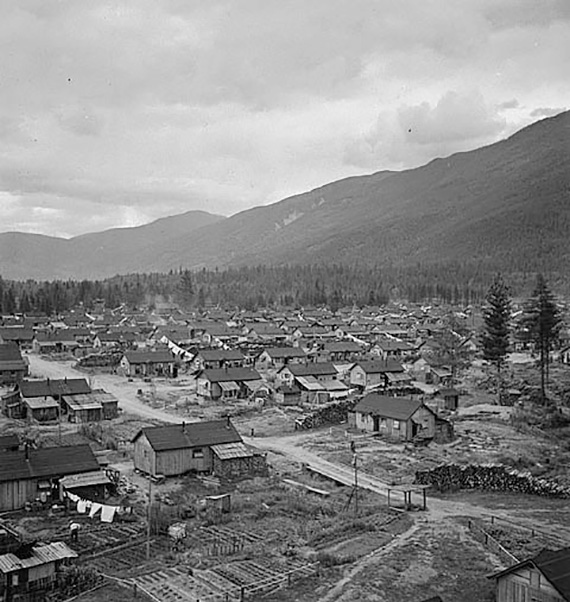
In 1942, Canadian Prime Minister William Lyon Mackenzie King ordered Japanese Canadian adult men to be removed from their homes and put in labour camps.
By March 1942, 23,000 Japanese Canadian men, women, and children had been removed from their homes on the West Coast. Most were placed in industrial buildings, called internment camps, in smaller and more remote areas of British Columbia. Internment camps were detention centres where citizens were kept against their will during the war.
While these Japanese Canadians were being held in internment camps, the Canadian government sold their homes, farms, businesses, vehicles, and other personal property. The government kept the money from these sales, claiming it was to help pay for the costs of their internment.
Comprehension check

Refer back to the predictions you made about the images in the Minds On section.
How do your predictions compare to the history of what happened?
Consulting other texts
An excellent way to check our understanding of texts is to read other texts or sources of information on the same topic.
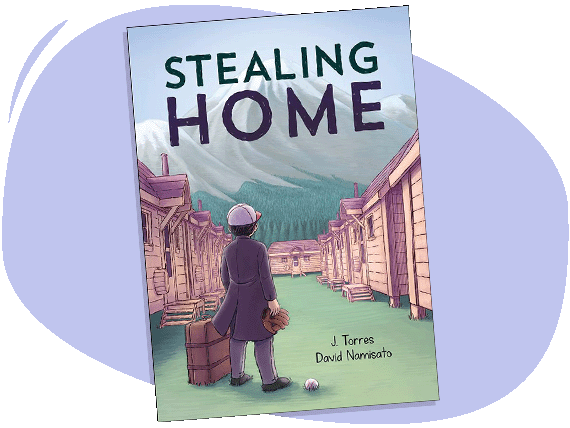
The graphic novel Stealing Home, by J. Torres and David Namisato, is the story of Sandy, a young Japanese Canadian boy. During World War II, Sandy is sent with his family to live in an internment camp as a result of the War Measures Act.
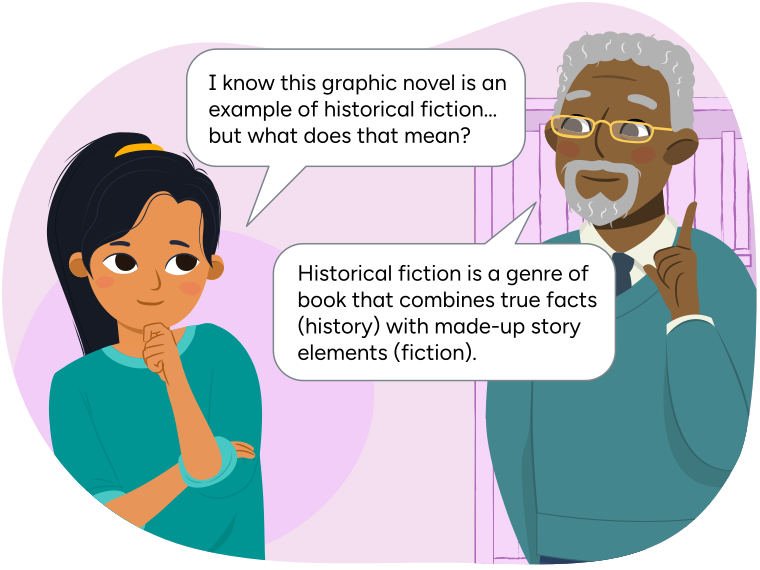
This graphic novel is an example of historical fiction.
Read the following excerpt from the historical fiction graphic novel Stealing Home by J. Torres and David Namisato. Notice the impact the sport of baseball had on the community of Japanese Canadians who were forced to live in an internment camp.
Comprehension check

In a notebook or using another method of your choice, answer the following questions:
- How did baseball help community members cope with life in the internment camps?
- This story is written from Sandy’s perspective. This is called first-person perspective. How does the first-person perspective help tell of the story of Japanese Canadians forced to live in internment camps?
- How did reading the text from Stealing Home help you understand the ideas in this learning activity?
Comparing forms
Next, let’s examine another kind of source to help build our understanding of the content.
Video
Check out the following clip from the National Film Board’s documentary “Sleeping tigers: The Asahi baseball story.”
After watching
Use examples from the video to explain how baseball once again helped rebuild community and provided a temporary escape for Japanese Canadians from some of the racism and discrimination they faced in the broader Canadian society.
Record your answers in a notebook or using another method of your choice.
When you have finished, press Sample Answer to check your understanding.
In the internment camps, baseball became a way for the Japanese Canadian community to recover some of their dignity and experience a sense of unity once again. As mentioned in the video, some guards and other officials working at the internment camps set aside racist attitudes to play together with the Japanese Canadian community.
Japanese Canadians: The war effort
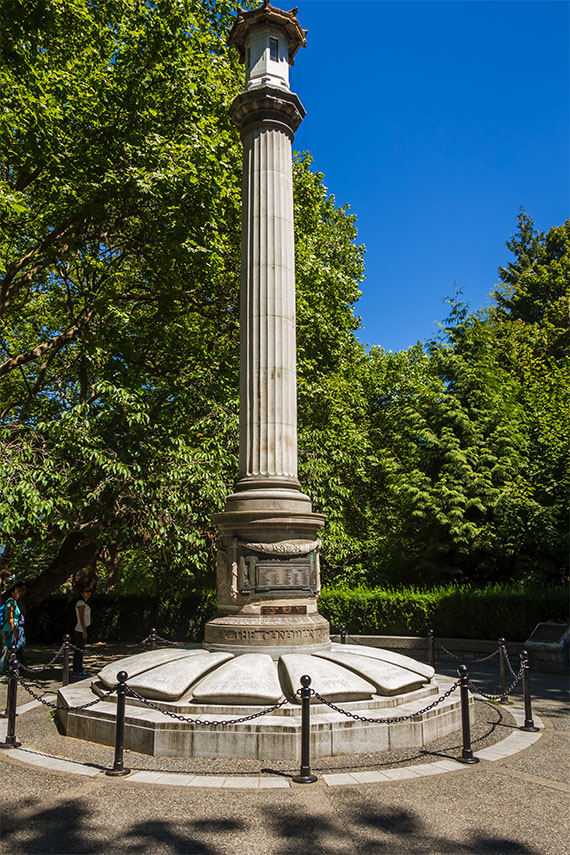
Japanese Canadian War Memorial
Despite the harsh treatment they received from the Canadian government, towards the end of World War II, 160 Japanese Canadians enlisted in (joined) the Canadian army. Some fought as soldiers, and some served as interpreters.
To honour their service to the country, there is a Japanese Canadian War Memorial in Vancouver.
The end of internment
The Second World War ended in 1945. The 21,000 Japanese Canadians interned during the war were given two choices by the Prime Minister: move to Japan or move east of the Rocky Mountains, far away from the lives they had previously built on the Pacific Coast of Canada.
About 4,000 Japanese Canadians were deported to Japan and forced to start their lives over. The remaining 17,000 had to start over in completely new Canadian cities and landscapes. Their personal belongings from before the war were never returned to them.
A historic apology
On September 22, 1988, Canadian Prime Minister Brian Mulroney formally apologized in the House of Commons for the internment of Japanese Canadians during World War II. This was the first time the Canadian government had made an official apology to a group of people. Since then, Canada has issued several apologies to groups that have been harmed by government policies.

Let’s check!
What do the texts used in this learning activity teach us about diversity and inclusion up to and including the 1940s in Canada?
Complete the following true-or-false questions to test your understanding. Select “true” or “false,” then press Check Answer to see how you did.
Putting it all together
In this learning activity, you discovered that during World War II, the Canadian government discriminated against Japanese Canadians and violated their human rights.
Summarize what you have learned

Your task is to summarize what you have learned throughout this learning activity about the Japanese Canadian experience and the resilience of this community.
To get started, consider these questions:
- What are the three biggest takeaways from what you have learned?
- How will you share this information with someone else who may not know about this part of history in Canada?
- What format will you use to share your summary? Does the format impact the information that you will include?
Complete your summary using the format of your choice. Once you have finished it, share it with a partner if possible.
Reflecting on strategies

In a notebook or using another method of your choice, answer the following questions:
- Of the comprehension strategies you tried in this learning activity, which helped you most?
- Why is it important to explore diverse experiences and perspectives when learning about historical events?
Reflection
As you read through these descriptions, which sentence best describes how you are feeling about your understanding of this learning activity? Press the button that is beside this sentence.

I feel...
Now, record your ideas using a voice recorder, speech-to-text, or writing tool.