Learning goals
We are learning to…
- understand historical and cultural contexts when reading and viewing texts by Indigenous creators
- identify cultural elements represented in various texts, including values, rituals and ceremonies, architecture, art, and dance
- assess how historical periods and cultural experiences influence texts created by Indigenous individuals, and how they relate to current lived experiences
Success criteria
I am able to…
- describe different aspects and components of powwows based on literary and informational texts
- explain how history, culture, and lived experiences influenced the creative work of an Indigenous artist or author
- identify some of the historical and cultural contexts of Indigenous powwows in my community
Exploring a celebration
Check out the following video clip from the show Raven’s Quest that features Joshua, a 12-year-old Ojibway boy.

Pause and Reflect
Pause and reflect
In a notebook or using another method of your choice, answer the following questions. If possible, share your ideas with a partner.
- What do you notice in the video?
- What do you wonder about what you observed?
- What connections can you make with what you observed?
- Is there anything in the video that is familiar or unfamiliar to you?

Powwows
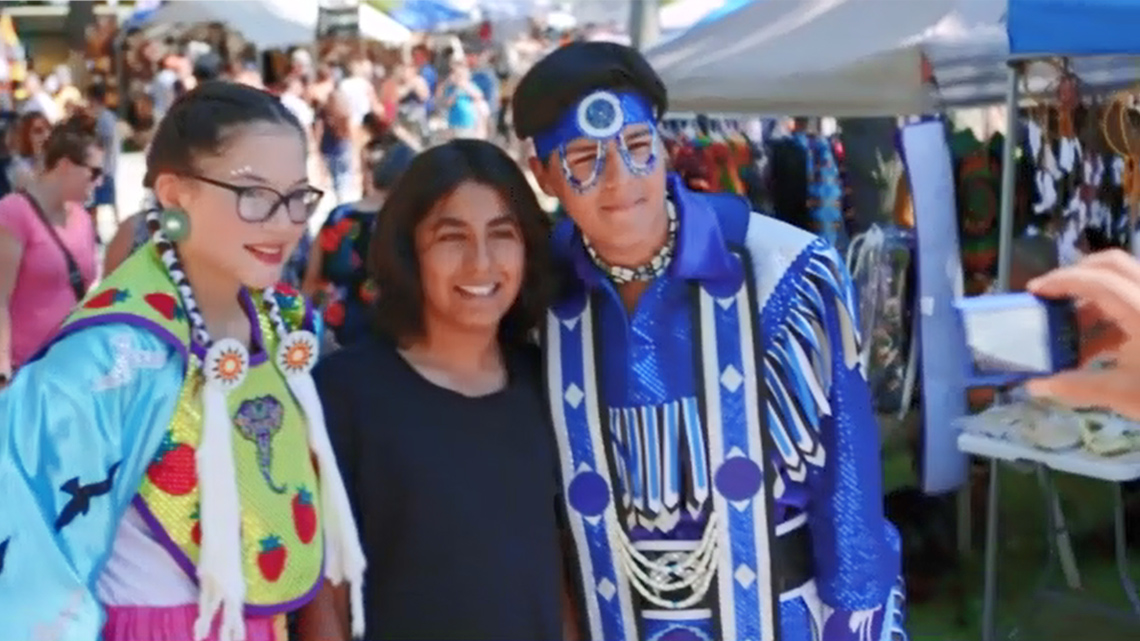
Joshua, a 12-year-old Ojibway boy, poses for a picture with friends at the Curve Lake powwow.
A powwow is a community celebration where Indigenous Peoples gather to show pride and respect for their culture and compete in dance competitions. There are vendors selling food and traditional art forms, as well as opportunities for Indigenous Peoples’ to dance, sing, and drum. The sacred and traditional clothing and accessories worn to a powwow are called regalia.

Did You Know?
Did you know?
In 1876, the Canadian Government passed The Indian Act, which made it illegal for First Nations individuals to hold powwows, or gather in groups, so they had to be held in secret.
Today, powwows are an important part of reclaiming cultural heritage and celebrating what was taken away from past generations.
Dancing is an integral part of powwows and some even have competitions for different types of dances.
- There are dances specifically for men, such as the Grass Dance.
- There are dances specifically for women, such as the Fancy Shawl and Jingle Dress dances.
- There are dances for all genders, such as the Hoop Dance.
- Some dances are intertribal or allow for Indigenous and non-Indigenous Peoples to join in.

First Nations, Métis, and Inuit dances are linked to cultural identity and pride. For Indigenous Peoples, dances and their teachings are sacred. They are not to be copied or imitated without a specific invitation from an Indigenous dancer to join in the dancing.
Press the following tabs to explore examples of some different powwows that have taken place in Ontario and Quebec.
In the following clip from the show Raven’s Quest, Joshua, a 12-year-old Ojibway boy, attends the Curve Lake powwow in South-Eastern Ontario.
In the following clip from the show Raven’s Quest, Quill, an 11-year-old Algonquin girl, attends the Kitigan Zibi Traditional powwow in Southern Quebec.
In the following clip from the show Raven’s Quest, Wiingashk, an 11-year-old Ojibwe boy, attends the Sault Ste. Marie powwow in South-Central Ontario in honour of National Indigenous Peoples Day (formerly called National Aboriginal Day).
In the following clip from the show Raven’s Quest, Jacob, a 10-year-old Cree and Ojibwe boy, attends the Na-Ma-Res powwow in Toronto, Ontario in celebration of the summer solstice.
Pause and Reflect
Pause and reflect
In which powwow example did you notice the following elements:
- vendors
- traditional art forms
- food
- dancing
- drumming
- singing
- regalia
- community
Record your answers, along with examples, in a notebook or using another method of your choice. If possible, share your answers with a partner.

Let’s read!
Next, let’s explore an excerpt from atext in which a powwow plays an important role.
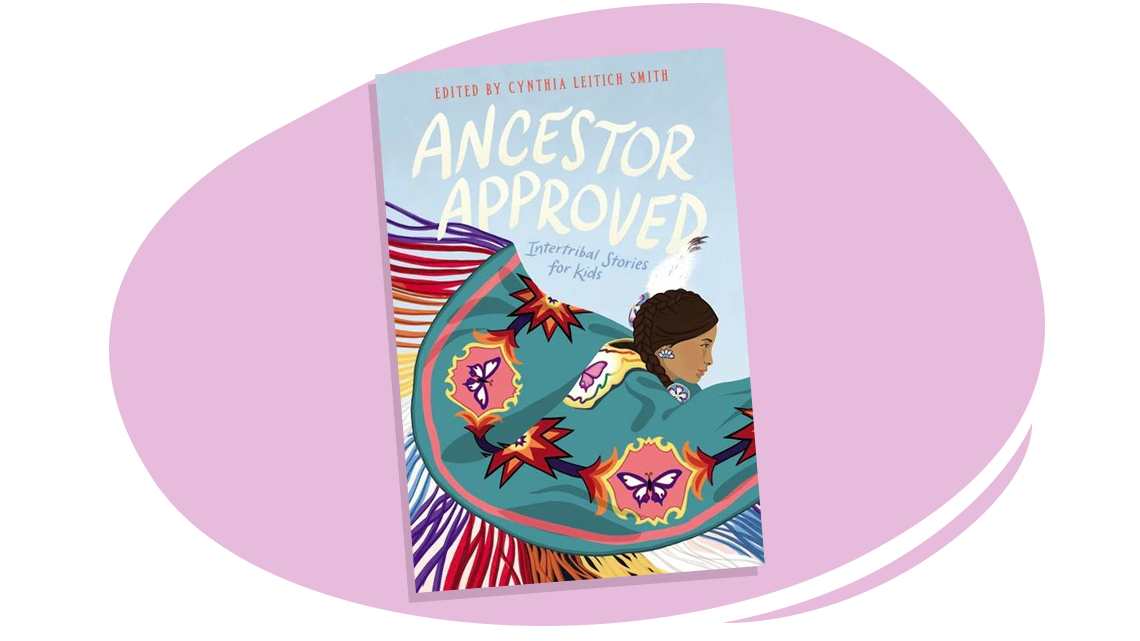
The following excerpt is from one of the short stories in the book Ancestor Approved: Intertribal Stories for Kids edited by Cynthia Leitich Smith. Each story and poem in this book is written by a different Indigenous author and provides different perspectives, or points of view, as each character participates in the same powwow in Ann Arbor, Michigan.
In this book, the short story “Brothers” by David A. Robertson follows Aiden, a 12-year-old Cree boy, as he and his foster parents drive from Winnipeg, Manitoba, Canada to Ann Arbor, Michigan, USA.
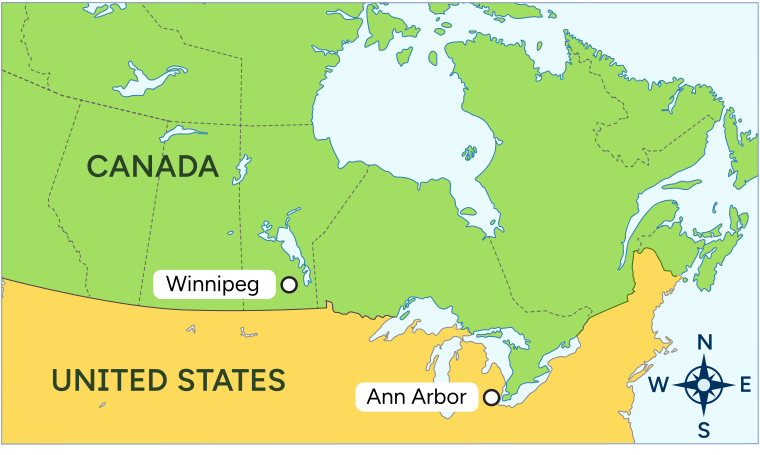
They are making the journey to Ann Arbor so that Aiden can experience his first powwow and finally meet his older brother, Vince, that he recently found out existed.
Aiden’s only connection to his Cree culture has been recent Grass Dancing lessons, inspired by his new relationship with Vince. He is supposed to be dancing at the powwow alongside his brother.
Before reading
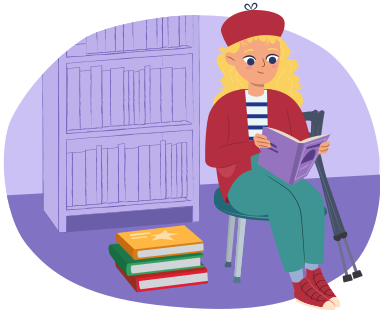
Consider the following questions to make predictions about the text before reading. Record your thinking in a notebook or using another method of your choice.
- How do you think Aiden might be feeling about meeting his older brother for the first time?
- How might Aiden be feeling about going to his first powwow and dancing with other Indigenous Peoples?
Read the following excerpt from the short story “Brothers” by David A. Robertson.
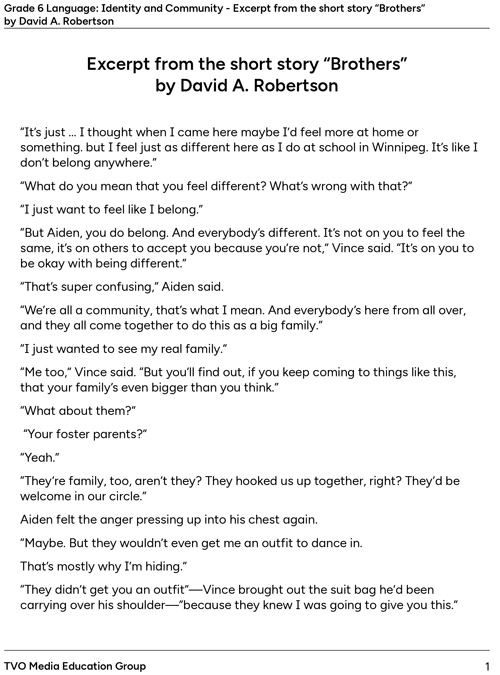
Press the Activity button to access the Excerpt from the short story “Brothers” by David A. Robertson.
Activity(Opens in a new tab)Based on what you read, what ideas or images come to mind?
After reading
Comprehension check
Using the method of your choice, answer the following questions.
- What dance is Aiden learning? Describe the regalia that Vince gives him.
- How is this powwow significant for Aiden, culturally and emotionally?
- Were your predictions about Aiden’s feelings correct? Explain your answer.
When you have finished, press Possible Answers to check your understanding.
- Aiden has been taking Grass Dance lessons. The regalia Vince gives him is bright lime green with many colours of ribbons connected to the arms, legs, and chest. The legs, arms, and chest of his regalia are embellished with images of animals.
- At this powwow, for the first time Aiden feels like he is part of a larger Indigenous community. It is also the first time he meets his brother and connects with him in person.
- Answer will vary.
Reflecting on strategies
Consider the following question. If possible, share your thinking with a partner.
- Did visualizing and making predictions help you understand the story? Will you use these strategies with other texts in the future?
Now that you have explored this story, you are going to learn a little bit about the author. But first, take a little break!

Social Emotional Learning
Water break!
Remember to drink water and stay hydrated during the day. We learn best when we take care of ourselves!
About the author
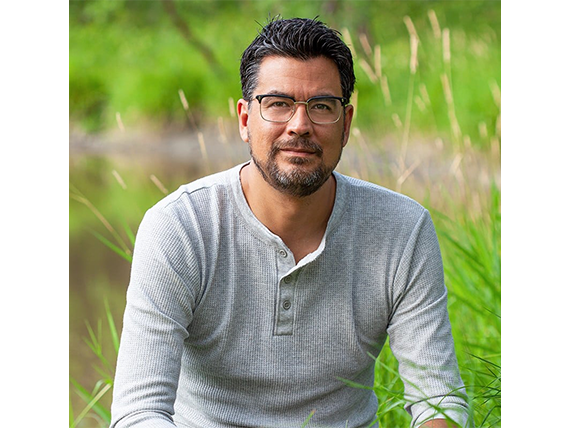
David A. Robertson is a member of Norway House Cree Nation and lives in Winnipeg, Manitoba. He is a podcaster, public speaker, social advocate, and an award-winning author of more than 25 books for children and adults, as well as several short stories.
In David’s short story “Brothers”, the main character Aiden, lives with foster parents that are not Indigenous. Exploring how kids reclaim their cultural heritage is important to David because of the very high number of Indigenous children that are in foster care. He also writes from his personal experience of being separated from his Cree father during his childhood and not discovering his Indigenous heritage until middle school.
Many of David's books cover difficult real-life topics such as the residential school system, mental health, and environmental sustainability. David writes for kids in a straight-forward way that doesn’t talk down to them and believes in representing Indigenous people in positive and truthful ways.
Pause and Reflect
The link between life and art
Now that you have read David A. Robertson’s bio, consider the links between his life experiences and his work.
In what ways might the author’s life experiences impact his writing? Can you make any connections between the character Aiden and author David A. Robertson’s lived experience?
How do you think history, culture, and lived experience might affect the work of an Indigenous author or artist?
Record your response using a method of your choice.

Correlative conjunctions
Conjunctions are connecting words. Correlative conjunctions are conjunctions that work in pairs by making a connection between two things in a sentence.
Check out these examples:
| Correlative conjunctions | Sample sentence |
|---|---|
| Both… and | Both Aiden and Vince are grass dancers. |
| Not only… but also | Not only was Aiden excited about the powwow, but he was also nervous. |
| Either… or | Aiden could either choose to hide under the bleachers, or he could choose to dance with Vince. |
| If… then | If Aiden had regalia for the grass dance, then he would feel more comfortable dancing. |
| Not…but | Aiden did not have regalia, but Vince surprised him with some. |
| Whether… or | Whether Aiden dances or he chooses not to, Vince will still be there for him. |
Let’s check!
Answer the following question by identifying the correct correlative conjunctions for the sentence.
Select the correct answer, then press Check Answer to see how you did.

Try It
Let’s practice!
Choose three of the following pairs of correlative conjunctions and create your own sentences connected to what you have learned and explored in this learning activity.
Record your responses using a method of your choice.
Sample sentence:
- Not only does David A. Robertson write about exploring Indigenous culture and heritage, but he also writes about mental health and the environment.
| not only / but also | either / or | if / then |
| not / but | both / and | whether / or |
If possible, share your sentences with a partner to compare your answers.

Putting it all together
Powwows happen all across Ontario and throughout Canada all year long, especially during the summer months. To consolidate your learning, you will research the powwow of your choice – perhaps the one closest to your community – and communicate your findings.
Before you begin, let’s review some information about how to conduct research in a safe and responsible way.
Research safety
When doing research on the Internet, it is important to stay safe and stay focused. You can use the acronym TRUST to guide you as you do your research.
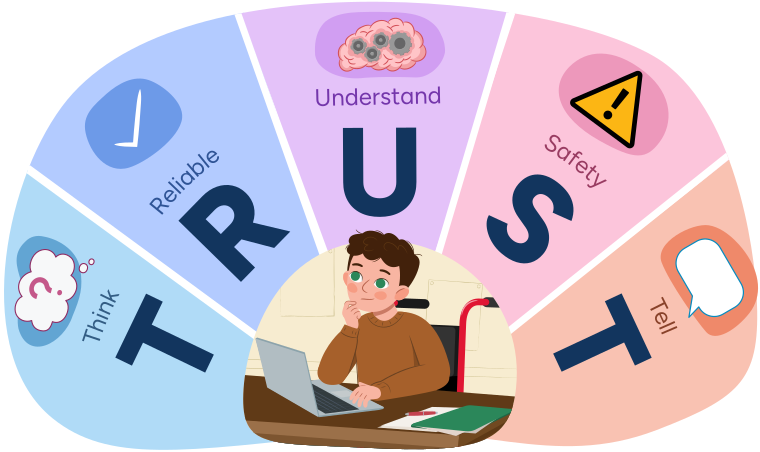
Press the following tabs to learn more.
Think about your topic and develop specific questions to get better research results.
For example, if you’re working on the topic of recycling, you might start with a general question and make it more specific before beginning your research.
- General question: Why is recycling good for the environment?
- Specific question: How does recycling help protect marine wildlife?
Be patient while doing your research. Go through each website carefully, and take notes using a graphic organizer or notebook. Record the websites used for specific information – it’s important to give credit to the creator of the content.
Consult more than one resource to help you determine if the information you gather is accurate and true.
Remember, research can take time. It helps to be focused and calm! Taking a break can refresh our thinking and help us process new information.
It’s important to use reliable sources so that you can put together accurate and up-to-date information about your topic.
Websites ending with .com, .org, and .net can be purchased and used by anyone.
The ending .org is usually used by non-profit organizations, which may be trying to persuade rather than educate.
Websites ending in .edu are reserved for colleges and universities. Canadian websites have a .ca ending.
Consider the following questions when you are doing your reliability check. You might also ask a trusted adult or a peer for help if you are uncertain about a website.
- When was the resource published?(This might help you determine if the information is current.)
- Who created the resource/website? What is their educational background or work experience?
- Who is the intended audience?
- Who benefits from this information being shared?
- Whose perspectives are represented? Whose perspectives are missing?
Do you understand all the words on the site? Can you decode their meaning?
Does what you’re reading make sense?
If not, it’s okay. Consider trying a different source. It’s important for you to understand the information that you read so that you can put it in your own words.
It’s important to stay safe while doing online research. If a website asks you for any personal information, close it and try a different website.
Personal information could include asking for your full name, email address, phone number, home address, photos, or school name. Do not provide any personal information and close the website.
Does the site have pop-up windows? These windows usually ask the user to click to “win a prize” or “check out information.” Do not click on the pop-ups and close the website.
Throughout the research process, feel free to check in with a peer or trusted adult.
If there is anything specific that makes you feel uncomfortable or worried while you are doing your research…
- pause and take a break
- speak to a trusted adult
A note on Indigenous research
When doing research relating to a specific group of people, it is important that all sources be either created or approved by someone in that group. For example, information about Indigenous Peoples should be written by an Indigenous person or presented on an Indigenous community’s website.
Your research activity: A powwow
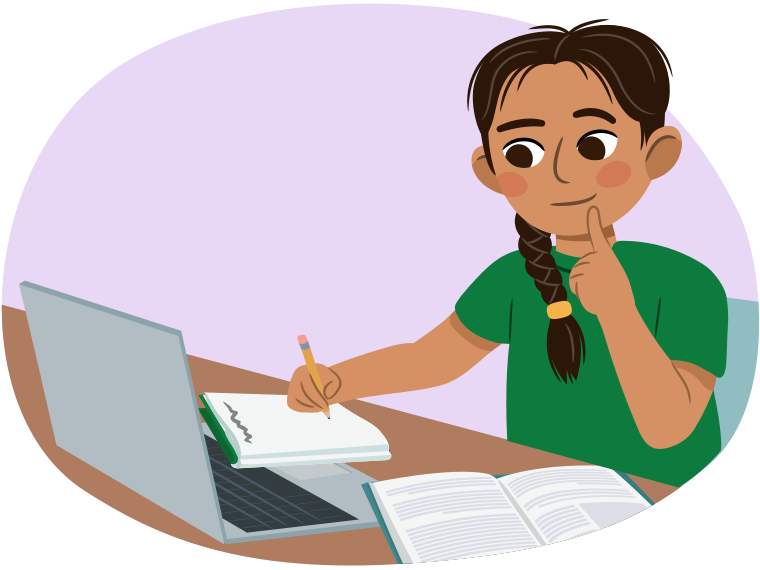
For this research activity, you will research a powwow to find out the following information:
- Where and when does this powwow take place?
- Where and when did this powwow begin?
- What is the history of this community? (Hint: check the community’s website)
- What are some of the different events or competitions at this powwow?
- What are three or more details about this specific powwow that are interesting or important to know?
You will also keep track of the sources you use.
Recording your research
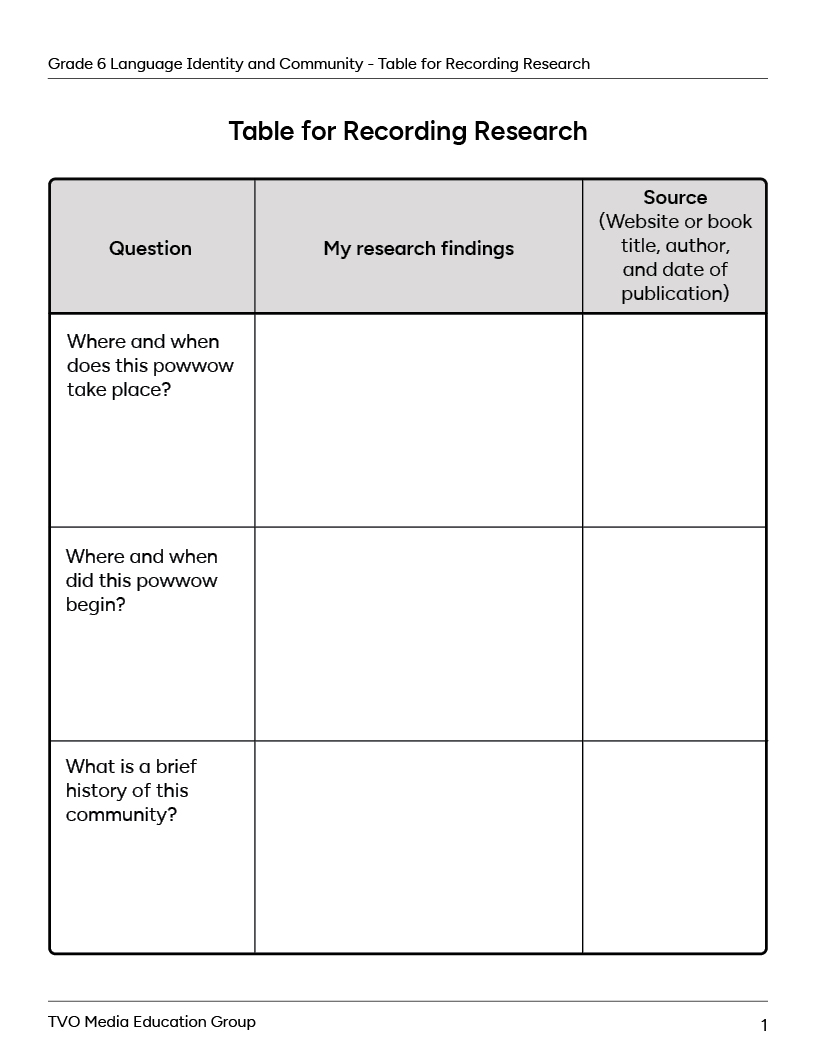
To organize and record your information and to keep track of sources, you may wish to use a graphic organizer.
Create a table in your notebook, or complete this fillable and printable Table for Recording Research.
Sharing your research
Once you have completed your research, the next step is to share the results with others.
Here is a list of formats to choose from:
- video presentation
- written presentation
- audio presentation
- infographic
- another format of your choice
Choose the format that you feel will most effectively share your information. Who do you want to communicate with? Make sure your format is a good fit for your intended audience.
Once you have finished, if possible, present your work to a partner and ask for their feedback.
Reflection
As you read through these descriptions, which sentence best describes how you are feeling about your understanding of this learning activity? Press the button that is beside this sentence.
I feel...
Now, record your ideas using a voice recorder, speech-to-text, or writing tool.