Learning goals
We are learning to…
- demonstrate an understanding of the historical contexts, contributions, lived experiences, and perspectives of a diversity of individuals and communities
- read and comprehend various complex texts, making predictions and responding to comprehension questions
- analyze how various topics, such as diversity, inclusion, and accessibility, are addressed in texts, respond to the insights and messages conveyed, and identify different positions presented
- establish an identifiable voice in complex texts, modifying language and style to suit the text’s form, genre, audience, and purpose, and express their thoughts, feelings, and opinions about the topic clearly
Success criteria
I am able to…
- make predictions about a text based on the cover and title, read and comprehend the text by responding to comprehension questions
- analyze how the themes of diversity, inclusion, and accessibility are addressed in two separate texts, focusing on character identity
- create character maps for two characters from two different texts, and later compare these characters and their experiences
- write a personal narrative that explores an aspect of my own personal identity and reflect on how this helps me understand myself and my connection with others
What is identity?
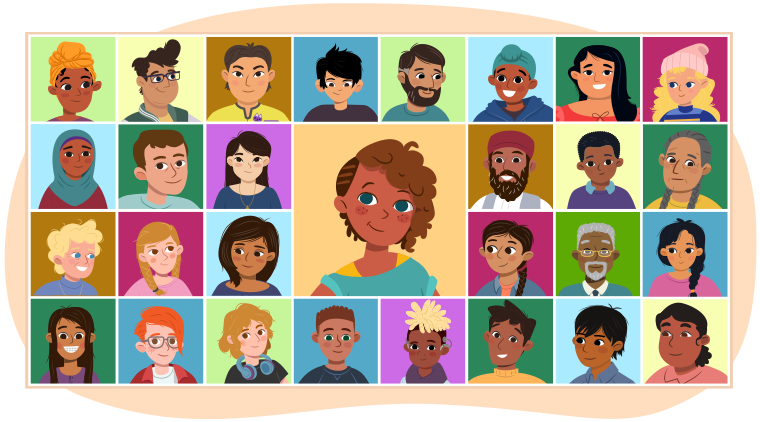
You’ve likely heard of the word “identity”, but what does it really mean? Some of the meanings of identity include:
- A person’s name.
- Facts about who a person is.
- The state of being, or the sense of who you are as a particular person, group, or organization.
- Who a person is.
- The qualities of a person or group that make them different from others.

Brainstorm
Brainstorm
Based on this information, what do you think shapes your identity? Brainstorm a list of ideas in a method of your choice.
Creating an identity web
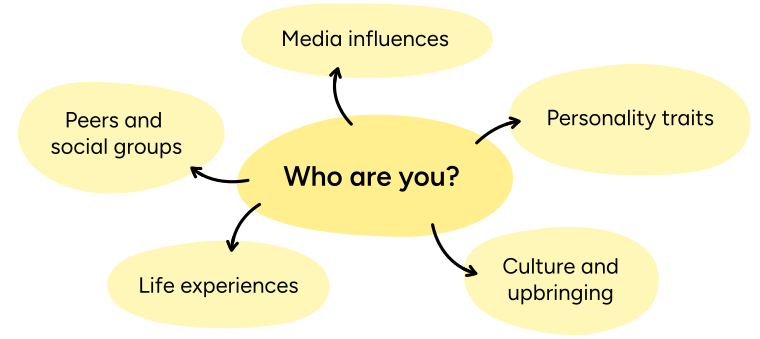
The formation of a personal identity is a constant, ongoing process: it begins in childhood and continues throughout life. Someone’s personal identity is influenced by a number of different factors in their life. Some of these factors might include:
- culture and upbringing
- peers and social groups
- media influences
- life experiences
- personality traits
Your task is to create an identity web about yourself. Use the following image to inspire your thinking.
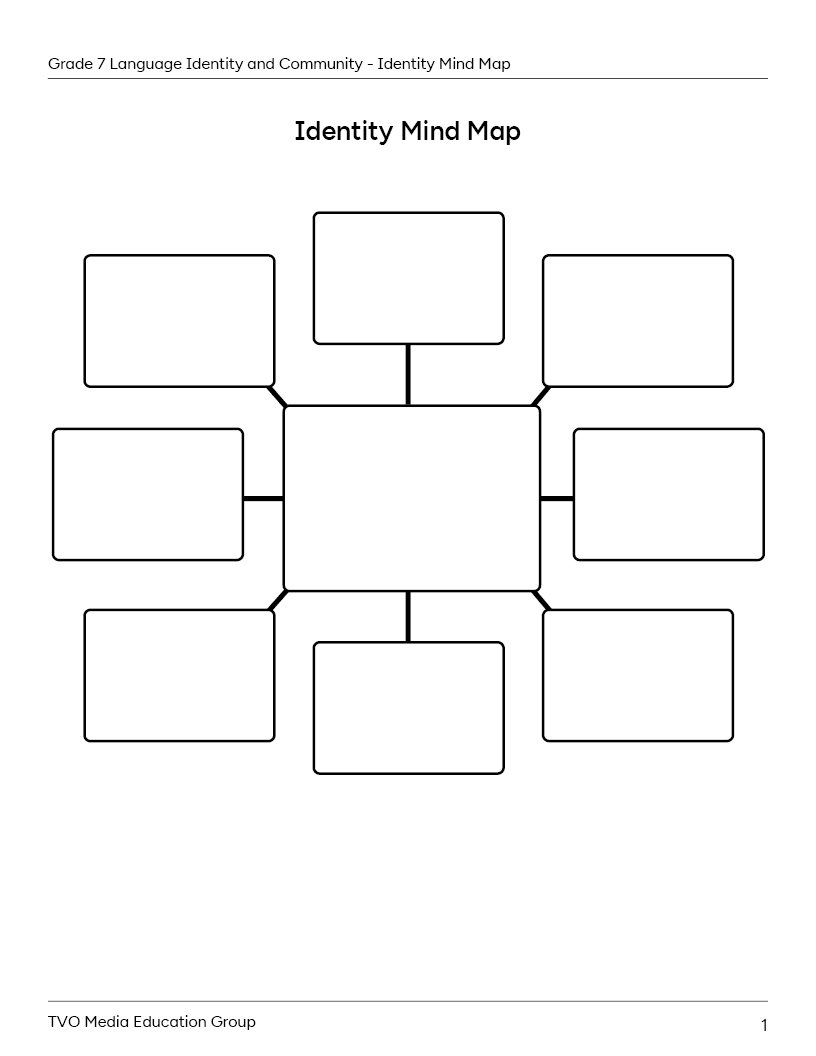
Complete the fillable and printable Identity Mind Map in your notebook or using the following document. If you would like, you can use speech-to-text or audio recording tools to record your thoughts.
Exploring identity, diversity, and inclusion
In this learning activity you are going to be exploring two different texts that explore identity, diversity, accessibility, and inclusion. Before you begin, let’s explore the definitions of vocabulary words.

New vocabulary
Identity
- A person’s name and other facts about who they are.
- The fact of being, or feeling that you are, a particular type of person, organization, etc.
- Who a person is, or the qualities of a person or group that make them different from others.
Diversity
- The fact of many different types of things or people being included in something.
- A range of different things or people.
- The fact of there being people of many different groups in society, within an organization, etc.
Accessibility
- The fact of being reached or obtained easily.
- The quality of being able to be entered or used by everyone, including people who have a disability.
Inclusion
- The act of including someone or something as part of a group, list, etc., or a person or thing that is included.
- The idea that everyone should be able to access the same facilities, take part in the same activities, and enjoy the same experiences.

Based on these definitions, record the following information about each word. You can use the graphic organizer provided or record your ideas in another method of your choice.
- Synonym (a word that means the same or similar)
- Antonym (a word that means the opposite)
- Use the word in a sentence
Complete the fillable and printable Vocabulary Graphic Organizer in your notebook or using the following document. If you would like, you can use speech-to-text or audio recording tools to record your thoughts.
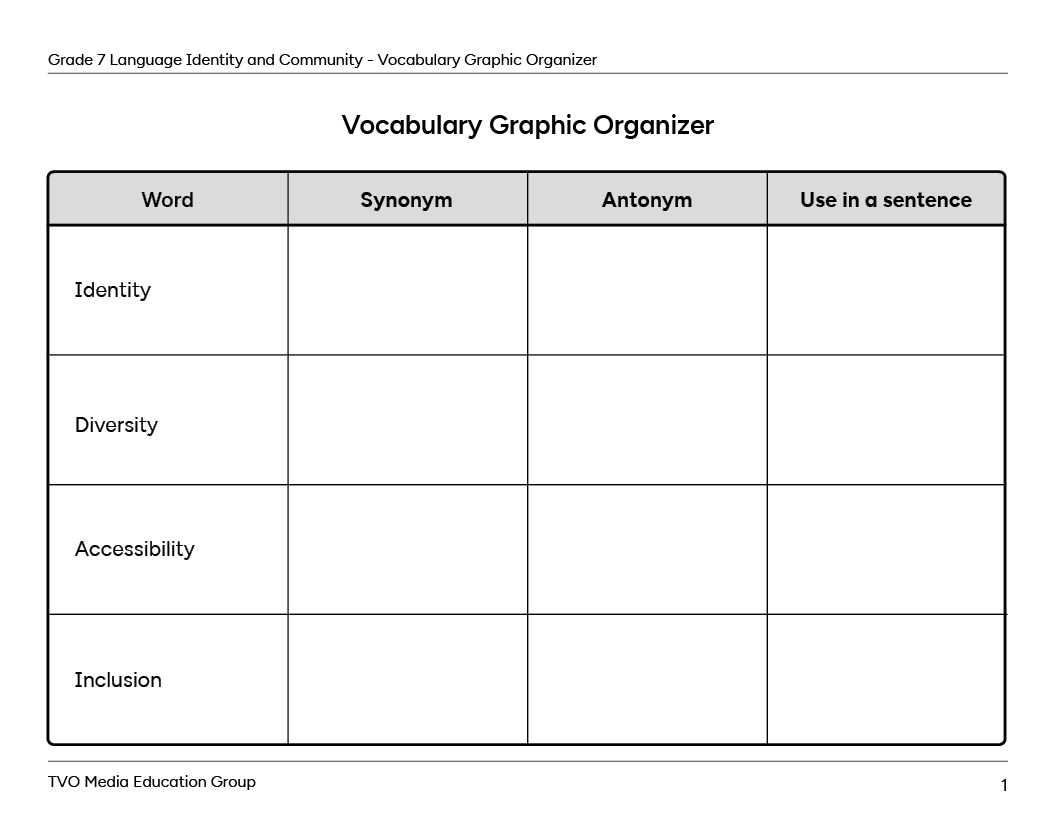
Press Possible Answers button to learn more.
|
Word |
Synonym |
Antonym |
Use in a sentence |
|---|---|---|---|
|
Identity |
Individuality Character |
Uniformity Sameness |
Each person’s identity is shaped by a unique combination of experiences, beliefs, and values. |
|
Diversity |
Variety |
Sameness |
The company values diversity in its workplace and promotes inclusion and equal opportunities. |
|
Accessibility |
Availability Ease of access |
Inaccessibility Obstruction |
The new ramp improves the accessibility of the building for wheelchair users. |
|
Inclusion |
Incorporation Integration |
Exclusion Isolation |
The school promotes inclusion by providing services for all students. |
As you explore the following texts, consider the role of identity, diversity, inclusion, and accessibility.
The Outsiders by S.E. Hinton
First, you will be exploring a chapter from The Outsiders by S.E. Hinton.
Pre-reading: making predictions
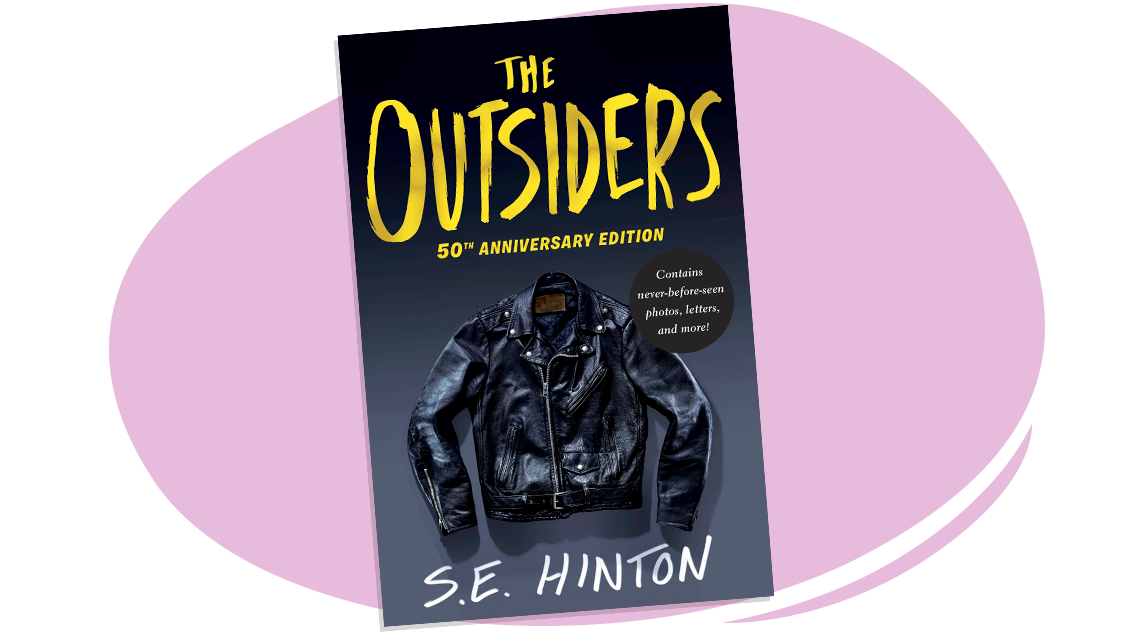
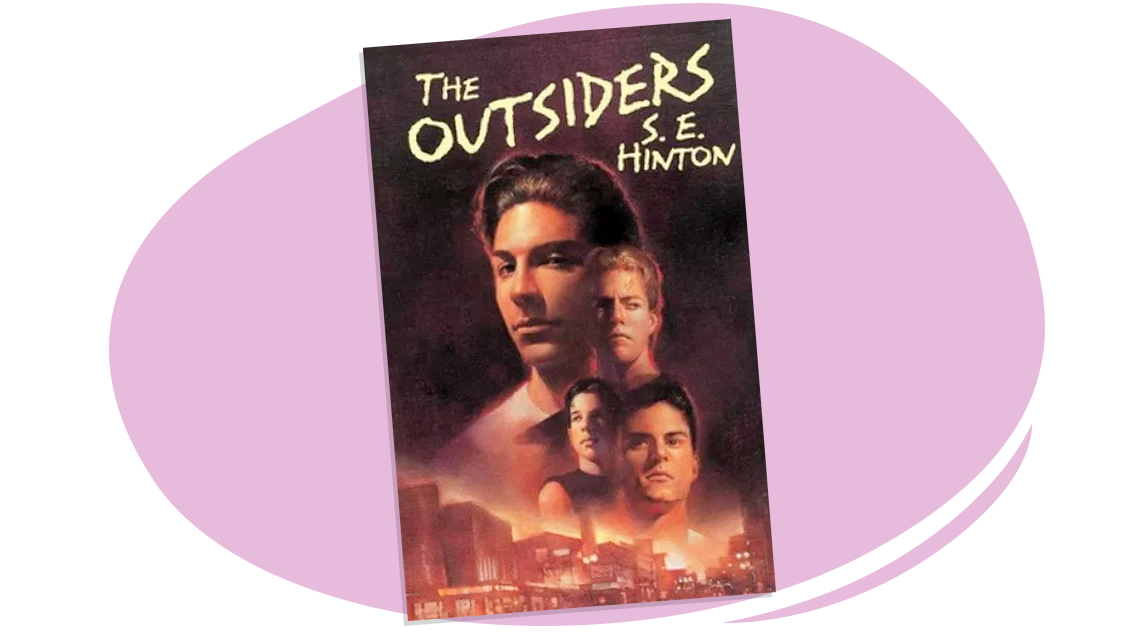
Begin by exploring the cover of the text. Based on the cover of the text and the title, can you make a prediction about what you think the text will be about?
A prediction is a guess you make about what you think will happen based on clues, such as the title or cover.
There are multiple versions of this text that have been printed. Use each image to help give you different clues and make your predictions. In your notebook, or another method of your choice, record three predictions.

Reading: exploring the text
Now that you’ve made your predictions, let’s learn a little bit more about the book prior to exploring a chapter.
The Outsiders by S.E. Hinton follows the life of Ponyboy Curtis (the narrator), a 14-year-old boy, who struggles with the right and wrong in society and feelings of being an outsider. As young men from the East Side of town, Ponyboy and his brothers are part of a group called the “greasers”. The greasers’ rivals are the “Socs”, short for socials, who are from the other side of town and considered the rich kids.
You will be exploring Chapter 3 from the book and reflecting on themes of diversity, inclusion, and identity.
Let’s check!
Check your understanding of this chapter in the following multiple-choice questions.
Select the correct answer, then press Check Answer to see how you did.
Next, respond to the following comprehension questions in your notebook, or in another method of your choice. If possible, discuss your answers with someone else.
- Reflect back on the predictions that you made, were they correct? Why or why not?
- What do you think the following quote means: “Maybe the two worlds we lived in weren’t so different. We saw the same sunset,”? Why is this quote so important?
- What perspectives did you get to explore in this section of the text?
- How did this selection of the text address diversity, inclusion, and accessibility? Use specific details from the text when responding.
Press Hint to check your answers.
- The quote “Maybe the two worlds we lived in weren’t so different. We saw the same sunset,” is important because it shows there is a connection between the two groups, the Socs and the Greasers, regardless of their different situations and group affiliations. In this chapter, the Socs (Cherry and the Greasers have both just left the drive-in movie theatre, a place in town where both groups can go to enjoy a movie.
- In this chapter we get to explore two perspectives – Ponyboy’s and Cherry’s – as they discuss their social backgrounds and the things they believe connect and separate the Socs and the Greasers. This chapter highlights the theme of diversity as Cherry represents the affluent privileged social group in the story, while Ponyboy and Johnny represent the Greasers, a lower-class group. The interaction between Cherry and Ponyboy reveals differences in their lifestyles, values, and experiences, illustrating the diversity of social identities within the community.
- Despite belonging to different social groups, they engage in conversation, showing a willingness to interact with individuals outside of their social circle. This moment of inclusion challenges stereotypes and shows the potential for understanding and connection even across social divides. It also highlights the importance of empathy and open-mindedness in fostering inclusivity. Lastly, the drive-in theatre is a shared space where characters from all backgrounds can come together. This shows that certain social experiences, such as entertainment, are accessible to everyone, regardless of socioeconomic status.
Post-reading: character identity map
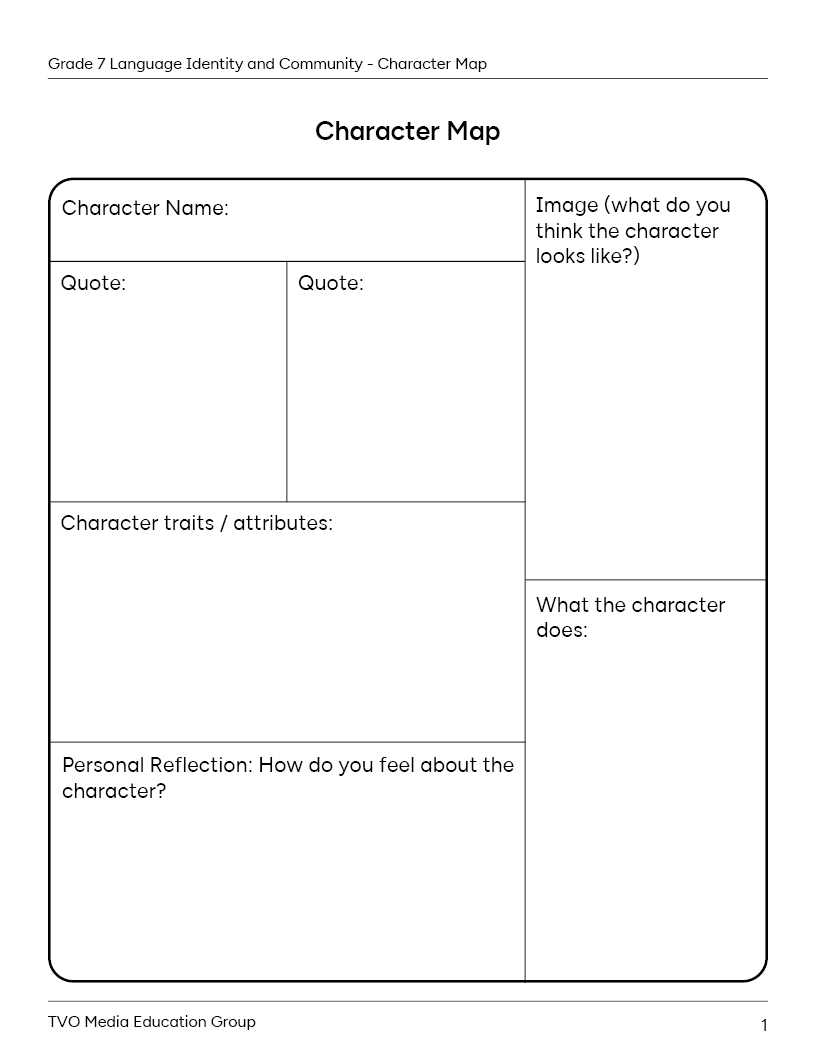
Next, let’s create a character identity map for either Ponyboy or Cherry. Choose one of the characters and complete a character map, that includes:
- character's name
- 1-2 quotes from the character
- character’s traits/attributes
- 1-2 things the character does
-
a personal reflection in response to the following prompt:
- Discuss any qualities or actions of the character that you admired or found relatable. How does this character's story or journey resonate with your own identity, experiences, or values?
You can use the graphic organizer provided or record your ideas in another method of your choice.
Complete the fillable and printable Character Map in your notebook or using the following document. If you would like, you can use speech-to-text or audio recording tools to record your thoughts.
Wonder by R.J. Palacio
Next, you will be exploring the novel, Wonder.
Pre-reading: making predictions
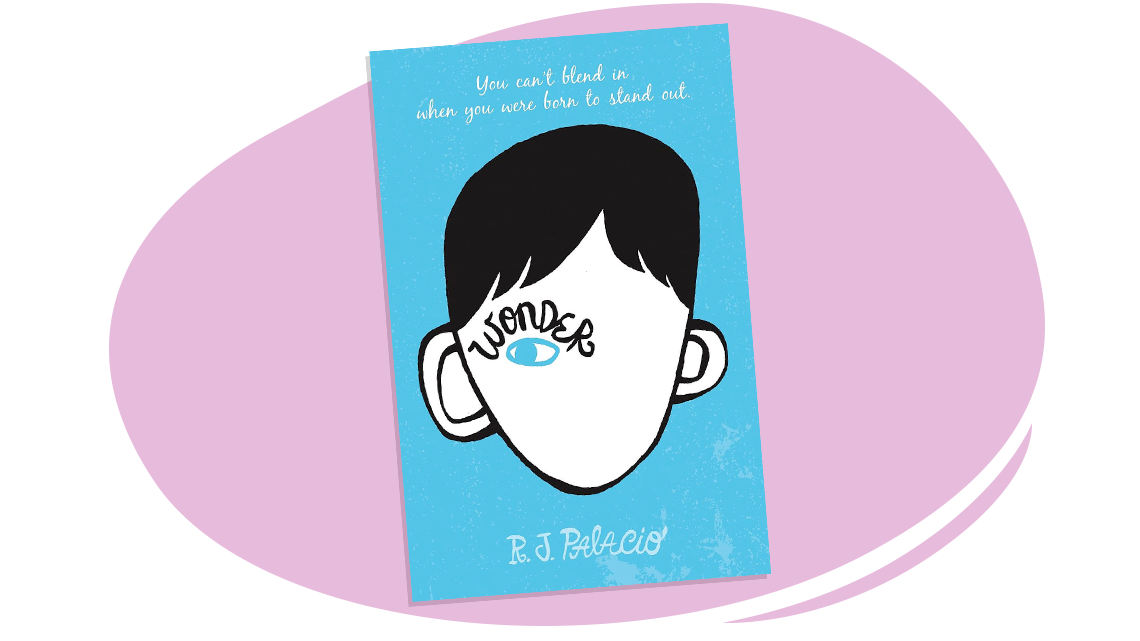
Begin by exploring the cover of the text. Based on the cover of the text and the title, can you make a prediction about what you think the text will be about? Record your ideas in a method of your choice.
Reading: exploring the text
The main character of this book is August Pullman, who is starting middle school in fifth grade for the first time. Up to this point, August (Auggie) had been home schooled. August was born with facial differences and wants nothing more than to be accepted by his peers and treated like an ordinary kid. This story is told from several points of view, including Auggie’s, his family’s, and other kids at school.
You will be exploring three sections of this text and reflecting on themes of diversity, inclusion, and identity. The first two sections, “Lunch” and “The Cheese Touch” show you Auggie’s perspective, and the third one “Summer” shows you the perspective of another girl at school.
Let’s check!
Respond to the following comprehension questions in your notebook, or in another method of your choice. Use text evidence to support your answers. If possible, discuss your responses with someone else.
- What happens at school that might make August feel unwelcome or uncomfortable?
- How does Summer’s acceptance of August show inclusion?
- Are there other sections of the text that highlight diversity, inclusion, and accessibility?
Press Possible Answers to check your understanding.
- Many things happen at the school that may make August feel unwelcome or uncomfortable: name calling, being starred at, no one wanting to sit or play with him, people don’t want to touch him, etc.
- The section on Summer emphasizes the theme of inclusion through Summer’s interactions with August. Even though other students don’t befriend August due to his appearance, Summer chooses to reach out to him with kindness and empathy. This starts when she sits with him during lunch so he doesn’t have to sit alone. She shows a willingness to look beyond his appearance and embrace August for who he is – a fun and nice kid. Summer’s acceptance of August highlights the importance of being inclusive and the power of helping others feel belonging.
-
Diversity - The lunchroom scene shows the diversity of the school community, with students from various backgrounds and social circles gathering in one space. August’s facial differences make him visibly different from other students, which could be seen as a way to show the diversity of human appearance and experiences. His unique physical appearance challenges societal norms, encouraging readers to recognize and embrace diversity in all its forms.
Inclusion – The lunchroom scene explores both inclusion and exclusion as August navigates the cafeteria for the first time. At first, August feels overwhelmed and worried about how he will appear when eating, until Summer shows him some kindness and inclusion by sitting with him. Despite physical differences, August wants to feel accepted by his peers.
Accessibility – August experiences challenges because of his facial condition, such as navigating the hallways and eating food. This shows the importance of having spaces and awareness to make sure all students have what they need at school to be successful.
Post-reading: character identity map
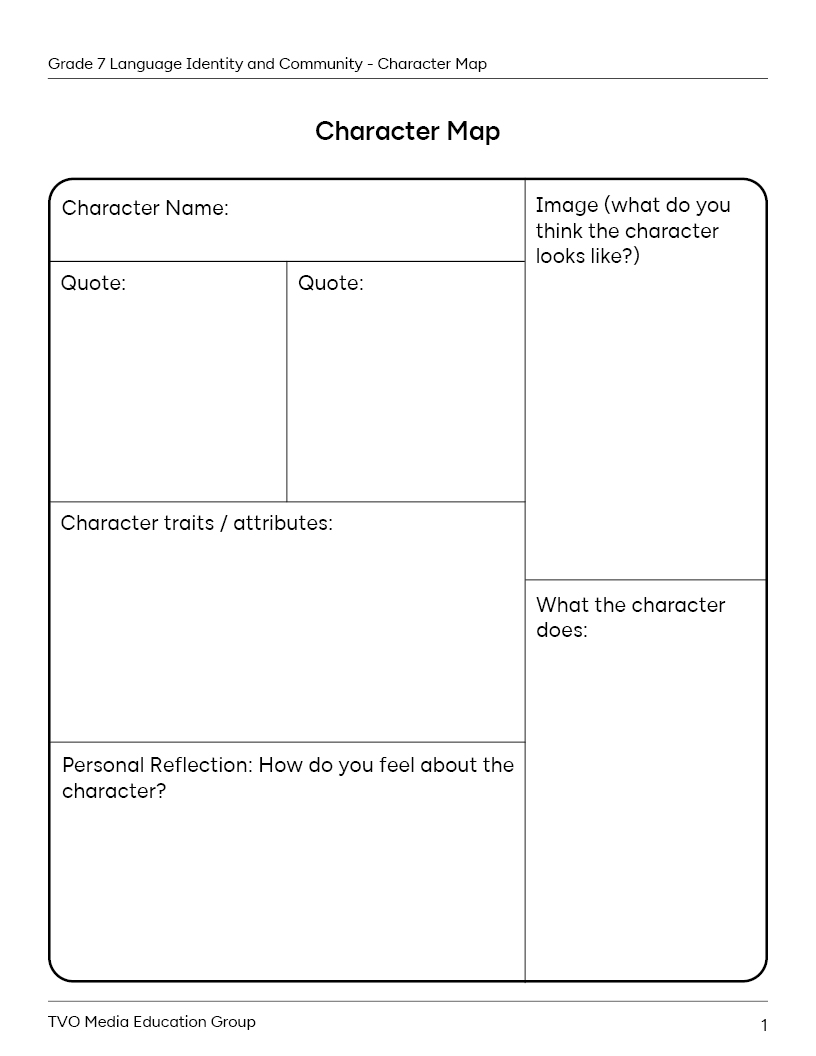
Lastly, create your character identity map of either August Pullman or Summer from the book Wonder. Create this using the graphic organizer provided, or in another method of your choice.
Complete the fillable and printable Character Map in your notebook or using the following document. If you would like, you can use speech-to-text or audio recording tools to record your thoughts.

Complex sentences with prepositional clauses
Before completing a writing activity on the books you read, let’s learn about complex sentences with prepositional clauses to enhance your writing. Let’s begin by reviewing the following definitions by pressing the accordion tabs.
A clause that expresses a complete thought and can stand on its own as a simple sentence.
A clause that does not express a complete thought and cannot stand on its own as a sentence.
Words or phrases that connect dependent clauses to independent clauses.
Examples:
and, because, since, after, when, once, if, unless, before, although, while
A complex sentence is one of four sentence types made up of one independent clause and one or more dependent clauses. Most complex sentences contain subordinating conjunctions.
Check your understanding of complex sentences by choosing true (it is a complex sentence) or false (it is not a complex sentence) for each sentence below.
Select the correct answer, then press Check Answer to see how you did.
Now that you understand complex sentences, let’s examine prepositional clauses.
A prepositional clause is a group of words consisting of a preposition (a word that precedes a noun or pronoun), its object, and any words that modify the object.
Let’s look at some examples in the following carousel.
Description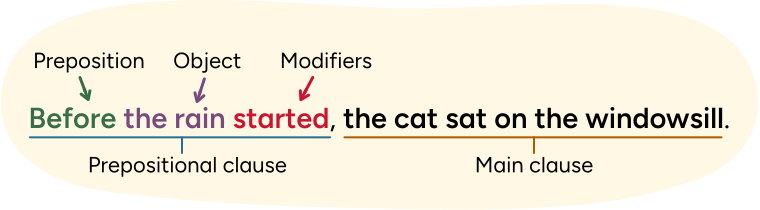
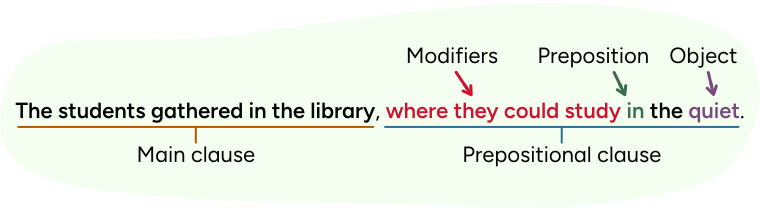
Image 1:
The complex sentence "Before the rain started, the cat sat on the windowsill," with the clauses, preposition, object, and modifier indicated. The preposition "before," the object "the rain," and the modifier "started," form the prepositional clause "before the rain started," which is followed by the main clause "the cat sat on the windowsill"
Image 2:
The complex sentence “The students gathered in the library, where they could study in the quiet,” with the clauses, modifiers, preposition, and object indicated. The main clause “The students gathered in the library,” is followed by the prepositional clause “where they could study in the quiet,” which is formed by the modifiers “where they could study,” the preposition “in,” and the object “quiet.”
Identify the following prepositional clauses within these complex sentences in the multiple-choice activity below.
Select the correct answer, then press Check Answer to see how you did.
By using complex sentences with prepositional clauses in your writing, you can provide additional details, show relationships between ideas more clearly, and make your writing richer and more complex. As you work through the next writing activity, be sure to include complex sentences with prepositional clauses.

Social Emotional Learning
Social emotional

Great work! Take a break before continuing onto the next part.
Writing about personal identity
Think back to the mind map that you created about your own identity in the Minds On section of this learning activity. Your task is to write a personal narrative that explores an aspect of your own identity.
You may choose to focus on:
- a specific experience
- an event
- a relationship
- an aspect of your identity that is meaningful to you
As you write, consider how you can establish a voice and style in your text. Modify your language to suit the text’s form, genre, audience, and purpose, and clearly express your thoughts and feelings about your chosen experience.
Press the following tabs to learn more about voice and style in writing.
Voice is the distinctive and individual style in which the author writes their works. It can include different literary devices and stylistic techniques to create the mood of a work. Most of the time an author’s voice is consistent across all of their writings.
Elements of voice include:
- Attitude: How do you think the speaker or writer feels about the subject or theme of the text?
- Tone: What is the overall mood or feeling conveyed by the speaker’s or writer’s words?
- Perspective: What point of view is the speaker or writer presenting, and how does this affect the readers understanding of the text?
Style is a manner of writing, speaking, or representing. It can be the characteristics of the word choice, language, literary devices, language patterns, and sentence structures of the work.
Use the following checklist to establish an identifiable voice in your text.
Voice
Now it’s time to write your personal narrative, in a method of your choice. Try to write it out in cursive or type it.

Cursive practice
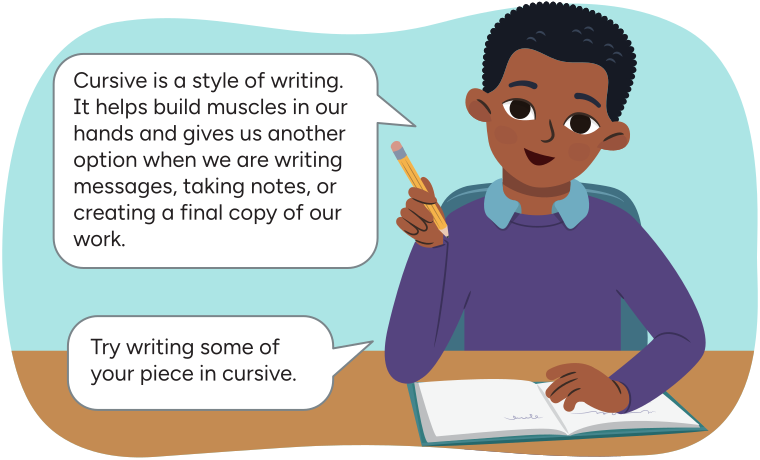
Arthur saying: Cursive is a style of writing. It helps build muscles in our hands and gives us another option when we are writing messages, taking notes, or creating a final copy of our work. Try writing some of your piece in cursive.
Let’s review cursive writing!
Check out the following animation of how the word “identity” is written in cursive, then review the tips for cursive writing provided.
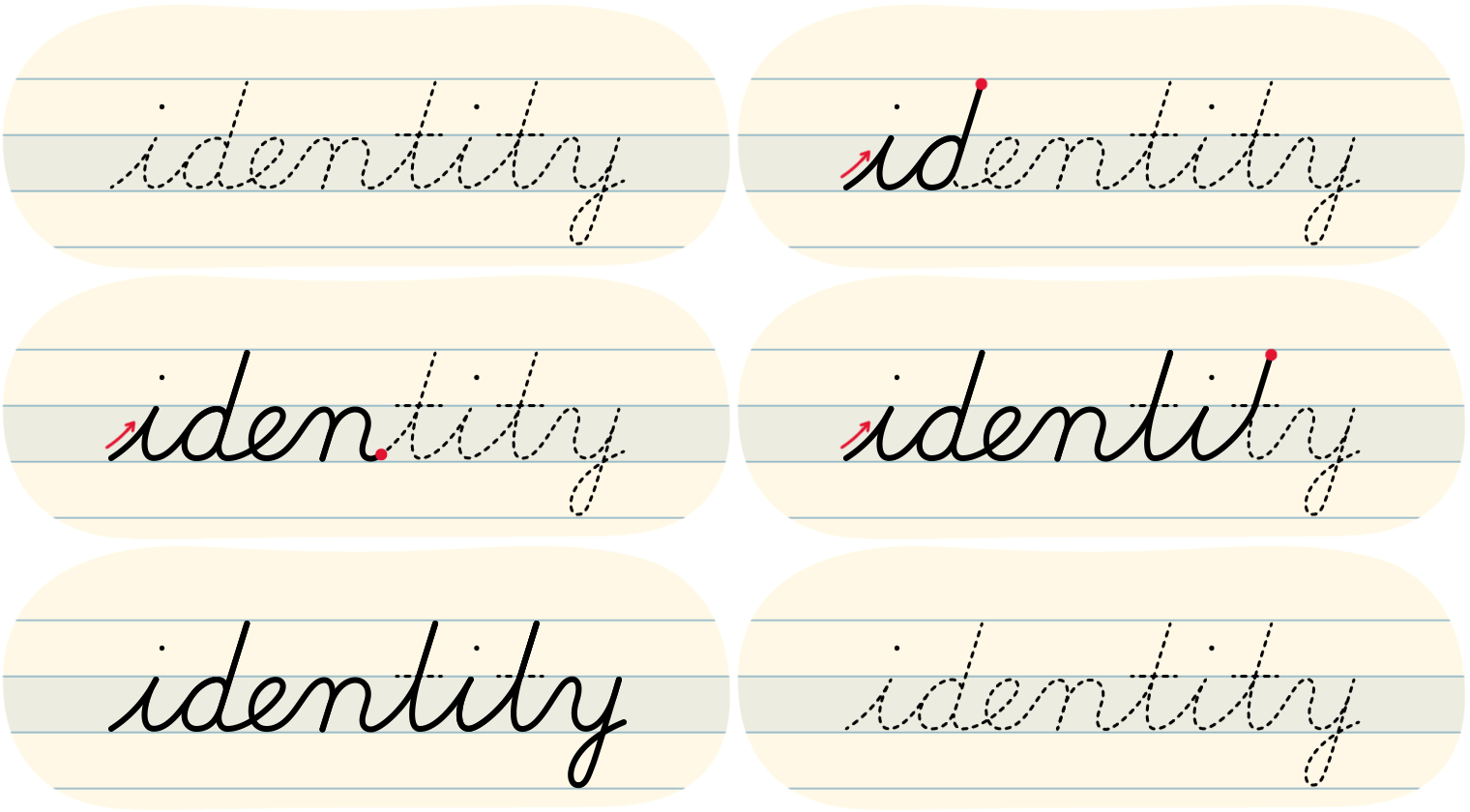
Tips for cursive letters
- When we write in lowercase, we always begin at the bottom.
- When we write in uppercase we can start from the top or the bottom.
- Try to keep the pencil on the page until you are done the word.
- Try to press gently as you write so that your hand can move easily across the page.
- Take your time to make sure that you are writing clearly and evenly.
Left-handed tips for cursive writing

Explore the video on Left-Handed Tips to learn more.

Typing practice
Typing is a great skill to develop! When we need to use a computer or tablet keyboard, knowing how to type helps us:
- take notes
- respond to messages
- create final drafts of our work.
Explore the following image to see what fingers are used to type each letter or number.
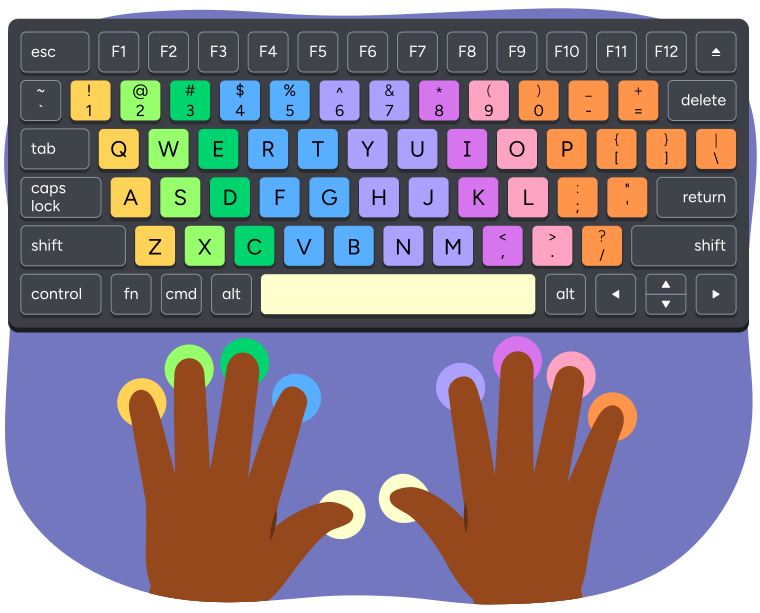
A keyboard and hands showing which fingers are used to press each key when typing.
The left pinky finger presses the keys 1, Q, A, and Z.
The left ring finger presses the keys 2, W, S, and X.
The left middle finger presses the keys 3, E, D, and C.
The left index finger presses the keys 4, 5, R, T, F, G, V, and B.
The left or right thumb presses the space bar.
The right index finger presses the keys 6, 7, Y, U, H, J, N, and M.
The right middle finger presses the keys 8, I, K, and comma.
The right ring finger presses the keys 9, O, L, and period.
The right pinky finger presses the keys 0, minus, equal, P, open bracket, closed bracket, backslash, semicolon, apostrophe, and forward slash.
We use specific muscles in our hands to type! It’s important to practice so that it becomes easier to type correctly without putting too much pressure on our hands and our wrist.
Let’s check!
Check your understanding of learned vocabulary words in the following fill in the blank’s activity. For each sentence, select the missing word from the drop-down menu. Press Check Answer to see how you did.
Character identity analysis
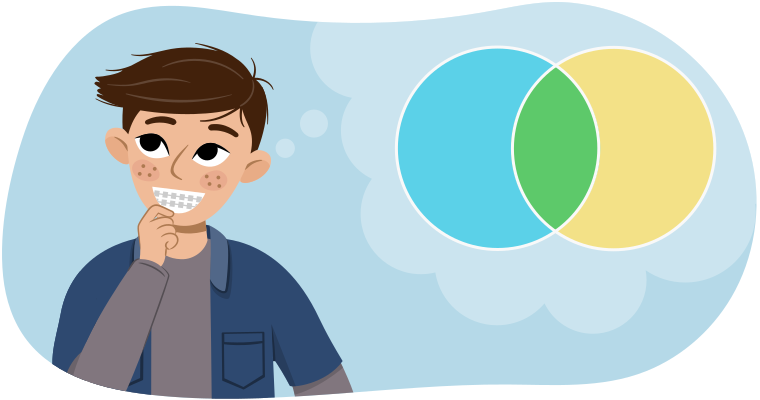
Your final task is to complete a Venn diagram comparing two characters that you learned about in your reading today. Choose two of the following characters: Ponyboy, Cherry, August, or Summer.
As you compare, consider the following questions.
- How have the characters’ backgrounds, experiences, and circumstances shaped who they are and how they behave?
- What are the characters’ motivations and goals, and how do they differ or align with each other?
- What challenges or advantages do they have? How are they diverse? How do they respond to these challenges or advantages?
- How do the characters’ personalities differ from each other? What traits do they share?

Student Tips
Student tips
You could use the character maps you created earlier in the learning activity to help you!
Complete the fillable and printable Venn Diagram in your notebook or using the following document. If you would like, you can use speech-to-text or audio recording tools to record your thoughts.
Next, respond to the following reflection questions in a method of your choice.
- How does examining the similarities and differences between characters help you better understand the text?
- How do these comparisons deepen your understanding of diversity, inclusion, and accessibility?
Putting it all together

Based on what you have learned in this learning activity, respond to the following reflection questions in a method of your choice. If possible, discuss your responses with someone else.
- How does identity shape an individuals’ perception of themselves and their interactions with the world around them?
- How has writing about your own identity deepened your understanding of yourself and the connection that you have with others around you?
- What strategies did you use to establish an identifiable voice and style in your personal narrative? How do you know?
Reflection
As you read the following descriptions, select the one that best describes your current understanding of the learning in this activity. Press the corresponding button once you have made your choice.

I feel...
Now, expand on your ideas by recording your thoughts using a voice recorder, speech-to-text, or writing tool.
When you review your notes on this learning activity later, reflect on whether you would select a different description based on your further review of the material in this learning activity.