Learning goals
We are learning to…
- demonstrate an understanding of the historical contexts, contributions, lived experiences, and perspectives of a diversity of individuals and communities, including those in Canada, by exploring and analyzing the concepts of identity, self, and sense of belonging in a variety of culturally responsive and relevant texts
- compare the text features, such as a glossary and infographics, and text patterns, such as problem-solution in a letter to the editor, associated with different text forms, including cultural texts, and evaluate their importance in helping readers, listeners, and viewers understand meaning in texts
- draft complex texts of various forms and genres, including narrative, persuasive, expository, and informational texts, cite sources, and use a variety of appropriate media, tools, and strategies to transform information and communicate ideas
Success criteria
I am able to…
- understand the difference between identity and community and reflect on my own personal identity and community
- analyze two texts, responding to comprehension questions focused on identity and community, and identify text features and patterns and how they help me understand the text better
- write a personal reflection about my own identity and community following an outline provided
- create a piece of artwork to accompany my personal reflection about my own identity and community
Identity and community
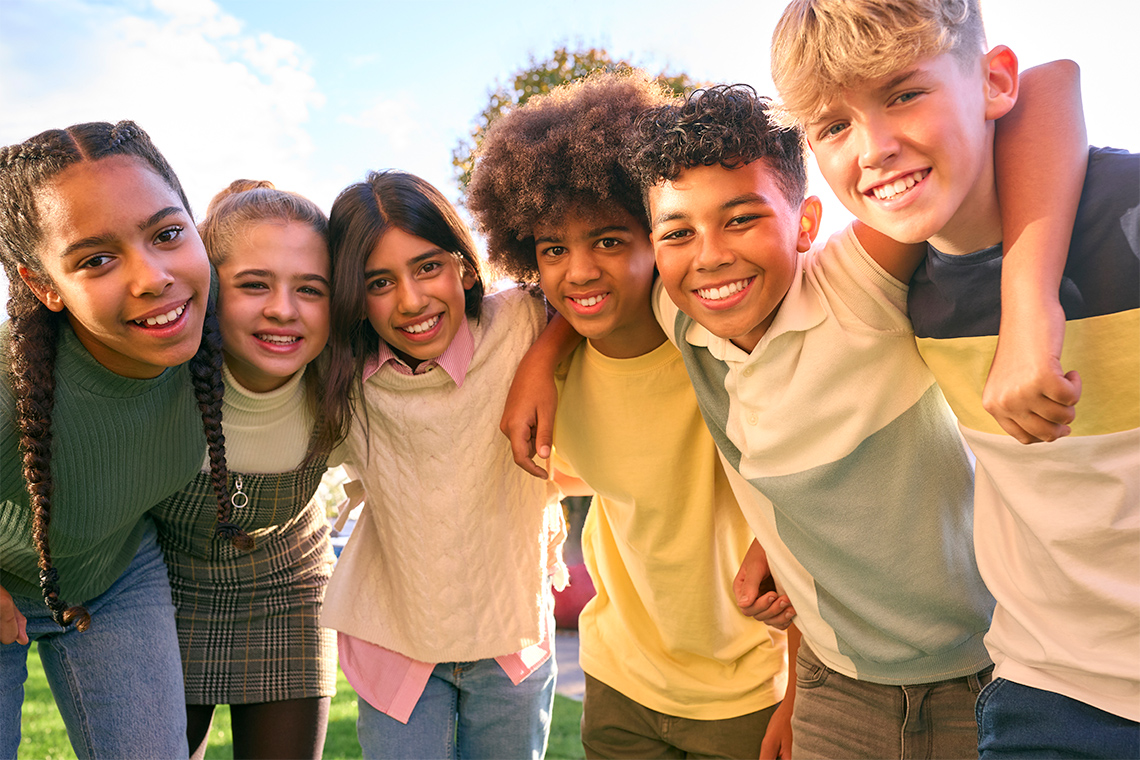
You’ve likely heard of the words “identity” and “community,” but what do they really mean?
Identity is a collection of facts about who a person is, such as their name and age. This can include feeling like a particular type of person or being part of an organization. Something that makes a person different from others can also be a part of their identity.
Community can refer to people living in a specific area. Community can also be a group of people that share the same characteristic. This could be an interest, belief, experience, or nationality that all the people in a group have.
My identity
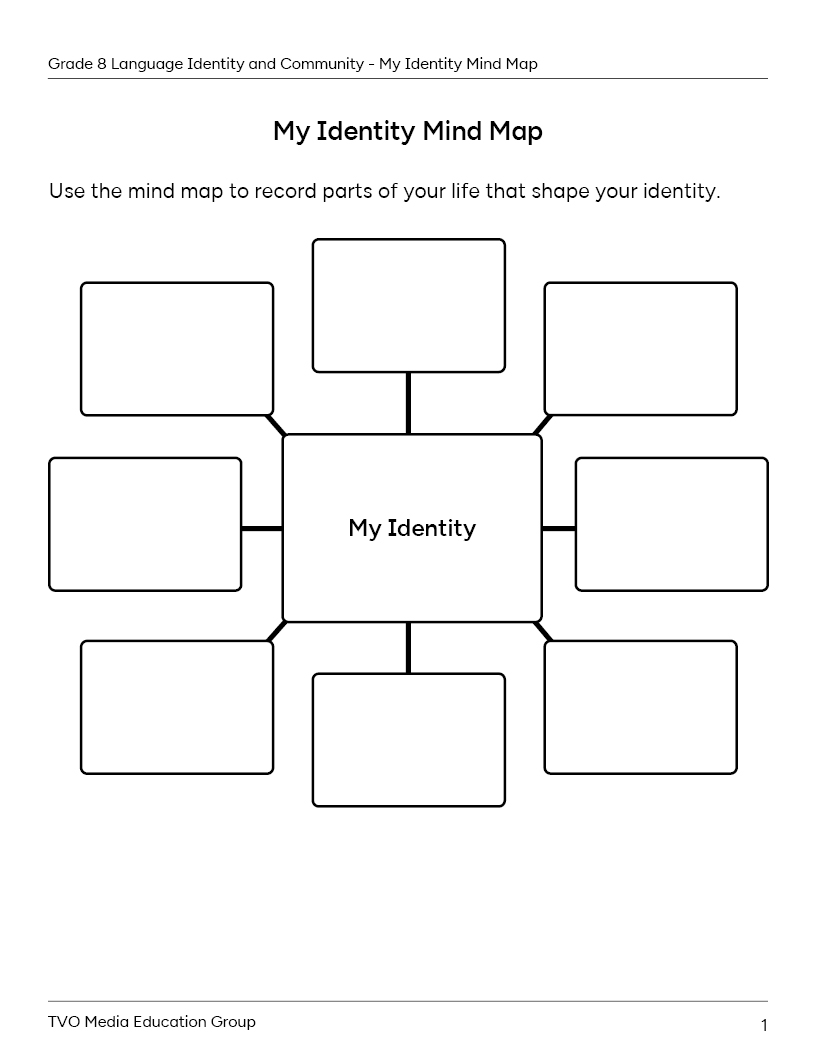
Let’s begin by brainstorming about your own identity and community. You will use a mind map to record facts about your identity. Review the following list to help you brainstorm ideas about different parts of your life that shape your identity.
- My family…
- My friends…
- My background…
- My culture…
- My hobbies…
- My school…
- My neighbourhood…
- My language…
- My beliefs…
- My favourite things…
Complete the fillable and printable My Identity Mind Map in a notebook or using the following document. If you would like, you can use speech-to-text or audio recording tools to record your thoughts.
It is the unique identities of humans that contribute to the diversity between and within cultures.
It is important to remember that the term “culture” is not restricted to discussing ethnicity because it can also refer to any shared interest or characteristic that unites people. For example, there are cultures associated with different genres of music, gender identities, occupations, and more. By recognizing and respecting diverse identities, we contribute to healthy communities.

Pause and Reflect
Pause and reflect
Respond to the following reflection question in a notebook, digitally, or using a method of your choice.
- How does the world around me contribute to who I am?
Press the Example button to access an example response to the reflection question.
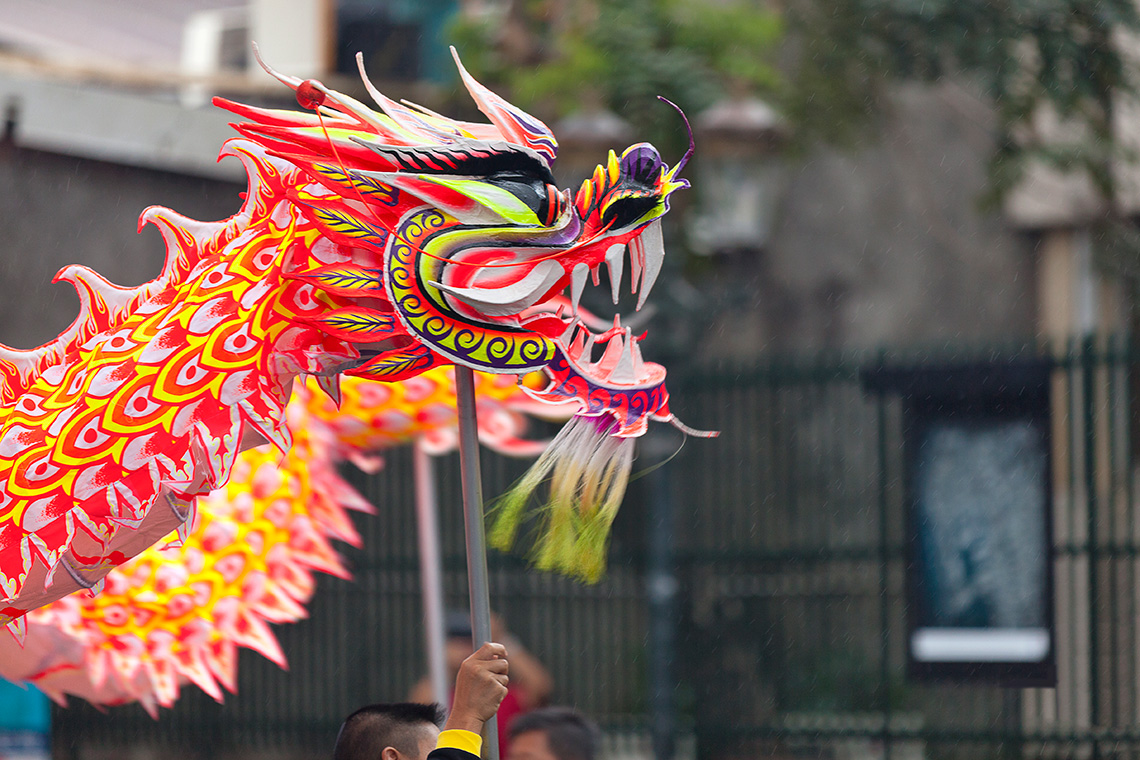
Li Wei (he/they) celebrates Lunar New Year with his family every year. His neighborhood hosts a big festival with dragon dances and traditional music, making him feel proud of his Chinese heritage. These experiences help Li Wei feel proud of their background and teach them the importance of family and tradition.
Text features and patterns
In this section of the learning activity, we are going to be exploring two texts that highlight the theme of identity and community. Before you begin, let’s take a moment to learn about text features and patterns, and how they can help readers understand meaning in texts.
Text features
Text features are the components of a text that stand out from the main body of a text, helping organize and highlight information for the reader. Text features can make it easier for the reader to understand and navigate a text.
Explore some common text features in the following flashcards. Make a note of these text features in a notebook, digitally, or using a method of your choice. We will be revisiting them throughout the learning activity.
Text patterns
Text patterns are the ways that information is organized in a text. They are sometimes called text structures. Recognizing text patterns can help the reader understand and recall information more effectively.
Explore some common text patterns in the following flashcards. Again, make a note of these text patterns in a notebook, digitally, or using a method of your choice. We will be revisiting them throughout the learning activity.
Reviewing text features and patterns
Check your understanding of text features and patterns by answering the following multiple choice questions.
Select the correct answer, then press Check Answer to see how you did.
Analyzing texts about identity and community
You are now going to be exploring two texts that highlight the theme of identity and community: "Montreal 1962" by Shauna Singh Baldwin, and poems from Brown Girl Dreaming by Jacqueline Woodson.
“Montreal 1962” by Shauna Singh Baldwin
The first text you are going to explore is the short story “Montreal 1962” by Shauna Singh Baldwin (she/her). As you read, consider the text features and patterns that you notice, as well as any themes of identity and community.
Read "Montreal 1962" by Shauna Singh Baldwin and answer the reflection questions that follow.
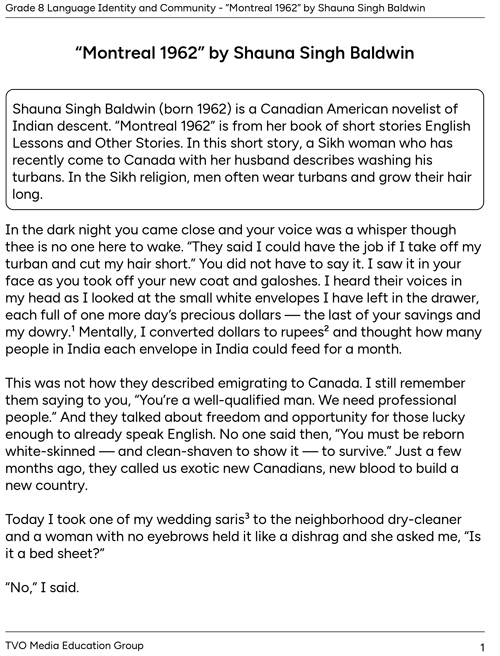
Press the Activity button to access the "Montreal 1962" by Shauna Singh Baldwin.
Activity(Opens in a new tab)Reflection questions: "Montreal 1962"
Answer the following questions in a notebook, digitally, or using a method of your choice.
- How did Mr. and Mrs. Singh interact with the local community in Montreal? What barriers did they face in feeling a sense of belonging?
- How do the themes of identity and community in this text relate to contemporary issues faced by immigrant families today?
- What text features did this short story include? How did these text features help you better understand the story? Which text feature did you find the most helpful?
- What text pattern do you think this short story follows? How do you know?
Brown Girl Dreaming by Jacqueline Woodson
The second text you are going to explore is a selection of poems from Brown Girl Dreaming , a poetic memoir by Jacqueline Woodson (she/her).
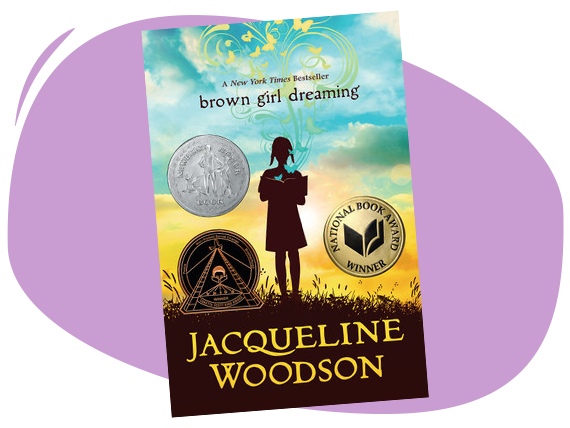
Woodson tells the story of growing up as an African American in the 1960s and 1970s through a series of poems. The reader gets a glimpse into Woodson's life, including her family and all the places she lived. The poems reflect the experiences of herself and other African Americans during a time when discriminatory laws enforced racial segregation, like requiring African Americans to sit at the back of the bus. These passages depict themes of race, religion, and culture as Woodson navigates her childhood in America.
Before exploring this text, check out a video of Jacqueline Woodson introducing the book Brown Girl Dreaming and sharing the reasons she became an author.
Now let’s explore some poems from Brown Girl Dreaming. As you read, consider the text features and patterns that you notice, as well as any themes of identity and community.
Please note: Some of these poems can be challenging to read because they reflect the harsh realities of racism and discrimination that African Americans experienced and continue to navigate the impacts of today.
Read Selected Poems from Brown Girl Dreaming by Jacqueline Woodson and answer the reflection questions that follow.
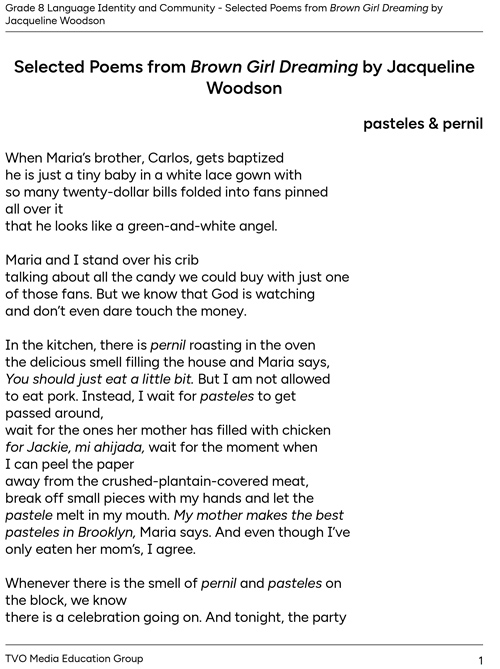
Press the Activity button to access the Selected Poems from Brown Girl Dreaming by Jacqueline Woodson.
Activity(Opens in a new tab)Reflection questions: Brown Girl Dreaming
Answer the following questions in a notebook, digitally, or using a method of your choice.
- Based on these poems, what aspects of Woodson's life contributed to her sense of identity and community?
- Reflect on the video of the author that you checked out before you read the poems. Why do you think it’s important for everyone to see themselves reflected in texts?
- What text pattern and features exist in this text? How do they help convey meaning?
Press the Example Answers button to access answers to the reflection questions.
- Based on these poems, things that contributed to Woodson's sense of identity and community include: her family, her religion, her ethnicity, her hair, the community that she lived in, family food traditions, her language.
- Seeing yourself reflected in texts provides affirmation of your identity. It also reassures people that their experiences and backgrounds are valid and significant. This fosters a sense of belonging.
- Brown Girl Dreaming uses a descriptive text pattern and a chronological text pattern. The poems follow Woodson's life from a young age forward and describe many of her emotions and feelings throughout. Text features that were used include titles that detail what each poem is going to be about and italicized sections to highlight information.

Social Emotional Learning
Take a break!
You've just explored two texts that highlighted the themes of identity and community. Take a break before continuing to the next activity.

Grammar glimpses: Clauses
Let’s review independent and dependent clauses.
An independent clause is a sentence that can stand alone.
A dependent clause is an incomplete simple sentence. While dependent clauses might have a subject and predicate, there is often more information needed for comprehension.
Identifying clauses
Practice identifying clauses by completing the following sorting activity.
Sentence structures
Understanding independent and dependent clauses will help you understand other sentence structures.
Press the following tabs to learn about different sentence structures and explore some examples.
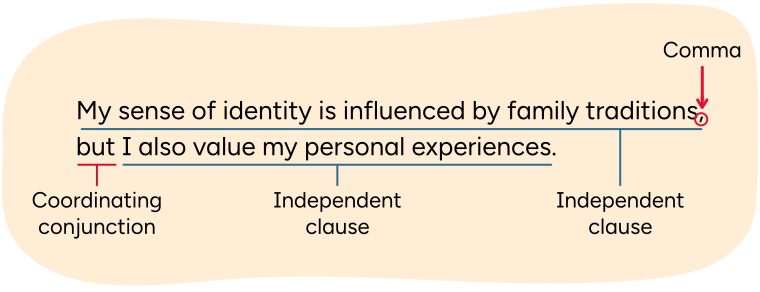
A compound sentence is made up of two or more independent clauses joined by a semicolon (;) or a coordinating conjunction (for, and, nor, but, or, yet, so), which is usually preceded by a comma.
Explore the following image showing the structure of the compound sentence "My sense of identity is influenced by family traditions, but I also value my personal experiences."
 Description
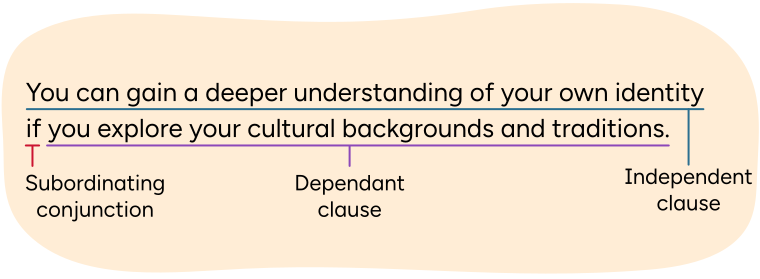
A complex sentence is made up of one independent clause and one or more dependent clauses. Complex sentences can sometimes be linked with subordinating conjunctions (after, although, before, since, if, while, because).
Explore the following image showing the structure of the complex sentence "You can gain a deeper understanding of your own identity if you explore your cultural backgrounds and traditions."
 Description
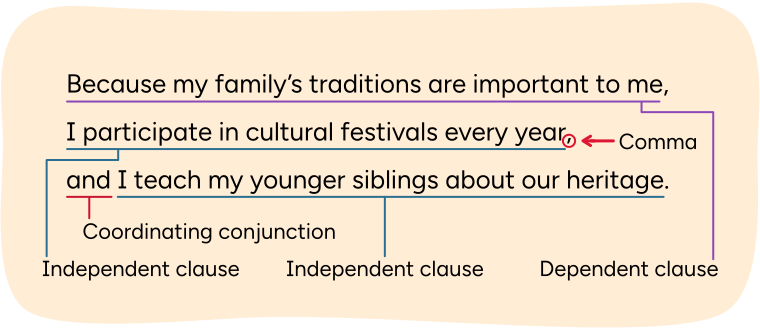
A compound-complex sentence is made up of two or more independent clauses and one or more dependent clauses.
Explore the following image showing the structure of the compound-complex sentence "Because my family's traditions are important to me, I participate in cultural festivals every year, and I teach my younger siblings about our heritage."
 Description

Try It
Writing compound and complex sentences
Write one compound and one complex sentence about your identity or community. Record your sentences in a notebook, digitally, or using a method of your choice.
Reflecting on identity and community
Review your mind map from the Minds On activity where you brainstormed ideas about your own identity and community.
Choose one of the identities you carry and write a reflection piece about it. For example, as a member of your ethnic group, as a friend amongst your peers, or as a student in your class. Record your reflection in a notebook, digitally, or using a method of your choice.
Reflection outline
Your reflection should include an introduction, body paragraphs, and a conclusion.
Press the following tabs to learn how to outline your reflection.
Start with an engaging opening that introduces the themes of identity and community. Provide a brief overview of yourself and share information about what you believe to be the most important parts of your identity and community.
You might choose to have separate paragraphs for identity and community, or separate paragraphs if you are discussing your life in chronological order. Be sure to include specific, personal examples that reinforce your points.
Use the following questions to guide how you structure the body of your reflection.
- What are the key aspects of your identity?
- How have your experiences shaped who you are today?
- Are there any specific events or people that have had significant impacts on your sense of self or identity?
- What communities help you feel a sense of belonging? For example, a location, interest, culture, background, or school.
- How do these communities influence your identity? What role do you play in these communities?
- How does being part of a community help you understand and express your identity?
- Are there times where your identity has felt different from a community’s expectations? How do you navigate these differences?
In your conclusion, summarize the main points of your reflection and how understanding your identity and community can help you in the future. End with a thought-provoking statement or question for further reflection.

Cursive practice
Once you have completed the final revisions of your reflection, try writing the final copy in cursive!
Tips for cursive letters
- When we write in lowercase, we always begin at the bottom.
- When we write in uppercase we can start from the top or the bottom.
- Try to keep the pencil on the page until you are done the word.
- Create a finger space before you continue to the next word.
- Try to press gently as you write so that your hand can move easily across the page.
- Take your time to make sure that you are writing clearly and evenly.
Reflection evaluation
When you have finished the final copy of your reflection, evaluate it using the following checklist.
Reflection checklist

Fluency
Imagine that you are going to share your personal reflection with your class. To boost your confidence when sharing, it is important to focus on reading with fluency.
Fluency is the ability to identify words correctly and read a text at an appropriate rate with ease, pace, automaticity, and expression. With proper phrasing and a focus on punctuation, the reader will gain more meaning from the text.

Practise your fluency by re-reading your personal reflection several times, focusing on expression, automaticity, phrasing, and pace.
Use the following checklist to assess your own fluency. If possible, share your reflection with someone else and ask them to provide feedback on your fluency.
Fluency checklist
Pause and Reflect
Fluency reflection
Choose one area of fluency to focus on and set a goal for yourself, then respond to the following reflection question in a notebook, digitally, or using a method of your choice.
- What strategies could you use to help you achieve your goal?
Learning check!
Check your understanding of all the concepts covered in this learning activity by completing the following true or false questions.
Select the correct answer, then press Check Answer to see how you did.
Putting it all together
Consider the reflection question that you answered during the Minds On section of the learning activity: How does the world around me contribute to who I am?
Review your original answer then respond to the following questions in a notebook, digitally, or using a method of your choice.
- Now that you have more information about identity and community, has your response changed?
- Is there anything you want to add to your mind map?
Your final task is to create a piece of art to accompany your personal reflection about identity and community. You can create your art on paper or digitally.
Your art should be representative of what you wrote in your personal reflection and include elements of your own unique identity and community.

Student Tips
Tips for making art
There are lots of ways to make art!
You can include pictures, images, symbols, and words. You can create one single piece of art or several small pieces. You can focus on one element of your identity that you feel is the most important, or you can focus on several parts of your identity.
Some examples of art you could make are:
- a multimedia piece of art using magazines and photographs
- a painting or sketch that highlights your identity
- a paper or digital collage of all the things that encompass your identity
Reflection
As you read the following descriptions, select the one that best describes your current understanding of the learning in this activity. Press the corresponding button once you have made your choice.

I feel...
Now, expand on your ideas by recording your thoughts using a voice recorder, speech-to-text, or writing tool.
When you review your notes on this learning activity later, reflect on whether you would select a different description based on your further review of the material in this learning activity.