Learning goals
We are learning to…
- show an understanding of the forms, conventions, and techniques of a variety of media texts
- identify ways in which specific design choices share meaning in a variety of texts
- use a source to gather information about a topic
- brainstorm and develop ideas about different topics using simple strategies, sources, our own learning, and our own experiences
Success criteria
I am able to…
- explore different examples of media, such as print, broadcast, digital, and out of the home media
- identify how each example of a media form shares ideas
- brainstorm 1–2 facts about a media form I explored to share with a friend
Notice and wonder
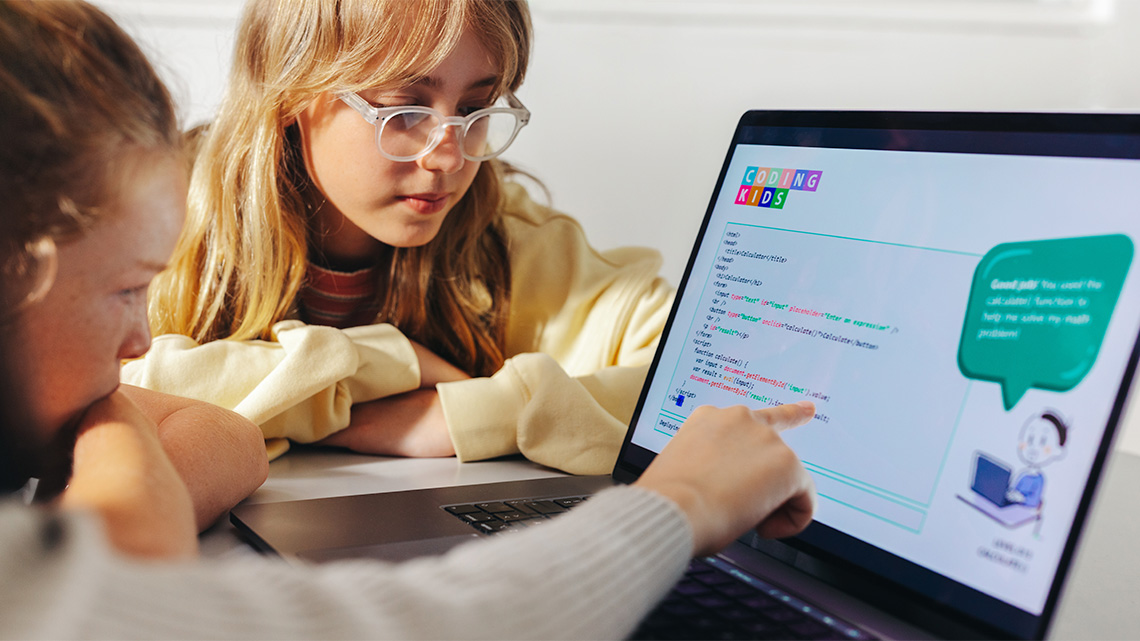
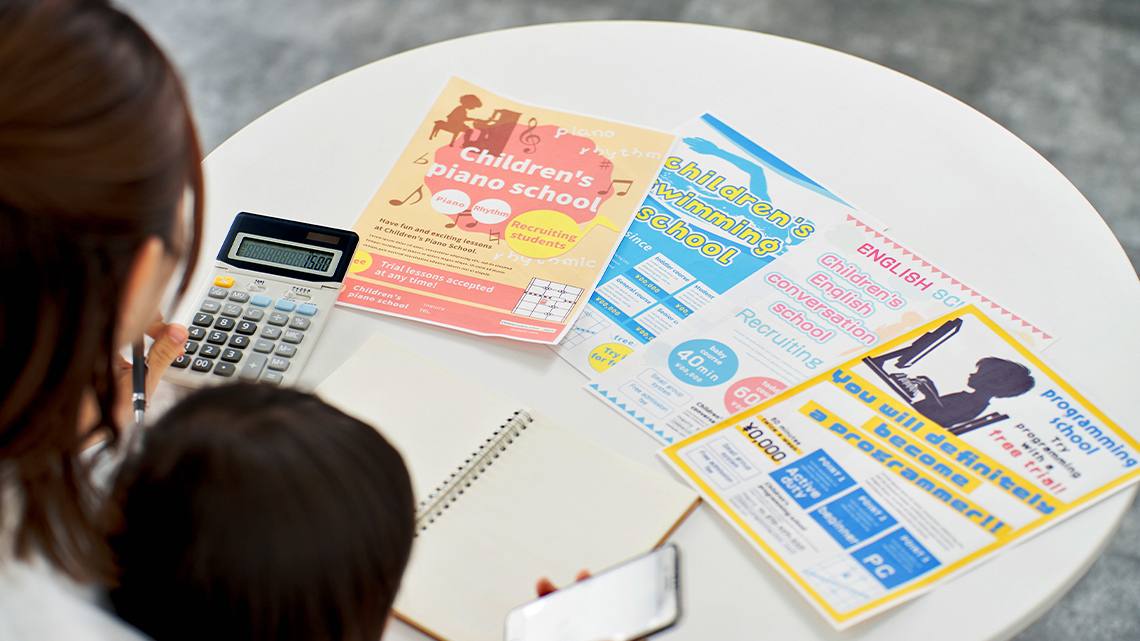
Explore the following images. What do you notice? What do you wonder?


Exploring media
All of the examples that you explored in the Minds On images are types of media.
Media comes in many forms and is shared with an audience or people in different ways.
Let’s explore what different forms of media look like!
Most media texts use one or more of the following to share a message:
- words
- sounds
- images
- shapes
Press the following tabs to learn more about print, broadcast, digital, and out-of-home media.
Books are a type of print media.
Books usually have:
- a title
- a front cover
- a back cover
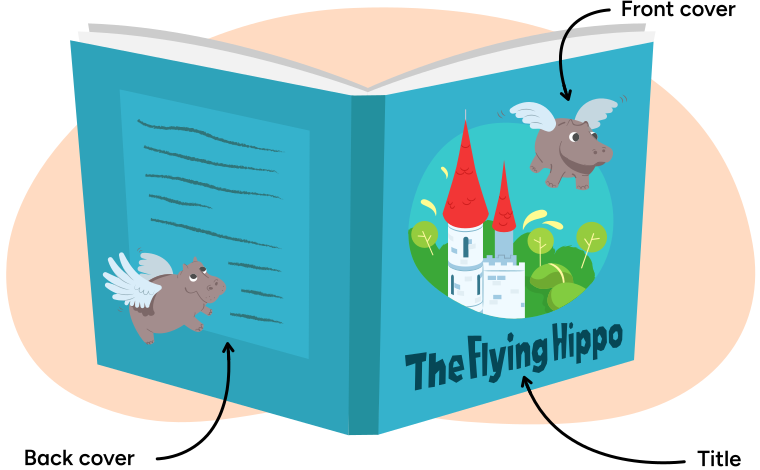
An open book called The Flying Hippo showing the outer cover. The front cover, the back cover, and the title are labelled. On the front cover there is a hippo with wings flying over a castle, and the book's title. The back cover has text and a hippo with wings.
Inside a book there are:
- words
- pictures
- sentences
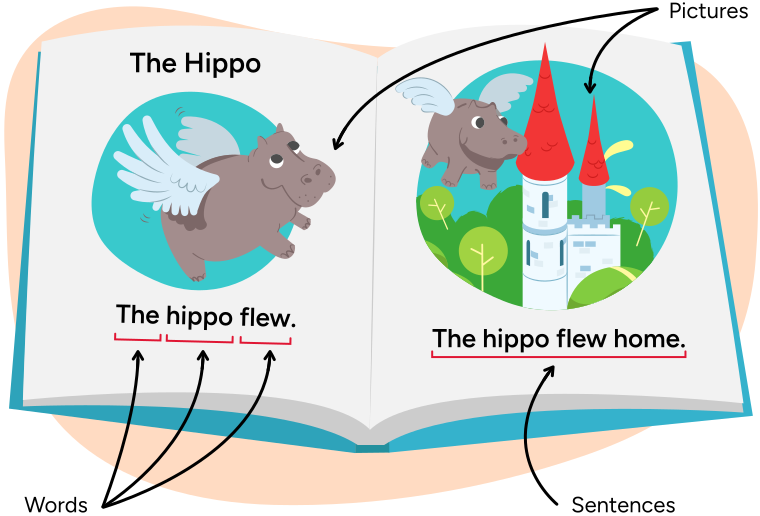
The book The Flying Hippo is open to show the inside
pages. The
left-hand page has the words "The Hippo" at the top of the page
and the words "The hippo flew" at the bottom of the page. The
words at the bottom are underlined and labelled "words". In the
middle of the page is a picture of a hippo with wings.
On
the right-hand page is a picture of the hippo flying over a
castle. Below the image is the sentence "The hippo flew home."
The sentence is underlined and labelled "sentence" and the
images on both pages are labelled "Pictures."
Some books share stories.
Other books share information.
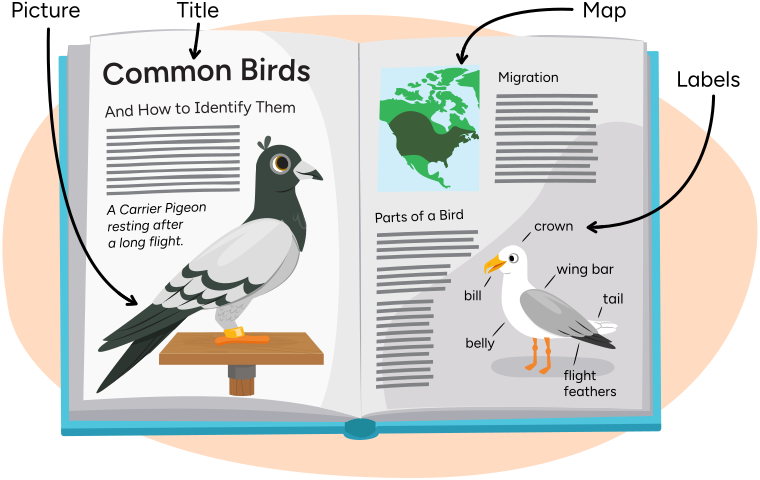
A book is open to show the inside pages. On the left-hand page,
at the top, is the title "Common Birds and How to Identify
Them". The title is labelled "Title". Under the title there is
text and a picture of a carrier pigeon. The picture is labelled
"Picture".
On the right-hand page there is a map labelled
"Map" and some text. There is also a picture of a bird with the
parts of its body identified (i.e., crown, bill, belly, flight
feathers, tail, and wing bar). The labels of the parts of the
bird are labelled "Labels".
Some books include a table of contents.
This is a page that lists all the sections in a book in order, along with their page numbers.
A table of contents helps us find information easily.
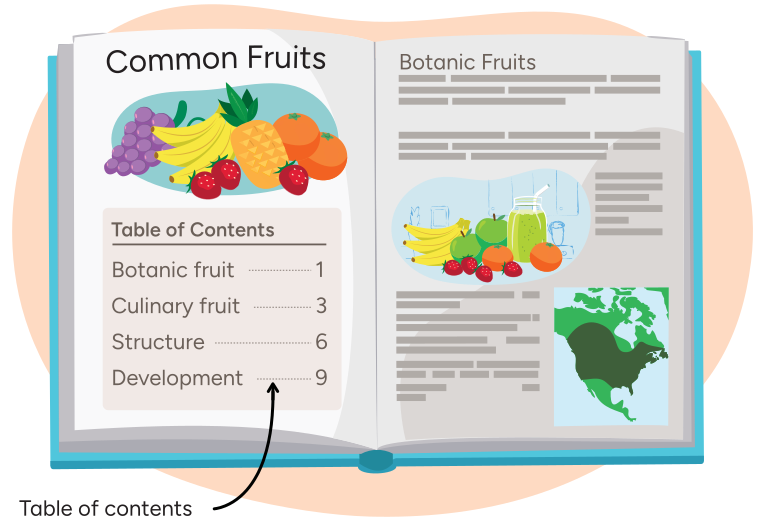
A book is open to the table of contents page. At the top of the page is the title "Common Fruits". Under the title is a picture of different fruits and the table of contents which lists each section of the book in order, and the page where it appears.
What do you notice about each type of book?
Does it share stories or information? How do you know?
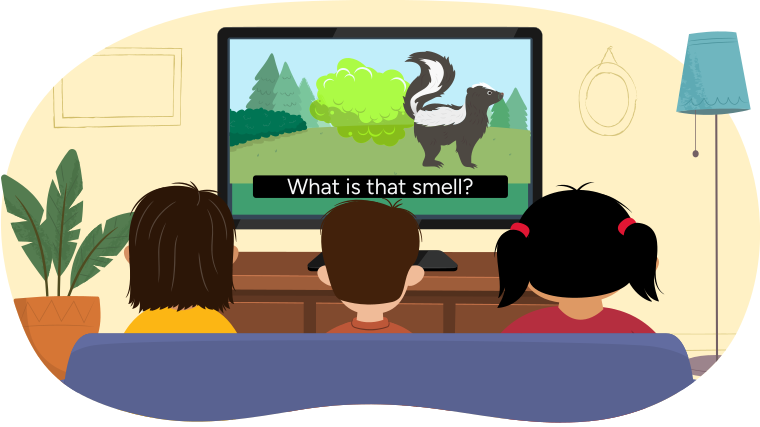
We can listen to or watch broadcast media.
Television is a type of broadcast media that includes images, sounds, and words (subtitles).
We can watch shows or movies on a television.
What kind of shows or movies could we watch on television?
Websites are a type of online digital media. You can find these websites when you go on the internet.
Websites can include links that take us to different topics. For example, on the TVOKids website, we can:
- watch live shows
- play videos
- play games
- select apps
- switch sections from Elementary to Preschool
The TVOKids website uses words in different fonts, colours, images, and shapes.
All of the shows are available in smaller circle-shaped buttons along the top.
Show episodes are available in larger rectangle-shaped buttons below. We can also use a search button to type out specific words or titles of shows.
Posters are a type of out-of-home media. They are usually put up in busy areas so we notice them.
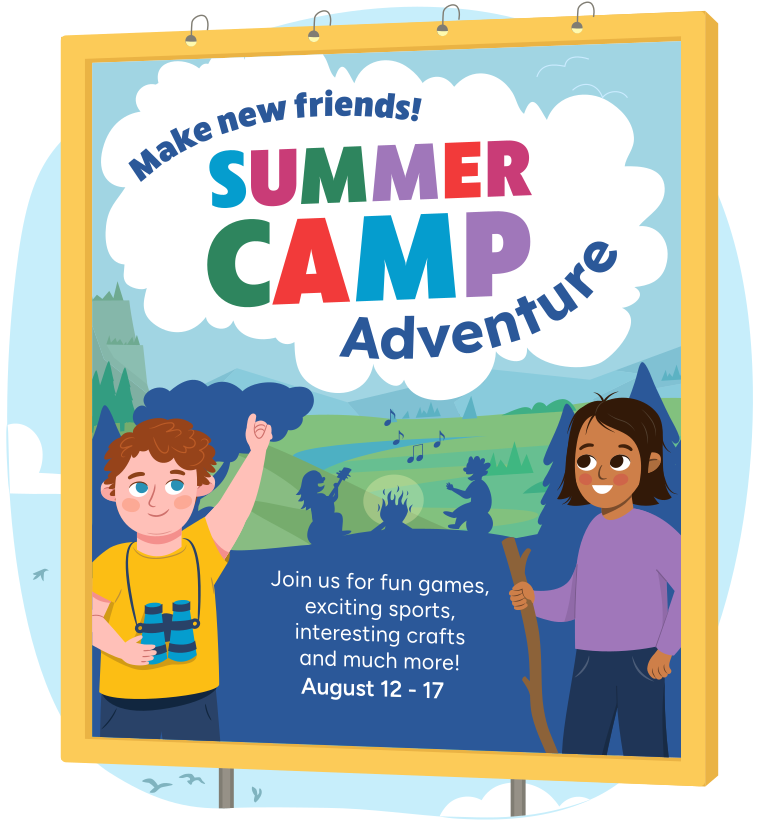
A poster for a summer camp showing two happy campers with
binoculars and a walking stick. There are trees, hills, and
cliffs, as well as silhouettes of campers singing around a
campfire. The poster reads: Make new friends! Summer
camp adventure. Join us for fun games, exciting sports,
interesting crafts and much more!
The date of the camp and
the website also appear.
Posters use pictures, shapes and words to share information about activities, products, or businesses.
Common nouns
The different forms of media we have been learning about are:
- book
- television
- website
- poster
Each of these words is an example of a common noun. Common nouns are general names that we use for people, places, things, animals and events. They begin with a lowercase letter. Common nouns are not specific names.
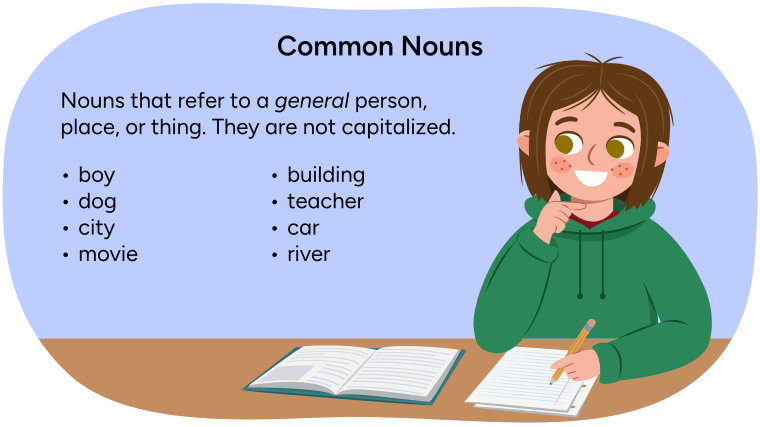
Student Clara next to text that says: Common Nouns refer to a general person, place, or thing. They are not capitalized. Examples are: boy, building, dog, teacher, city, car, movie, and river.
Can you think of any common nouns?
Share your thoughts with a partner.
Presenting about media
Select one form of media that we explored today:
- books
- television
- websites
- posters
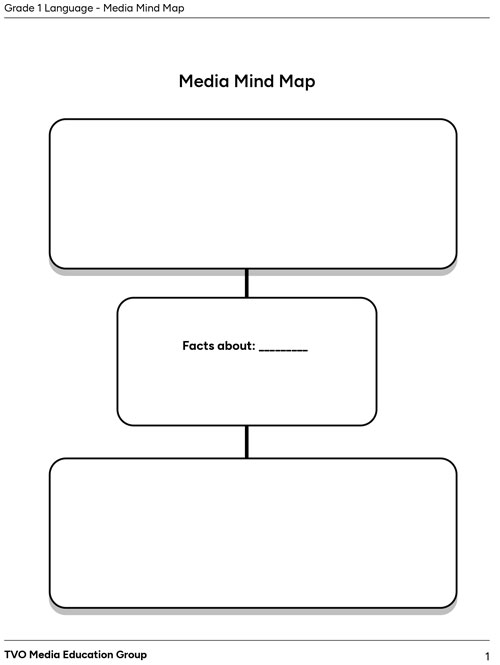
What are 1–2 different facts you could share about this type of media?
Use the following fillable and printable Media Mind Map to record 1–2 different facts you could share about one form of media from the list above.
Media review
Let’s review what we learned about media!
Select the correct answer, then press Check Answer to see how you did.
Reflection
How do you feel about what you have learned in this activity? Which of the next four sentences best matches how you are feeling about your learning? Press the button that is beside this sentence.
I feel...
Now, record your ideas about your feelings using a voice recorder, speech-to-text, or writing tool.