Did you check the website address?
Fake website addresses might have spelling mistakes, have a lot of numbers, or be unusually long.
We are learning to…
I am able to…
Explore the following images.
Which one is a photo of a real panda, and which one is a photo of a toy?
Take a guess and share your reasons with a partner, if possible.

An image of a panda.

An image of a panda hanging in a tree.
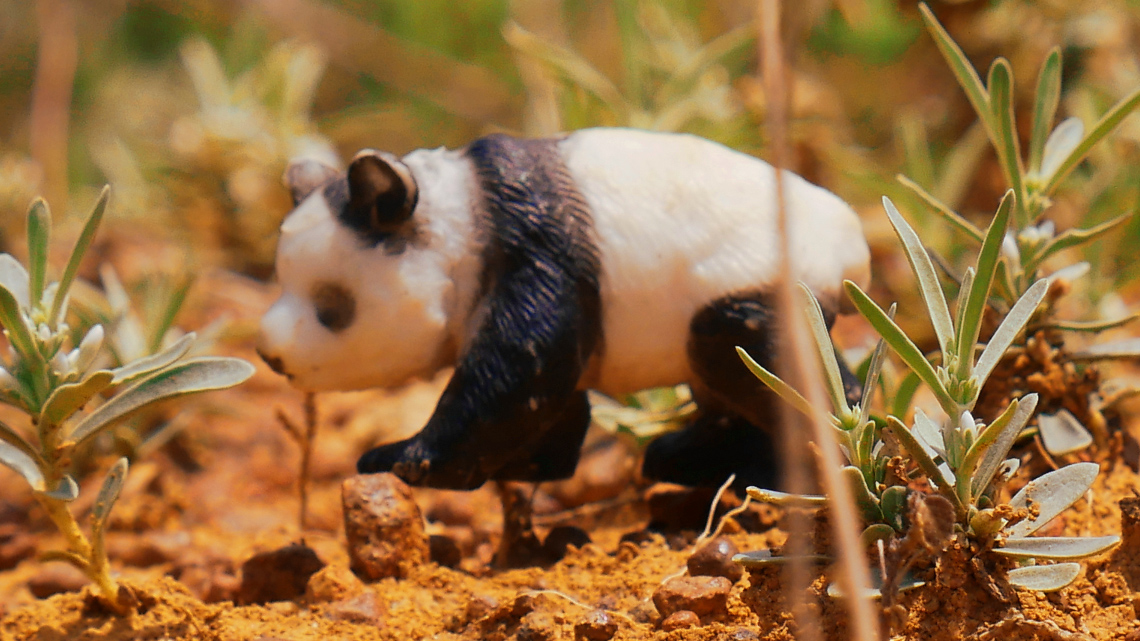
The first photo is of a toy panda!
When we look closely, we can see that the panda’s fur does not have that much detail.
We might also be able to tell that the plants around the panda are not very tall. The photographer created an illusion to trick the audience by taking the photo at just the right angle.
Explore the photo again and notice if you can tell that it's a toy panda.
The second photo is of a real-life panda hanging in a tree.
When we look closely, we can see that the panda’s fur has much more detail.
It also seems that the photographer took the picture straight towards the panda, instead of taking it from an angle.
Explore the photo again and notice if you can tell that it's a real panda.

Why is it important that we take the time to look for these details?
Press Reveal to find out why this is important!
Not all information we find online is true!
This is why it is important to take the time to think about the information we see and hear on the Internet.
We can do this by asking questions, checking with adults we trust, and looking for information from reliable sources like books or websites from trusted organizations.
The Internet has lots of information. We can use the Internet to:
But did you know that not all information we find on the Internet is true?
Just like we examined the two photos, how could we figure out if information online is real?
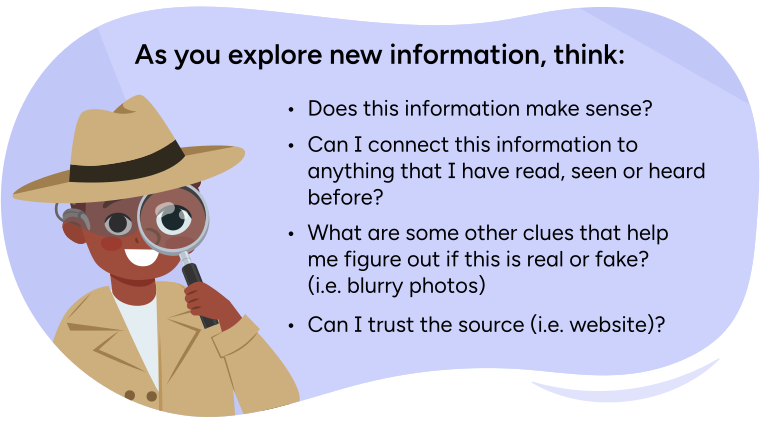
Marcel is dressed like a detective (in a fedora hat and trench coat) and holding a magnifying glass towards his eye. Next to Marcel is the following text:
As you explore new information, think:
Reliable means that the information is real and we can trust it.
Unreliable means that some information is fake.
Let’s practice saying the words. Press the audio button under each word to hear it aloud!
Reliable
Unreliable
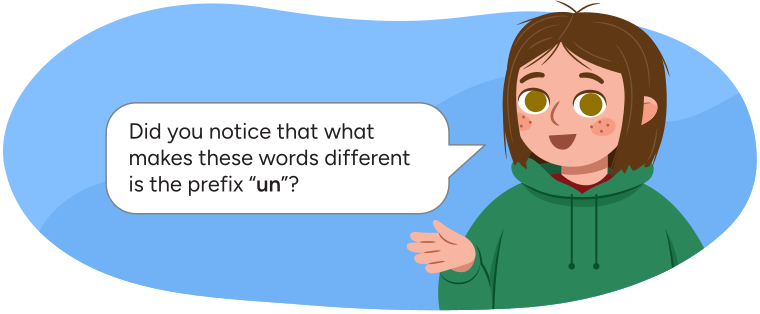
A prefix is a group of letters at the beginning of a word that changes the word’s meaning.
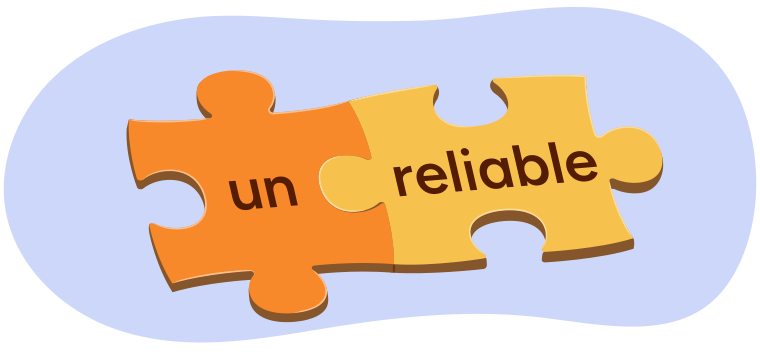
In this case, the prefix is 'un! When you add 'un we change the meaning from real to not real.
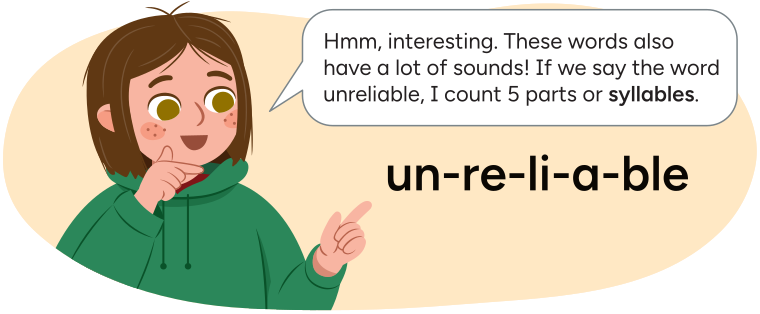
Clara says "Hmm, interesting. These words also have a lot of
sounds! If we say the word unreliable, I count 5 parts or syllables."
Next to Clara is the word "unreliable" with its 5 syllables separated by dashes.
Let’s learn some more about syllables!
Explore the following video from Wacky Word Songs to learn more about syllables!

Try It
Now it's your turn to break up these words into their syllables by saying them out loud.
First, listen to the audio recordings to hear each word.
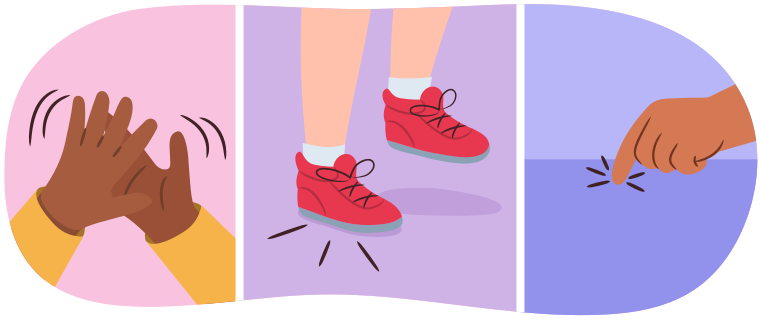
Next, repeat each word and clap, tap, or stomp the syllables.
Believable
Understandable
Comfortable
Read and/or listen to the following book Is It Reliable or Not? to learn more about reliable and unreliable information on the Internet.
We can read for different reasons. Sometimes, we read:
You are about to read a text of tips to know if information online is reliable or unreliable.
Read Is it Reliable or Not? by pressing the arrows to move between pages. You can press the play button to listen to the words on each page.
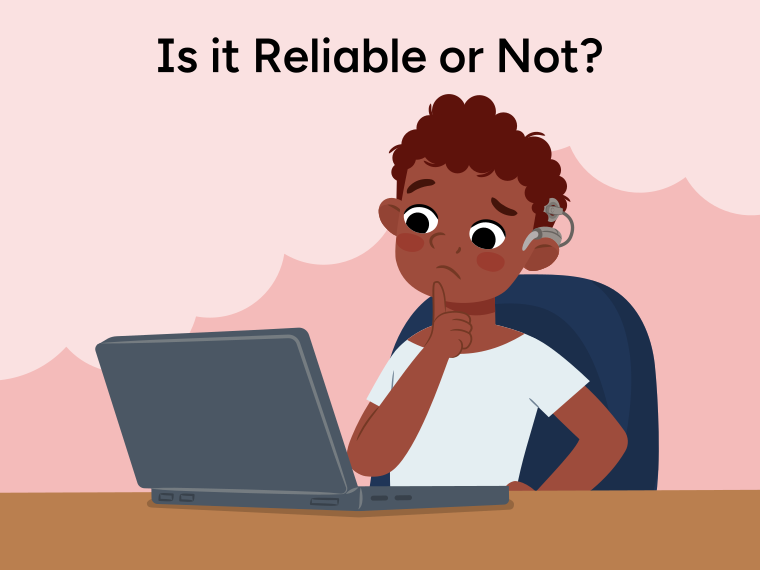
Is it Reliable or Not? Is it Reliable or Not?
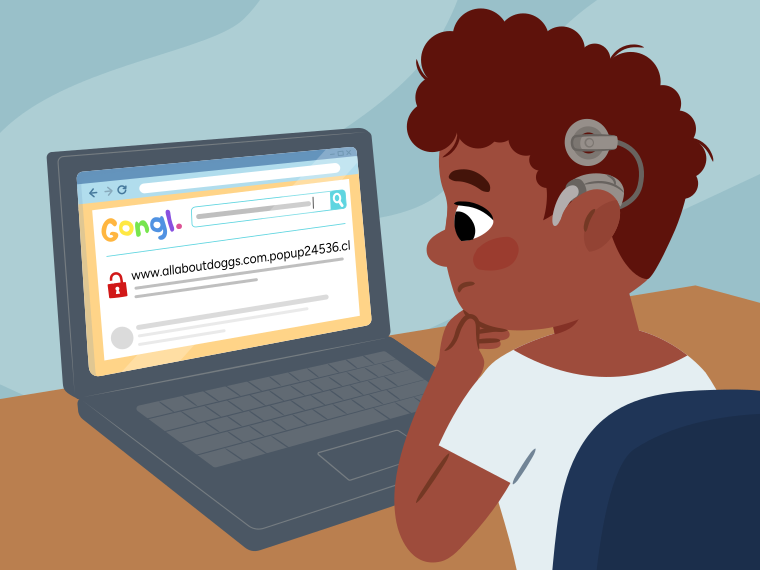
Did you check the website address?
Fake website addresses might have spelling mistakes, have a lot of numbers, or be unusually long.
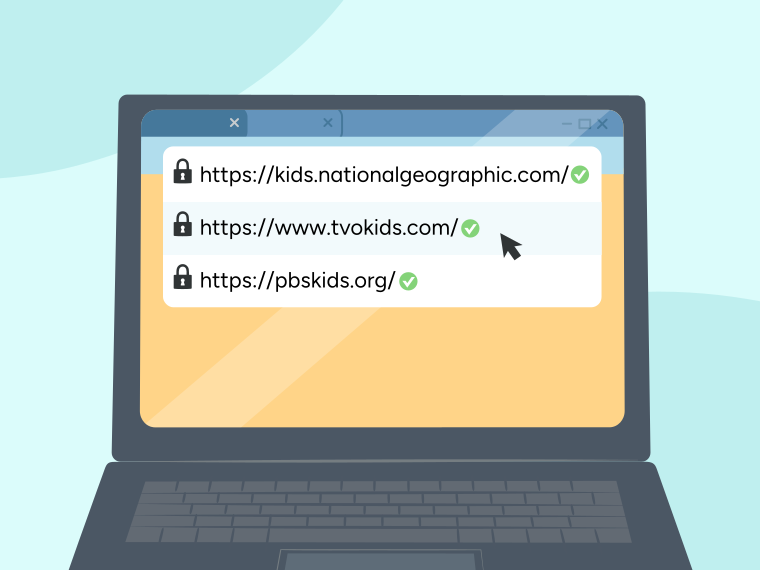
Is it from a trusted source?
Some sources such as official news websites, familiar websites, and websites that have been around for a long time, are more trustworthy than websites you may not have heard of before.
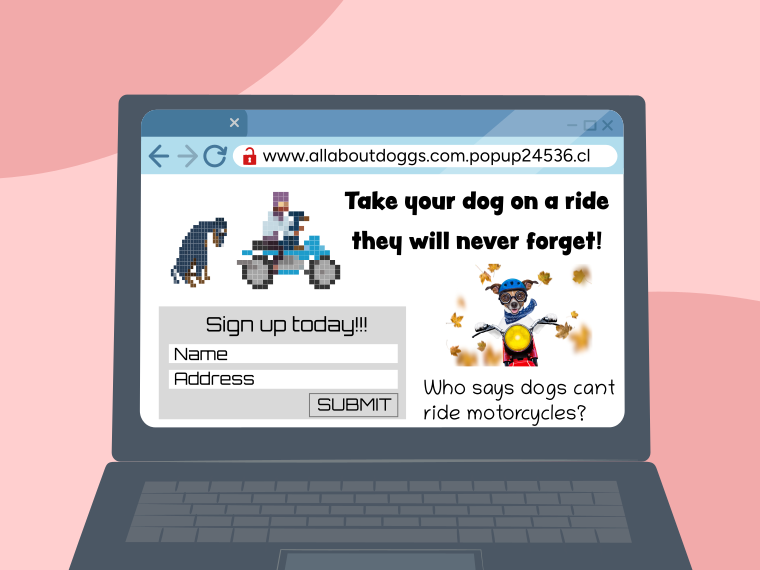
What do you notice about the pictures?
Are the pictures on the website of low quality? Or do they look like they are too good to be true? If so, the information on that site might not be trustworthy.
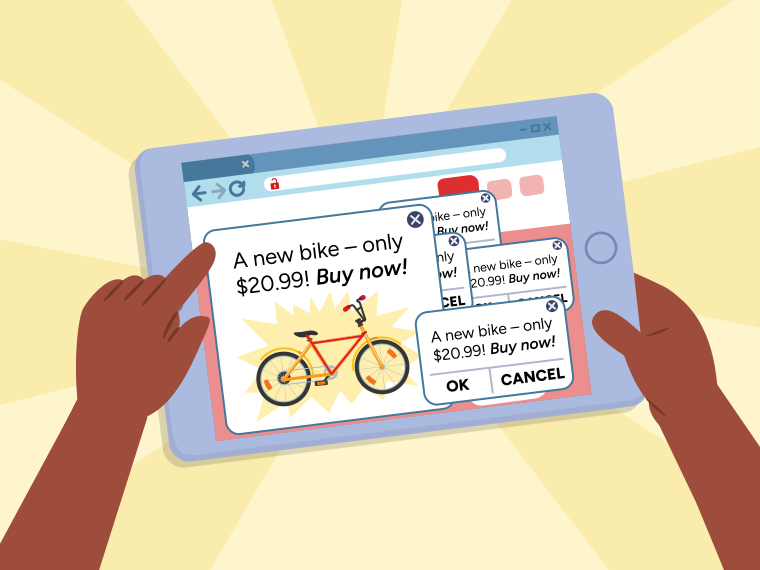
Are there ads or popups?
If there are a lot of ads or popups on the website, it might be a sign that the website is more about making money than about giving reliable information.
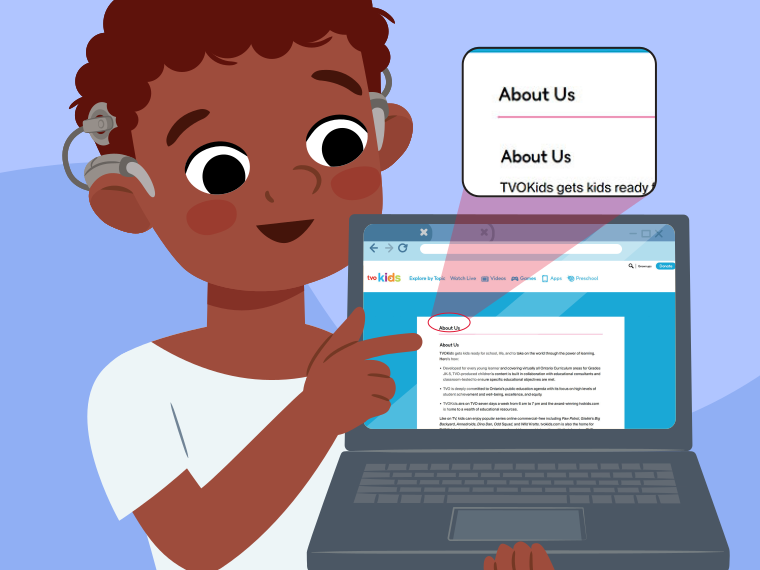
Is there an ‘About Us’ section? Some websites will often have a section on their website called ‘About Us.’ This section will give more information about the website and who it was created by.
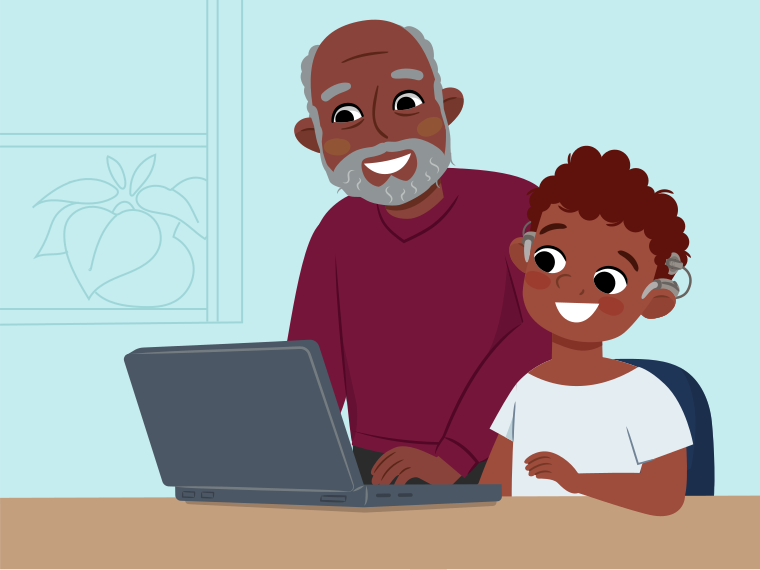
Ask an adult! If you are unsure whether something online is real or fake, ask a trusted adult like a parent, guardian, or teacher.
What do you think the reason or purpose is for reading this text? (i.e., entertainment, learn new information)
Press Reveal to check your answer.
The purpose of reading this text is for information. We are going to get information about how to find out whether something online is real or not.
Think about what you have learned about reliable sources:
Share your thoughts with a partner, if possible.

Social Emotional Learning
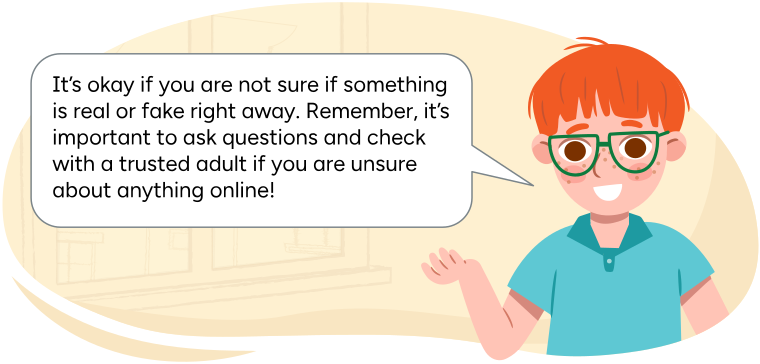
Connor says "It's okay if you are not sure if something is real or fake right away. Remember, it's important to ask questions and check with a trusted adult if you are unsure about anything online!"
It’s time to use your information detective skills!
Sort the following images and websites as real or fake.
Place the cards into categories that best match. Use the arrow buttons to navigate between cards.
It’s time to share your learning. Imagine you are teaching a friend about how to figure out what is real or fake on the Internet.
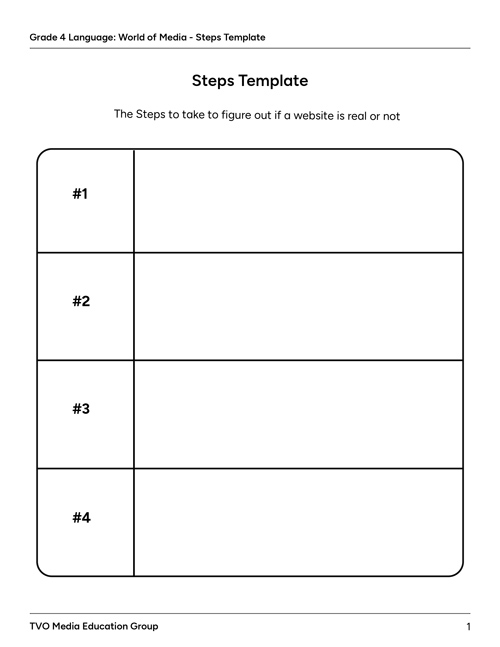
What are some steps someone can take to figure out if a website is a reliable source or not?
Complete the fillable and printable Reliable Website Steps in your notebook or using the following document. If you would like, you can use speech-to-text or audio recording tools to record your thoughts.
For each sentence, select the missing words from the drop-down menu.
Press Check Answer to see how you did.
How do you feel about what you have learned in this activity? Which of the next four sentences best matches how you are feeling about your learning? Press the button that is beside this sentence.

Now, record your ideas about your feelings using a voice recorder, speech-to-text, or writing tool.