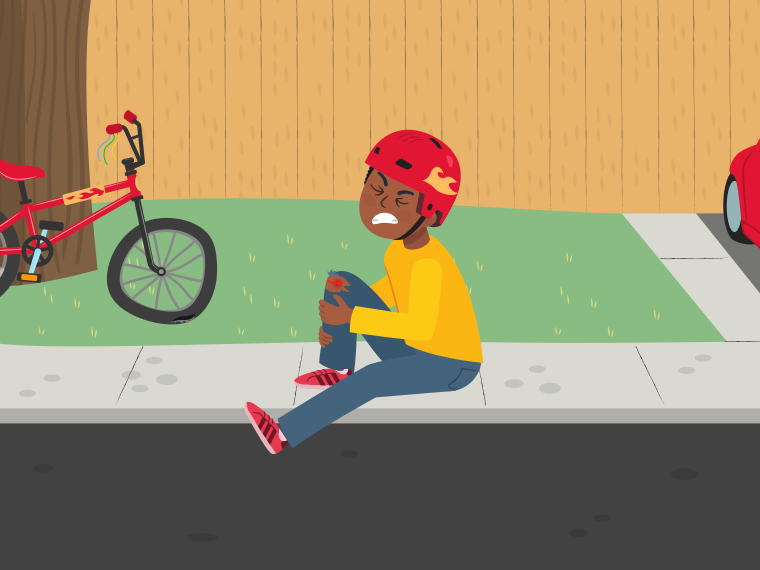
Liam’s bicycle was leaning against the oak tree with a flat tire. He was sitting on the curb, still wearing his helmet, holding his bleeding knee. He tried to wipe the dirt away but it stung. It looked bad, but not as bad as his parents’ car that was parked in the driveway.
Learning goals
We are learning to…
- describe ways in which images, graphics, and visual design are used in texts
- make inferences using stated and implied information to understand texts
- draft short texts of various forms and genres using a variety of media
- identify and use non-verbal communication strategies including expressions, gestures, and body language
Success criteria
I am able to…
- share my ideas on how images are used in the given comics
- make inferences using what I see, what I know, and what I think
- create a comic with the use of a graphic organizer
- identify and use facial expressions, gestures, and body language to explain what might be happening in a digital text
Making inferences in our daily lives
Imagine that you are cheering on your friend as they receive an award for all their hard work this year because they started a school-wide project. They are up on a stage, smiling happily as they receive their award!

How do you think your friend is feeling about the situation? What is happening? What clues would you use to help you support your guess?
If possible, discuss your thoughts with a partner.

Student Tips
Inference
When we use what we know, our experiences, and other clues to make a guess about what is happening, this is called 'making an inference.' Think about how you might use this skill when exploring a story or text.
Press the Example button to learn more.
If someone comes to school on crutches, we infer that they had some kind of accident and were injured.
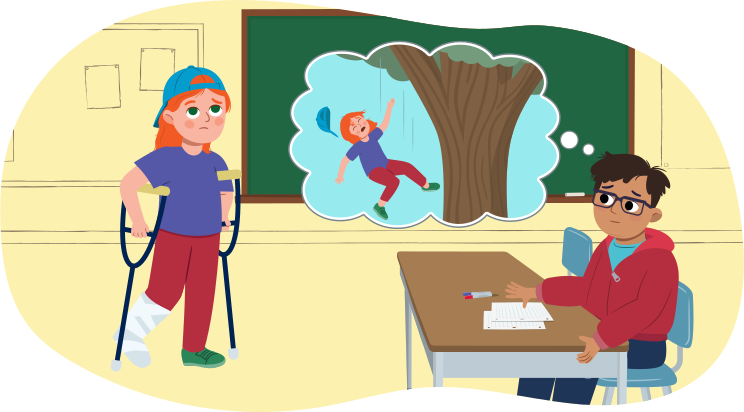
Let's practice making an inference!
Select the correct answer, then press Check Answer to see how you did.
Why do we make inferences?
Sometimes the creator of a text does not tell us everything that is happening in story, but they may leave us clues in the text. Learners use what they already know (knowledge) and the clues found in the text to make inferences about what might be happening in the story.
Knowledge + Clues found in a text = Inference
Making inferences can help learners in many ways. Some ways include:
- Predicting what will happen next in a story.
- Understanding why a character chooses to make certain decisions.
- Understanding how a character thinks and feels about a situation.
Using clues from the text
Every picture can tell a story or give a message without using any words.
Review the three strategies that can help you make inferences and better understand the text by exploring the following flashcards.
You are going to explore the story “The Accident” by Lori Friesen. As you explore the story, try to make inferences using the clues in the text.
The Accident The Accident
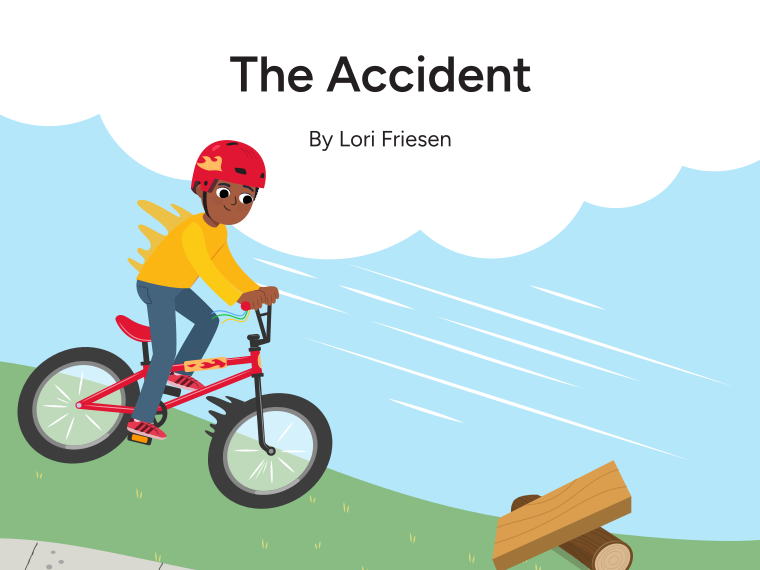
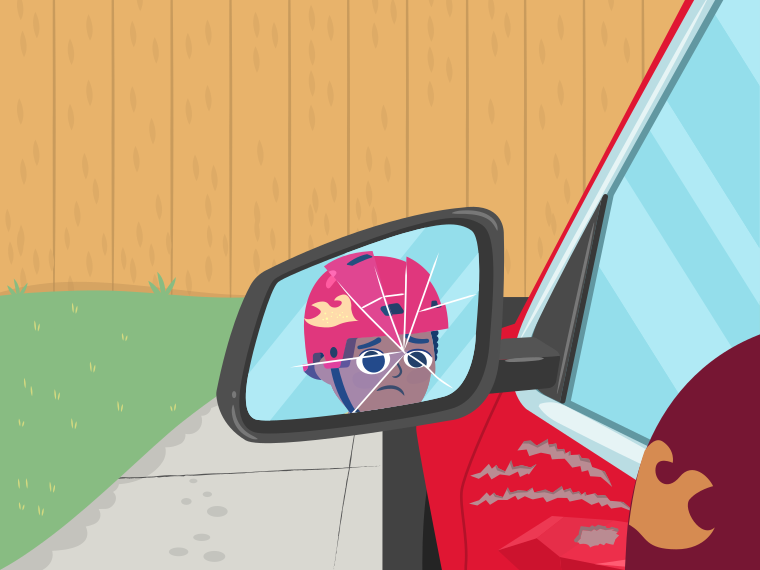
He got up and hopped over to get a closer look. The side-view mirror was shattered and there was a big dent in the car door. There was no way his parents wouldn’t notice.
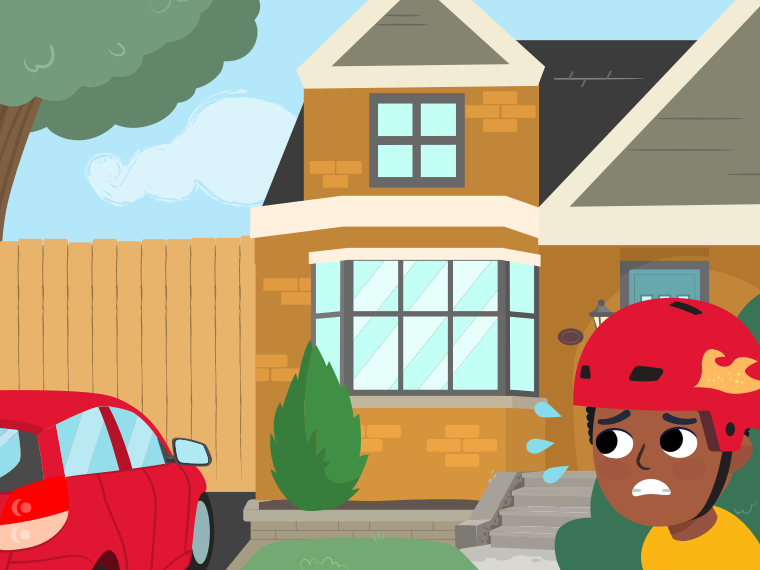
He winced in pain as he looked up at the big bay window that faced the street. Maybe there was still time to come up with a good story. His parents had told him it was ok to ride his bike on the sidewalk as long as he was careful.
Complete the following matching activity to practice making inferences.
For each passage select the corresponding inference.

Student Wellness
Take a break!
Water break! Remember to drink water and stay hydrated during the day.
What is a comic strip?
Close your eyes and think of a story, any story. Perhaps it is a story that has happened in your own life. Now imagine the characters, see the setting, and hear the conversation between the characters. While you are imagining all of this, you are on your way to creating a great comic strip.
Now let’s use the strategies to explore the comics below.
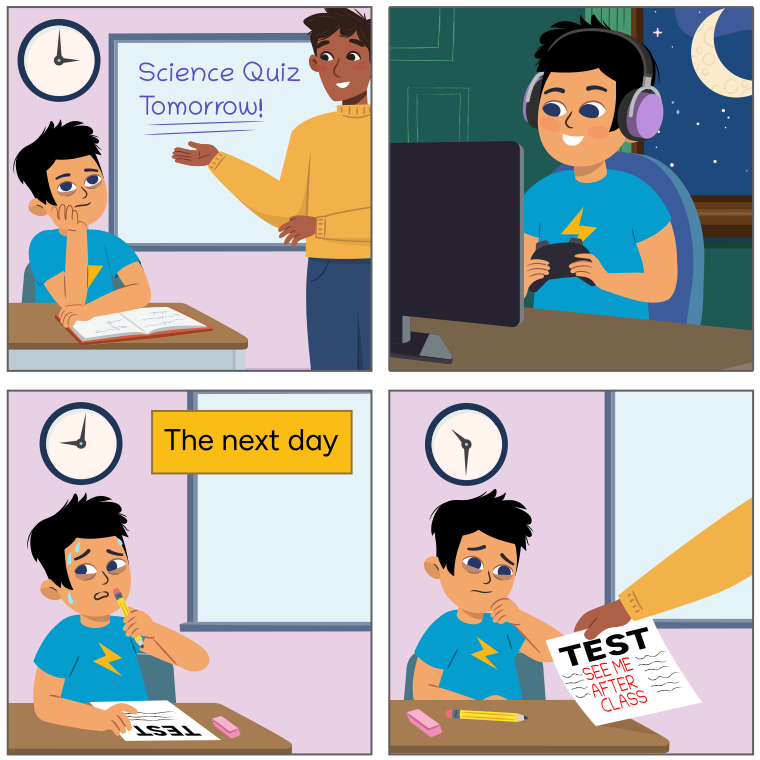
A comic strip with four frames: In the first frame, learner Tyler is sitting at a desk in a classroom with puffy eyes with dark circles around them. Teacher Ravi has written "Science Quiz Tomorrow!" on the board.
In the second frame, Tyler is playing video games at home. The moon and stars can be seen outside the window.
The third frame is labelled "The Next Day". Tyler is writing the test and sweating.
In the fourth frame, Teacher Ravi hands Tyler a marked test that says, "See me after class". Tyler looks concerned.
|
Observe I see… |
Knowledge I know… |
Infer I think… |
|---|---|---|
|
|
|
Explore the second comic and complete the table below or record your answers in a method of your choice.
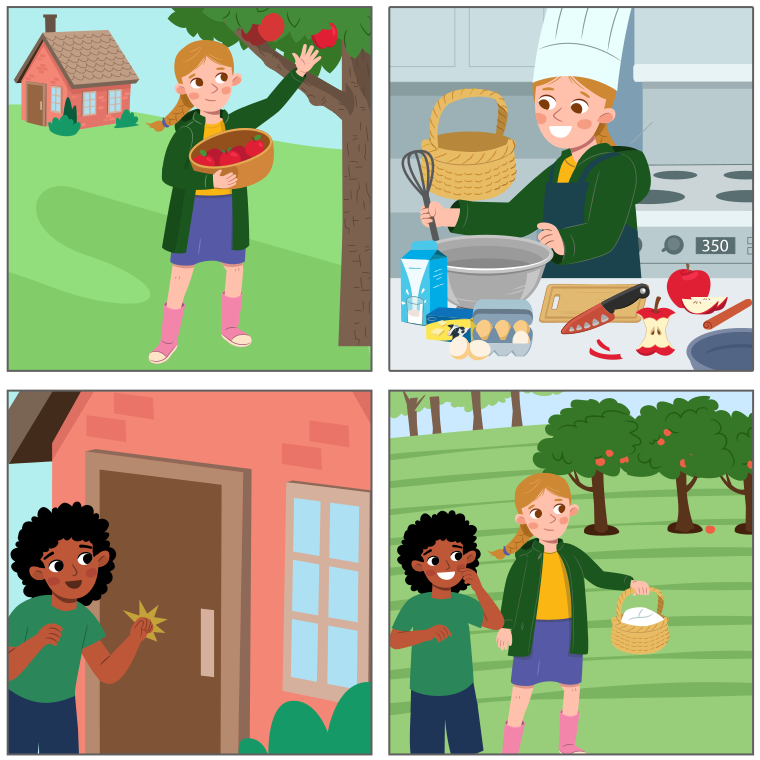
A 4-frame comic strip
In the first frame: Sandy is in a grassy field picking apples from a tree and putting them in a basket half-filled with apples. There is a red-brick house in the background.
In the second frame: Sandy is in a kitchen holding a whisk and wearing a chef's hat. On the table there is a mixing bowl, cutting board, knife, pie dish, apple peels and cores, milk, butter, eggs, and cinnamon. In the background is an oven preheated to 350 degrees and a picnic basket.
In the third frame, Tiara is knocking at on the door of a red-brick house.
In the fourth frame, Tiara and Sandy are walking in a grassy field with apple trees. Sandy is holding an empty basket.
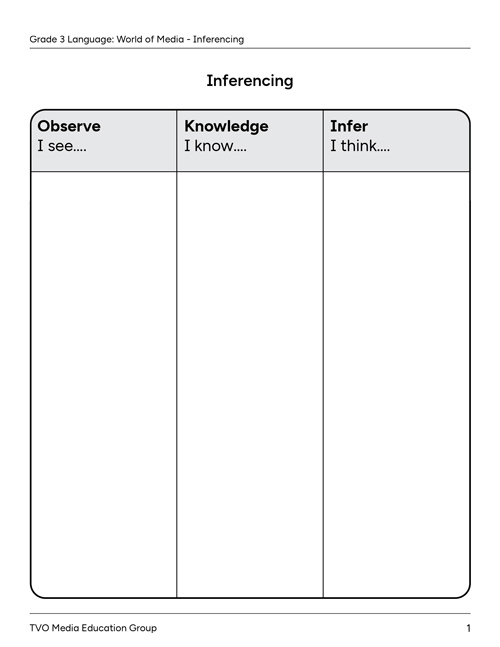
Complete the fillable and printable Inferencing activity in your notebook or using the following document. If you would like, you can use speech-to-text or audio recording tools to record your thoughts.
Create your own comic!
Now, it's your turn to be the storyteller, without using any words! Get ready to create a comic strip with just three boxes.
Use the following checklist to help you along the way.
Comic checklist

Complete the fillable and printable Comic Strip Template in your notebook or using the following document. If you would like, you can use speech-to-text or audio recording tools to record your thoughts.
Reflection
How do you feel about what you have learned in this activity? Which of the next four sentences best matches how you are feeling about your learning? Press the button that is beside this sentence.

I feel...
Now, record your ideas about your feelings using a voice recorder, speech-to-text, or writing tool.