Learning goals
We are learning to…
- demonstrate an understanding of our rights and responsibilities when interacting online
- demonstrate an understanding of how to navigate online environments safely
- acquire and use explicitly taught vocabulary in various contexts
- read paragraphs in a variety of texts to support comprehension
Success criteria
I am able to…
- explain how to be a good digital citizen when using the Internet
- create my own Digital Citizen Pledge to show how I will behave online
- apply the digital citizenship vocabulary taught
- use the reading strategies taught to help me read paragraphs
What is digital citizenship?
Did you know that when you use the internet, you are part of an online community? Just like every community, an online community needs people who use technology responsibly to learn, create, and work together. This is called being a digital citizen. Digital citizens have a responsibility to ourselves, our communities, and our world to stay safe and do our best to make good choices on the Internet.

Today’s vocabulary!
Explore some digital citizen vocabulary in the following flashcards.

Brainstorm
Brainstorm
- What are some ways you can be a digital citizen?
- What are things you might already be doing to be responsible and stay safe when you go online?
Explore the following image and think about how you are connected to the world around you.
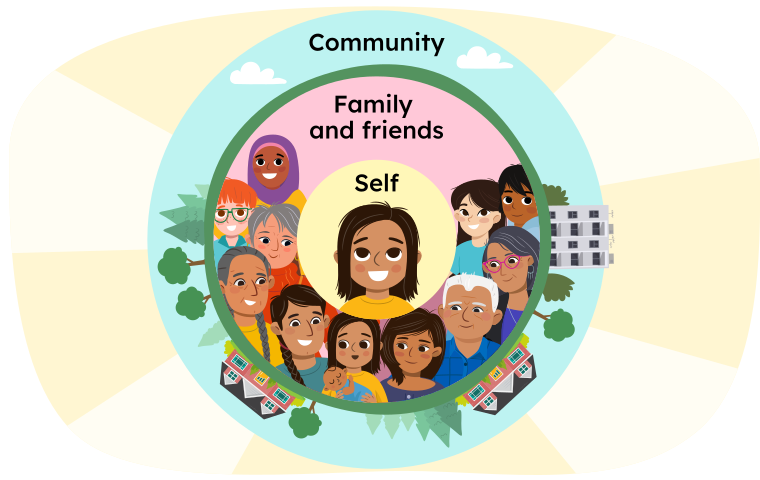
Three concentric circles. Remy is shown inside the smallest, inner circle, along with the word "Self.". Remy's family and friends appear in the middle circle along with the words "Family and friends." Inside the largest, outer circle, there are trees, houses, and buildings and as the word "Community".

Student Success
Think!
People can be a part of bigger communities such as family, friends, schools, neighbourhoods, cultural communities, and more.
Do you think your actions and behaviours affect your family, friends, and community around you when you are online?
Before we move on to the Action section, let's review cursive writing.

Cursive practice
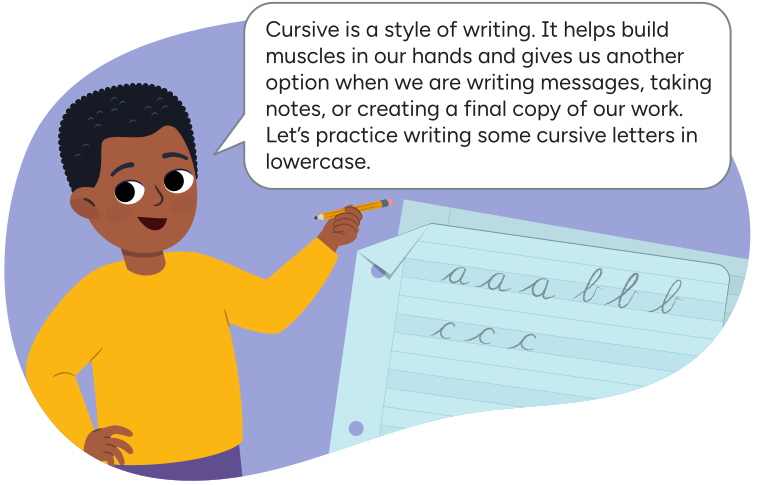
Arthur says "Cursive is a style of writing. It helps build muscles in our hands and gives us another option when we are writing messages, taking notes, or creating a final copy of our work. Let's practice writing some cursive letters in lowercase."
|
|
Cursive |
|---|---|
| c |
|
| J |

|
| l |

|
| d |
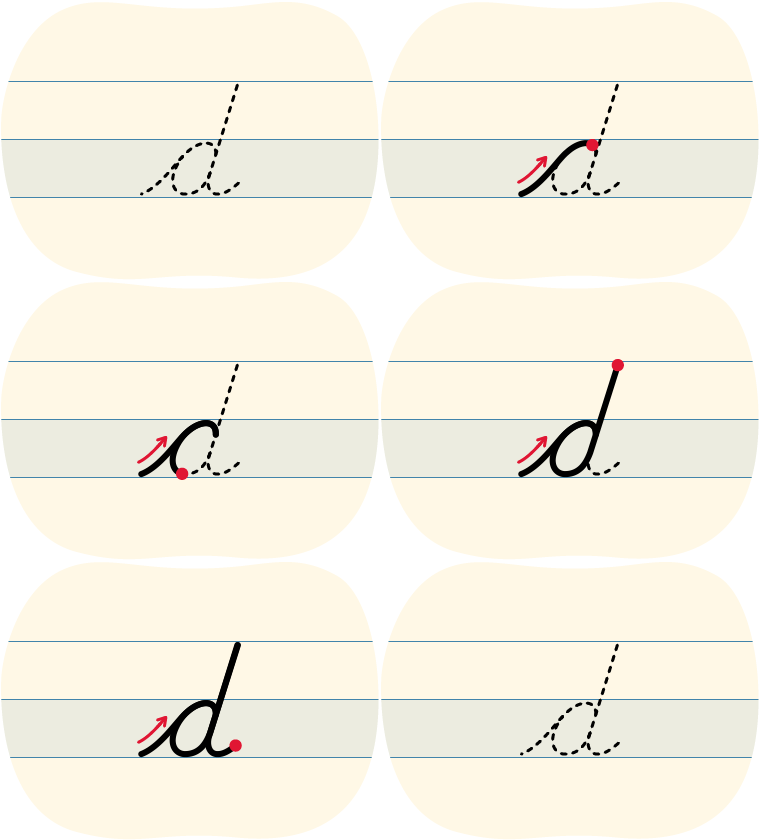
|
| n |

|
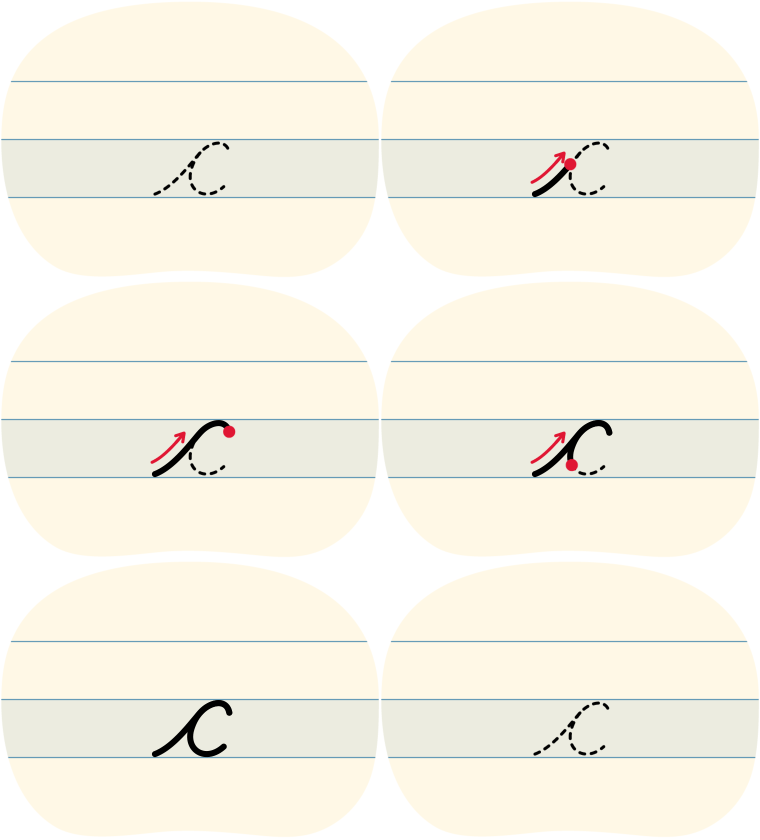
Before you begin, what do you notice about the shape of each cursive letter?
All of the cursive letters start from the bottom. Some of the letters have loops and they each create a different shape.
Tips for cursive letters
- Start from the bottom of the letter
- Try to keep the pencil on the page until you are done the letter
- Create a finger space before you continue to the next letter
- Try to press gently as you write so that your hand can move easily across the page
Cursive writing can be hard at first. But don’t worry, you can do it. All it takes is some practice!
Press the Left-Handed Tips button to access tips for left-handers.
Being a digital citizen
Explore the following video entitled "We the Digital Citizens" to learn more about digital citizenship.
Source: Common Sense Education. (2019, August 8). We, the Digital Citizens [Video]. Common Sense Media. https://www.commonsense.org/education/digital-citizenship/lesson/we-the-digital-citizens
Check your learning!
Review what you learned about things to do as a digital citizen from the "We the Digital Citizens" video by completing the following fill-in-the-blank activity.
For each sentence, select the missing words from the drop-down menu. Press Check Answer to see how you did.
Complete the fillable and printable Digital Citizenship Fill-in-the-Blank activity in your notebook or using the following document. If you would like, you can use speech-to-text or audio recording tools to record your thoughts.
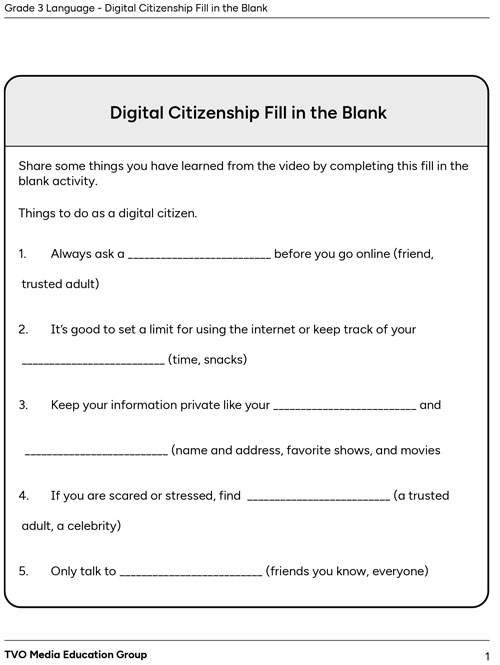
Press the Activity button to access the Digital Citizenship Fill-in-the-Blank.
Activity(Opens in a new tab)
Student Wellness
Take a break!
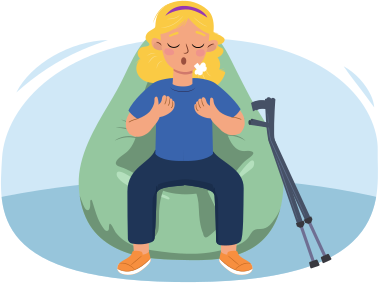
Let’s take a few minutes to relax, clear our minds, and refocus our attention.
Let’s build our skills!
Explore the following image of decoding strategies to help you understand what you read.
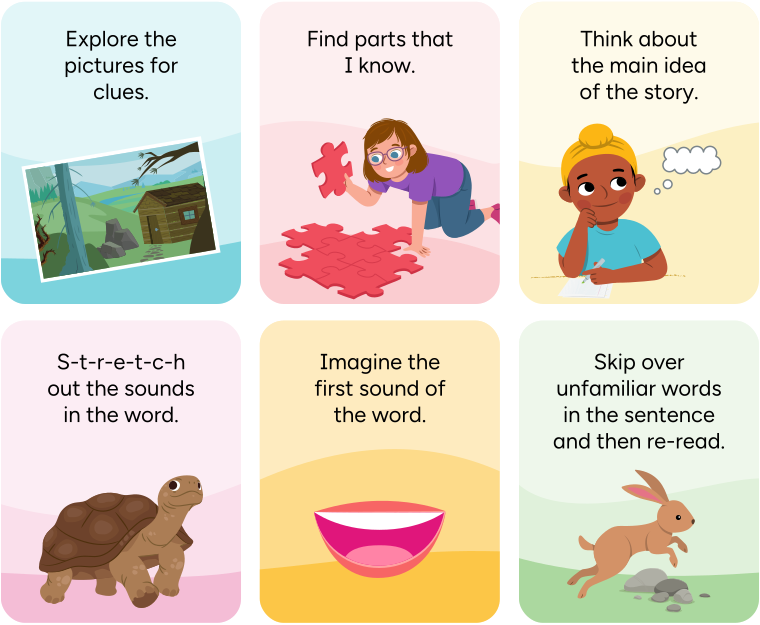
There are six reading strategies.
Examine the picture for clues.
Try to find the parts of the word that I know.
Think about the main idea of the story.
Stretch out the sounds in the word.
Imagine the first sound of the word.
Skip over the words in the sentence and reread it.
Becoming a digital citizen!
Being a digital citizen means using the Internet responsibly and thoughtfully. Here are some more ways to be a digital citizen:
- Ask permission: Ask a trusted adult before going online, visiting websites you don’t know, or if you are not sure about something.
- Passwords should be private: Only share your password with a parent/guardian.
- Words matter, even online: Treat others with respect, even when you disagree. Remember, there is a real person behind every screen, so choose kindness over hurtful words.
- Stand up for what is right: If you know someone is being bullied online, tell a trusted adult.

Pause and Reflect
Pause and reflect
- What are two important things you’ve learned so far about being a digital citizen?
- What are two questions that you still have about being a digital citizen?
Record your thinking in a method of your choice.
Being responsible
Making responsible choices can smetimes be hard and confusing, even when we know the rules.
Press the following tabs to find out about three important skills that can help you when you are confused and not sure what to do next.
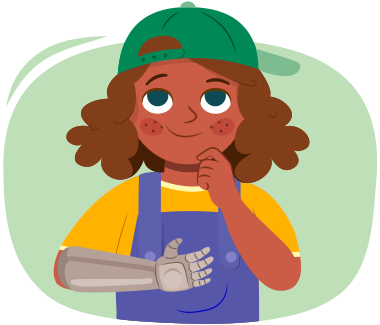
Be a critical thinker and question what you see online.
- How do you know it’s true?
- Where does the information come from?
- Does it make you feel uncomfortable?
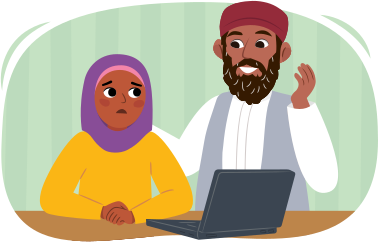
Communicate and tell a trusted adult what is happening and let them know why you are confused. Together, you can come up with an idea of what to do next.

Always pause and reflect. There is a real person on the other side of the screen. It’s important to say and share things respectfully, and that the other person does the same for you. It’s also important to only say and share things with people you know.
Being a responsible digital citizen
Now, it's time to create your own digital citizen pledge, a special promise to yourself and others about how you will use technology responsibly and safely.
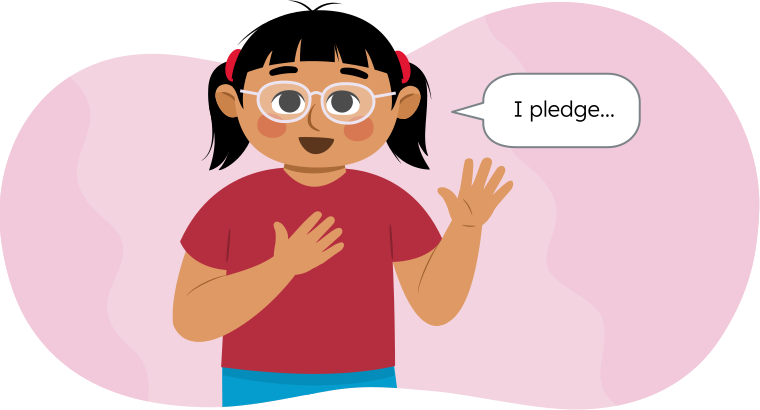
Remember, being a digital citizen is an ongoing journey. Use your pledge as a guide to remind yourself of the important things you learned:
- Being respectful and kind when you say or share things online.
- Not sharing your private information like your name, address, and pictures of yourself.
- Being a critical thinker and making sure information is true.
- Standing up against online bullying by telling a trusted adult.
Student Success
Think
Think about ways you can be a responsible digital citizen.
- What promises do you want to make to yourself and others?
- Why do you think it is important to be a good digital citizen in your everyday life?
Press the Example button to learn more.
As a digital citizen, I pledge to:
- Ask for help when I am confused or scared.
- Keep myself safe by not sharing my personal information.
- Ask questions and not believe everything I see online.
Create your own digital citizen pledge in a method of your choice.
Reflection
How do you feel about what you have learned in this activity? Which of the next four sentences best matches how you are feeling about your learning? Press the button that is beside this sentence.

I feel...
Now, record your ideas about your feelings using a voice recorder, speech-to-text, or writing tool.