Learning goals
We are learning to…
- demonstrate an understanding of the relationship between the audience and the creator of a text
- demonstrate an understanding of the functions of parts of speech in sentences
- identify specific purposes for engaging with texts
- draft short texts of various forms, including persuasive texts, using a variety of strategies
Success criteria
I am able to…
- identify the target audience and message in different advertisements
- identify and use adjectives and adverbs
- use critical thinking skills when exploring different advertisements
- create an advertisement using appropriate advertisement techniques

What is an ad?
An ad is short for the word advertisement.
The word advertisement comes from the root word “advert” which means “to turn someone’s attention toward something.”

Try It
Try it
Read the word and listen to the audio clip, then say it aloud!
Ad-ver-tise-ment
Advertisement
How do ads work?
Advertisements are a way to sell a product, service, or experience to an audience.
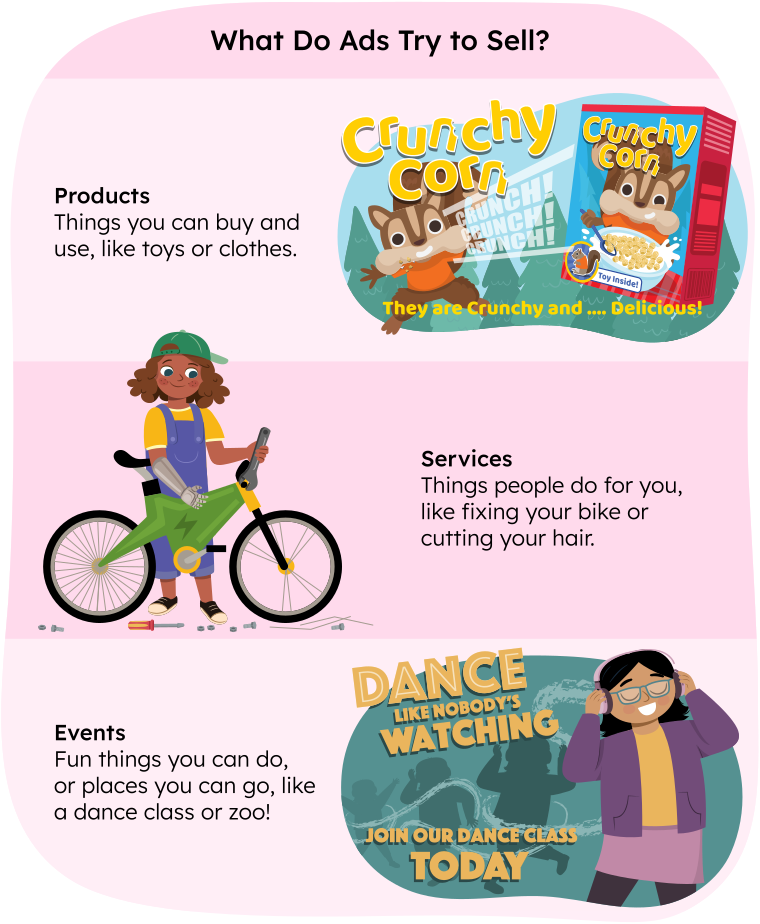
An infographic titled "What do ads try to sell?" Three things that ads try to
sell are products, services, and events.
Products are things you can buy, like
toys or clothes. The example is an ad for "Crunchy Corn" cereal. In the ad, a
cereal box has the Cruncy Corn logo, a chipmunk mascot smiling while eating
cereal, and a picture of a chipmunk toy next to the words "Toy Inside!" on it.
Next to the cereal box is the Crunchy Corn logo and the same mascot from the
box. The mascot is jumping next to the text "Crunch! Crunch! Crunch!" written in
all capital letters. There is a forest in the background and at the bottom of
the ad is the text "They are crunchy…and delicious!" The Crunchy Corn logo has
bite marks on every letter "n."
Services are things people do for you, fixing
your bike or cutting your hair. The example is learner Gabby using tools to fix
an electric bike.
Events are fun things you can do, or places you can go, like a
dance class or zoo! The example is an ad for a dance class. In the ad, learner
Avery is smiling with their eyes closed while holding headphones on their ears.
Next to Avery is the text "Dance like nobody's watching," and "Join our dance
class today," written in all capital letters. The words "dance," "watching," and
"today," are larger than other words, and "dance" is the largest word. In the
background there are silhouettes of other people dancing with a magical wisp of
smoke swirling around them.
Advertisements will usually have a target audience and a message to sell you a product, service, or experience.
Vocabulary
Press the following tabs to learn more about target audiences and messages in advertisements.
The group of people that the creator wants to reach with their message. It is who they think will read, watch, or listen to what they made.
For example, an advertisement about toys might have a target audience of kids, while an advertisement about gardening tools might have a target audience of people who like to garden.
Explore the following image for an example of a target audience for an ad.

In this example, a group of children are watching a commercial about toys.
This commercial might play as they watch a children’s show. This is because the advertiser's target audience is children.
The main idea or information that the ad is trying to share with the audience. It can include reasons why someone should buy a product or use a service.
Explore the following image for an example of a message in an ad.
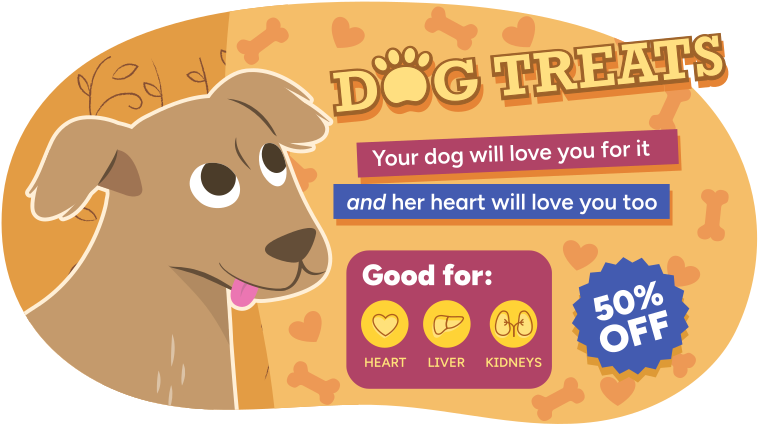
In this example, the message the advertiser is trying to share is that buying their dog treats will make your dog love you.
Explore the following ads.
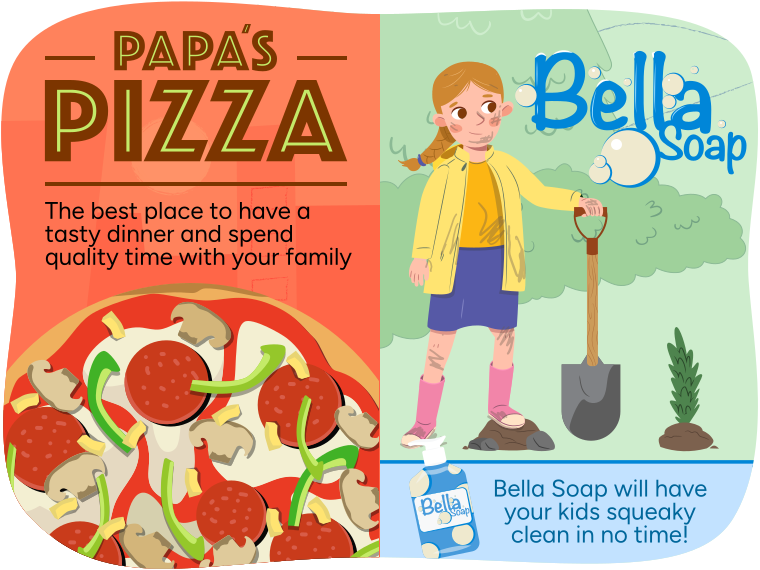
An image of two ads.
The first ad is for "Papa's Pizza." The upper half has the
text "Papa's Pizza. The best place to have a tasty dinner and spend quality time
with your family." The bottom half is a pizza with many kinds of toppings.
The second ad is for "Bella Soap." A child with dirt on their clothes and skin
is outside holding a shovel and standing on a small pile of dirt next to a
seedling they planted. At the bottom is a small bottle of Bella Soap next to the
text "Bella Soap will have your kids squeaky clean in no time!"
Based on the two ads you just explored, record answers to the following questions using a method of your choice.
- Who do you think the target audience might be?
- What do you think the message is?
Press Reveal for some possible answers.
The first ad is selling pizza. The target audience might be families who like to eat pizza together. The message is that this restaurant has tasty food and is the best place to spend time with your family.
The second ad is selling Bella Soap. The target audience might be people who need a soap that works quickly and is safe for kids. The message is that this soap will get kids clean quickly, even after they play in the dirt.

Advertising techniques
Advertisers use special methods to make their ads work better.
These methods are called advertising techniques. The more you know about these techniques, the better you will be at understanding ads!
Check out the following video about how ads use special words to catch your attention and influence what you might buy.
As you explore the video, pause when you notice some of these special words.

Student Success
Learning check
What were some special words in this video that are used in ads to convince you to buy something?
Press Reveal to check your answer.
Some of the special words we heard were:
- “Last in stock”
- “Unique”
- “Improved”
- “Once in a lifetime”
Adjectives and adverbs
Special words that advertisers use often include adjectives and adverbs.
- Adjectives: describe a noun
- Adverbs: describe a verb
- Verb: words that show action.
Check out the following video to learn more about how to use adjectives and adverbs.
An adverb tries to answer the question of how much, where, when, and how?
Explore the following examples of adverbs and the verbs they are describing.
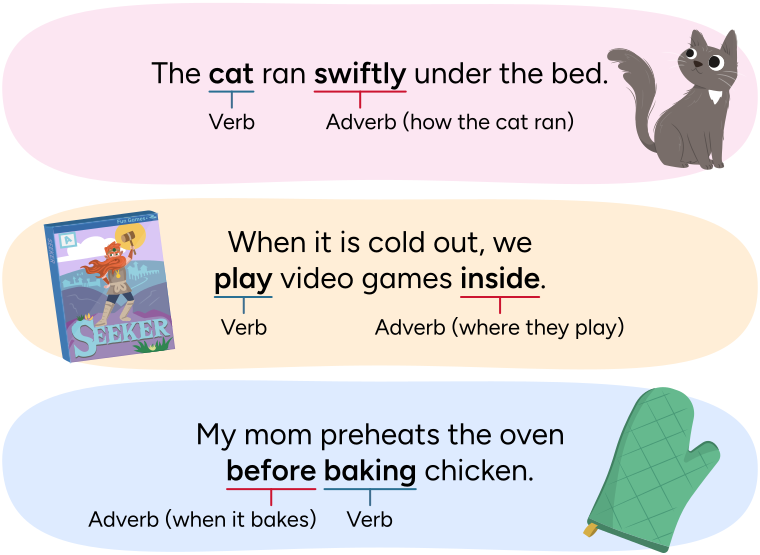
Three sentences with the verb and adverb indicated.
The first sentence is "The cat
ran swiftly under the bed." The verb is "ran," and the adverb is "swiftly,"
which describes how the cat ran.
The second sentence is "When it is cold out, we
play video games inside." The verb is "play," and the adverb is "inside," which
describes where they play.
The third sentence is "My mom preheats the oven before
baking chicken." The verb is "preheats," and the adverb is "before," which
describes when the oven preheats.
Let’s practice!
Find the adverb and verb it is describing in the sentences below.
More advertising techniques
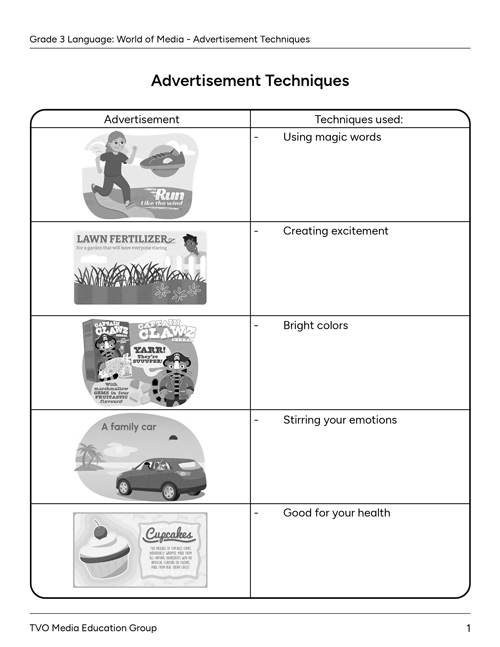
Explore more advertising techniques in the following table.
| Common Ad Techniques | |
|---|---|
| Technique | Example |
| Creating excitement | “Everyone’s talking about it!” |
| Colour | Using bright and interesting colours |
| Special words | “There is nothing else like it!” |
| Compliments | “You deserve the best.” |
| Featuring celebrities | A famous hockey player tells you they use the skates in the ad |
| Mascots | Using animals and cartoons to sell the product |
| Good for health | “This product is made with all natural ingredients.” |
| Stirring your emotions | “Your help is needed desperately.” |
You can use the table you just explored to help you complete the next activity.
You try!
Practise exploring ads and listing the techniques they use by completing the Advertisement Techniques activity.
Use the following fillable and printable document or another method of your choice to record your thoughts. Some possible answers have been provided to get you started!
Design an ad!
Now that you are familiar with techniques used in advertising, it’s your turn to create your own ad!
Brainstorm

Think of a product you would like to advertise. Is it a type of food, toy, or new sneakers?
Use a method of your choice to record a list of product ideas you would like to advertise. If you would like, you can also use speech-to-text or audio recording tools to record your thoughts.
Planning
Once you have selected a product, it’s time to plan the design of the advertisement!
You can include different techniques in your ad.
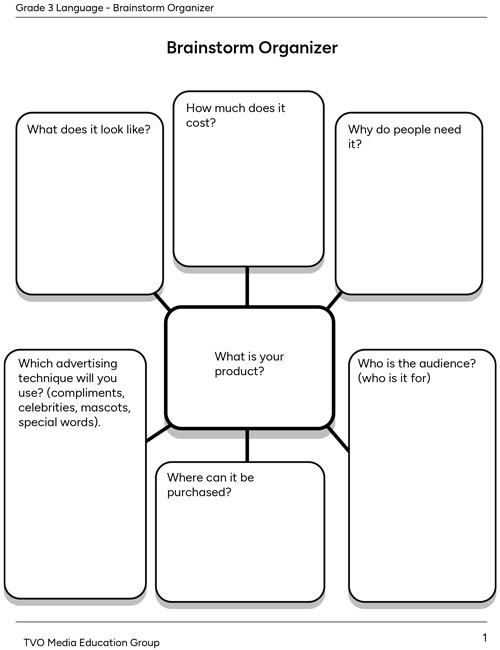
Use the following questions to help guide your design.
- What does it look like?
- How much does it cost?
- Why do people need it?
- Which advertising techniques will you use?
- Who is the audience?
Record your thoughts using a method of your choice or use the following fillable and printable Brainstorm Organizer to help you plan your advertisement.

Create an ad!

Now that you have brainstormed, planned, and organized your thoughts, you can go ahead and create your advertisement in your notebook or using another method of your choice.
If you would like, you can use speech-to-text or audio recording tools to describe your ad.
Use the following checklist to help guide you.
Advertisement checklist
Let’s review!
Select the correct answer, then press Check Answer to see how you did.
Reflection
How do you feel about what you have learned in this activity? Which of the next four sentences best matches how you are feeling about your learning? Press the button that is beside this sentence.

I feel...
Now, record your ideas about your feelings using a voice recorder, speech-to-text, or writing tool.