Learning goals
We are learning to…
- use consolidated orthographic knowledge to make spelling choices
- explore perspectives in texts
- sort and sequence ideas
- brainstorm, draft, and edit short texts
Success criteria
I am able to…
- use spelling tips provided to spell words in my journal entry
- identify the point of view, including first person or third person, in texts
- express my thoughts by creating a “best day ever” journal entry
- plan, create, and edit a journal entry using the 3Ws and H
How do we connect?
Explore the images in the following carousel.
Think about the different ways that people talk and share with each other online.
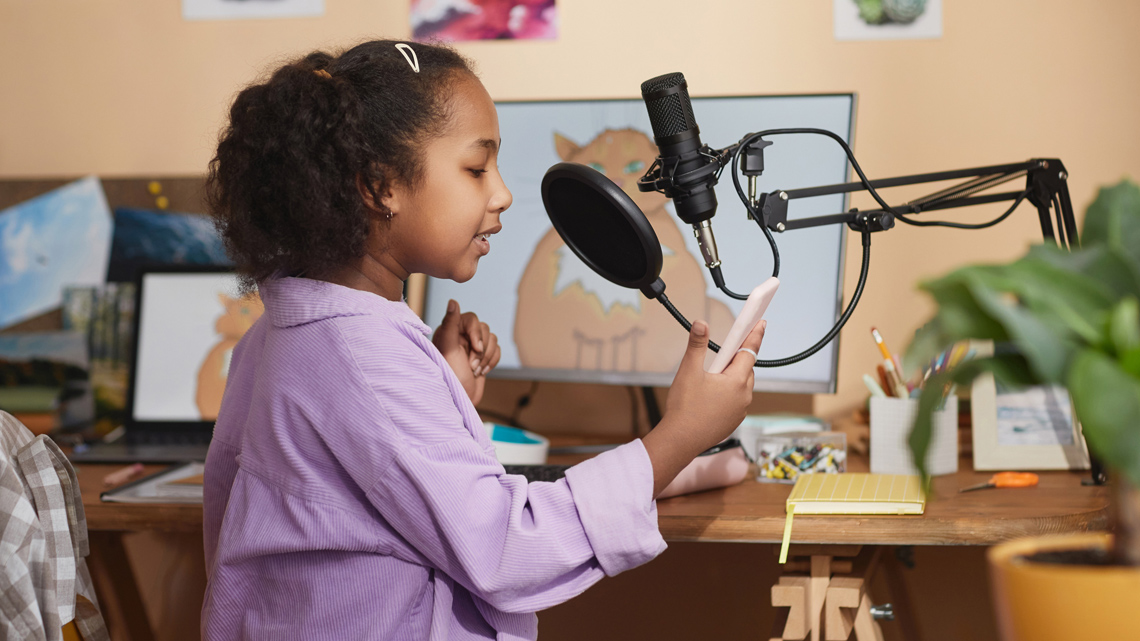


When it’s used in a safe way, the Internet can be a good way for people to share their thoughts, ideas, and experiences with others.
Can you think of anything you might have learned online from a podcast, a video, or a story?
Record your thoughts using a method of your choice.

Student Wellness
Safety check
What do you think is important to remember when you use the Internet to stay safe?
Press Reveal for some possible answers!
- Make sure you ask permission from a trusted adult before using websites
- Never share your personal information with anyone online
Whose point of view?
The Internet can be like a giant online classroom where people talk and share with each other.
People use tools like podcasts, videos, and posts to share their ideas, feelings, and things that they have done.
When they do this, they are also sharing their perspectives or point of view.
A point of view explains who is telling a story.
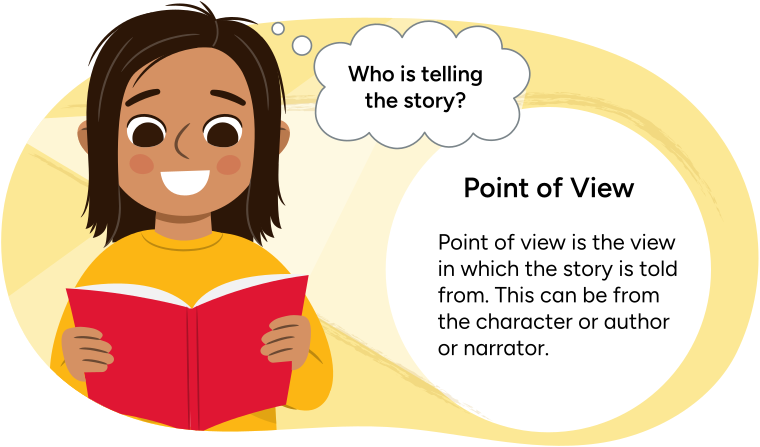
Neebin reading a book and thinking "Who is telling the story?" next to the text "Point of view is the view in which the story is told from. This can be from the character or author or narrator."
Vocabulary routine
In a point of view story, you will find characters, an author, and a narrator.
Press the following tabs to learn more.
Characters are the people, animals, or subjects in a story.
For example, characters can be real, like people and pets, or they can be imaginary, like unicorns and dragons.
The author is the person who writes the story.
For example, if you wrote a book, then you would be the author of that book.
The narrator tells you what is happening in the story.
For example, in a story about Joon(they/them), the narrator might say, "Joon was feeling sick today and couldn’t go to school."
First-person point of view
In a first-person point of view story:
- The narrator is a character in the story
- The narrator tells the story from their point of view
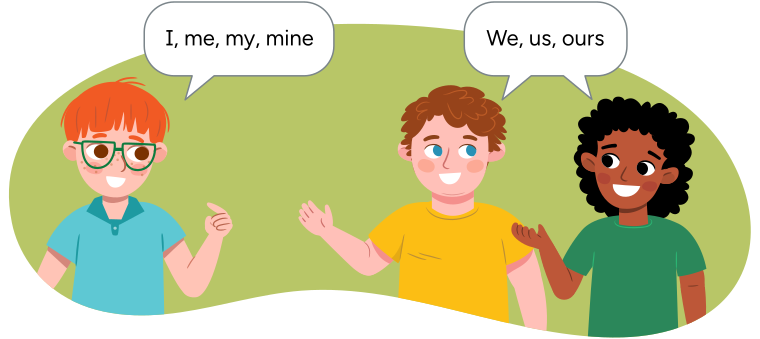
The following are some word clues that tell you a story is being told from the first-person point of view.
| I | me | my |
| we | us | our |
Third-person point of view
In a third-person point of view story:
- The narrator is not a character in the story
- The narrator tells the story about other characters and things that are happening
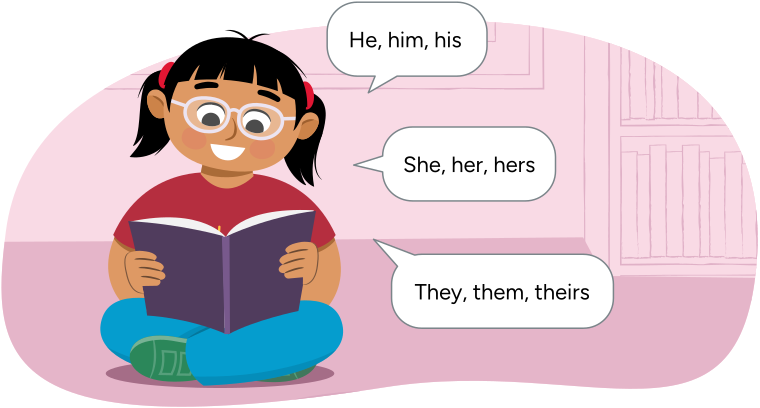
The following are some word clues that tell you a story is being told from the third-person point of view.
| they | their | theirs |
| she | her | hers |
| he | him | his |
Let’s practice!
For each sentence select the correct point of view using word clues!
Points of view can help you imagine you're inside the story, like a character in a book! People who share about themselves in podcasts, videos, and online posts use a first-person point of view. They use words like 'I' and 'my.' This way, you can imagine you're right there with them and better understand their feelings and ideas.
Podcasts, online posts, and videos can be a bit like online journal entries, where people share their thoughts and adventures with you!
Learning check
Let’s take a moment to review what we have learned about points of view and journal entries!
Select the correct answer, then press Check Answer to see how you did.
Cursive practice
Let’s take a break and try something different!
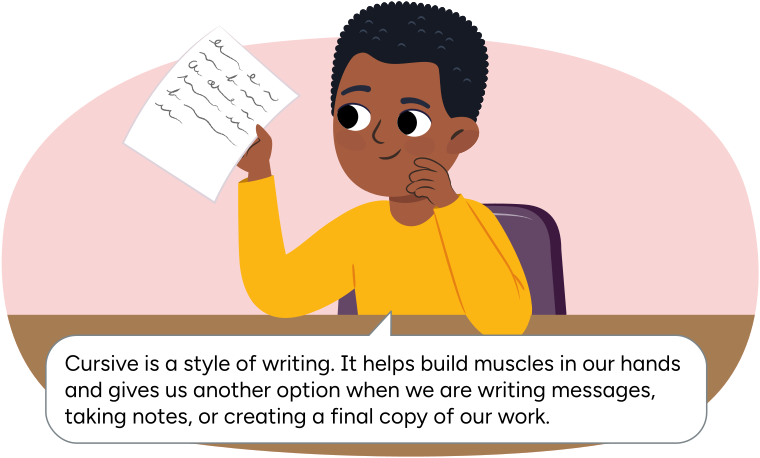
Arthur saying: "Cursive is a style of writing. It helps build muscles in our hands and gives us another option when we are writing messages, taking notes, or creating a final copy of our work."
Explore the following cursive letters: r, f, h, g and i.
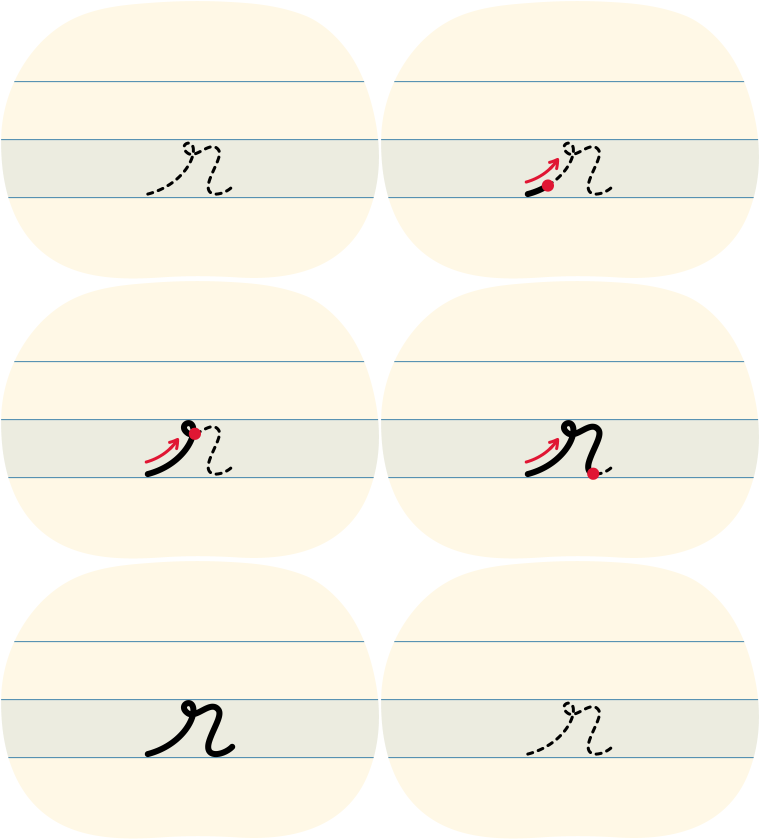
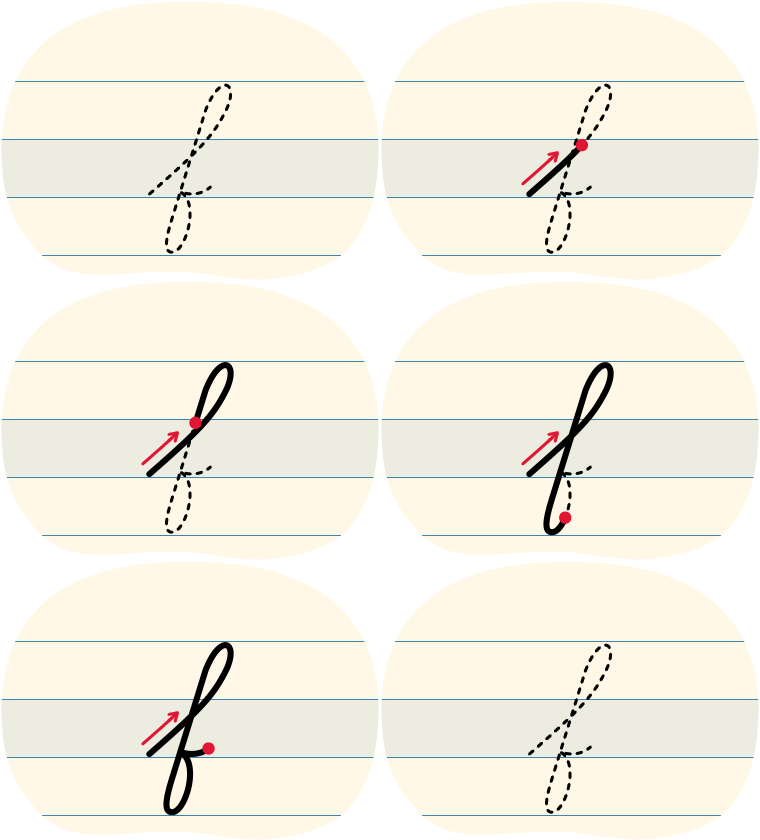
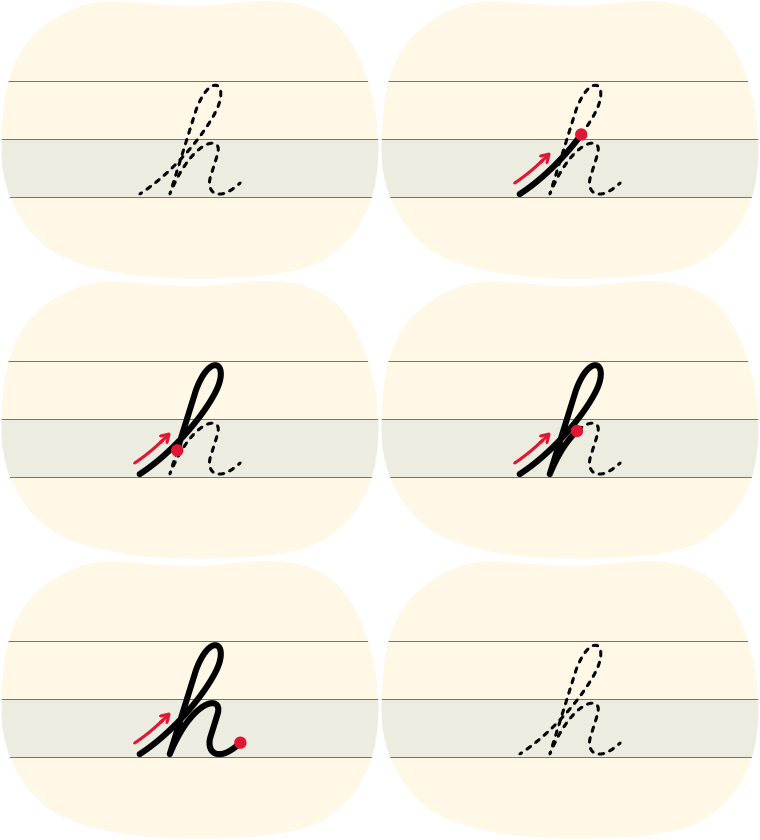
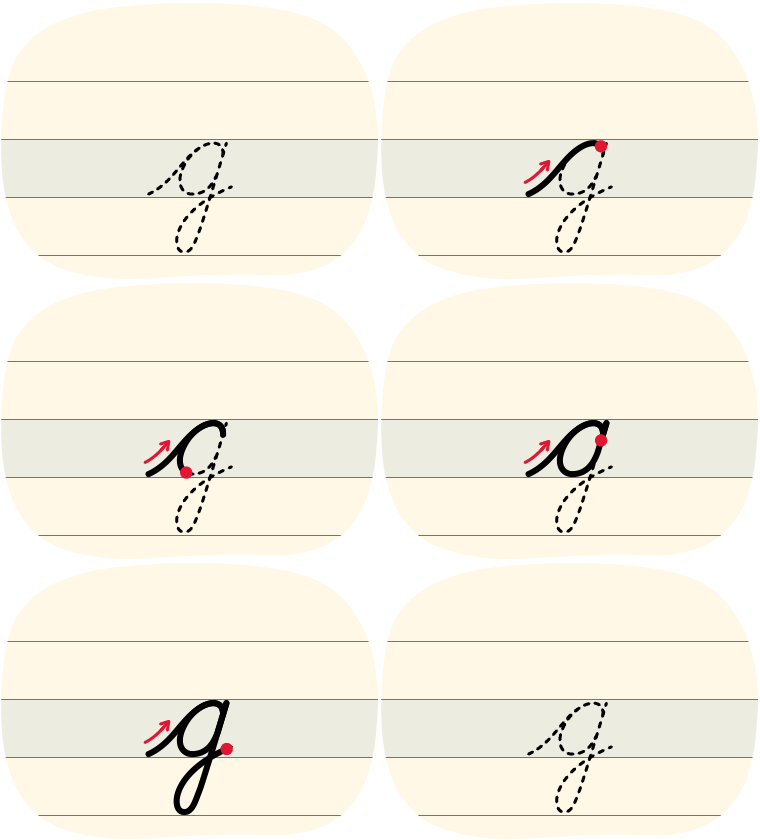
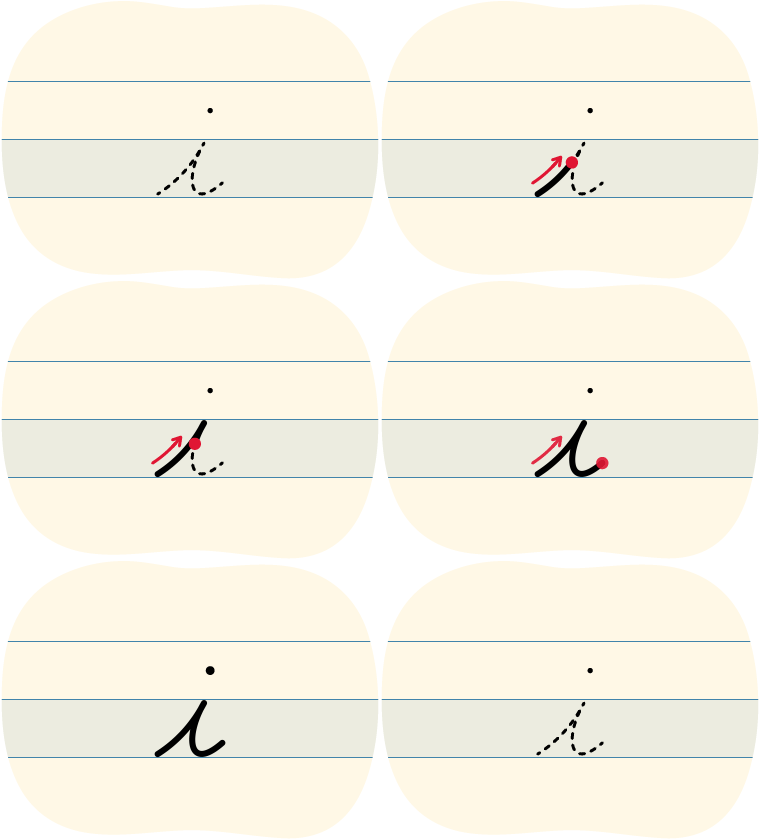
What do you notice about the shape of each cursive letter?
Press Reveal to check your answer.
All the cursive letters start from the bottom. Some of the letters have loops and they each create a different shape.
Tips for cursive letters
- Start from the bottom of the letter
- Try to keep the pencil on the page until you are done the letter
- Create a finger space before you continue to the next letter
- Try to press gently as you write so that your hand can move easily across the page
Now, it's your turn!
Try writing the cursive letters: r, f, h, g and i in your notebook or using the following printable activity sheet to help you get started.
If possible, write each letter a few times.
Writing a journal entry
In the next part of this activity, you are going to write a journal entry.
A journal entry is like writing a little story or a note about yourself. You can write about:
- What you did today or any other day
- Your emotions and how you feel
- Your thoughts and ideas
Instead of writing, you might want to draw pictures or doodles. Drawings can show what you did or how you feel too!
Journal entry example
There are a few things to think about when you are creating a journal entry.
Explore the following example to see a completed journal entry. Listen to the audio clip to hear the journal entry aloud!
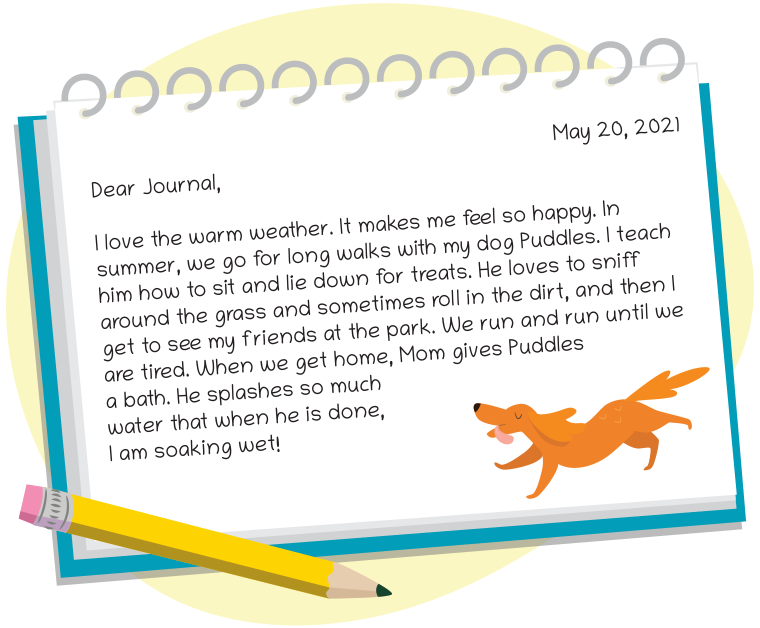
A journal entry dated May 20, 2021. It reads: "Dear Journal, I love the warm weather. It makes me feel so happy. In summer, we go for long walks with my dog Puddles. I teach him how to sit and lie down for treats. He loves to sniff around the grass and sometimes roll in the dirt, and then I get to see my friends at the park. We run and run until we are tired. When we get home, Mom gives Puddles a bath. He splashes so much water that when he is done, I am soaking wet!"
Journal Entry
Learning Check
Let’s review what we learned from the journal entry!
Select the correct answer, then press Check Answer to see how you did.
What perspective is the journal entry written in? How do you know?
Press Reveal to check your answer.
The journal entry is written in a first-person point of view because the author uses word clues like “I,” “my,” and “we.”
Place the events below in order from when they happened first, second, and last in the journal entry. Use the cards below to place each event in the correct order.
Brainstorm
For your journal entry, you'll write about something from your imagination. Imagination is when you can think of things that aren’t real or haven’t happened yet.
For example, you might imagine flying like a bird, visiting a house made of candy, or having a pet dragon, and write about that.
An imagination helps you create stories, pictures, and ideas. When you imagine, it can help you become a better storyteller!
For this journal entry, you are going to be imagining what you would do on your best day ever.
Plan
It can be helpful to organize your thoughts before you begin writing.
Close your eyes and imagine you are waking up and starting your best day. On this day, you get to choose where you go and what you do. These can be real places and activities, or they can be imaginary.
When using your imagination to write a story, think about the 3 Ws and How – What, Where, Why, and How.
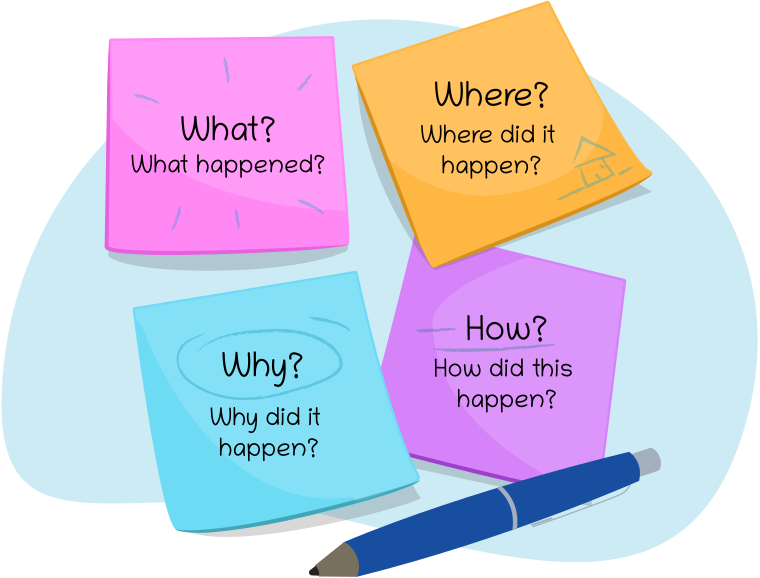
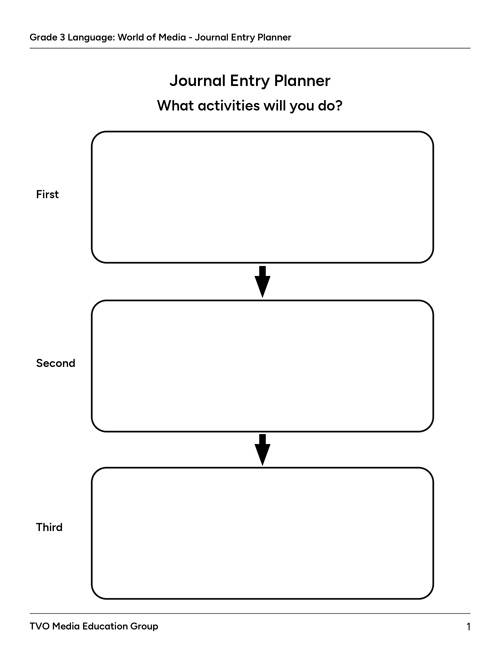
Now, think about the different activities you would like to do on your best day ever.

Student Success
Tips!
Review the example journal we explored and all the things that the author did that summer that made them happy.
Notice how the author told their story using an order of events?
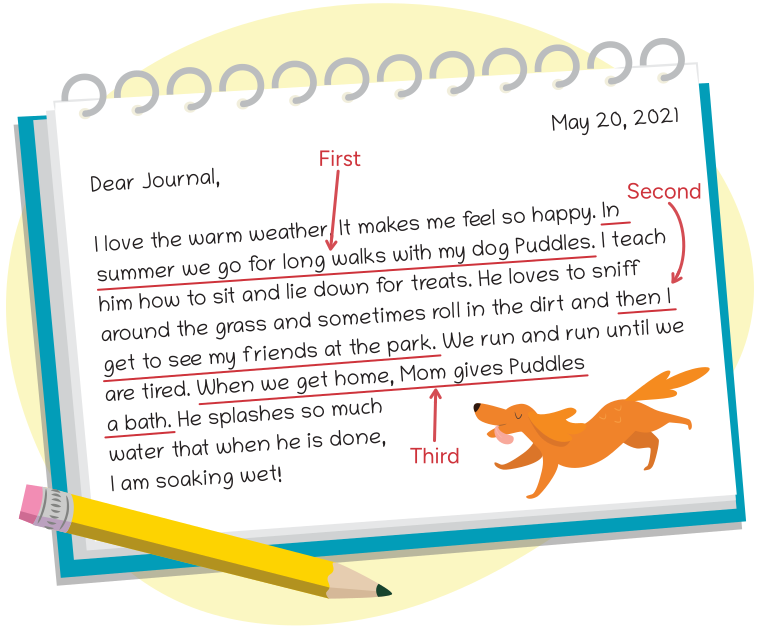
A journal entry with the order of events indicated.The first event is described in the sentence "In summer, we go for long walks with my dog Puddles."The second event is described in the clause "then I get to see my friends at the park."The third even is described in the sentence "When we get home, Mom gives Puddles a bath."
Record your journal entry plan using a method of your choice or by using the following fillable and printable Journal Entry Planner.
If you would like, you can use speech-to-text or audio recording tools to record your thoughts.
Let’s create a journal entry!
As you begin writing your journal entry, you may want to add other important details that you forgot to include in your planner.
Here are some tips you may use to help you as you write!

Student Tips
Spelling tips
Sometimes writers know the perfect word they want to use, but they might not be sure how to spell or say it. Don’t worry! You can still use that great word. You can try spelling it out or use a strategy below to help you!
Breaking a word into smaller chunks can help us hear individual sounds (for example, bro-ken).
Say the word slowly and listen for all of the individual sounds (for example, t-oo-th, r-a-sh).
Listen for the root word on its own and then add the ending (for example, play-ing, playing).
Sentence starters
Explore the following sentence starters before you begin writing:
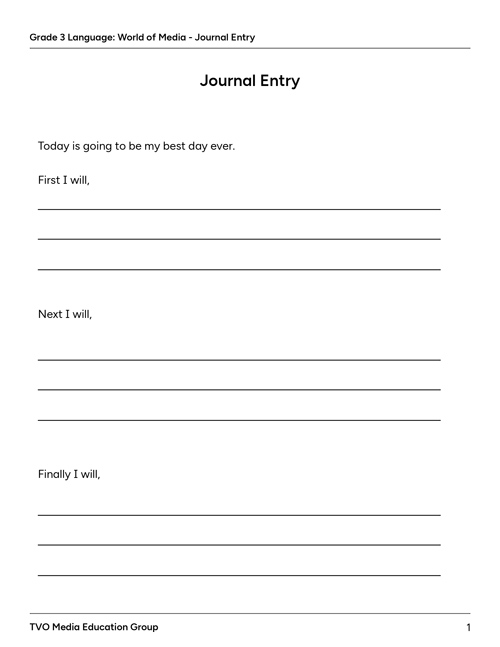
- Today is going to be my best day ever. First, I will…
- Something amazing happened today. I woke up and I…
- On my imaginary best day ever, I will…
Time to write your journal entry!
Now that you have brainstormed and planned your ideas, you can record your journal entry!
Create your journal entry in your notebook or using the following fillable and printable document. If you would like, you can use speech-to-text or audio recording tools to record your thoughts.
Edit
All writers read their writing over and over to see if they can make it even better!
Use the following checklist to review your work.
Editing Checklist
Let’s reflect!
Did using your imagination help you in your writing? Why or why not?
Where else do you think you might write with a first-person point of view?
Record your thoughts in a method of your choice.
Reflection
How do you feel about what you have learned in this activity? Which of the next four sentences best matches how you are feeling about your learning? Press the button that is beside this sentence.

I feel...
Now, record your ideas about your feelings using a voice recorder, speech-to-text, or writing tool.