Learning goals
We are learning to…
- navigate online environments safely by critically thinking about trustworthy and reliable sources
- identify strategies (such as asking questions) that can be used to determine if information is from a trustworthy and reliable source
- why it is important to check your sources for correct and fair information
- create a checklist by asking questions about the task we are trying to complete
Success criteria
I am able to…
- explain what it means to be trustworthy and reliable
- critically think about the information I find and use on the internet by asking questions about the source of information
- make connections to the importance of using trustworthy and reliable sources in everyday parts of my life
- develop a checklist as a tool to help myself and others check for trustworthy and reliable sources online
Fact and opinion

It is important to be able to identify the difference between facts and opinions when evaluating the credibility and trustworthiness of media such as television, the news, articles, commercials, online media, or advertisements.
Today’s Vocabulary
Press the following tabs to learn more about today’s vocabulary.
Something or someone that you can trust for correct information and the truth.
For example: If you have a favourite book that always gives you correct information for your homework, that book is trustworthy. It means you can rely on it to help you get the right answers.
Something or someone that you can count on to be true and dependable.
For example: If you continue to use a science website because it’s created by science experts who study the subject and always provide correct information, then it is a reliable website.
A fact is something that is true and proven to be correct, and is backed up by evidence.
Facts are reliable sources.
For example: Plants need carbon dioxide and water to live.
An opinion is a person’s feelings, judgement, and viewpoint about something.
Statements that begin with “I think” or “In my opinion” indicate an opinion.
Opinions are not reliable sources.
For example: I think plants are bothersome things.

Brainstorm
Brainstorm
Why do you think it’s important to think critically about the reliability and credibility of online sources?
Press the Possible Answers button to learn more.
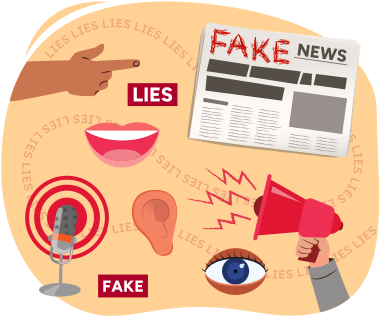
A poster about thinking critically about fake news. A finger is pointing to a newspaper titled, 'News.' However, the word 'fake' has been written on the newspaper. A mouth is talking into a microphone. The microphone is broadcasting the sound signals. There is a sign next to the microphone that states, 'FAKE.' An ear is listening, and an eye is looking at the audience. There is an art holding up a loudspeaker, which is blaring out sound. In the background of the poster, there is a line of text that connects each piece with the word 'lies' repeated over and over again.
I think it is important to think critically about the reliability and credibility of media to prevent the spread of misinformation and fake news.
Explore the images below and choose the images that you think mean trustworthy and reliable.
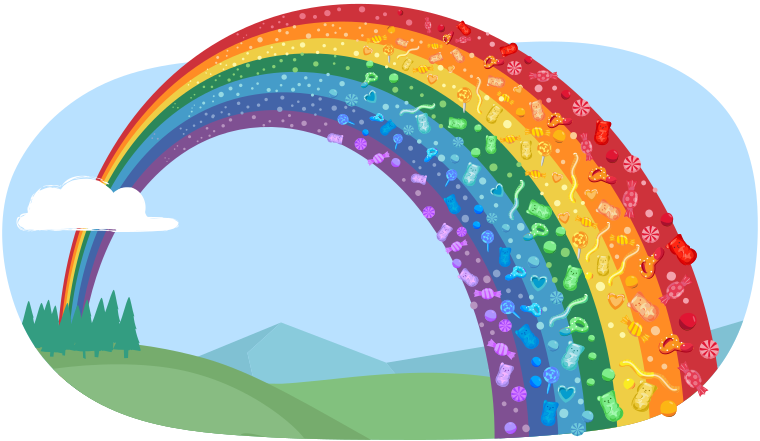
Rainbows are made of candy.
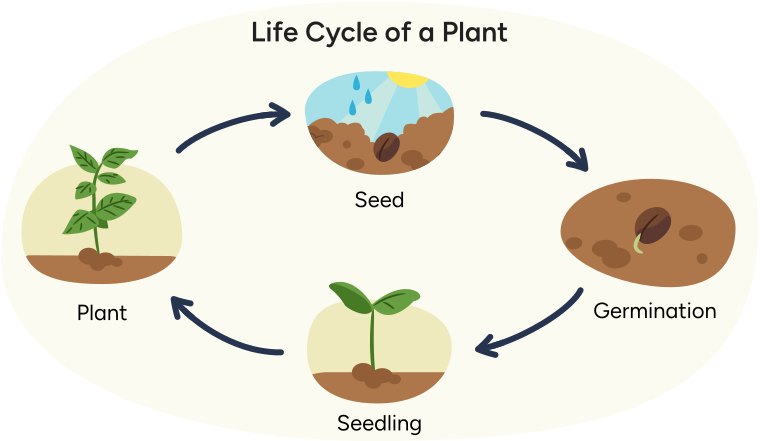
The Life Cycle of a Plant.

Elephants can fly.

An ant can lift 20 times its body weight.
Let’s review our skills
Synonyms and antonyms
Synonym: a word that has the same or nearly the same meaning as another word.
For example:
“Happy” and “cheerful” are synonyms because they both mean feeling good or pleased.
Antonym: A word that has the opposite meaning of another word.
For example: “Hot” and “cold” are antonyms because they mean opposite things.
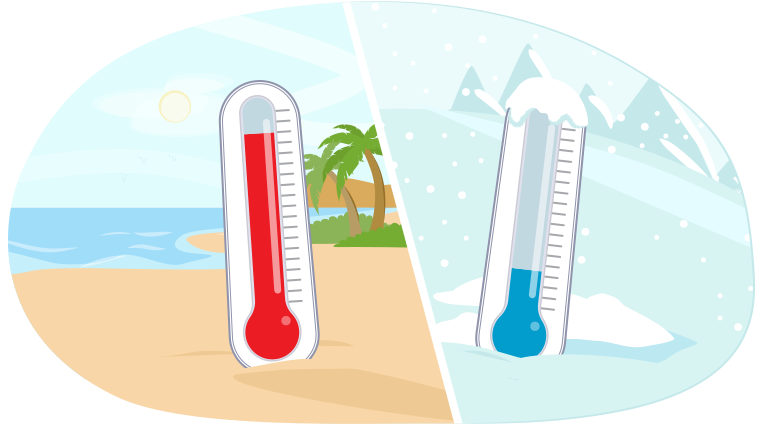
For each term select the corresponding antonym.
Reliable sources
When we use the internet, it’s important that we make sure the information we find is trustworthy and reliable. This means you can depend on the information to be correct and fair. You can evaluate whether the information is a fact that is true or just someone’s opinion. Examining evidence will help you decide whether something is a real fact or not. Then you can be more confident that any information you use or share with others is also correct and fair.
We can make sure the information we use is trustworthy by checking the source of the information. A source is where you get your information from.
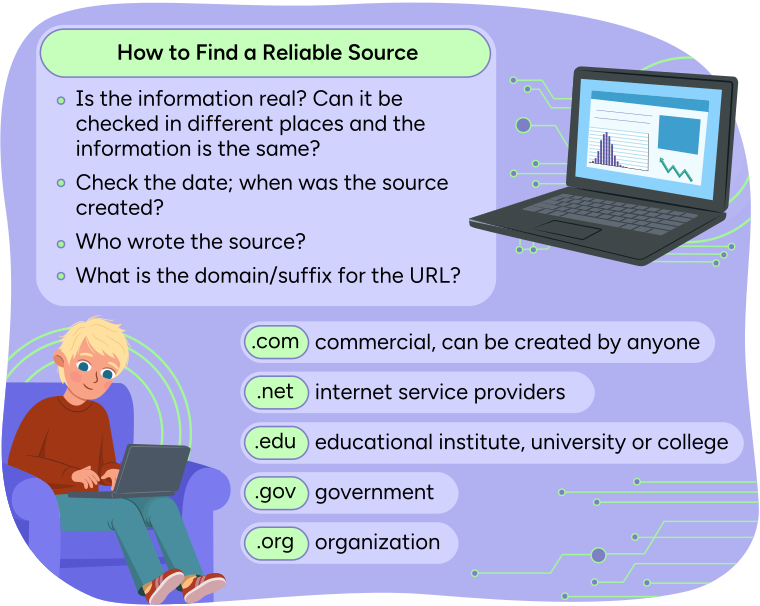
How to Find a Reliable Source
Is the information real? Can it be checked in different places and the
information is the same?
Check the date, when was the source created?
Who wrote the source?
What is the domain/suffix for the URL?
.com --> commercial, can be created by anyone
.net --> internet service providers
.edu --> educational institute, university or college
.gov --> government
.org --> organization
A book, a website, a person, or even a video can be a source. It's the place or thing you use to find out facts or learn something new. A trustworthy source is where you can find information that is correct and backed up by trusted evidence.
Sometimes information that we find on the internet might not be from a trustworthy source and instead tries to convince people to believe something that is not true.
Let’s explore the video where we meet Ava, who talks about the importance of checking our sources.
Critical thinking
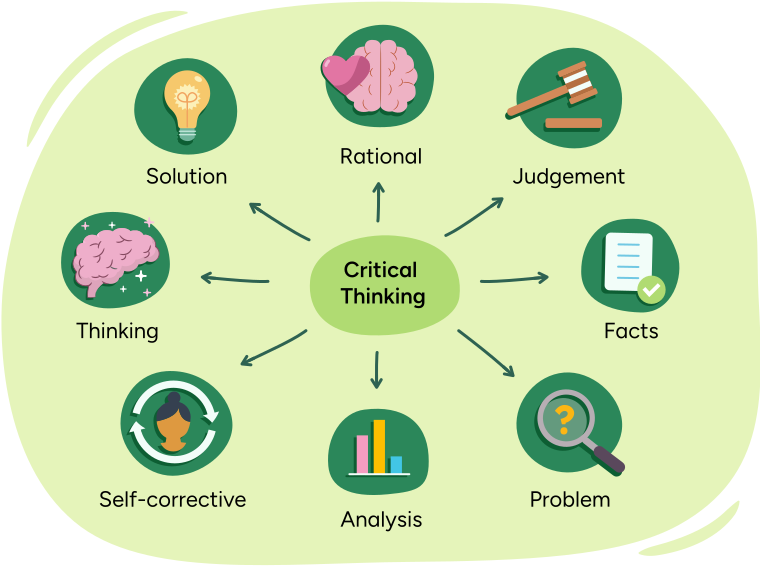
Ava shares some important tips about thinking critically when we use the internet. Thinking critically can mean that we ask questions and consider different types of information before we decide if something is true or not. One thing you can ask yourself is if the information matches what you already know from your personal experience. What are some of the other tips that Ava shares in the video?
Press the Possible Answers button to learn more.
- Ask yourself who made the information
- Ask an expert, parent, teacher, or a trusted adult
Now it’s your turn to be a source detective.
Select the correct answer, then press Check Answer to see how you did.
Select the correct answer, then press Check Answer to see how you did.
Select the correct answer, then press Check Answer to see how you did.
Select the correct answer, then press Check Answer to see how you did.
Prefixes and suffixes!
Let’s review some skills that will help us with some words that we might come across when we read. One way to read and understand a word is to look at its prefixes and suffixes.
Check out the following video to learn more about prefixes.
Prefixes
Prefixes are letters added to the beginning of a word to change its meaning.
Press the Example button to learn more.
For example, adding "un-" to "happy" makes "unhappy," which means not happy.
What is a prefix you can add to the words reliable and trustworthy to make a new word?
Press the Show Answer button to learn more.
Prefix: un-
Un+reliable= unreliable
To be unreliable means to not be trusted.
Un+trustworthy= untrustworthy
Untrustworthy means to not be dependable and not trustworthy.
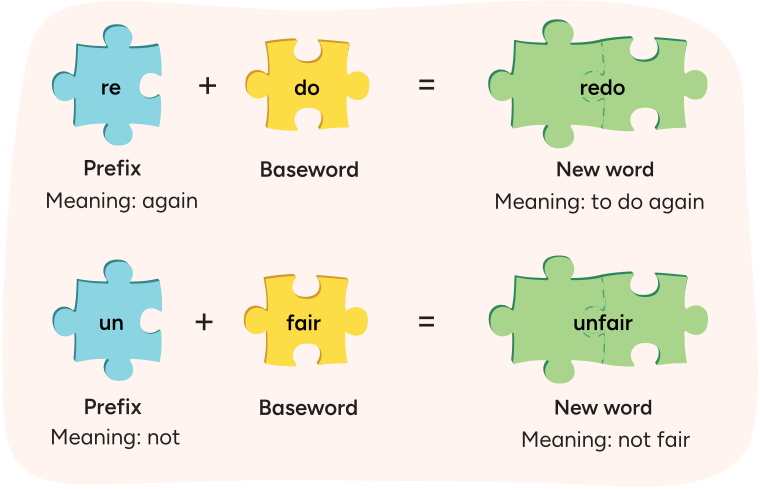
Two examples of two puzzle pieces that fit together, which have examples of a
prefix and a base word fitting together to create a word.
The first word is 'redo.' The first puzzle piece has the prefix 're.' The prefix
're' means 'again.' The second puzzle piece has the base word 'do.' The prefix
and the base word fit together to create the word 'redo.' 'Redo' means 'to do
again.'
The second word is 'unfair.' The first puzzle piece has the prefix 'un.' The
prefix 'un' means 'not.' The second puzzle piece has the base word 'fair.' The
prefix and the base word fit together to create the word 'unfair.' 'Unfair'
means 'not fair.'
Suffixes
Suffixes are letters added to the end of a word to change its form or meaning.
Press the Example button to learn more.
For example, adding "-ful" to "hope" makes "hopeful," which means full of hope.
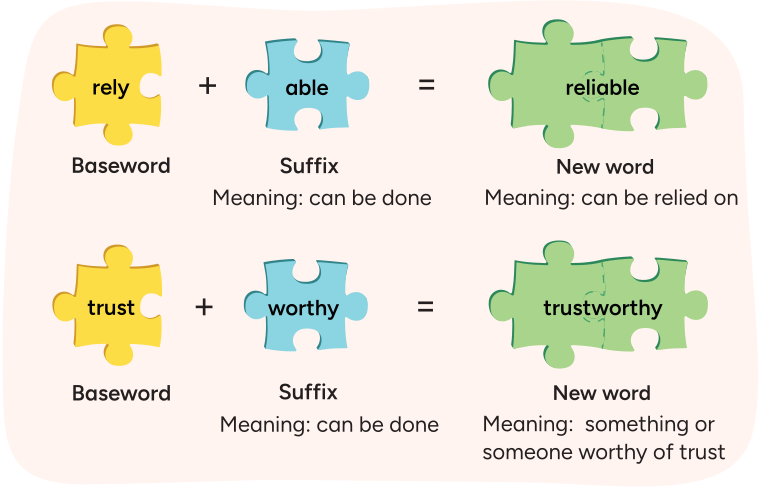
Two examples of two puzzle pieces that fit together, which have examples of a
base word and a suffix fitting together to create a word.
The first word is
'reliable.' The first puzzle piece has the base word 'rely.' The second puzzle
piece has the suffix 'able.' The suffix 'able' means 'can be done.' The base
word and the suffix fit together to create the word 'reliable.' 'Reliable' means
'can be relied on.'
The second word is 'trustworthy.' The first puzzle piece has
the base word 'trust.' The second puzzle piece has the suffix 'worthy.' The
suffix 'worthy' means 'having worth.' The base word and the suffix fit together
to create the word 'trustworthy.' 'Trustworthy means 'something or someone
worthy of trust.'
Press the Reading Tip button to learn more.
When you come across a word that you have trouble reading, try breaking the word down into smaller words, and look for suffixes and prefixes that can help you understand the meaning of the word.

Student Wellness
Take a break!
Let’s take a few minutes to relax, clear our minds, and refocus our attention.
Evaluating a trustworthy and reliable source
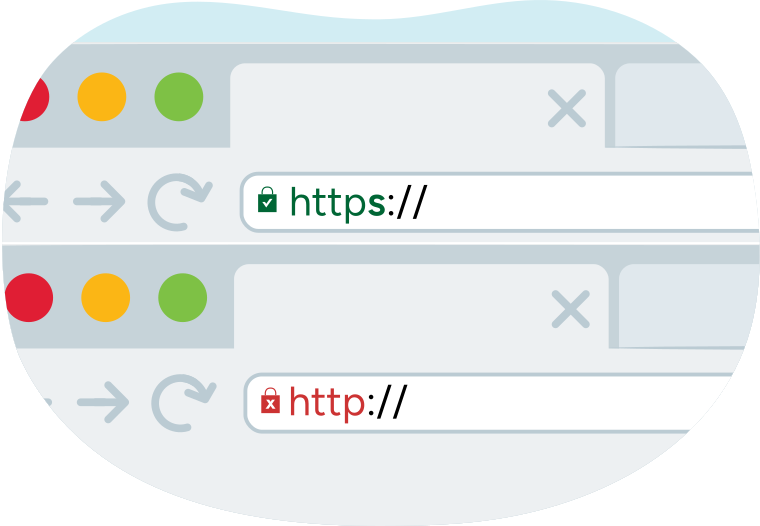
Two web address examples. The first example begins with 'https://' and has a
lock with a checkmark.
The second example begins with 'http://' and has a lock
with an x.
In the first example, the 's' in 'https://' means that the website has
been verified as more secure.
When you are trying to figure out if a source of information is trustworthy, it’s important to use your critical thinking skills. You can do this by asking yourself some questions.
Press the Critical Thinking button to learn more.
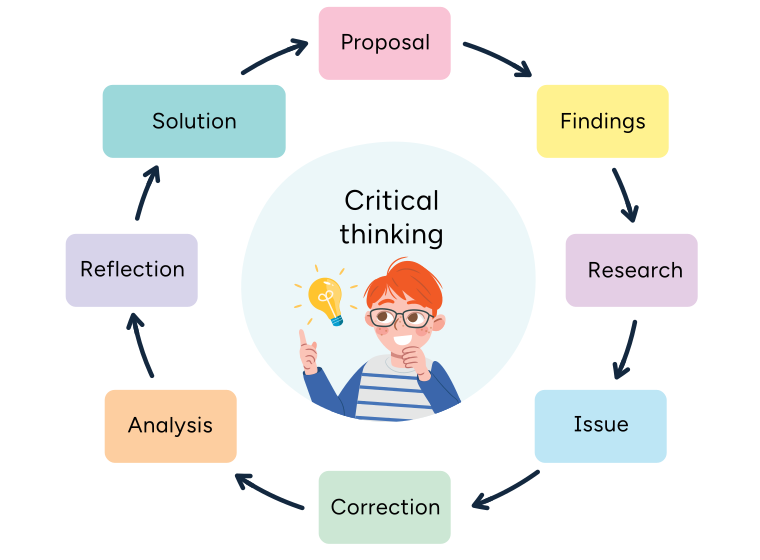
A 'Critical thinking' cycle, with arrows leading the audience through the following words: proposal, findings, research, issue, correction, analysis, reflection, and solution.
Press the following tabs to learn more about trustworthy and reliable sources.
Check the date of when the source was created. You can usually find this under the title of an article or at the end of a webpage. If the date is recent, the information is more likely to be up to date and reliable.
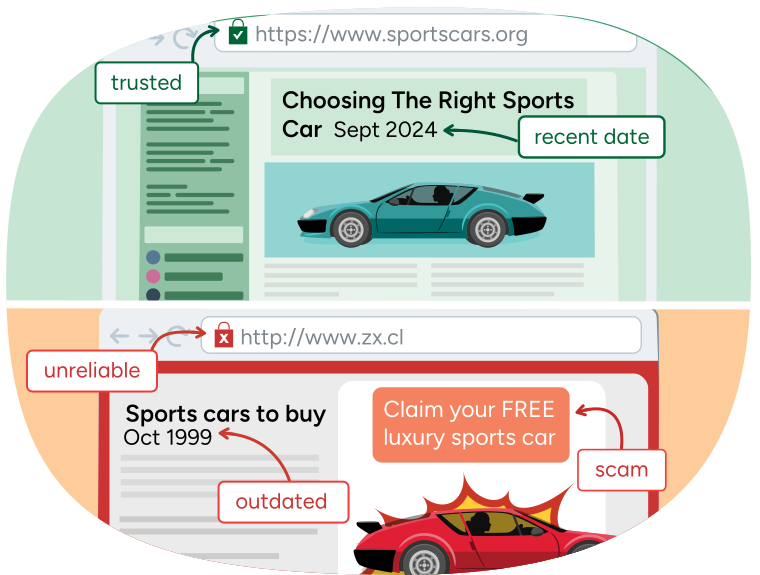
Examples of two similar websites about cars.
The first
website starts with the web address 'https://' and is
labelled 'trusted.' The article is dated, 'Sept 2024,' and
labelled 'recent date.'
The second website starts with the
web address, 'http://' and is labelled 'unreliable.' The
article is dated 'Oct 1999' and is labelled 'outdated.'
There is an ad on the website that says, 'Claim your FREE
luxury sports car,' and is labelled 'scam.'
Check who made the website or wrote the article. Websites made by government organizations, schools, universities, or colleges are usually more trustworthy. These places will show where they found their information, which makes them more reliable.
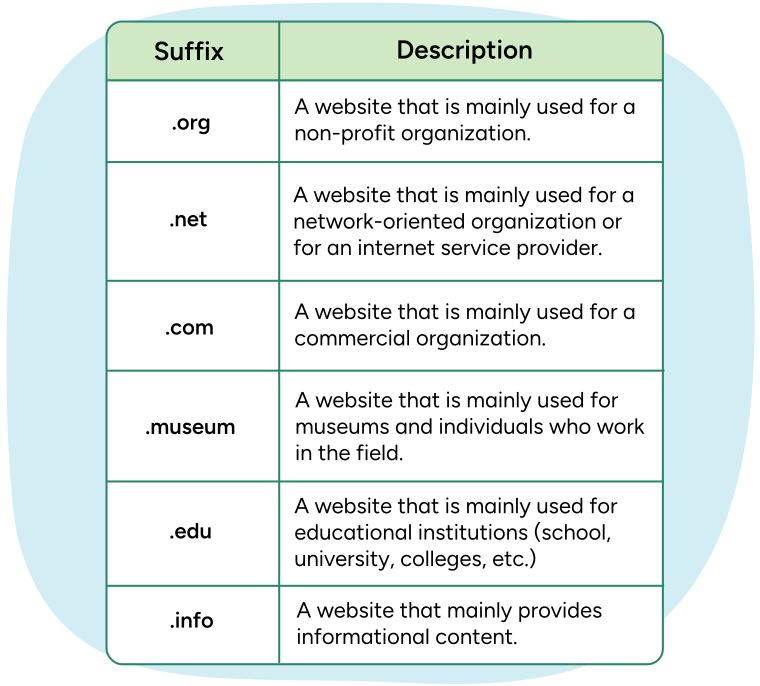
A table listing 6 common website suffixes, and a description of
each one.
Suffix '.org' means a website that is mainly used for a
non-profit organization.
Suffix '.net' means a website that is
mainly used for a network-oriented organization or for an
internet service provider.
Suffix '.com' means a website that is
mainly used for a commercial organization.
Suffix '.museum' means
a website that is mainly used for museums and individuals who
work in the field.
Suffix '.edu' means a website that is mainly
used for educational institutions (school university, colleges,
etc.)
Suffix '.info' means a website that mainly provides
informational content.
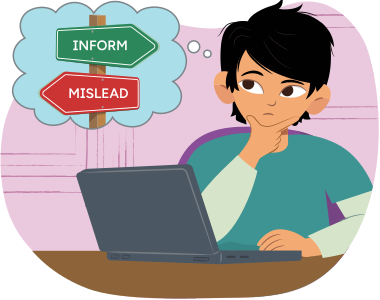
Think about why the information is being given to you. Is it trying to convince you to take one side over another? Is it trying to sell you something? If it is, the information might not be a trustworthy source.
Check if the same information is found on other reliable websites. Do different trustworthy sources agree with this information? If they do, then it is more likely that you can trust this source.
Explore the website below and decide if it is a trustworthy and reliable source.
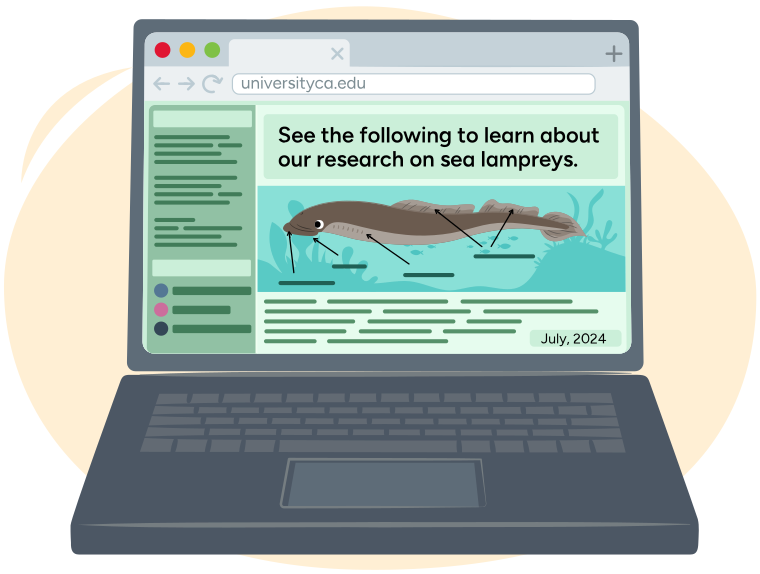
A website with the web address, 'universityca.edu.' It's headline states, 'See the following to learn about our research on sea lampreys.' It is dated 'July 2024.' There is a picture and text, but no ads.
Press the Sample Answer button to learn more.
I think this source is trustworthy and reliable. The URL ends in .edu which means it is from a university, which are often trustworthy places. It also has a recent date, so I know the information is new. There are only facts and no opinions.
Creating a checklist
Now that we’ve learned some ways to check our sources, we are going to create a Trustworthy Source Checklist that will help others to check their sources!
Have you ever created a checklist before or had someone else create one? How about when you are packing for a trip, doing chores at home or planning a party?
A checklist is a list of tasks (things to do) that need to be completed. Each task is written as one item on the list with a checkbox next to it.
Checklists are useful because they…
- help us remember what needs to be done
- keep us organized
- make sure we don’t forget any steps.
Explore the example of a checklist of a morning routine that can help someone get ready for their day.
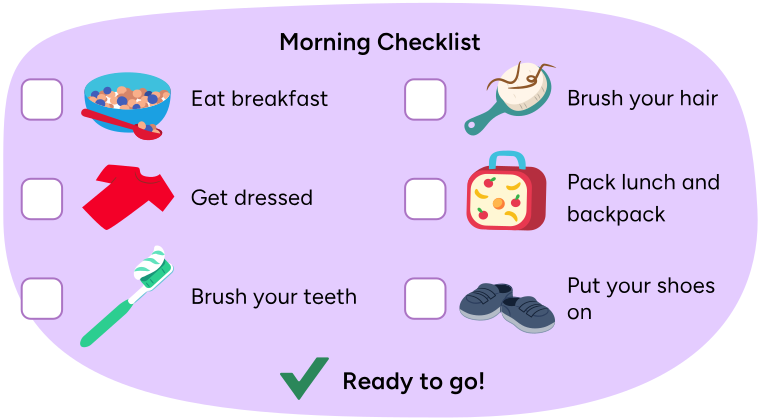
A morning checklist, with the following tasks: eat breakfast, get dressed, brush your teeth, brush your hair, pack lunch and backpack, put on your shoes. The bottom of the checklist says, 'Ready to go!'

Student Success
Think
Think about the following questions as you brainstorm ideas for your own checklist.
Press the Definition button to learn more.
Source: Any place you get information from.
For example, a book, a website, a person, or even a video can be a source.
|
Question |
What to do |
|
Who wrote this source? |
Check who wrote this source |
|
When was the source created? |
Check when the source was created |
|
Why did the author write this information? |
Ask yourself why you think the author wrote this information |
|
What other trustworthy sources have the same information? |
Check if there are other trustworthy sources that also have this same information |
|
Does this source share what I already know from personal experience? |
Ask yourself if the information is something you already know is true from your personal experience |
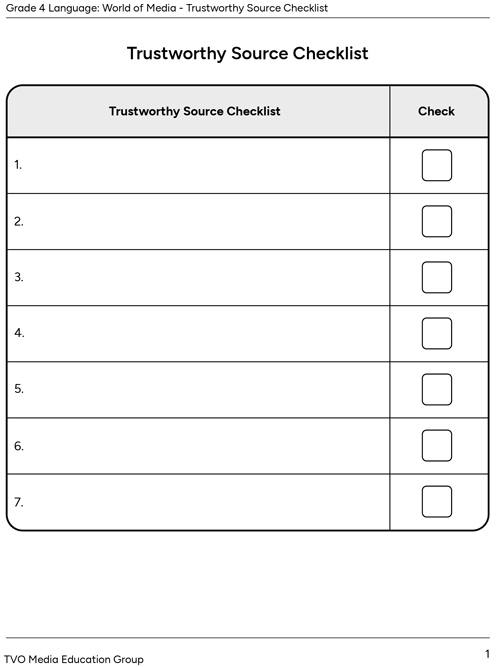
Now it’s time to create your own checklist for checking trustworthy sources on the internet.
Complete the fillable and printable Trustworthy Source Checklist in your notebook or using the following document. If you would like, you can use speech-to-text or audio recording tools to record your thoughts.
Let’s Review
Select the correct answer, then press Check Answer to see how you did.
Select the correct answer, then press Check Answer to see how you did.
Select the correct answer, then press Check Answer to see how you did.
Reflection
How do you feel about what you have learned in this activity? Which of the next four sentences best matches how you are feeling about your learning? Press the button that is beside this sentence.

I feel...
Now, record your ideas about your feelings using a voice recorder, speech-to-text, or writing tool.