Learning goals
We are learning to…
- understand the forms, conventions, and techniques used to identify an advertisement
- use critical thinking skills by asking questions about the purpose and target audience of advertisements
- identify the purpose and target audience of an advertisement
- compare and contrast advertisements using Venn diagrams to help us make informed decisions
Success criteria
I am able to…
- critically think about advertisements by asking questions about their purpose and target audience
- analyze advertisements by identifying the purpose and intended audience
- use Venn diagrams to compare and contrast the forms, techniques and conventions used in advertisements
- reflect on my learning and how critically thinking about advertisements might help me make informed decisions

Today’s vocabulary

Time Square in New York City, displaying bright and bold billboards and advertisements.
Press the following tabs to learn more about today’s vocabulary.

A logo is a picture or symbol used by a group, person, or company to identify who they are.
An advertisement, also known as an ad, is a way for companies to try and sell a product or a service. It can be a poster, a billboard, a commercial, or other media forms.
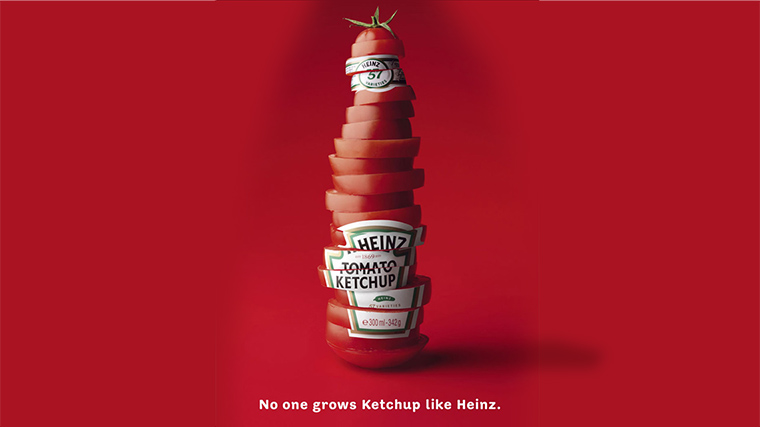
An ad for ketchup. It has tomatoes that are carefully sliced to look like a ketchup bottle. The ketchup bottle labels are also carefully put on the sliced tomatoes. The text at the bottom says, 'No one grows Ketchup like Heinz.'

A slogan is a catchy phrase that is sometimes used by advertising companies to help people remember what they are selling.
A choice that is made after asking questions and reviewing all of the information.
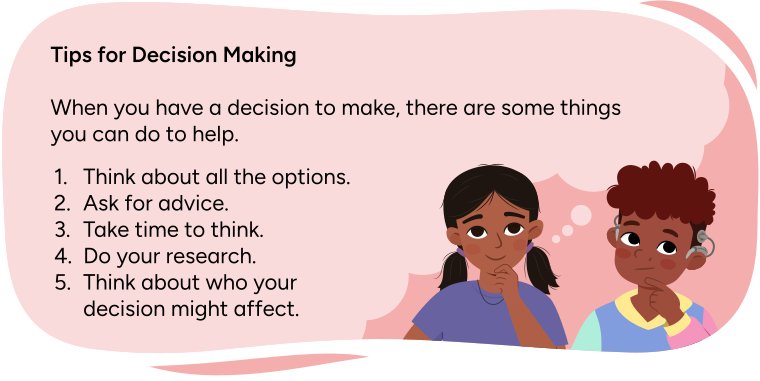
Tips for Decision Making
When you have a decision to make, there are some things you can
do to help.
- Think about all the options.
- Ask for advice.
- Take time to think.
- Do your research.
- Think about who your decision might affect.
Have you seen an ad before? Maybe while you were watching a video, playing a game online or waiting for a bus. Ads are short for the word advertisement. Advertisements are used by companies to try and sell a product (like clothes or toys) or a service (like cleaning a car). Advertisements usually have slogans, logos, and images that help catch the audience’s attention.
Spot the advertisement!
Explore the descriptions and the images below.

A person drinking coffee from a disposable coffee cup that is nearly the size of her body. They are standing in a store while drinking from the cup. The cup has a logo on it and a slogan that says, “Never Stop Hydrating!”

A white take-away coffee cup with a plain background.

Student Success
Think

Think about the following questions:
- What is the difference between these two descriptions and images?
- Which one do you think is an advertisement? How do you know?
- Which is more appealing to you? Why?
Record your thinking using a method of your choice.

Advertising techniques
Advertising companies often use bright colours, characters, and catchy slogans to attract attention and influence people’s choices. It’s important to pause and think about these ads to make sure we are making informed decisions about the products and services in the ad.
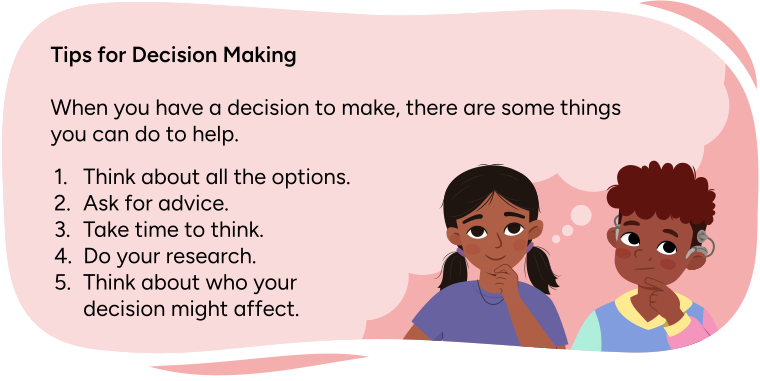
Tips for decision making
When you have a decision to make, there are some things
you can do to help.
1.Think about all the options.
2.Ask for advice.
3.Take time to think.
4.Do your research.
5.Think about who your decision might affect.
Learning to ask questions is an important part of developing your critical thinking skills.
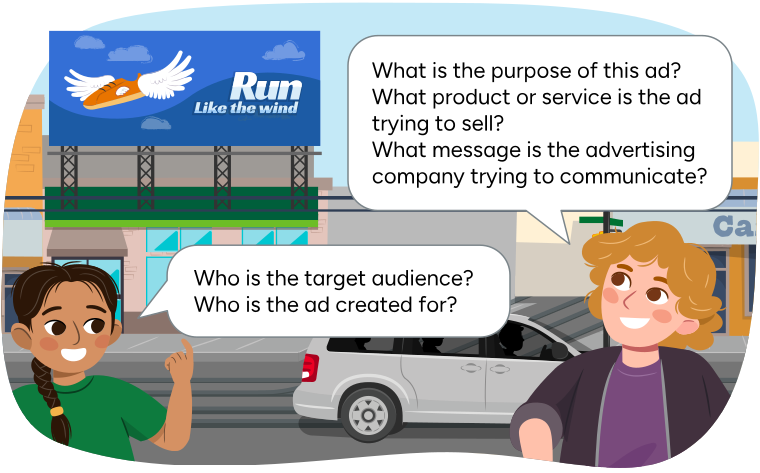
Ryan asks, 'What is the purpose of this ad? What product or service is
the ad trying to sell? What message is the advertising company truing to
communicate?'
Remy asks, 'Who is the target audience? Who is the ad
created for?'

Social Emotional Learning
Take a break!

Take a break before continuing onto the next part!
Purpose and target audience
All advertisements are created for a specific audience and purpose. Some may be created for children, while others may be created for adults. Some may be created specifically for athletes, while others may be created for people who enjoy cooking. The intended audience(s) that the company is aiming their ad towards is what we call the target audience.
Think about the different forms of ads that you may have come across and who the target audience might be for that ad. What are some of the clues that might have helped you to identify the target audience?
Explore the Advertisement Techniques poster below to learn about some techniques (ways) that advertising companies use to target an audience for their product or service.
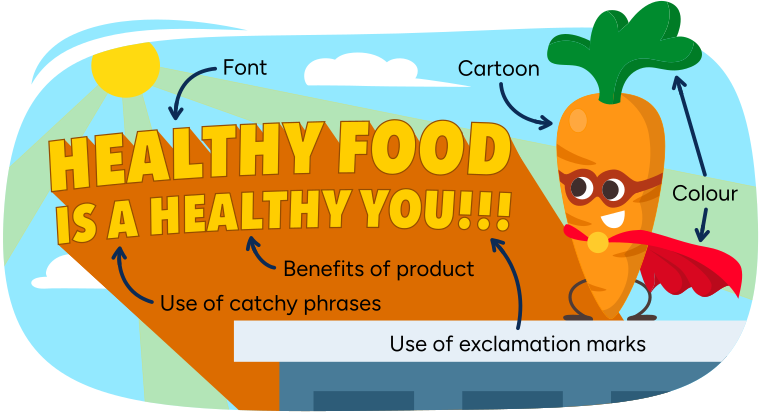
An advertisement with a large cartoon carrot dressed as a superhero. It is
wearing a cape and goggles. It is standing on top of a building. There is a
large headline that says, 'Healthy food is a healthy you!!!'This section has a
large orange background to help the font stand out.
There are 6 advertising
techniques on the poster, with arrows pointing to each one. The techniques
are:
1. Font, with an arrow pointing to the large and easy to read headline
2. Cartoon, with an arrow pointing to the superhero carrot.
3. Colour, with an arrow
pointing to the bright green part of the carrot's head, and the red cape it is
wearing.
4. Benefits of product, pointing to the word 'healthy.'
5. Use of catchy
phrases, with an arrowing highlighting the phrase, 'a healthy you!!!'
6. Use of
exclamation marks, with an arrow pointing to the three exclamation marks at the
end of the headline.
Now let’s explore the advertisements below to learn more about their purpose and target audience.

An advertisement for a cupcake brand. Half of the ad is a large, frosted cupcake
with a cherry on top. It is surrounded by radiating lines of pink to help it
stand out. The word 'yum' is repeated across the rest of the background.
The second half of the advertisement is a fancy sign. It is titled 'Cupcakes' in
a swirly font. The following text reads, 'This package of cupcakes comes
individually wrapped. Made from all-natural ingredients with no artificial
flavours or colours. Made from real cream cheese.'
Select the correct answer, then press Check Answer to see how you did.
Select the correct answer, then press Check Answer to see how you did.
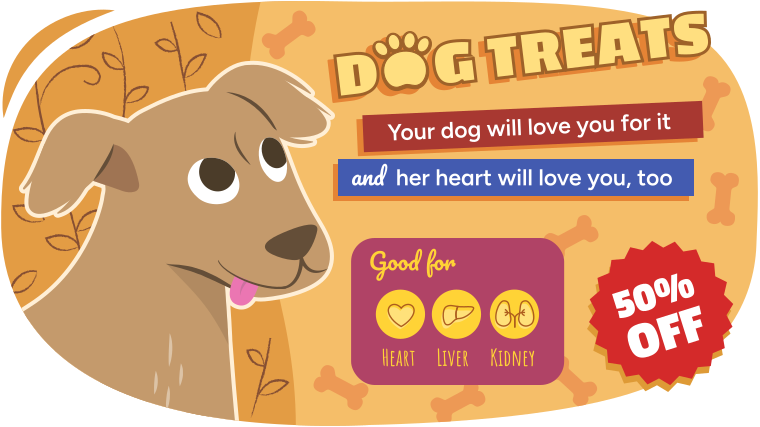
An advertisement for dog treats. About 1/3 of the ad is a picture of a dog, and
2/3 of the ad is text. There is a happy looking dog with their tongue stuck out,
in front of a natural leafy background. The dog is looking at the phrase, 'Dog
treats.'
The heading of the add says, 'Dog treats' in a large, uppercase font.
The 'o' in 'dog' has been replaced by a dog's pawprint.
The next text states,
'Your dog will love you for it, and her heart will love you, too.' The font is
outlined with two different coloured boxes.
The next piece of font is in a
separate box, and states, 'Good for heart, liver, kidney.' There are three icons
showing a heart, a liver, and a kidney.
The final text element is a red circle that says, '50% OFF.'
Select the correct answer, then press Check Answer to see how you did.
Select the correct answer, then press Check Answer to see how you did.
Cursive Headers
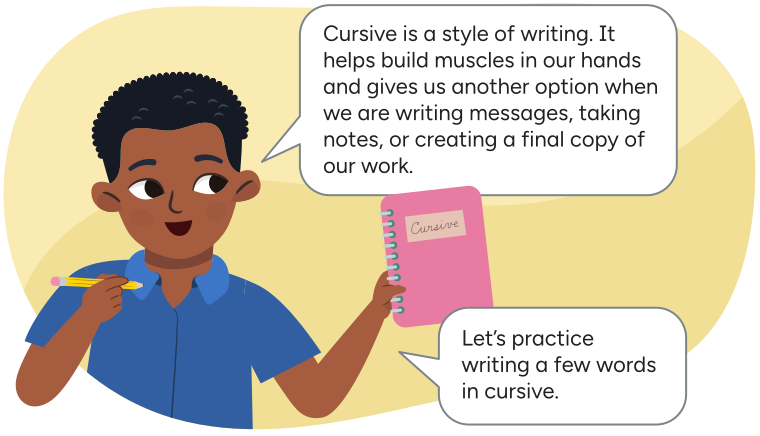
Arthur says, 'Cursive is a style of writing. It helps build muscles in
our hands and gives us another option when we are writing messages, taking
notes, or creating a final copy of our work.
Let's practice writing a few words in cursive.'
Let’s practice writing a few words in cursive.
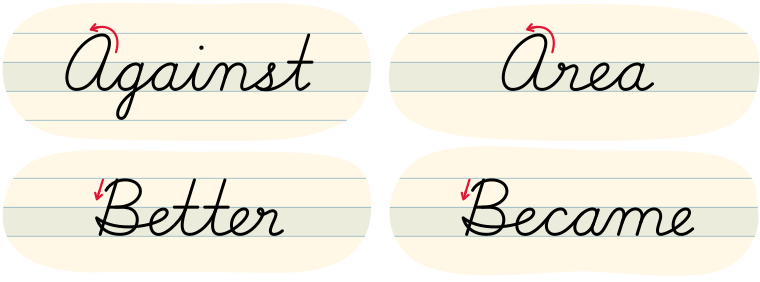
Four words written in cursive. The four words are: Against, Area, Better,
Begin.
Each word begins with a capital letter. A red arrow traces each capital
letter at the beginning of each word.
Tips for cursive letters
- When we write in lowercase, we always begin at the bottom
- When we write in uppercase we can start from the top or the bottom
- Try to keep the pencil on the page until you are done the word
- Create a finger space before you continue to the next word
- Try to press gently as you write so that your hand can move easily across the page
- Take your time to make sure that you are writing clearly and evenly
Comparing advertisements
In the next activity, you are going to use a graphic organizer called a Venn diagram to help you compare the two ads you have just explored.
What is a Venn Diagram?
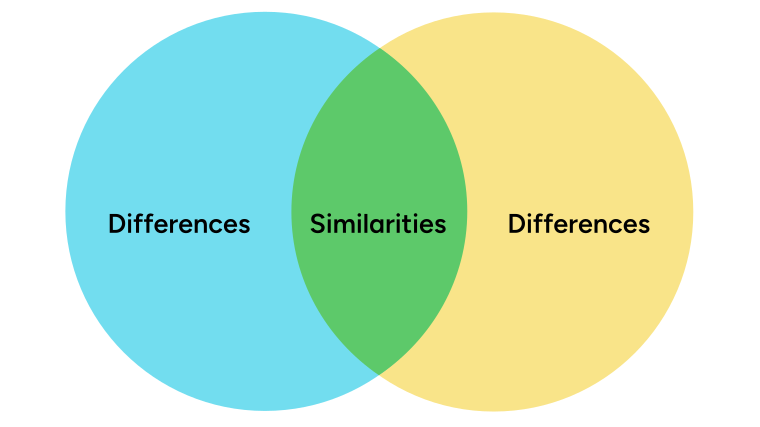
A Venn diagram with two overlapping circles. Each circle is labelled 'Differences.' The area that the two circles overlap is labelled 'Similarities.'
A Venn diagram is one way to show how two things (such as texts or ideas) are similar and different.
Press the Explore button to learn more about Venn Diagrams.
A Venn diagram can be a useful tool for many reasons like:
Critical thinking: Critical thinking encourages you to think deeply about how the two texts are connected to each other.
Simplifying and organizing information: Venn diagrams break down information, making it easy to remember.
Problem solving and informed decisions: Venn diagrams show how two texts relate to each other, and how one might be better than another.
Check out the video below to learn more about how you can use Venn diagrams.
Review the Cupcake and Dog Treat ads and how the information is organized and compared in the Venn Diagram below.
Press the Hint button to learn more.
You can refer to the Advertisement Techniques poster to help you identify some of similarities and differences.
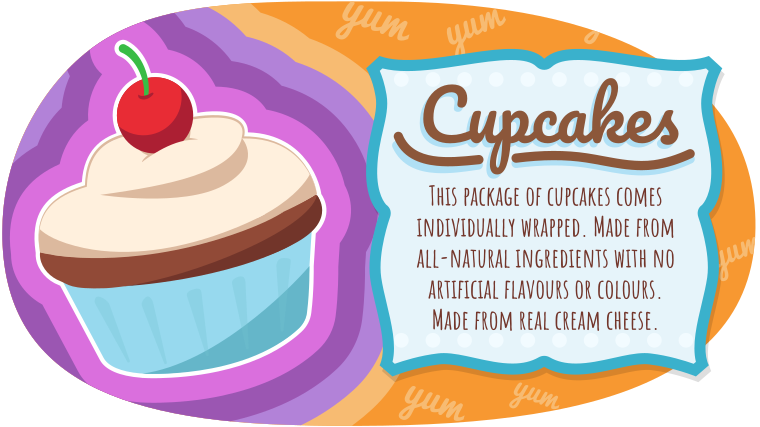
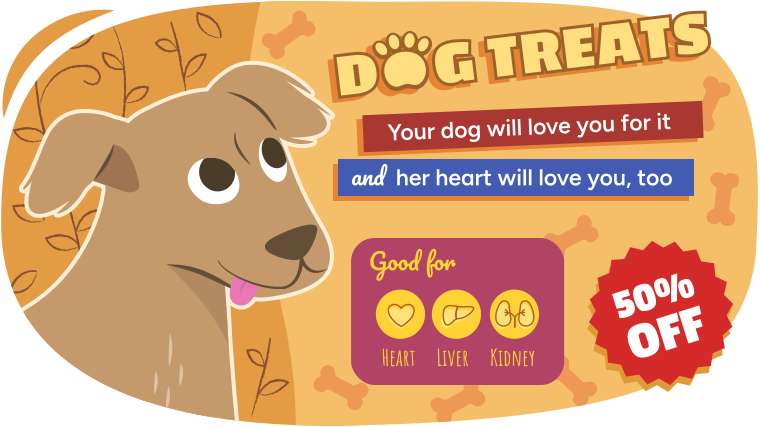
Image 1:
An advertisement for a cupcake brand with a large, frosted cupcake with a cherry on top. The ad’s text reads, ‘Cupcakes. This package of cupcakes comes individually wrapped. Made from all-natural ingredients with no artificial flavours or colours. Made from real cream cheese.’
Image 2:
An advertisement for dog treats. A dog is looking at the text, ‘Dog treats. Your dog will love you for it, and her heart will love you, too. Good for heart, liver, kidney. 50% OFF.’
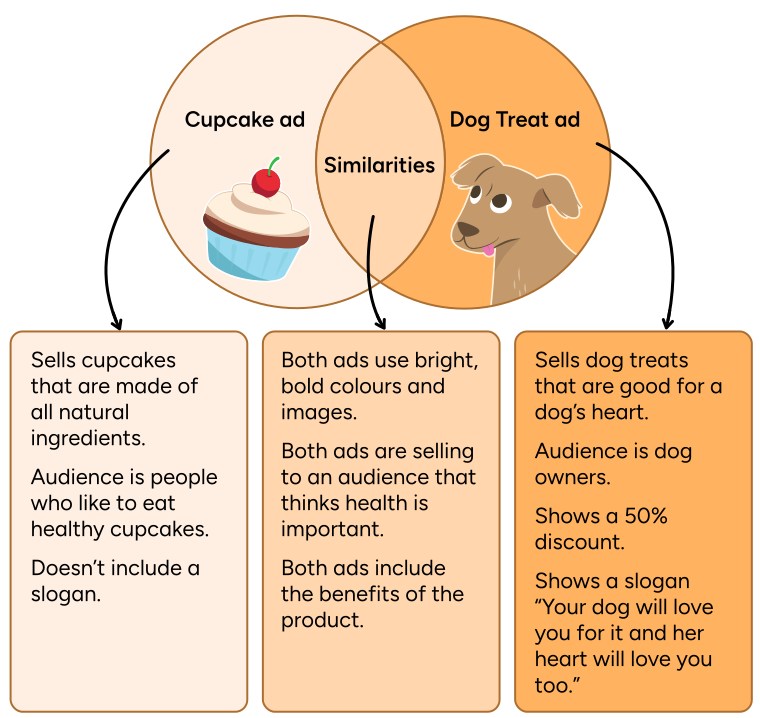
A Venn diagram with two overlapping circles. The first circle is titled 'Cupcake
ad.' The second circle is titled, 'Dog treat ad.' The overlapping area between
both circles is labelled, 'Similarities.'
Each of the three areas in the Venn
diagram is connected to a text column.
The cupcake text column summarizes the
cupcake ad. It says, 'Sells cupcakes that are made of all natural ingredients.
Audience is people who like to eat healthy cupcakes. Doesn't include a
slogan.'
The dog treat text column says, 'Sells dog treats that are good for a
dog's heart. Audience is dog owners. Shows a 50% discount. Shows a slogan 'Your
dog will love you for it and her heart will love you too.''
The middle text
column is titled, 'Similarities.' It lists the following similarities: 'Both ads
use bright, bold colors and images. Both ads are selling to an audience that
thinks health is important. Both ads include the benefits of the product.'
Which ad do you think is more effective? Why do you think that?
Record your thinking in a method of your choice.

Using Venn diagrams to compare ads
Explore the advertisements below. As you enjoy the videos, think about what makes these ads similar and what makes them different.
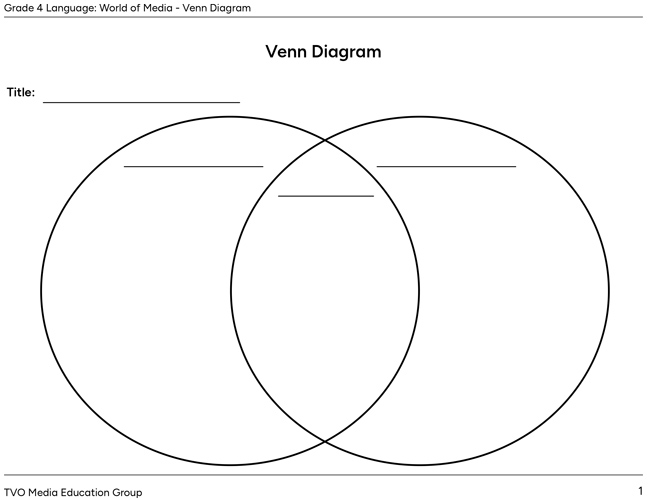
Using what you have learned, complete the fillable and printable Venn Diagram in your notebook or use the following document. If you would like, you can use speech-to-text or audio recording tools to record your thoughts to compare the two advertisement videos above.

Pause and Reflect
Pause and reflect
Reflect on the following questions:
- What do you think is the purpose of both ads?
- Who do you think is the intended audience for both ads?
- Why do you think it’s important to critically think and ask questions about ads that we might come across in everyday life?
Record your answers in a method of your choice.
Reflection
How do you feel about what you have learned in this activity? Which of the next four sentences best matches how you are feeling about your learning? Press the button that is beside this sentence.

I feel...
Now, record your ideas about your feelings using a voice recorder, speech-to-text, or writing tool.