Getting excited about stories!
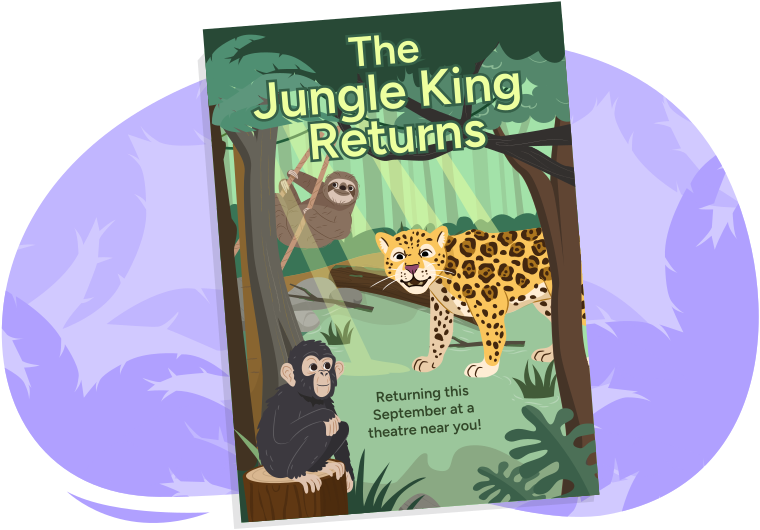
A movie poster with a large movie title, an image, and a tagline of text.The movie title is, 'The Jungle King Returns.' The title is in large, bold font that is easy to read.The tagline text says, 'Returning this September at a theatre near you!' It is a smaller font, and in a darker, less noticeable colour.The image is a jungle scene with large trees and beams of light. There is a chimpanzee at the front bottom left of the poster. The most noticeable animal is a large jaguar in the middle of the poster. There are beams of light that help point the audience's attention to the jaguar. Finally, there is a sloth in the background of the poster.
Have you ever watched a movie trailer that made you excited to see a movie? A movie trailer is a type of advertisement that makes the audience excited to watch the movie.

Did You Know?
Did you know?
Did you know that just like movies, books can also have trailers? A book trailer is a type of advertisement for a book that catches people’s attention and makes them interested in the book.
Press the Definition button to learn more about advertisements.
An advertisement, also known as an ad, is a message that tries to make people interested in buying something or using a service. Ads can be found in places like the internet or on signs. They often use pictures, words, and sounds to catch people's attention and show how something can be fun, useful, or important.
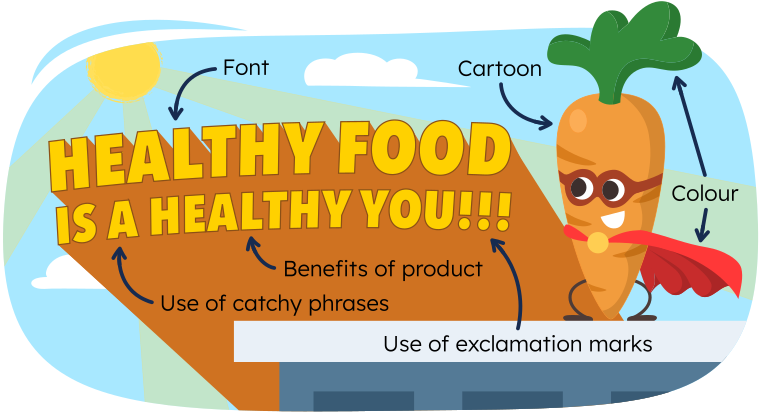
An advertisement with a large cartoon carrot dressed as a superhero. It is wearing a cape and goggles. It is standing on top of a building. There is a large headline that says, 'Healthy food is a healthy you!!!'This section has a large orange background to help the font stand out.There are 6 advertising techniques on the poster, with arrows pointing to each one. The techniques are:1. Font, with an arrow pointing to the large and easy to read headline2. Cartoon, with an arrow pointing to the superhero carrot.3. Colour, with an arrow pointing to the bright green part of the carrot's head, and the red cape it is wearing.4. Benefits of product, pointing to the word 'healthy.'5. Use of catchy phrases, with an arrowing highlighting the phrase, 'a healthy you!!!'6. Use of exclamation marks, with an arrow pointing to the three exclamation marks at the end of the headline.
Book trailers
Here are two examples of book trailers that were created to catch the attention of their audience. As you enjoy the trailers, look for some of the techniques that were used to make people want to read these books.
Check out the following video from the TVOkids show Ainara’s Bookshelf, where Ainara introduces us to “The Witch Boy,” by Molly Knox Ostertag.
Check out the following video where the author, Victoria Jamieson, introduces her book “Roller Girl.”
Learning check
What are the titles of these two books?
Press the Possible Answer button to learn more.
“The Witch Boy,” by Molly Knox Ostertag
“Roller Girl,” by Victoria Jamieson
Who do you think will be interested in these books?
Press the Possible Answer button to learn more.
Elementary school-age children.
What are some elements of a book trailer?
A book trailer is an advertisement for a book that is meant to catch the attention of its audience. It is a short video that might include:
- music and sounds
- a speaker or narrator (could be the author, a famous person, or a reader)
- scenes from the book
- summary of the book
- text
- graphics (images on the screen to catch your attention)
- animation
What techniques did you notice in the book trailer for “The Witch Boy”?
Press the Possible Answer button to learn more.
In the book trailer for “The Witch Boy,” some of the techniques that were used to grab the viewer’s attention were:
- a famous person
- a recommendation from a reader
- summary of the book
What techniques did you notice in the book trailer for “Roller Girl”?
Press the Possible Answer button to learn more.
In the book trailer for “Roller Girl,” some of the techniques that were used to grab the viewer’s attention were:
- the author introduced herself and the book
- the author spoke about why she wrote the book
- scenes from the book
- music
- video of the author roller skating
- graphics (stars and circles) on the screen
Which type of book trailer did you like better and why?
Record your answers in a method of your choice.
Let’s review our skills

What are suffixes?
Suffixes are a letter or group of letters added to the end of a word to create a different word.
The suffix endings -er and -or, can be used to turn verbs into nouns.
Press the Definition button to learn more.
Verb: An action word.
Noun: Person, place or thing.
For example:
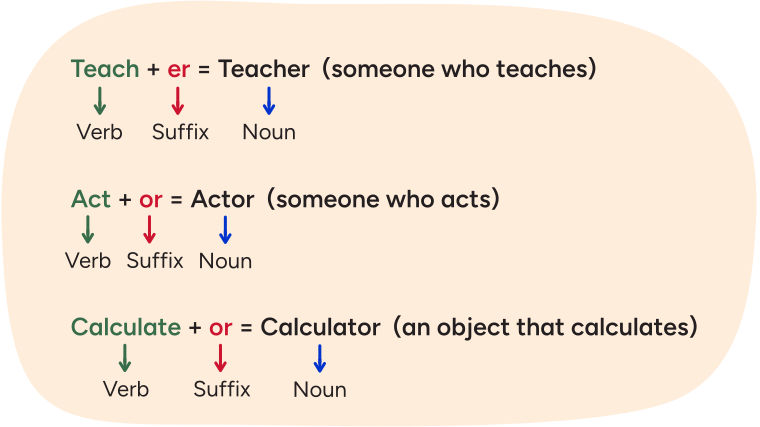
Three examples of verbs with suffixes being added to the end of the word. The words look like an addition equation.Teach + 'er' = teacher. 'Teach' is the verb. 'Er' is the suffix. The two words combine together to make 'teacher.' A teacher is someone who teaches.Act + 'or' = actor. 'Act' is the verb. 'Or' is the suffix. The two words combine together to make 'actor.' An actor is someone who acts.Calculate + 'or' = calculator. 'Calculate' is the verb. 'Or' is the suffix. The two words combine together to make 'calculator.' A calculator is an object that calculates.
Let’s practice changing more verbs into nouns with -er and -or suffixes.
Press the Hint button to learn more.
If the verb ends in -ate, -it, or -ct use the suffix -or.
Example: Create changes to creator.
Place the cards into categories that best match. Use the arrow buttons to navigate between cards.
Why do you think the word trailer is used for these types of advertisements?
Let’s take a closer look at the word trailer.

An example of a verb with a suffix being added to the end of the word. The word look like an addition equation.Trail + 'er' = trailer. 'Trail' is the verb. 'Er' is the suffix. The two words combine together to make 'trailer.'

Pause and Reflect
Pause and reflect
What does the verb trail make you think of?
Press the Show Answer button to learn more.
Trail- To follow behind something or someone, usually slowly and along the ground.
The word trailer is talking about something that trails behind.
At first, trailers were shown after the movie ended. They trailed behind the movie, and so they were called trailers. The problem was that the audience would stop the movie as soon as it ended and didn’t end up watching the trailer. So, trailers were moved to the beginning, before the start of the movie.

Student Wellness
Student wellness
Time for a body break! If possible, stretch your body and move around your space.
Story elements
When creating a book trailer, it’s important to review story elements. Story elements are parts that make up a story. This will make it easier to highlight key events of books and stories that can be included in a book trailer.
Let’s review the elements of a story.
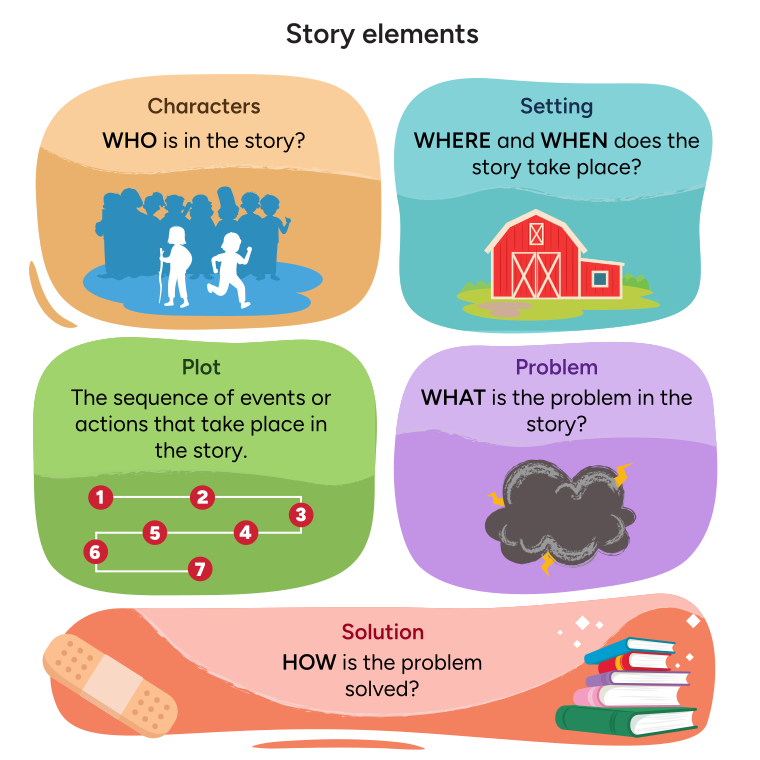
An infographic titled, 'Story elements.' It has five sections: characters, setting, plot, problem, and solution.
Characters: Who is in the story?
Setting: Where and when does the story take place?
Plot: The sequence of events or actions that take place in the story.
Problem: What is the problem in the story?
Solution: How is the problem solved?
Let’s review!
Answer the following questions about Goldilocks and the Three Bears to review the elements of a story.
Goldilocks and the Three BearsGoldilocks and the Three Bears
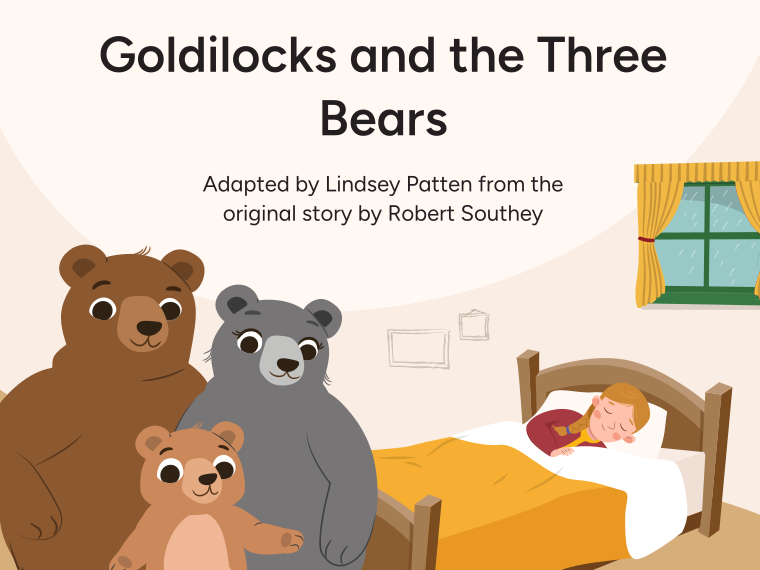
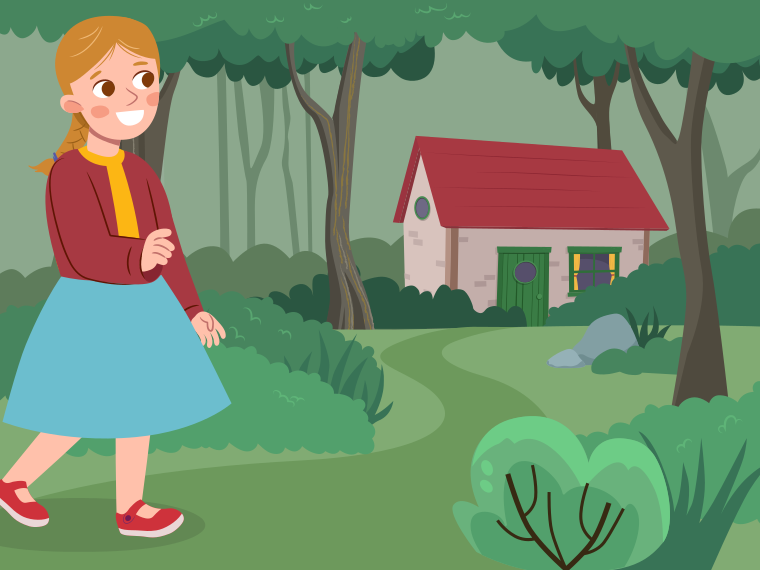
Once upon a time there was a girl named Goldilocks. She went for a walk in the forest.
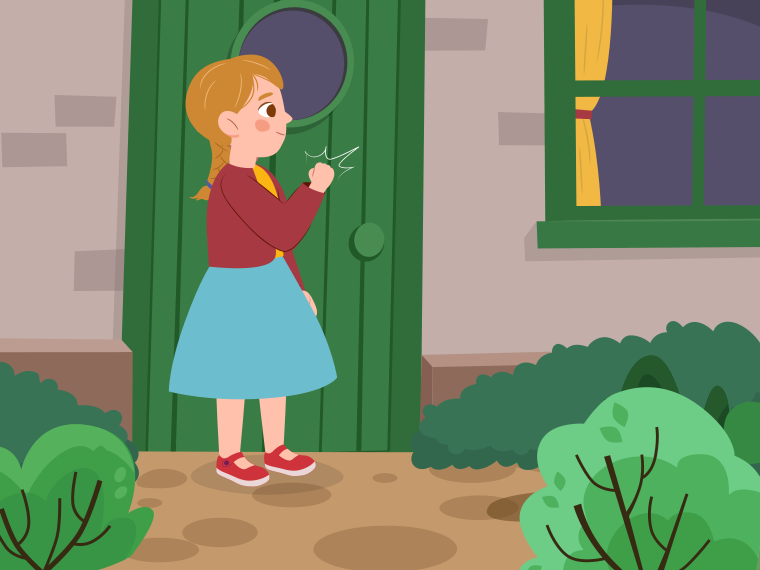
She saw a small house in the middle of a forest. She knocked on the door, but no one answered.
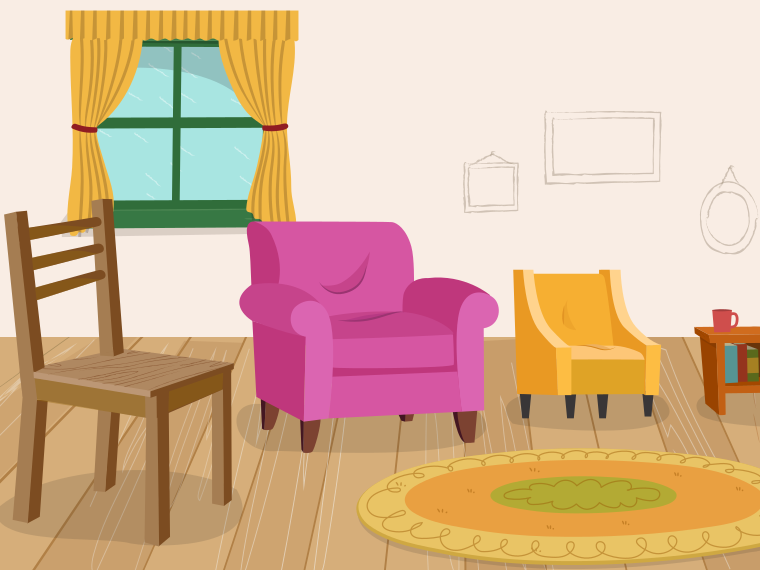
It was starting to rain so she went inside the house. She saw three comfy chairs. The first chair was too hard. The second chair was too soft. The third chair was just right.
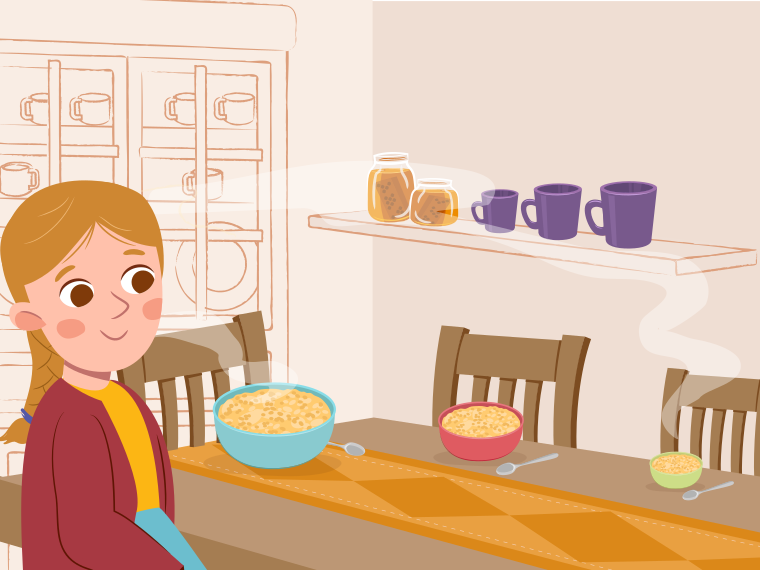
Goldilocks saw the kitchen table had three bowls of porridge. One was large, one was medium, and one was small.
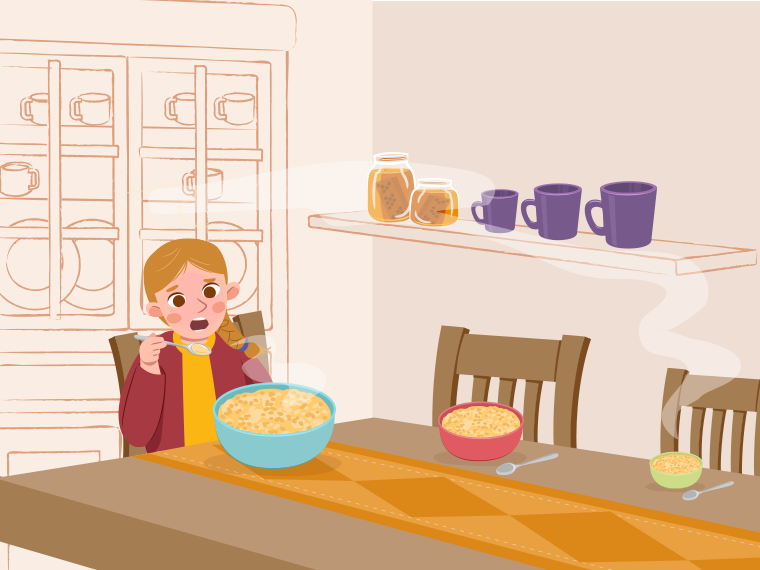
Goldilocks was so hungry. She went over to the table and grabbed a spoon. First, she tried the largest bowl. It was too hot!
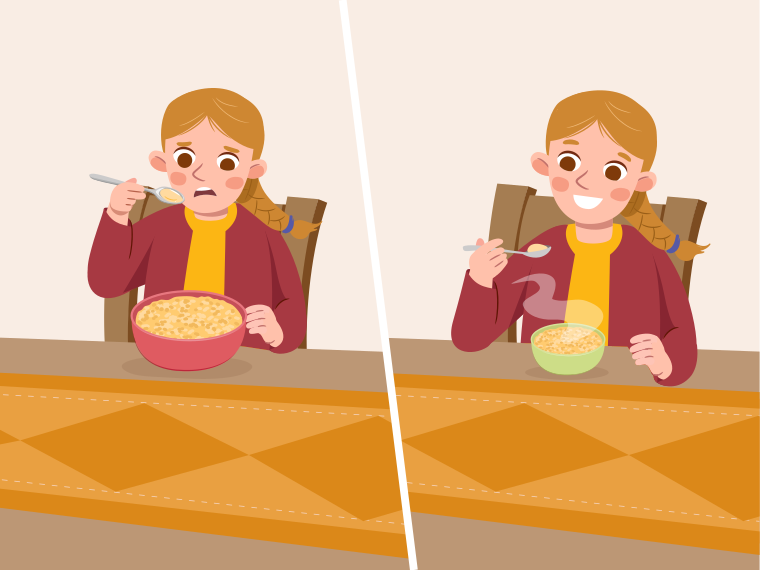
Then she tried the medium bowl. It was too cold! Then she tried the smallest bowl. It was just right. Goldilocks ate it all up.
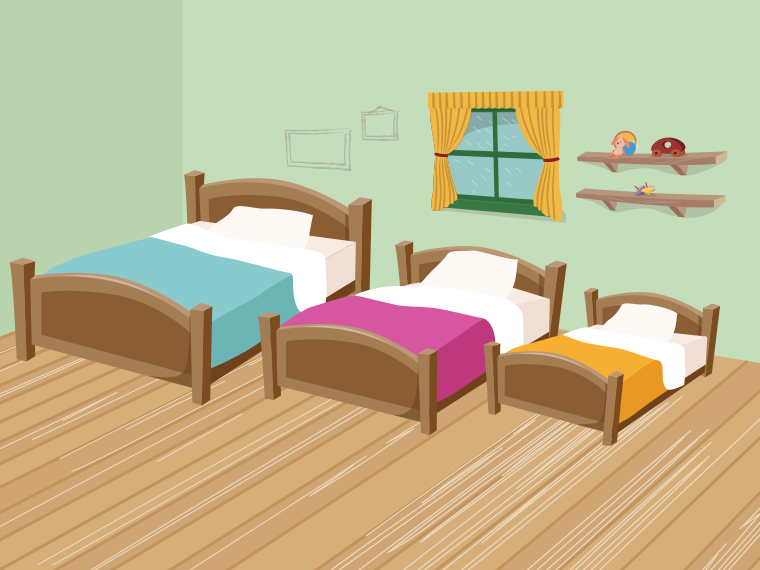
Goldilocks was tired. She went into the next room where there were three beds. One was large, one was medium, and one was small.
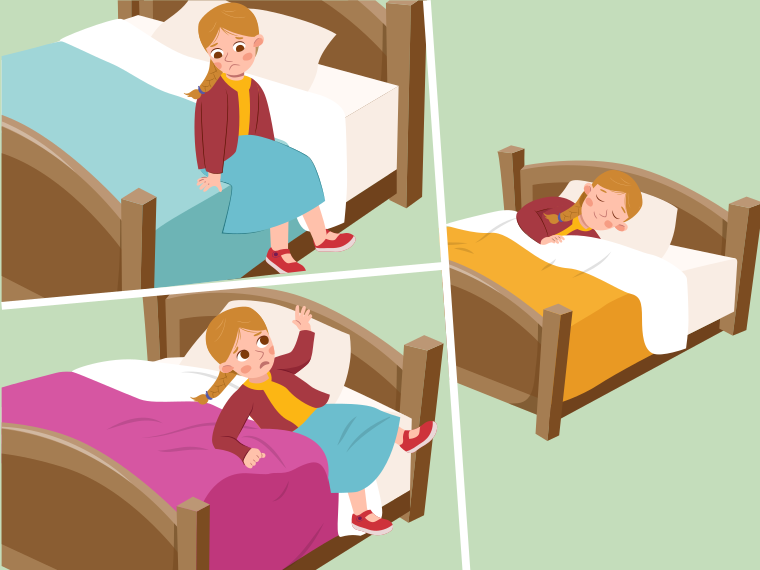
She got into the large bed but it was too hard. Then she got into the medium bed but it was too soft. The small bed was just right. She fell asleep.
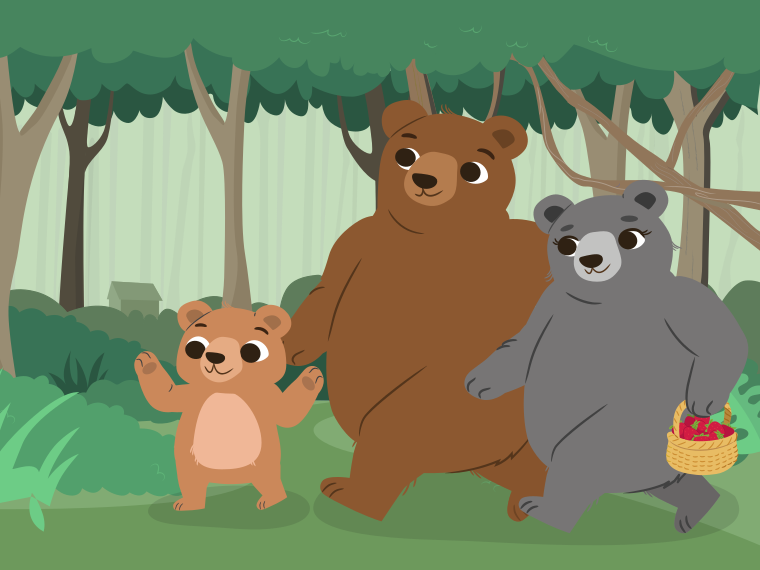
The house belonged to three bears: Mama Bear, Papa Bear, and Baby Bear. They had just come home from berry picking.
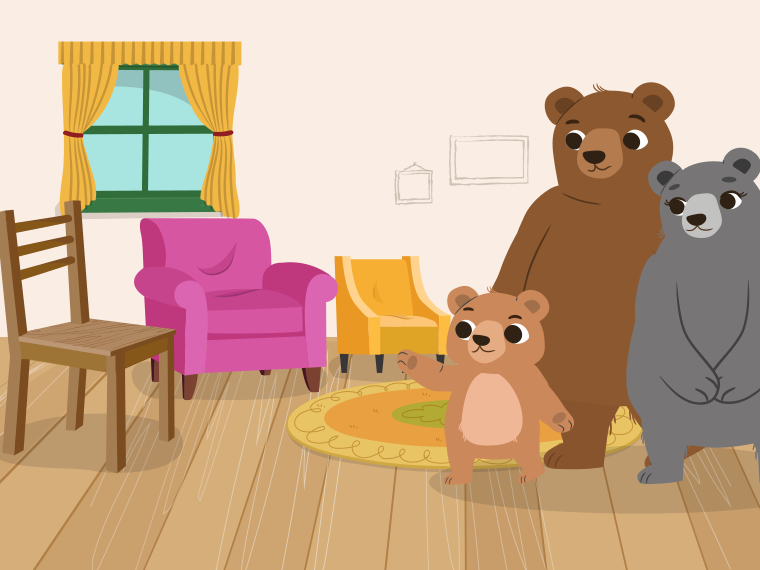
“Who’s been sitting in my chair?” said Papa Bear. “Someone sat in my chair too,” said Mama Bear. “Someone sat in my chair too,” said Baby Bear.
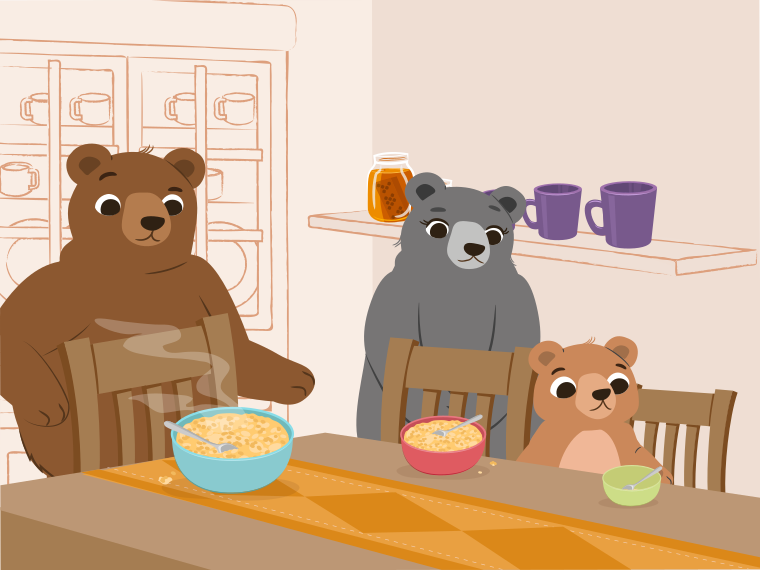
“Who’s been eating my porridge?” said Papa Bear. “Someone ate my porridge too,” said Mama Bear. “Someone ate ALL my porridge,” said Baby Bear sadly.
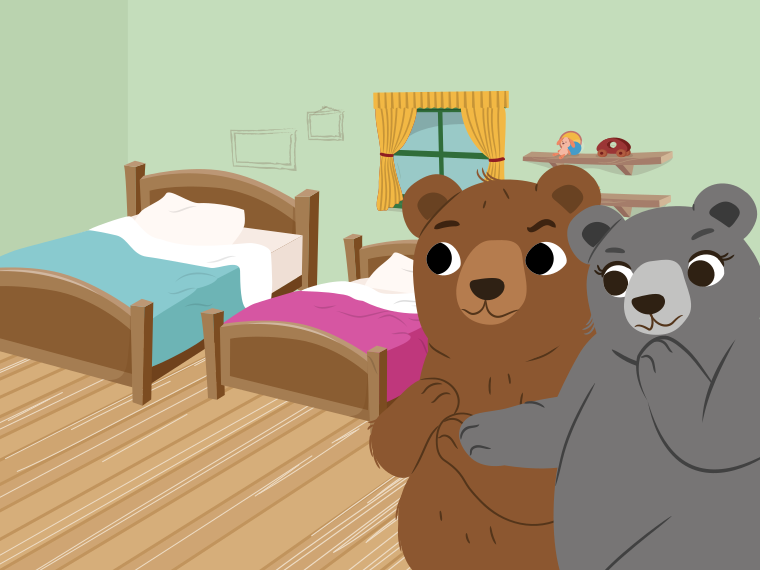
The Bears went into their bedroom. “Who’s been sleeping in my bed?” said Papa Bear. “Someone slept in my bed too,” said Mama Bear.
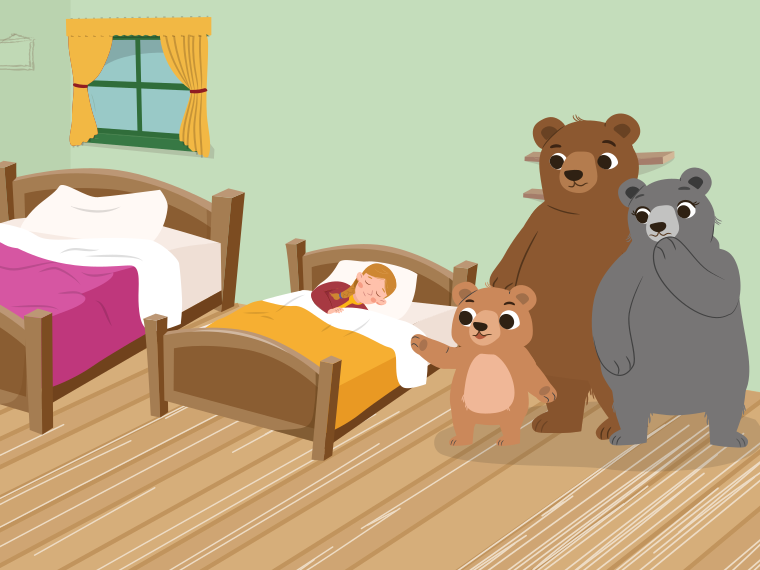
“Someone slept in my bed too!” said Baby Bear. “And there she is!”
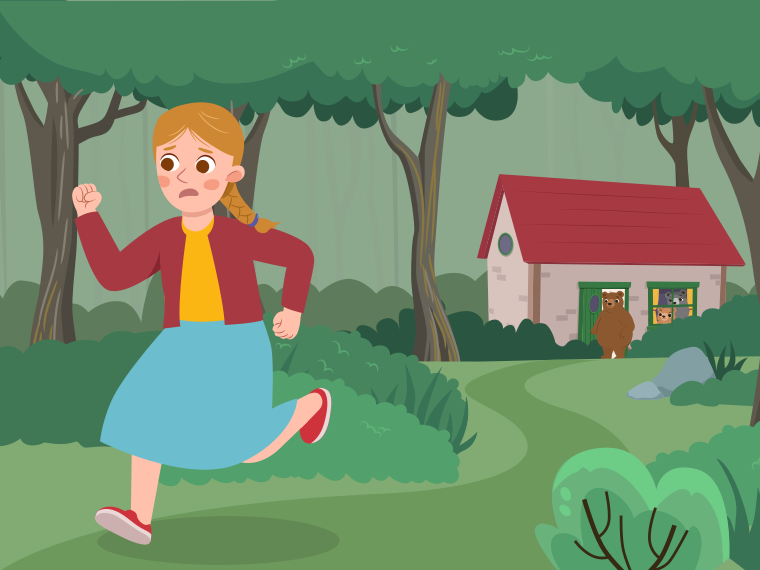
All of the noise woke up Goldilocks and she was scared. She immediately ran out of the house and ran home. Goldilocks never entered anyone’s house without permission ever again. The end.
Select the correct answer, then press the Check Answer button to see how you did.
Creating a book trailer
Now it’s your turn to create a book trailer about one of your favourite books!
To plan your book trailer, you will need to think about the story elements like:
- the title
- the author
- the characters
- the setting
- the plot
Remember – you want to encourage the audience to read the book – but you don’t want to spoil the story! Don’t tell the ending of the book in your book trailer!
You’ll also need to explain why you recommend this book!
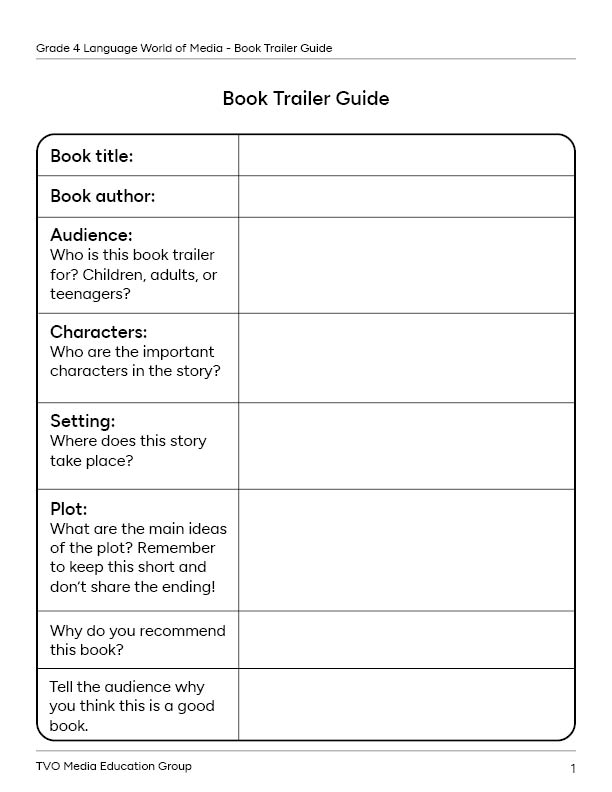
To help organize the information about your book, consider the following information from the Book Trailer Guide:
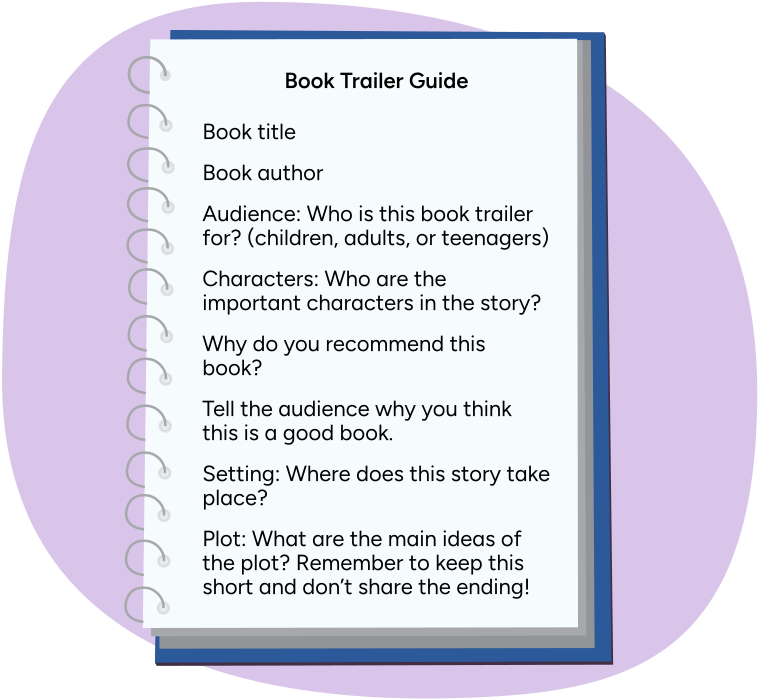
An example worksheet a learner can fill out, with the following text:
Book Trailer Guide:
Book title, Book author, Audience: Who is the book trailer for? (children, adults, or teenagers), Characters: Who are the important characters in the story?, Setting: Where does the story take place?, Plot: What are the main ideas of the plot?, Remember to keep this short and don’t share the ending!, Why do you recommend this book?, Tell the audience why you think this is a good book.
Complete the fillable and printable Book Trailer Guide in your notebook or using the following document. If you would like, you can use speech-to-text or audio recording tools to record your thoughts.
Make sure you know exactly what information you will include in your book trailer.
Now that you have reviewed the Book Trailer Guide, you can think about how you will create this trailer.
Consider the following:
- Will your trailer include yourself talking about the book?
- Will your trailer include pictures of the stories?
- Will your trailer include music?
- Will you use an app, digital tool, or another method of your choice?
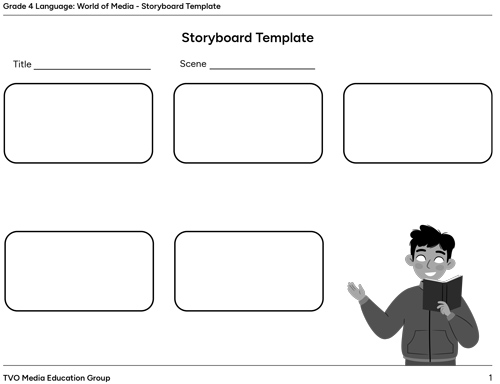
Creating a storyboard can help you organize your book trailer by planning what you’re going to say as well as how and when you’ll present it.
In each box on the storyboard, you’ll explain the actions you’ll be doing. You can draw pictures in these boxes or use words to describe the actions.
In the space underneath, you’ll write about what you’ll be saying at each moment in your book trailer. That way you know you’ve included everything.
Click the Activity button to see the Storyboard example.
Complete the fillable and printable Storyboard Template in your notebook or using the following document. If you would like, you can use speech-to-text or audio recording tools to record your thoughts. Think about what you want each scene of your book trailer to say to the audience.
Before you begin creating your book trailer, it is important to proofread your work and get some feedback on your plan and storyboard, checking for spelling, grammar, and punctuation errors.
Editing and proofreading
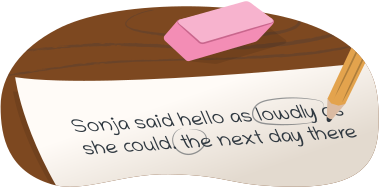
Proofreading is the skill of finding and correcting mistakes. Review your work for punctuation, spelling, and grammar.
Non-verbal communication strategies
Before you get started on your book trailer, review the following important non-verbal communication strategies. Using some of these strategies in your presentations can help your audience stay interested, pay attention, and understand what you want to share. Press the name of each non-verbal communication strategy to learn more.
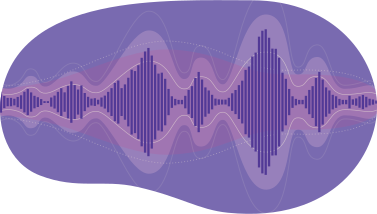
Volume is how loudly or quietly you communicate. We can change our volume based on how big our audience is or what we want to communicate.
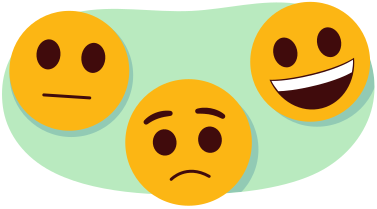
When we present, we can change the expressions on our face to tell the audience how we feel about the information that we are sharing.
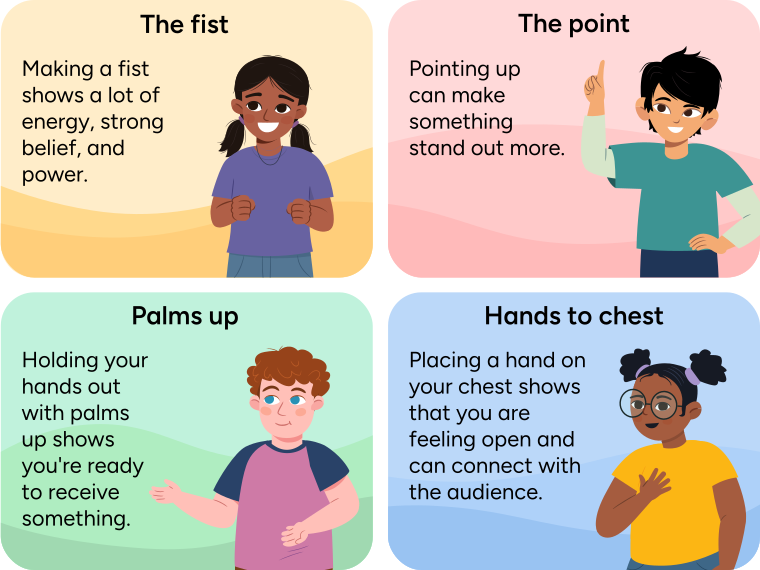
We can use body movement or hand gestures to help us share what we mean.
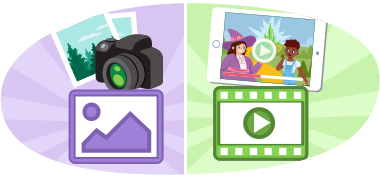
We can use things like pictures, books, diagrams, or videos. These can keep the presentation interesting and help the audience understand what we are talking about.
Revisit “The Witch Boy” book trailer from Ainara’s Bookshelf in the Minds On section. What non-verbal communication strategies do you notice Ainara using in this video?
Press each non-verbal communication strategy for examples that were used in the video.
Match the non-verbal communication strategy to the examples that were shown in the video.
Putting it all together
Now that you have all of your planning completed, you can create your own book trailer using a method of your choice. Be sure to ask an adult to help with any digital tools.
Your book trailer could look like:
- a presentation to learning partners or to your class (if possible)
- a recorded video of your presentation
- images of your book that you narrate on a video
- another option of your choice
Use the following checklist to make sure you are on-track:
My book trailer checklist:
I have...

Student Success
Think
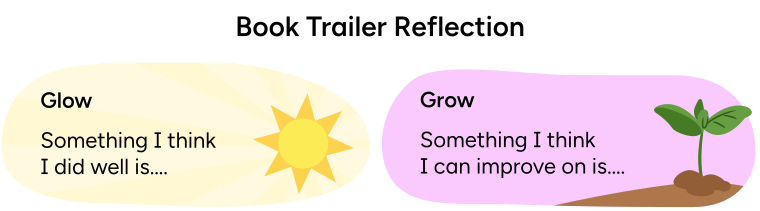
In a notebook of your choice, consider the areas where you were able to glow and grow while making your book trailer.
Reflection
How do you feel about what you have learned in this activity? Which of the next four sentences best matches how you are feeling about your learning? Press the button that is beside this sentence.

I feel...
Now, record your ideas about your feelings using a voice recorder, speech-to-text, or writing tool.