Learning goals
We are learning to…
- identify various stylistic elements in the text of advertisements (such as word patterns and sentence structure)
- demonstrate an understanding of the forms and techniques of advertisements and their impact on the audience
- create an advertisement and explain how the various text elements will help sell the product
Success criteria
I am able to…
- identify logos, slogans, alliteration, imperative sentences, and interjections in advertisements
- create an advertisement using common text strategies used in marketing
- explain how different text elements in an advertisement help sell a product
Ads everywhere!

Advertisements (or ads) are all around us: buses, television, stores, the internet, social media, and billboards. Ads try to persuade us to buy goods (such as food, technology, and clothing) and services (such as cleaning, restaurants, and car rentals).

Pause and Reflect
What ads have you seen?

Take a moment to think of advertisements you have seen in the last few days and where you saw them.
Preview: Key terms
Before we continue, let’s preview some terms that we will come across in this learning activity. Explore the following flashcards. Do you know any of these terms already? Do any of them remind you of other words?
Press the flip button to reveal the definition on the other side of the card. Use the arrow keys to navigate between cards.
Marketers carefully plan out the advertisements they create. They also spend time deciding where to place their ads so their target market will see them.
Marketers and advertisers consider a variety of techniques when they create an advertisement. They use words, colours, and images to attract the buyer's attention and encourage them to purchase a product or service.

In this learning activity, we will focus on the different texts that are used in advertising, and the strategies that advertisers use to grab your attention with words. You’ll start by watching a video!
Watch the video “Words That Sell!”

The power of words!
How do the words in advertisements attract the attention of the buyer? What are some tricks that marketers use when choosing the words for their packaging?
Record your ideas in a notebook or using another method of your choice. If possible, discuss your ideas with a partner.

Advertisements: What are the elements?
Examine the following advertisement. Can you identify some of the marketing elements it contains?

Once you have thought of some ideas, check out this interactive version of the ad:
Logos and slogans
Advertisements need to get across a lot of information in a very short space. The images and words are carefully chosen.
Marketers pay particular attention to the logo and slogan. Press the following tabs to learn more.

A logo is a simple image that represents the company. Sometimes it’s just an image, and sometimes it includes the name of the company. In the smoothie ad you examined, the logo includes the company name: Sunny Drinks.
A slogan (sometimes called a tagline) is a short phrase that describes and represents the company or the product. In the smoothie ad you examined, the slogan is “Source your strength!”
Examples
Examine the following logos and slogans. Why do you think these companies chose them? What might they want you to think or feel when you see them?
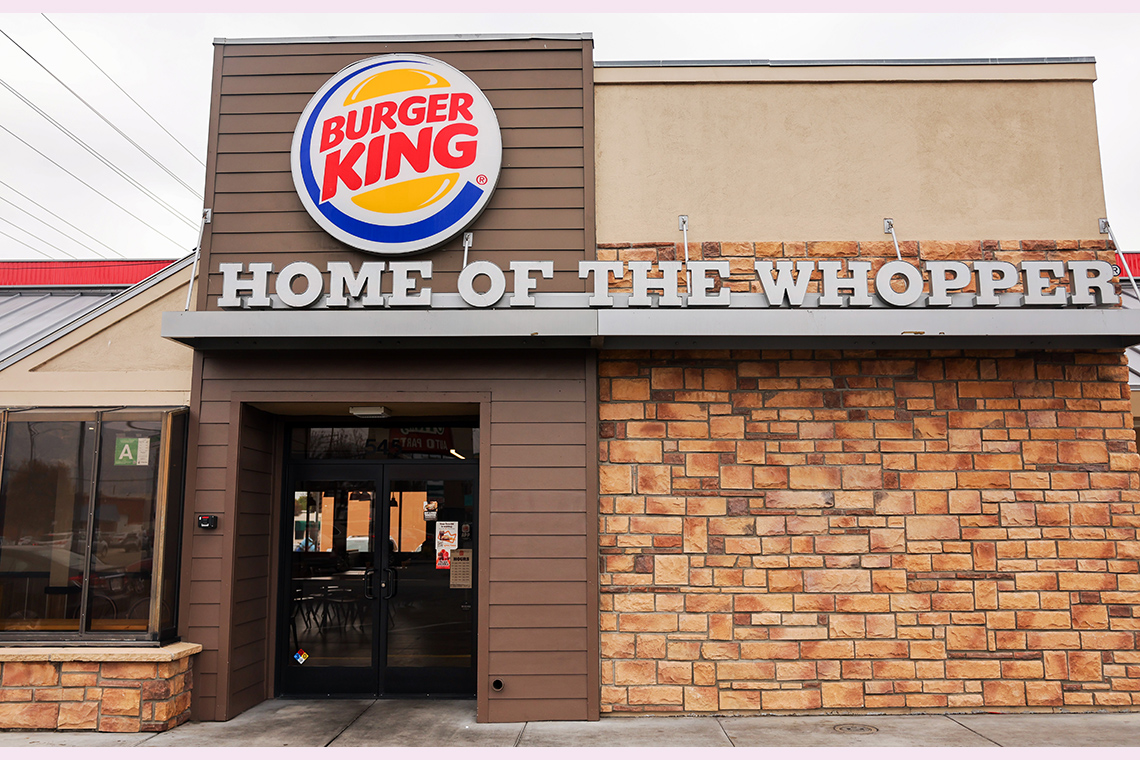

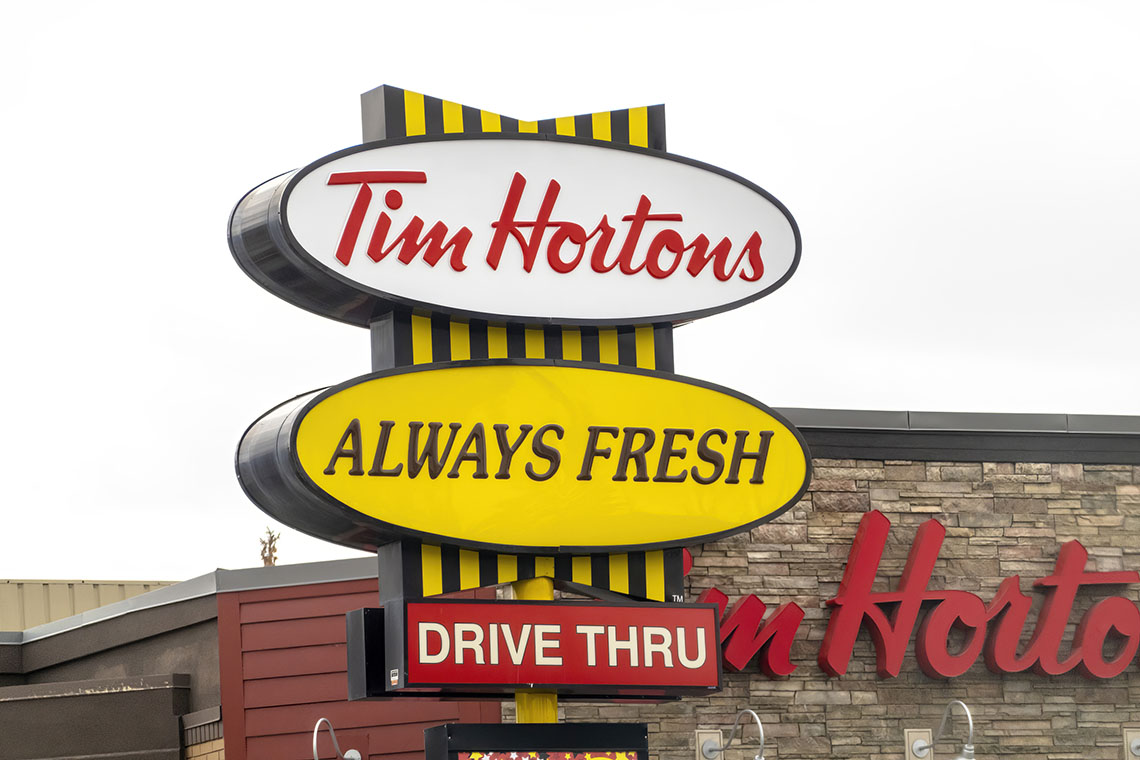
Can you think of any other logos and slogans?
Pause and Reflect
Is it effective?
What makes a logo effective? What about a slogan?
Write your ideas in a notebook, or record them using another method of your choice. If possible, discuss your ideas with a partner.
Once you have some ideas, press Logos and Slogans to see some possible answers.
| Logos | Slogans |
|---|---|
| Simple and recognizable | Short, catchy, easy to remember |
| Often include the name of the company or brand | Use language that connects to the company or brand |
| Use colour in a simple, effective way | Designed to work with the logo |
Advertisements: Text strategies
When marketers create advertisements, they must decide which words or text they will include. As you saw in the Minds On section, the text on an ad is called the copy. People only look at an ad for a few seconds, so the copy needs to be short and “catchy.”
In advertising, words are used in many ways. We will explore three common techniques:
- interjections
- imperative sentences
- alliteration
Interjections
Interjections are a part of speech. They are short words or phrases that show feelings or emotions. They are usually followed by an exclamation mark (!). The following are some examples:
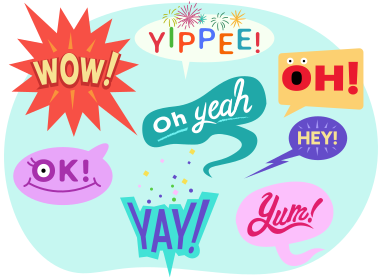
- Wow!
- Yippee!
- Oh!
- Ok!
- Oh yeah.
- Hey!
- Yay!
- Yum!
Your turn!
Can you find the interjection in the following advertisement?
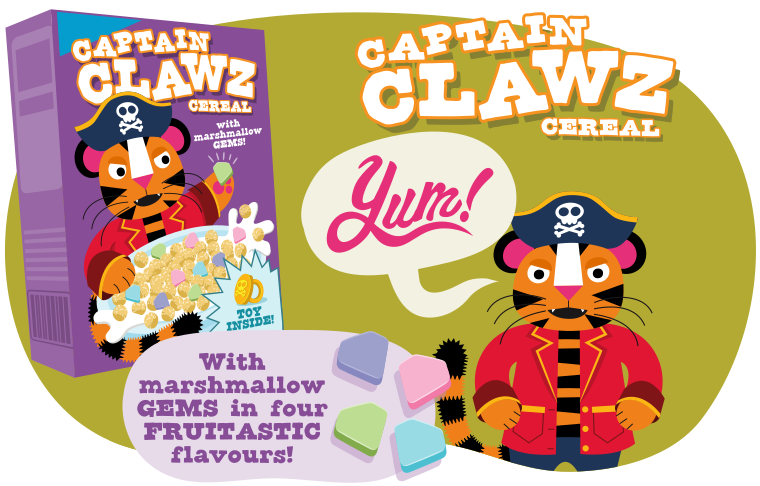
An ad for Captain Clawz cereal. The Captain Clawz mascot is saying, “Yum!” At the bottom left of the ad, the gem-shaped cereal is shown, and beside it reads, “with marshmallow GEMS in four FRUITASTIC flavours!”
Press Interjection to check your answer.
The interjection is “Yum!”
Imperative sentences
Note: An imperative sentence is often called just an “imperative.”
Can you tell the difference between a question and an imperative? Read the examples in the following multiple-choice questions. Select the correct answer, then press Check Answer to see how you did.
Imperative sentences are used to tell someone what to do. They can have a period or an exclamation mark at the end, depending on the tone of voice of the speaker:
- Walk the dog.
- Walk the dog!
The following are examples of imperatives that you might hear from a teacher:
- Take out your math books.
- Sit down!
- Write your name on the paper.
- Line up!
Imperatives in advertisements
Ads generally try to tell you what to do or buy, so they often contain imperatives. In advertisements, an imperative is known as a call to action.
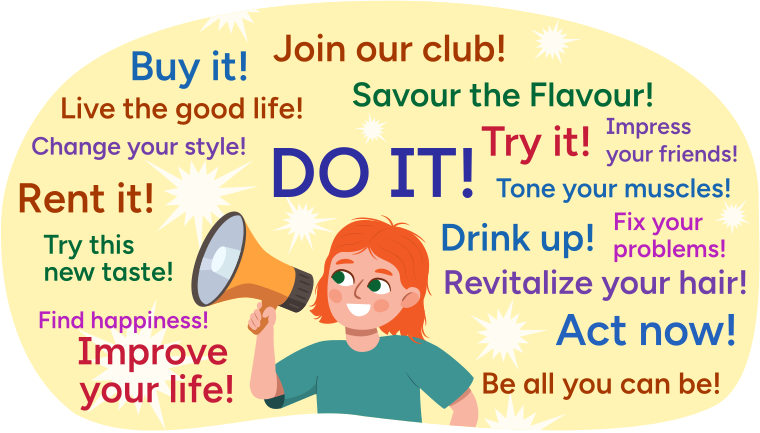
A word cloud containing the following calls to action, each of which is followed by an exclamation mark: Do it, Buy it, Rent it, Try it, Drink up, Act now, Join our club, Revitalize your hair, Live the good life, Be all you can be, Tone your muscles, Savour the flavour, Change your style, Fix your problems, Find happiness, Improve your life, Try this new taste, Impress your friends.
Your turn!
Examine the following advertisement. What are the imperative sentences or calls to action?
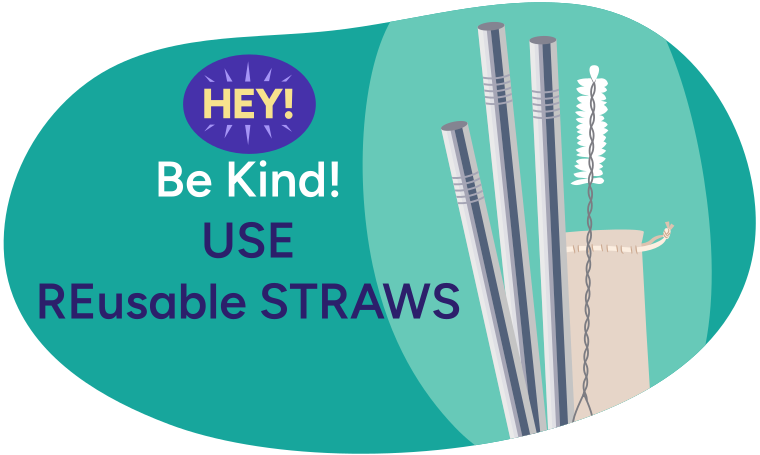
An ad showing three metal drinking straws and a thin brush for cleaning them. The copy reads as follows: "Hey! Be kind! Use reusable straws."
Once you have identified the imperative sentences, press Imperatives to check your answer.
There are two imperative sentences:
- Be kind!
- Use reusable straws
“Hey!” is an interjection.
Examine this second advertisement. What the imperative sentences or calls to action?

Once you have identified the imperative sentences, press Imperatives to check your answer.
There are three imperative sentences:
- Learn how to pack your lunch box and cook up a storm!
- Sign up now for cooking classes in your community.
- See details below.
“Wow!” is an interjection.

Try it
You be the marketer!
What call to action would you add to this advertisement?
An ad for Captain Clawz cereal. The Captain Clawz mascot is saying, “Yum!” At the bottom left of the ad, the gem-shaped cereal is shown, and beside it reads, “with marshmallow GEMS in four FRUITASTIC flavours!”
Record your ideas in a notebook or another method of your choice. If possible, discuss your ideas with a partner.
Alliteration
Alliteration is the repetition of the same sound at the beginning of two or more words or phrases. Check out the following example:
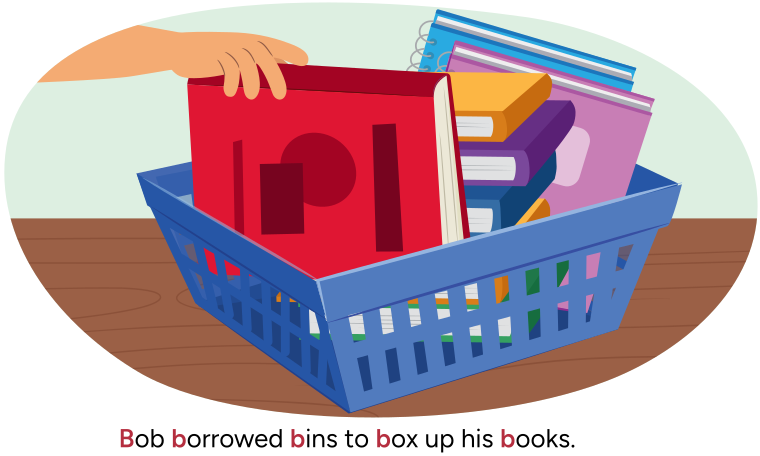

Listen to the alliteration!
Check out the following audio clip to hear this example of alliteration.
Alliteration sentence
Using alliteration allows the author to add emotions, rhythm, and mood to a text.
Do either of the following examples evoke a silly mood in you? Sad emotions? Is there a rhythm you like?
- Sloane slips and slides down the snowy slope.
- Rain rushes in rivers down the road.
Alliteration is often used in advertisements. Compare the following phrases. Which version is catchier and easier to remember?
| Alliteration | No alliteration |
|---|---|
| Try our tasty treats today! | Our treats are delicious! |
| Buy the best brand of bikes: Blue Breeze | Get the fastest bike: Speed Plus |
| Galactic Gorillas and Ghosts: a great game for your giggling group | Play this funny game: Monkeys and Zombies |
Make it memorable!

Alliteration makes a name, brand, or phrase stick in your mind. Do you recognize any of these examples?
- Krispy Kreme
- M&Ms
- Chupa Chups
- Dunkin’ Donuts
Can you think of any other products or brand names that use alliteration?
Text strategies: Sort it out!
Interjections, alliteration, and imperatives are all used in advertising. Can you identify examples of these strategies?
Place each card in the right category. Use the arrow buttons to navigate between cards.

Putting it all together
We have examined a number of elements and techniques that marketers use to convince buyers to purchase their products and services. You have studied interjections, alliteration, imperatives.
To refresh your memory, review the interactive image from the Minds On section:
Now it is time for you to apply your knowledge by designing your own advertisement. Follow these four steps.
Step 1: Plan the ad
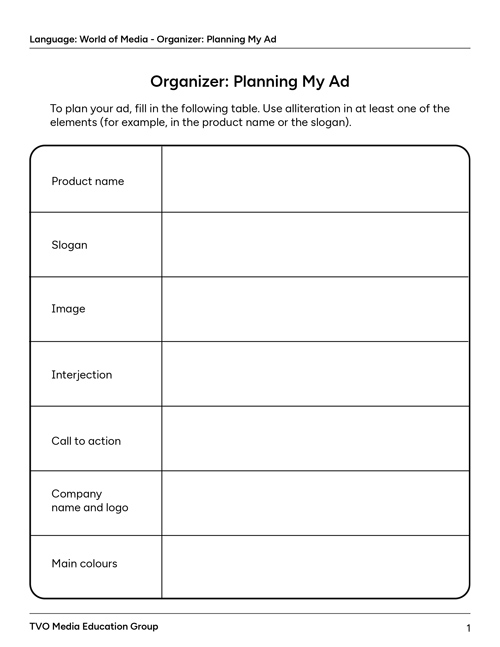
It’s a great idea to use a graphic organizer for planning. Check out the following organizer that was used to plan the smoothie ad:
| Product name | Scrumptious Summer Smoothies |
|---|---|
| Slogan | Source your strength! |
| Image | Smoothie with some fresh fruit |
| Interjection | Yum! |
| Call to action | Try one today! |
| Company name and logo | Sunny Drinks (+ sun logo) |
| Main colours | Pink and blue |
To plan your ad, complete the following organizer in your notebook, or use the fillable and printable Organizer: Planning My Ad document. If you would like, you can use speech-to-text or audio recording tools to record your thoughts.
Step 2: Create a draft of the ad
Once you have finished your plan, create a draft (rough copy) of the ad. You can draw the ad or use digital tools to create it.
Step 3: Finish the ad
It’s now time to revise and edit your advertisement. Press the following tabs to learn more.
Revising means reviewing what you wrote or created, and changing anything that you feel could be improved.
To revise your advertisement, follow these steps:
- Check that you have included all the elements of an advertisement from the planning graphic organizer.
- Make sure you have an example of alliteration (either the name of the product or the slogan).
- Check that you have used colour effectively.
Editing means finding and correcting errors in spelling, grammar, and punctuation.
To edit your advertisement, follow these steps:
- Check that there are no spelling mistakes.
- Check that you have used appropriate punctuation (such as exclamation marks at the end of interjections or imperatives).
When you’ve finished revising and editing your advertisement, it’s time to publish it! Create a final copy digitally, on paper, or using another method of your choice.
Step 4: Reflect on your work
Once you’ve completed your advertisement, it’s time to reflect. Examine your ad carefully.
Reflection questions
Record your answers to the following questions in your notebook or using another method of your choice.
- Overall, do you think your advertisement is effective? Why or why not?
- What text strategies did you use to attract the attention of the buyer (for example, alliteration, imperatives, interjections)? Why are they helpful in marketing?
- What’s one thing you like about your ad? Is there anything you would do differently next time?
- Has creating an advertisement made you more aware of the techniques that marketers use to sell products?
Reflection
As you read through these descriptions, which sentence best describes how you are feeling about your understanding of this learning activity? Press the button that is beside this sentence.

I feel...
Now, record your ideas using a voice recorder, speech-to-text, or writing tool.