Learning goals
We are learning to…
- apply foundational knowledge when reading and writing texts
- analyze different forms of texts and their features and elements of style
- make inferences using explicit and implicit evidence from texts
- develop ideas and organize content for the drafting of narrative media texts
Success criteria
I am able to…
- read graphic texts fluently using features like dividing panels to read from left to right and from top to bottom
- identify similarities and differences in features and elements of style between comic books and graphic novels
- use sentence starters to make inferences about an excerpt from a graphic novel
- draft and make revisions to a comic book using features appropriate for the genre

A picture is worth a thousand words

Have you ever heard the expression “A picture is worth a thousand words”?
It’s an example of an idiom. An idiom is an expression that, over time, has taken on a special meaning different from its literal meaning.
Press the following tabs to see some other examples of idioms.
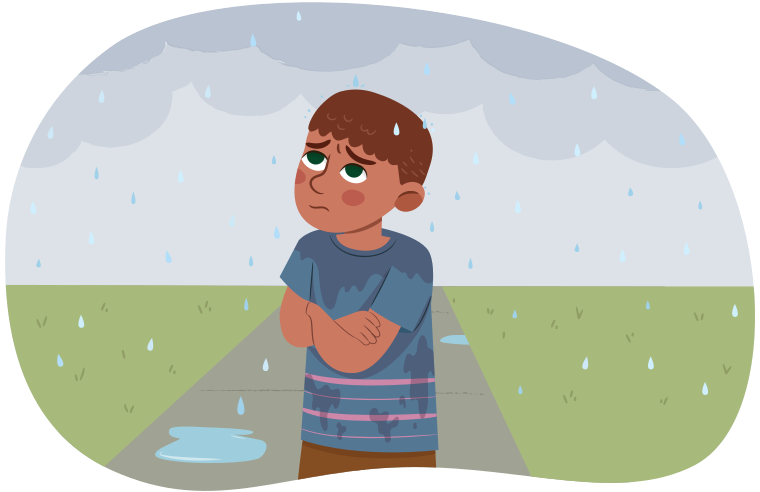
This expression is used to describe very heavy rain. For example: “It’s raining cats and dogs out there!”
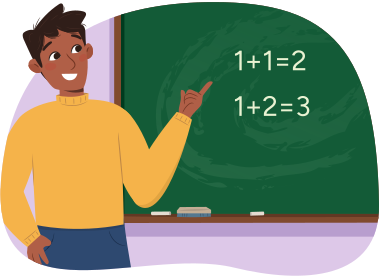
If something is a “piece of cake,” that means it’s very easy. For example: “This math class is going to be a piece of cake!”
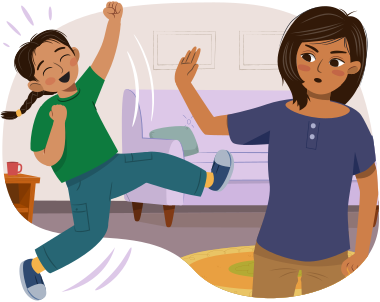
This expression is used to tell someone to wait, slow down, or stop. For example: “I know you’re excited, but you need to hold your horses!”
Let’s examine the idiom “A picture is worth a thousand words.”
What do you think it means?
Press the Answer button to see a possibility.
This expression could mean that a picture (or image) can often communicate a message more clearly and more effectively than words.
This is exactly the intention with graphic texts!
What is a graphic text?
A graphic text is an image or picture used by an author to communicate a message to their audience. Sometimes these pictures also have words, sentences, or phrases in them. Sometimes they have no text at all and are just pictures!
The following are some examples of graphic texts you might see in your neighbourhood:
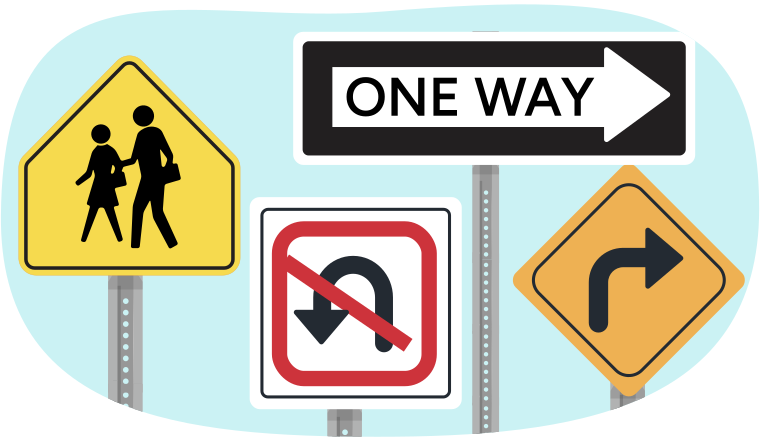
Can you think of any examples of graphic texts?
Brainstorm some ideas in a notebook or using another method of your choice. Consider creating a mind map in your notebook, or completing the following fillable and downloadable Mind Map: Graphic Texts document.
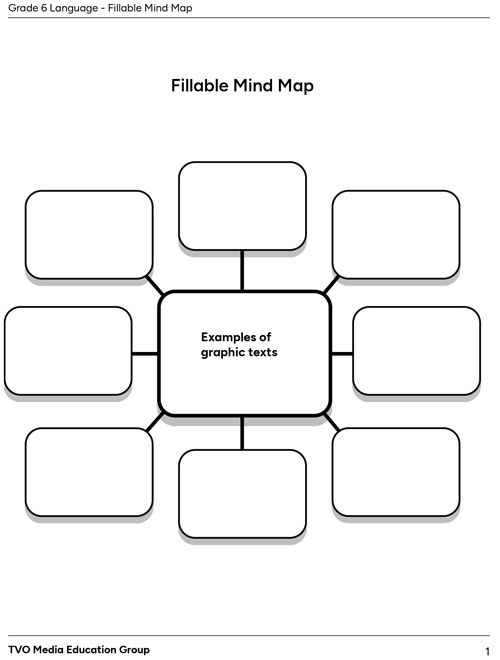
Sample mind map: Graphic texts
Once you have tried on your own, press Sample to see some examples that other students have thought of. Can you add any to your own mind map?
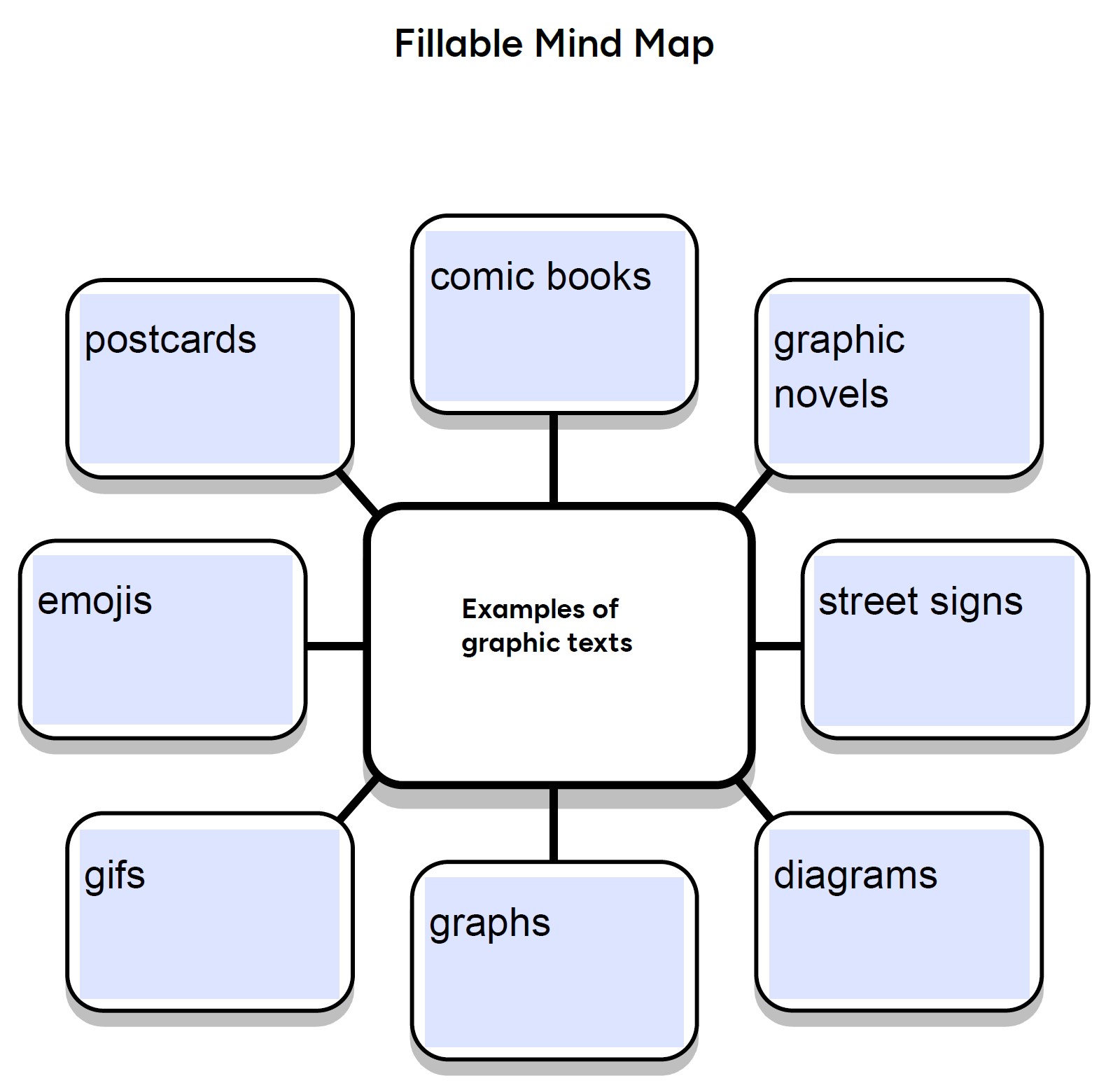
Mind map with a central bubble that says, “Examples of graphic texts.” The surrounding bubbles say comic books, graphic novels, diagrams, street signs, graphs, gifs, emojis, postcards.
In this learning activity, we are going to explore two types of graphic texts: comic books and graphic novels. We will examine their features and see how they rely on images to communicate their message and tell a story.

Exploring graphic texts
Comic books and graphic novels are both examples of graphic texts, but do you know the difference between the two?
Let’s explore these two types of texts to learn more.
Comic books
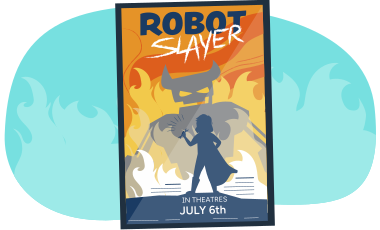 Description
A comic book cover with the title “Robot Slayer.” In the background is a frightening robot surrounded by flames. In the foreground is the silhouette of a girl in a cape, holding a wrench.
Comic books aren’t just stories with pictures like a child’s picture book. In comic books, the images and words are entwined (connected or woven together).
A comic book is part of a larger collection of stories that are serialized. This means that every comic book issue is only one part of a much larger story.
Individual issues in a comic book series are usually published every week or every month. This is the case with many famous superhero comic books. One example of a serialized comic is the famous DC Comics series that began in the late 1930s.
Examine the cover of DC’s Actions Comics.
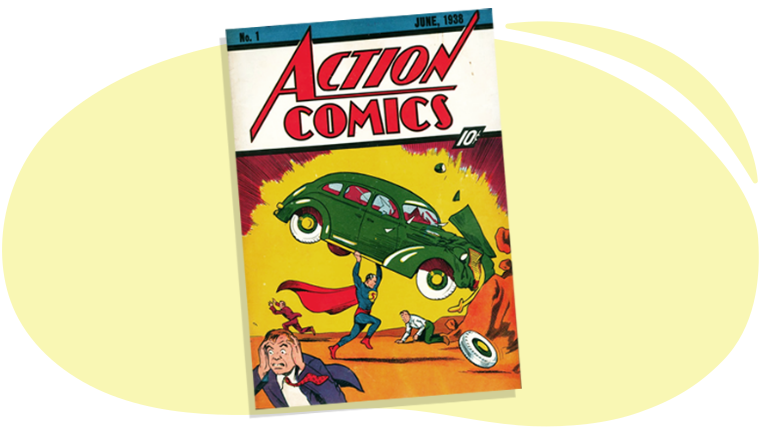
Cover of DC’s Action Comics No.1 (June 1938). This issue introduced Superman, considered to be the first "superhero."
What clues from the cover tell you that this is part of a serialized series?
When you are ready, press Sample Answer to review some possible responses.
The “No. 1” in the top left corner of the cover gives a clue that this is the first comic in a series. If it was a standalone (a single comic only) it wouldn’t need a number on the cover.
Sometimes, one comic book issue will contain several short stories, instead of only one longer story. A great example of this type of comic is the classic Archie Comics series that was first published in 1941.
Check out the cover of the first Archie Comics that was published in 1941. Can you name any of the characters featured?
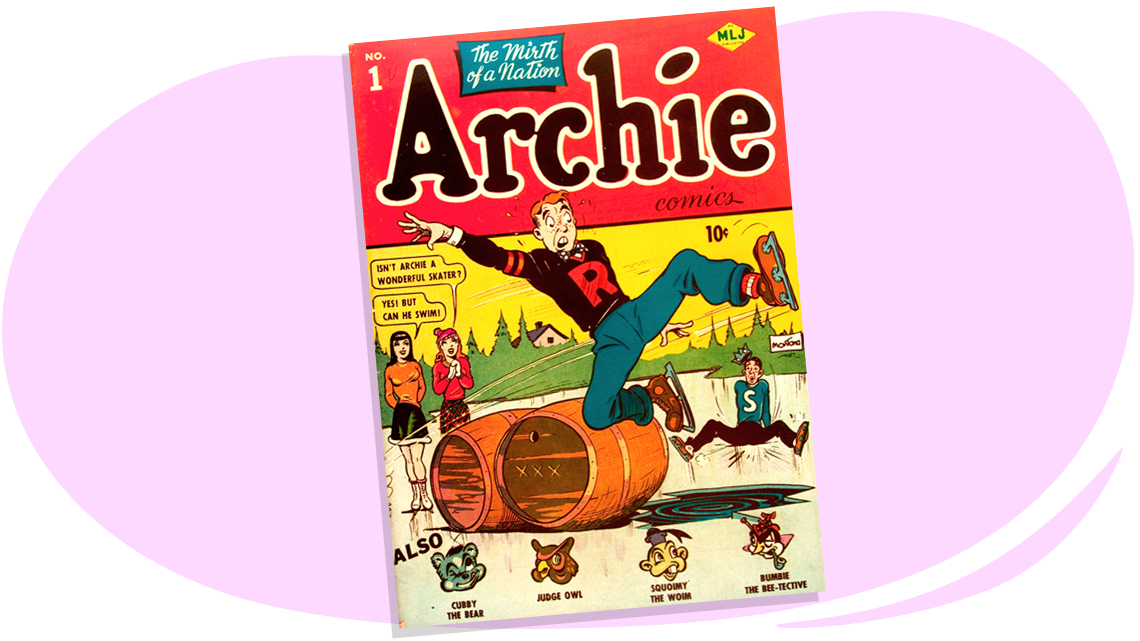
The cover of the first published edition of the Archie Comics series (1941).
DescriptionIn the Archie comic series, one issue (or publication) usually contains five or more short stories. The short stories are not connected in plot, but they all feature the same cast of characters. Some of the characters include: Archie, Betty, Veronica, and Jughead. These are the four human characters shown on the cover of the first issue.

Take a minute and record some notes on what you have learned about comic books. Jot your facts down in a notebook or use another method of your choice.
Graphic novels
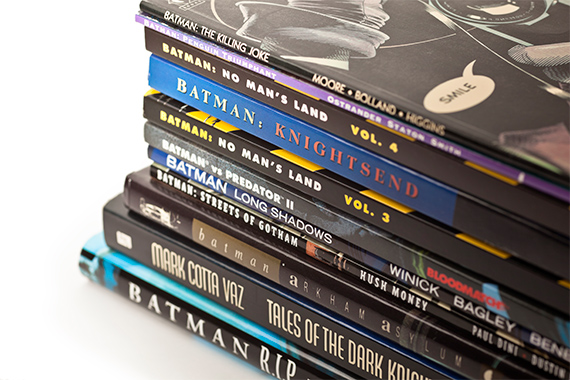
Graphic novels were created many years after comic books. It’s believed some of the first graphic novels were published in the late 1970s.
While graphic novels share some similarities with comic books, there are a few differences:
- The name “graphic novel” is the biggest clue! Graphic novels are novels but the stories are told in a very graphic/visual way.
- Unlike traditional novels (which are all text), graphic novels use minimal text to tell their story. Instead, they rely heavily on images and illustrations to communicate what’s happening in the plot.
- Because they tell long, complex stories from beginning to end, graphic novels are much longer than comics and are published in a more traditional book format.

Did You Know?
Did you know?
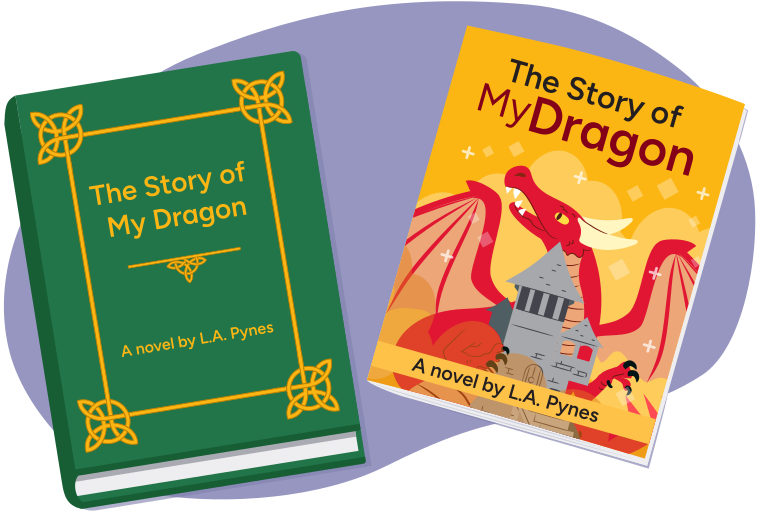
Many novels, both classic and modern, have been converted (turned) into graphic novels. One of the reasons for this is to draw in a new wave of readers that prefer more visuals and less text.
Before continuing, take a minute and record some notes on what you have learned about graphic novels. You can record your notes in a notebook or using another method of your choice.
Comparing comics and graphic novels
Let’s explore some of the features that comic books and graphic novels share.
Press the following tabs to learn more about each feature.
Speech bubbles are used in comic books and graphic novels when a character has something to say.
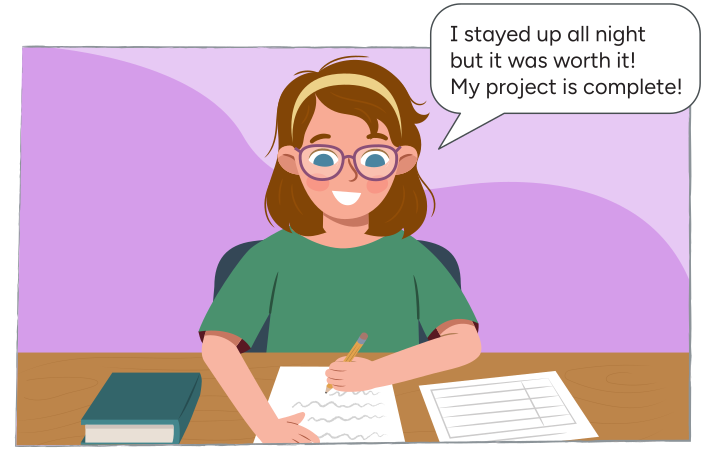
Thought bubbles are used to show what a character is thinking to themselves.
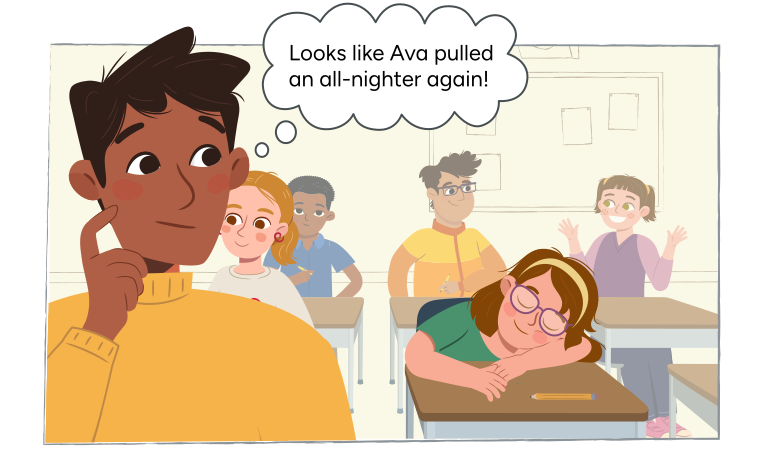
Comic books and graphic novels divide up the action on each page into boxes or sections called panels (or frames). This helps communicate different moments and perspectives, but also adds visual interest.
Fun fact: the spaces between the panels are sometimes known as “the gutter.” The gutters are usually white in colour to help the individual panels stand out as separate sections.
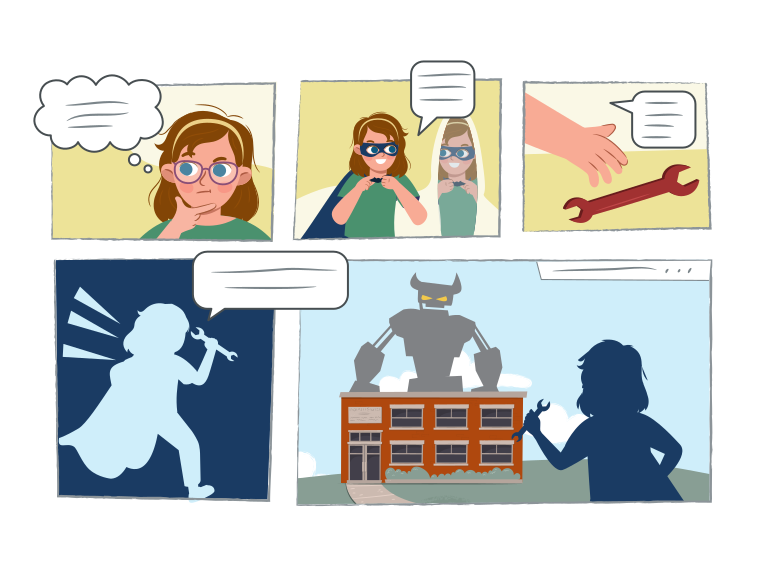
There is limited text in comic books and graphic novels. Most of the story is told through the images or illustrations.
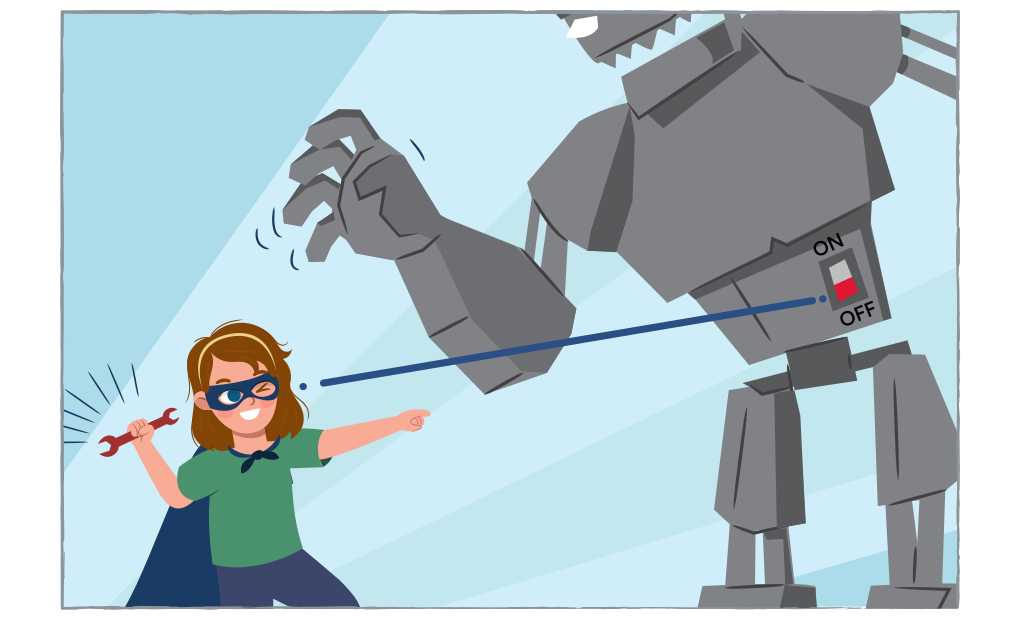
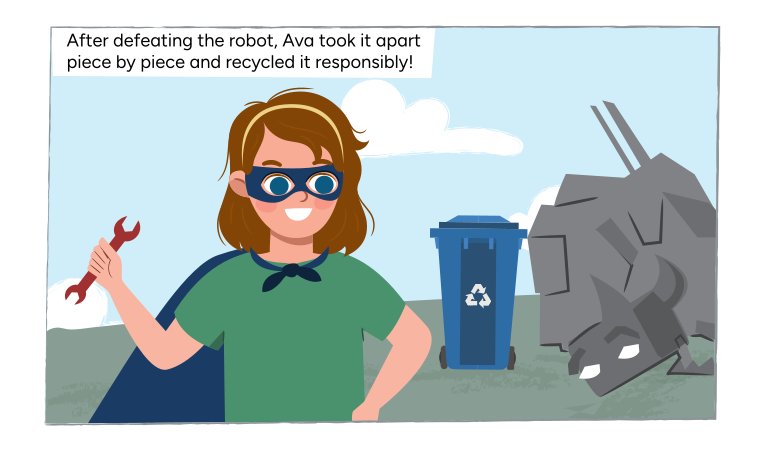
Examine the following image. What do you think is going to happen next?
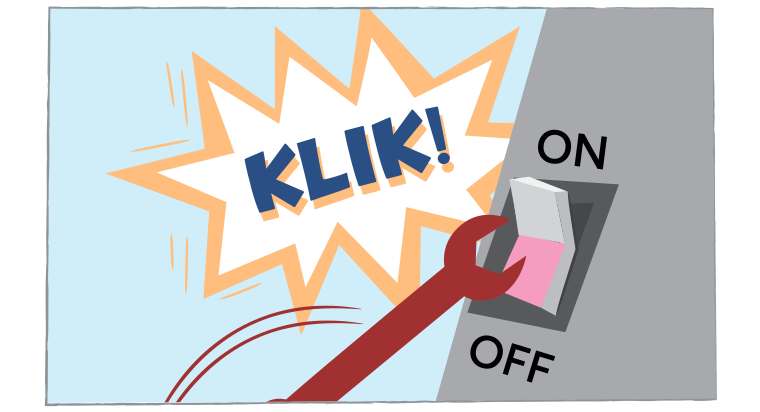
Comic books and some graphic novels use a combination of illustrations and words that express sound to create the experience of a sound effect.
Words that express sounds (or words that sound like what they describe), are called onomatopoeias. Examples include, “crash,” “bang,” and “pow.”
Comic books and graphic novels use text boxes, often called captions, for the narration of the story, or anything that isn’t dialogue or a sound effect. For example, they could give information about location or setting. Captions are usually found in the corner of the panels.
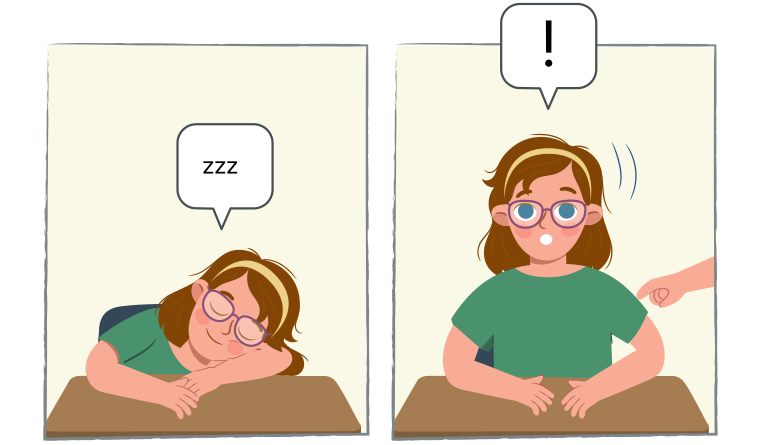
You will often find symbols (such as question marks and exclamation marks) in comic books and some graphic novels. They are used as a quick, visual way to communicate a character’s reactions or feelings.
Tips for reading graphic texts

As you’ve learned, English-language comics and graphic novels are displayed in panels (frames). We read the panels one at a time starting from the top left and moving across to the right. Then we move down the page and repeat.
Within each panel, character dialogue and thoughts appear in callouts called speech or thought bubbles. We read these in the order they appear inside each frame, from left to right, and top to bottom.
Captions are text boxes that appear inside panels. They often provide information about the setting or context. We read captions in the order that they appear inside the panels.
Let’s analyze some sample texts to explore some of the similarities and differences in the features of comic books and graphic novels.
Marvel X-Men comic
First, let’s read an excerpt from the Marvel comic series X-Men. Can you identify examples of some of the features of graphic texts?
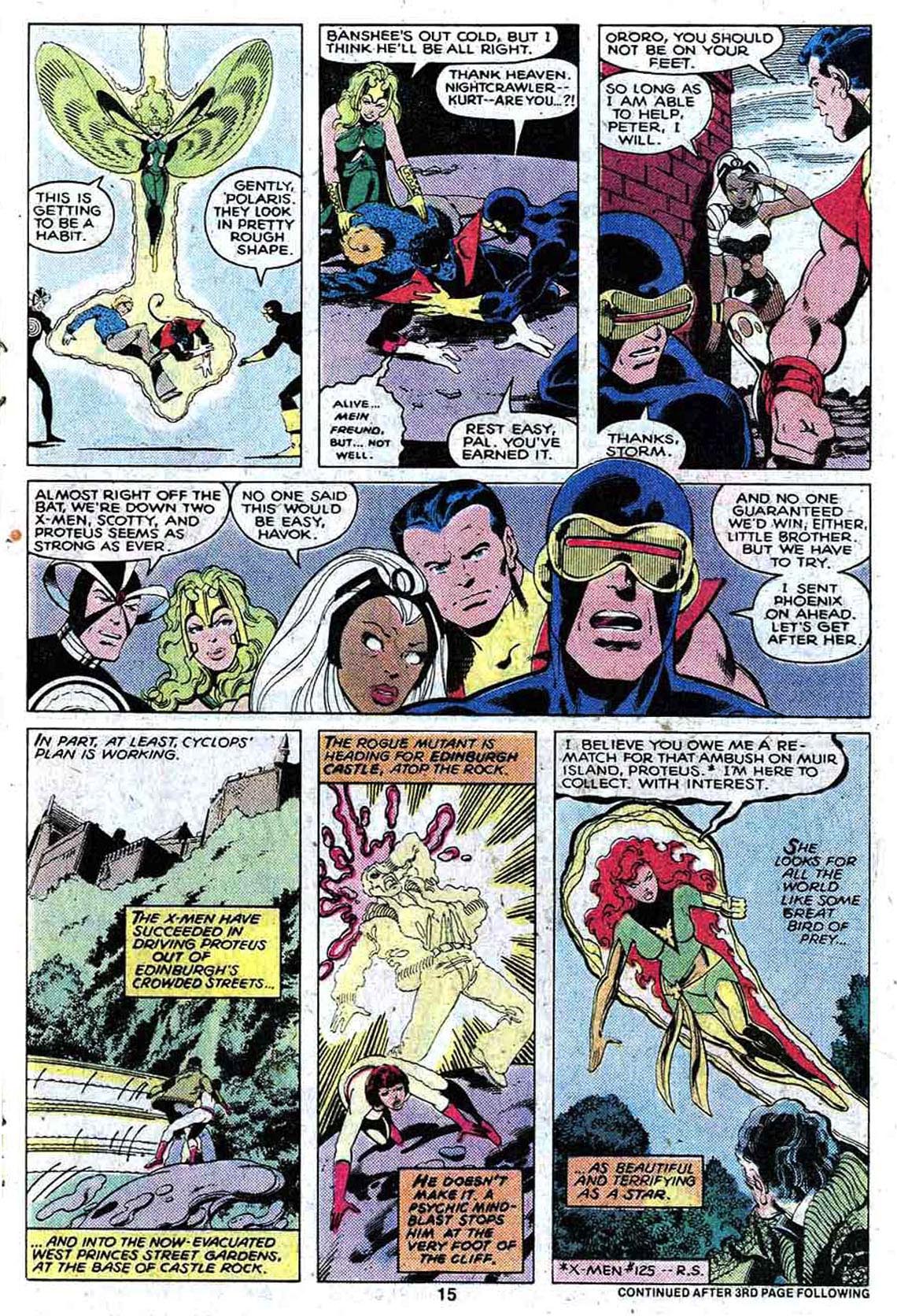
A page from a 1979 issue of an X-Men comic book.
In a notebook or using another method of your choice, record your answers to the following questions:
- What features of graphic texts were used in the excerpt of the X-Men comic?
- Choose one of the panels and explain how images are used to add details to the story being told.
When you are done, press Sample Answers to review some examples of possible responses.
- Some of the features of graphic texts used in the X-Men excerpt are: panels, speech bubbles, and captions.
- In the first panel, the dialogue doesn’t tell us much about what is actually happening. The image in the panel is what tells the reader that Polaris has two people wrapped in a force field of her power. The image combined with the text tells the reader that Polaris is helping them by cradling them in her force field and gently lowering them to the ground.
Living with Viola graphic novel
The graphic novel Living with Viola is the first published book for Toronto-based author Rosena Fung.
Check out the following video clip from the show Ainara’s Bookshelf to learn more about Living with Viola and why Ainara thinks a graphic novel format was a great choice for this story.

Pause and Reflect
Pause and reflect
Why does Ainara feel that a graphic novel format is a great choice for telling Viola’s story?
When you are ready, press the Possible Answer button to review a sample response.
Ainara says that “the way Viola and Livy’s negative thoughts were drawn was unique and educational.”
She also says that she’s glad the book is a graphic novel because the reader can see the characters feelings through the images and not just read about them in the text. Ainara feels that this “adds another dimension to the story” meaning that it makes it more interesting and helps the reader connect with the story.
Next, let’s explore an excerpt from the graphic novel Living with Viola by Rosena Fung. As you read, try to identify any similar features found in the X-Men comic you explored earlier.
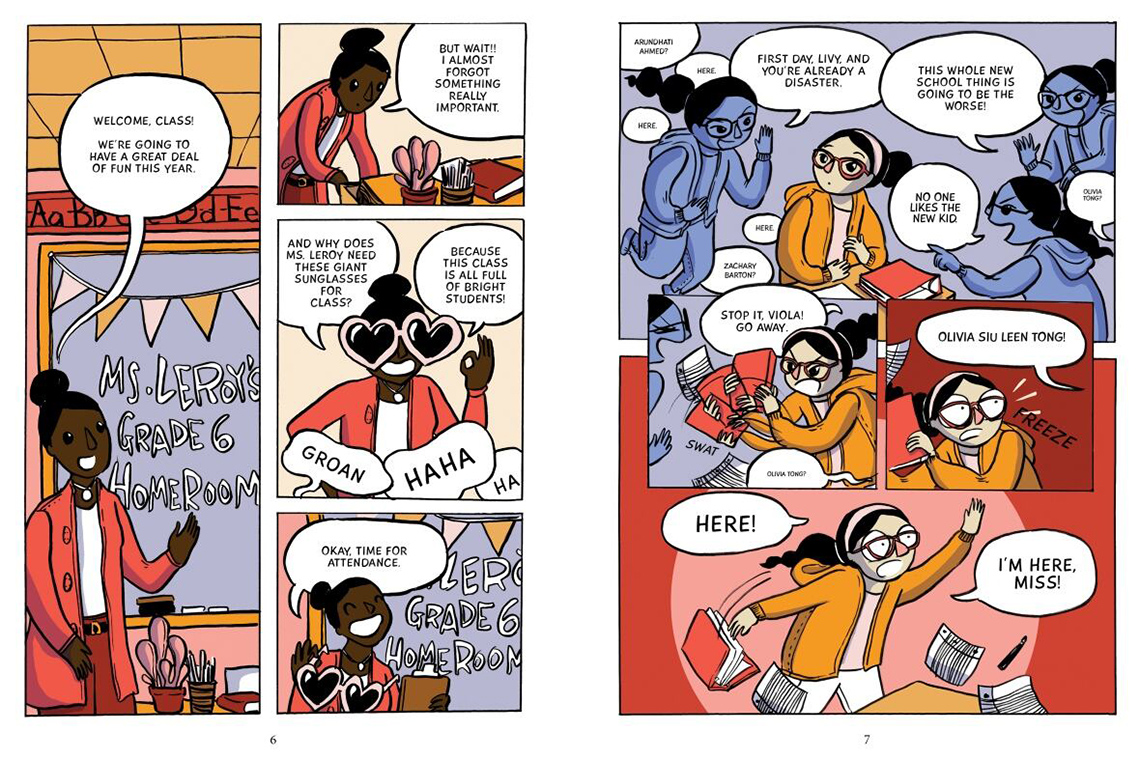
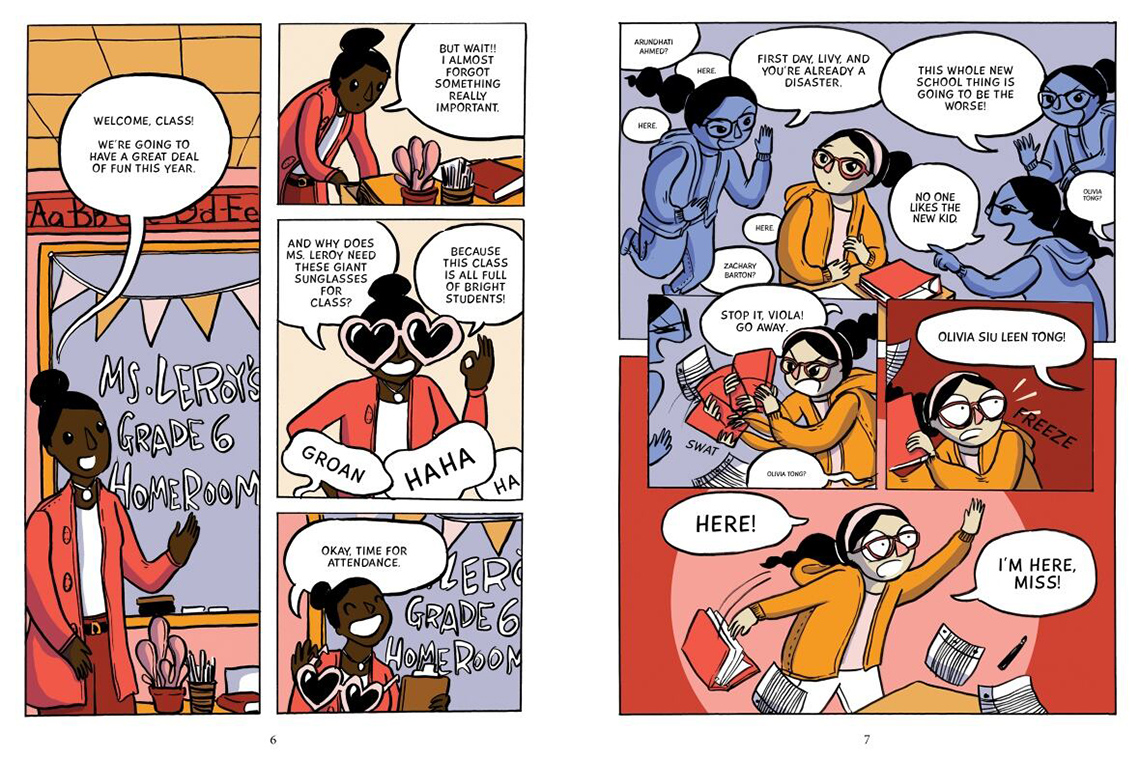
What features did you observe in the excerpt of Living with Viola?
When you are ready, press Sample Answers to review an example of a possible response.
Some of the features of graphic texts used in the Living with Viola excerpt are: speech bubbles, panels, and sound effects (such as “Groan” and “Haha”).

Recording similarities and differences
Now that you have explored a sample of a comic book and a sample of a graphic novel, let’s compare the shared and different features observed in the two texts.
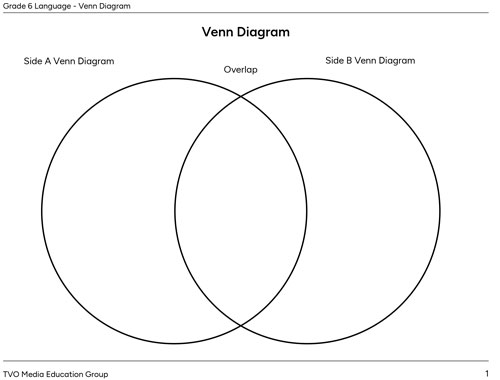
Use a method of your choice to record your answers. If you wish, you can create a Venn diagram in your notebook or complete the following fillable and printable Venn Diagram.
Making inferences
Comic books and graphic novels rely heavily on images. Because of this, readers must use their critical thinking skills to “read between the lines.” In other words, readers fill in information that the author doesn’t directly provide us with. This is called making inferences.
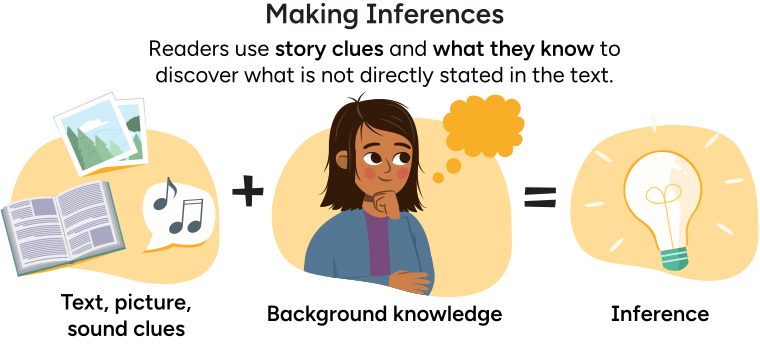
We make inferences because it helps us to form a deeper understanding of the text. Making inferences allows us to figure out details that the author doesn’t always use words to say.
Making inferences: Living with Viola
Let’s re-examine the excerpt from the graphic novel Living with Viola by Rosena Fung. Try to make some inferences about the text.
To make your inferences, use the following:
- clues and information from the text
- background knowledge (what you already know)
Press Getting Started to check out some sentences starters that you can use.
- I can infer… because…
- The author doesn’t say this, but I think… because…
- I have come to the conclusion that… because…
- This makes me think… because…
Ready to get started?
Re-examine the excerpt from Living with Viola to make your inferences about what is happening or what will happen next. Record your thinking in a notebook or using another method of your choice.
What inferences were you able to make about this excerpt?
Press the Sample Answer button to review some possible inferences.
- I can infer that the teacher is speaking to a class full of students even though we can’t see them because she is standing at the front of a classroom looking out. There are also many speech bubbles with reactions for characters that we don’t see.
- The author doesn’t say this, but I think the main character is struggling with her own thoughts and inner dialogue because there is a second version of herself that appears to be talking at her and making her anxious and upset.
Make an inference
Let’s check your understanding by deciding which inferences match an image. Examine the following image, then answer the multiple-choice question that follows it.

Putting it all together
In the following sorting activity, you will identify which features belong to comic books, which features belong to graphic novels, and which features belong to both!
Place the cards into categories that best match. Use the arrow buttons to navigate between cards.
Create your own comic!
It’s time to put all your learning together and create a draft for your very own mini–comic book.
Use the following questions to help you plan out your story:
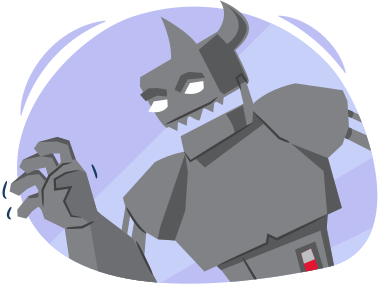
- What kinds of characters will you feature in your comic? Who is the main character?
- What is the main character’s goal? What are they working to accomplish? Is their mission a social justice issue?
- Who is the antagonist or villain?
- Where does the story take place?
Use the following checklist to make sure your comic book contains the right elements and features.
Features of a comic book
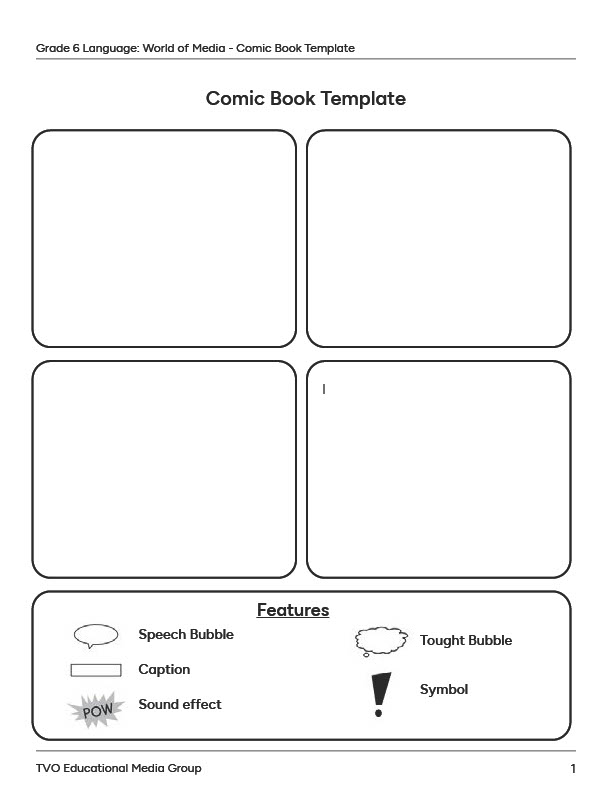
Use a digital tool of your choice, complete the Comic Book Template in your notebook, or using the following fillable and printable document.
Revising and editing
When you’ve completed your draft, revise and edit your work. If possible, ask a peer or trusted adult to help you proofread.
Press the following tabs for tips on how to revise and edit your work.
Revising means changing the content of your writing by moving text around or deleting or adding content.
To revise your comic, follow these steps:
- Look for text that can be replaced with a more visual feature or element of comic books (such as an image or a “symbol as dialogue” to communicate emotion).
- Add text boxes (captions) for narration in panels where the message of what’s happening may not be clear to the reader.
Editing means finding and correcting errors in spelling, grammar, punctuation, and capitalization.
To edit your comic, follow these steps:
- Check that there are no spelling mistakes.
- Check that you have used proper punctuation where necessary (such as periods where you want a full stop and exclamation marks where you want to communicate something important or shocking in the action).
Teacher saying the following: "When you have finished revising and editing your comic book, consider publishing it! You could create a final copy digitally, in print, or using another method of your choice."
Reflection
As you read through these descriptions, which sentence best describes how you are feeling about your understanding of this learning activity? Press the button that is beside this sentence.

I feel...
Now, record your ideas using a voice recorder, speech-to-text, or writing tool.