Learning goals
We are learning to…
- evaluate and explain how communication and collaboration help to express voice and be engaged in learning by implementing a plan to develop capabilities and potential
- evaluate and explain rights and responsibilities when interacting online with appropriate permission, and make decisions that contribute positively to the development of a digital identity
- demonstrate an understanding of how to navigate online environments safely, manage privacy, personal data, and security, and interact in a way that supports our well-being and that of others, including seeking appropriate permission
- communicate and collaborate with various communities in a safe, respectful, responsible, and inclusive manner when using online platforms and environments, including digital and media tools, and demonstrate and model cultural awareness with members of the community
- manage our digital footprint by engaging in social media and online communities respectfully, inclusively, safely, legally, and ethically.
- recognize rights and responsibilities as well as opportunities that come with living and learning in a digital world
- draft, using cursive writing, a code of conduct to communicate ideas about navigating online social media sites safely
Success criteria
I am able to…
- apply communication and collaboration skills necessary to live and work with others in my community by implementing a plan to develop my capabilities and potential
- evaluate and explain my rights and responsibilities when interacting online, and seek permission when needed
- communicate on social media sites safely, and manage my privacy, personal data, and security while taking care to create a positive digital footprint
- recognize the rights, responsibilities, and opportunities that come with living and learning in a digital world
- draft, using cursive writing, a code of conduct that communicates my ideas about navigating online social media sites safely
Being online

Exploring digital media in our daily lives varies, like playing video games, browsing news sites, using streaming services, or posting on social platforms, just to name a few examples.
No matter which style or format of media you use, there are rising considerations and concerns about privacy, security, and anonymity.

Brainstorm
Brainstorm
Let’s brainstorm what you think the following words mean:
- privacy
- security
- anonymity
Record your ideas in a notebook or another method of your choice.
Press Hints to explore guiding questions for each term.
- Privacy: Is my personal information being protected?
- Security: Am I safe to share and interact in this online space?
- Anonymity: Is my real identity visible? Does it need to be?
When you’re ready, press Let’s Check! to explore the definition for each term.
- Privacy is the state of being secluded or free from observation; the right to keep personal matters secret.
- Security is the state of being protected from external threats or possible harm.
- Anonymity is the state of having one’s personal identity remain unknown.
Your level of privacy, security, and anonymity while being online are not just important factors to consider as you learn to become a responsible digital citizen, but they’re already common concepts in our daily lives.
Learning check!
For this activity, sort the images based on whether they represent security, privacy, or anonymity.

Student Success
Think
Between privacy, security, and anonymity, which do you think is the most important to ensure when being online?
Record your ideas in a notebook or another method of your choice.
If possible, share your thoughts and ideas with a peer.
Digital safety
You may have been familiar with some of the examples of privacy, security, and anonymity from everyday life. However, these concepts are slightly different when being online.
Because the internet is an unregulatedspace, there are unique risks to being online. Therefore, it is critical to know how best to protect your information when navigating the wider digital world.
Why is privacy important?
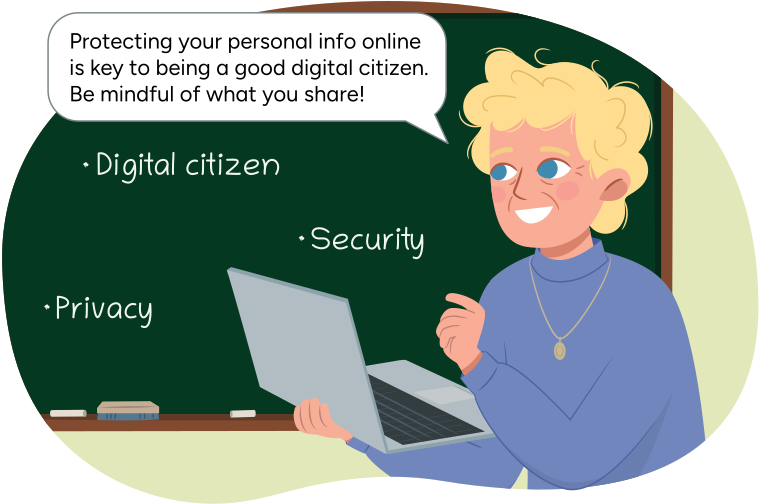
Personal privacy is a fundamental human right in Canada. However, with the rise of technology over the decades, there has been an increasing number of perceived threats against the right to protect our personal information from interference or theft.
Explore the following excerpt from the Government of Canada regarding how privacy is protected by law across the country:
“Section 8 of the Canadian Charter of Rights and Freedom protects privacy from unreasonable searches and seizures. In addition, the federal Privacy Act provides a high level of protection against the disclosure of personal information. This Act governs the collection, use, disclosure, retention and disposal of personal information within federal government jurisdictions. The Canadian private sector is also accountable for protecting privacy under the Personal Information Protection and Electronic Documents Act (PIPEDA), and similar provincial legislation in British Columbia, Quebec and Alberta.”
– Health Canada
Protect your information
Check out the following video to learn how Ava protects her personal information while using the internet.
After reviewing the video, note a few examples of Ava’s advice on how to protect your identity safely online. Record your thinking in a notebook or another method of your choice.
Stay safe online
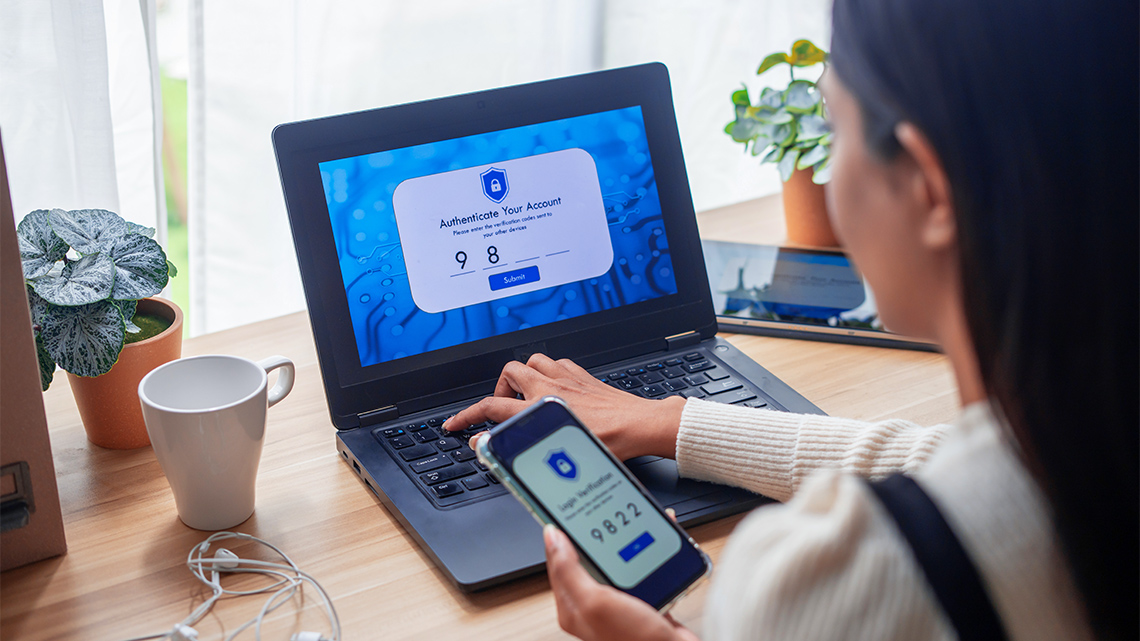
Explore the following guidelines to ensure that you’re staying safe online and protecting sensitive information in digital spaces.
Punctuation
You may have noticed throughout the learning activity that a certain type of punctuation was used—the dash and the ellipsis!
Have you used the dash or the ellipsis before?
Dashes—
A dash in your writing tells the reader that something unexpected is about to follow.
It should be used for this purpose and not to replace other punctuation, such as a colon. If used too often, dashes lose some of their effect.
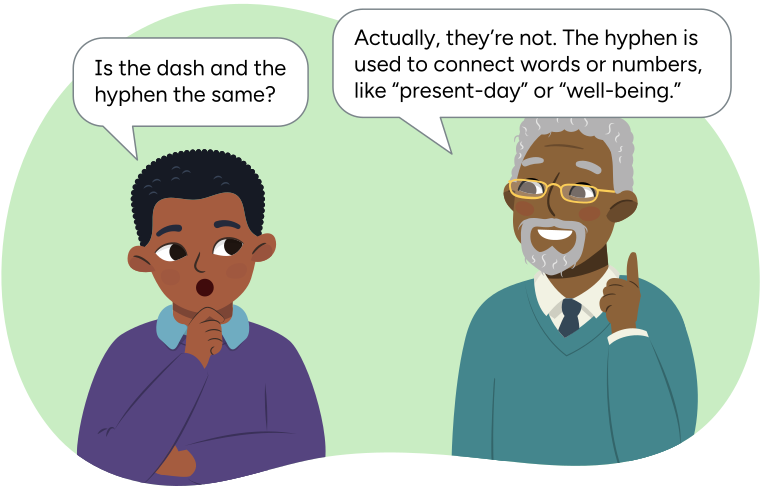
A conversation between Arthur and Teacher Wilfred.
Arthur says, "Is the dash and hyphen the same?"
Teacher Wilfred replies, "Actually, they're not. The hyphen is used to connect words or numbers like 'present-day' or 'well-being'."
Press Dash to explore an example.
Check out this example of a sentence where a dash has been inserted:
Did you see that we won–and I mean made a clean sweep–our volleyball tournament?
Ellipsis…
A similar but unique form of punctuation that is worth mentioning here is the ellipsis. The ellipsis (plural: ellipses) is made with three periods with a space between each one. It is used most often to indicate that words are missing from a quotation.
Press Ellipsis to explore an example.
Check out this example of a sentence where the ellipsis is used:
I knew that I was going to like the book when the author said, “As you can see, it only lives in … and lunch boxes.”
The ellipsis in the sentence is replacing other words that were spoken.

Student Wellness
Student wellness
Time for a body break! If possible, stretch your body and move around your space.
When you’re ready, let’s move onto the next section of this learning activity.
Online awareness
Because of how easily and immediately people can share information over the internet, the risk to personal privacy is both high and constant. Losing privacy isn’t great, but we need to be aware of when it occurs and what steps we can take next.
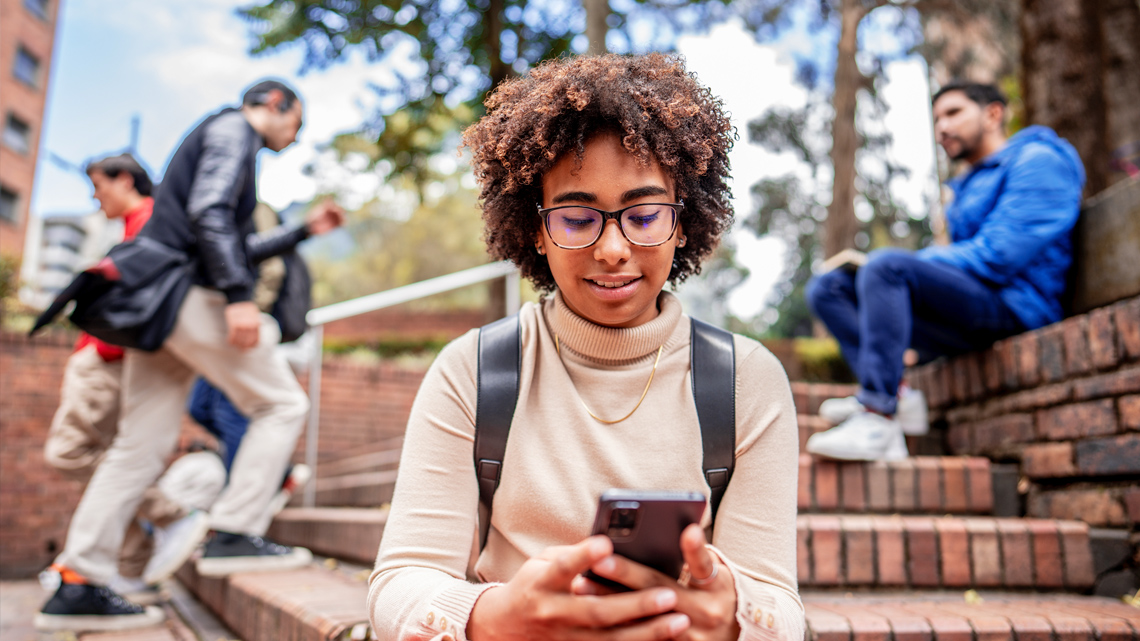
There are various ways that a person’s privacy and identity can be compromised on web platforms.
Press the following tabs to find out more.
Fraudulent behaviour and scams certainly existed before the internet, but it's now much easier to be targeted online. Sharing any amount of personal information on the internet could reveal clues to hackers about someone’s passwords or security questions. Therefore, it is important to be thoughtful about when and where you might post about your location, pets, current school, or extended family.
Fraudsters and scammers look to invade your privacy and access your personal information by forcing their way into your online accounts. They might use personal details to decode your password or security questions. Similarly, online fraudsters may employ tactics like impersonating a friend to trick you into providing your password.
Doxxing is an aggressive, targeted harassment tactic and one of the more extreme examples of online privacy invasion. This can occur once someone’s personal data has already been made available.
Doxxing refers to when aggressors, like cyberbullies, share someone else’s personal information on the internet with the intention of causing that person harm. For example, that could include sharing someone’s private home address, personal phone number, or geolocation so that others have better access to harass the target.
Another severe type of privacy intrusion is identity theft and impersonation.
Because the act of impersonation poses a particular risk to a person’s reputation and can even lead to the incredibly serious crime of identity theft, it is very important to be aware of the signs.
Creating false accounts, posting under the name of someone else, entering the banking information of another person, or using someone else’s photos and identifying information all count as impersonation.
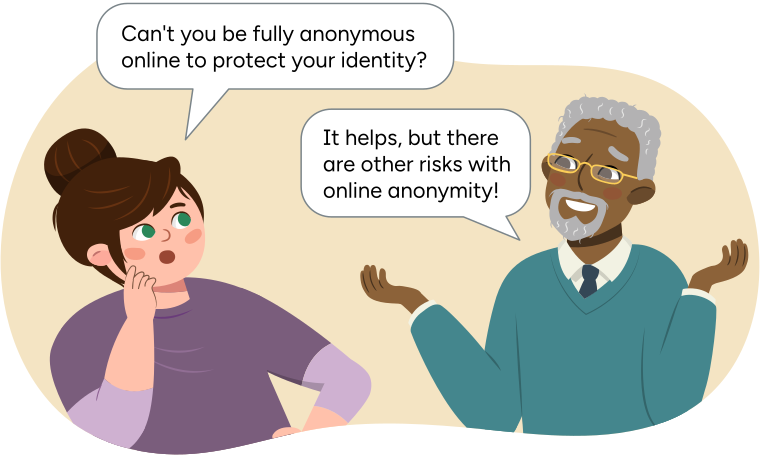
A conversation between Sam and Teacher Wilfred.
Sam says, "Can't you be fully anonymous online to protect your identity?"
Teacher Wilfred replies, "It helps, but there are other risks with online anonymity."
Anonymity
Since there are so many threats to our personal privacy online, it might seem as though concealing your identity, withholding your personal information, or perhaps using an alias would be the safest approach.
Having the option to explore, post, and interact with others on the internet without having to disclose a real identity is not just a way to protect private data.
For many people, the option of anonymity or “identity shielding” can be a positive approach that offers a certain level of inclusion and safety. There are, however, a range of potential risks associated with anonymity that are difficult to regulate or disable.
Press the following tabs to learn more.
We must consider when a user…
- struggles with social anxiety, expressing themselves anonymously online can relieve their stress
- wishes to post content for feedback without fear of judgment, they can share anonymously or under an alias so their work is viewed objectively
- posts to avoid targeted backlash or about non-hateful political viewpoint(s) that could result in them being harassed
- may not feel comfortable publicly identifying with their communities but can anonymously interact online without discrimination
The previous tab presented examples on how internet users can benefit from the option of online anonymity. Let’s now consider how concealing one’s real identity results in serious harm online.
When a user…
- chooses to use an unknown alias or no display name to bully another person without repercussions
- spreads disinformation online on behalf of a political group or movement but does not want the activity traced back to them personally
- expresses a hateful viewpoint without revealing their personal identity to avoid potential legal backlash
There are both benefits and drawbacks to being anonymous online, but the complexity of the internet makes it difficult to define these guidelines in one single way. For example, social media platforms vary with their anonymity policies.

Did You Know?
Did you know?
When certain social media platforms were first introduced to the public as a tool, there were very strict membership requirements. Users had to verify their actual identities by registering for an account with their official university or college email address.
More recent social platforms, especially those for youths, now allow for some level of anonymity. So, users can develop a unique display name, but they’re not required to add an identifying photo.
Authenticity

Nowadays, most social platforms are designed to encourage “authentic” engagement and build a virtual sense of community by having users disclose their real identities rather than opting for anonymity. This is also strategic for social media business models to hold users’ attention with direct targeted advertising at users.
After all, the more authentic information companies can collect about a user, the more they will be able to target and personalize their advertising. And the more tailored advertisements can likely lead users to purchase those products.
Vocabulary

Vocab goals!
Before we move onto the next section, let’s review and build our vocabulary.
- inappropriate
- permission
- privacy
- well-being
- rights
- password
- goal
Some of the words were defined throughout the learning activity.
For the unfamiliar words, let’s use the following strategies to determine a possible definition and understanding of the term:
Vocab strategies
Learning check!
After reviewing the vocabulary, let’s match the correct definition for each term.
Code of conduct
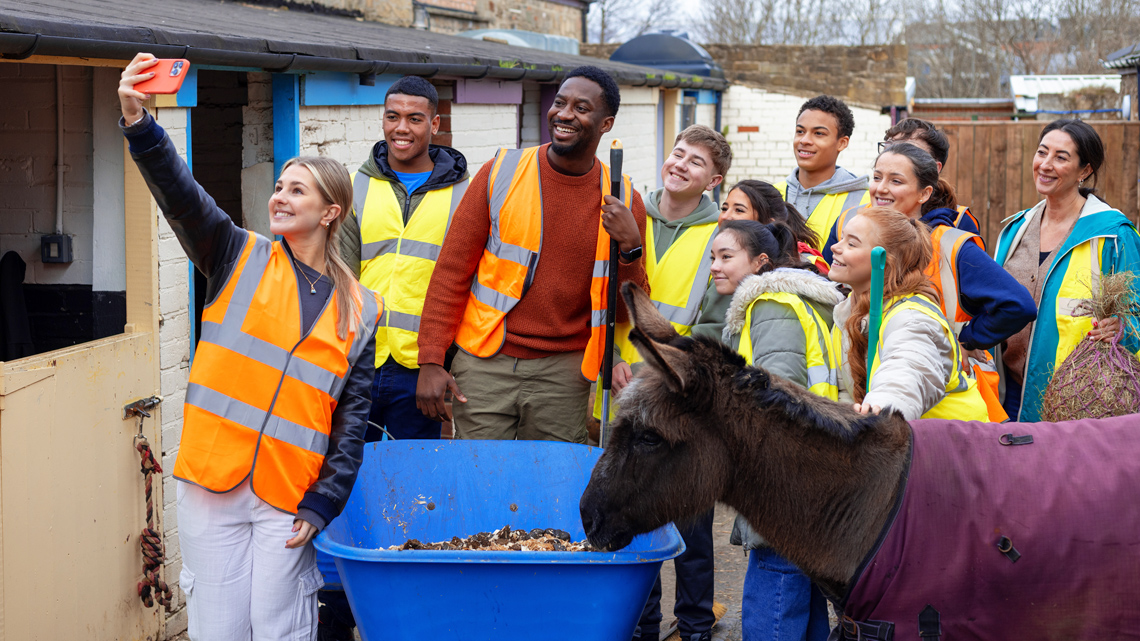
Social media can create positivity yet be damaging for many. Also, there are many responsibilities when using social media.
One of the best ways to acknowledge those responsibilities is to make specific statements about how you will conduct yourself while using social platforms, also known as a personal code of conduct.

Try it
Try it!
Your task is to write a code of conduct describing how your current self and your future self will behave on social media.
Plan
Create an organizer for planning your code of conduct.
You may use the following headings to guide your thinking:
Press More Details to learn more.
- Purpose: What is the purpose?
- Goals: Note three behaviour goals, then have one of your goals become a long-term goal for your future self.
- Plan of action: What steps will you take to achieve each goal?
- Evidence: How will you know your goal is achieved? What will be the evidence of achievement?
For example, a person might have the goal to always behave politely, even if someone makes a hurtful comment towards them on social media.
When your code of conduct is ready, press Next Steps! to learn more.
You may choose to continue with any of the following next steps:
- Read your writing out loud and make any necessary revisions and corrections.
- Show your code of conduct to a parent and ask them for feedback on your goals and your plan to achieve them. Do you have anything to add after conferring with an adult?
- Take ownership of your code by signing it with your signature.
- Put the date on your code and keep it in a place where your present-day self and your future self can refer to it.

Pause and Reflect
Pause and reflect
For this task, choose one of the following options to reflect on:
- Option A: Your code of conduct
- Option B: Social media scenarios
Press Option A to explore the reflection task.
Reflect on the following:
- In what way does setting goals help you to use social media more safely and more responsibly?
- How could your code of conduct be adapted to a classroom of your peers?
- How does your code reflect social awareness?
Record your thoughts and ideas in a notebook or another method of your choice.
Press Option B to explore the scenario.
Recall an in-person situation where you had to consider a friend’s feelings or their perspective:
- How did you handle the situation in-person?
- How would you have handled this if it had been on social media?
- What feelings or emotions could be missed in an online post?
Record your thoughts and ideas in a notebook or another method of your choice.
Reflection
As you read the following descriptions, select the one that best describes your current understanding of the learning in this activity. Press the corresponding button once you have made your choice.

I feel...
Now, expand on your ideas by recording your thoughts using a voice recorder, speech-to-text, or writing tool.
When you review your notes on this learning activity later, reflect on whether you would select a different description based on your further review of the material in this learning activity.
Discover MoreSafely conduct research on the internet about teens who have used social media for good actions and intents.
If possible, share what you have learned with a peer or an adult.