Learning goals
We are learning to…
- understand how to navigate online environments safely and interact in a way that supports my well-being and that of others
- understand the interrelationships between the form, message, and context of media texts, the intended and unintended audience, and the purpose of production
- analyze satire in media texts, and explain its intended purpose and audience
- assess the effectiveness of critical thinking skills when analyzing and evaluating media texts, and set goals to improve their use
Success criteria
I am able to…
- understand the interrelationships between the form, message, and context of media texts, the intended and unintended audience, and the purpose for production
- use critical thinking and digital literacy skills to navigate online environments safely and interact in a way that supports my well-being and that of others
- critically analyze online content for misinformation or disinformation in order to make informed decisions about their truth
- assess the effectiveness of critical thinking and digital literacy skills when analyzing and evaluating media texts, and set goals to improve their use
Misleading media
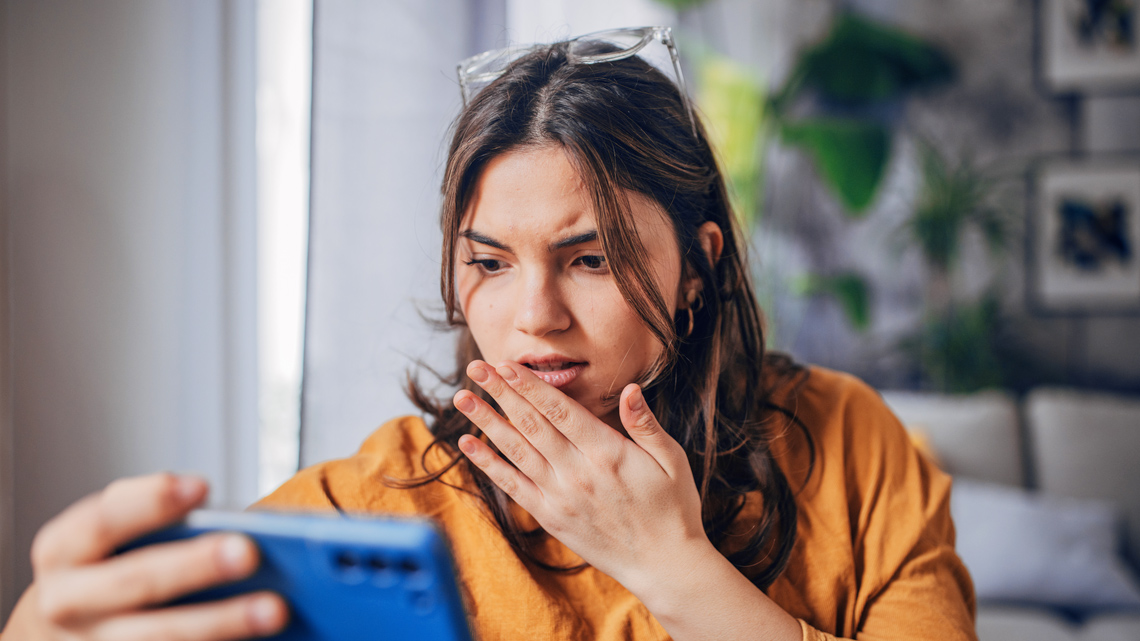
When we engage with media, it’s not unusual to come across content that seems unlikely—or even intentionally fake!
Every day, we navigate potentially misleading information amongst all the legitimate information. So, it’s essential that we develop strategies for identifying and considering which content…
- can be trusted
- may have inaccuracies
- was intentionally designed to mislead its audience
Explore the following video clip to learn more about disinformation.

Student Success
Let’s think!
Think of a time when you may have encountered dubious information online.
What about the information made you question its truth?
Record your thoughts in a notebook or another method of your choice.
Traditional media

In today’s cultural climate, certain types of news media are more trusted than others.
For many people (including certain journalists), traditional forms of media–like newspapers, magazines, and radio–are believed to be a more reliable source for accurate reporting than more modern formats, such as social media platforms, public video streaming sites, and blogs.
Verifications
One of the ways that traditional news media won this level of public trust has been through detailed fact-checking and verification procedures. Knowing that an organization or company has entrenched procedures for verifying information allows the audience to feel certain that the information presented is accurate and factual.
Press the following tabs to learn how traditional news media outlets are legitimate and accountable.
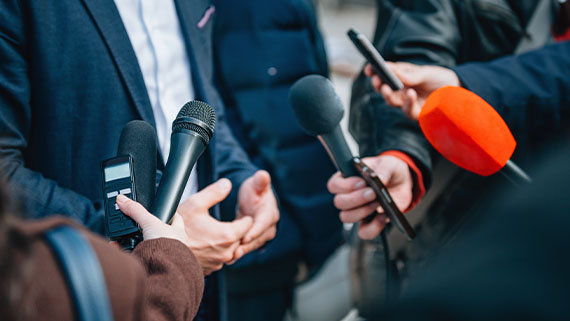
Traditional media outlets have certain methods of “proving” their legitimacy and accountability. For example, the majority of articles or “stories” in a newspaper are accredited to an author or specific team of writers, and individual quotations used in these articles are typically attributed to a source.
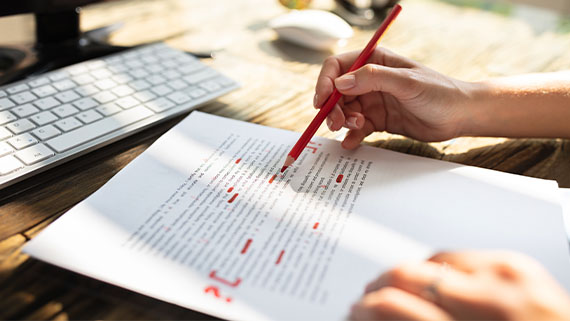
Most of these media outlets also have a standards editor, whose job is to ensure that the journalism is of the highest quality. This is another measure taken to demonstrate accountability and integrity in order to ensure the public’s confidence.
Another element of accountability on behalf of traditional media is the “corrections” section included in every issue of most daily newspapers. This section exists as a space for the company to address any inaccuracies that were printed and clarify the facts that should have been published.
It is important to note that this option is essential for print media, since the original version that was released with inaccuracies cannot be altered after it has been published and distributed. For exclusively digital media outlets, however, corrections and disclaimers can be made directly within the article page.
Having a corrections section is an example of how newspapers attempt to be transparent about accidental misinformation. The errors are typically unintentional, and the media outlets have the resources to promptly correct the inaccuracy. Accidental misinformation can be addressed in ways that resolve the initial issue and still demonstrate respect.
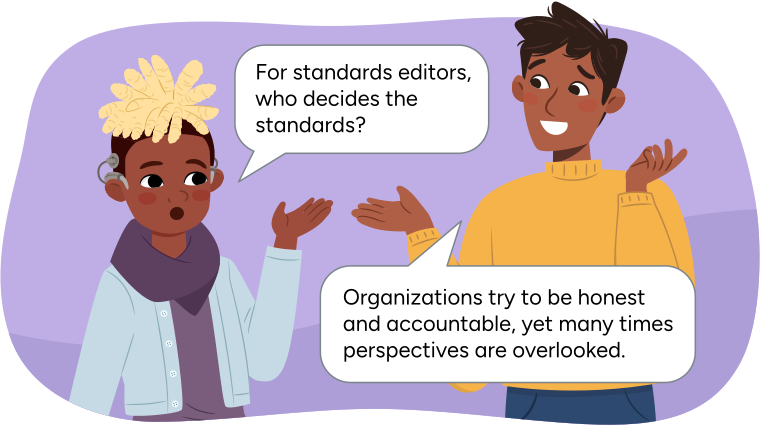
Marcel and Teacher Ravi having a conversation.
Marcel says, "For standards editors, who decides the standards?"
Teacher Ravi says, "Organizations try to be honest and accountable, yet many
times perspectives are overlooked."
Satire

Did You Know?
Did you know?

Satire is fiction or an exaggeration that is intended to be humorous, with the overall goal of highlighting or exposing a greater truth within society. Satire is a form of critical thought that invites different interpretations, and it often sparks productive debate.
Let’s explore an article from a Canadian satirical news site, The Beaverton.
Press the Article button to access the Coffee Time Manager Going To Pretend That All The Spiderwebs Are Halloween Decorations.
Article(Opens in a new tab)After you explored the article, think about the following statements and whether they are true or false.
Select the correct answer, then press Check Answer to see how you did.
Satirical misinformation
Popular satirical publications intentionally produce misinformation as a way to inspire critical thinking about real issues that exist in society. Sometimes the exaggeration in satire is so far-fetched that the inaccuracies become so obvious it can be hard not to laugh!
Press Misinformation to learn more about the term.
Misinformation
| Definition | Characteristics | Examples | Non-examples |
|---|---|---|---|
| Information that is incorrect | If shared online, it’s usually by someone who doesn’t know the information is untrue. |
Accidental: A journalist mistakenly includes an inaccurate detail. Purposeful: In satire, it’s used to exaggerate or invent facts, which can mislead those who mistake satire for fact. |
A well researched scientific article, autobiography, etc. |
For example, it is so unlikely that a restaurant manager would admit to a journalist that they allowed a pumpkin to rot indoors for over a year or that they decorated using the dust sitting on tables. These details act as hints to the audience that this is a satirical article.
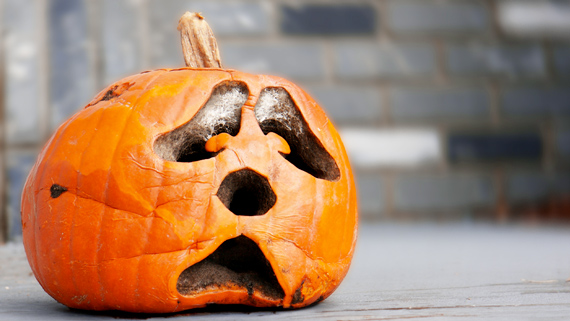
The risk with satirical misinformation is that it requires a certain degree of audience awareness in order to function as intended. For the Beaverton article, the reader would need to be aware of both Coffee Time and its dwindling popularity across the country. In other words, the reader has to get the joke!

Investigate
Investigate
Let’s investigate how the humorous exaggeration of Coffee Time’s deterioration could mislead certain audiences!
You may complete the fillable and printable Misleading Audiences table in your notebook or use the following document. If you would like, you can use speech-to-text or audio recording tools to record your thoughts.
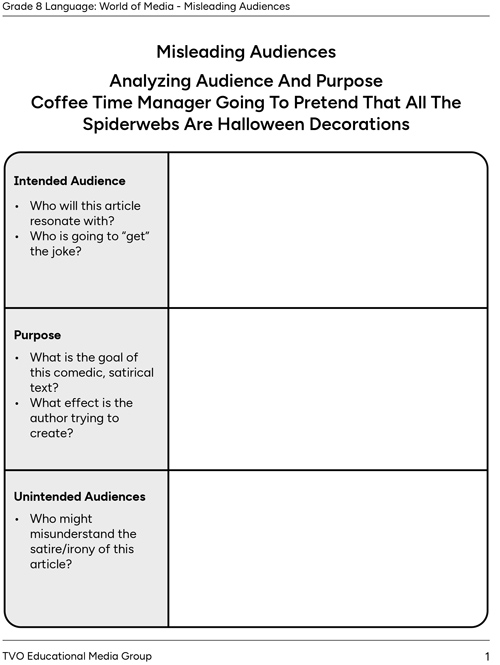
When you’re ready, press Let’s Check! to explore a sample response to the Misleading Audiences activity.
|
Intended Audiences
|
|
|
Purpose
|
|
|
Unintended Audiences
|
|
Disinformation?
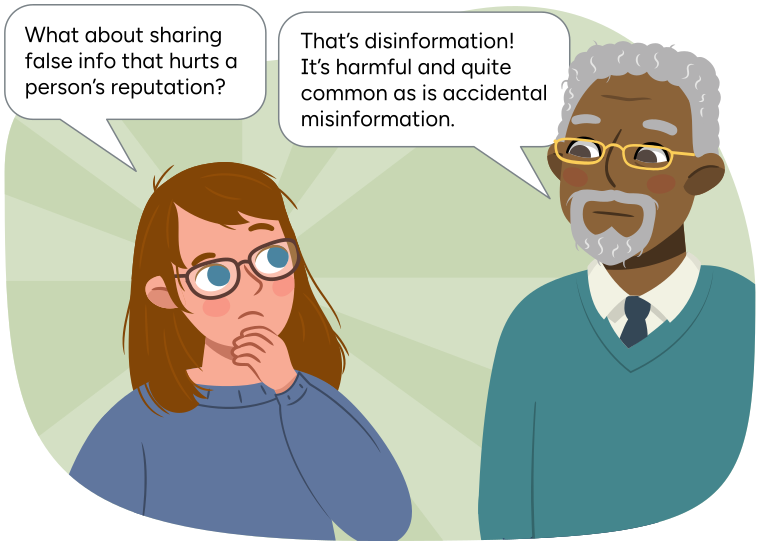
A conversation between Ava and Teacher Wilfred.
Ava says, "What about sharing false info that hurts a person's
reputation?"
Teacher Wilfred says, "That's disinformation! It's harmful and quite common as
is accidental misinformation."
Information that contains intentional inaccuracies and false statements, with the aim to mislead and upset certain audiences, is referred to as disinformation.
Disinformation is far more harmful than misinformation, as it is neither designed to spark constructive critical thinking nor be comedic or amusing for its audience.
Disinformation is also not intended to be corrected, revised, or clarified. It is meant to be believed at face value to cause an irrationally emotional reaction, compromise someone’s public image, and compromise the public’s faith in traditional media practices.
Let’s learn more about the different types of disinformation.
Identifying disinformation
What are a few strategies that we can use to confirm the accuracy and truthfulness of information?
Check out the following video to learn about identifying accurate information.
After exploring the video, think about how Ava determined if the information was true or false.
Record your thoughts in a notebook or another method of your choice.
Detection checklist
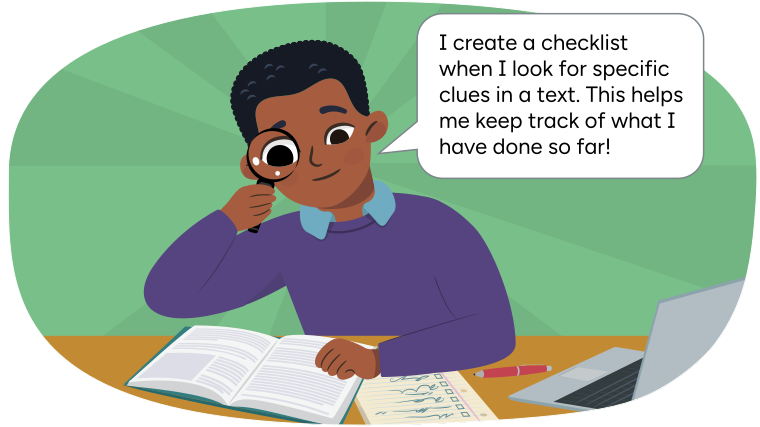
Detecting disinformation can be tricky.
Unlike critical misinformation or satire, which often over-exaggerates inaccuracies for comedic effect, disinformation is carefully designed to be hard to recognize. This is especially true for some of the more sophisticated disinformation that is spread by cyber criminals, certain governments, or dedicated activist groups.
When a country or group coordinates a complicated plan of spreading disinformation, it is often referred to as a “disinformation campaign.”
To verify what you’re reading or watching is accurate, there are a series of specific steps you can take. Press the following tabs to learn more.
Start off with questions, then consider the following:
- Why should you believe this information?
- Maybe you already know something about the content and what you know doesn’t match what the message is saying. You need to investigate further.
- Ask someone else, like a trusted adult or peer, if they know anything about this. They may already know that the content is false, or they may help you investigate further.
Explore the media to identify where the story first originated. It might have been shared many times.
Then, consider the following:
- Is the source trustworthy? Is it reliable?
- Is there something strange about the website or the website address?
- Are there spelling/grammar mistakes that could suggest this is not a professional media outlet?

Student Wellness
Student Wellness
Let’s think about what we’ve learned about disinformation.
Press Disinformation to explore and review the term.
Disinformation
| Definition | Characteristics | Examples | Non-examples |
|---|---|---|---|
| Information that is intentionally untruthful and created on purpose. | Deliberate lies, inaccurate facts, and false news that are intentionally spread in the media. |
|
|
Then, take a break to freestyle draw, write, or colour.

Grammar
Grammar glimpse: Prefixes
Did you know that prefixes can help give us the meaning of words?
| Pre | Fix |
|---|---|
| Before | To fasten something |
The prefixes before a word give us clues to their meanings.
For example, the words misinformation and disinformation both have the root word ‘information.’
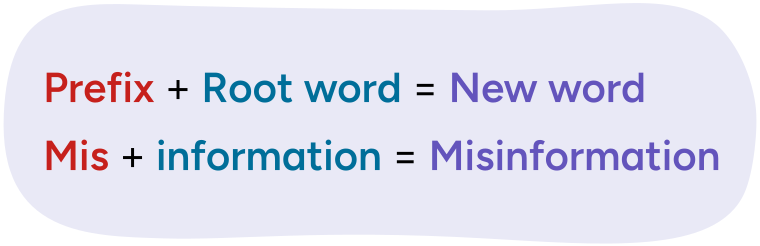
Press Prefixes to check out more examples.
| Prefix and Meaning | Root Word | New Word Created | Definition of the New Word |
|---|---|---|---|
| Mis=wrong | Information | Misinformation | Wrong information |
| Deed | Misdeed | A wrong deed | |
| Lead | Mislead | The wrong idea about something | |
| Spell | Misspell | Wrong spelling | |
| Dis=not | Information | Disinformation | Not information |
| Order | Disorder | Not in order | |
| Similar | Dissimilar | Not similar | |
| Appear | Disappear | Not appear |
Press Hint to learn more.
When adding a prefix to a root word that begins with the same letter, you will have double letters in the new word.
For example:
- mis+spell = misspell
- dis+similar = dissimilar

Vocabulary
Vocab goals!
Let’s review and recap our vocabulary.
-
Misinformation
-
Satire
-
Intended
-
Disinformation
-
Source
Some of the words were defined throughout the learning activity.
For the unfamiliar words, let’s use the following strategies to determine a possible definition and understanding of the term:
Vocab strategies

Reading aloud
Let’s read aloud the vocabulary words or the prefixes previously explored.
If possible, record yourself with an audio recorder or a device.
How did you do?
Did you stumble over any words?
Did you correctly pronounce each syllable of the word?
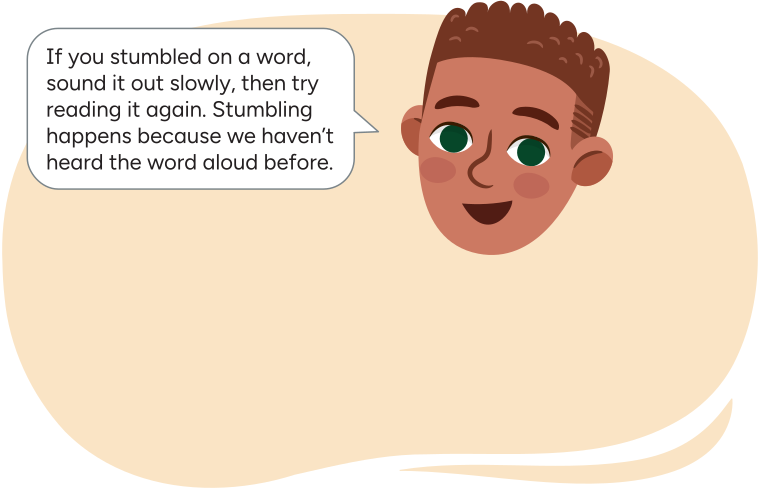
William saying, "If you stumbled on a word, sound it out slowly, then try reading it again. Stumbling happens because we haven't heard the word aloud before."
Wrap up
Let’s review the steps we can take when detecting disinformation.
Student Success
Think
Choose one of the prompts to think further about:
- Option A: Reflect on your plan to assess the accuracy and truth of information. How does it help you interact online to support the well-being of yourself and others?
- Option B: Think about your activity online. What are two ways you can improve how you’re assessing information?
Record your thoughts and ideas in a notebook or another method of your choice.
Learning check!
After reviewing the vocabulary, let’s match the correct definition for each term.
Reflection
As you read the following descriptions, select the one that best describes your current understanding of the learning in this activity. Press the corresponding button once you have made your choice.