Noticing and Naming the Learning
What are you going to learn today?
We are learning to…
- identify, describe and create patterns
- find the part of the pattern that repeats (the core)
- describe why the core is important
- show patterns in different ways with the core staying the same
- continue patterns in both directions
- identify the missing parts of a pattern
How do I show what I have learned?
I can…
- find and talk about patterns I see around me
- make my own pattern using colours, shapes, sounds, or objects
- show and describe the part of the pattern that repeats (the core)
- tell what comes next in a pattern and explain my thinking
- fix or fill in a missing part of a pattern
Minds On
Let’s get ready to learn!
Before we begin our learning, let’s wake up our minds with a warm up.

Social Emotional Learning
Warm up
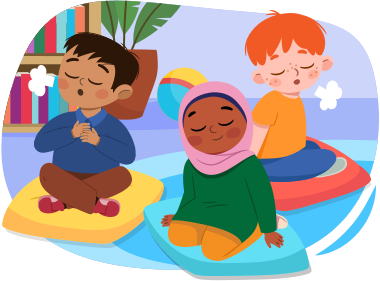
Find a safe space.
Sit down or lie down and close your eyes.
Slowly breathe in through your nose.
Then hold your breath for a few seconds.
Slowly breathe out through your mouth.
Do this for 3 breaths.
Listen to the Breathing In and Out audio to follow along.
Breathing In and Out
What is a pattern?
A pattern is a group of shapes, colours, numbers, or objects that repeat.
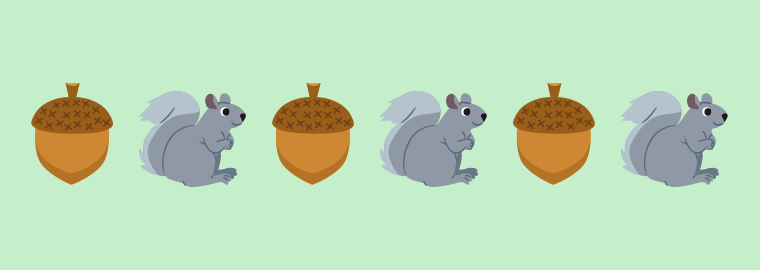
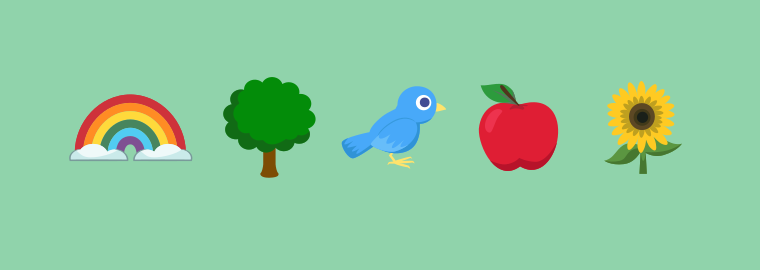
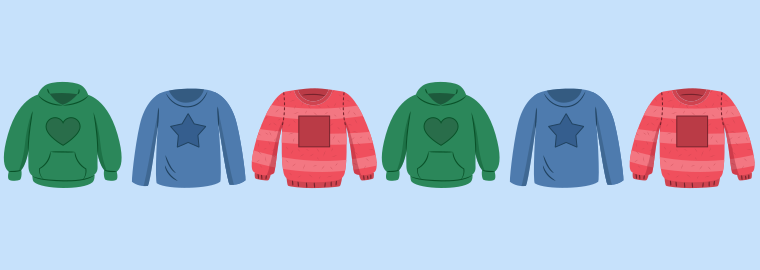
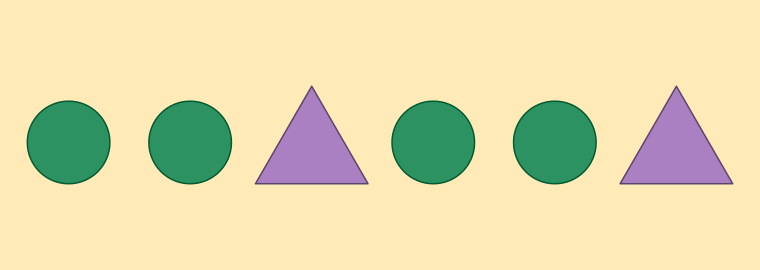
Explore the following art.
What do you see, think, or wonder about each of them?
Do you notice any patterns?
Share your thoughts with someone if you can.
As you work through this learning activity, you can record your ideas in many ways.
Listen to the following audio recording to learn more about how to record your ideas.
How to Record Your Ideas
Action
A pattern core
When you are repeating the same thing in a pattern, like "car, truck, car, truck", the “car, truck” part is repeating over and over. The part of the pattern that repeats again and again is called the core.
Let's explore an example of a pattern and its core.
What is the core of the following pattern?
red apple, yellow banana, yellow banana, red apple, yellow banana, yellow banana
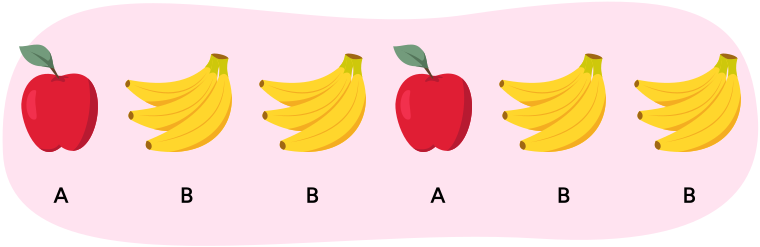
If we described the core of this pattern with letters, the pattern would be called an “ABB” pattern. This is because there is one apple, and two bananas.
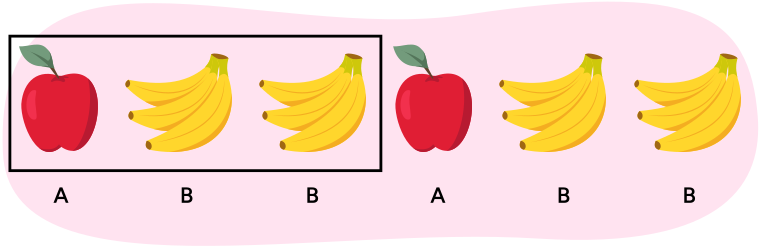
The pattern core is the part of the pattern that keeps repeating. In this pattern, the core is “apple, banana, banana”!
Let’s watch the TVO Kids video, Gabrielle is GG Styles and Patterns, to learn more about different pattern cores!
Which pattern cores did GG Styles learn?
Press the Reveal button to find out.
GG Styles learned the:
- AB pattern core
- AAB pattern core
- ABC pattern core
She chose an ABC pattern core.
Extending patterns
Let’s practice extending a pattern.
A pattern is extended in both directions by adding the correct object in the right order.
When you get to the end of the pattern, think about what object should come next.
Record and share your thoughts with someone else if you can.
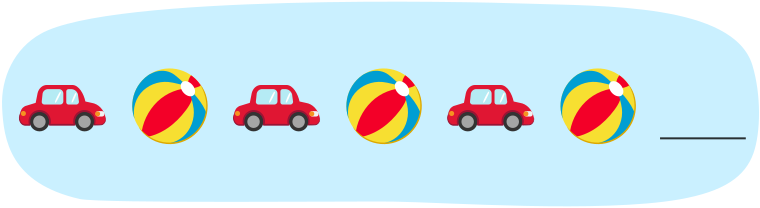
Listen to the following audio recording to follow along.
Extend a Pattern 1
When you get to the end of the pattern, think about what object should come next.
Record and share your thoughts with someone else if you can.
Let’s try a few more questions! Extend the pattern. What comes before?
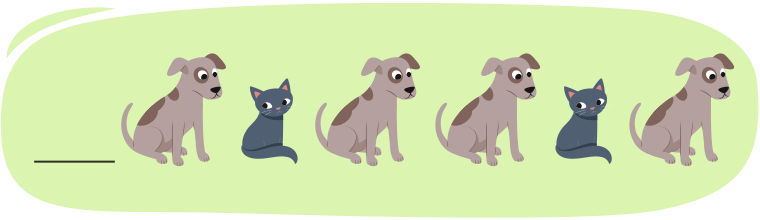
Listen to the audio recording to follow along.
Extend a Pattern 2
Let’s try one more! Can you extend the next pattern?

Listen to the audio recording to follow along.
Extend a Pattern 3
Great work! Let's keep going.
Body break!
Let’s take a break and move!
Before you begin:
- Find a safe space. Move anything you might bump into.
- How are you feeling? Listen to your body and take breaks.
- Ask an adult before getting materials or if you need help.
Follow the steps to move your body. You can also follow along with the audio.
Do whatever feels most comfortable for you.
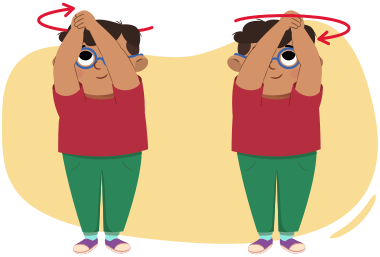
A learner is standing with both arms raised over their head. With their hands clasped together, they are moving their arms in a circular motion.
- Start by standing or sitting.
- Marching on the spot, raise your arms in the air.
- Slowly make circles going one way, do this five times.
- Slowly make circles going the other way, do this five times.
- Try and make different shapes.
- Repeat this one more time!
Circles
Let’s check!
Look at the following flower pattern that has red flowers and yellow sunflowers.
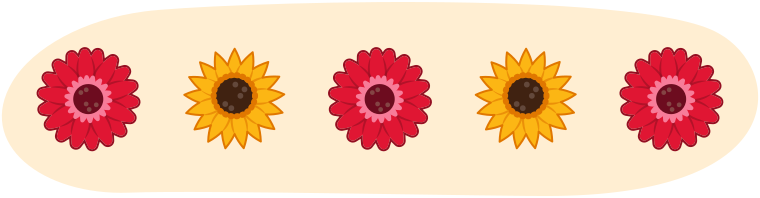
A pattern of yellow sunflowers and red gerbera flowers. The pattern is: gerbera flower, sunflower, gerbera flower, sunflower, gerbera flower.
How can you continue to extend the pattern?
Let’s explore the Ten Frame to find out! Use the two flower stickers to extend the pattern.
Try using it yourself and you can always ask for help if you need!
What comes after the red flower? How do you know?
What is the most important thing that you’ve learned about making patterns?
What do you want to learn more about?
Record your thoughts and share with someone else if you can.

Printing practice
P is for Pattern.
Let’s practice printing the letter P.
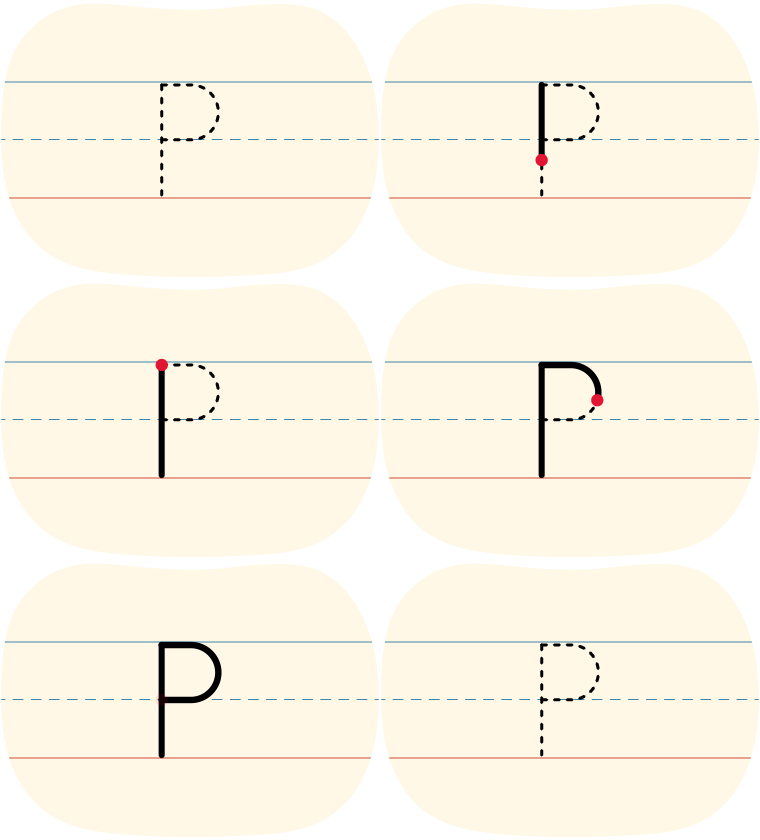
Now, you try!
Practice printing this letter in your notebook or using a method of your choice.
Use the following checklist to learn some printing tips.
When you are printing:
Consolidation
Time to explore!
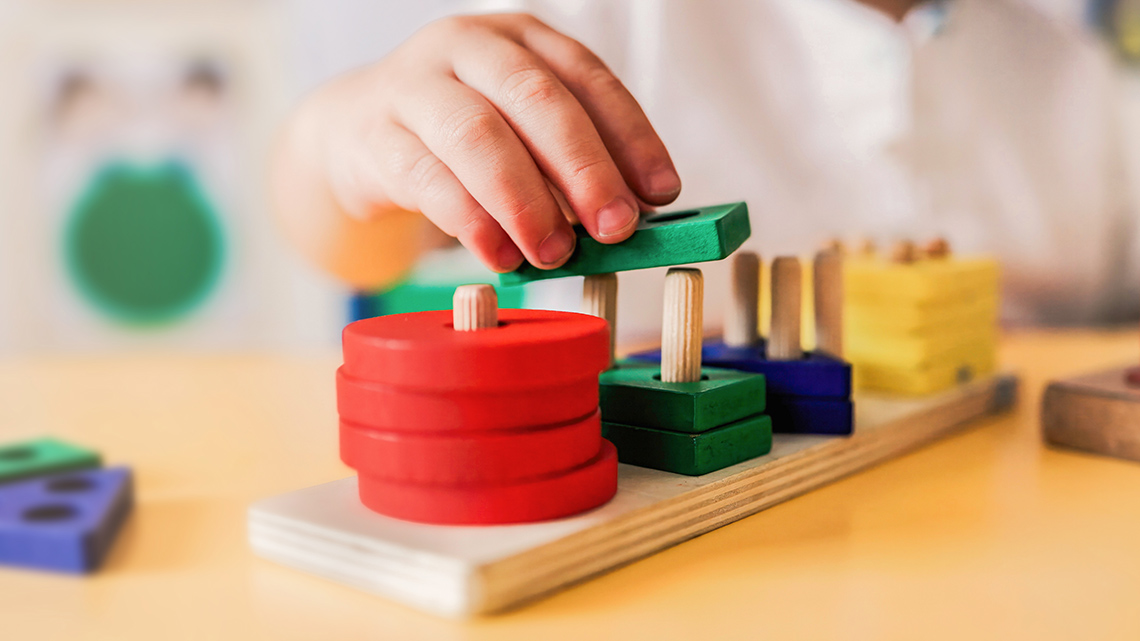
Check out some fun ideas to help you learn more about patterns.
You can choose one or more centres to explore.



Arts
Making patterns with music!
We can make patterns with music!
Explore some different ways you can choose to make music.
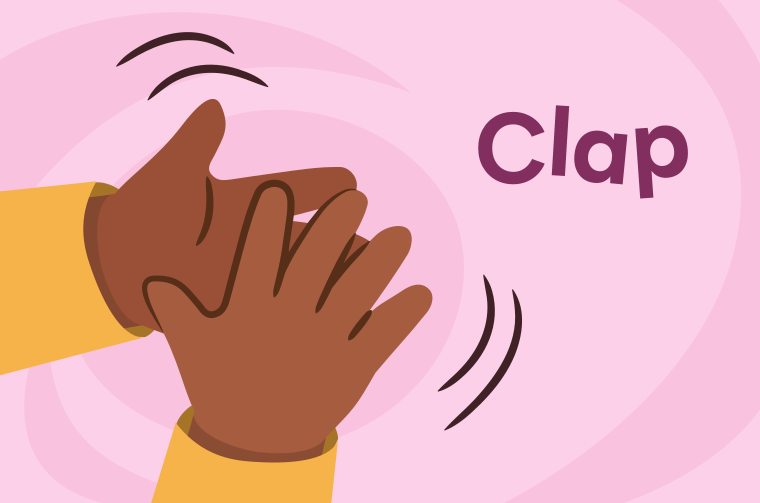
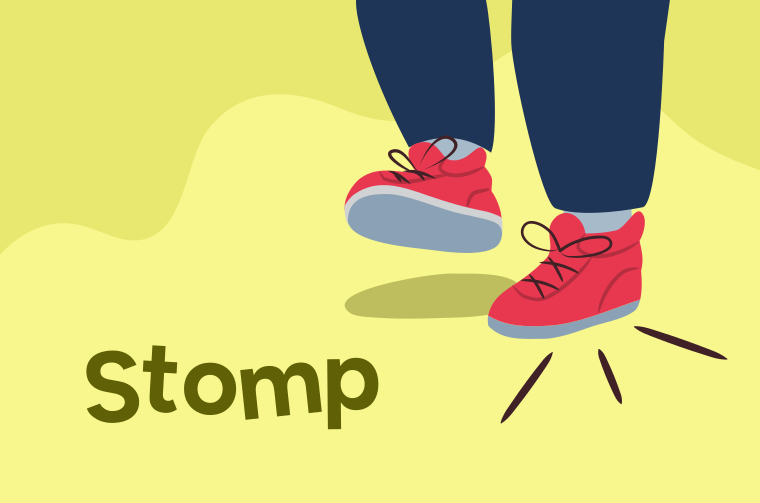
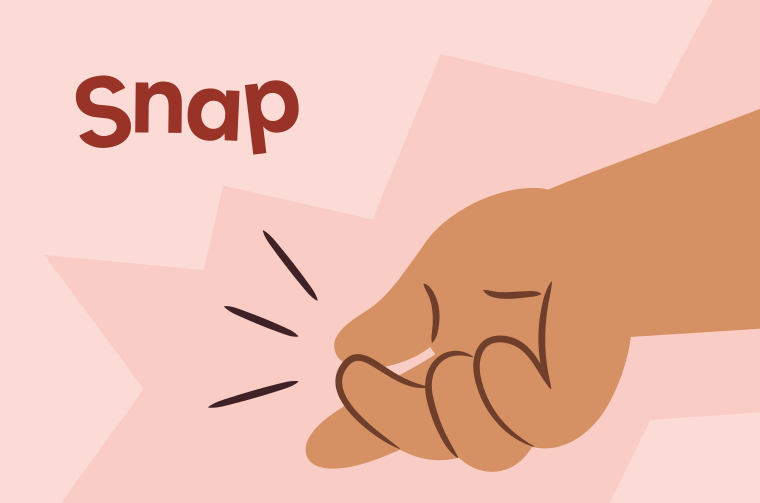
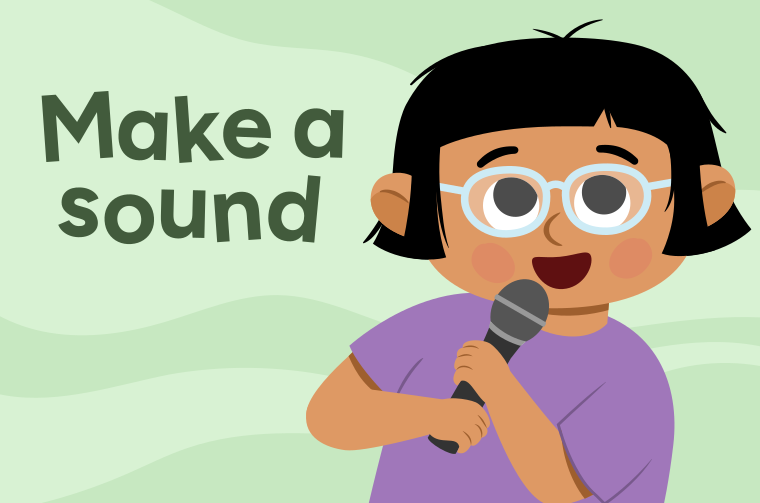
Now, using these actions or any other music-making tools you have, we are going to turn these picture patterns into music patterns!
Picture pattern 1
What do you notice about the pattern?
What is the core of this pattern?

When you are ready press the Answer button to find out.
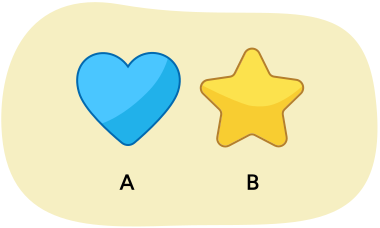
The core of this pattern is AB
How could we make the pattern with sounds?
When you are ready press the Answer button to find out.
Explore the following recording to find out how we can make the pattern with sounds.
Pattern with Sounds
Now, you try saying it and playing it out loud!
Picture pattern 2
Let’s try another pattern.
What is the core of this pattern?
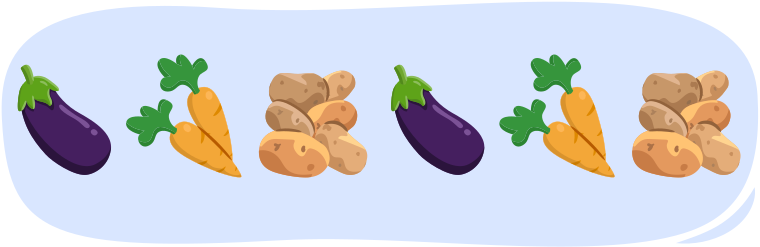
When you are ready press the Answer button to find out.
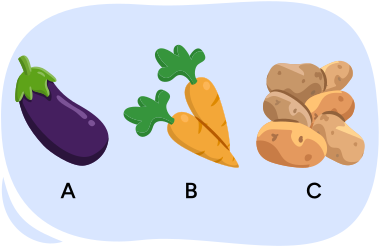
The core of this pattern is ABC.
Can you choose three different sounds for this pattern?
Now, you try saying it and playing it out loud!

Inquiry
Puzzle patterns
Check out the following pattern.
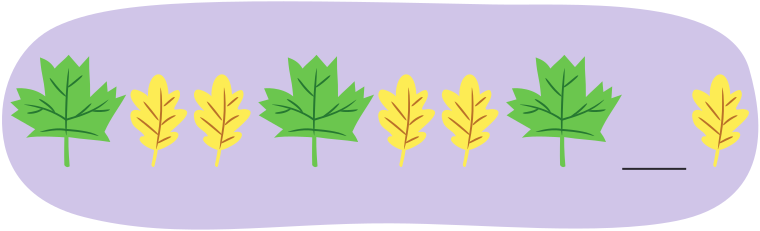
The pattern is big green maple leaf, little oak leaf, little oak leaf, big green maple leaf, little oak leaf, little oak leaf, big green maple leaf, little oak leaf, a blank space and then a little yellow oak leaf. The blank space is to extend the pattern.
What is missing from the pattern?
Using the Ten Frame, place a sticker to complete the pattern.
As you make the pattern, think about the following questions:
- What is the core of the pattern?
- Can you name the core of the pattern with letters? Is your pattern an AB, ABC, or AAB pattern or something else?
- How many different ways can you show an ABAB pattern? How many different ways can you show a ABB pattern? How do you know?

Movement
Patterns with our body!
You can use different body actions to make patterns.
Before you give this a try, make sure you have a safe space around you!
You can also do any other body movements that you feel most comfortable with.
Press the following tabs to explore different actions you can do to make patterns.
To make an AB pattern you can try:
Sit, stand, sit, stand.
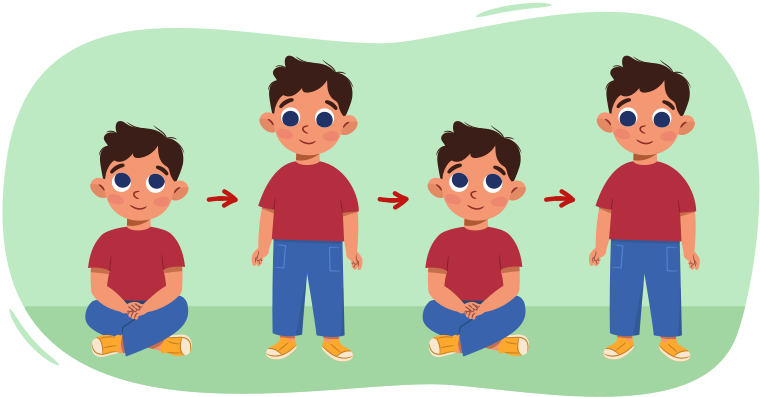
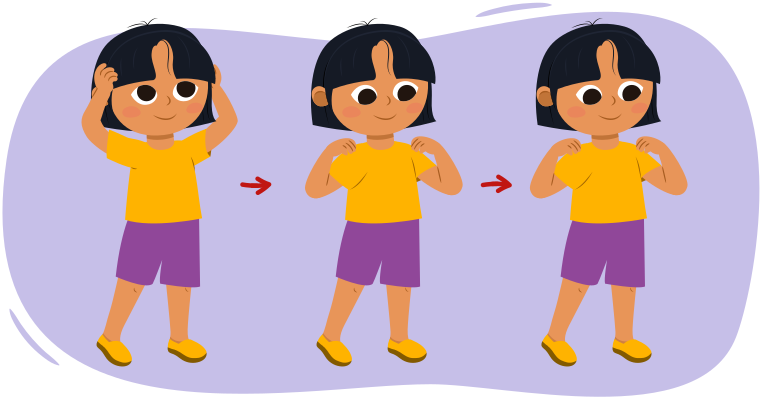
To make an ABB pattern, you can try:
Touch head, touch shoulders, touch shoulders.
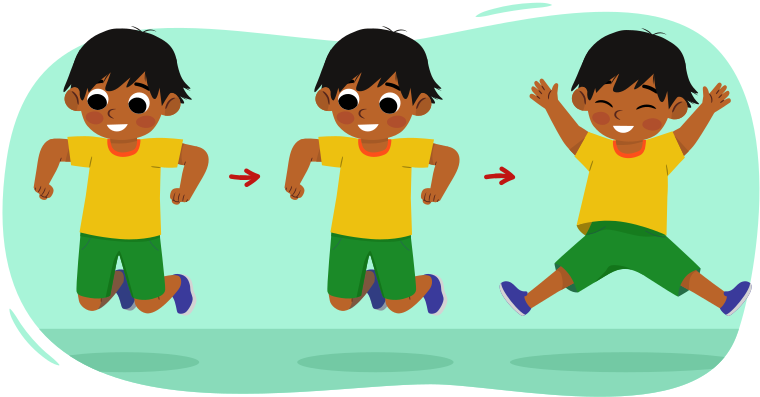
To make an AAB pattern, you can try:
Jump, jump, star pose, jump, jump, star pose.
Can you think of any other patterns you can make with your body?

Literacy
Patternpalooza
Watch the following video clip from Work It Out Wombats called “Backwards Day/Patternpalooza”, where friends try to solve pattern puzzles to get a prize from the fair.
Can you follow along and help them solve the pattern puzzles?
As you watch, follow along and think about the different pattern puzzles:
- What comes next in the pattern?
- What other patterns can you make from the objects in the video?
- Can you write, draw, or make your own pattern?
Record your ideas and share with someone if possible.
Reflection
How do you feel about what you have learned in this activity? Press the button next to the sentence that matches how you feel.