Minds On
Let’s get ready to learn!
Before we begin our learning, let’s wake up our minds with a warm up.

Social Emotional Learning
Warm up
Find a safe space.
Sit down or stand up.
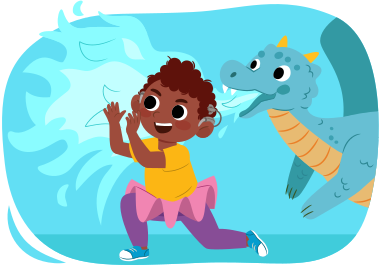
It’s time to breathe like a dragon!
Take a deep breath in and breathe out fast, letting the air swish from your mouth.
Pretend that you are breathing out fire.
Listen to the Dragon Breathing Warm Up audio to follow along.
Dragon Breathing Warm Up
Let’s guess!
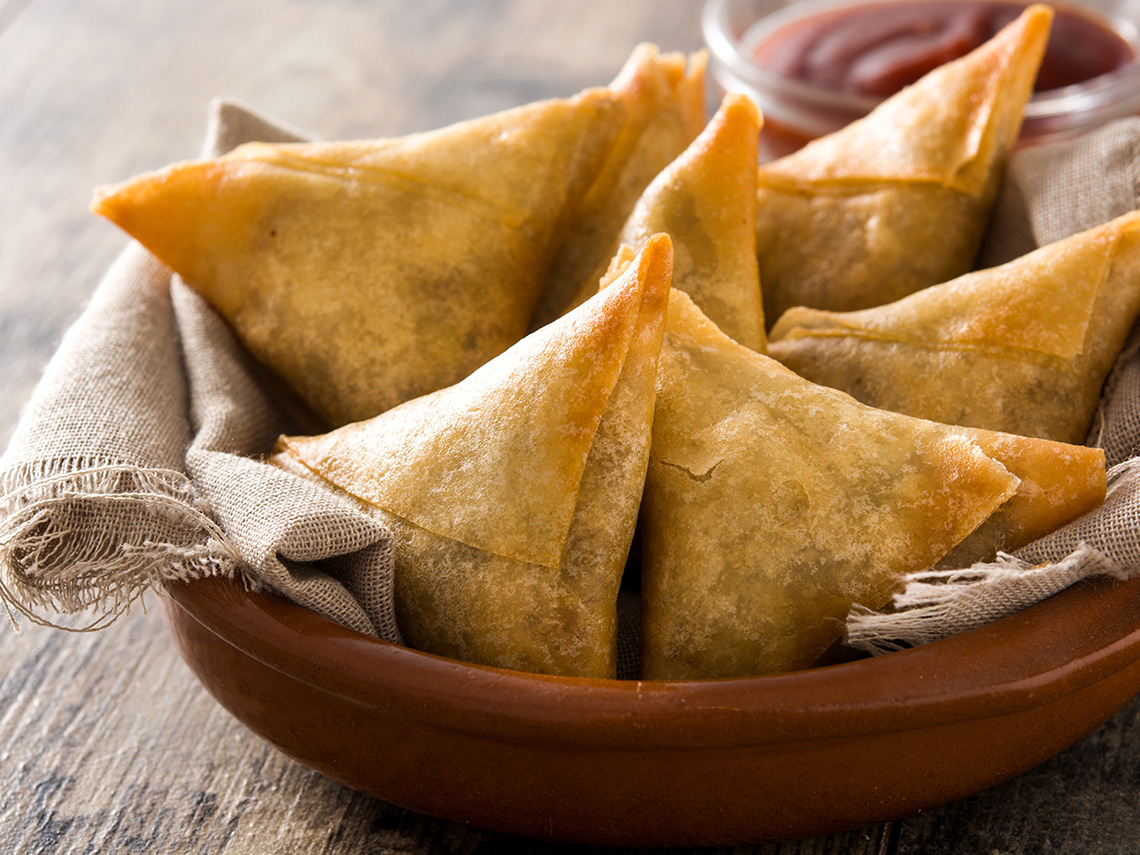
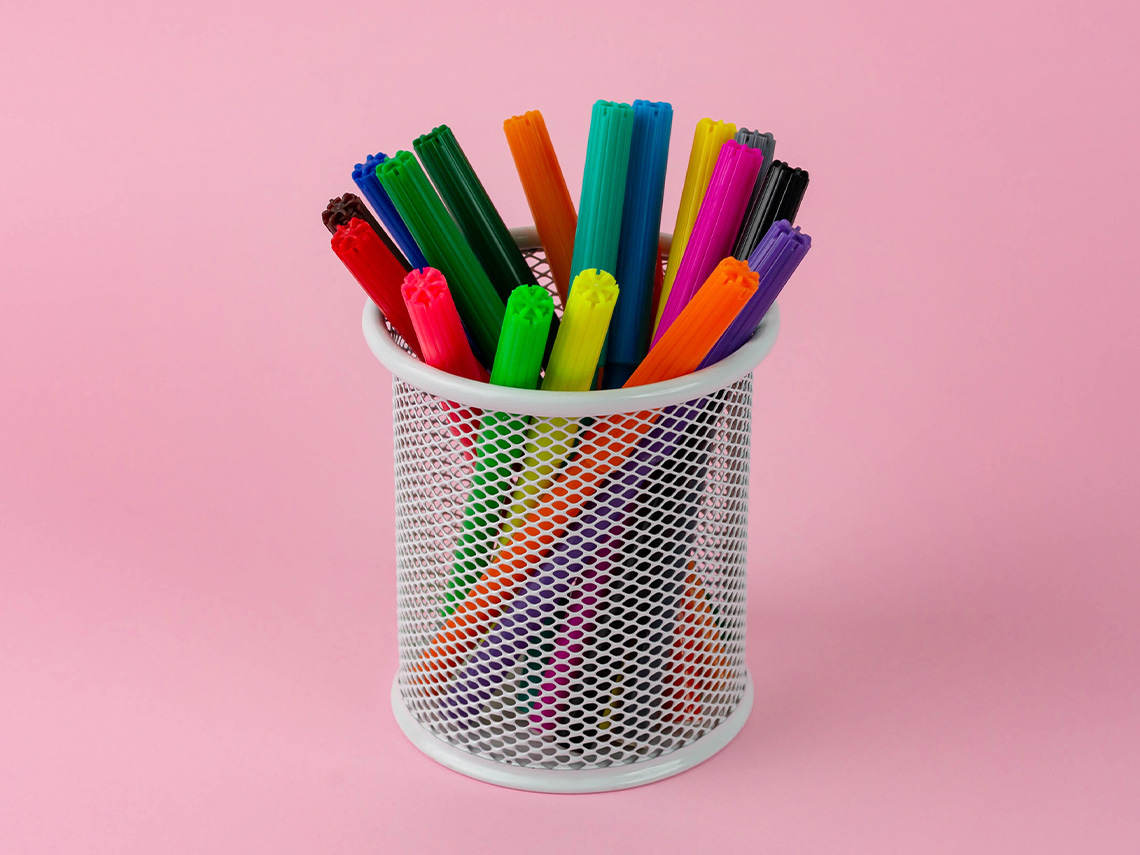
As you explore the images in the carousel, think about the following questions:
- How many objects do you think there are?
- Can you guess without counting?
- Do you think there are more or less than 10?
- What could help you make a good guess?
As you work through this learning activity, you can record your ideas in many ways.
Listen to the following audio recording to learn more about how to record your ideas.
How to Record Your Ideas
Action
Comparing numbers
Estimation is making a reasonable guess about how many or how much something is without counting every single one.
A reasonable guess is a guess that makes sense based on what you are looking at.
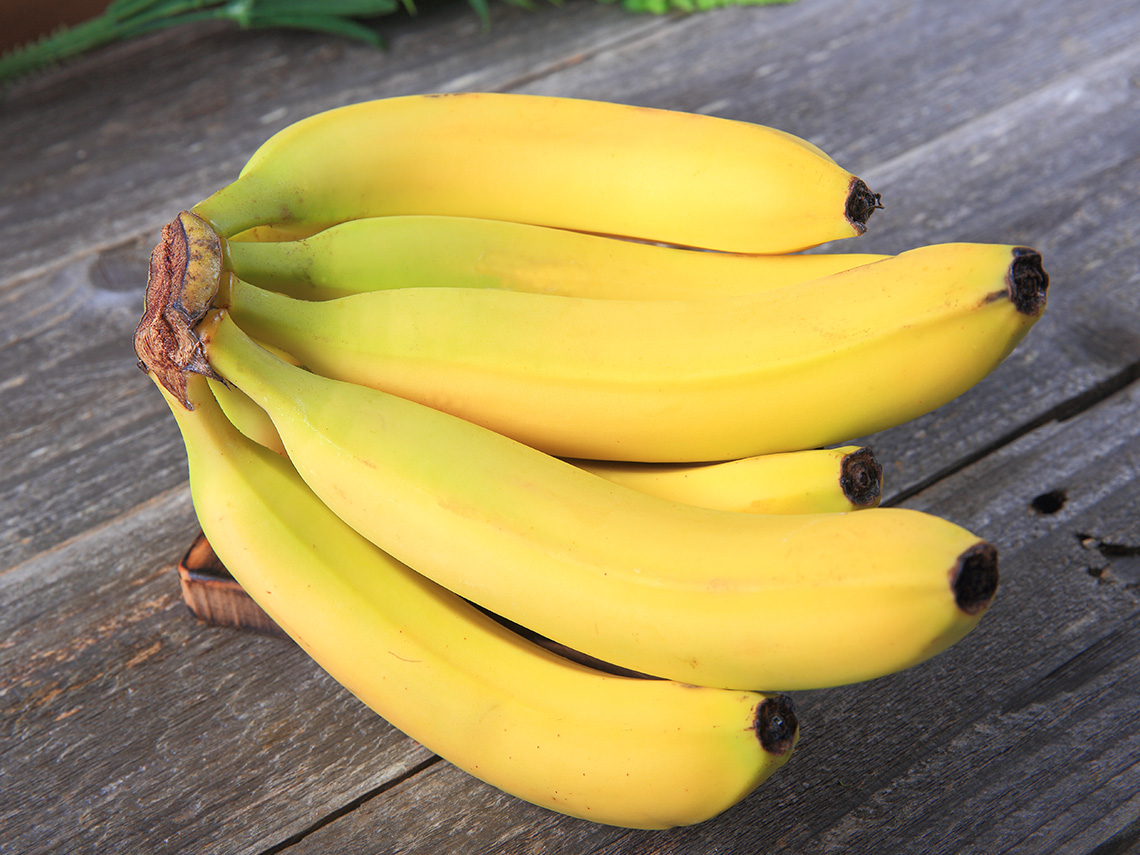
Let’s look at the bunch of bananas again.
Is 100 a reasonable guess for the number of bananas? Or is 6 a reasonable guess?
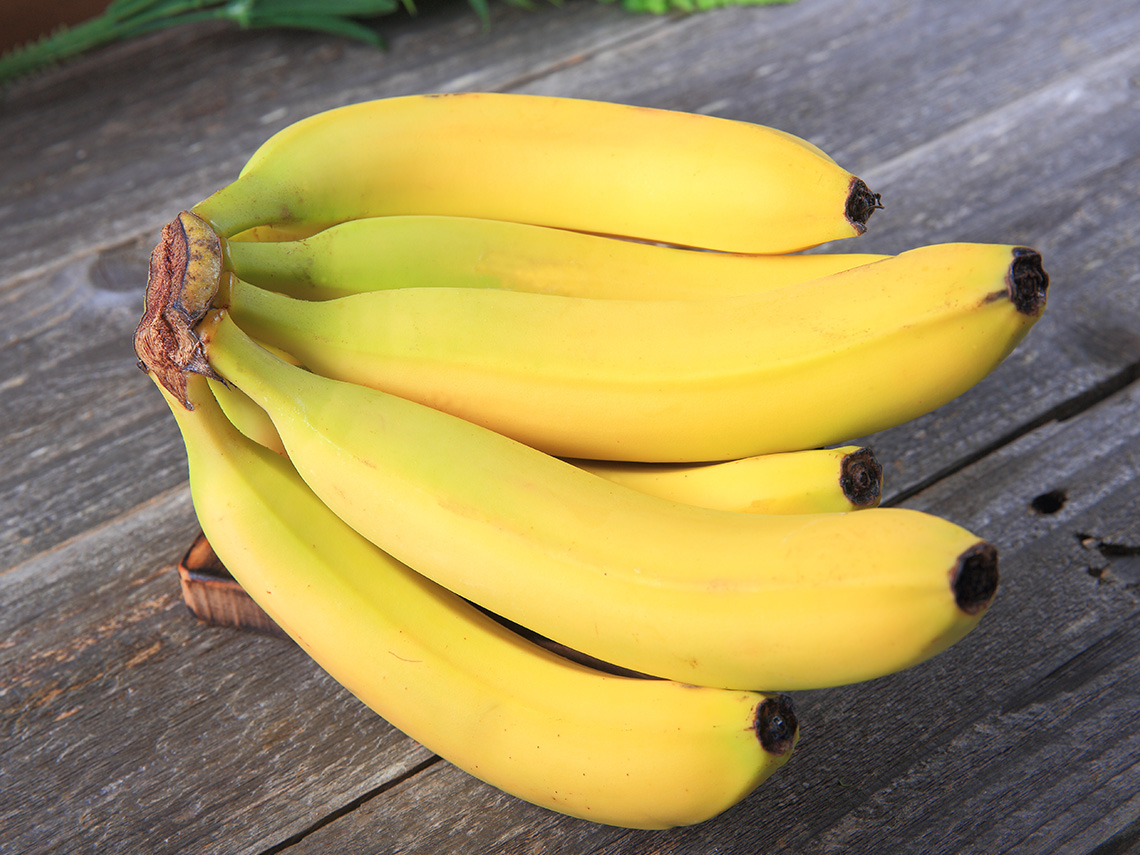
Press the Possible Answer button to find out which number is a reasonable guess.
6 is a reasonable guess. Next, we can count and check!
More or less
Let’s be number detectives!
We’re going to look at groups of objects and figure out the following:
- which group has more
- which has less
- when two groups are the same, or equal
First, let’s review a few definitions. Press the following tabs to find out more.
More means having a bigger number of something.
Less means having a smaller number of something.
Equal means having the same number of something.
In real life, we use these math ideas all the time! Explore the following images for examples.
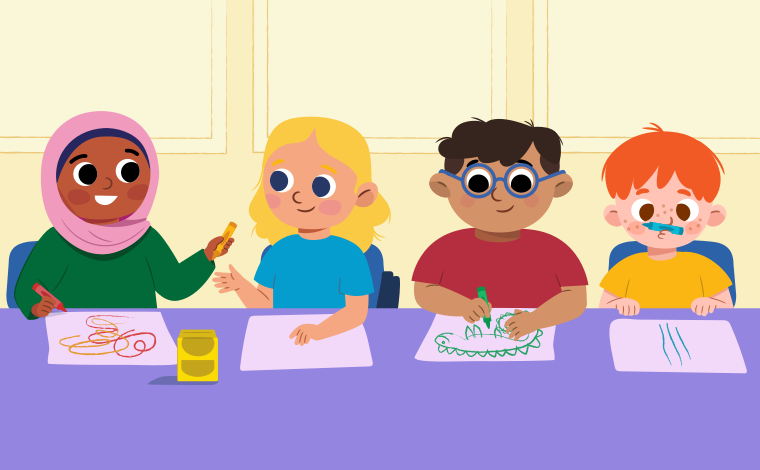
When you’re sharing crayons and want everyone to have the same amount.
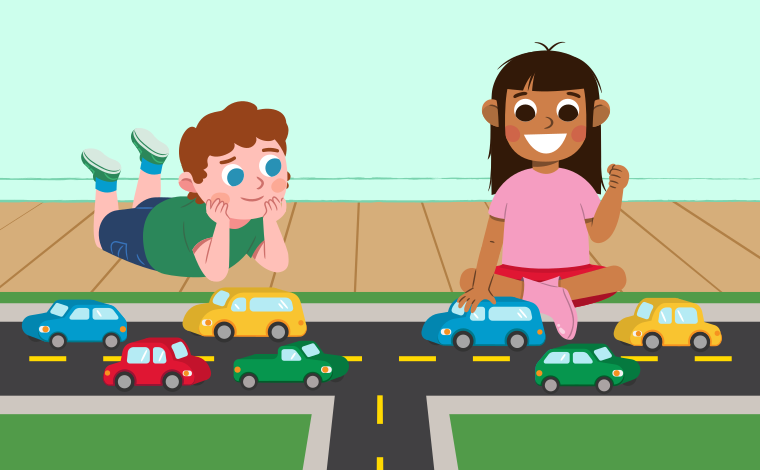
When you want to know if you have more toy cars than your friend.
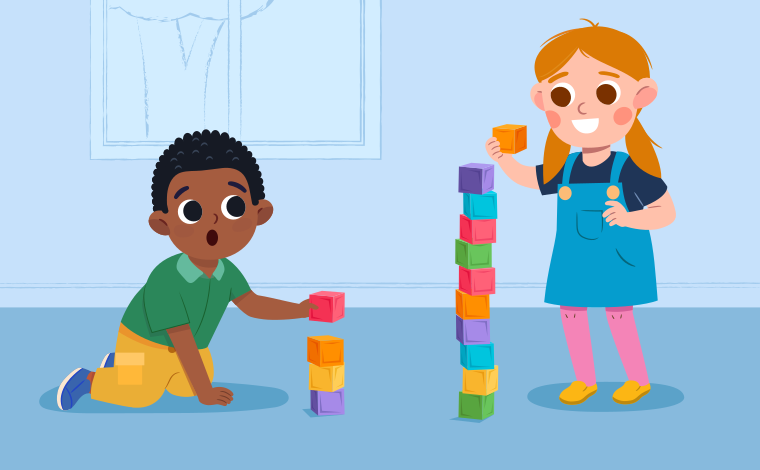
When you’re building with blocks and want to see who built the taller tower.
Let’s practice!
Math helps us be fair, share, and solve problems!
Let’s watch a video by Jack Hartmann titled “Comparing Numbers” to help us think about which groups have more or less!
Let’s practice deciding whether the following groups of items have more, less or are equal.
Look at the following images and decide which has more, less, or equal..
Body break!
Let’s take a break and move!
Before you begin:
- Find a safe space. Move anything you might bump into.
- How are you feeling? Listen to your body and take breaks.
- Ask an adult before getting materials or if you need help.
Follow the steps to move your body. You can also follow along with the audio.
Do whatever feels most comfortable for you.
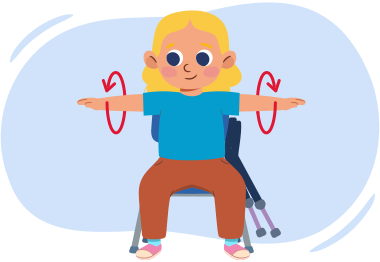
- Start by standing or sitting.
- Raise your arms out and up to your shoulders.
- Slowly make circles going one way, do this 5 times.
- Slowly make circles going the other way, do this 5 times.
- Repeat this stretch one more time!
Side Arm Circles
Equal share
Sometimes we have a group of objects, and we want to share them so that everyone gets the same number. This is called sharing equally, or fair sharing.
Let’s explore the following video where they share shells equally.
What did you notice?
After all the shells had been handed out, how many did each learner have?
Press the Answer button to find out.
Each learner has 2 shells.
Let’s practice!
Let’s practice sharing flowers. Explore the following image.
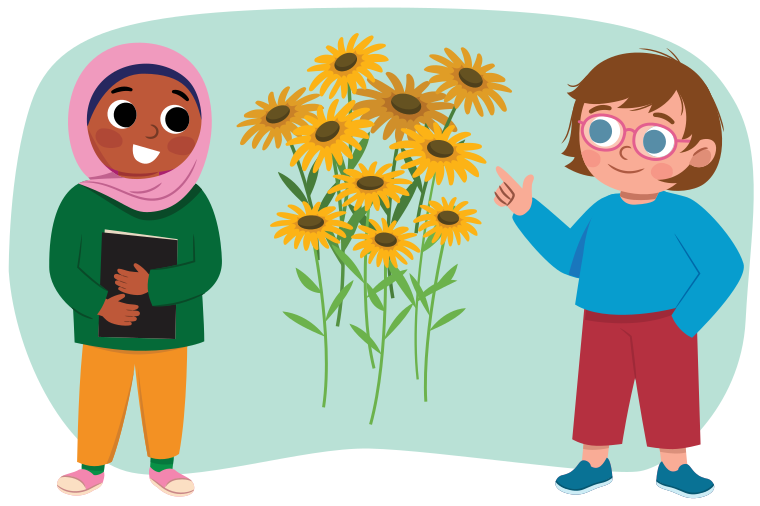
If 2 friends, Esma and Ava, have 10 flowers, how many flowers would each friend get?
Let's explore Ten Frames to help us answer this question!
Place one flower at a time in each of Esma and Ava’s ten frame. Add the same number of flowers to each frame to make up 10 in total.
Let's explore a Ten Frame! Try using it yourself and ask for help if you need it!
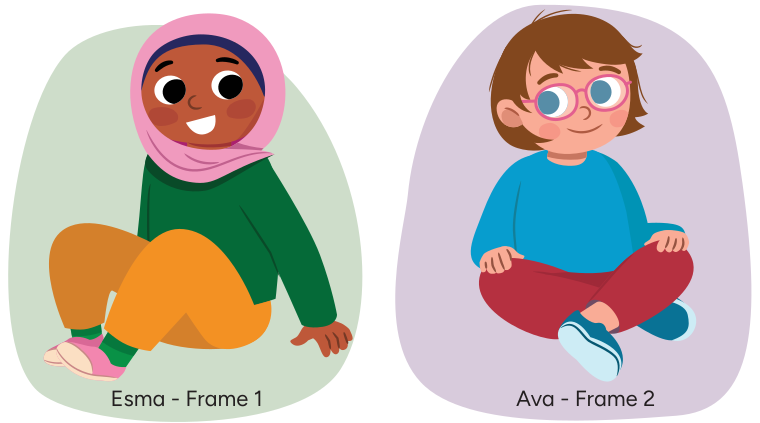
Show your math thinking with pictures, numbers or words, or tell someone your math thinking.
- Did Esma and Ava get the same number?
- What would happen if we had one more friend?
- How could we check our sharing to make sure it’s fair and equal?
Share your thoughts with someone else if you can.

Printing practice
L is for Less.
Let’s practice printing the letter L.
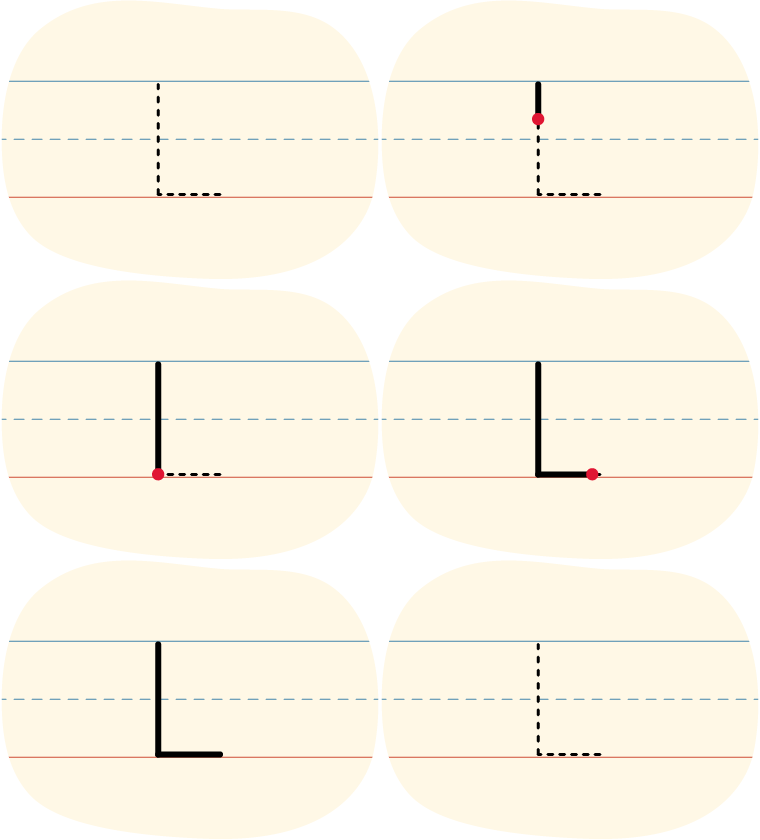
Now, you try!
Practice printing this letter in your notebook or using a method of your choice.
Use the following checklist to explore some printing tips.
When you are printing:
Consolidation
Time to explore!
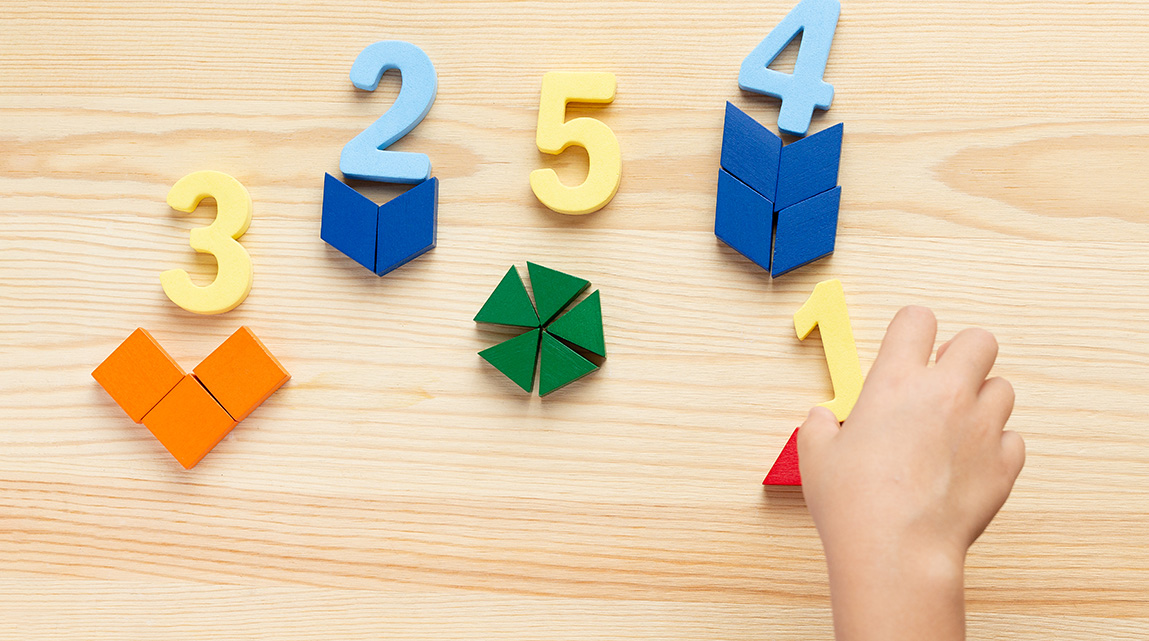
Check out some fun ideas to help you practice fair share and less, more and equal!
You can choose one or more centres to explore.



Arts
Fair share art
Sora is creating some fair share art!
She has to put an equal amount of stickers, shapes or drawings on each side of her paper for it to be fair share art.
If you would like to try this activity, you can follow the steps to learn how.
You can use materials that you have in your learning space. Always ask permission from a trusted adult before gathering your materials.
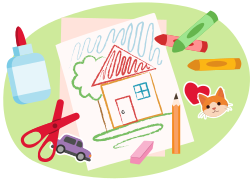
Possible materials
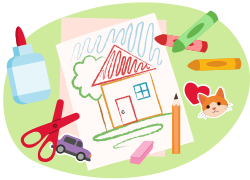
- paper
- colouring tools (crayons, markers, pencil crayons)
- stickers
- stamps
You could also use your imagination to think about how you would design your fair share art!
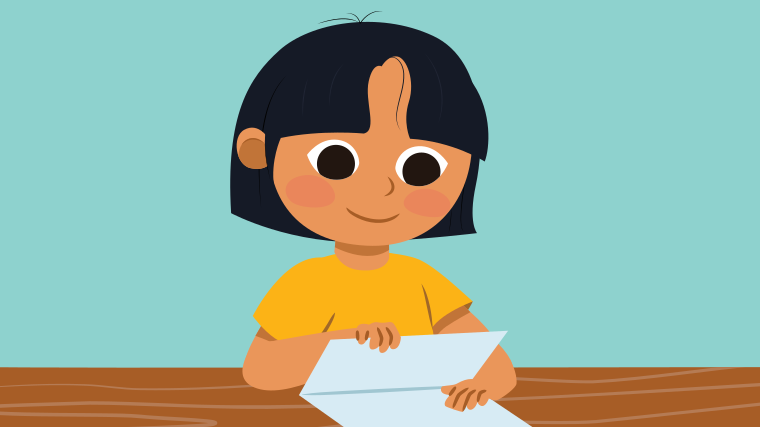
Step 1: Fold a piece of paper into two equal pieces.
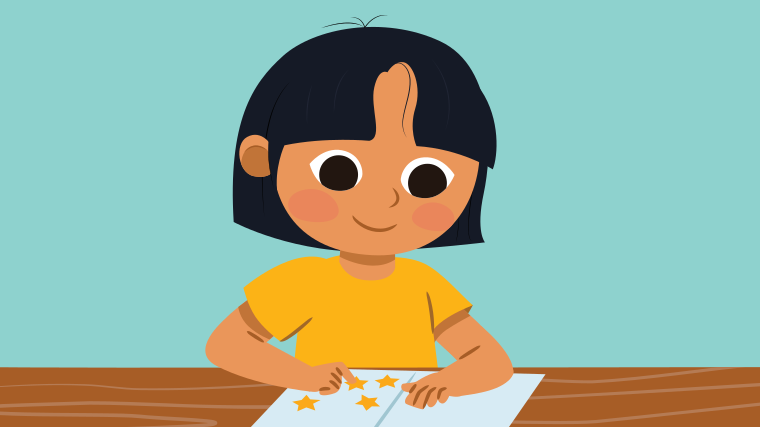
Step 2: Choose a number and create that number of shapes or objects using materials of your choice.
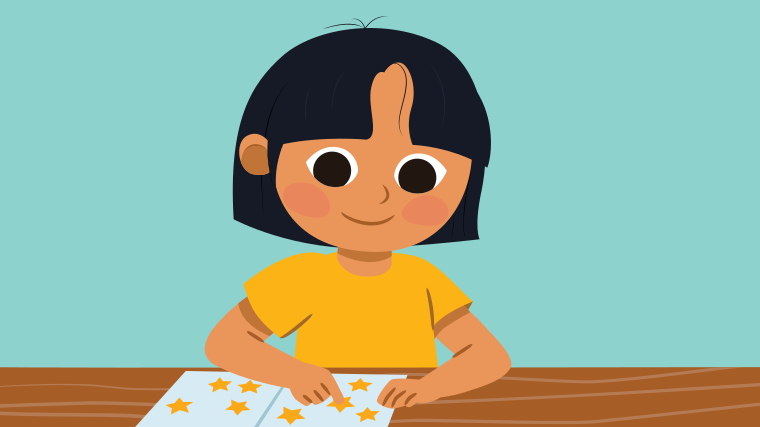
Step 3: Create the equal number of shapes or objects anywhere on the other side of the paper.

Step 4: Keep going until you feel your art is finished!
Share your thoughts with someone else if you can.

Inquiry
How many?
Explore the following flashcards. Can you estimate (make a guess) how many objects there are in each image?
Now, let’s play a game to practice estimation!
If you want to try the game, you can use materials that you have in your learning space. Always ask permission from a trusted adult before gathering your materials.
Possible materials
- a jar, cup, or container
- small objects from your learning space (for example buttons, beads, blocks, pom-poms, toy animals, shells, coins, or others)
- paper or a notebook
- rayons, markers, or pencils
You could also use your imagination to think about what kind of materials you might use.
Press the following tabs to learn how to create an estimation jar.
Collect a bunch of small objects from your learning space. You can choose what you like!
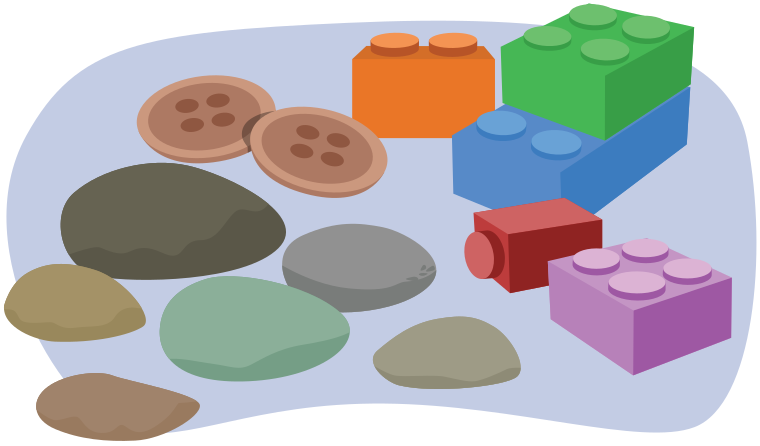
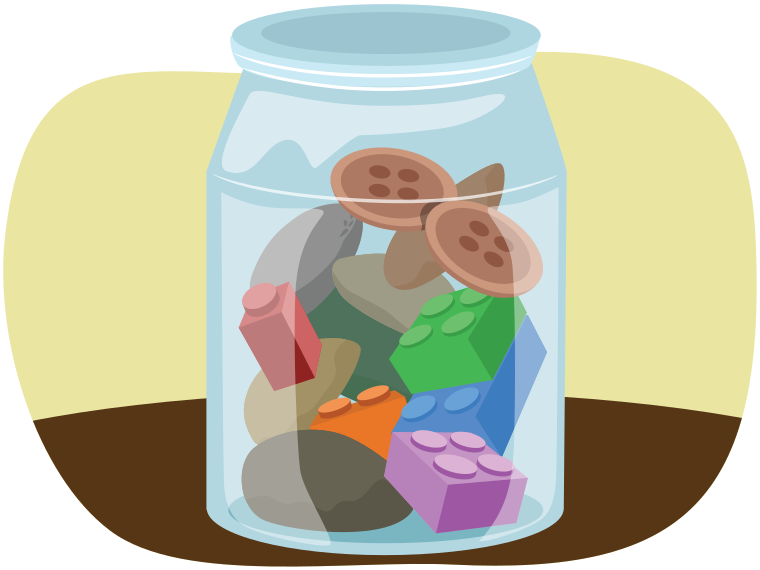
Put all your objects into your jar, cup, or container.
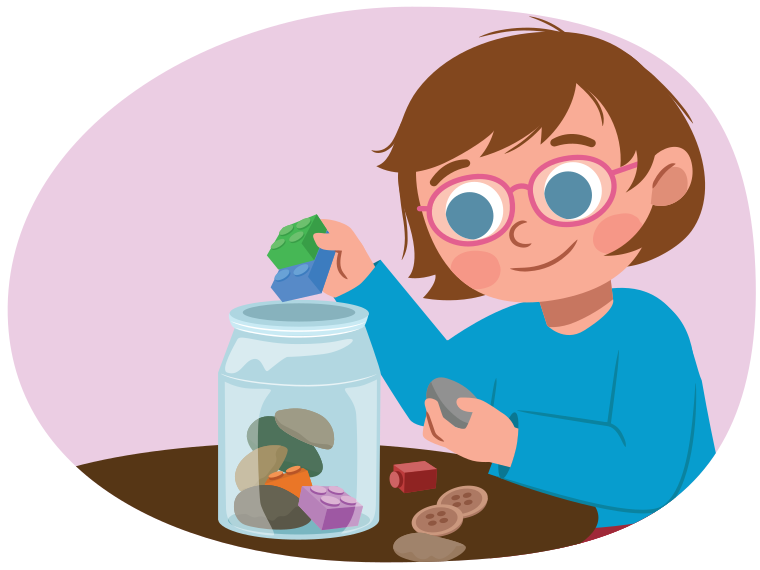
Look at your jar and make an estimate (guess) about how many objects are inside.
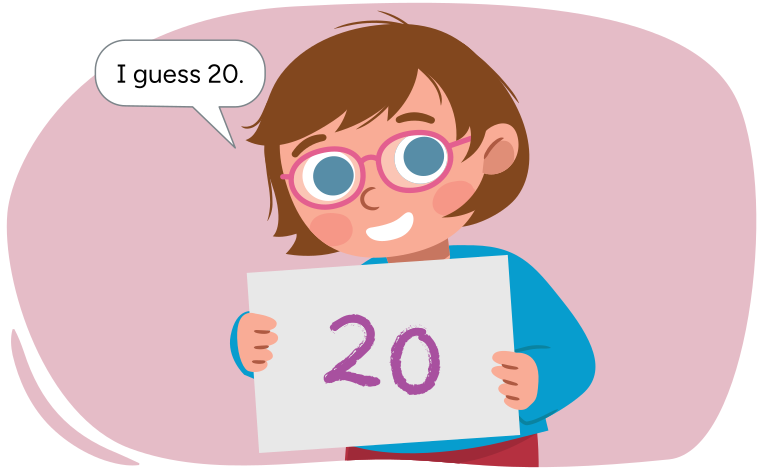
Record your guess in a way that makes sense to you. You could do the following:
- Draw a picture of the objects.
- Write a number.
- Write the number word.
- Make tally marks.
- Say the number out loud.
Now, count the objects to see how close your guess was.
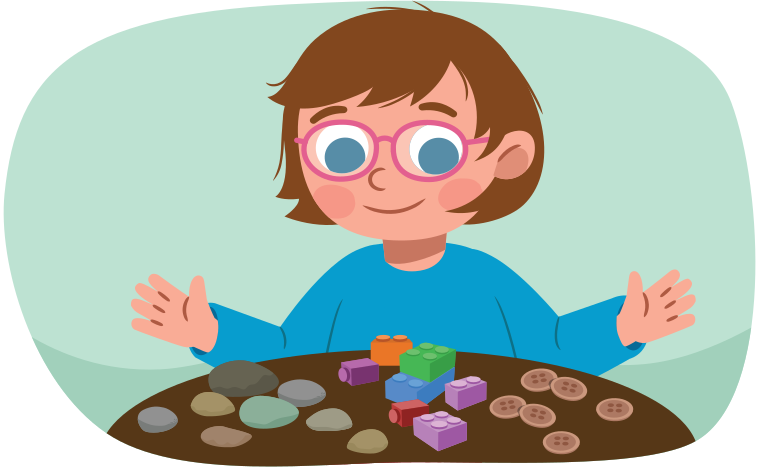
Repeat with different combinations of objects or different starting numbers.
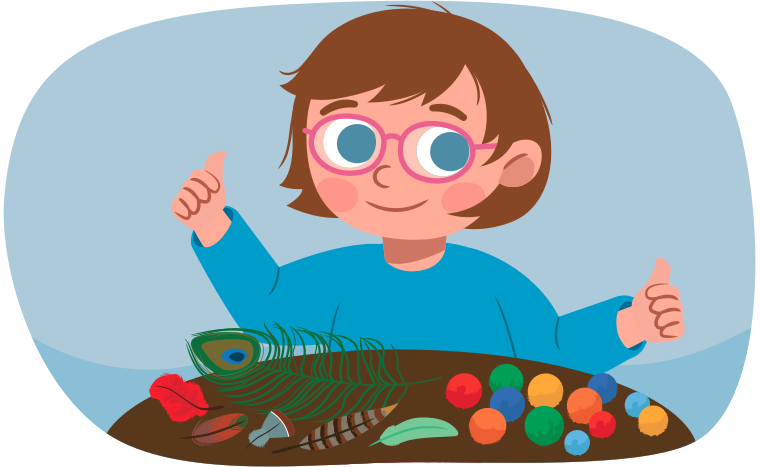
Use the following questions to talk or write about your thinking:
- Was your guess too high or too low?
- How did you decide your estimate?
Share your thoughts with someone else if you can.

Try it
Try it
- Make two jars with different objects and guess which one has more and which one has less.
- Try it with someone else. Take turns guessing each other’s jars.

Movement
More, less and equal movement game
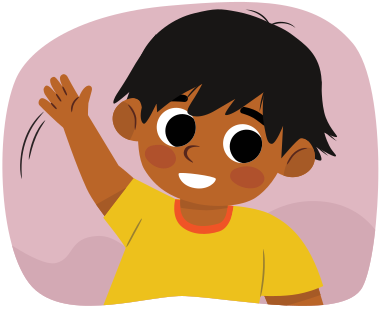
Let’s play a movement game with Antonio!
Before you begin, press the following tabs to get ready.
Have you moved any objects that you might bump into?
Listen to your body. Take breaks or stop if you need to.
Follow the steps to move your body. You can also do any action that feels most comfortable for you.
Choose a movement. Some examples of types of movements are the following:
- a stretch
- a clap
- a snap
- a stomp
- a jump
Once you have chosen your movement, it’s time to begin!
Antonio claps 6 times.
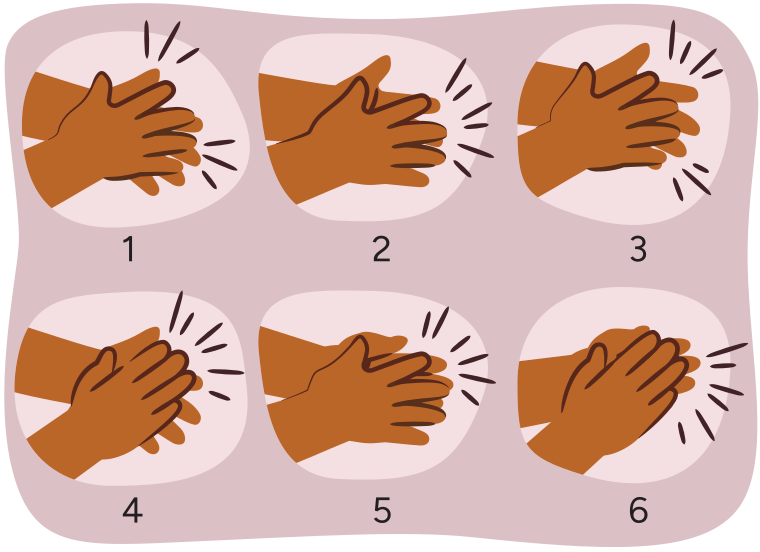
Now, try the following:
- Show your movement as more than 6.
- Show your movement as less than 6.
- Show your movement as equal to 6.
Next, Antonio decides to stomp. Choose your next movement!
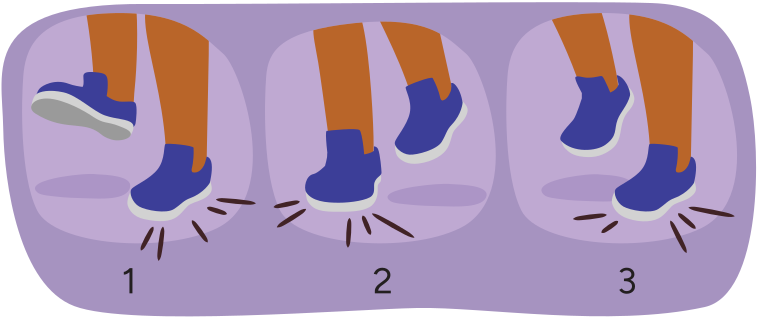
Now, try the following:
- Show your movement as more than 3.
- Show your movement as less than 3.
- Show your movement as equal to 3.
Great job!

Literacy
Is it more, less or equal?
Let’s play a game where we get to use the words more, less or equal.
Explore the following flashcards. Look at the circled groups.
Are those groups:
- more?
- less?
- equal?
Make your guess and then practice saying the words: more, less and equal!
Reflection
How do you feel about what you have learned in this activity? Press the button next to the sentence that matches how you feel.