
My name is Antonio, and I am 6 years old. I have a dog named Sparky!
Noticing and Naming the Learning
What are you going to learn today?
We are learning to…
- name the letters of the alphabet
- form uppercase letters correctly
- find uppercase letters signs and stories
How do I show what I have learned?
I can…
- say the names of uppercase letters when I see them
- print uppercase letters using the right formation
- find uppercase letters in different stories or texts
Minds On
Let’s get ready to learn!
Before we begin our learning, let’s wake up our minds with a warm up.

Social Emotional Learning
Warm up
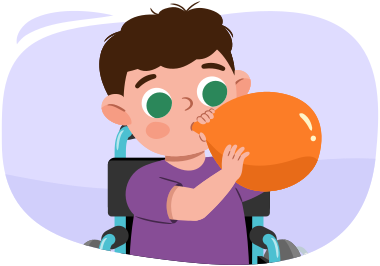
Find a safe space.
Sit down or stand up.
Pretend you are blowing up a huge balloon.
Take a deep breath in through your nose.
Then, slowly start to blow out through your mouth.
Once your balloon is as big as it can be, let it go!
Then take another deep breath in and blow up another balloon!
Listen to the Balloon Breathing audio to follow along.
Balloon Breathing
Letters around us!
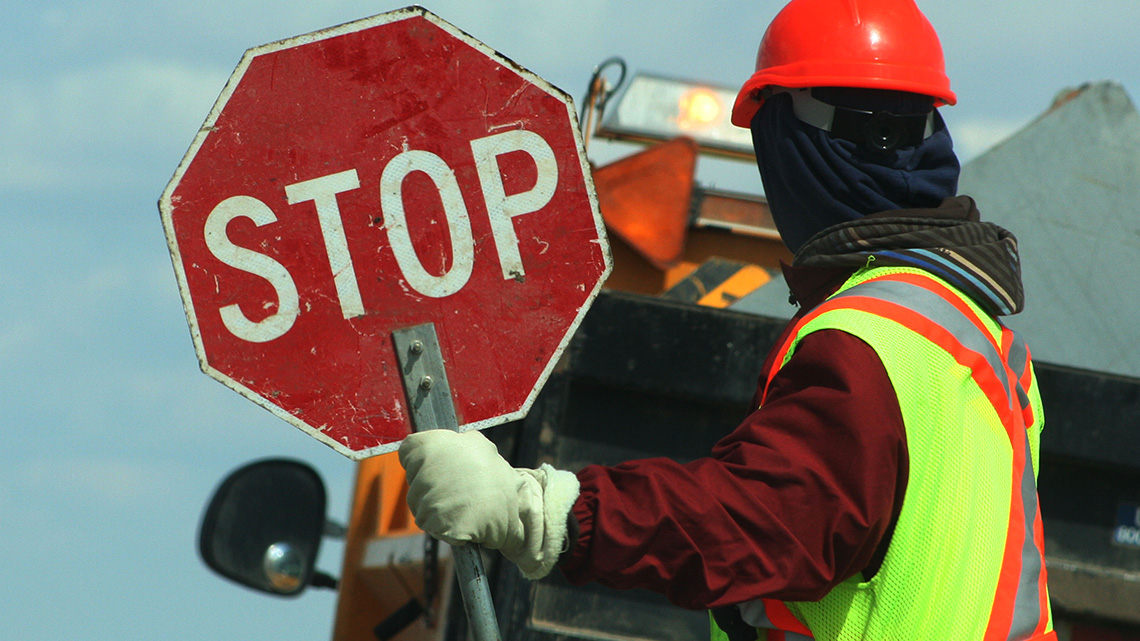
There are letters all around us! Check out the following picture of a stop sign.
As you explore, think about the following:
- What do you notice in this picture? What letters do you see?
- What do you think is the same about the letters? What looks different?
- What do you wonder about uppercase (big) letters? Why do you think uppercase letters are used?
As you work through this learning activity, you can record your ideas in many ways.
Listen to the following audio recording to learn more about how to record your ideas.
How to Record Your Ideas
Action
All about uppercase letters
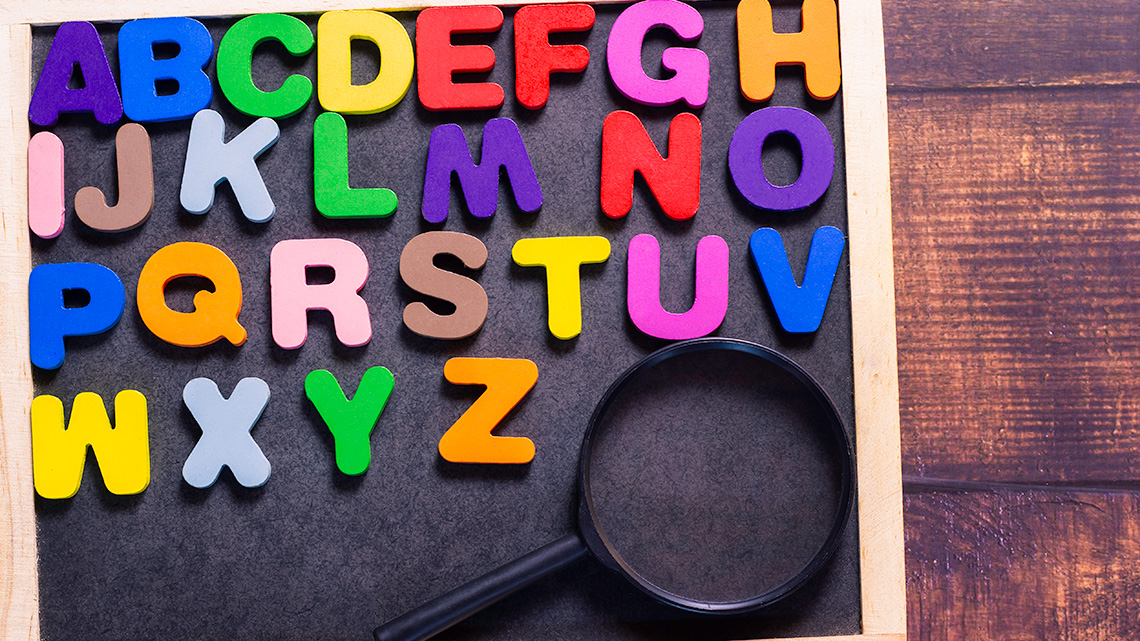
A letter is a symbol that helps us make words.
Each letter has a name and a sound.
Letters are the building blocks of words.
Letters can be uppercase (big) or lowercase (small) but they have the same name.
Another name for uppercase or big letters is capital letters.
Letter sounds
Let’s explore letter sounds.
Pick a letter to hear its name and sound.
|
A |
B |
C |
D |
|
E |
F |
G |
H |
|
I |
J |
K |
L |
|
M |
N |
O |
P |
|
Q |
R |
S |
T |
|
U |
V |
W |
X |
|
Y |
Z |
Lines in letters
Let’s practice printing letters.
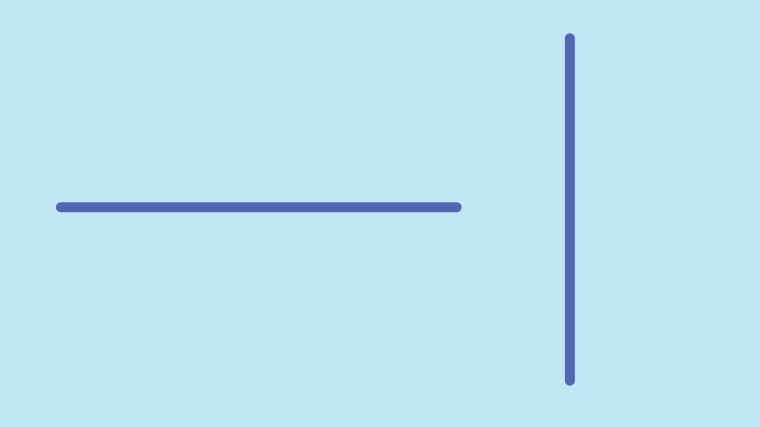
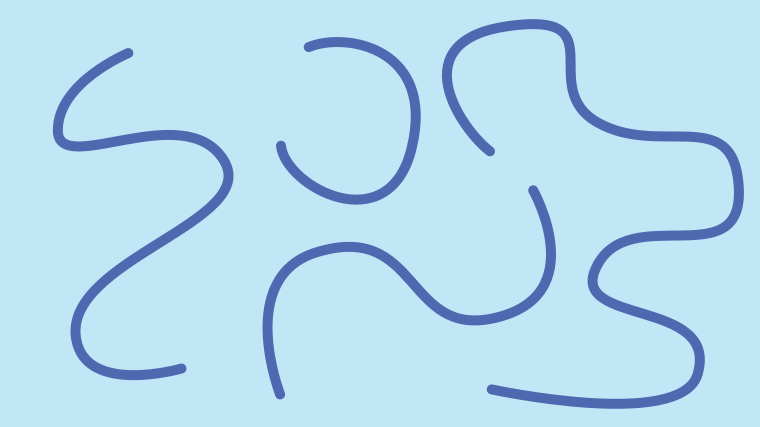
Letters can be made with:
- straight lines
- curved lines
- slanted lines
- a mix of lines
Look at the following images of line types.
Let’s practice!
Click on the following letter groups to explore the lines used in each and learn how to print them!
Select one letter from each group and practice printing on a piece of paper or using a method of your choice. You are welcome to practice the whole alphabet if you wish.
Press the Tips button to check out helpful printing tips before you begin.
When you are printing:
- Think about the curvy or straight lines that the letter may have.
- Take your time to write each letter clearly.
- Practice writing the letter more than once and use a finger space each time.
- Try to press gently as you write so that your hand can move easily across the page.
Check out Straight Line Letters to practice printing uppercase E, F, H, I, L, and T.
Press the Letters button to access the Straight Line Letters.
Letters (Opens in a new tab)Check out Curved Line Letters to practice printing uppercase C, O, S, and U.
Press the Letters button to access the Curved Line Letters.
Letters (Opens in a new tab)Check out Slanted Line Letters to practice printing uppercase V, W, and X.
Press the Letters button to access the Slanted Line Letters.
Letters (Opens in a new tab)Check out Letters with 2 or More Types of Lines to practice printing uppercase A, B, D, P, Q, and R.
Press the Letters button to access the Letters with 2 or More Types of Lines
Letters (Opens in a new tab)Check out More Letters with 2 or More Types of Lines to practice printing uppercase G, J, K, M, N, Y, and Z.
Press the Letters button to access the More Letters with 2 or More Types of Lines.
Letters (Opens in a new tab)Body break!
Let’s take a break and move!
Before you begin:
- Find a safe space. Move anything you might bump into.
- How are you feeling? Listen to your body and take breaks.
- Ask an adult before getting materials or if you need help.
Follow the steps to move your body. You can also follow along with the audio.
Do whatever feels most comfortable for you.
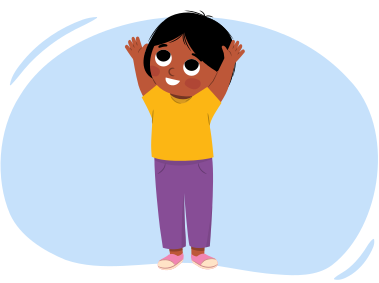
- Start by standing or sitting.
- Slowly raise your arms up high.
- Count to 10, then bring your arms down.
- Repeat this one more time!
Hands in the Air
When do we use uppercase letters?
We use uppercase letters for special reasons! They help us know when something is important or when a new sentence is starting.
Check out the following flashcards to learn about different ways we can use uppercase letters.
Now, you try!
Can you find all the uppercase letters in this short story?
Remember, capital letters are found at the beginning of a sentence, names of places or people, the word “I”, and sometimes, titles or signs!
Antonio and Sparky’s Park AdventureAntonio and Sparky’s Park Adventure
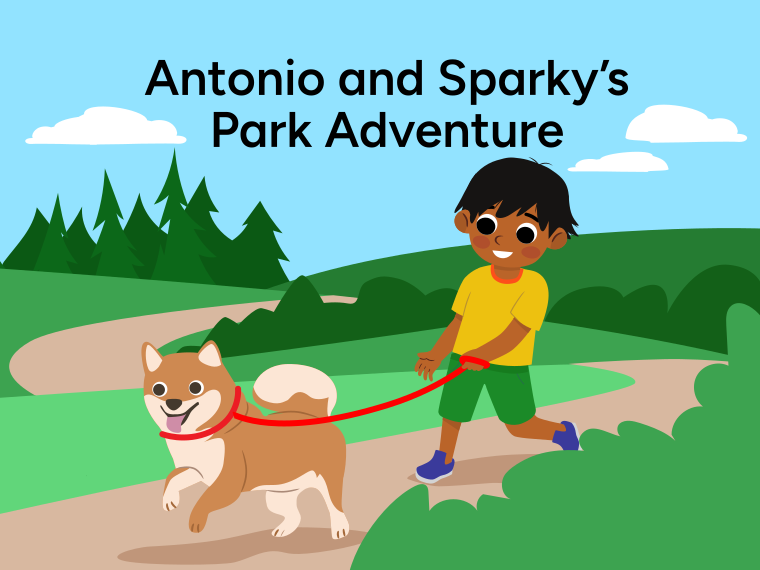
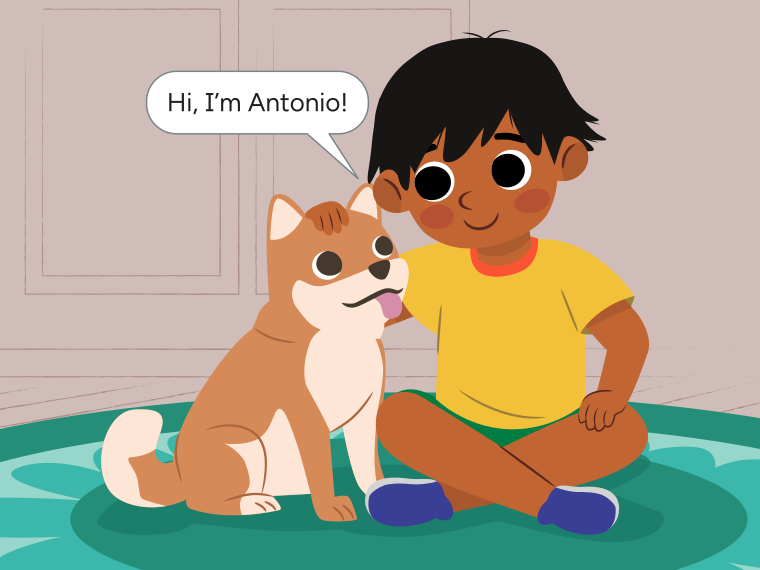
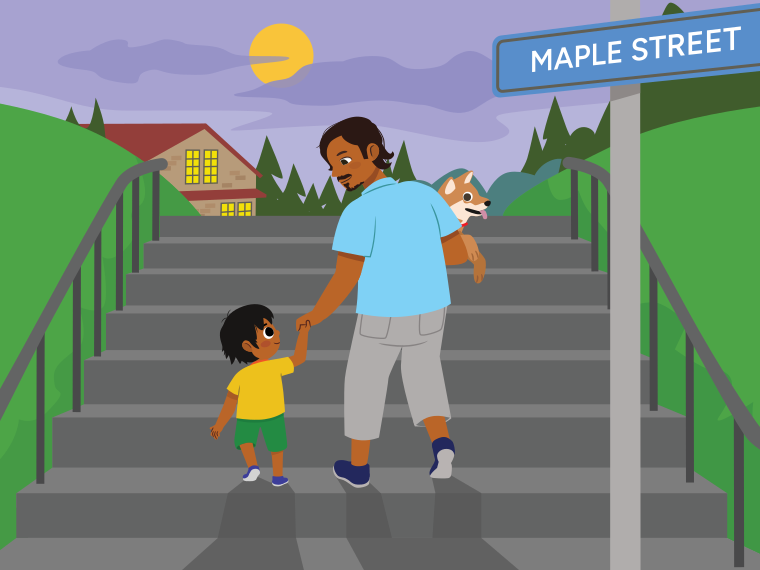
One sunny morning, Sparky and I went to the park with my dad. There was a big sign that said, “WELCOME TO ROSEWOOD PARK!”
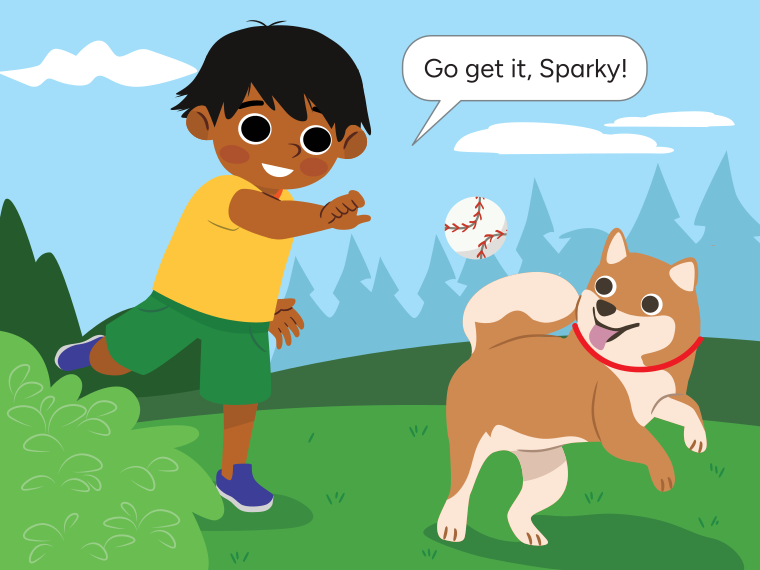
At the park, Sparky and I played catch with our ball together. We played until the sun set.
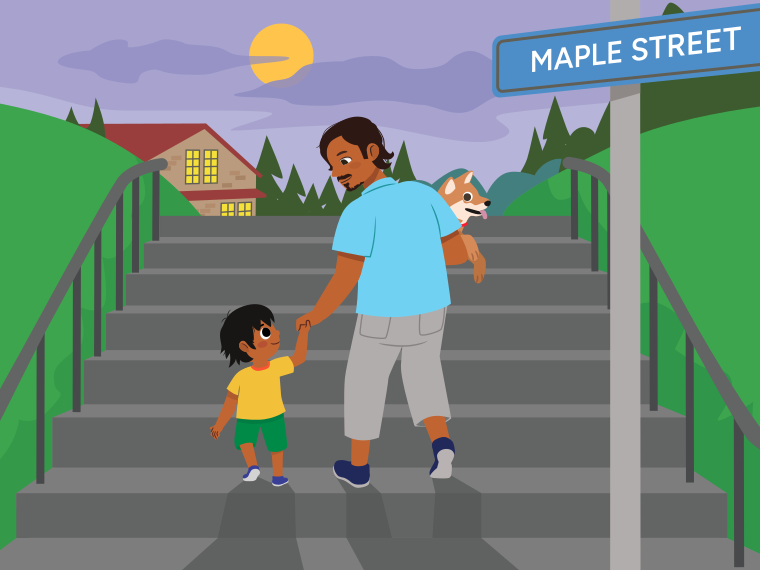
Feeling tired but happy, dad, Sparky and I all walked home together. What a great day!
Did you find all the capital letters?
Consolidation
Time to explore!
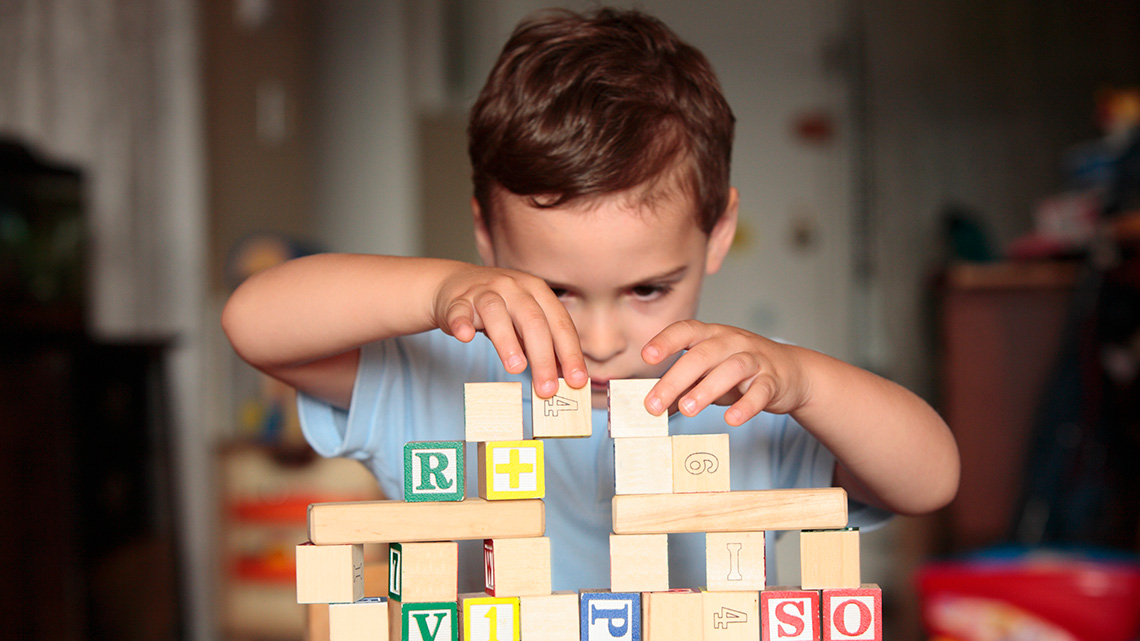
Check out some fun ideas to help you learn more about uppercase letters.
You can choose one or more centres to explore.



Arts
Letter art
Ryan is making a painting of his favourite letter, R. Follow the steps to learn how.
Before you start, ask a trusted adult for permission to gather your materials.
Possible materials
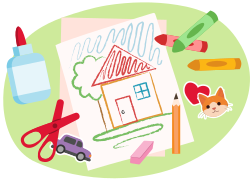
- paper or cardstock
- paint (tempera, watercolour, or finger paint)
- paintbrushes, sponges, or cotton swabs
- cup of water
- a tray or palette for colours
- printed or drawn uppercase letter
- optional: tape for tracing letters
Let’s get started!
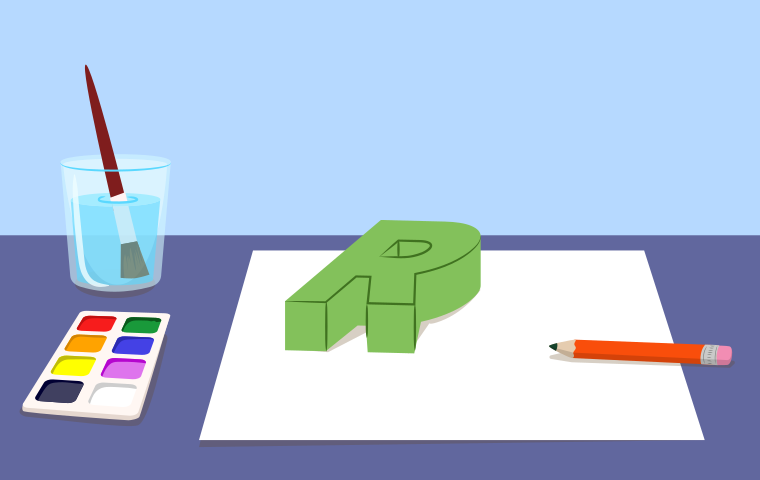
Step 1: Choose an uppercase letter. You can use the first letter of your name or any letter you like.
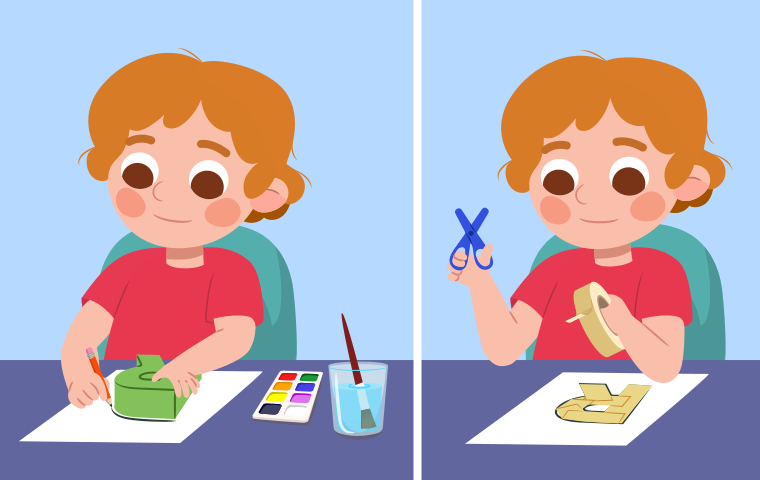
Step 2: Use tape or a pencil to outline the shape of the letter on your paper.
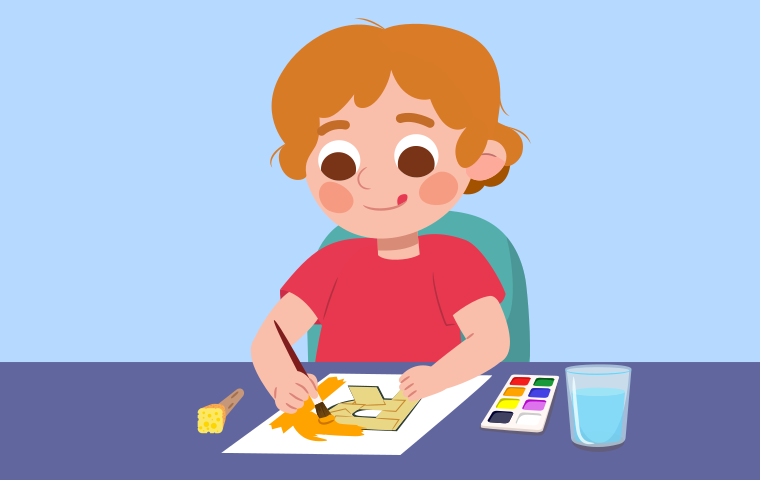
Step 3: Paint around your letter using any colours you like. Try dabbing, swirling, or stamping to make your letter pop.
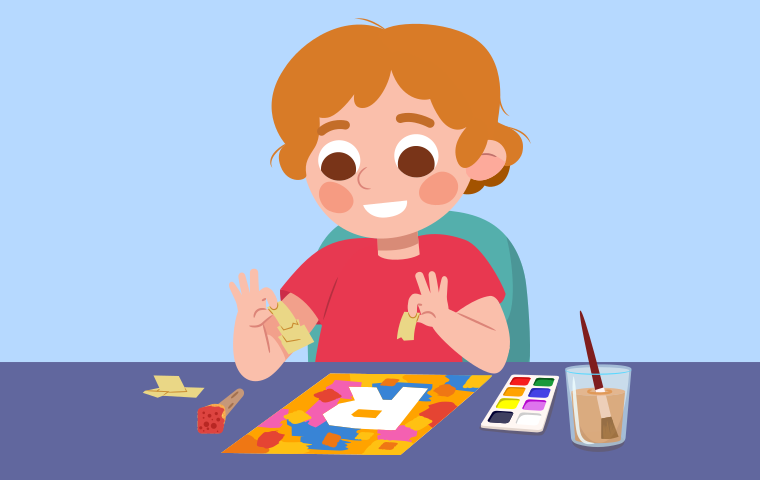
Step 4: When the paint is dry, peel off the tape to see your uppercase letter!
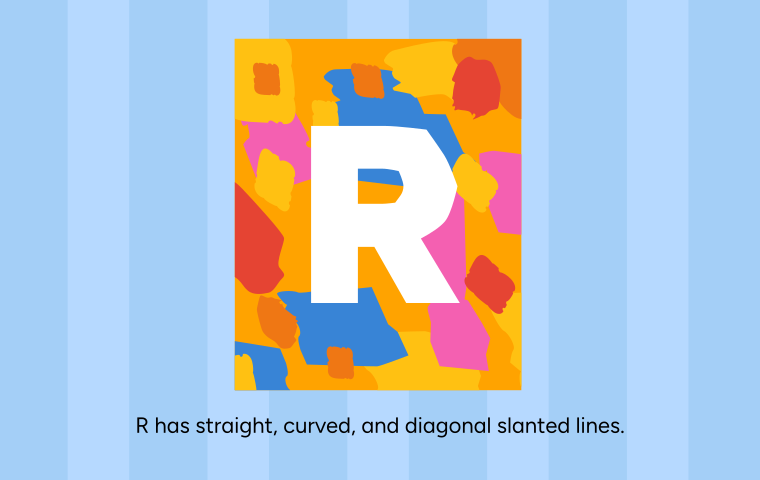
Step 5: You can also use your imagination and think of a design for your own letter art!
You can add more to Ryan’s art, like using many colours in the background.
You can use your imagination to design your own letter art! You can draw your ideas on paper and make your letter with things you like.
If possible, share your thoughts with someone you know.

Inquiry
I spy puzzle
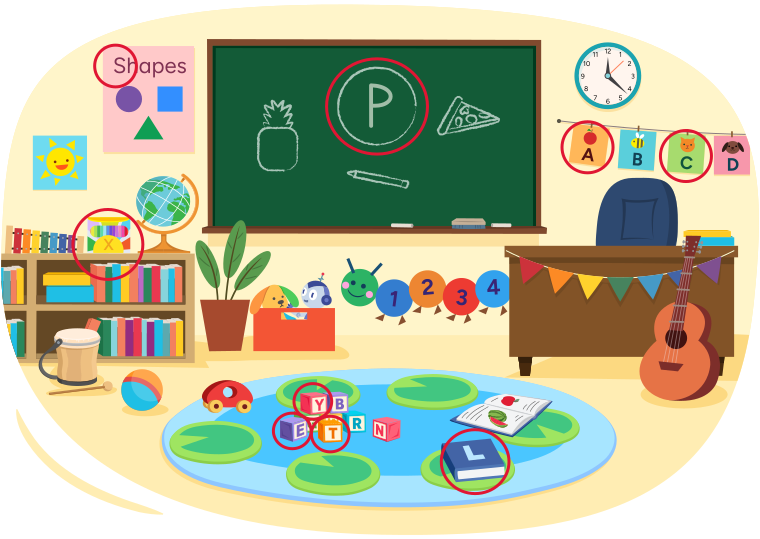
Explore the following picture and find all the uppercase letters hiding in the classroom! Can you find the letters A, C, E, L, P, S, T, X, and Y?
As you find each letter, think about these questions:
- What letter did you find?
- What type of lines does it have? Straight, curved, slanted?
- What sound does the letter make?
- How would you write this letter?
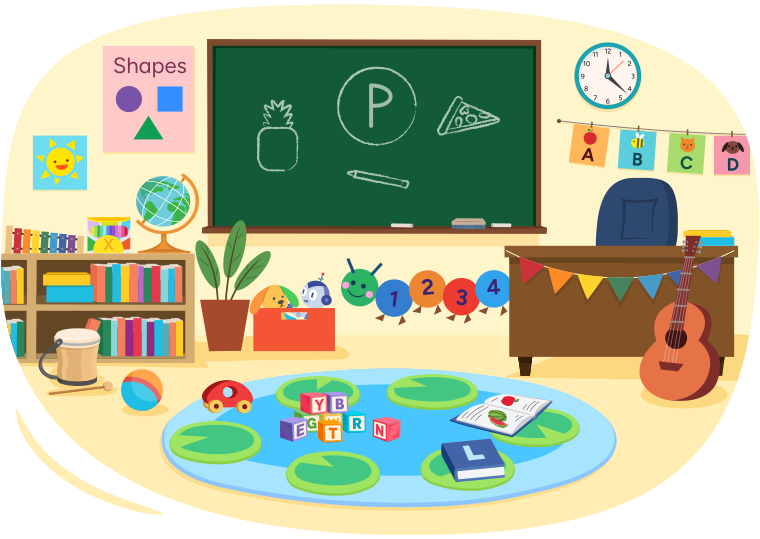
Did you find it all?
Press the Answer button to check your work.

Movement
Letter freeze dance!
Let’s play a movement game! Can you dance and practice your uppercase letter sounds?
Before you begin, press the following tabs to get ready.
Have you moved any objects that you might bump into?
Listen to your body. Take breaks or stop if you need to.
If you would like to try this activity, you can use materials that you have in your learning space.
Ask a trusted adult for permission to gather your materials before you start.
Possible materials
- music
- space to move safely
- uppercase letter template or make your own. You can write them on paper or print and cut them out.
Use the following Uppercase Letter Template to complete the activity.
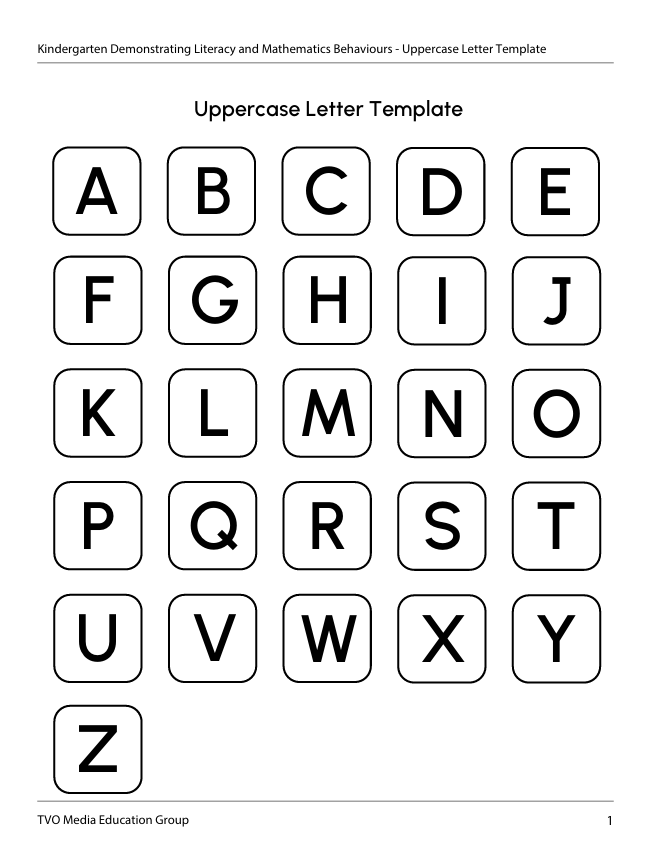
Let’s follow the steps to learn how to play the letter freeze dance. You can also do any action that feels most comfortable for you.
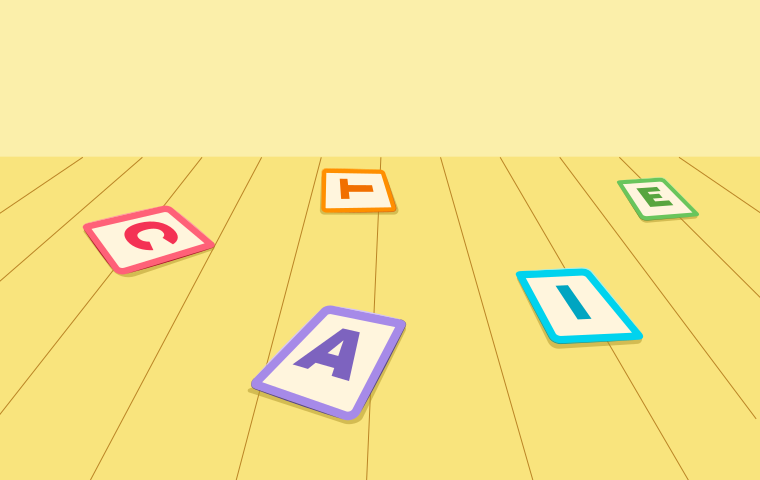
Step 1: Place the uppercase letter cards on the ground all around.
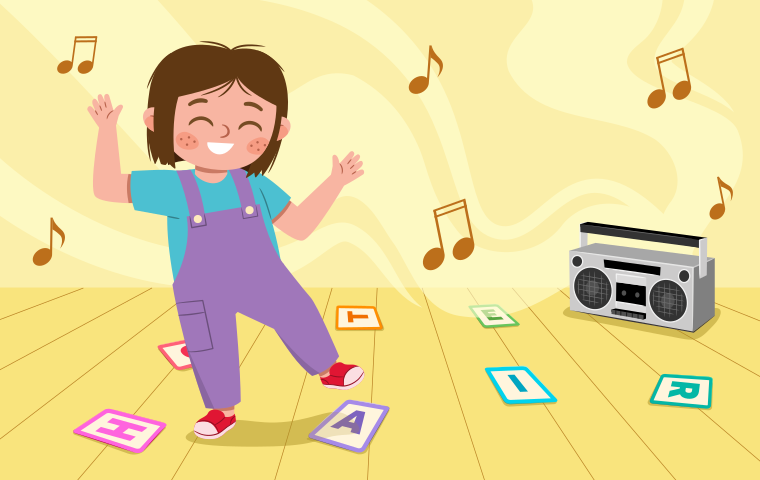
Step 2: Play some music and start dancing! Move your body in any way you choose like jumping, wiggling, or spinning!
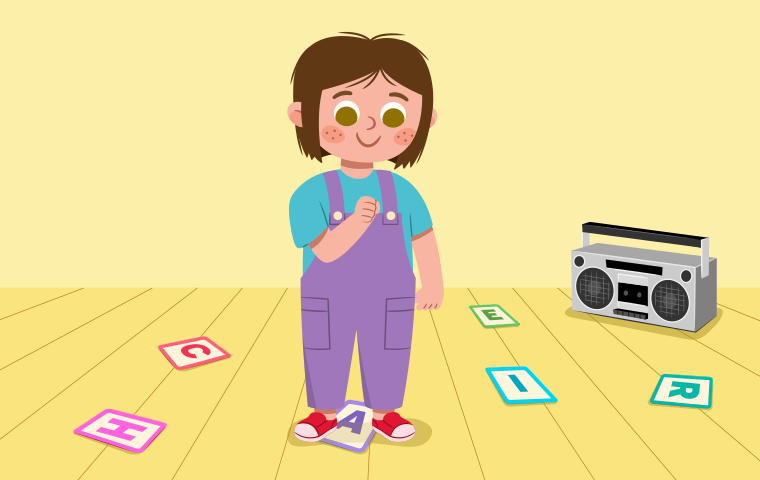
Step 3: When the music stops, safely move to the nearest letter card.
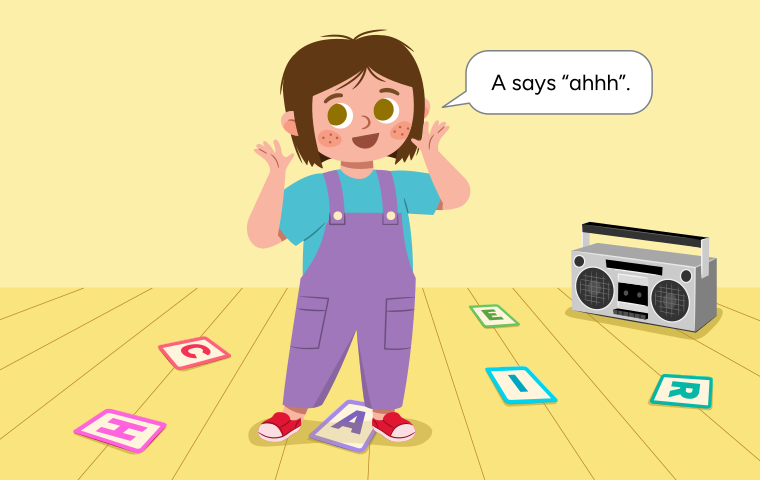
Step 4: Say the letter name out loud and its letter sound. For example, if you land on A, you might say, “A says “/a/””
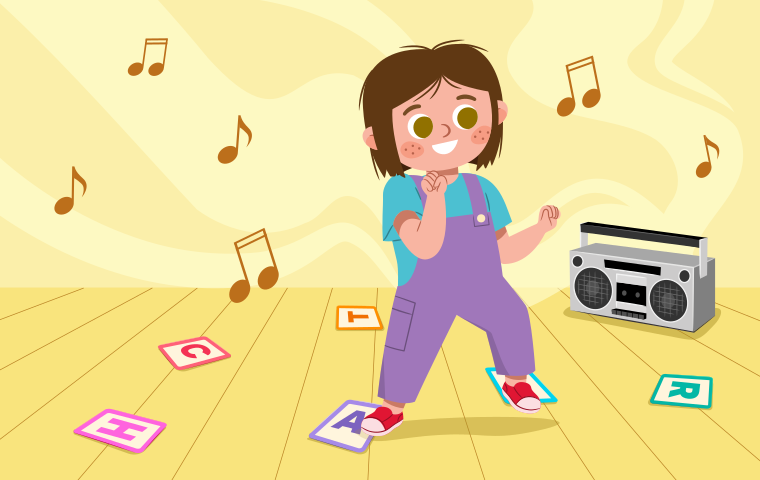
Step 5: When the music starts again, move your body and find a new letter when it stops.
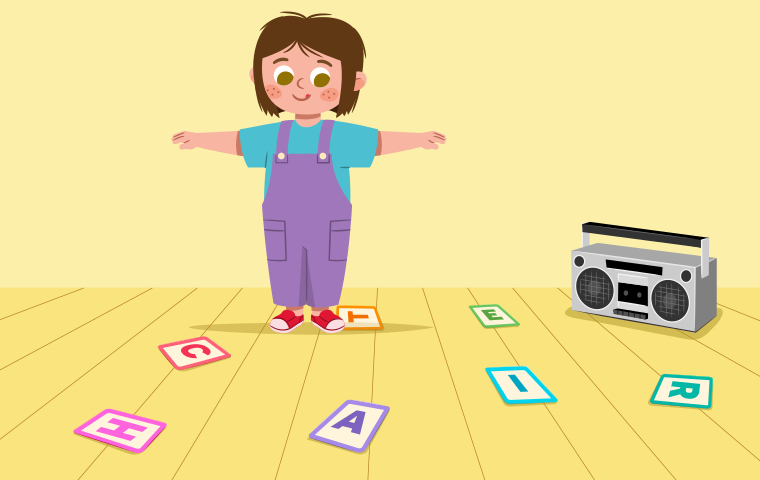
Optional: If you choose, you can make your body into the shape of that letter!
You could also use your imagination to think about how you would move and find each letter.
Share your thoughts with someone else, if possible.

Literacy
Sorting letters by lines
Some letters are made with straight lines, curved lines, or slanted lines, and some are made with all these lines put together!
Explore each letter and sort them by the kind of line they have.
As you sort each letter, think about these questions:
- What letter is it?
- What sound does the letter make?
- How would you write this letter?
Reflection
How do you feel about what you have learned in this activity? Press the button next to the sentence that matches how you feel.