Noticing and Naming the Learning
What are you going to learn today?
We are learning to…
- notice how words work together to make a sentence
- recognize that sentences begin with a capital letter and end with punctuation
- understand that punctuation marks help us know how to read a sentence
How do I show what I have learned?
I can…
- find the capital letter at the beginning of a sentence
- find the punctuation mark at the end of a sentence
- explore what each punctuation mark is used for
- use my face, body and voice to say sentences that end in different types of punctuation
Minds On
Let’s get ready to learn!
Before we begin our learning, let’s wake up our minds with a warm up.

Social Emotional Learning
Warm up
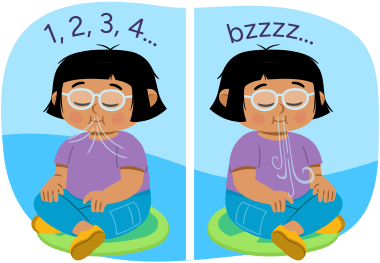
Split image of a child sitting cross-legged on the floor with eyes closed. In the first panel, the child is breathing in, accompanied by the numbers 1, 2, 3, 4. In the second panel, the child is breathing out with the word bzzzz shown.
Find a safe space.
Sit down or lie down.
Take a deep breath in through your nose for a count of four.
As you breathe out, make a buzzing sound like a bee.
Repeat your bee breathing a few times.
Listen to the Buzzing Breath audio and follow along to get you ready to learn!
Buzzing Breath
Look inside!
When we open a story book, what might we see on the pages inside?
Explore the following image. What do you notice?
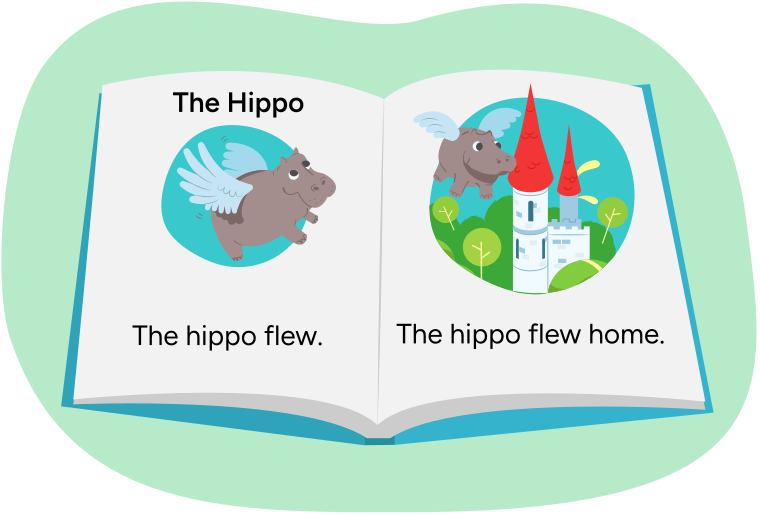
An open book shows a winged hippo. The left page is titled 'The Hippo' and reads 'The hippo flew.' The right page shows the hippo flying toward a castle and reads 'The hippo flew home.'
As you work through this learning activity, you can record your ideas in many ways.
Listen to the following audio recording to learn more about how to record your ideas.
How To Record Your Ideas
Action
What’s inside a book?
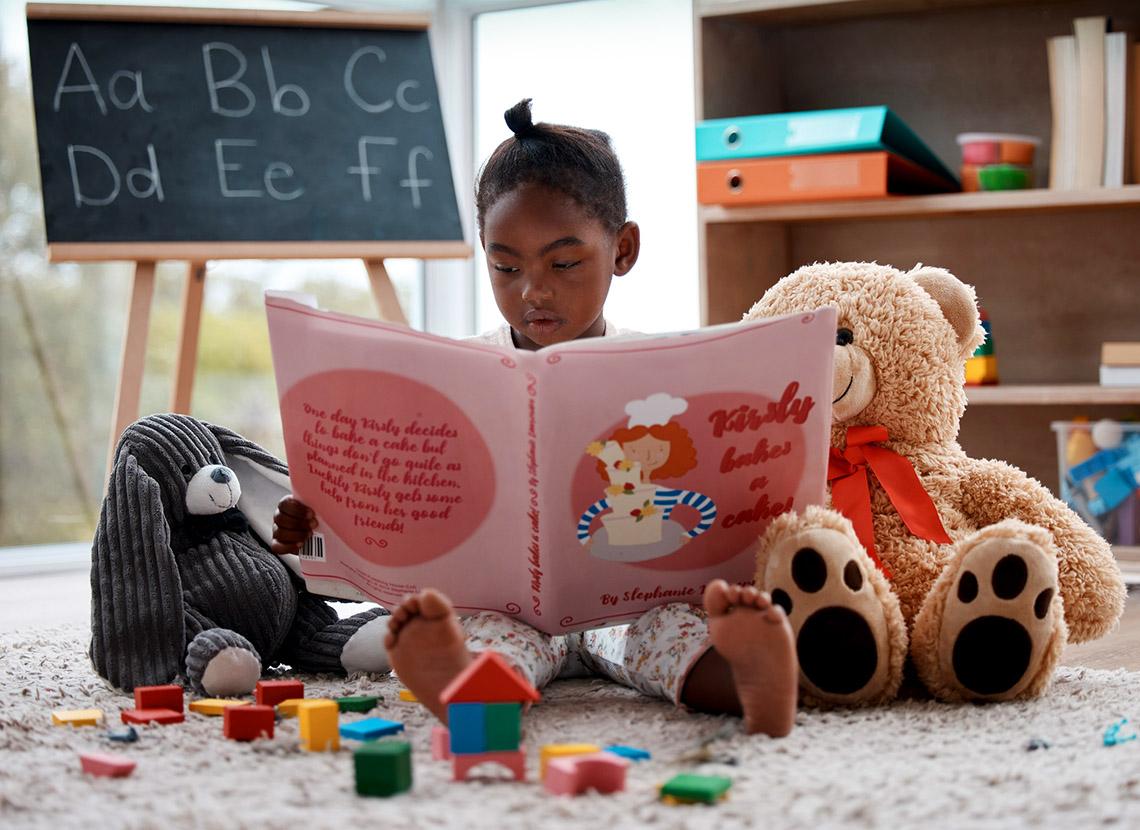
Inside a book, we might find:
- letters
- words
- pictures
- spaces
- sentences
All these parts work together to tell a story. Learning about them helps us understand how reading works.
What’s on a page?
Let’s look at a page of a book together to find the letters, words, pictures, spaces, and sentences!
This story is about a hippo. We know this because of the word “hippo” in the title, and the picture of a hippo on both pages.
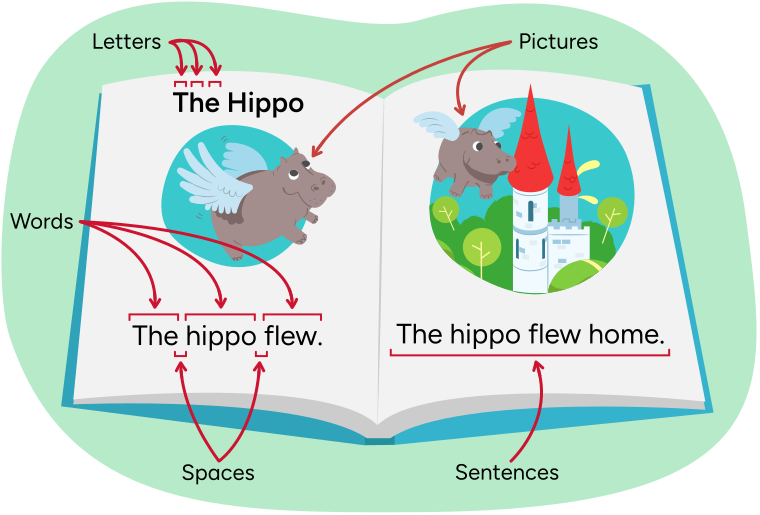
An open book shows labeled parts of a picture book. Arrows point to letters in the title, groups of letters forming words, spaces between words, pictures on the page, and sentences made up of spaces and words.

Pause and reflect
Pause and reflect
What is your favourite story or book?
What is the story about?
Let’s review!
Match the pictures to the different parts of a page in a book. Use the arrow buttons to navigate between cards.
Body break!
Let’s take a break and move!
Before you begin:
- Find a safe space. Move anything you might bump into.
- How are you feeling? Listen to your body and take breaks.
- Ask an adult before getting materials or if you need help.
Follow the steps to move your body. You can also follow along with the audio.
Do whatever feels most comfortable for you.
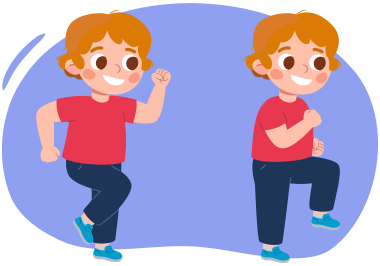
Split image of a young child standing in place. In the first panel, the child has their arms raised and one knee lifted mid-height. In the second panel, the child’s knee is raised higher, and their arms are lowered near their waist.
- Start by standing or sitting.
- Slowly move one of your elbows up at the same time you bring your knee up.
- Do the same on the other side and keep switching sides! You can count to 10 as you march.
- Repeat this one more time!
Slow March
Sentences
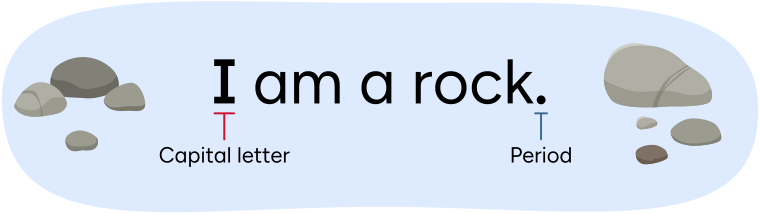
A sentence is a group of words that tell a complete idea or thought.
Look at the following example.
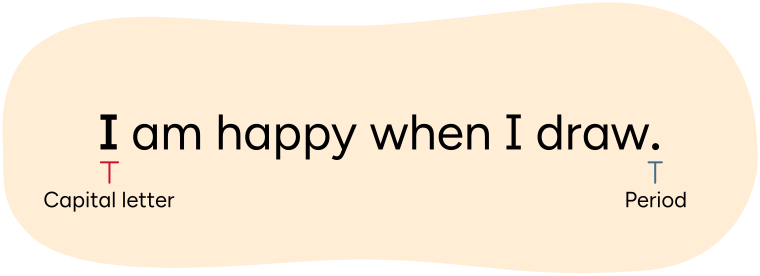
The text "I am happy when I draw." An arrow pointing to the "I" is labelled "capital letter". An arrow pointing to the period at the end of the sentence is labelled "period".
Every sentence starts with an uppercase letter and ends with a punctuation mark, such as:
- a period (.)
- question mark (?)
- an exclamation mark (!)
Let's explore these three kinds of punctuation.
Flip the card to read or listen to an example of each punctuation being used in a sentence.
Let’s practice!

Explore the following sentences about the dog running.
- What punctuation is at the end of each sentence?
- How might your voice change if you read each one?
If possible, share your thoughts with someone.
Listen to the audio to hear the sentence read out loud.
The dog ran.
Sentence with a Period
The dog ran!
Sentence with an Exclamation Mark
The dog ran?
Sentence with a Question Mark
Let’s try saying each sentence. Use your face, body, or voice to express each one.
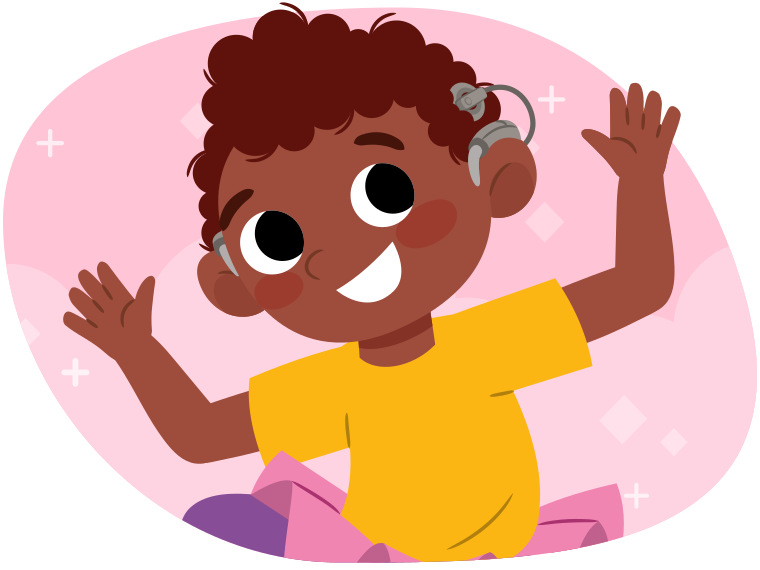
For example, when the sentence ends with a period, you could try
- a happy expression
- opening your arms
- and making your voice soft or quiet
The dog ran.
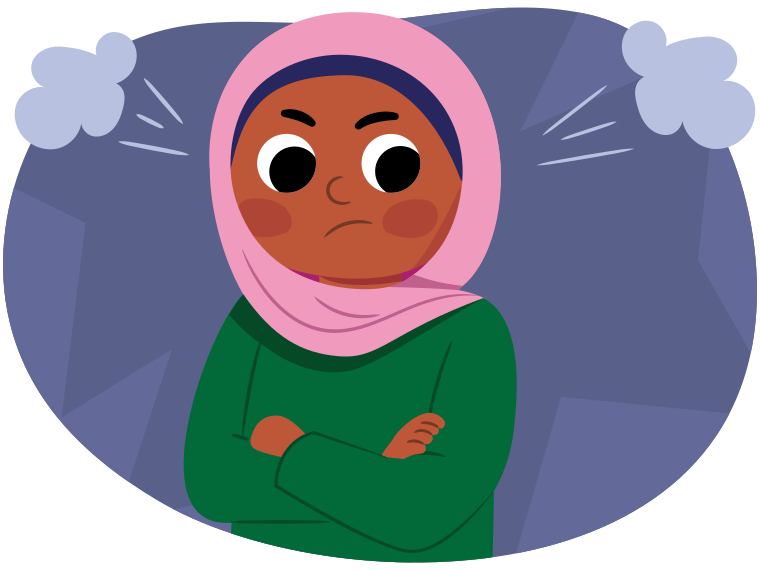
When the sentence ends with an exclamation mark, you could try
- an angry expression
- crossing your arms
- and making your voice louder
The dog ran!
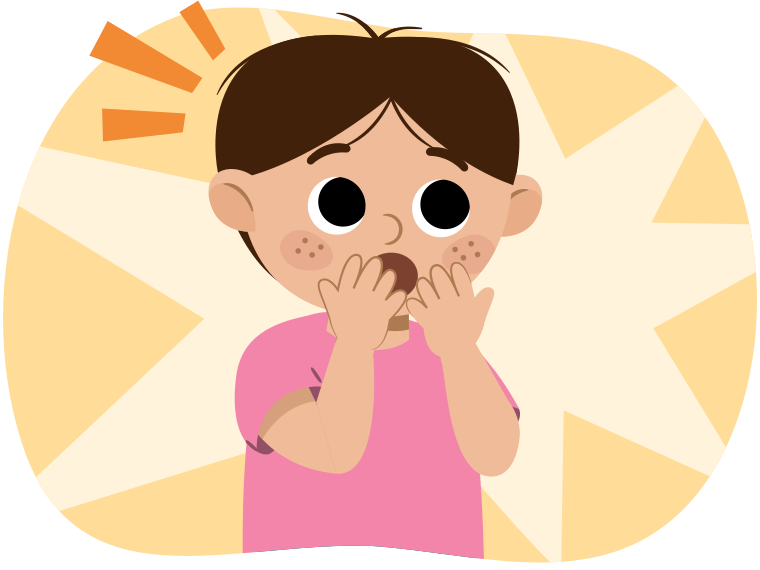
When the sentence ends with a question mark, you could try
- a surprised expression
- raising your arms up
- and making your voice higher at the end
The dog ran?

You just explored a group of sentences! Next, let’s explore some pages from the book I am a Rock by Ashley Qilavaq-Savard.
Let’s read!
In the story, Pauloosie and his mom imagine what it would be like if his pet rock, Miki Rock, were alive. Miki Rock shares how he listens and watches the Arctic animals and feels the seasons change.
Try reading the sentence out loud to show the meaning of the punctuation or listen to the audio.
- Can you find the uppercase letter at the start of the sentence?
- What is the punctuation at the end of the sentence?
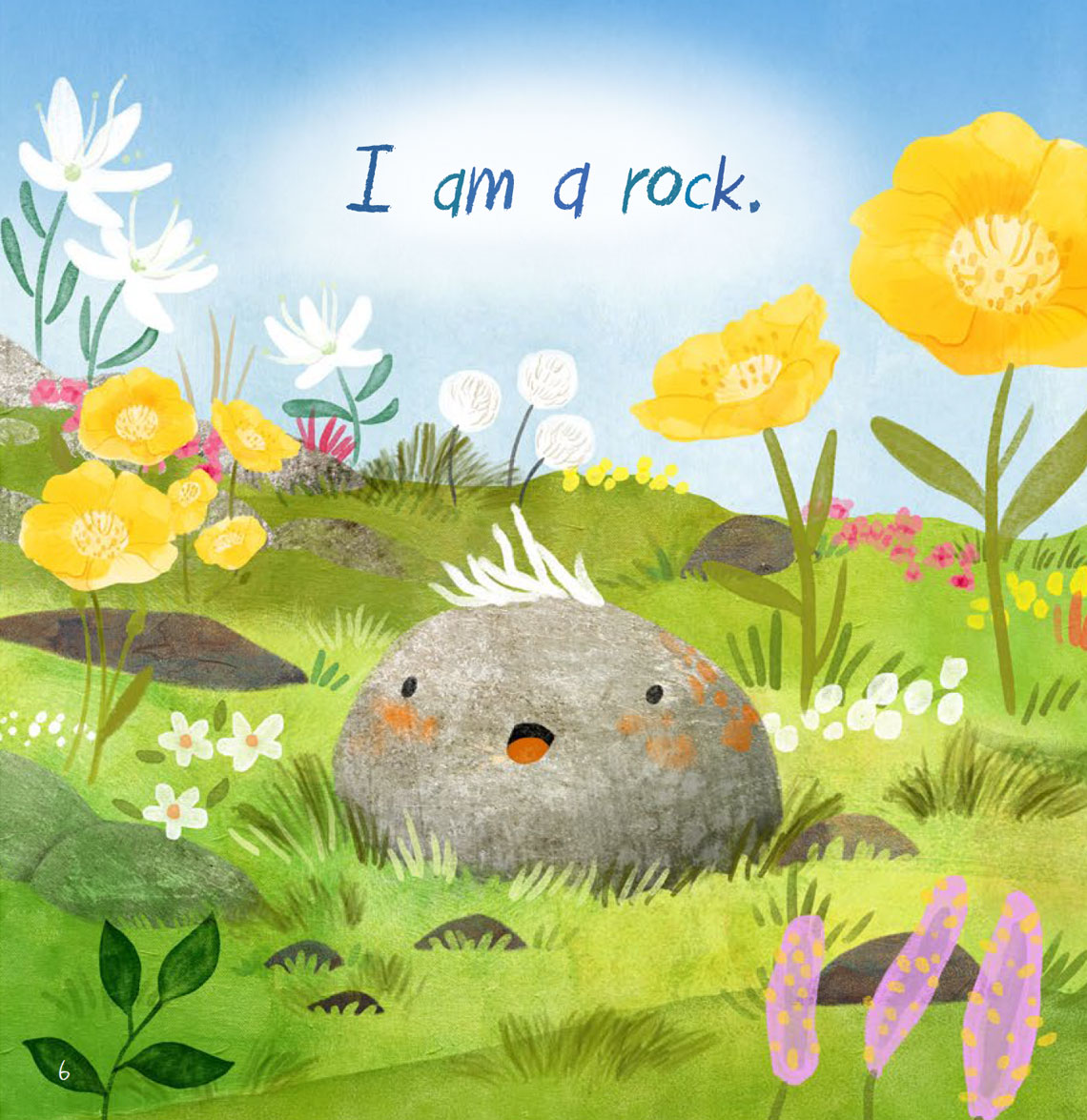
Page 6 Audio
Press the Check Answer button to learn more.
Let’s try one more!
Look at the following page of the book, where Pauloosie talks to his mom about his pet rock.
Try reading the sentence out loud to show the meaning of the punctuation or listen to the audio.
- Can you find the uppercase letter at the start of the sentence?
- What is the punctuation at the end of the sentence?
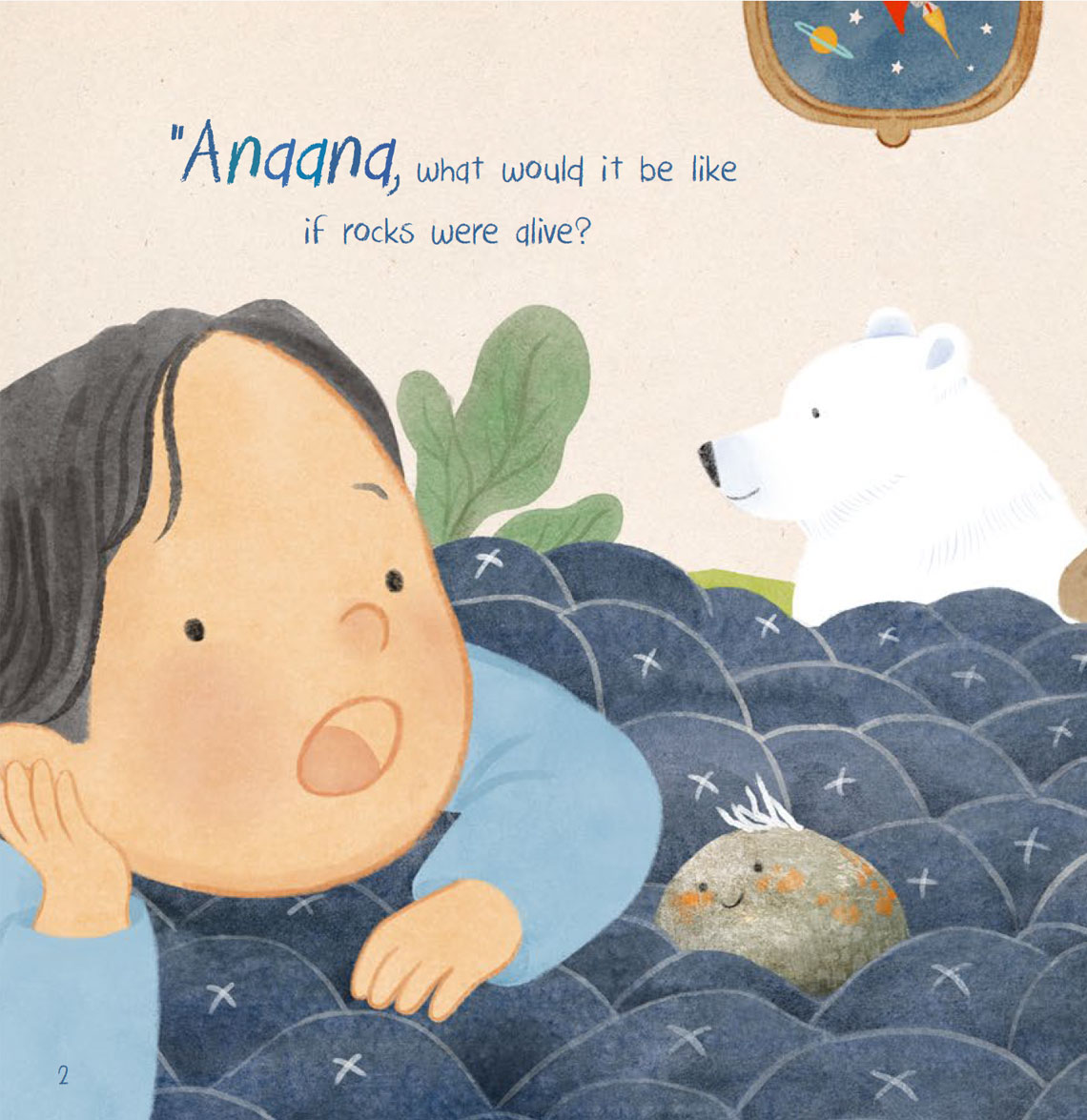
Page 2
Press the Check Answer button to learn more.
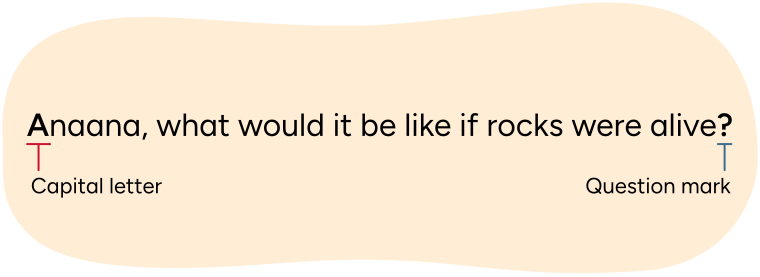
The sentence "Anaana, what would it be like if rocks were alive?" The letter A in Ananna's name is capitalized and the sentence ends with a question mark.
Uppercase letters and punctuation help stories make sense, and it shows us when to start, stop, and how to feel as we read!

Printing practice
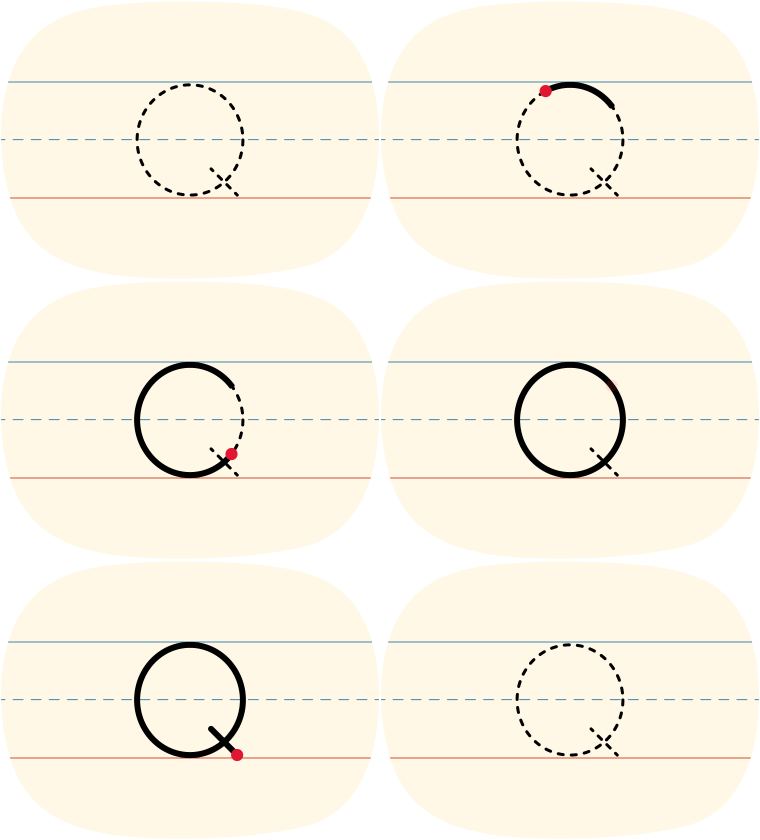
Q is for Question mark.
Let’s practice printing the letter Q.
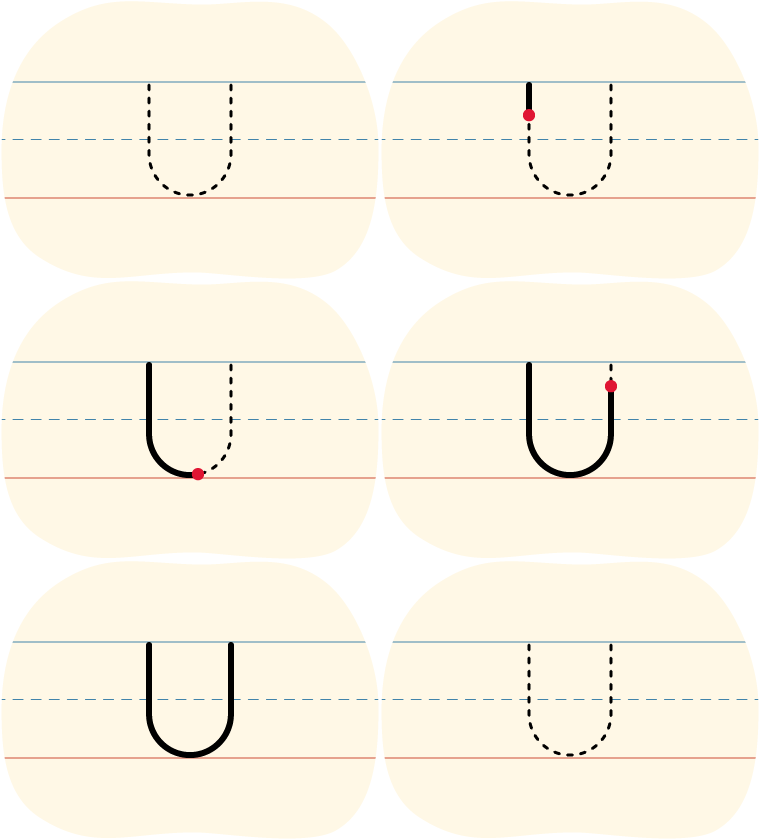
U is for Uppercase letters.
Let’s practice printing the letter U.
Now, you try!
Practice printing this letter in your notebook or using a method of your choice.
Use the following checklist to explore some printing tips.
When you are printing:
Consolidation
Time to explore!
Check out the following centre ideas to explore more about sentences and punctuation!
You may choose one or more centres to explore.



Arts
A page of a book
The inside of a book might have pictures, letters, words, spaces, and sentences.
Clara wants to draw her own page from the book I Am A Rock by Ashley Qilavaq-Savard.
In the story, Pauloosie and his mom imagine what it would be like if his pet rock, Miki Rock, were alive. Miki Rock shares how he listens and watches the Arctic animals and feels the seasons change.
Look at the following page from the book. Listen to the audio to follow along.
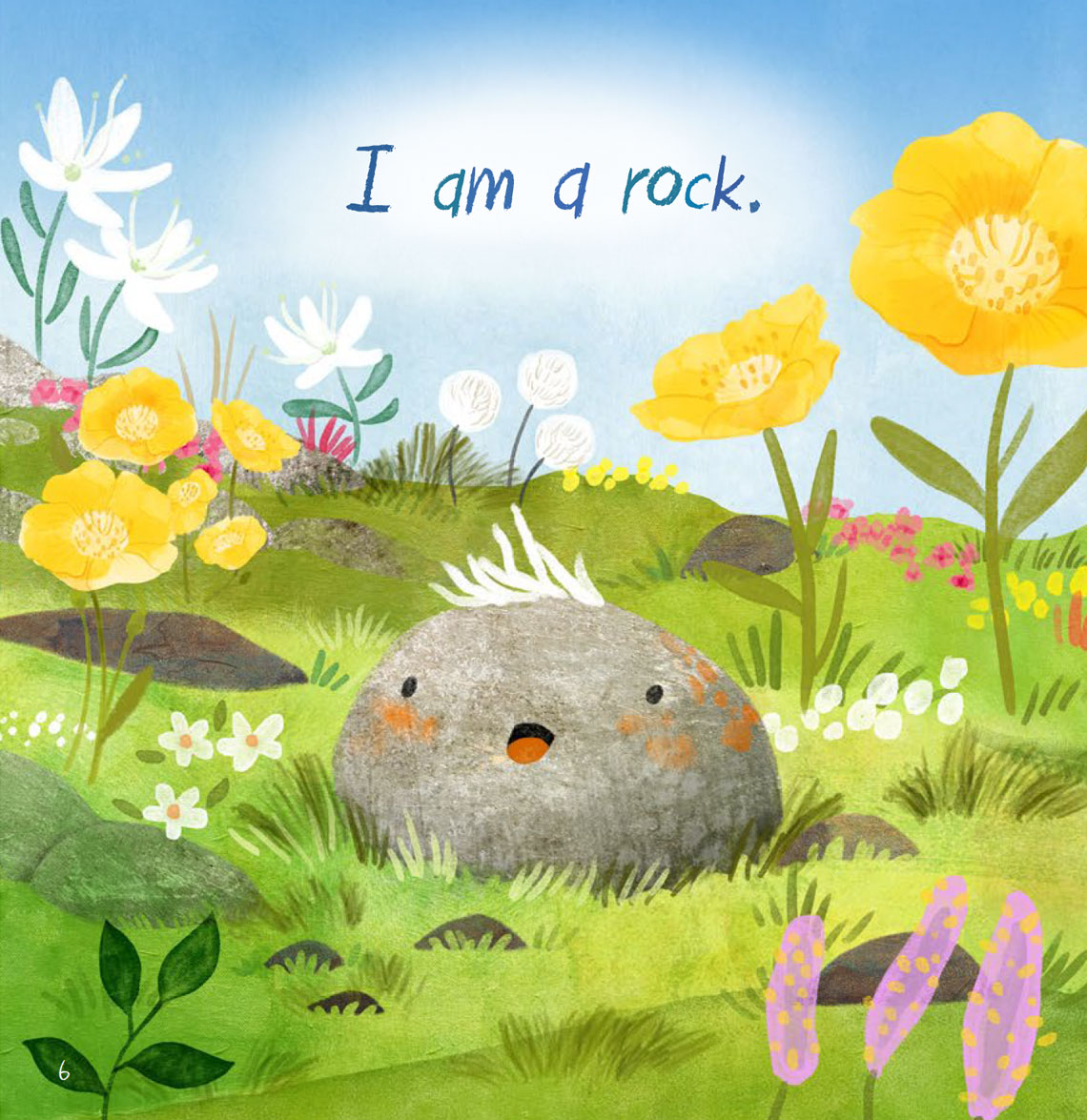
Page 6 Audio
If you would like to try this activity, you can use materials that you have in your learning space. Always ask permission from a trusted adult before gathering your materials.
Possible materials
- paper
- a writing utensil (pencil, pen)
- optional: colouring tools (crayons, markers, pencil crayons)
Follow the steps in the images.
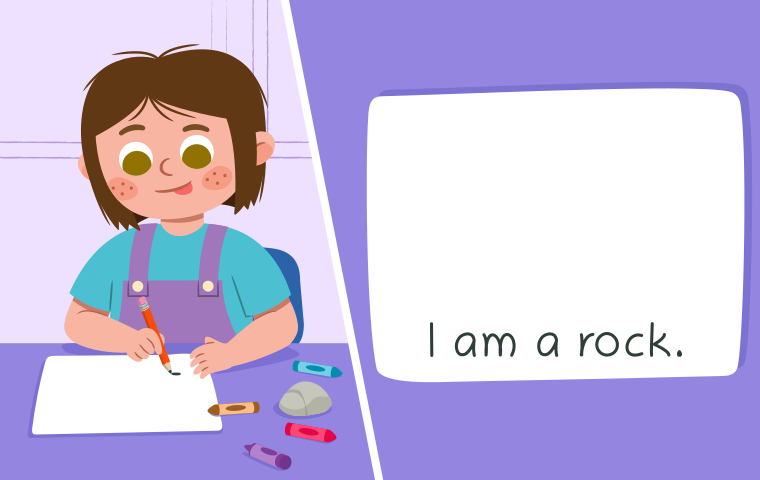
Step 1: With a piece of paper, write or copy the sentence. Make sure to use a capital letter and the correct punctuation at the end!
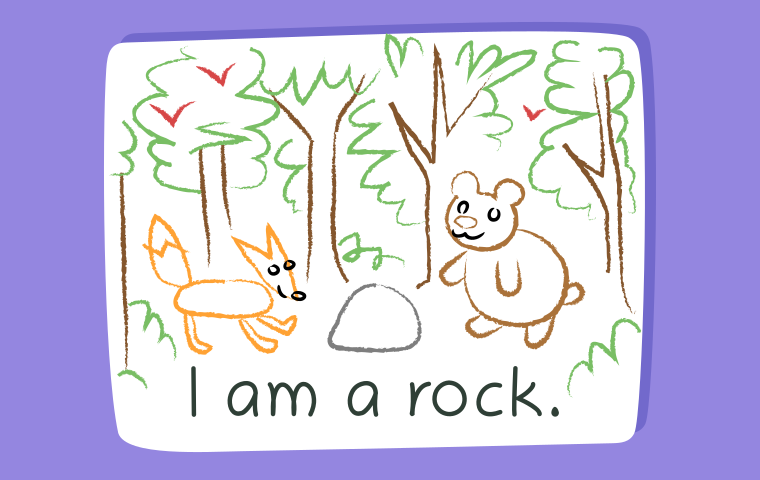
Step 2: Add pictures to your page. Use your imagination!
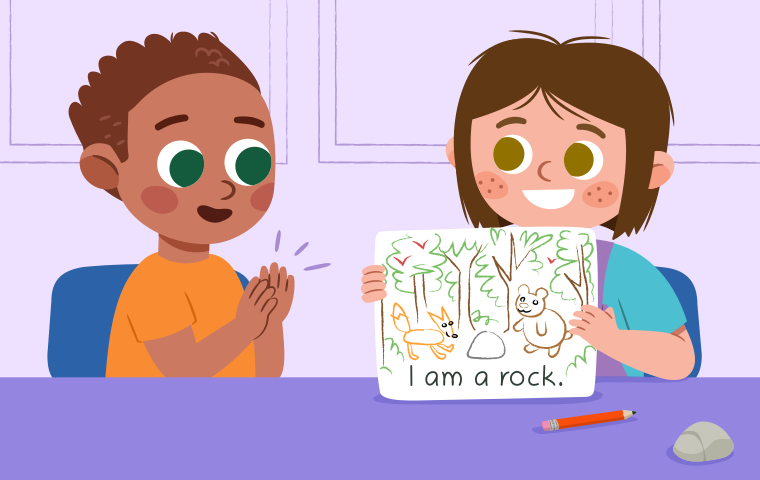
Step 3: If possible, share your page of a book with someone.
You can explore a few other pages of the book, “I Am a Rock”, and pick the pages you would like to draw by listening to the audio and looking at the pictures, letters, words, spaces, and sentences.
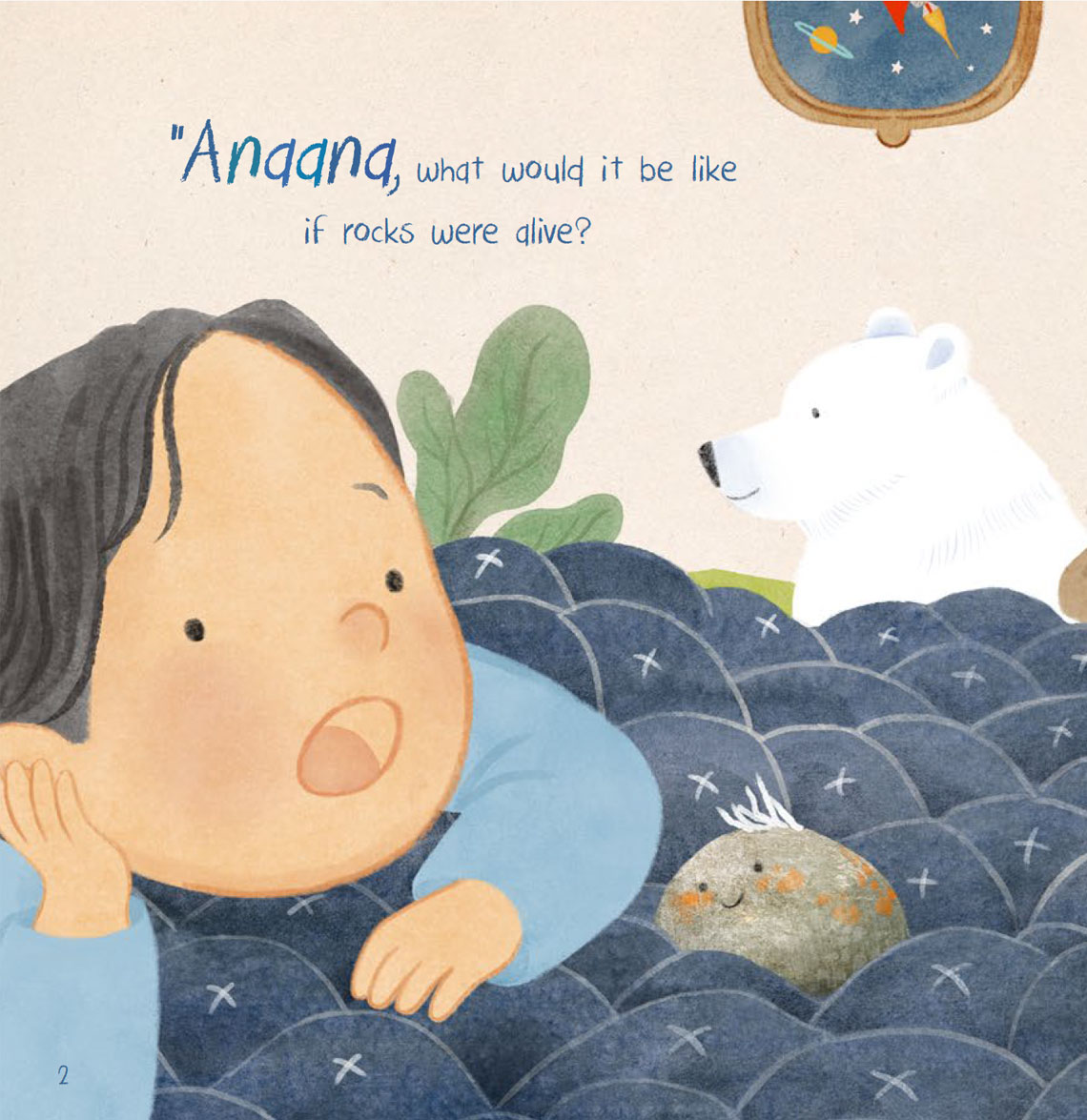
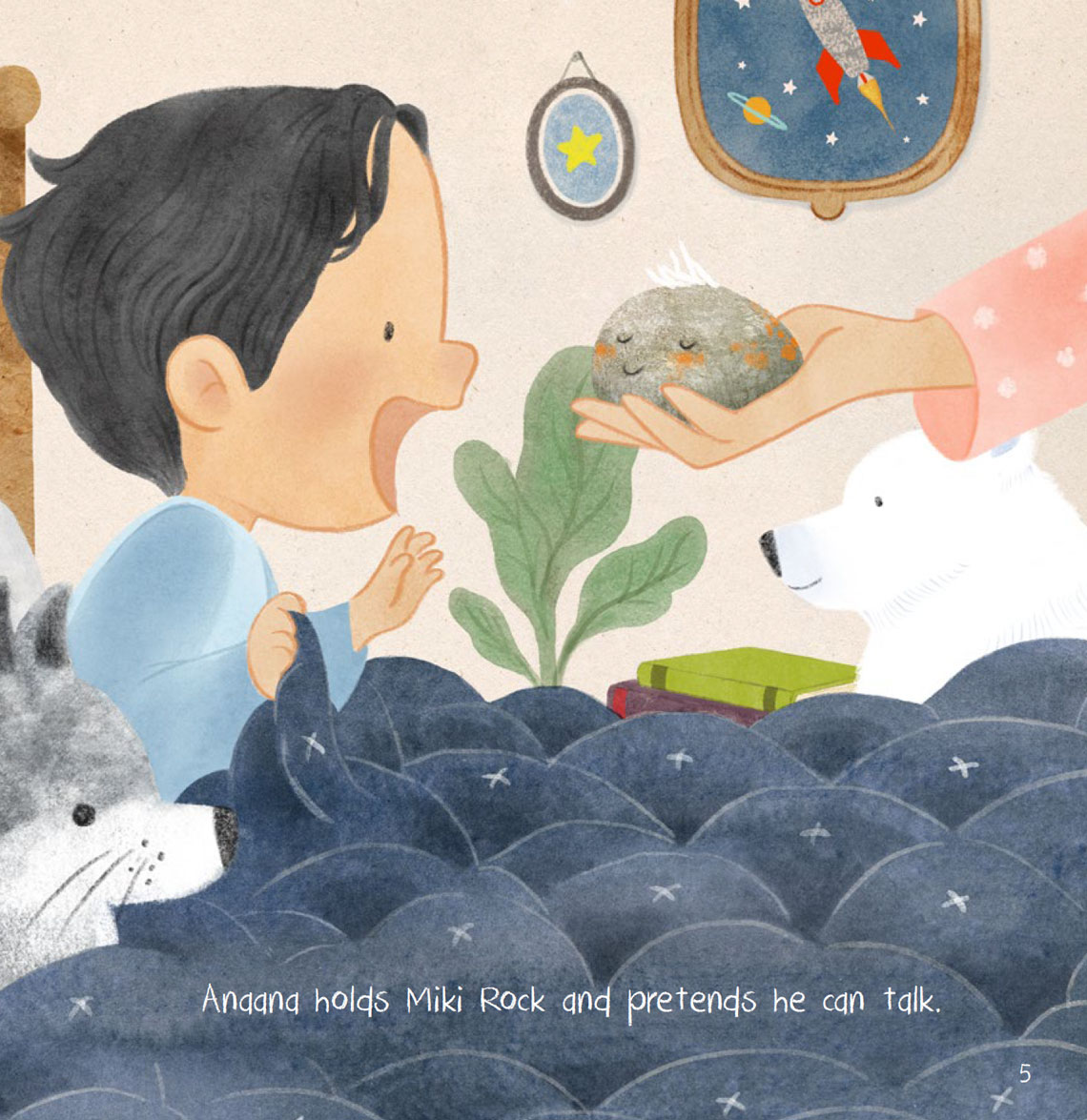
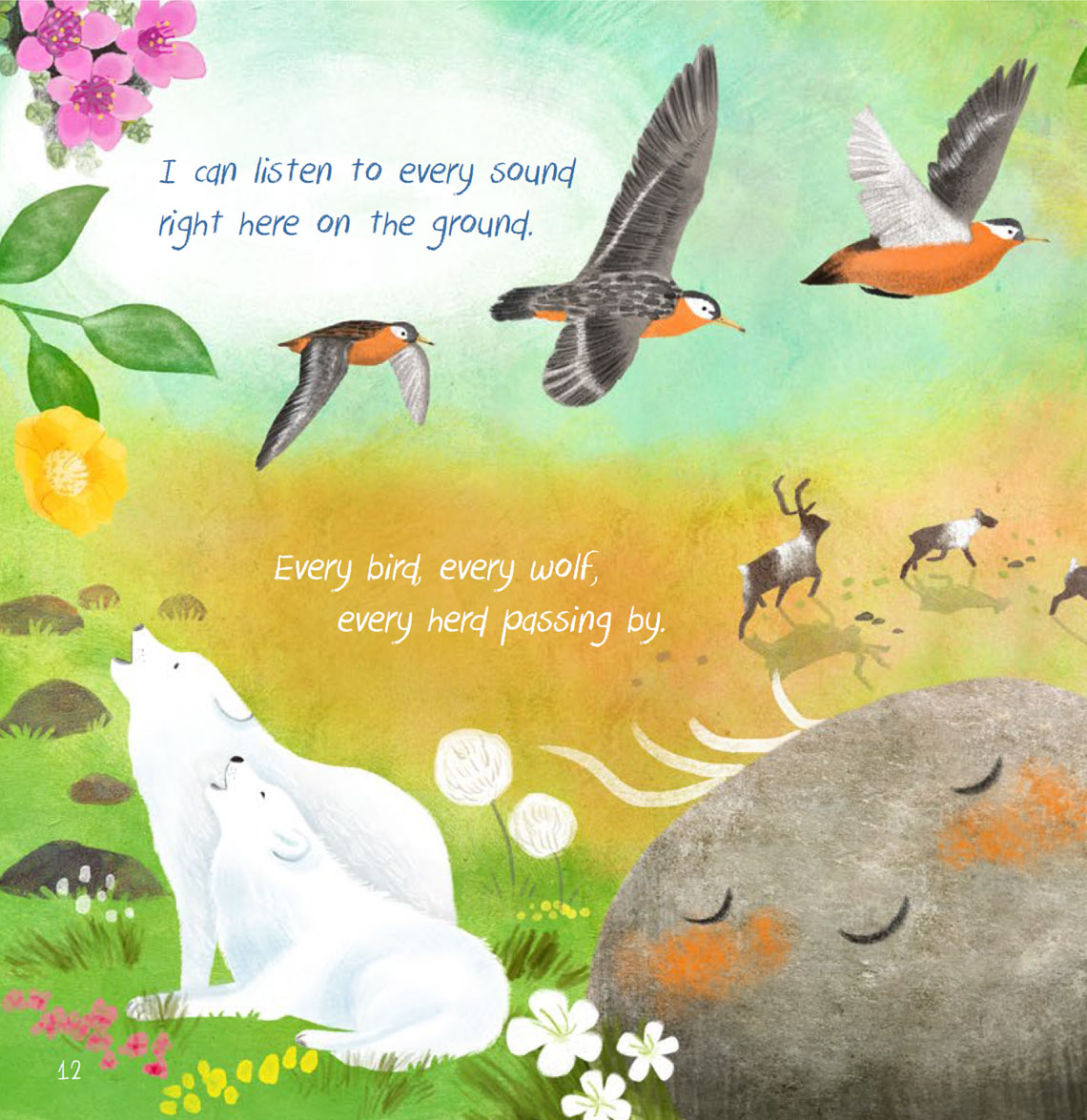
Image 3: An outdoor scene shows grass, flowers, and Miki Rock resting on the ground. A flock of birds flies across the sky above the rock. Two white wolves sit on the grass nearby, and a herd of animals moves across the land in the background. Text near the top of the page reads, 'I can listen to every sound right here on the ground.' Text below reads, 'Every bird, every wolf, every herd passing by.'
You could also use your imagination to think about how you would design the pages of your own book or story!
If possible, share your thoughts with someone you know.

Inquiry
Match the punctuation
Let’s practice finding punctuation at the end of sentences.
Match the sentence to the punctuation that comes at the end of the sentence.

Movement
Move like punctuation
Let’s play a movement game!
Have you moved any objects that you might bump into?
Listen to your body. Take breaks or stop if you need to.
Follow the steps to move your body. You can also do any action that feels most comfortable for you.

Literacy
Making sentences

Listen to the audio clip to hear the sentence.
Ball Audio
Select the sentence with the correct capitalization and punctuation.
Press the Check Answer button to see how you did.
Let’s try another one!
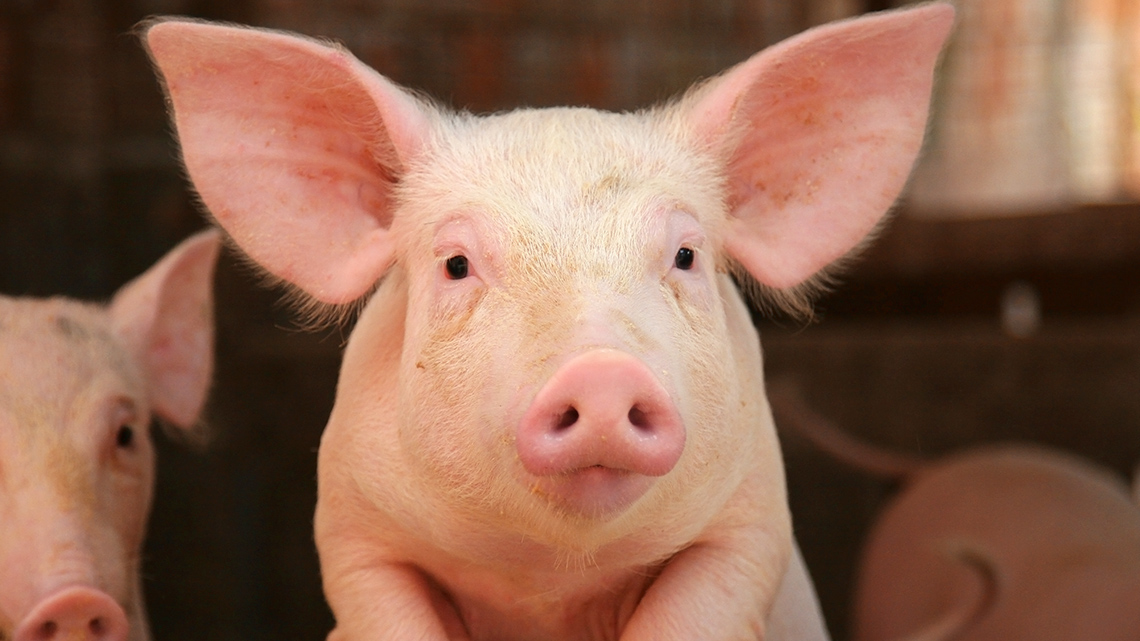
Listen to the audio clip to hear the sentence.
Pig Audio
Select the sentence with the correct capitalization and punctuation.
Press the Check Answer button to see how you did.
Reflection
How do you feel about what you have learned in this activity? Press the button next to the sentence that matches how you feel.