Noticing and Naming the Learning
What are you going to learn today?
We are learning to…
- subitize amounts up to 5
- compose and decompose amounts to 10
- recall addition facts to 5
- solve addition problems up to 10 using materials
How do I show what I have learned?
I can…
- show numbers in different ways
- make and break apart numbers
- solve and explain addition problems
- share my math thinking clearly
Minds On
Let’s get ready to learn!
Before we begin our learning, let’s wake up our minds with a warm up.

Social Emotional Learning
Warm up
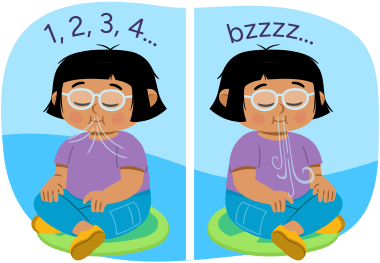
Split image of a child sitting cross-legged on the floor with eyes closed. In the first panel, the child is breathing in, accompanied by the numbers 1, 2, 3, 4. In the second panel, the child is breathing out with the word bzzzz shown.
Find a safe space.
Sit down or lie down.
Take a deep breath in through your nose for a count of four.
As you breathe out, make a buzzing sound like a bee.
Repeat your bee breathing a few times.
Listen to the Buzzing Breath audio and follow along to get you ready to learn!
Buzzing Breath
I can subitize
Subitizing means seeing a small group of things and knowing how many there are without counting them.
When might we subitize numbers?
Let’s take a look at some examples.

We subitize when we roll a die. How many dots do you see?
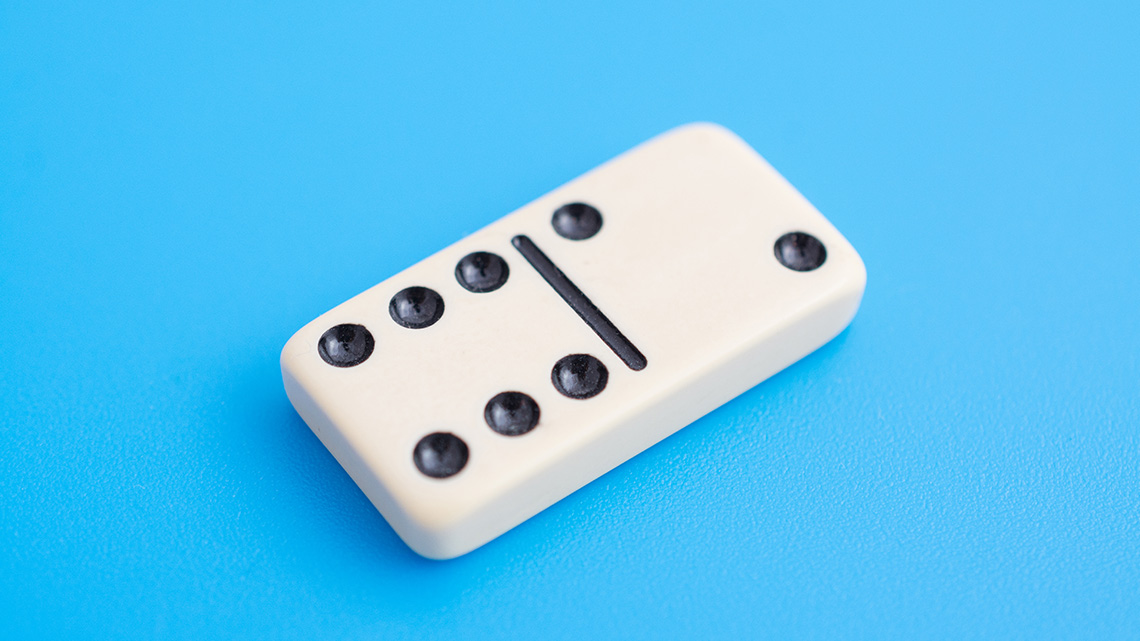
We subitize when we play games. How many dots are on the domino?

We subitize when we count objects in nature. How many birds are on the fence?
Now, let’s try subitizing using dots in the following video by Jack Hartmann called “Subitize Up to 5 (soo-bi-tize)”. Say the number out loud as the dots appear on your screen. How many dots do you see?
As you work through this learning activity, you can record your ideas in many ways.
Listen to the following audio recording to learn more about how to record your ideas.
How To Record Your Ideas
Action
I can make numbers
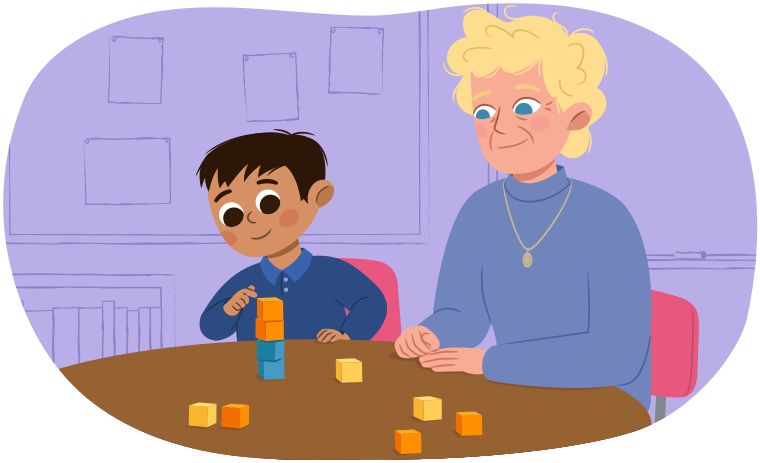
When we subitize, we see a small group of things and know how many there are without counting them.
Next, we can look at the way a number can be made of smaller parts.
Remy has 5 red cars.
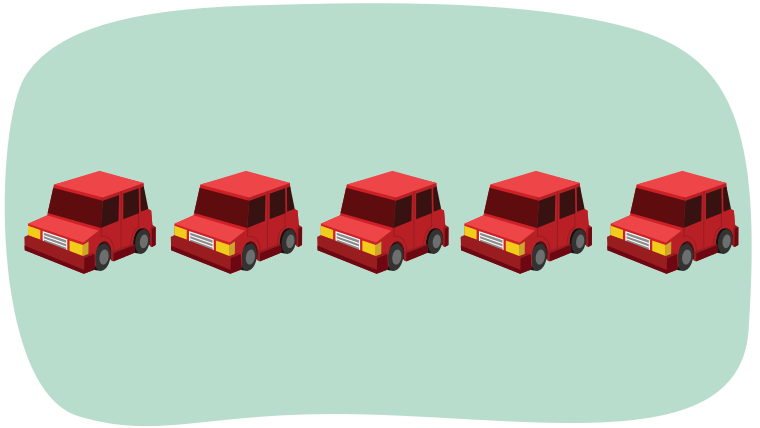
If he moves 2 cars on one side of the road and 3 cars on the other side of the road, does he still have 5 cars?

Let’s count!
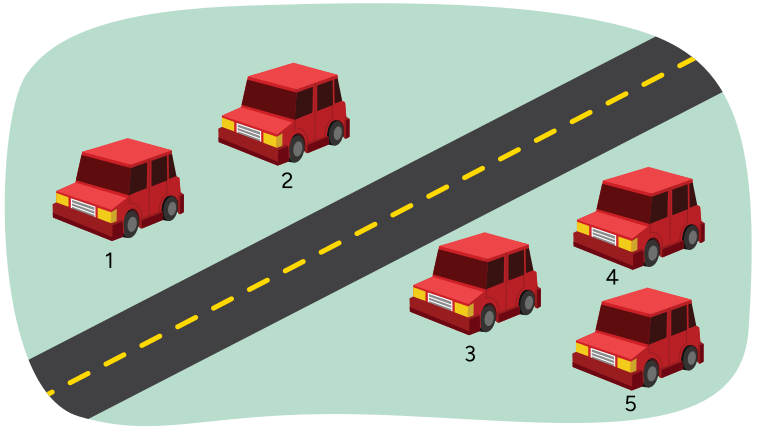
Yes! The whole stays the same even when the parts change.
What if Remy put 4 cars on one side of the road, and 1 car on the other side. Would he still have 5 cars?
Share your thoughts with someone else if you can.
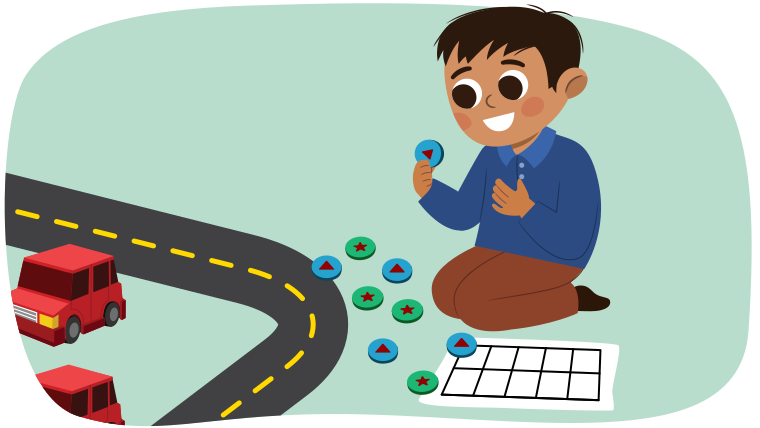
Remy decides he wants to play with counters next.
He has 7 counters in total. Can he split them into two parts?
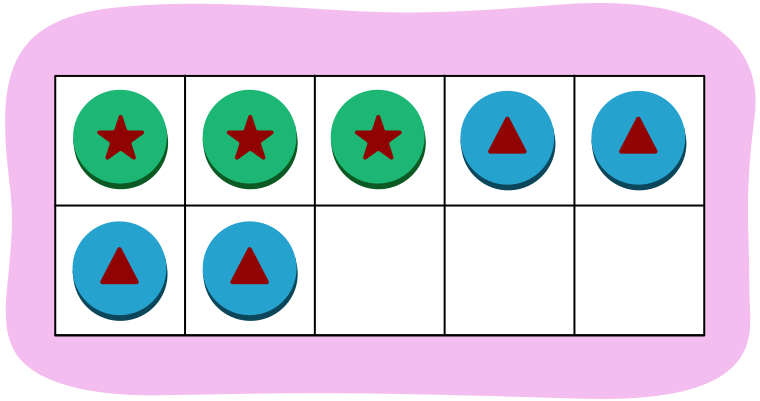
Yes! One part is 3 green counters, and one part is 4 blue counters.
He tries again. What does he do differently?
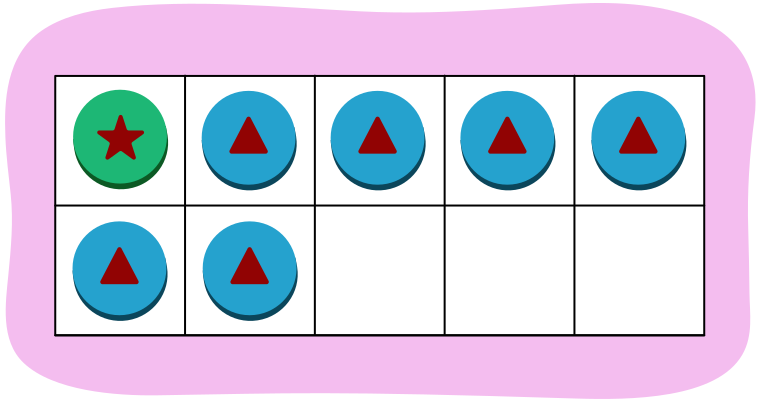
When you are ready press the Answer button to find out.
This time, one part is 1 green counter, and one part is 6 blue counters.
Remy left 2 counters on the 10-frame before he moved onto another activity.
How many more counters do we need to add to the frame to make 7 altogether?
Let’s explore the Ten Frame and use the counter stickers to find out!
Try using it yourself and you can always ask for help if you need!
Let’s add!
When we group items to find out how many we have altogether, we are doing addition!
Let’s try to add together.
If we have 2 circle counters and we add 3 star counters, how many shapes do we have altogether?
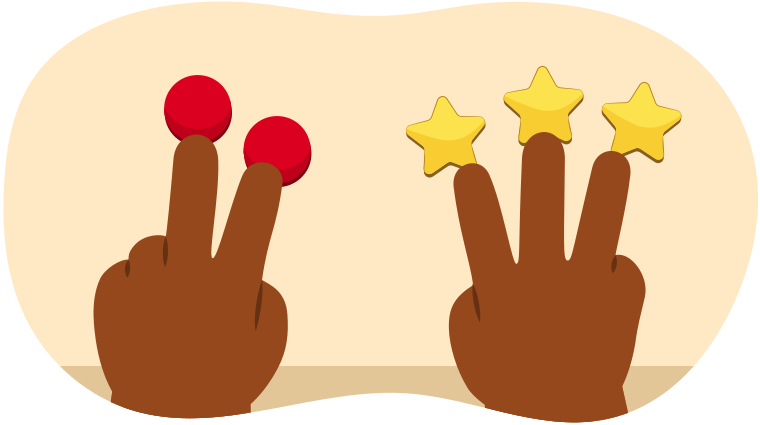
On the left, two fingers are raised with a circle on the tip of each finger. On the right, three fingers are raised, each topped with a star.
Put them together and count.
How many shapes do we have?
How many fingers are altogether?
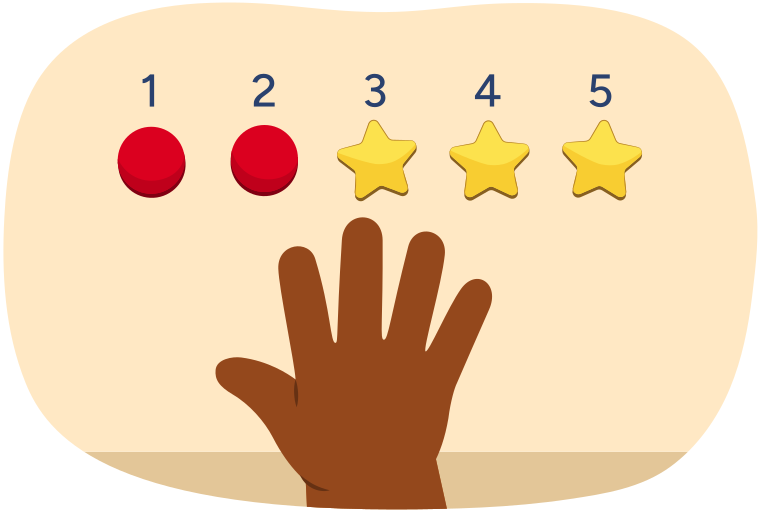
A hand with five fingers raised appears below numbers 1 through 5. Under the numbers 1 and 2 are circles. Under the numbers 3, 4, and 5 are star shapes.
We have 5 shapes altogether.
We can write this in a number sentence.
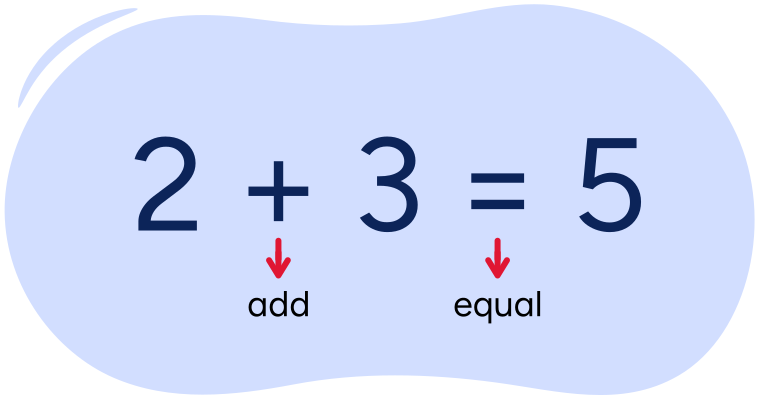
A number sentence reads '2 + 3 = 5.' Red arrows point to the plus sign with the word 'add' below it, and to the equal sign with the word 'equal' below it.
The addition sign, + , means to add.
The equalsign, = , means to balance.
We can write our number sentence as:
2 + 3 = 5.
Let’s practice!
Now that we have learned to add numbers up to 5 using a number sentence, let’s see if we can add some other numbers together. You can also use your fingers to help you!
Let’s try another one together.
1 + 3 = 4
We can show this number sentence on a 5-frame by using shapes like this:
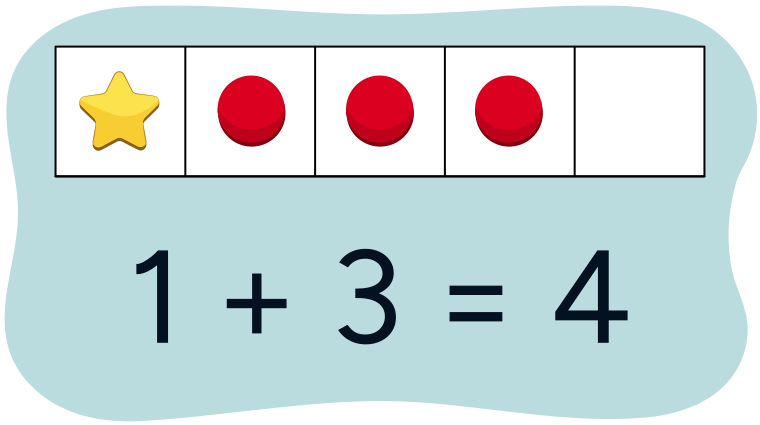
3 yellow stars plus 1 red circle make 4 shapes altogether.
Now, it’s your turn!
Explore each card and find out how many shapes are altogether. Can you show the addition on a 5-frame and write a number sentence?
Movement break
Body break!
Let’s take a break and move!
Before you begin:
- Find a safe space. Move anything you might bump into.
- How are you feeling? Listen to your body and take breaks.
- Ask an adult before getting materials or if you need help.
Follow the steps to move your body. You can also follow along with the audio.
Do whatever feels most comfortable for you.
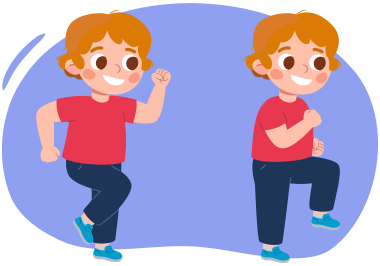
Split image of a young child standing in place. In the first panel, the child has their arms raised and one knee lifted mid-height. In the second panel, the child’s knee is raised higher, and their arms are lowered near their waist.
- Start by standing or sitting.
- Slowly move one of your elbows up at the same time you bring your knee up.
- Do the same on the other side and keep switching sides! You can count to 10 as you march.
- Repeat this one more time!
Slow March
Let’s check!
Let’s take what we learned so far and practice adding together!
- Count the dots on one side of the domino.
- Count the dots on the other side of the domino.
- Now add them together.
Pick the correct number sentence that goes with each domino.

Printing practice
A is for Add.
Let’s practice printing the letter A.
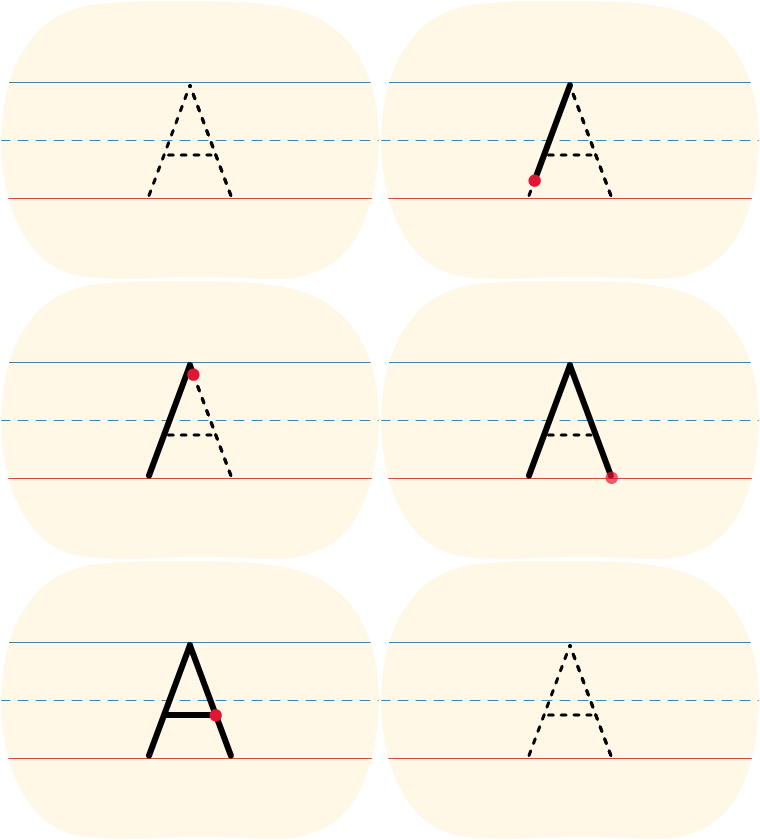
Now, you try!
Practice printing this letter in your notebook or using a method of your choice.
Use the following checklist to explore some printing tips.
When you are printing:
Consolidation
Time to explore!
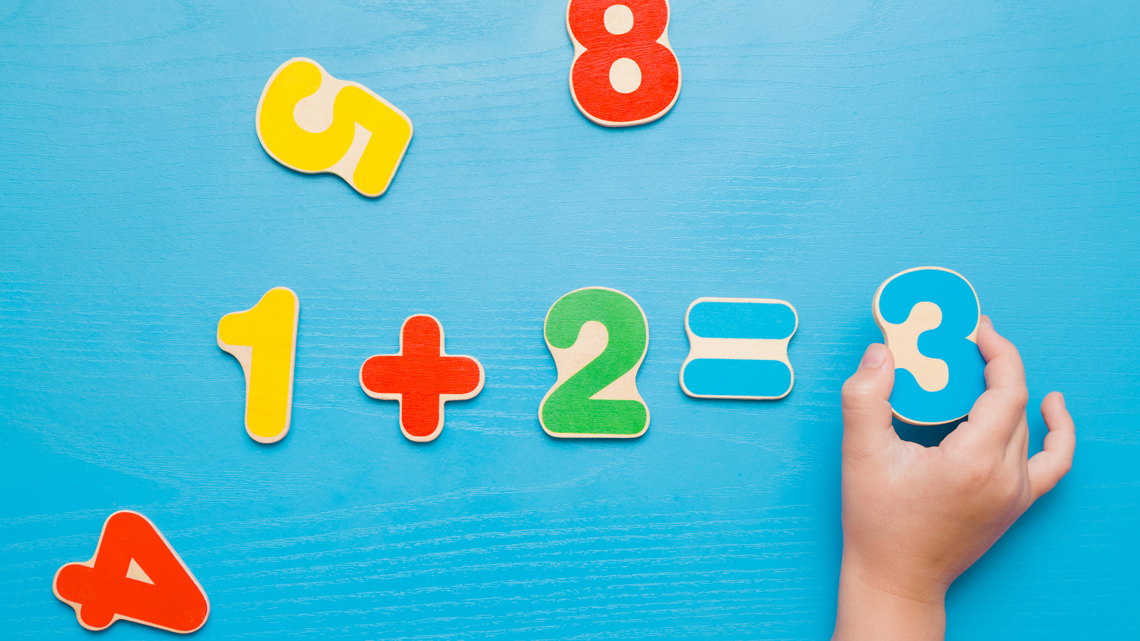
Check out the following centre ideas to further your learning about numbers!
You can choose one or more centres to explore.



Arts
Addition book
William is making his very own addition book!
If you would like to try this activity, you can use materials that you have in your learning space. Always ask permission from a trusted adult before gathering your materials.
Possible materials

- paper or printed My Addition Book template
- a writing utensil (pencil, pen)
- colouring tools (crayons, markers, pencil crayons)
Complete My Addition Book in your notebook or using the following fillable and printable document.
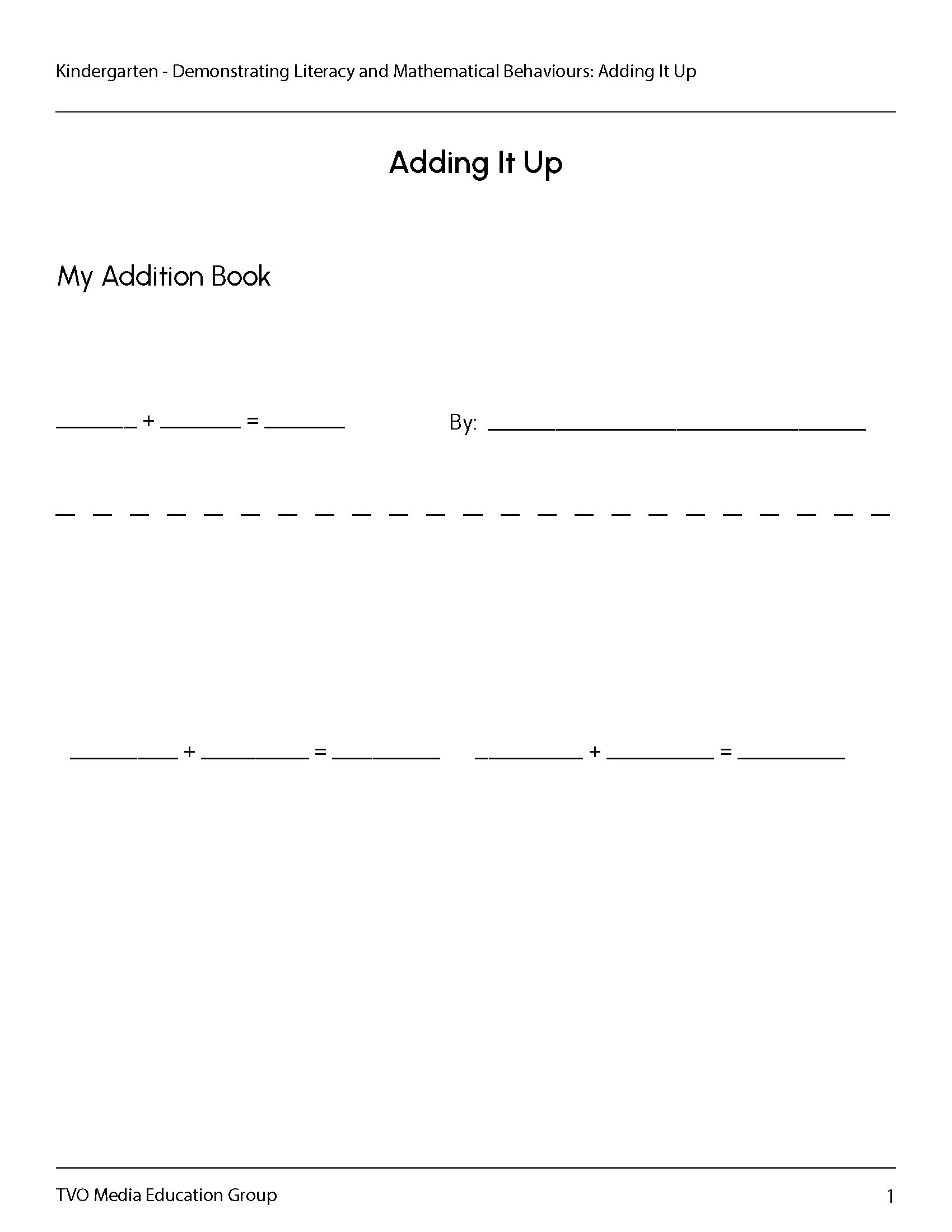
Let’s follow the steps in the pictures to learn how.
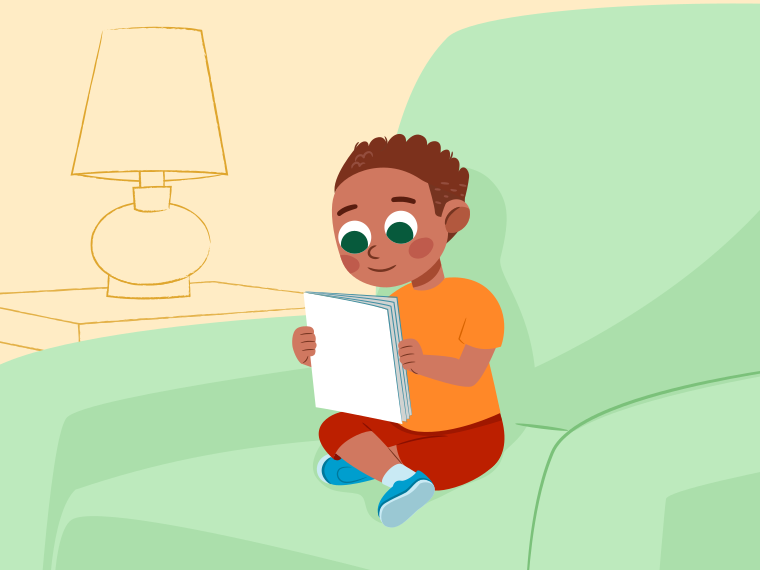
Step 1: Fold the papers into a book or print the template and fold it into a book.
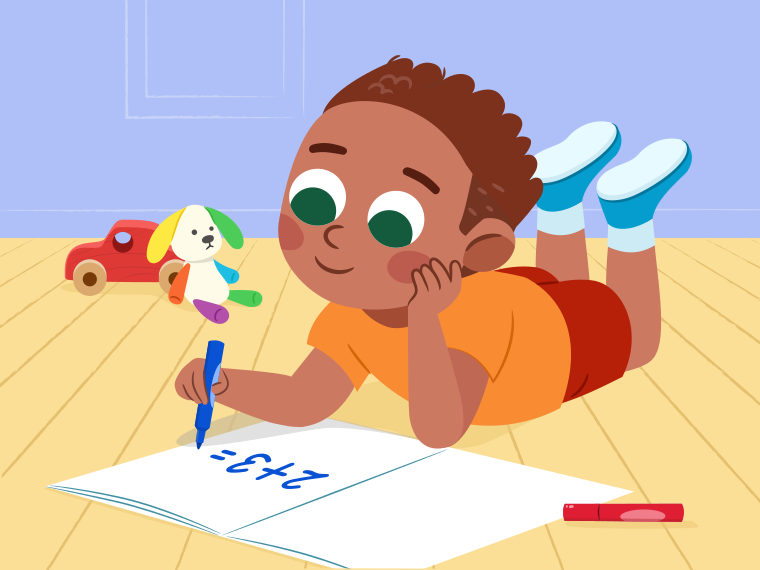
Step 2: Write a number sentence on each page.
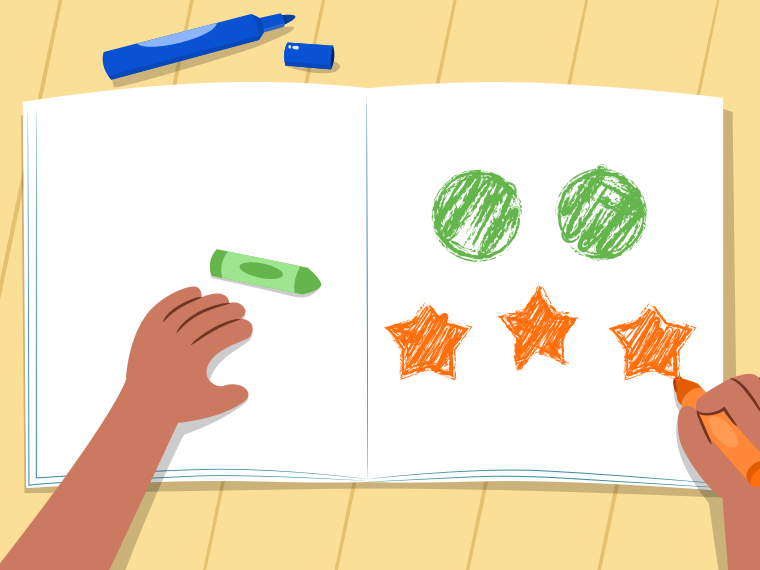
Step 3: Draw objects to show each sentence (like circles, stars, or apples).
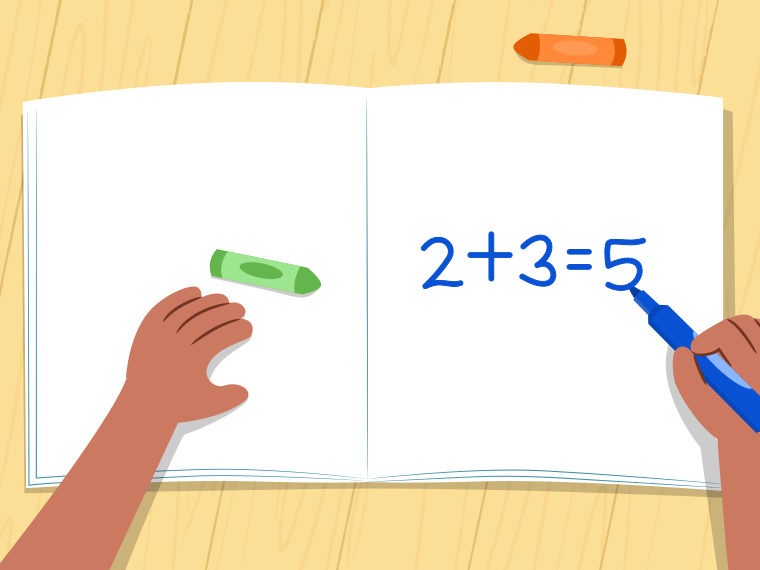
Step 4: Solve the addition problem and write the answer.
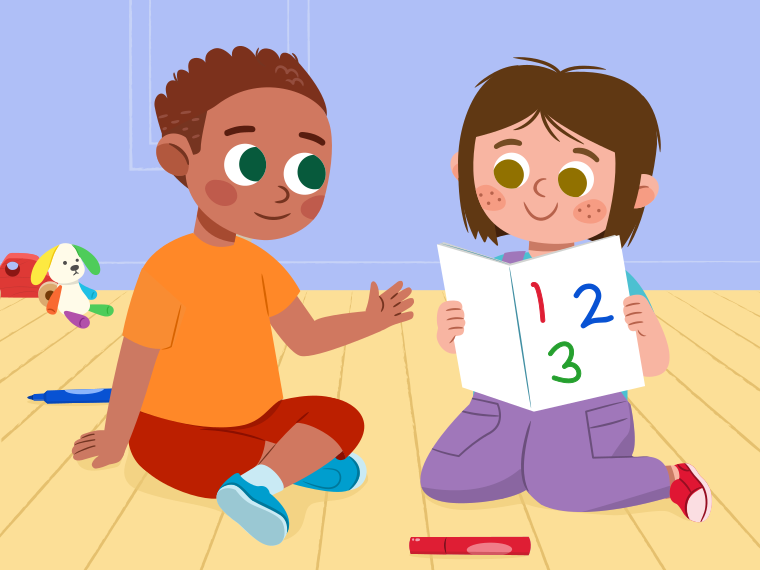
Step 5: If possible, share your addition book with someone.
You could also use your imagination to think about how you would design your book!
If possible, share your thoughts with someone else.

Inquiry
Addition dice game
Let’s play an addition game using dice!
If you would like to try this activity, you can use materials that you have in your learning space. Always ask permission from a trusted adult before gathering your materials.
Possible materials

- paper
- 2 dice, or Paper Dice Template
- a writing utensil (pencil, pen)
- optional: scissors, glue, colouring tools (crayons, markers, pencil crayons)
Access the following Paper Dice Template to complete the activity.
Let’s follow the steps to learn how to play the game.
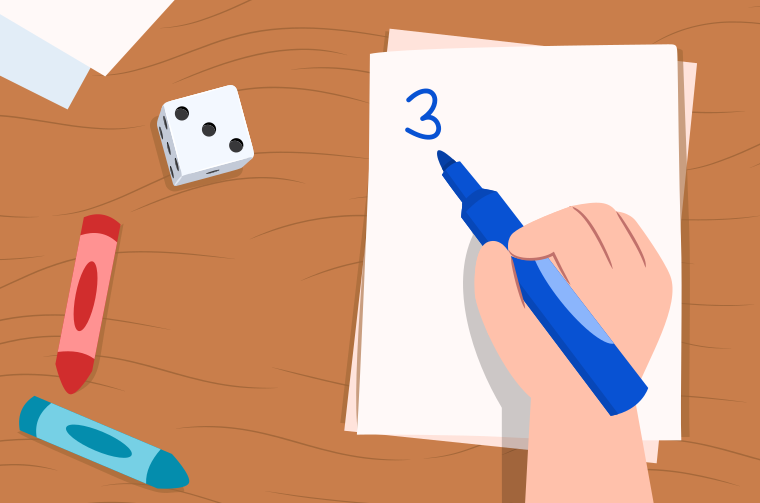
Step 1: Roll a die and count the dots of the number that appears. Write it down on a piece of paper.
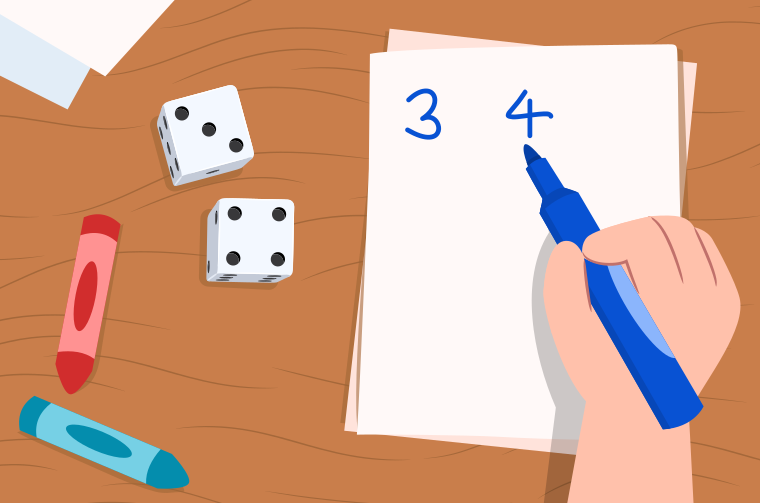
Step 2: Roll the dice again and count the dots of the second number that appears. Write it down on your piece of paper.
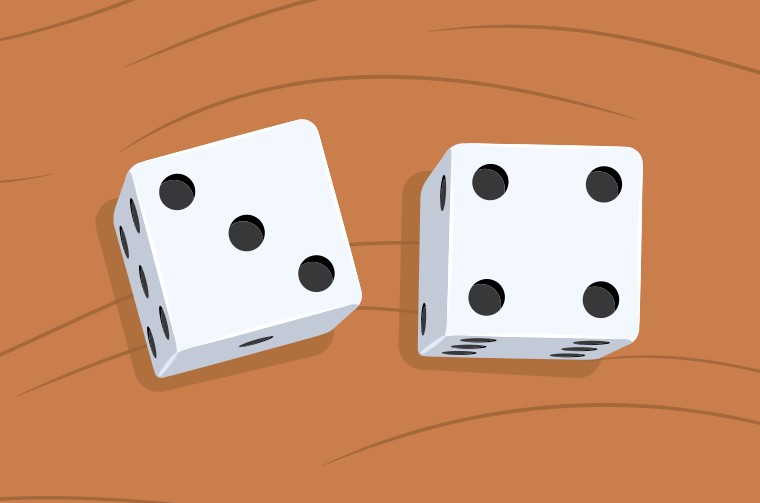
Step 3: Count all the dots together on the dice to find the total.
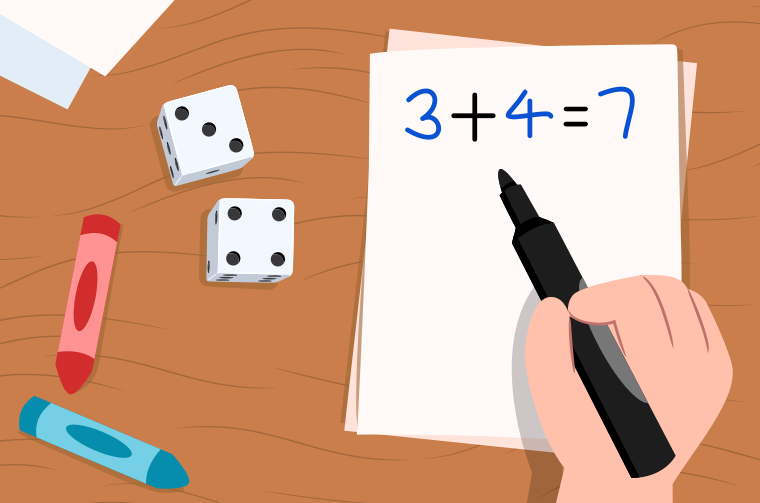
Step 4: Write the number sentence on your piece of paper.
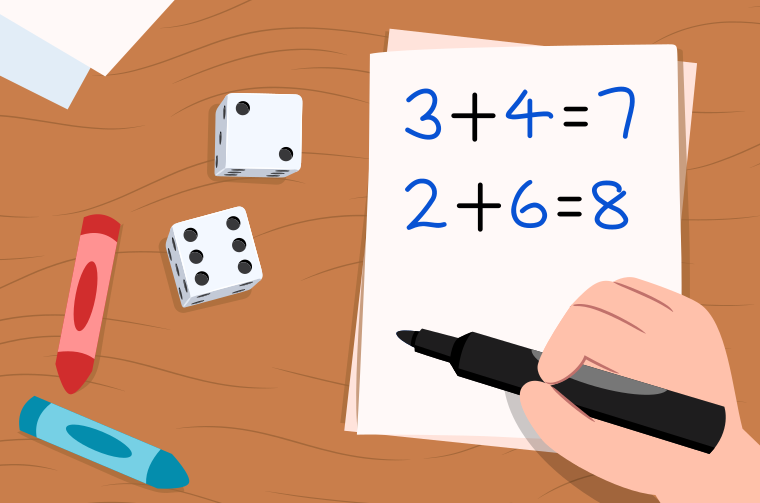
Step 5: Repeat this game as many times as you like!
Now it’s your turn!
Use your dice to make a math sentence. What numbers did you roll? Can you add them together?
You could also use your imagination to think about how you would write your number sentence.
If possible, share your ideas with someone you know.

Movement
Add the actions!
We can add up our movements!
Before you begin, press the following tabs to get ready.
Have you moved any objects that you might bump into?
Listen to your body. Take breaks or stop if you need to.
Take a look at the following flashcards.
Do the movements, add them together, and find out how many actions you did altogether.
Follow the steps to move your body. You can also do any action that feels most comfortable for you.
Can you think of your own movements and add them together?

Literacy
Addition song
Let’s apply what we have learned about adding.
How can you make the number 3?
How did you come to your answer?
Share your thoughts with someone else if you can.
Next, watch a video clip from "The Whole of Me" by Numberblocks and think about how you can break down the number 3 to make an addition. Count along to add the number blocks together!
Reflection
How do you feel about what you have learned in this activity? Press the button next to the sentence that matches how you feel.