Noticing and Naming the Learning
What are you going to learn today?
We are learning to…
- recall subtraction facts
- show and solve subtraction problems up to 10 using materials
How do I show what I have learned?
I can…
- show subtraction in different ways
- take away and find out how many are left
- solve and explain subtraction problems
- share my math thinking clearly
Minds On
Let’s get ready to learn!
Before we begin our learning, let’s wake up our minds with a warm up.

Social Emotional Learning
Warm up
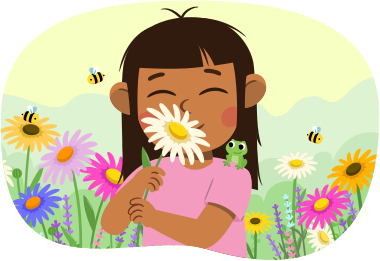
Imagine you are in a field of flowers.
The birds chirp, the bees buzz and you can feel the warm sun on your face.
You gently hold a flower in your fingers.
Bring it up to your face and breathe deeply through your nose and out through your mouth.
Count one, two, three.
Listen to the Flower audio to follow along!
Flower
How many are left?
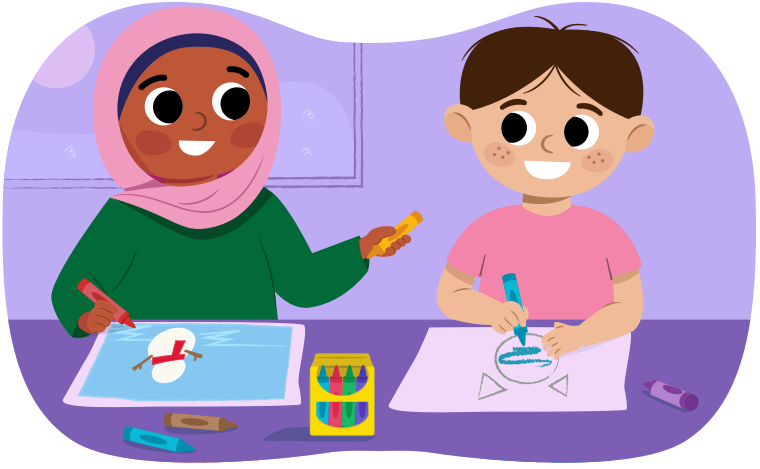
Have you ever shared with a friend?
Let’s take a look at an example together.
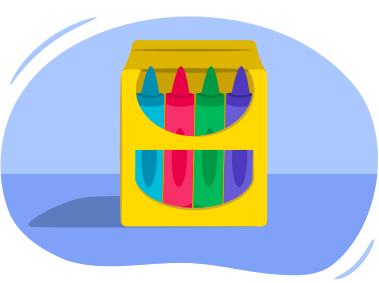
You have 4 crayons.
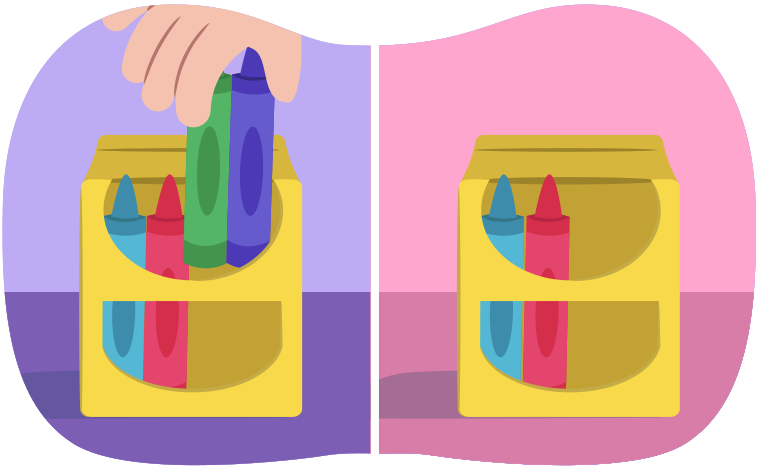
You give 2 crayons to your friend to use.
How many crayons do you have left?
When you are ready press the Answer button to find out.
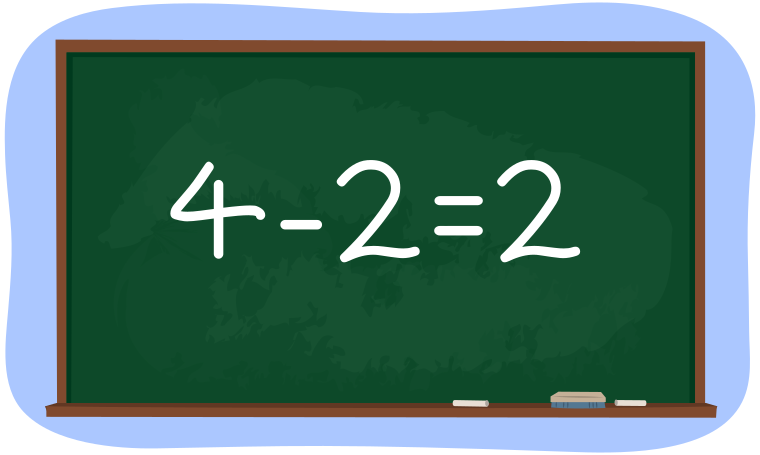
You would have 2 crayons left.
You can write that as a math sentence like this:
As you work through this learning activity, you can record your ideas in many ways.
Listen to the following audio recording to learn more about how to record your ideas.
How To Record Your Ideas
Action
Take away
We are learning how to take away and find how many are left.
This is called subtraction. Subtraction helps us solve problems in real life.
Let’s take a look at some examples of when we might use subtraction.

We subtract to know how many blocks are still in the tower after some fall down.

We subtract to find out how many crayons are left after some roll off the table.

We subtract to see how many birds are left in the tree after some fly away.

We subtract to find out how many kids are dancing out of the whole class.
We can show our subtraction math thinking in many ways.
Let’s take a look at how we can show subtraction.
Press the following tabs to explore different strategies.
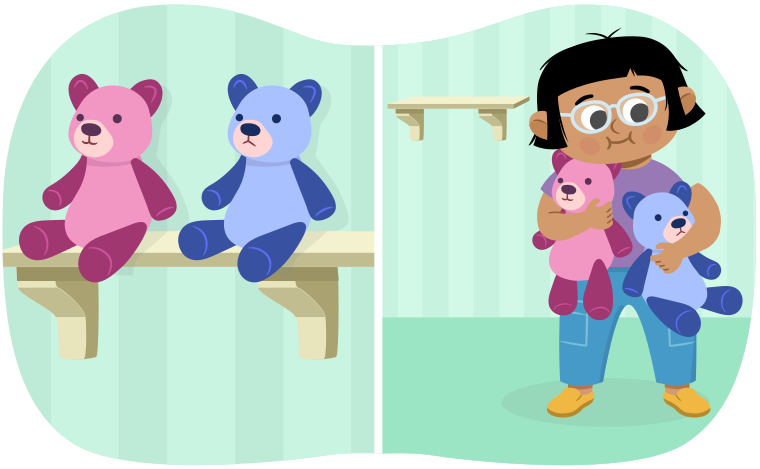
Start with a group of blocks, counters, or toys. Take some away and count what’s left.
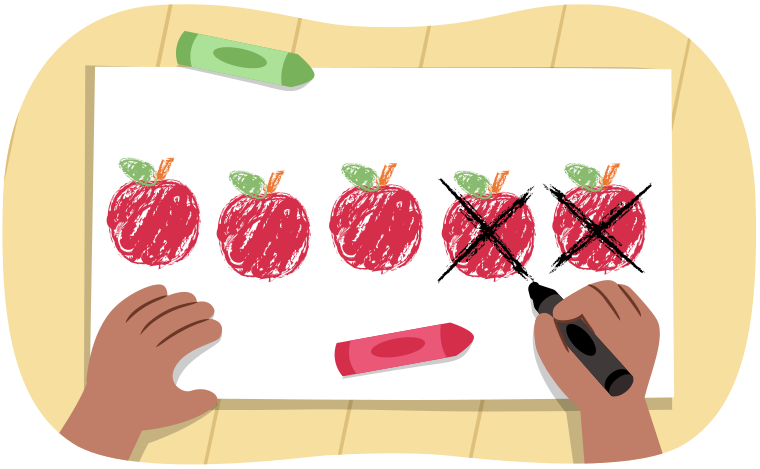
Draw a group of items (like 5 apples). Cross out or erase some, then count what’s left.
Hold up some fingers, fold a few down, then count the fingers still up to show the answer.

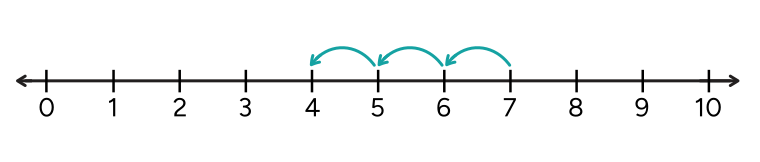
Start at a number and jump backwards to show “taking away.”
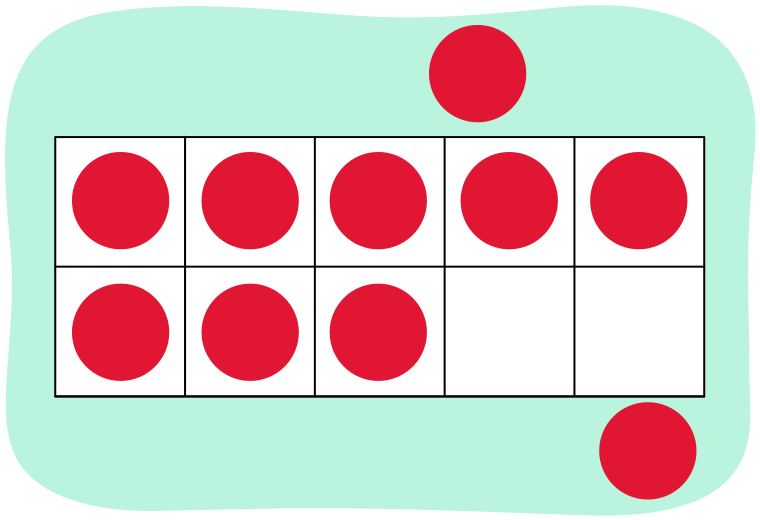
Fill in a ten frame with counters, then remove some and see how many are left.
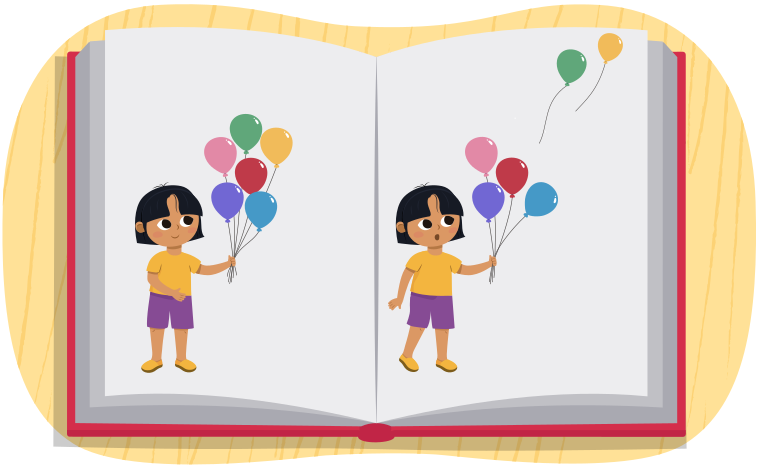
Sora had 6 balloons. 2 floated away. How many balloons does she have left?
To solve this subtraction problem, we can write a number sentence. Check out the following example.
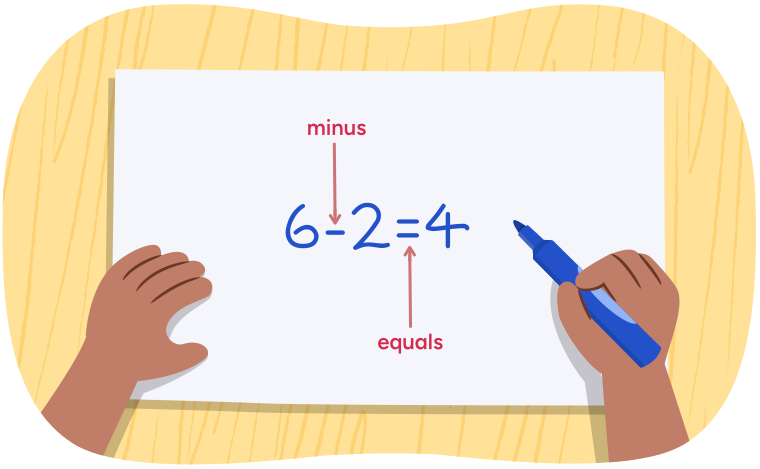
The minus sign, − , means subtract or take away.
The equal sign, =, means the same as.
We can write our subtraction number sentence as: 6 − 2 = 4
Body break!
Let’s take a break and move!
Before you begin:
- Find a safe space. Move anything you might bump into.
- How are you feeling? Listen to your body and take breaks.
- Ask an adult before getting materials or if you need help.
Follow the steps to move your body. You can also follow along with the audio.
Do whatever feels most comfortable for you.
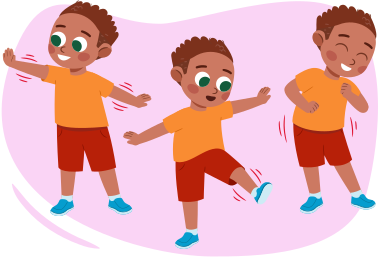
- Start by standing or sitting.
- Gently shake one arm, the other arm, then both.
- Shake one leg and the other leg.
- Gently shake your head, hips, and whole body.
- Repeat this two more times!
Body Shake
Let’s practice!
Let’s practice what we have learned about subtraction by matching the pictures to the correct subtraction number sentence.

Printing practice
S is for Subtract.
Let’s practice printing the letter S.
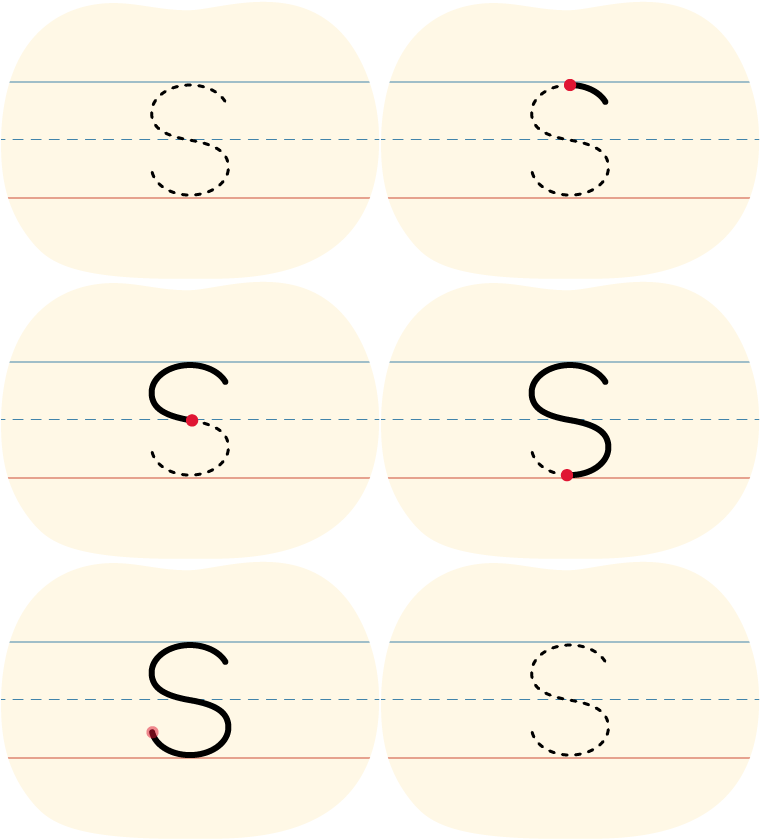
Now, you try!
Practice printing this letter in your notebook or using a method of your choice.
Use the following checklist to learn some printing tips.
When you are printing:
Consolidation
Time to explore!

Check out some fun ideas to help grow your math brain!
You may choose one or more centres to explore.



Arts
Subtraction songs
Listen to or sing along to one or more of the following subtraction songs!
Song 1: Five Green and Speckled Frogs
Song 2: Ten in the Bed

Brainstorm
Brainstorm
What kind of subtraction did you notice?

Inquiry
Sink or float subtraction
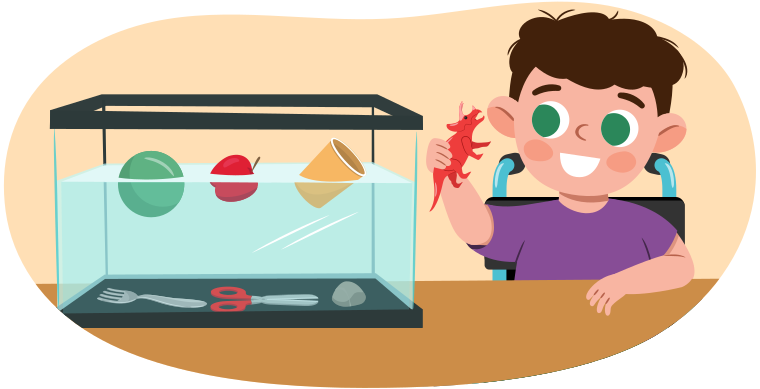
Hunter sits a table beside a fishtank. Inside the tank, a fork, scissors, and a rock rest at the bottom, while a ball, apple, and a cup float at the top.
Hunter is playing the sink or float subtraction game.
There are 6 objects in the water.
The fork, scissors, and rock sank to the bottom. That is 3 objects.
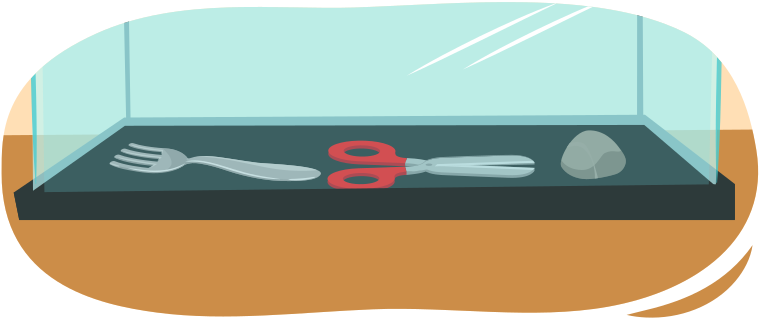
The ball, apple, and cup float on the top. That is 3 objects.
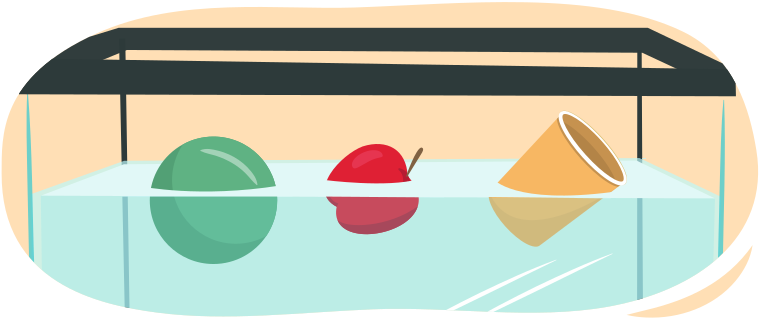
If Hunter removes the floating objects (ball, apple, cup), how many objects will he have leftover?
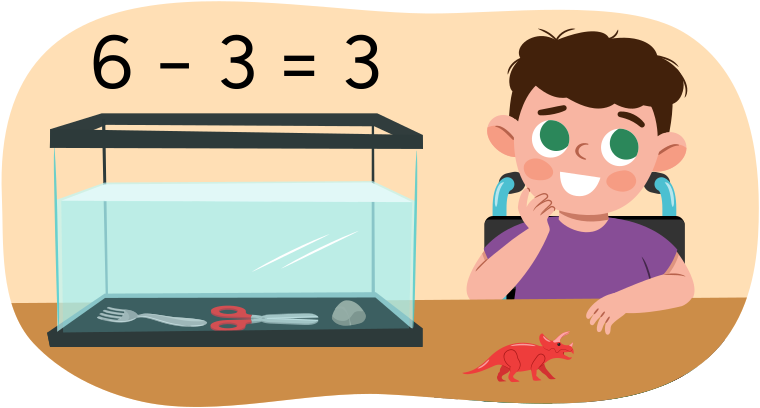
Hunter sits at a table beside a fishtank that contains three items: a fork, scissors, and a rock. Above the tank, the number sentence '6 - 3 = 3' is written.
3 objects will be left in the water!
If you would like to try this game, you can use materials that you have in your learning space. Always ask permission from a trusted adult before gathering your materials.
Possible materials
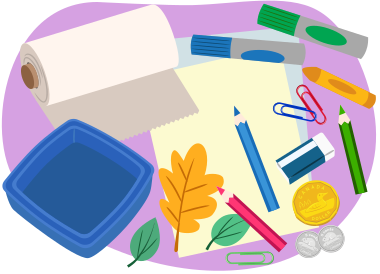
- clear container of water (like a bowl, tub, or plastic bin)
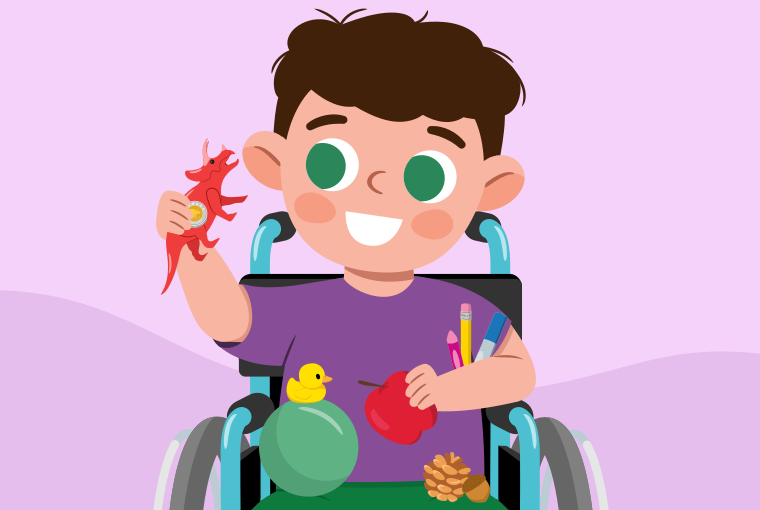
- 5 small objects (such as corks, coins, small plastic toys, leaves, paperclips, rubber erasers or other materials)
- towel or paper towel for spills
- paper
- pencil, crayon, marker
Let’s play!
Follow the steps.
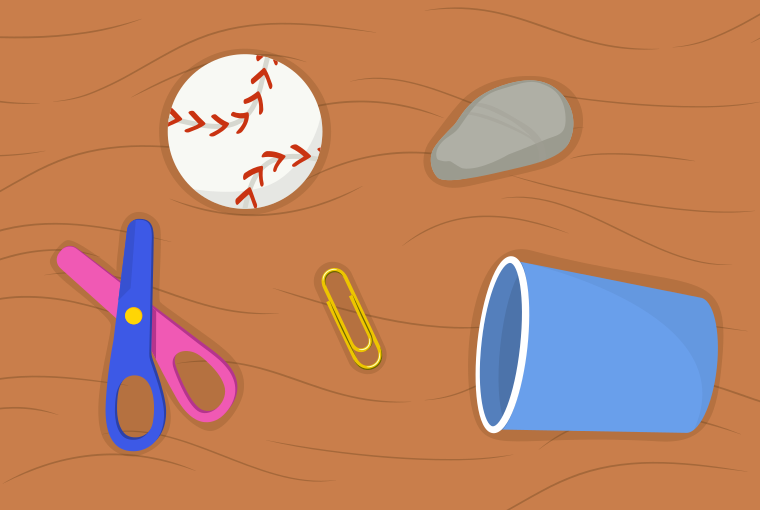
Step 1: Choose 5 objects to start with.
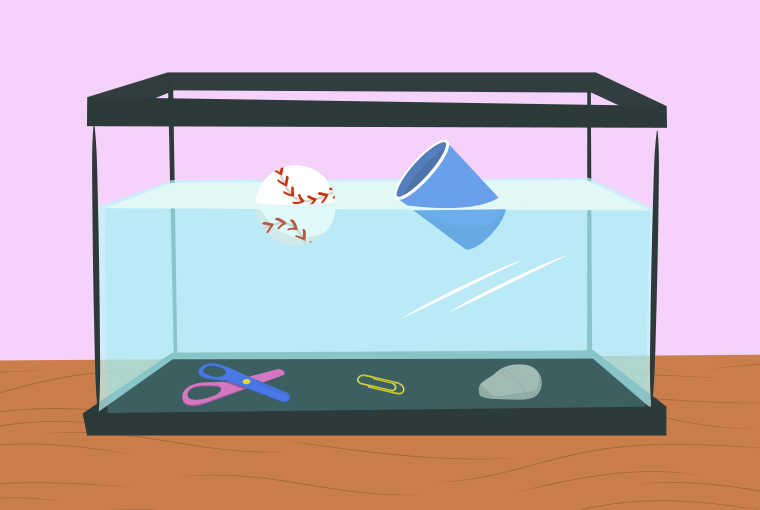
Step 2: Place all the objects in the water. Watch carefully which ones sink and which one’s float.
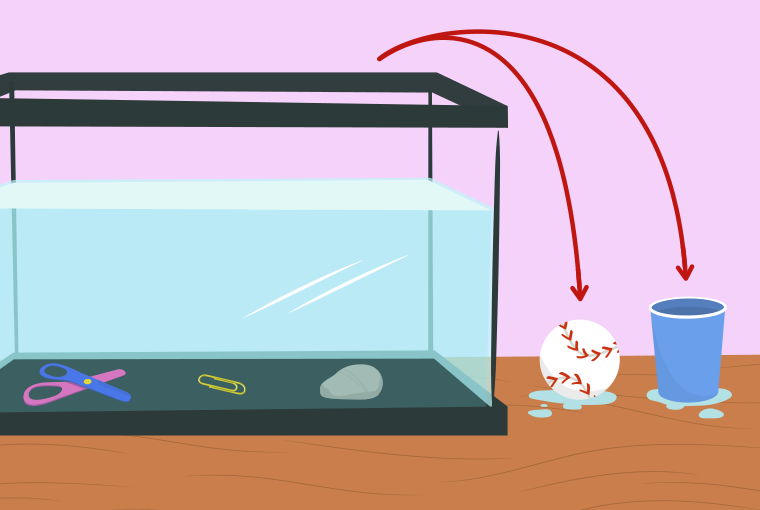
Step 3: Remove the floating objects from the water.
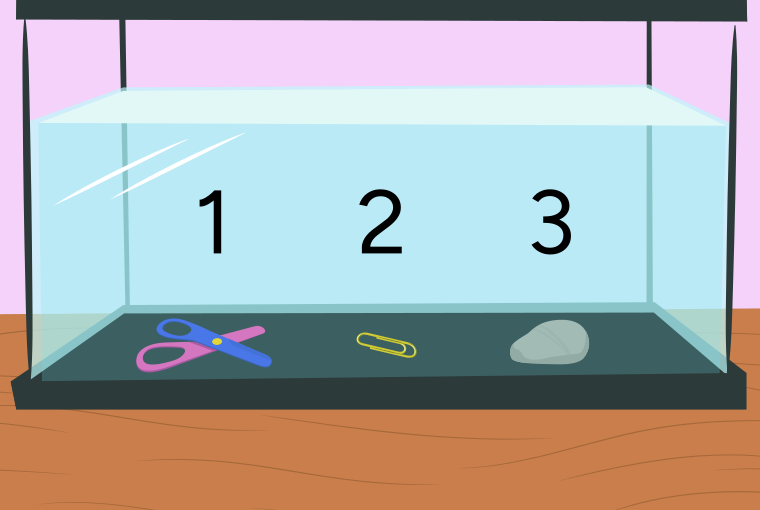
Step 4: Count how many objects are left in the water.
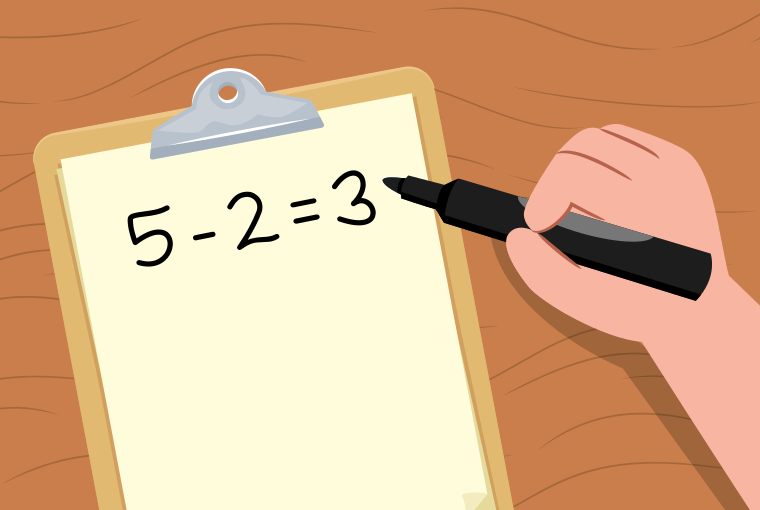
Step 5: Write the subtraction sentence. For example: If you started with 5 objects and removed 2, write: 5 − 2 = 3
Step 6: Repeat with different combinations of objects or different starting numbers.
You could also use your imagination to think about what kind of materials you might use.
Which do you think would sink?
Which do you think would float?
Share your thoughts with someone else if you can.

Movement
Subtraction dance game
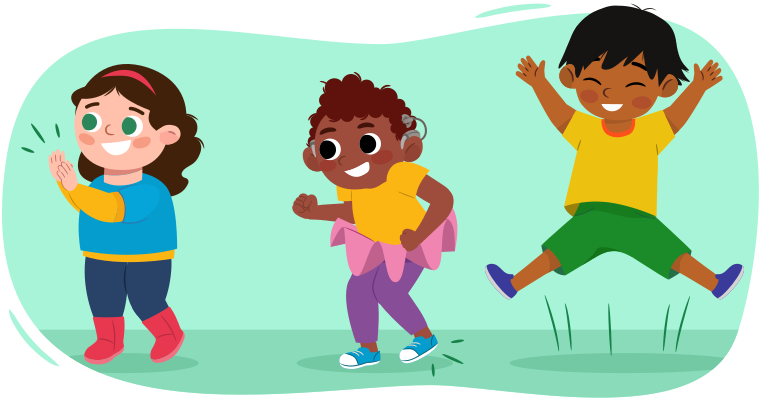
Are you ready to dance and move?
Before you begin, press the following tabs to get ready.
Have you moved any objects that you might bump into?
Listen to your body. Take breaks or stop if you need to.
Possible materials
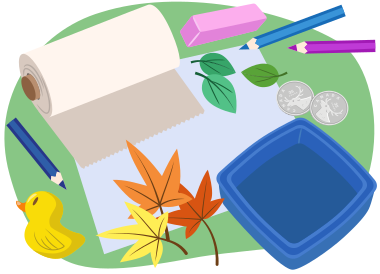
- writing utensil (pencil, crayon, marker)
- paper or something to write on
Follow the steps to move your body. You can also do any action that feels most comfortable for you.
Let’s begin!
Press the following tabs to learn how to play.
Start with a number
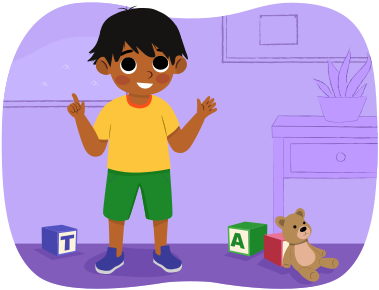
Choose a starting number of moves like jumps, claps, or stomps.
For example, let’s start with 6 claps.
Do the moves
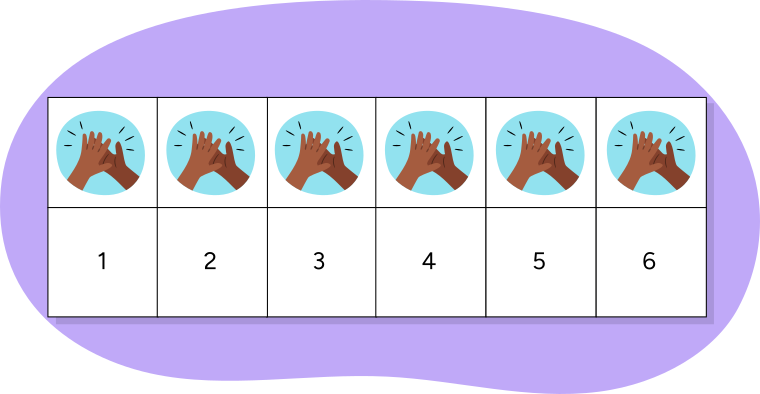
Do the movements and count as you go.
One, two, three, four, five, six!
Take some away and count what’s left
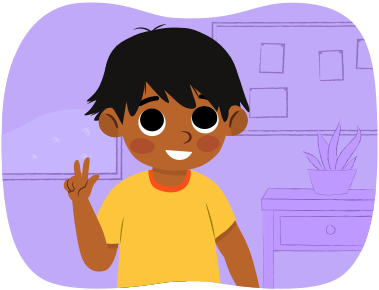
Choose a number of moves to take away.
Let’s take away 2 claps!
How many moves are left?
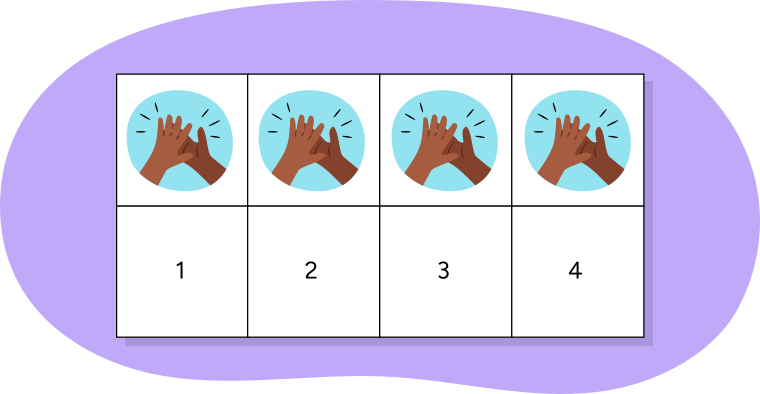
Write the subtraction sentence
Write down your subtraction sentence using a method of your choice.
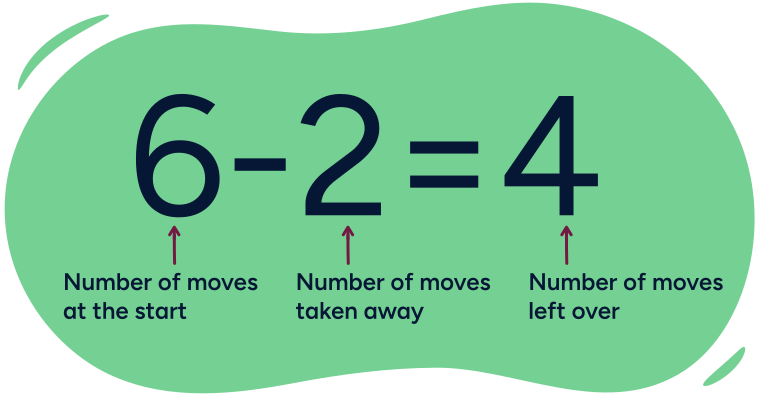
The number sentence '6 − 2 = 4' is shown with arrows labeling 6 as 'number of moves at the start,' 2 as 'number of moves taken away,' and 4 as 'number of moves left over.'
Can you make a subtraction sentence with your own movements?
You can do any action that feels most comfortable for you.

Reflection
How do you feel about what you have learned in this activity? Press the button next to the sentence that matches how you feel.