Noticing and Naming the Learning
What are you going to learn today?
We are learning to…
- identify and describe two-dimensional shapes in different sizes and positions
- sort and compare shapes based on their attributes
- use shapes to create pictures, patterns, and new shapes
- take apart and rearrange shapes to make new ones
- communicate thinking about shapes, objects, and structures in different ways
How do I show what I have learned?
I can…
- find and name shapes
- sort and compare shapes
- build and show shapes
- use shapes to make pictures or new designs
Minds On
Let’s get ready to learn!
Before we begin our learning, let’s wake up our minds with a warm up.

Social Emotional Learning
Warm up

Find a safe space.
Sit down or lie down and close your eyes.
Slowly breathe in through your nose.
Then hold your breath for a few seconds.
Slowly breathe out through your mouth.
Do this for 5 breaths.
Listen to the Breathing In and Out audio to follow along.
Breathing In and Out
Shapes in art
There are shapes all around us.
Have you ever made art with shapes or noticed different shapes in pictures?
Let’s explore pictures filled with two-dimensional shapes.
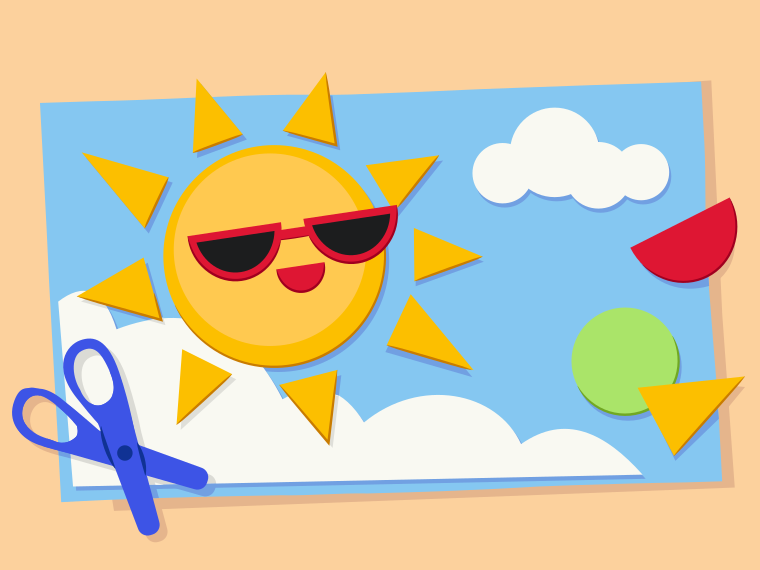

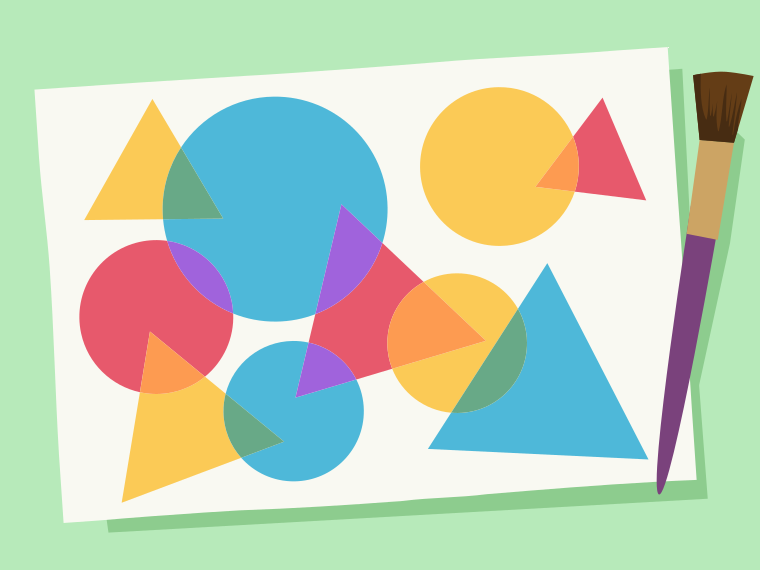
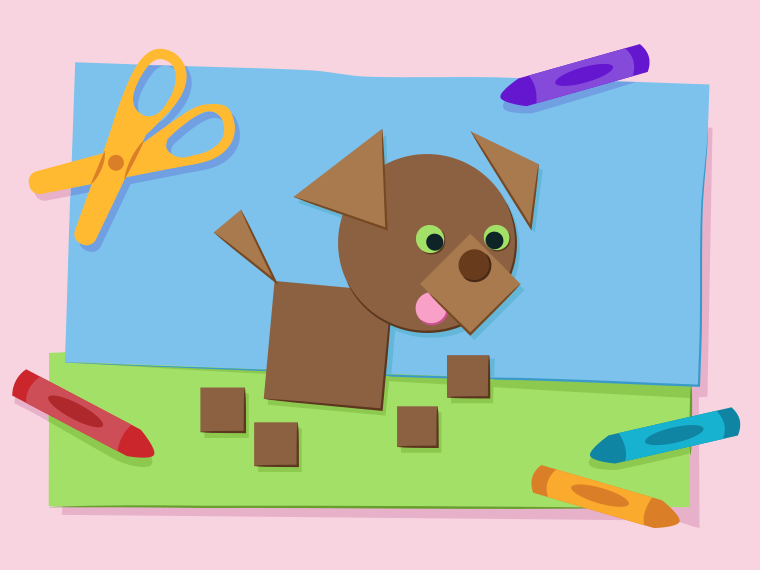
Choose one of the pictures.
What shapes can you see? Are there any small shapes inside big shapes?
Record your thoughts. If possible, share your thoughts with someone you know.
As you work through this learning activity, you can record your ideas in many ways.
Listen to the following audio recording to learn more about how to record your ideas.
How To Record Your Ideas
Action
Discover 2D shapes
A two-dimensional, or 2D, shape is a flat shape.
Let’s explore some 2D shapes:
What makes a shape special?
Attributes are the things we can notice and describe about a shape, like:
- how many sides it has
- how many corners it has
- if it has curved sides or straight sides
Let’s explore the attributes of some two-dimensional shapes.
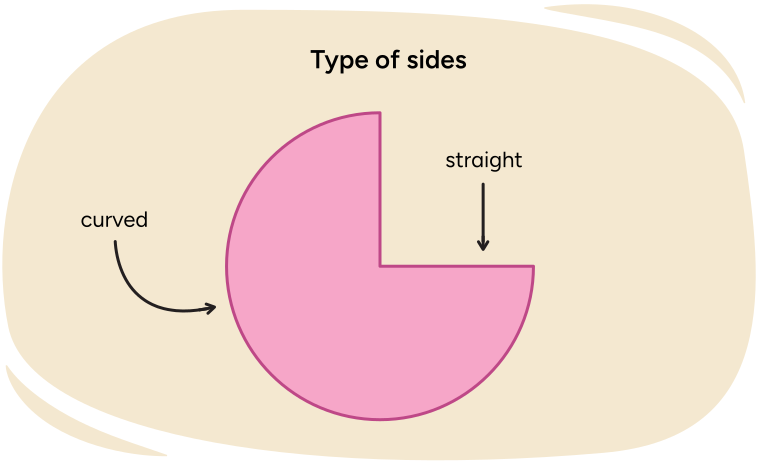
A diagram titled 'Types of sides' shows a shape with one curved edge and two straight sides. The rounded side of the shape is labelled 'curved' and one of the flat sides is labelled 'straight.'
Image 4: A square is shown. The top side is highlighted with the number '1' above it, the right side with '2,' the bottom side with '3,' and the left side with '4.'
We can count the straight sides on some shapes.
Let’s practice counting the number of sides on a square.
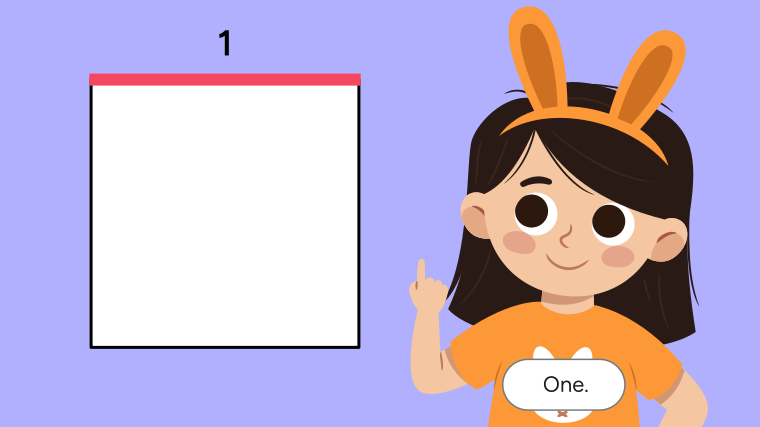
This is a square with one red side shown
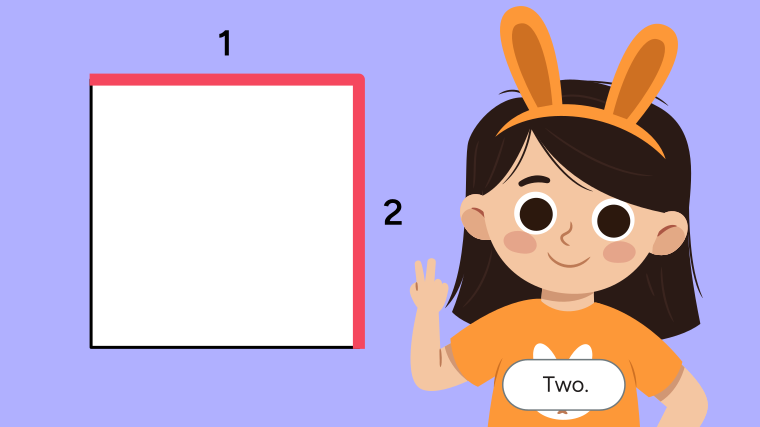
This is a square with two red sides shown.
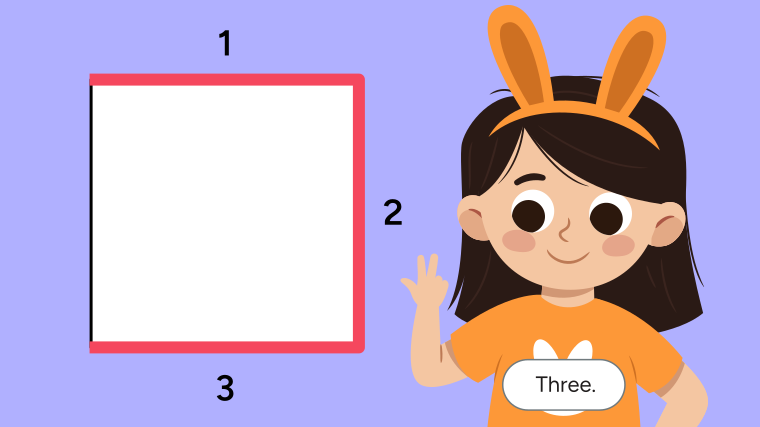
This is a square with three red sides shown.
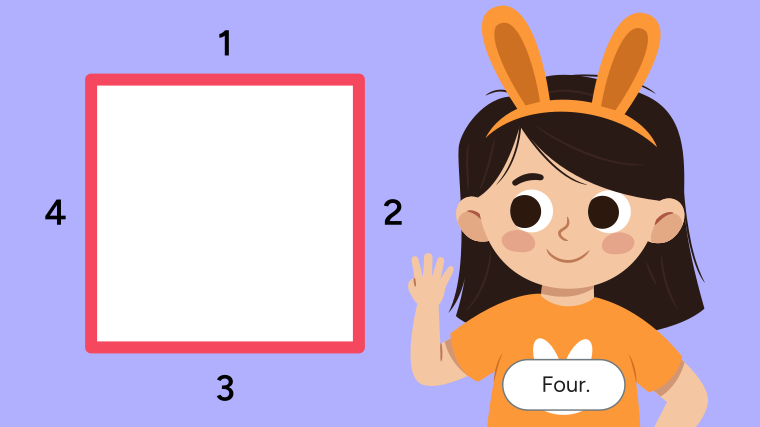
This is a square with four red sides shown.
A diagram titled 'Types of sides' shows a shape with one curved edge and two straight sides. The rounded side of the shape is labelled 'curved' and one of the flat sides is labelled 'straight.'
Image 4: A square is shown. The top side is highlighted with the number '1' above it, the right side with '2,' the bottom side with '3,' and the left side with '4.'
How many sides does a triangle have?
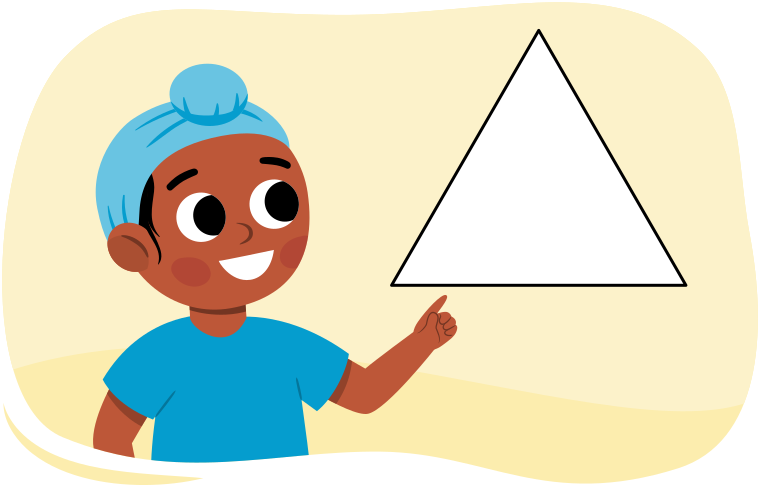
Press the Answer button to find out.
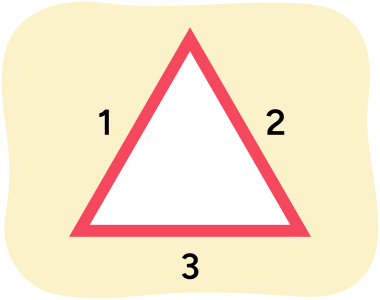
A triangle is shown with all three sides highlighted. The left side is labeled '1,' the right side is labeled '2,' and the bottom side is labeled '3.'
A triangle has 3 sides.
When we count the sides altogether, we can see that a square has 4 straight sides!
We can also describe a shape by counting the number of corners it has.
A corner is a point on a shape.
Let’s count the corners on a square.
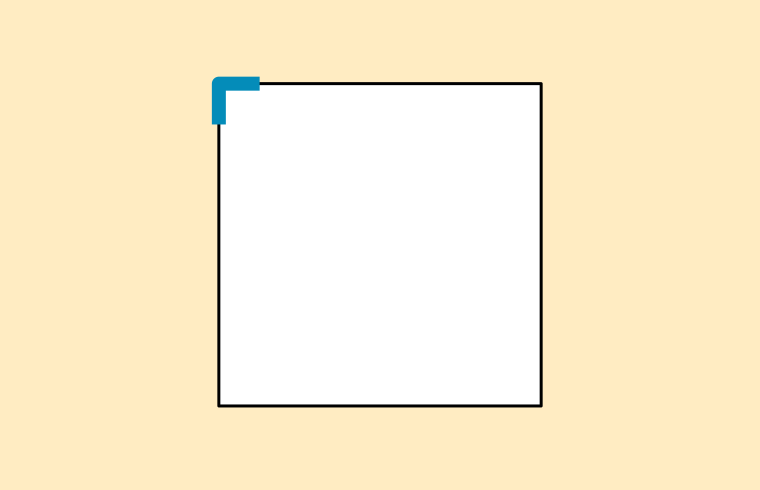
This is a square with 1 blue corner.
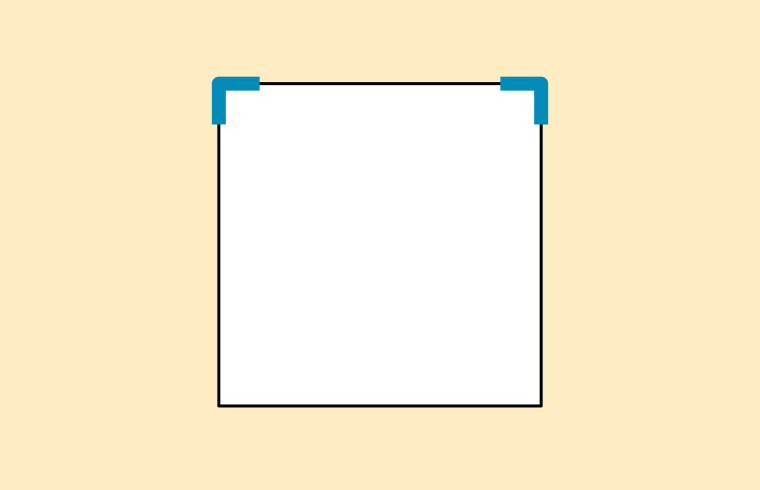
This is a square with 2 blue corners.
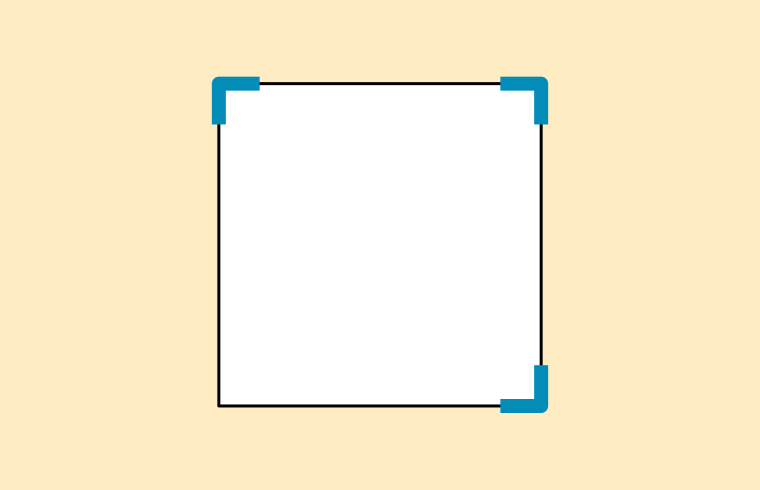
This is a square with 3 blue corners.
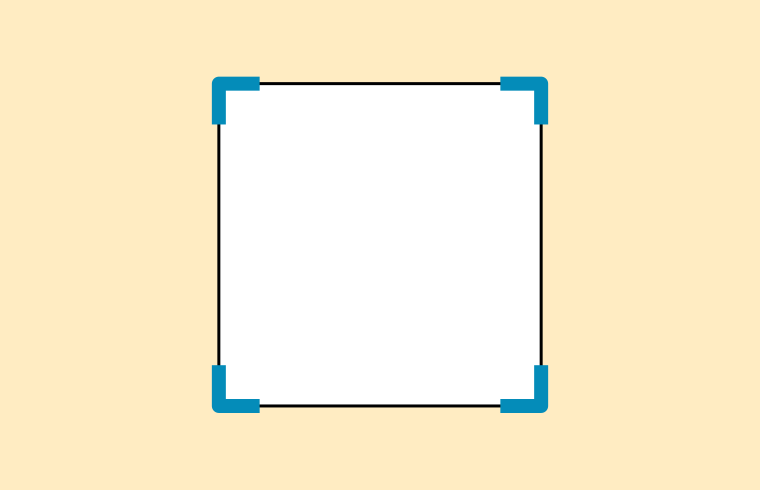
This is a square with 4 blue corners.
When we count the corners altogether, we can see that a square has 4 corners!
Now, you try!
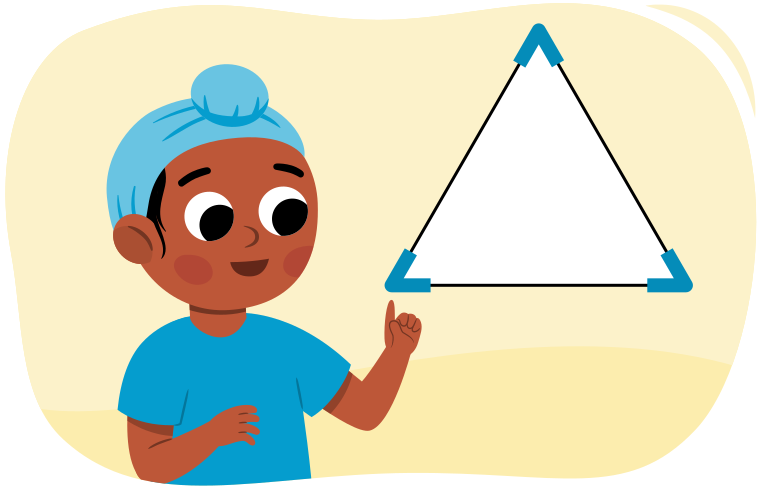
How many corners does a triangle have?
Press the Answer button to find out.
A triangle has 3 corners.
Body break!
Let’s take a break and move!
Before you begin:
- Find a safe space. Move anything you might bump into.
- How are you feeling? Listen to your body and take breaks.
- Ask an adult before getting materials or if you need help.
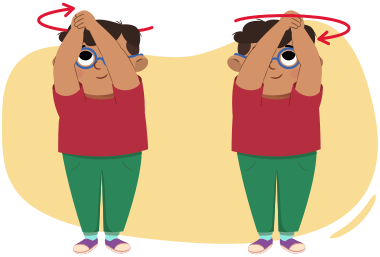
Follow the steps to move your body. You can also follow along with the audio.
Do whatever feels most comfortable for you.
A diagram titled 'Types of sides' shows a shape with one curved edge and two straight sides. The rounded side of the shape is labelled 'curved' and one of the flat sides is labelled 'straight.'
Image 4: A square is shown. The top side is highlighted with the number '1' above it, the right side with '2,' the bottom side with '3,' and the left side with '4.'
- Start by standing or sitting.
- Raise your arms in the air and then hold your hands together above your head.
- Slowly make circles going one way, do this 5 times.
- Slowly make circles going the other way, do this 5 times.
- Try and make different shapes.
- Repeat this one more time!
Circles
I can sort shapes
Now that we have learned about some attributes that we can use to describe shapes, let’s explore how we can use these attributes to sort!
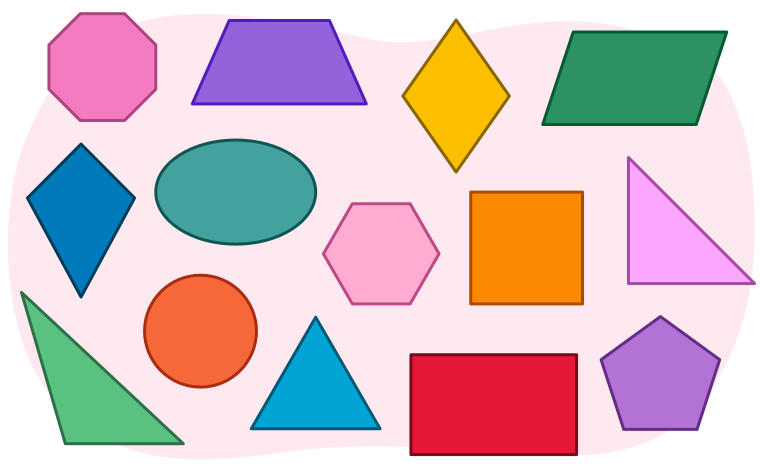
Can you sort the shapes that have corners and the shapes that have no corners?
Place the cards into categories that best match. Use the arrow buttons to navigate between cards.
Let’s try another one using a different attribute.
Can you find the shapes that have 4 sides, and the shapes that have 3 sides?
Place the cards into categories that best match. Use the arrow buttons to navigate between cards.

Printing practice
R is for Rectangle.
Let’s practice printing the letter R.
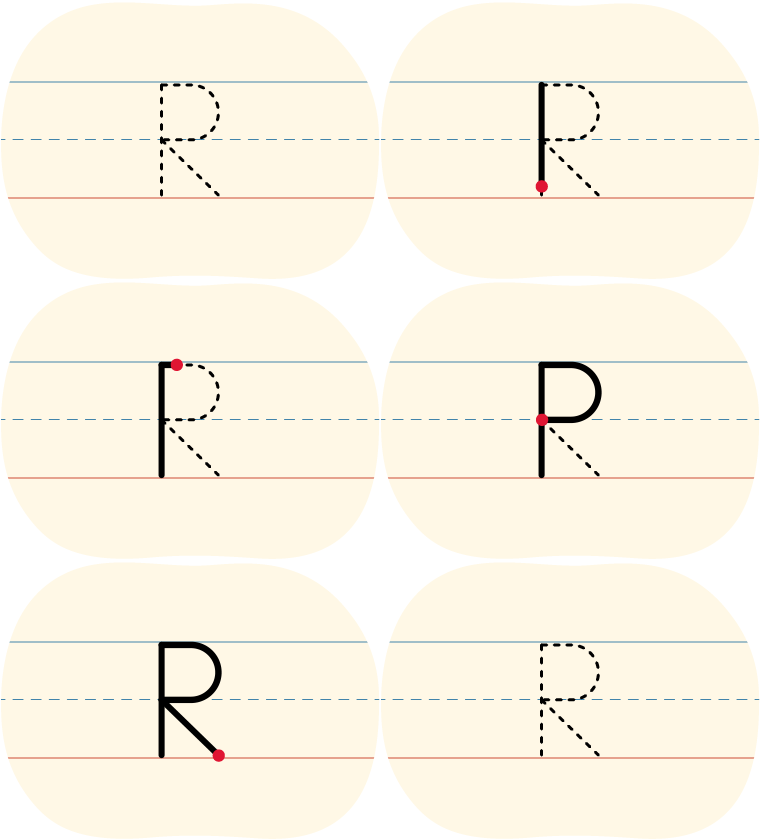
Now, you try!
Practice printing this letter in your notebook or using a method of your choice.
When you are printing:
Consolidation
Time to explore!
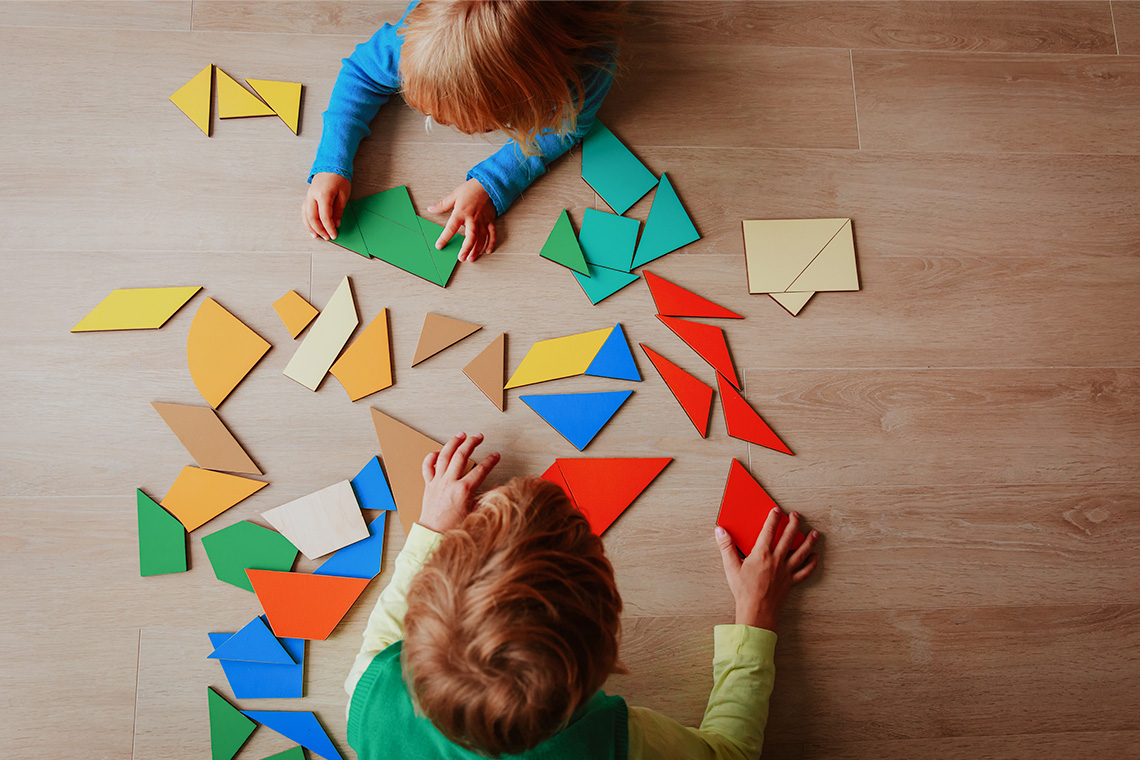
Check out some fun ideas to help you learn more about shapes!
You can choose one or more centres to explore.



Arts
Make art with shapes!
Tiara is making her own shape artwork. Let’s see how she turns shapes into a picture! If you want to try, you can make your own too.
Before you start, ask a trusted adult for permission to gather your materials.
Possible materials
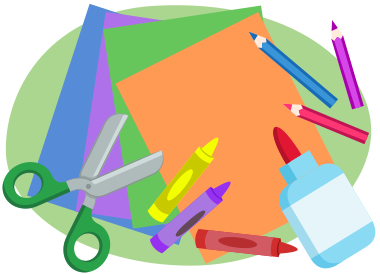
- paper and/or construction paper
- scissors
- glue
- writing utensil (pencil, crayon, marker or pencil crayon)
Follow the steps to learn how.
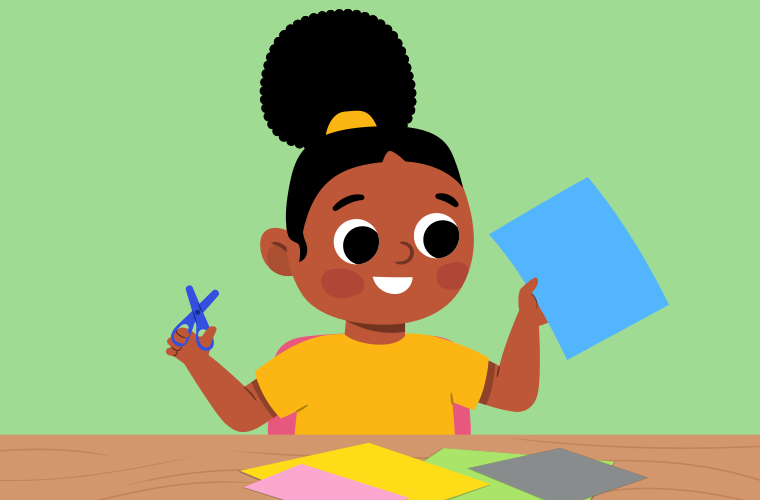
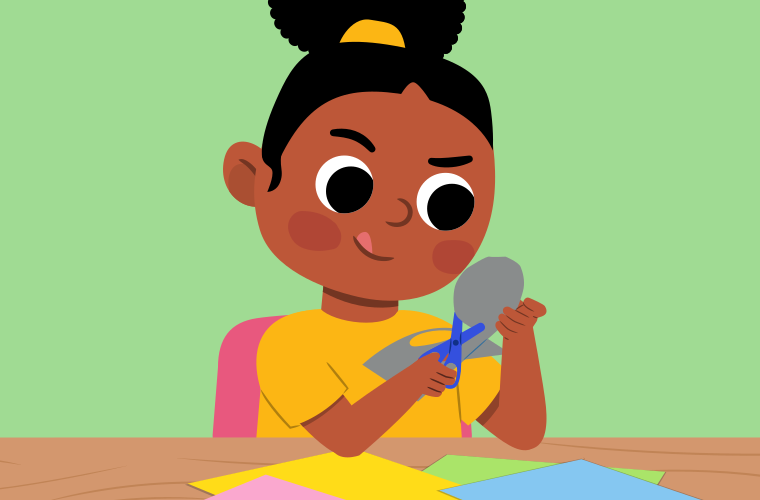
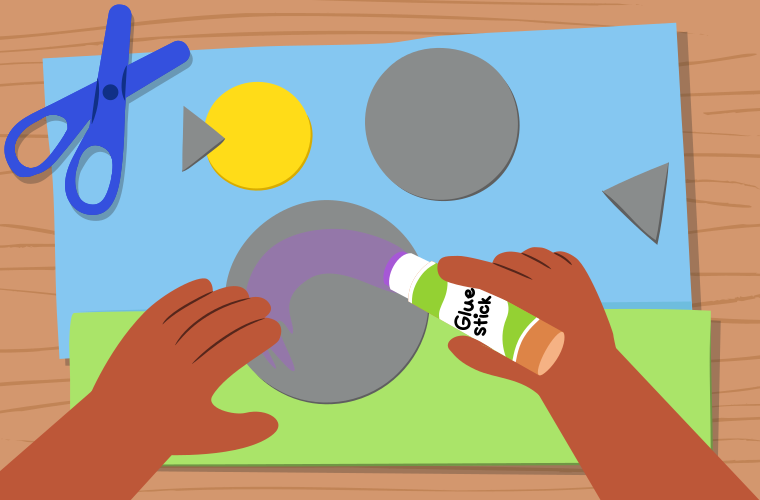
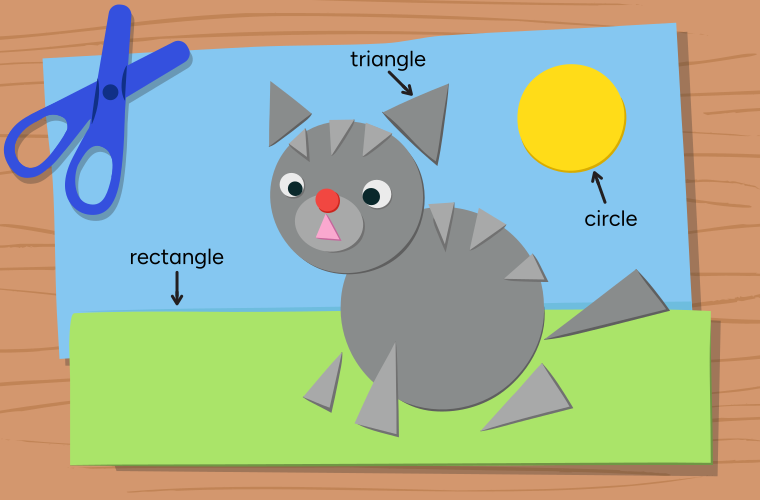
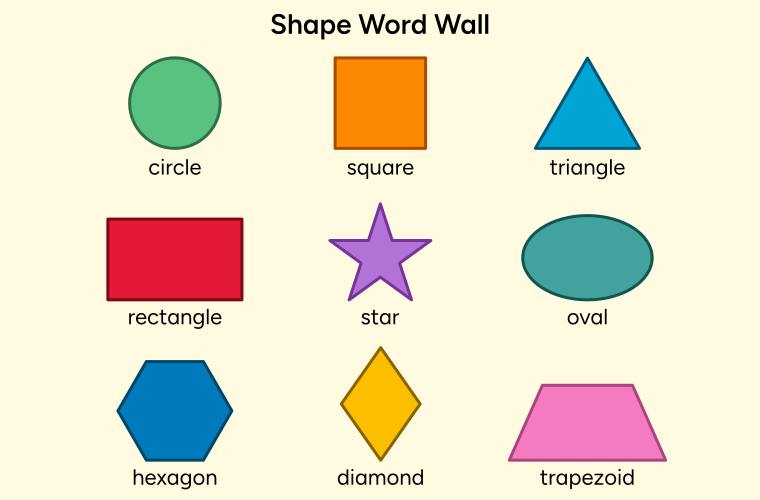
Image 5: A shape word wall shows nine shapes with their names written below each one. The shapes shown are a circle, square, triangle, rectangle, star, oval, hexagon, diamond, and trapezoid.
When you finish your picture, think about these questions:
- How many shapes do I have?
- How many sides or corners do my shapes have?
- What do you like about your shape picture?
If possible, share your thoughts with someone you know.

Inquiry
Shape detective
Put on your detective hat!
There are hidden circles, squares, triangles, and rectangles in the following picture. Can you find them?
As you search for the shapes, think about these questions:
- How many circles can you find?
- How many squares can you find?
- How many triangles can you find?
- How many rectangles can you find?
- What other shapes might be hiding in this picture?
You can also search for shapes around your learning space. What other two-dimensional shapes can you find around you?
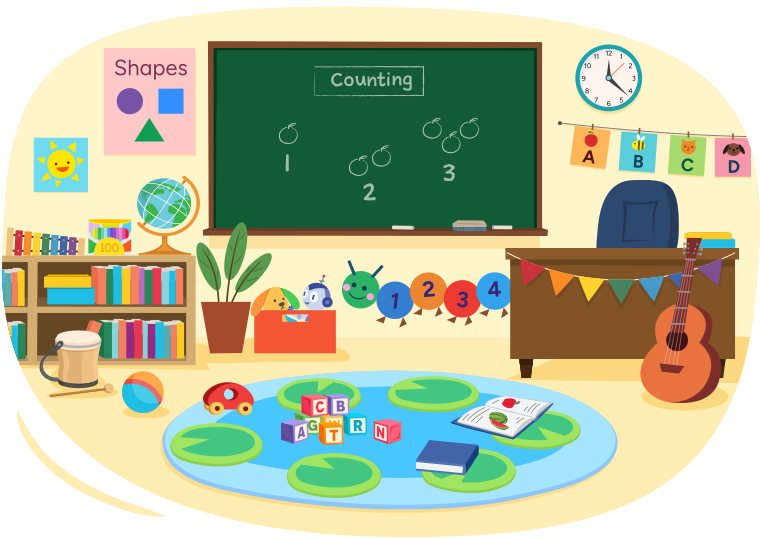
A classroom filled with furniture, toys, posters, books, and learning materials. Many everyday objects that represent shapes are arranged around the room.
You can use your words, draw a picture, or write about the shapes you found. If possible, share your ideas with someone you know.

Movement
Shape breathing
Did you know that you can use your breath to help you feel calm and focused?
Let’s try it by picking a shape to breathe with. You can also pick a shape of your own to breathe along with and follow.
Before you begin, press the following tabs to get ready.
Follow the steps to practice your breathing. You can also do any action that feels most comfortable for you.
Press the following tabs to check out each shape breathing activity.
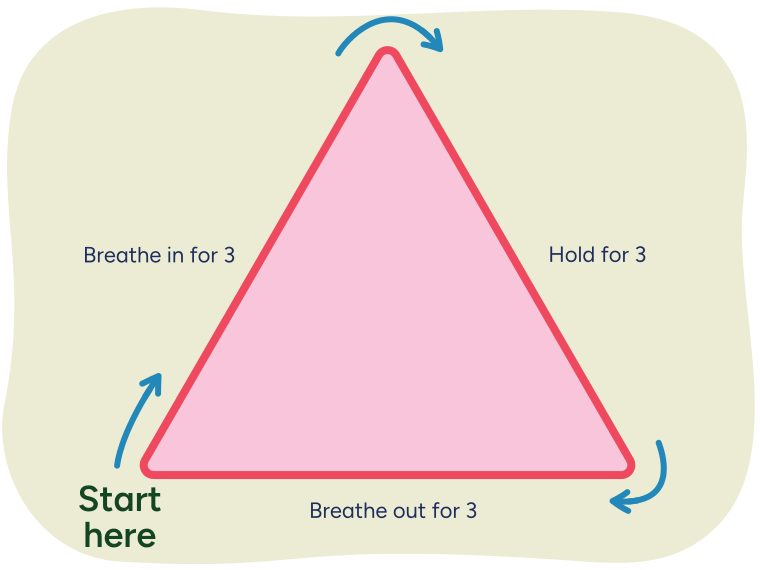
A triangle with arrows tracing each side. The bottom left corner is labeled 'Start here.' Text appears near each side reading 'Breathe in for 3,' 'Hold for 3,' and 'Breathe out for 3.
Triangle breathing steps
- Sit comfortably and find the triangle.
- Start at the bottom left corner.
- Breathe in through your nose for 3 counts as you trace the first side.
- Hold your breath for 3 counts as you trace the next side.
- Breathe out through your mouth for 3 counts as you trace the last side back to where you started.
- Do the triangle breathing 2 to 3 times.
Listen to the Triangle Breathing audio to follow along.
Triangle Breathing
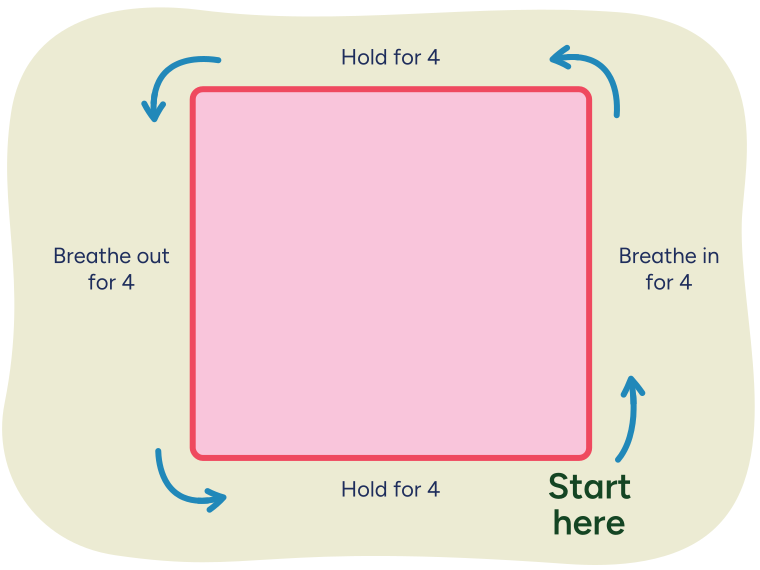
A square with arrows tracing each side. The bottom right corner is labeled 'Start here.' Text appears near each side reading 'Breathe in for 4,' 'Hold for 4,' 'Breathe out for 4,' and 'Hold for 4.'
Square breathing steps
- Sit comfortably and find the square.
- Start at the bottom-right corner. Trace up the first side while breathing in through your nose for 4 counts.
- Trace across the top and hold your breath for 4 counts.
- Trace down the next side and breathe out through your mouth for 4 counts.
- Trace across the bottom and hold your breath for 4 counts.
- Repeat 2–3 times.
Listen to the Square Breathing audio to follow along.
Square Breathing
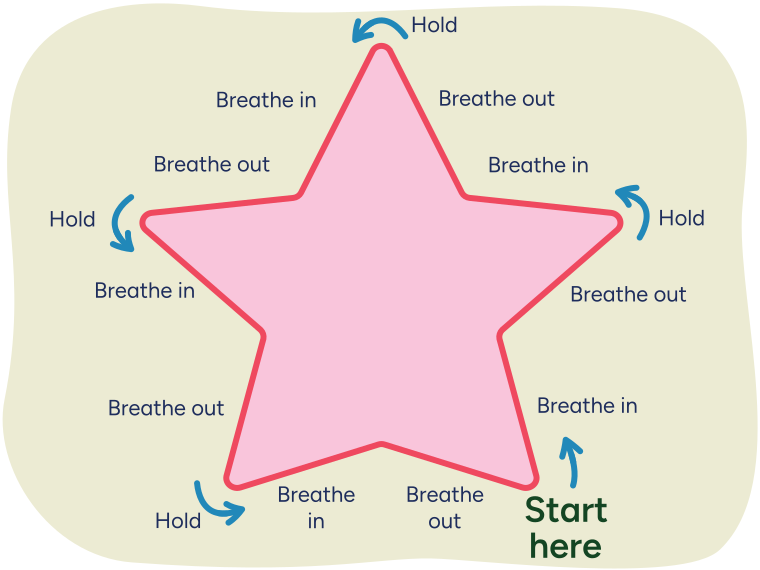
A star with arrows tracing each side. The bottom right point is labeled 'Start here.' Text appears near each side reading 'Breathe in,' 'Breathe out,' and Text appear on each point reading 'Hold.'
Star breathing steps
- Sit comfortably and find the star.
- Start at the bottom-right point.
- Trace up to the top point and breathe in through your nose. Hold for 1–2 counts.
- Trace down to the next point and breathe out through your mouth. Hold for 1–2 counts.
- Keep going around the star: breathe in to the next point, hold, breathe out to the next point, hold until you finish all 5 points.
- Repeat one more time.
Listen to the Star Breathing audio to follow along.
Star Breathing

Literacy
What shape am I?
Explore the following images and guess the shape of what each might be.
Reflection
How do you feel about what you have learned in this activity? Press the button next to the sentence that matches how you feel.