Noticing and Naming the Learning
What are you going to learn today?
We are learning to…
- identify, sort, and compare familiar three-dimensional objects
- identify three-dimensional objects and two-dimensional shapes in structures we created
- construct two-dimensional pictures and three-dimensional structures with matching halves
How do I show what I have learned?
I can…
- name and describe 3D objects
- sort and compare 3D objects
- find and talk about 3D objects
- build and create 3D objects and designs
Minds On
Let’s get ready to learn!
Before we begin our learning, let’s wake up our minds with a warm up.

Social Emotional Learning
Warm up
Find a safe space.
Sit down or stand up.
It’s time to breathe like a dragon!
Take a deep breath in and breathe out fast, quickly exhaling through your mouth.
Pretend that you are breathing out fire.
Listen to the Dragon Breathing Warm Up audio to follow along.
Dragon Breathing Warm Up
See, think, wonder
Look at images and their shapes.
- What do you see?
- What do you think?
- What do you wonder?

This is a party hat.
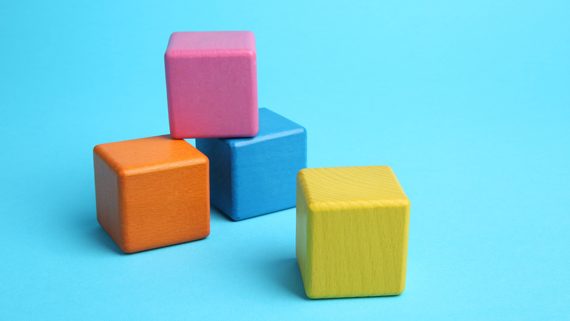
These are four blocks.

This is a basketball.
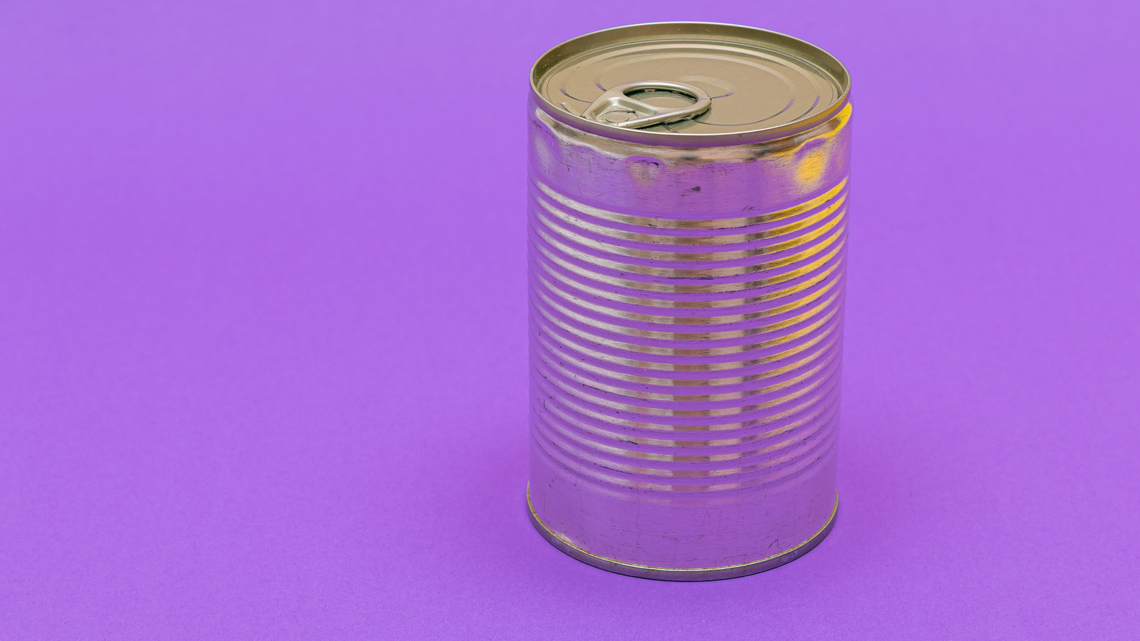
This is a can.

This is a tissue box.

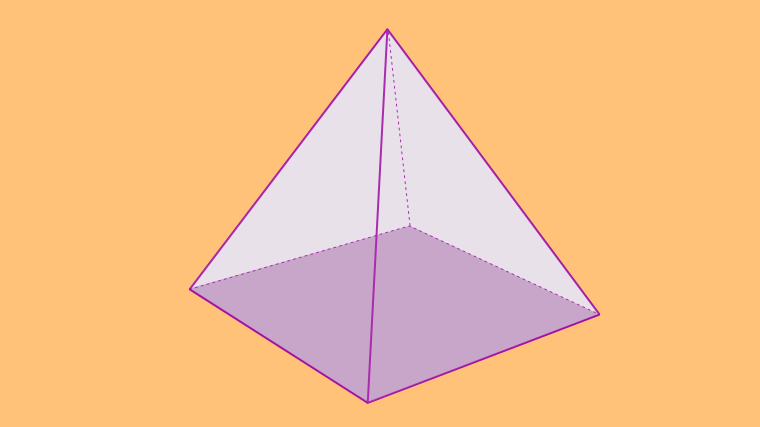
These are two pyramids.
As you work through this learning activity, you can record your ideas in many ways.
Listen to the following audio recording to learn more about how to record your ideas.
How To Record Your Ideas
Action
What are 3D objects?
Three-dimensional or 3D objects are solid shapes that we can hold, pick up, and move around.
- 3D objects have length, width, and height.
- 3D objects take up space.
- 3D objects can be stacked, rolled, or both, depending on their shape.
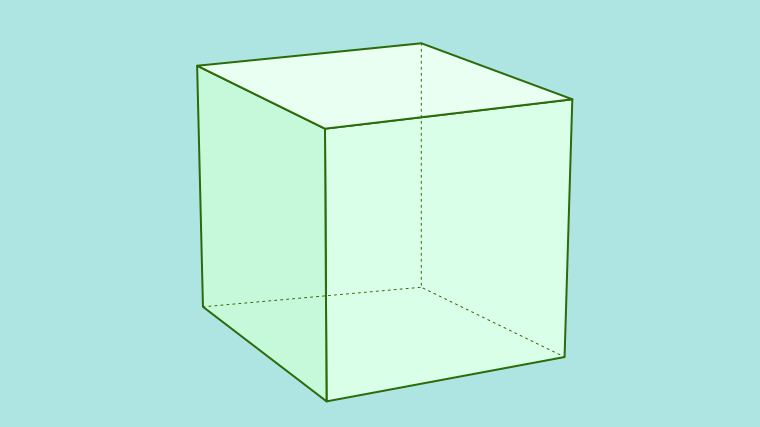
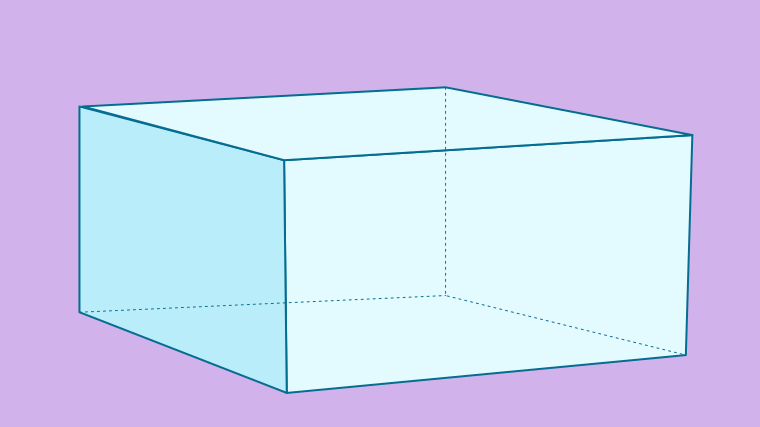
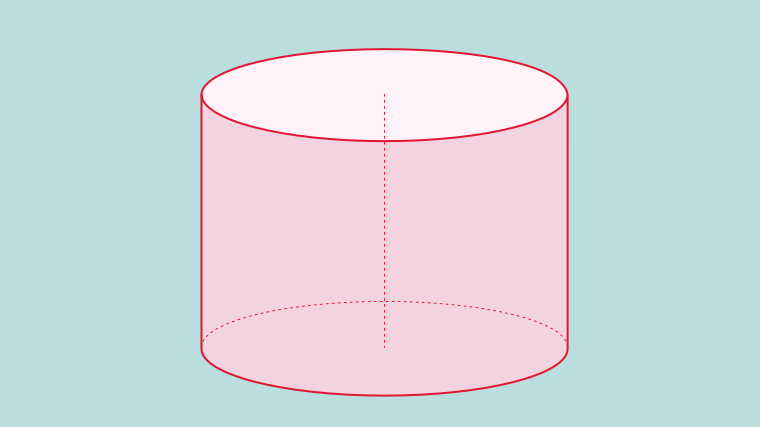
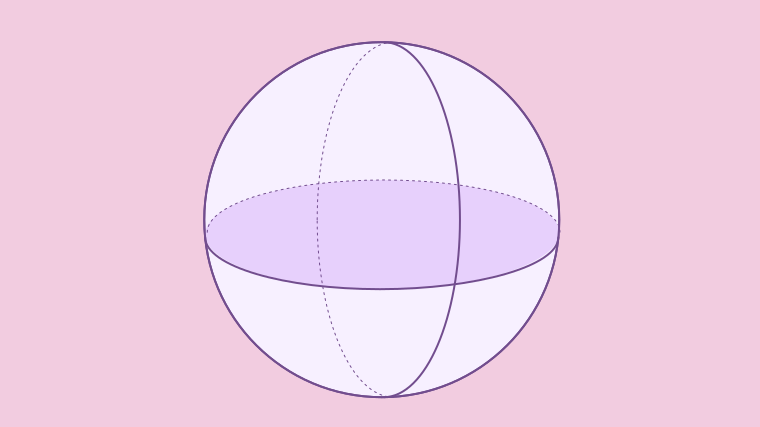
Let’s explore the length, width, and height of a rectangular prism in the following flashcards.
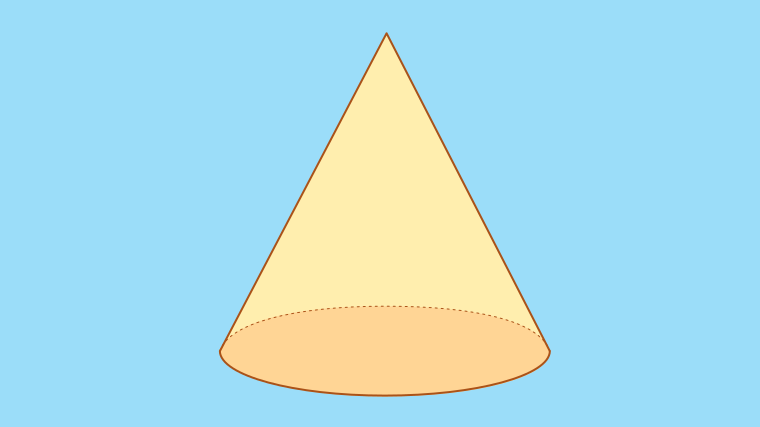
Roll and slide
Some 3D objects can roll. Spheres can roll.
Check out the following video of spheres rolling.
Some 3D objects can slide. Cubes and rectangular prisms can slide.
Check out the following video of a rectangular prism sliding.
Some types of 3D objects can slide and roll. Cylinders and cones can slide and roll.
Check out the following video of a cylinder rolling.
Let’s practice!
Place the cards into the categories that best match how the object can move. Use the arrow buttons to navigate between cards.
Body break!
Let’s take a break and move!
Before you begin:
- Find a safe space. Move anything you might bump into.
- How are you feeling? Listen to your body and take breaks.
- Ask an adult before getting materials or if you need help.
Follow the steps to move your body. You can also follow along with the audio.
Do whatever feels most comfortable for you.
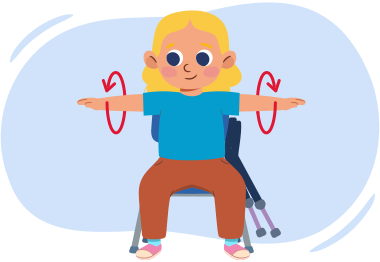
- Start by standing or sitting.
- Raise your arms out and up to your shoulders.
- Slowly make circles going one way, do this 5 times.
- Slowly make circles going the other way, do this 5 times.
- Repeat this stretch one more time!
Side arm circles
2D faces and matching halves
Look at some examples of 2D shapes in the following image.
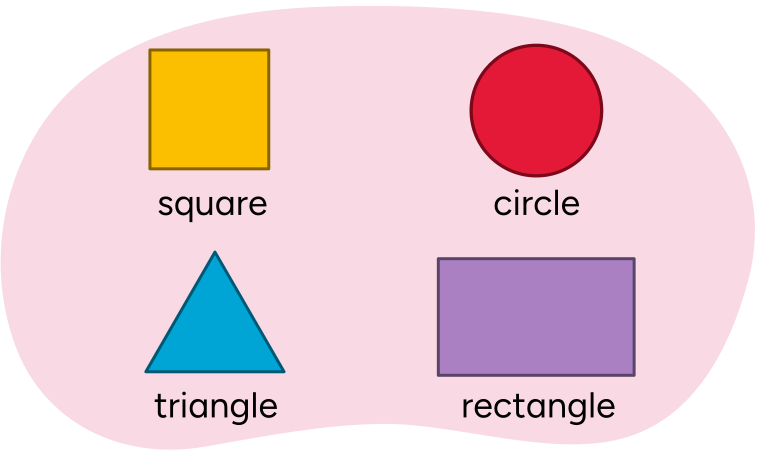
Four 2D shapes are shown with labels. A square is labeled 'square,' a circle is labeled 'circle,' a triangle is labeled 'triangle,' and a rectangle is labeled 'rectangle.'
Explore the following Numberblocks video to see how 3D objects have different 2D shapes as faces.
As you watch the video, think about the following questions:
- What 2D shape is used to make a pyramid?
- How many triangle faces are needed to make a pyramid?
- What other questions do you have about 3D shapes?
Share your thoughts with someone else if you can.
Matching halves
What would happen if we cut a 3D object in half to get matching halves?
Matching halves means cutting or splitting something into two equal parts that are the same size and shape.
What do you think each of the following objects will look like if we split them in matching halves?
Let's find out!
Explore the following flashcards of 3D shapes and their matching halves.

Printing practice
C is for Cube.
Let’s practice printing the letter C.
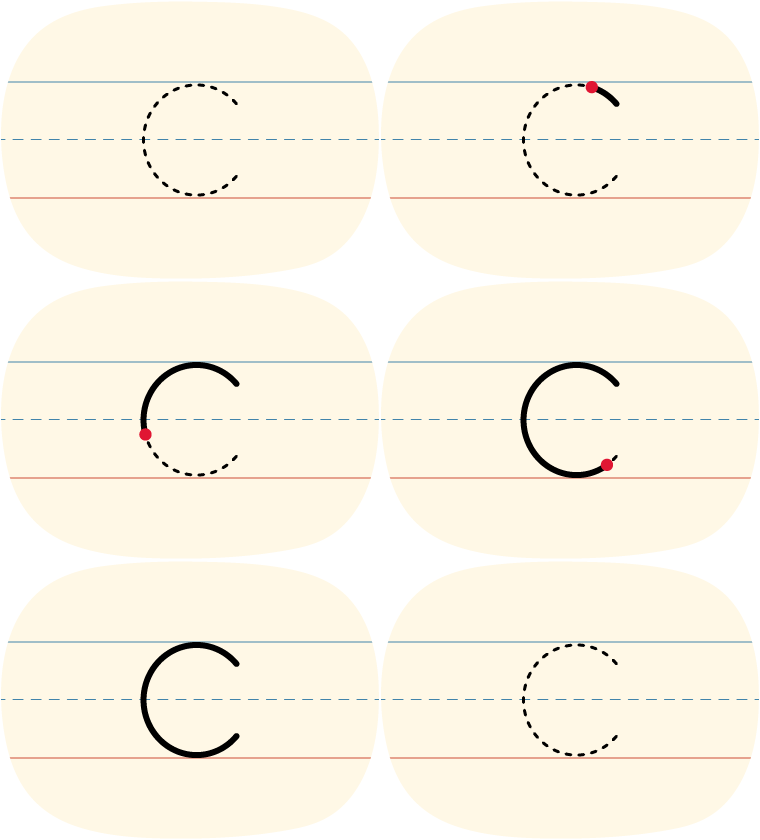
Now, you try!
Practice printing this letter in your notebook or using a method of your choice.
Use the following checklist to explore some printing tips.
When you are printing:
Consolidation
Time to explore!
Check out the following centre ideas to learn more about 3D shapes!
You can choose one or more centres to explore.



Arts
Stamping 3D objects to make 2D prints
Let’s learn from Esma how to make 2D prints with 3D objects in the following images!
If you would like to try this activity, you can use materials that you have in your learning space. Always ask permission from a trusted adult before gathering your materials.
Possible materials
- washable paint or ink pads
- paper
- 3D objects (wooden blocks, boxes, cans, plastic containers, spools, toy shapes, or other materials)
- plate or trays for paint
You could also use your imagination to think about which 3D objects you would use to create 2D shapes.
Follow the steps in the images.
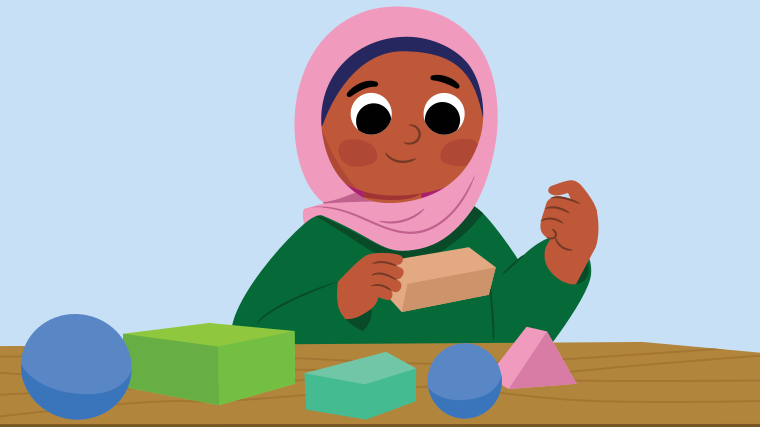
Step 1: Choose a block, can or other 3D object.
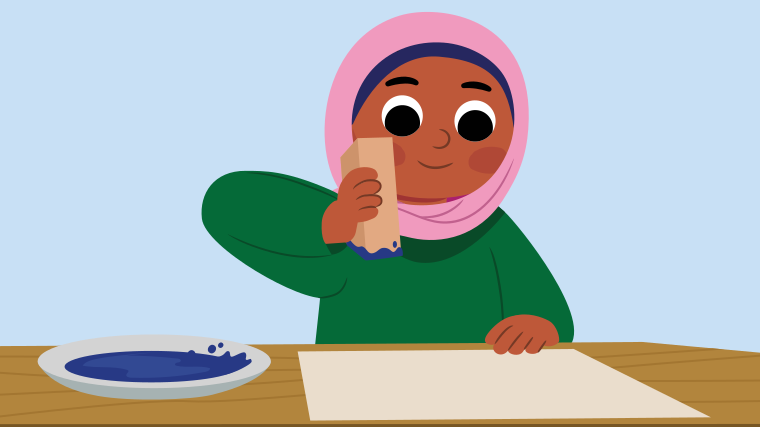
Step 2: Dip one flat side of your 3D object into paint or an ink pad. Make sure the surface is coated evenly.
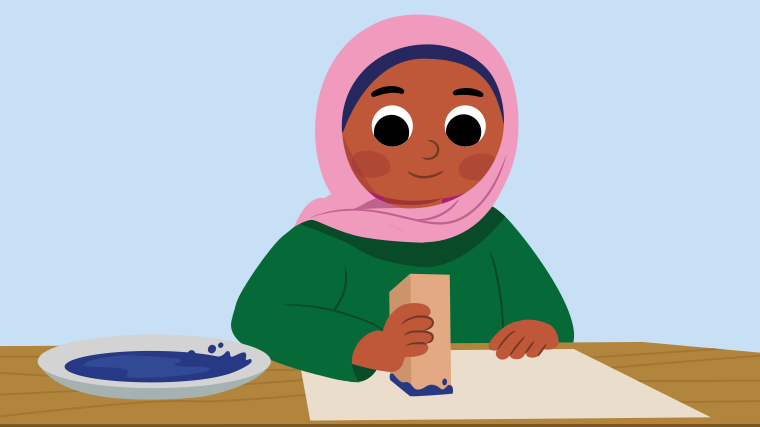
Step 3: Press the painted side of your 3D object onto the paper. Lift it up carefully and see what 2D shape it makes!
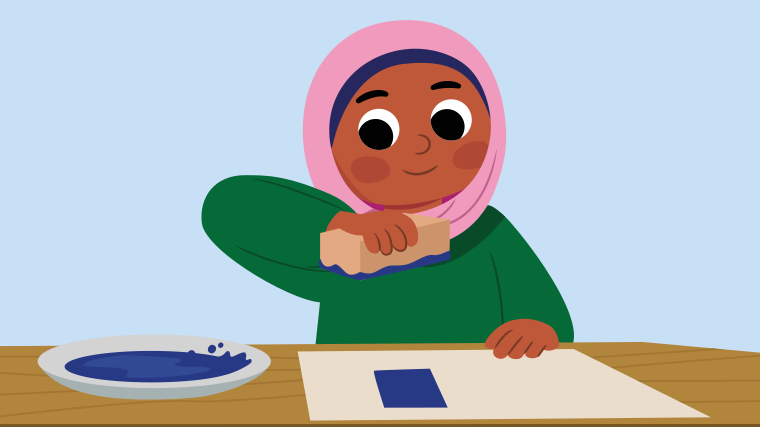
Step 4: Turn your 3D object and dip a different side in paint or ink. Stamp it again to see if it makes a new 2D shape.
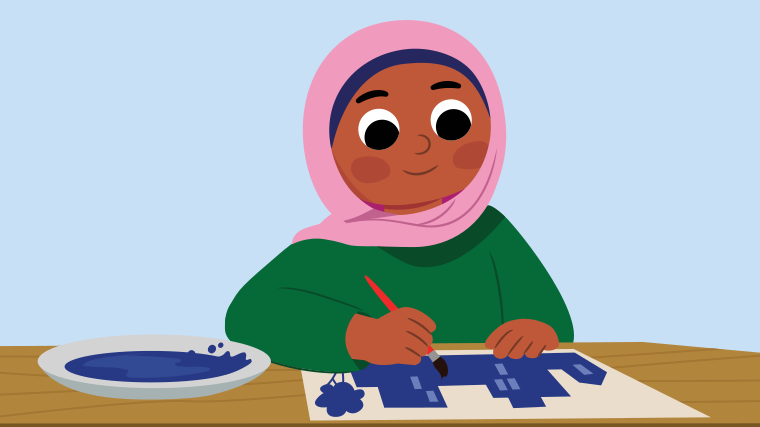
Step 5: If you would like, use your stamped shapes to make a design, pattern, or even a scene (like a house or garden).
What do you think happens if you use a curved face instead of a flat face?

Inquiry
3D objects scavenger hunt
Let’s go on a 3D objects scavenger hunt!
A scavenger hunt is when you search around your learning space for specific kinds of objects.
Explore the following images. Can you find any 3D objects?
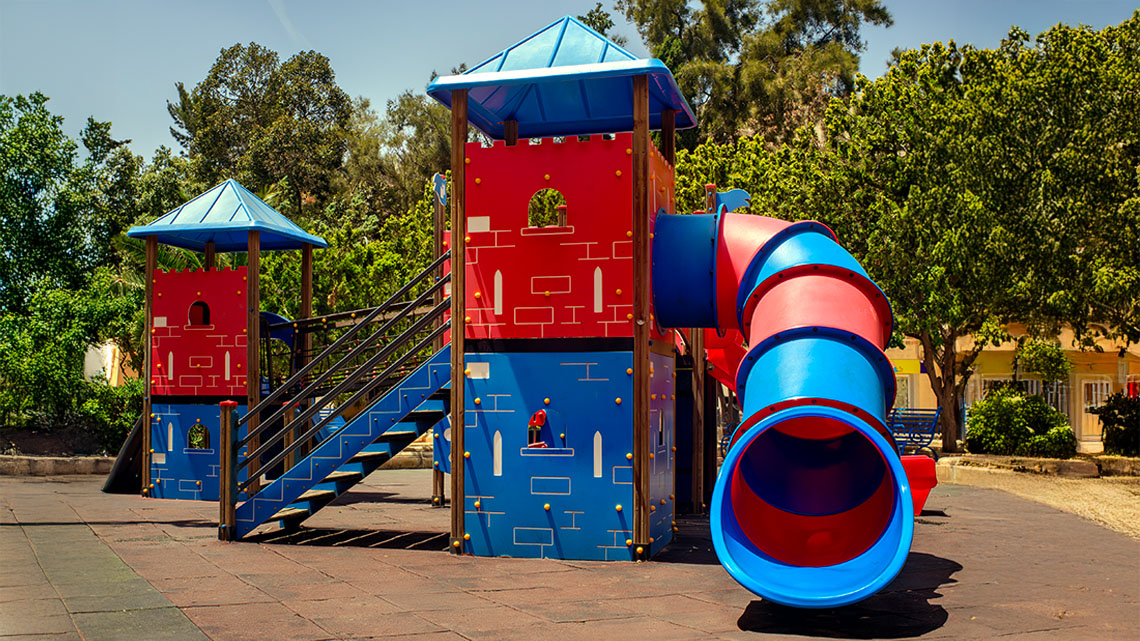


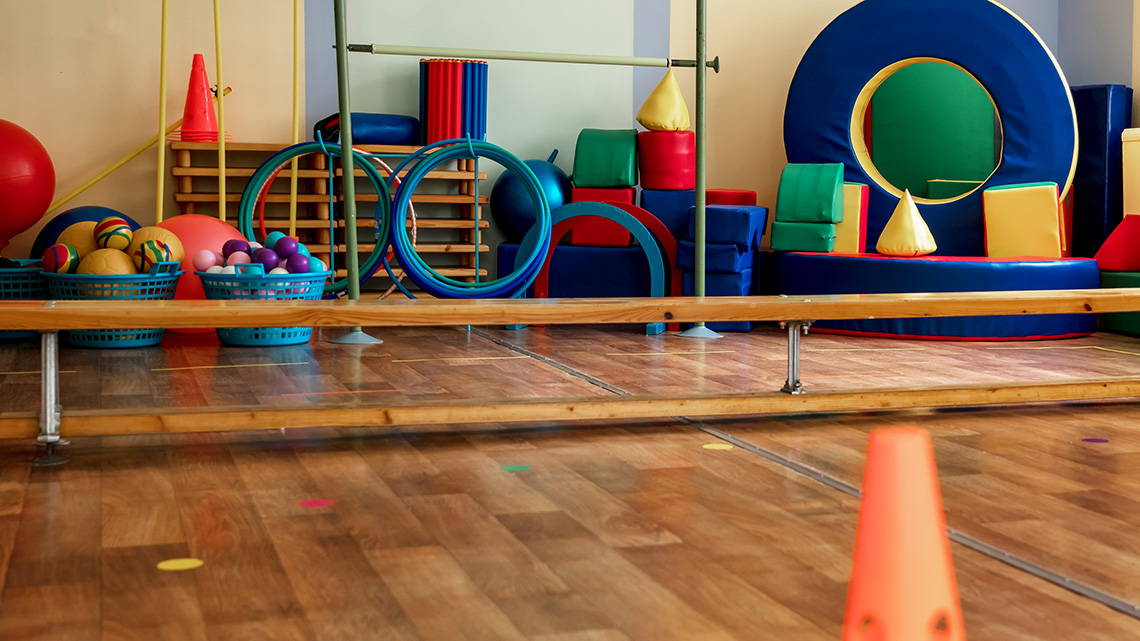
Image 2: A school building is shown from the front. The building has flat walls, rows of windows, a main entrance with pillars, and a flagpole in front.
If possible, can you find any other 3D objects in your learning space?

Movement
Shape moves
Did you know that you can make different shapes with your body?
Before you begin, press the following tabs to get ready.
Explore the following images of cube, sphere and pyramid pose and follow the steps to move your body.
Use your body to try any pose that you feel most comfortable with.
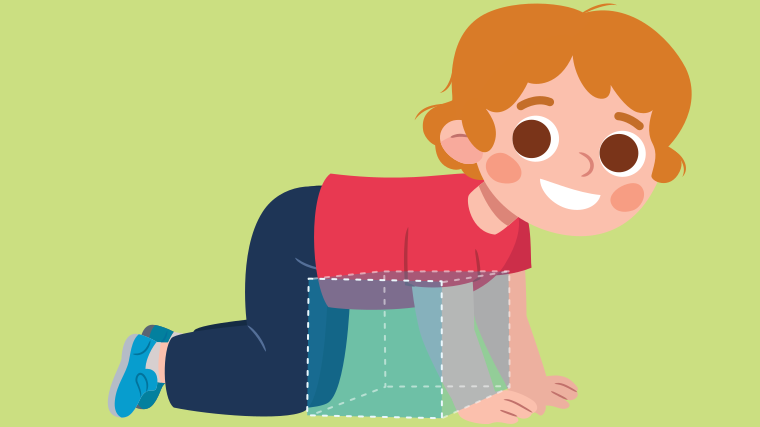
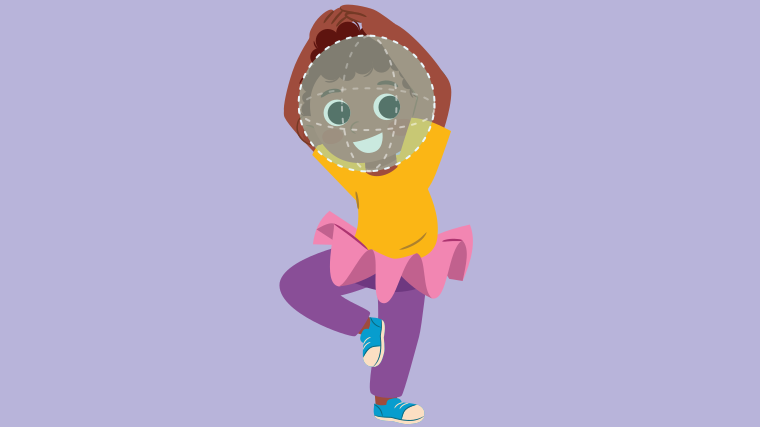
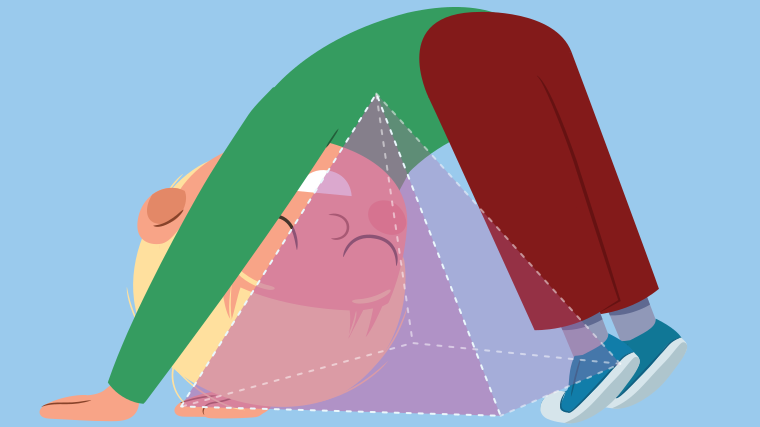
Image 2: A learner balances on one foot with the other foot raised against the leg, arms lifted overhead, and a sphere shown around the head and arms.
Do these movements up to 5 times, if possible.
Can you think of any other shapes your body can make?

Literacy
Name that 3D object
Match the 3D object with its name!
Can you think of any other real-world objects like these 3D objects?
Share your thoughts with someone else if you can.
Reflection
How do you feel about what you have learned in this activity? Press the button next to the sentence that matches how you feel.