Learning goals
We are learning to…
- explore and use new words
- ask questions and describe how we can care for and show respect for the Earth
- select materials and tools and use our imagination to create art
- share our learning through art
How do I show what I have learned?
I can…
- think and share different ways I can care for the Earth
- explore how to sort different waste in garbage, compost and recycling bins
- reflect on what I learned about separating waste and why it is important
- share my ideas about recycling and helping the Earth using art
Minds On
How can we help?
We can all do our part to help and respect our Earth.
Explore the following images. What are these children doing?
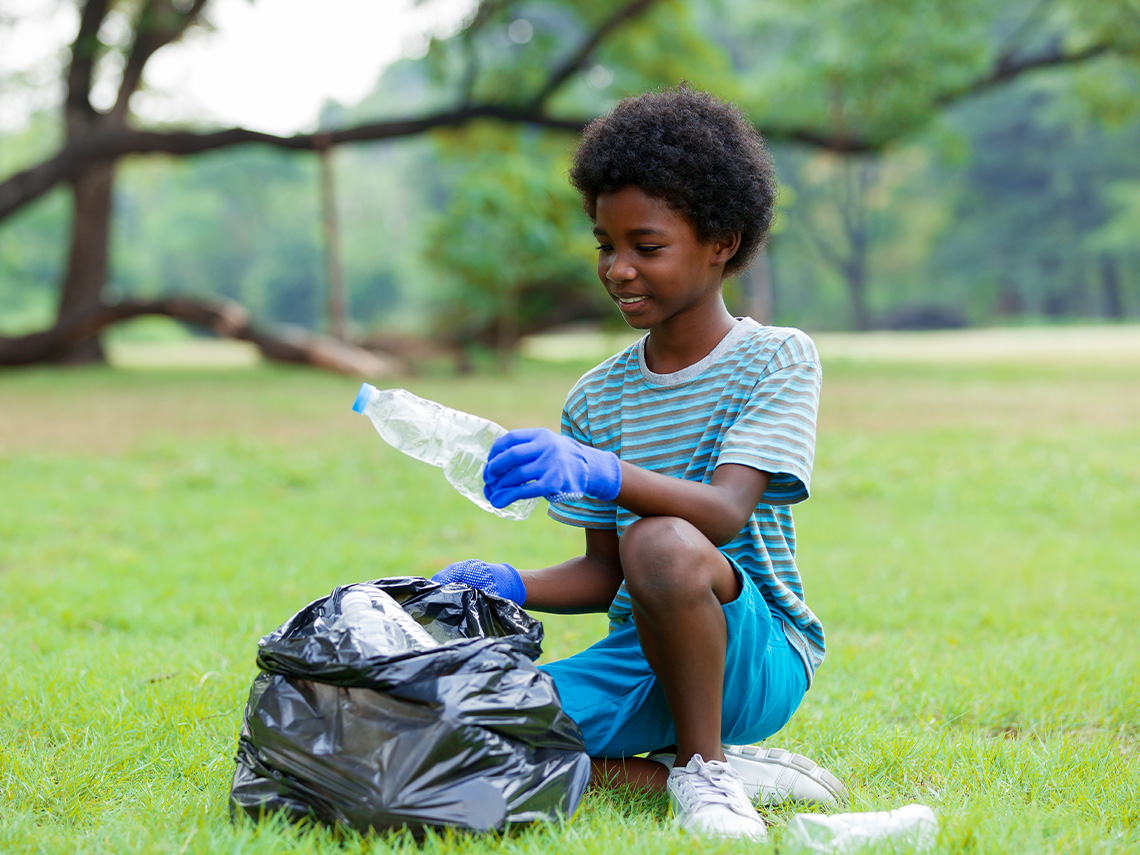
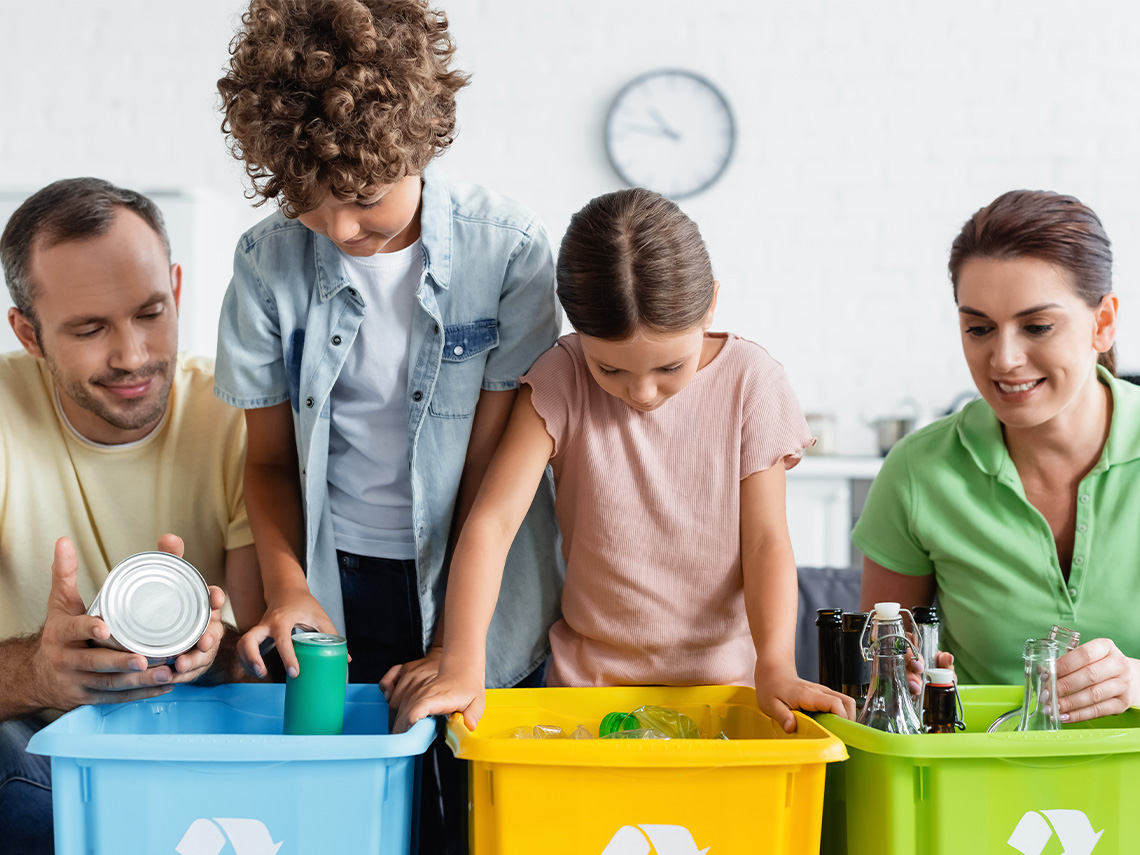
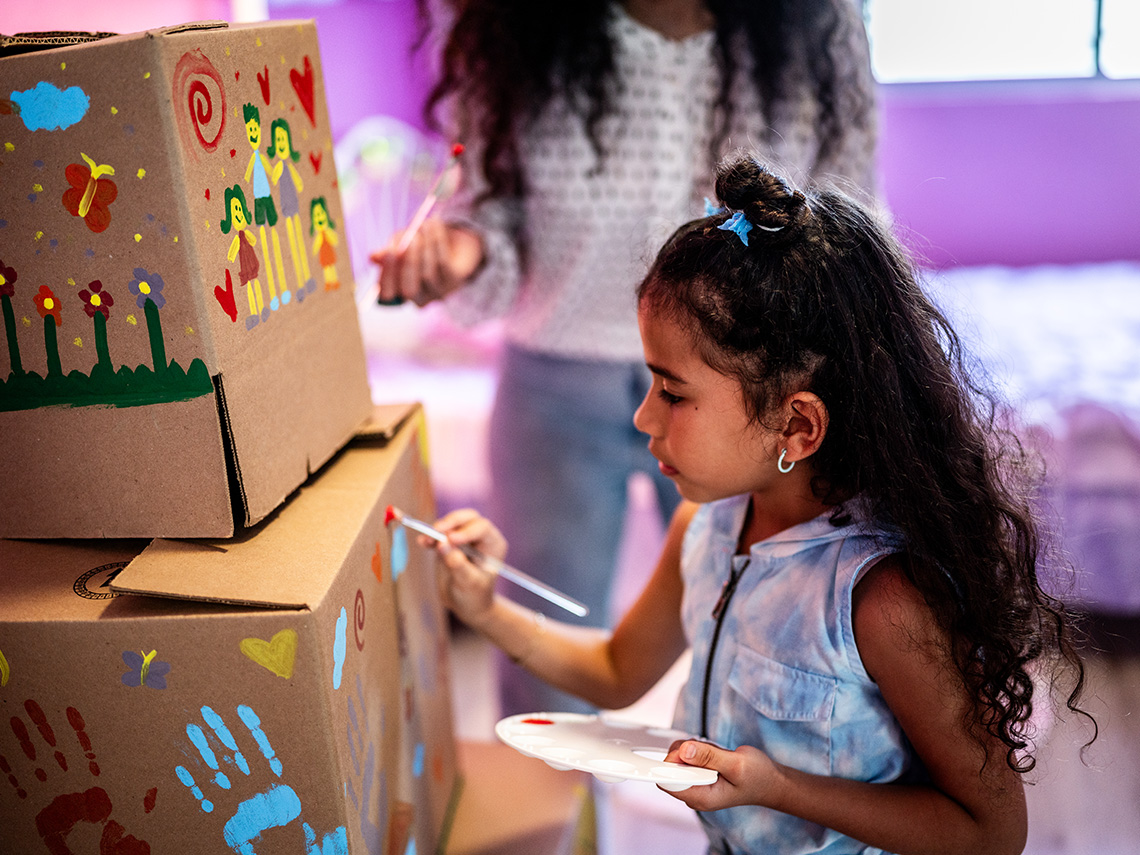
As you work through this learning activity, you can record your ideas in many ways.
Listen to the following audio recording to learn more about how to record your ideas.
How to record your ideas
Action
Earth helpers
In the Minds On, you explored some images of children helping to keep our planet happy and healthy.
Let’s take a look at these activities again. How do you think this helps the Earth?
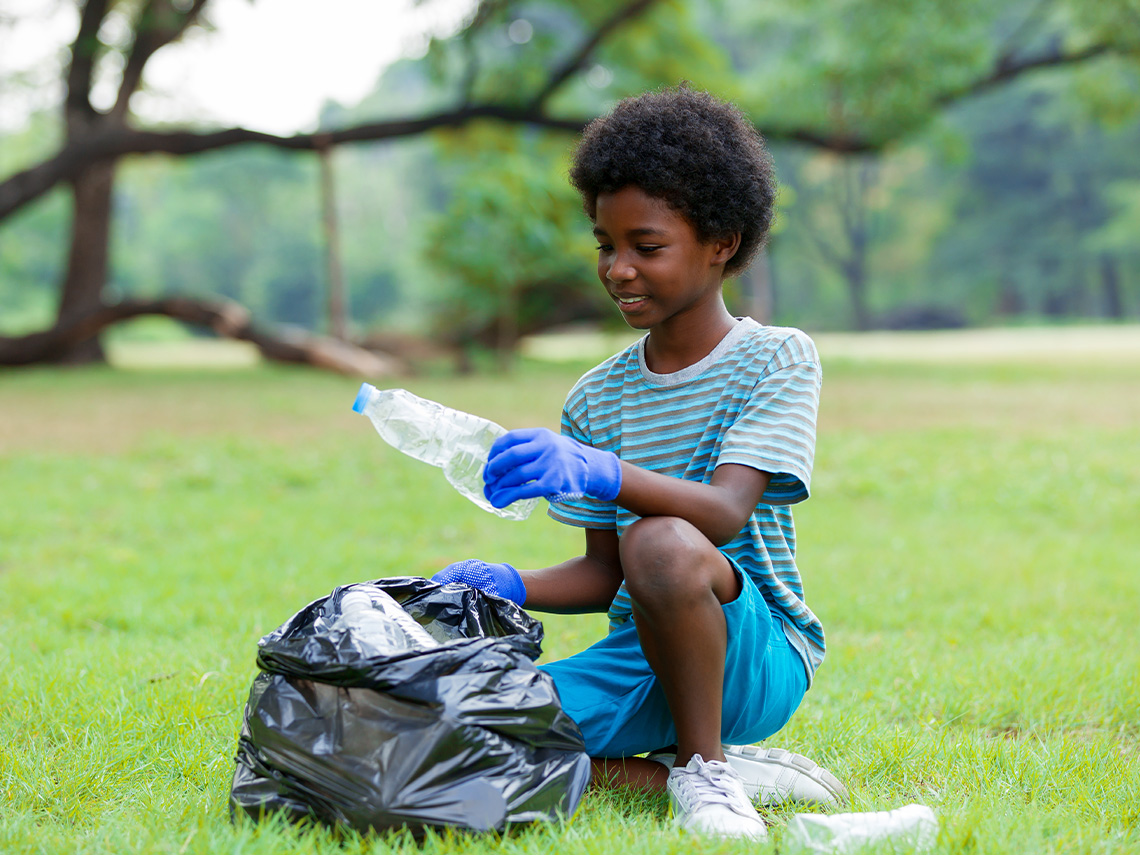
We can pick up garbage.
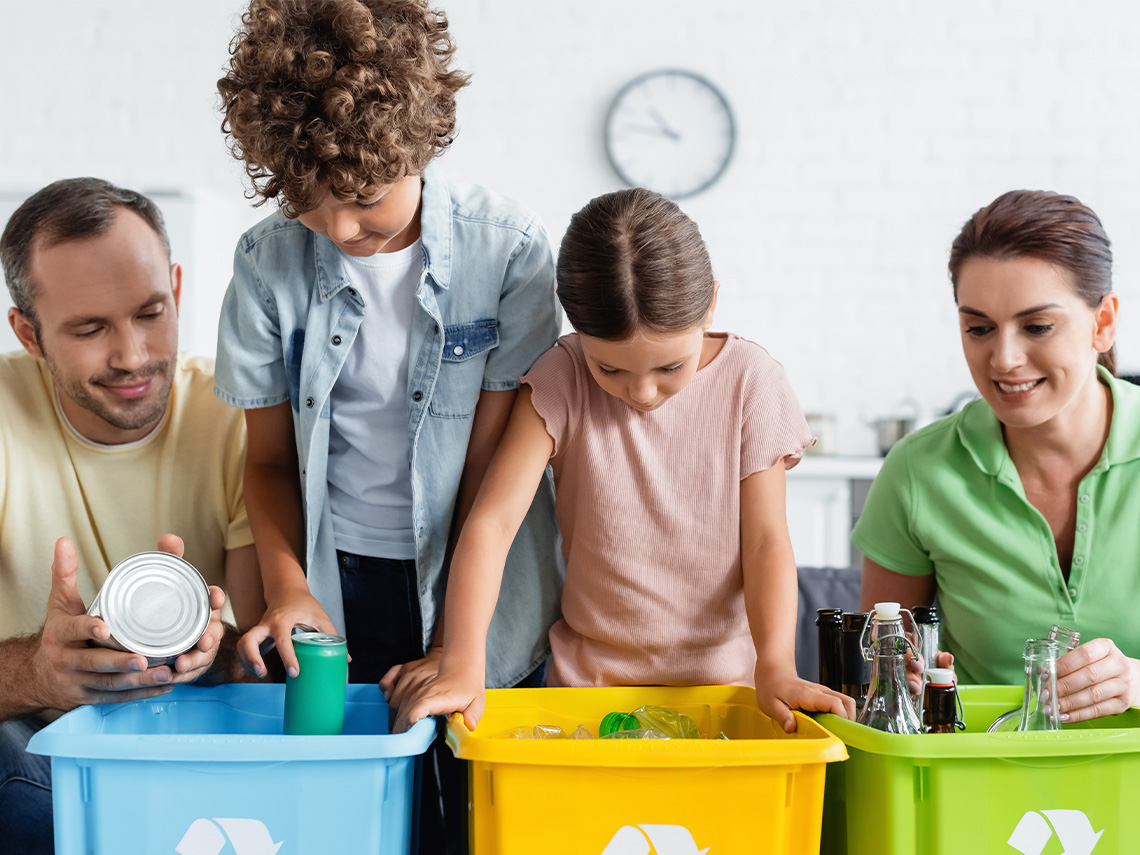
We can sort waste and learn how to recycle.
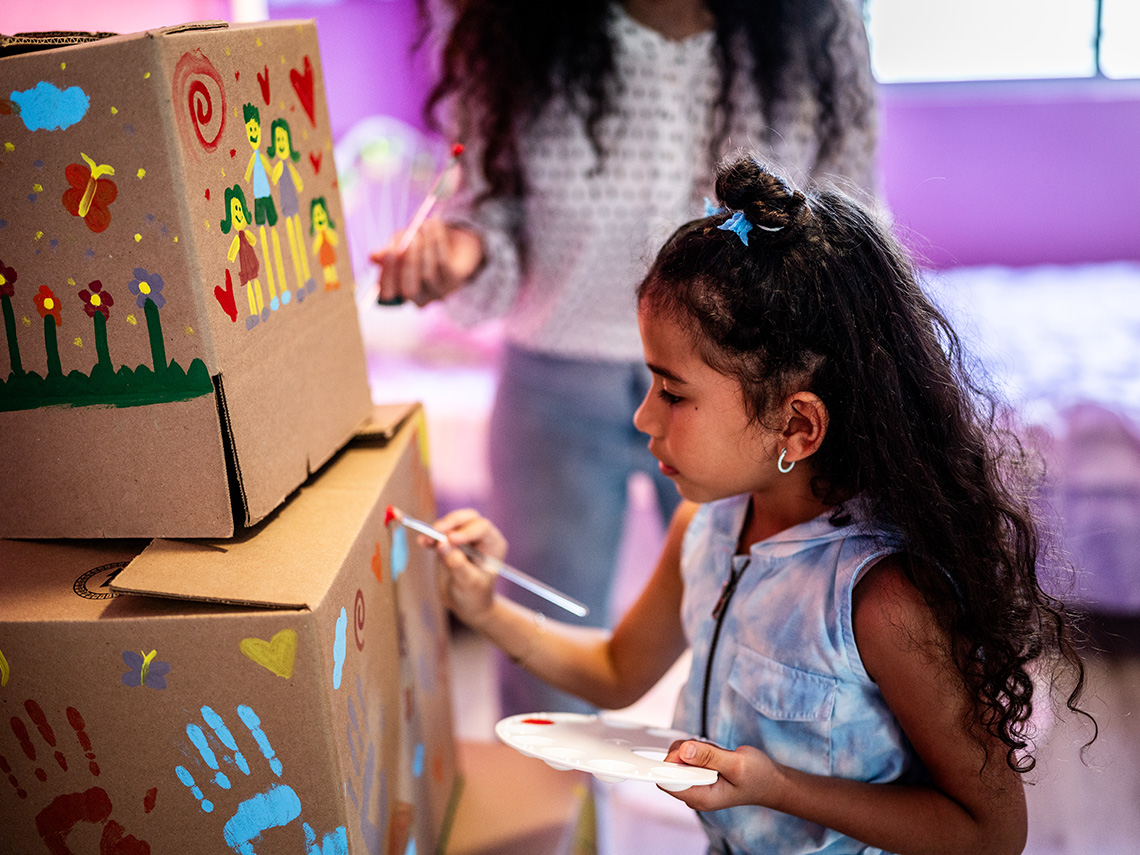
We can reuse items for art or other activities.
Sorting waste
Let’s explore how sorting waste can help take care of our Earth!
Waste is sorted into the following:
- garbage
- compost
- recycling

Teacher Chiara and William are speaking.
William says, How do I know which items I can recycle?
Teacher Chiara says, That is a great question, William. Let’s find out!
Learn from Gabrielle!
Explore the following TVO Kids video entitled “Sorting for Planet Earth” to find out what items we can recycle.
As you watch, think about the information Gabrielle shares about sorting items into recycling, compost and garbage.
Let’s learn a bit more about what goes into each bin.
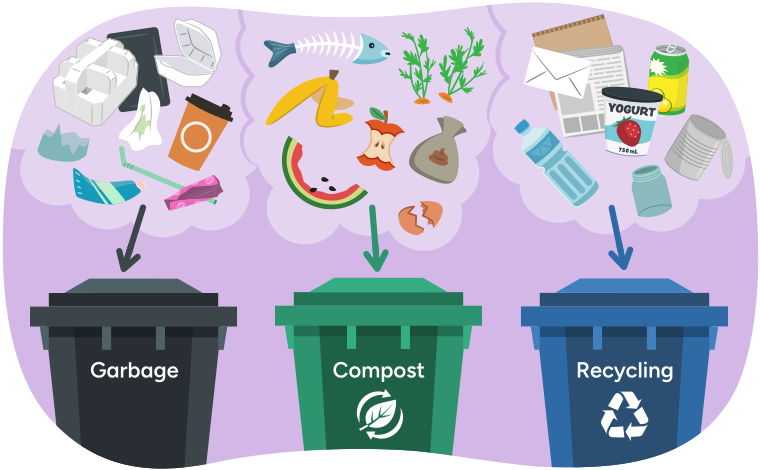
Press the following tabs to learn more about the three bins we can use to sort our waste.
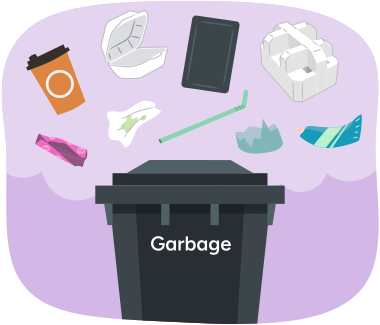
Takeout cups and containers, black plastic, Styrofoam, wrappers, dirty wipes, plastic straws, broken glass, and toothpaste tubes are garbage
In the garbage bin, we put trash that cannot be reused again or recycled, like plastic wrappers, Styrofoam, or dirty wipes!
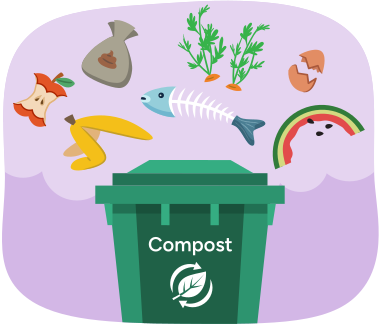
In the compost bin, we put food scraps or other garden waste, like fruit or vegetable peels, or eggshells!
Some communities where we live might not use a green bin for compost. We might have our own compost bin outside to dispose of food waste, rather than throwing it in the garbage!
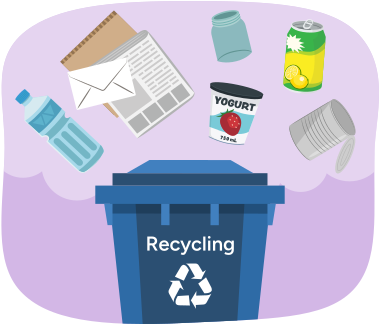
In the recycling bin, we put items that can be reused again, like paper, cans, jars, plastic bottles, or containers!
Note: In some cities, like Toronto, styrofoam can be recycled. Each place has rules, so it is important to ask questions before sorting your waste.
Why sorting waste matters
Now that we know how to sort waste, let’s think more about why sorting is so important.
Gabrielle showed us that once we sorted our waste, there was much less garbage.
So, what would happen if we did not sort out our waste?
Garbage is picked up in garbage trucks and then it is taken to landfills.
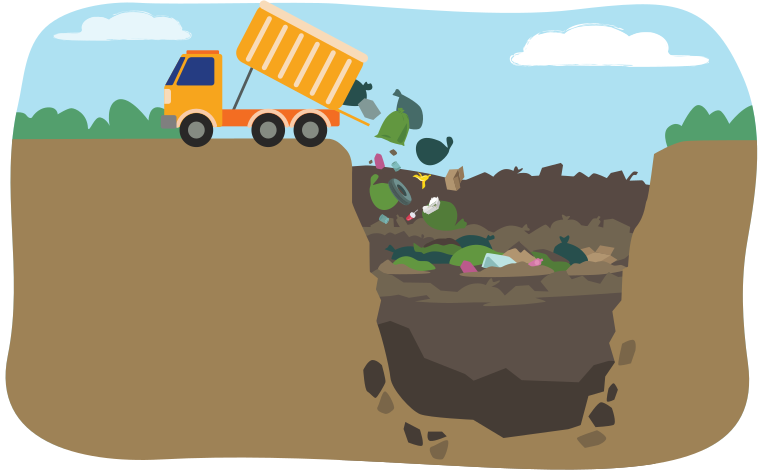
Landfills are places where items that cannot be recycled are collected.
The waste at landfills takes a long time to break down. This waste can pollute the air and water and land.
When we sort our waste, less garbage goes to the landfill!
Let’s practice!
Now that we’ve learned how and why we sort our waste, it’s time to try it yourself!
Sort the following items into garbage, recycling and waste.
Place the cards into categories that best match. Use the arrow buttons to navigate between cards.

Pause and reflect
Pause and reflect
- What did you learn about sorting waste from Gabrielle?
- Why is sorting waste so important?
- What tips could you give a friend on how to recycle?
Consolidation
Recycling poster
William is using what he learned about sorting waste and recycling to create a poster to share with friends!
If you would like to try this activity, you can use materials that you have in your learning space. Always ask permission from a trusted adult before gathering your materials.
Possible materials
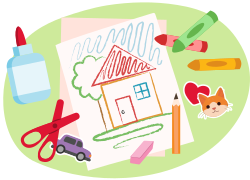
- paper
- a writing utensil (pencil, pen)
- colouring tools (crayons, markers, pencil crayons)
Let’s follow the steps to learn how.

Step 1: Take out a piece of paper and writing tools.

Step 2: Add your main idea using pictures.

Step 3: Add details to your poster to help people know what it is about.

Step 4: Add words and colour to finish your poster!
You could also use your imagination to think about how you would design your own poster!
If you would like, you may share your poster with others so everyone can do their part to take care of the Earth!
Pause and Reflect
Think
Can you find other ways to reuse, recycle, or compost in your learning space?
Think about an indoor or outdoor environment, like a home, classroom, park, or schoolyard.
How else might you help?

Reflection
How do you feel about what you have learned in this activity? Press the button next to the sentence that matches how you feel.