Minds On
Butterfly stories
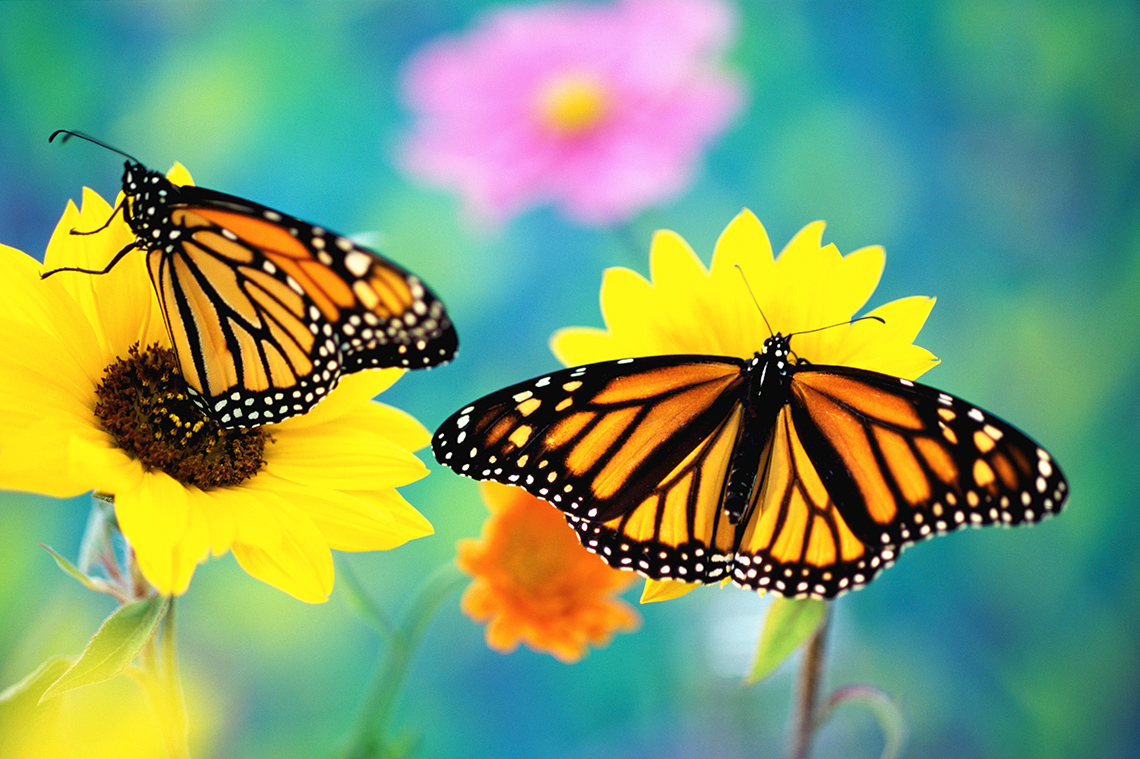
The Toronto Zoo has a First Nations Conservation Steward named Taylor. In the following video, Taylor shares the creation story about the first butterflies. The story they share was shared with them by an elder named Dr. Basil H. Johnston, who was Anishinaabe (Ojibway) from Wasauksing First Nation.
Check out the following video to learn about the story of the butterflies.
What can butterflies teach us about spreading our wings to grow and learn from new adventures?
Record your answer in a method of your choice.
The Anishinaabe, like many other First Nations communities, understood that butterflies had to be ready to adapt and change. Their creation story came from observing the butterflies over the seasons and their migration patterns.
Action
A fantastic flight
Butterflies cannot survive a cold winter. In order to stay safe and warm, they migrate. To migrate can mean to fly a great distance away to a new place for some time. Butterflies migrate in search of warmer temperatures.
Butterflies that are born in the fall need to prepare for a very long flight.
Explore the following video of a monarch butterfly taking flight.
Have you ever wondered how butterflies manage such a long flight from Canada all the way down to Mexico? They need to fuel up and have lots of nice eating spots along the way!
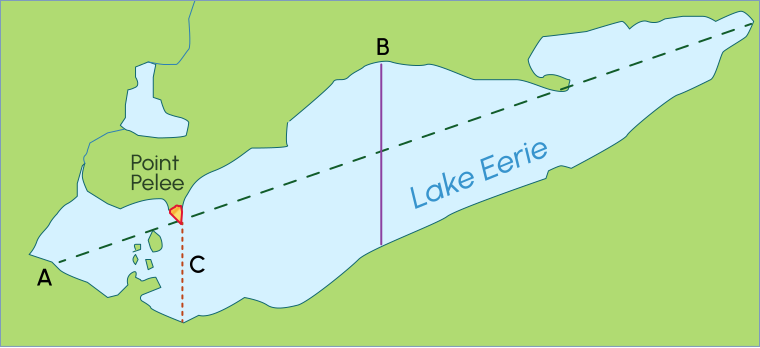
If a butterfly had to cross the Great Lakes, what route would they take?
Press the ‘Hint’ button for some help with this question.
The butterfly would find the shortest distance possible.
Now, answer the following question on your own.
Point Pelee National Park is Canada’s most southern spot. This is the last spot in Canada that monarch butterflies can rest before crossing Lake Erie.
This is the farthest spot into the lake to make the shortest crossing.
Check out the following image. It shares some monarch butterflies taking a break at Point Pelee!

The long journey
Butterflies make a long journey from Canada to Mexico. It is so long that a single butterfly does not make the entire journey.
The first butterfly begins the journey. This is the 1st generation butterfly.
Then their child takes over the journey for them. This is the 2nd generation butterfly.
Then the grandchild takes over the next part of the journey. This is the 3rd generation butterfly.
Then the great-grandchild takes over the last part of the journey. This is the 4th generation butterfly.
Explore the following map to learn more about the butterflies’ path.
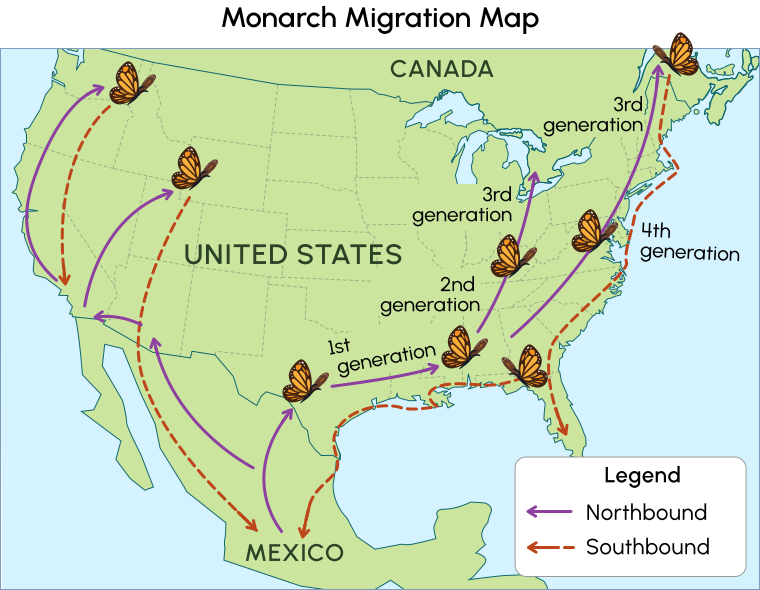
Monarch Migration Map

Pause and Reflect
Pause and reflect
Let’s consider what you have learned about the monarch butterfly.
- Did anything surprise you about this journey of the monarch butterfly?
- Who begins the journey?
- Who ends the journey?
- Why is it not the same butterfly who takes the whole trip?
Record your answers in a method of your choice.
Monarchs rely on food along the way, as well as the chance to coast on some air currently to carry them a little bit. Otherwise that would be a lot of fluttering and flapping!

Did you know?
What do butterflies eat?
Did you know that monarch butterflies eat nectar from flowers? A butterfly has a long straw under its mouth that it uses to drink the nectar.
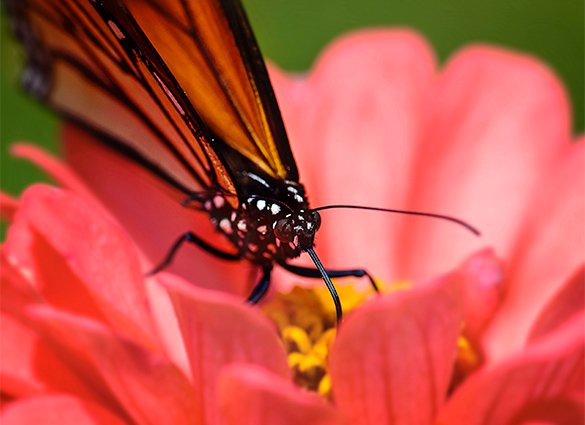
A monarch butterfly eating nectar
Pause and Reflect
Pause and reflect
What does a butterfly need on its journey?
Record your answer in a method of your choice.
Press ‘Possible Answer’ to compare your answer!
Butterflies need flowers to land on, a safe route to travel and places to rest on their journey.
Let’s investigate how people can help butterflies on their travels.
What’s a waystation?
Providing for the needs of monarchs
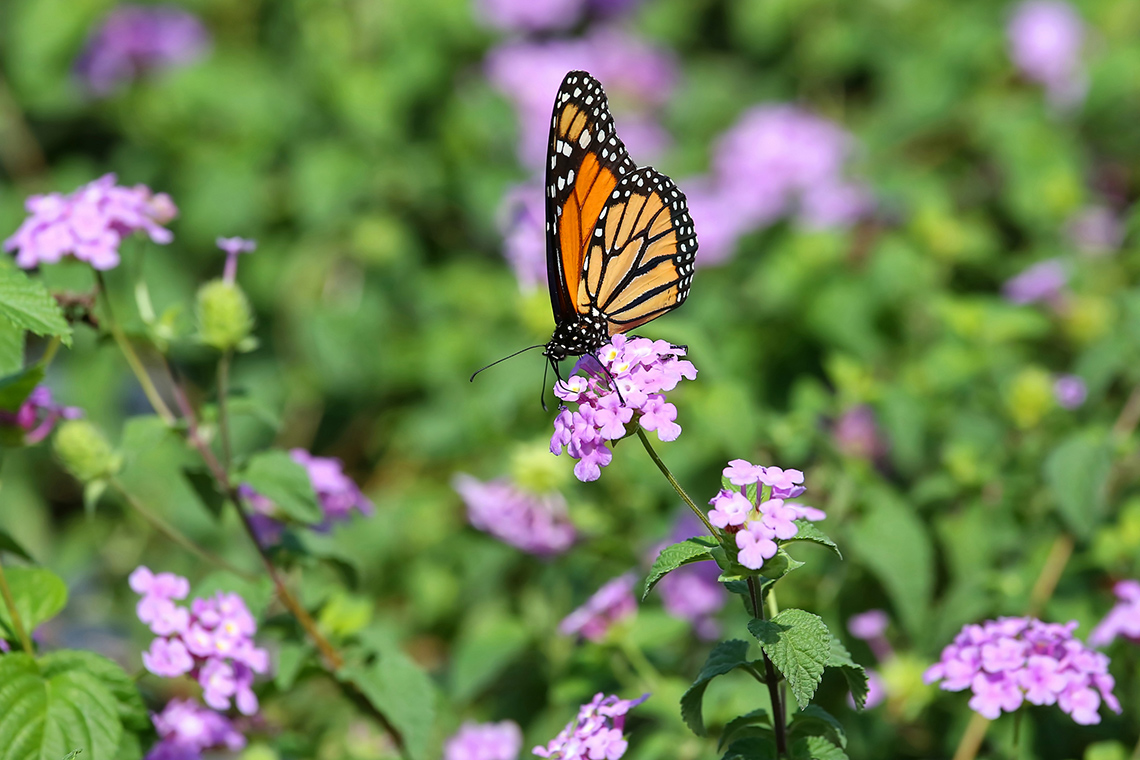
A waystation is a place to help provide for the needs of monarch butterflies along the whole way of their journey. You can think of the waystation as something to help butterflies find their way on the long trip to Mexico. A waystation can be used by the many generations who return back!
Let’s explore more with Zoey!
Access the following TVOkids video entitled “Finding Stuff Out: Migration”. As you explore the video, think about the following questions:
- Why is milkweed an important plant?
- What are rocks doing in the garden?
Now that you have explored the video, let’s answer a few questions.
Design time!
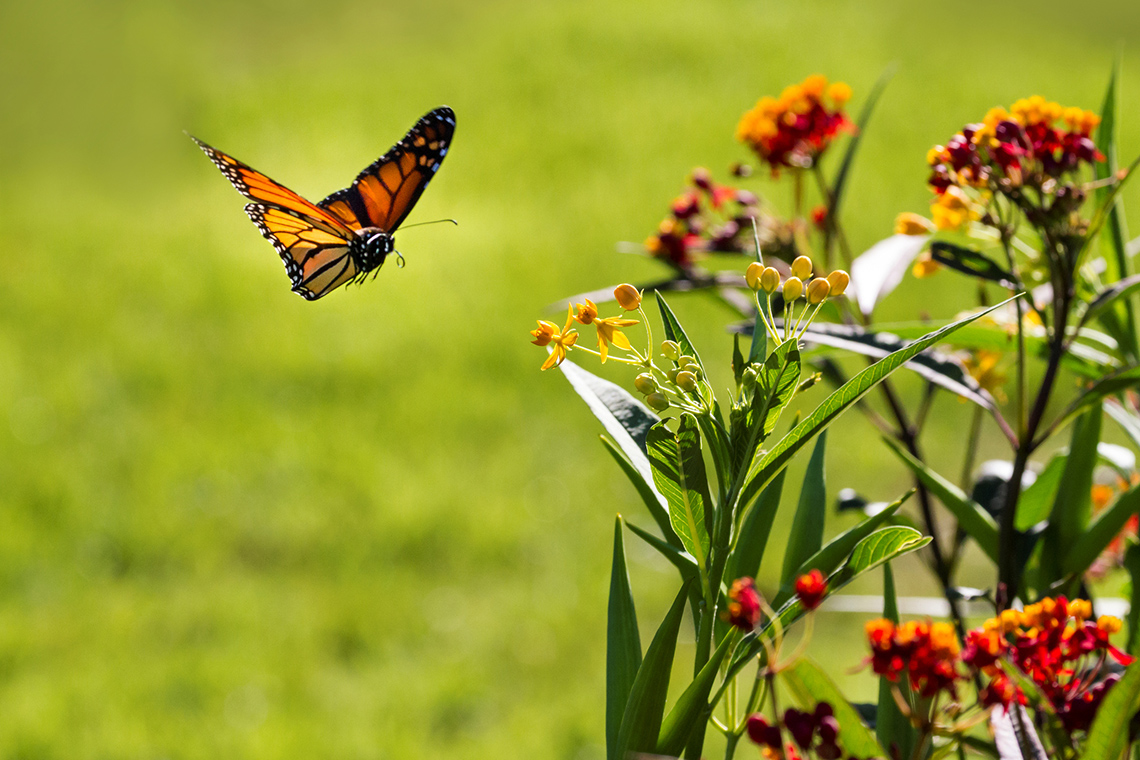
There are people whose job is to design garden spaces. These garden designers are known as landscape designers.
Landscape designers plan out garden spaces and a plant list before they begin digging. They choose just the right plant for the location. Then, they bring their plans to life!
In the following activity, you will take the role of landscape designer and plan your own monarch waystation.
You can explore the following images for some ideas of what a butterfly waystation can be like!
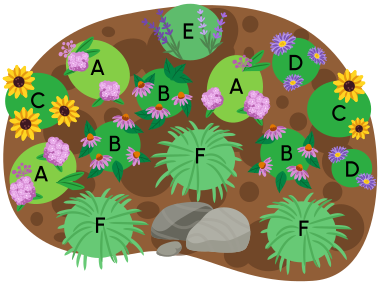
A butterfly waystation plan

A finished garden
Before beginning your design, it is important that you understand the parts of the Engineering Design Process. The Engineering Design Process has different steps to help you when you are designing something!
Let’s explore some possible steps from the Engineering Design Process. You may use some or all of the following steps when you are designing!
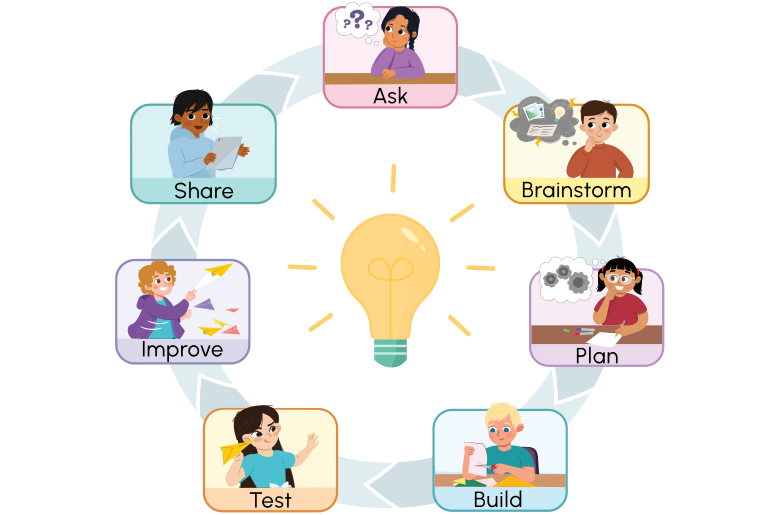
Exploring the Elementary Design Process

Let’s consider what parts of the Engineering Design Process we will be using in this learning activity!
In Science we ask questions to help us figure out what the problem is.
Then we imagine the design by brainstorming ideas.

Brainstorming is when you think about ideas like how to solve a problem.

Then we make a plan.
When you plan something, you think about the steps you have to follow and the materials you will need.
Make sure to use the previous steps when considering your waystation design.
When we create our waystation, it is important to consider what makes a good waystation for a butterfly. Use the following checklist to check off what you have included!
For my butterfly waystation, I will…

Student Tips
Must have milkweed!

There is one more important reminder for your waystation.
Milkweed is the only plant that monarchs will use to lay their eggs, and that caterpillars will eat.
We must include it in our waystation!
Your turn
Let’s try it!
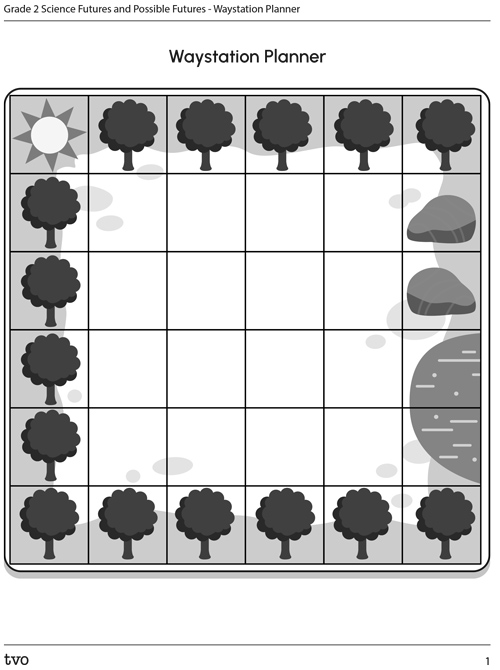
You will use the following chart to map out our design.
You can place four flowers in your waystation. These four flowering plants bloom at different times of the year, which will provide a place for butterflies to land all summer and offer them nectar.
You can also complete this activity using the following fillable and printable Waystation Planner document, or another method of your choice.
Fill in the following chart with flowers for your garden.
Remember that you must include milkweed so caterpillars can lay eggs!
You can draw or write any of the other flowers in the boxes. Some examples have been provided.
Consolidation
How will you know a design is successful?

If a landscape designer planted their design, what are two ways they would know that they’ve created a garden to help the monarchs?
Press the ‘Answer’ button to reveal some possible answers.
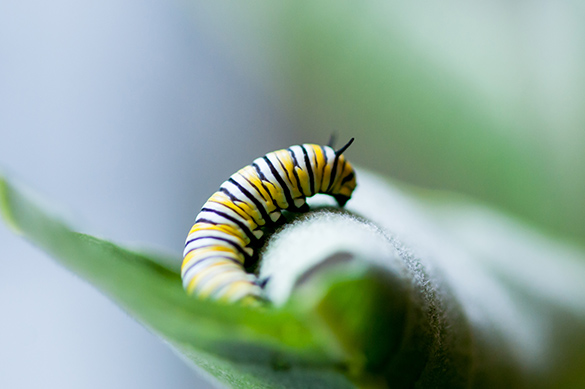
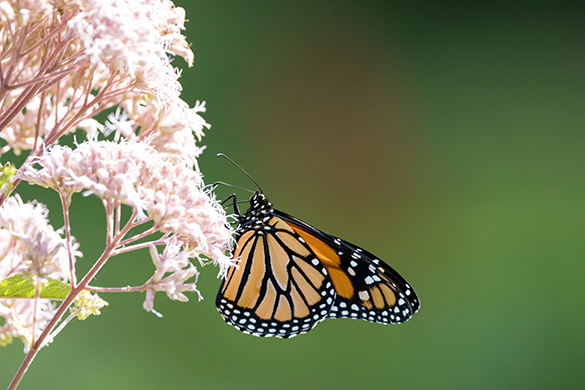
They might notice caterpillars, or they might notice butterflies.

Brainstorm
“Way” to go!
This learning activity connects new and existing approaches for young scientists to create positive changes in their communities.

Who could you talk to about creating a monarch waystation?
Using a format of your choice, prepare a list of materials that would be needed to create a monarch waystation.
Use the following checklist to help plan your waystation.
When I make a design, I…
What a Grade 2 student can do
The following list has some things a Grade 2 student can do to help monarch butterflies:
- plant some milkweed; even small areas are helpful to monarchs
- share your design with your school or community to check if it can be planted
- participate in some Citizen Science to share your monarch spotting; this is one way for scientists to know when and where animals migrate
Reflection
How do you feel about what you have learned in this activity? Which of the next four sentences best matches how you are feeling about your learning? Press the button that is beside this sentence.

I feel…
Now, record your ideas about your feelings using a voice recorder, speech-to-text, or writing tool.