Minds On

Action
Moving in different ways
Playgrounds are filled with different structures and equipment.
They help people move in different ways.
They also help people do work when they play.
Let’s explore how!

Teacher A and Teacher B talking. Teacher A says Wait a second! People do work when they play? Teacher B responds That’s right, Teacher A. In Science, the word “work” does not mean homework. When you push, pull, or lift something, you are doing work. For example, picking up a book is work. Teacher A says: Interesting! So, “work” is a force that moves an object. Teacher B responds: It is! Many pieces of playground equipment use simple machines that help people do work. Simple machines can make work easier and fun!
A force the speed of a moving object, change the direction of a moving object, and stop or slow down the movement of an object.
Explore the following images that show force and movement.
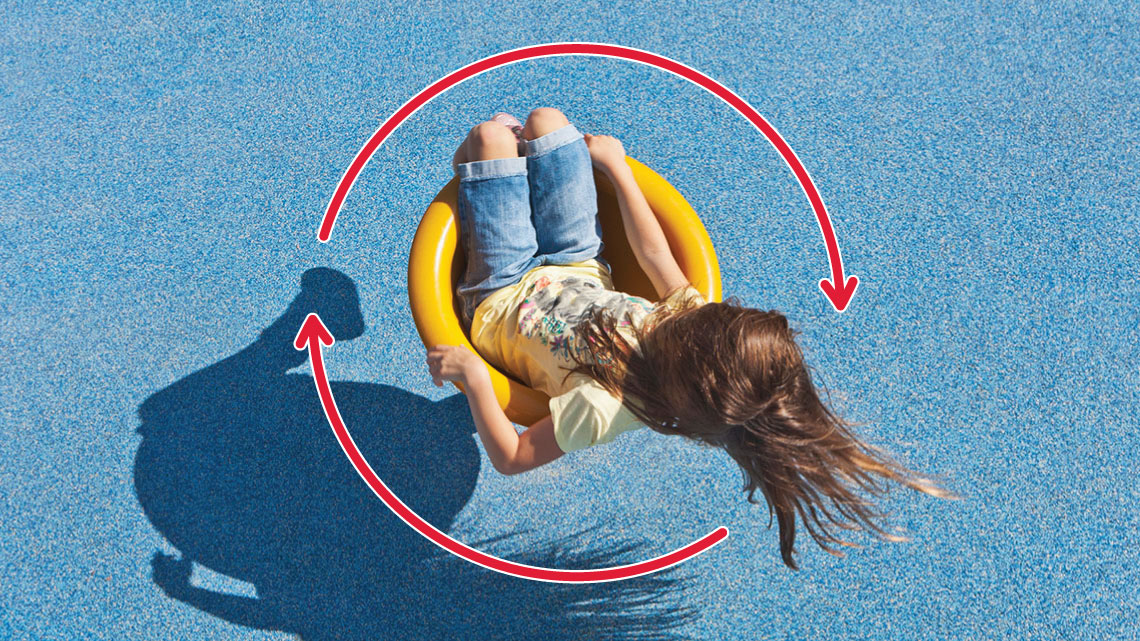
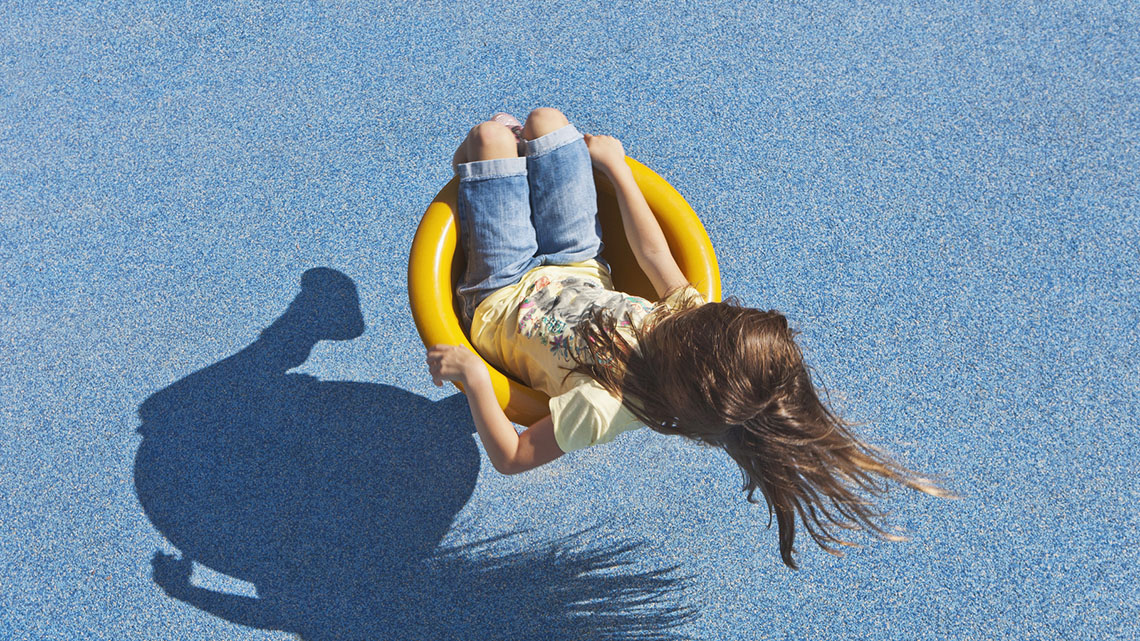
The spinner spins round and round
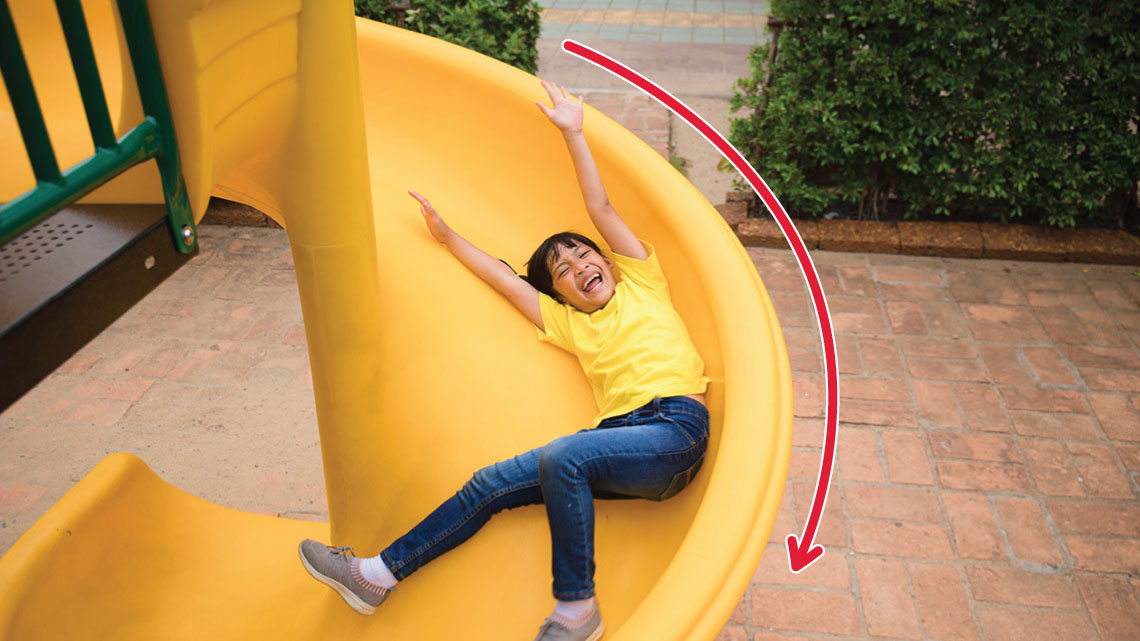
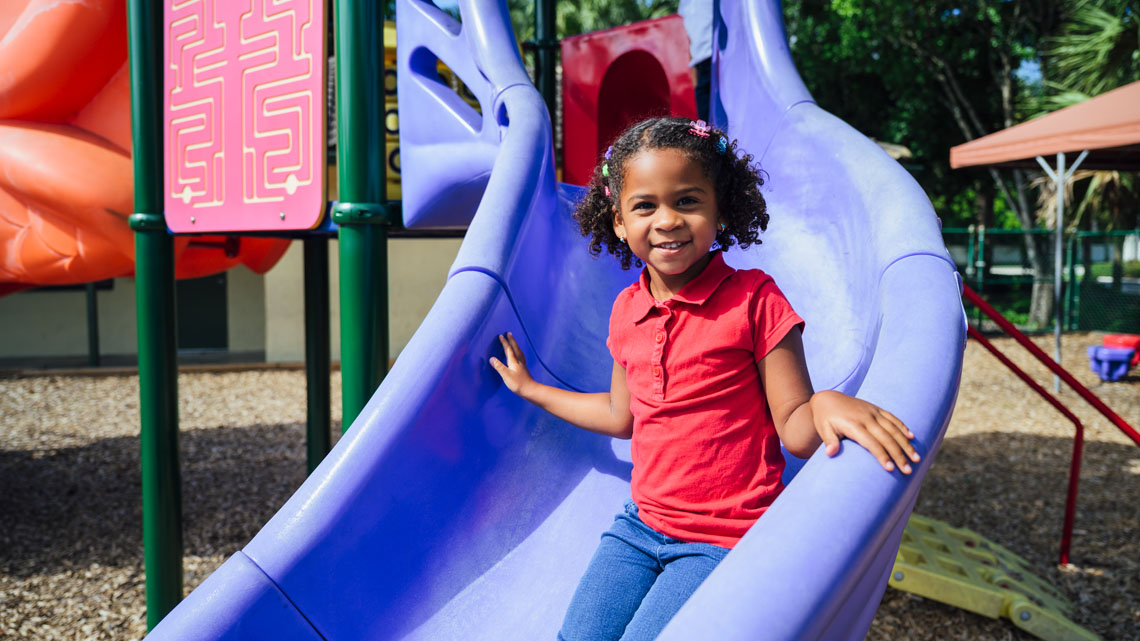
When you use a slide, you go down it.
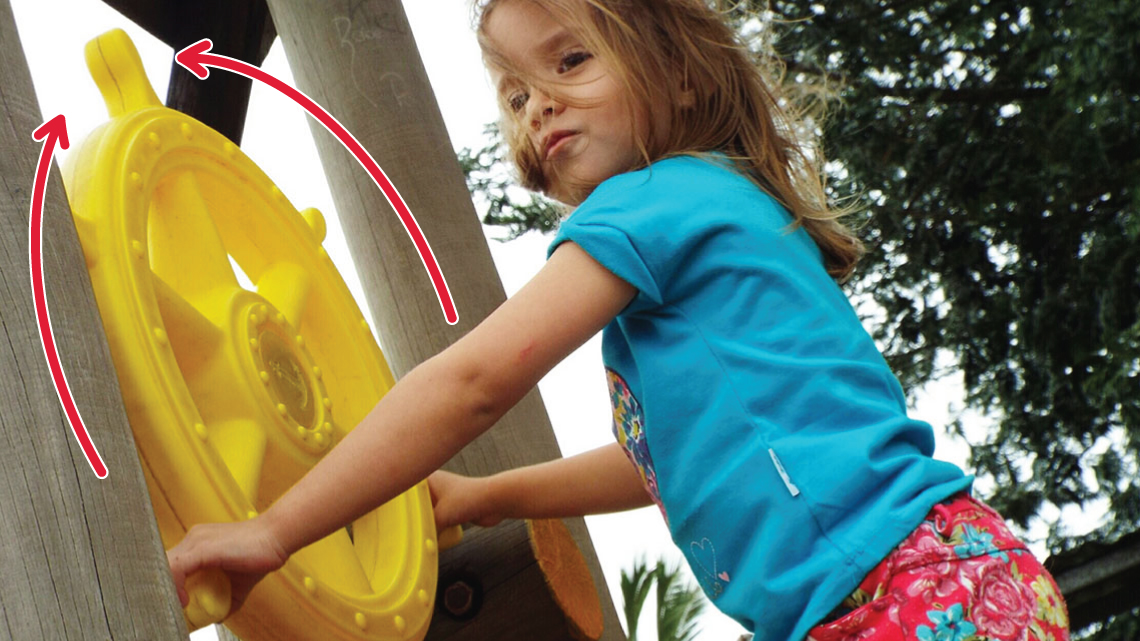
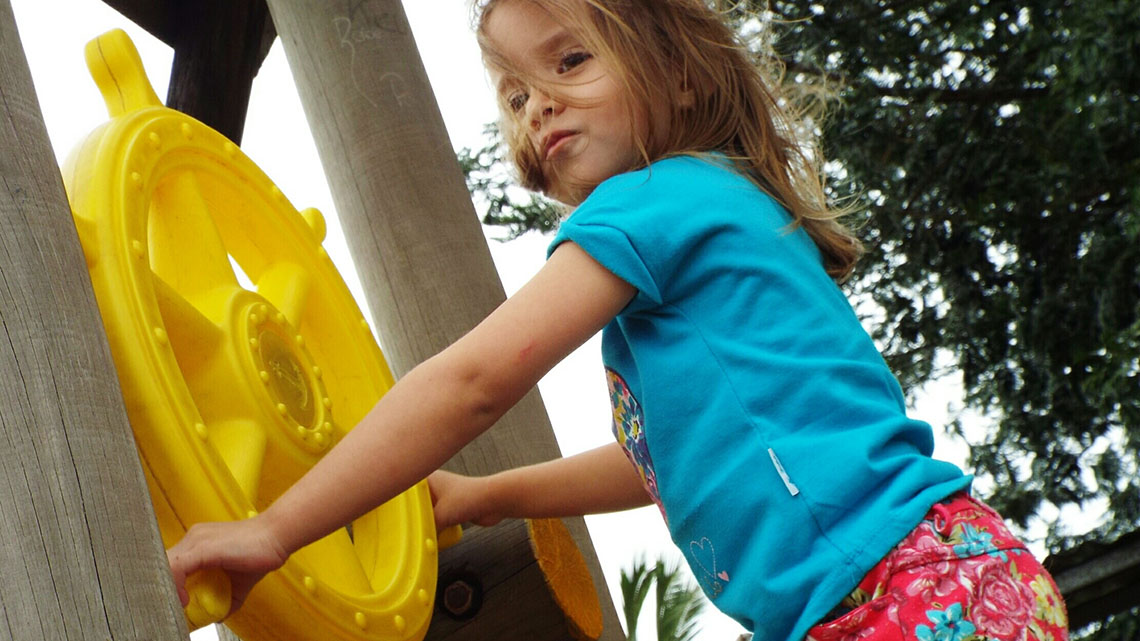
You can turn the steering wheel left or right.
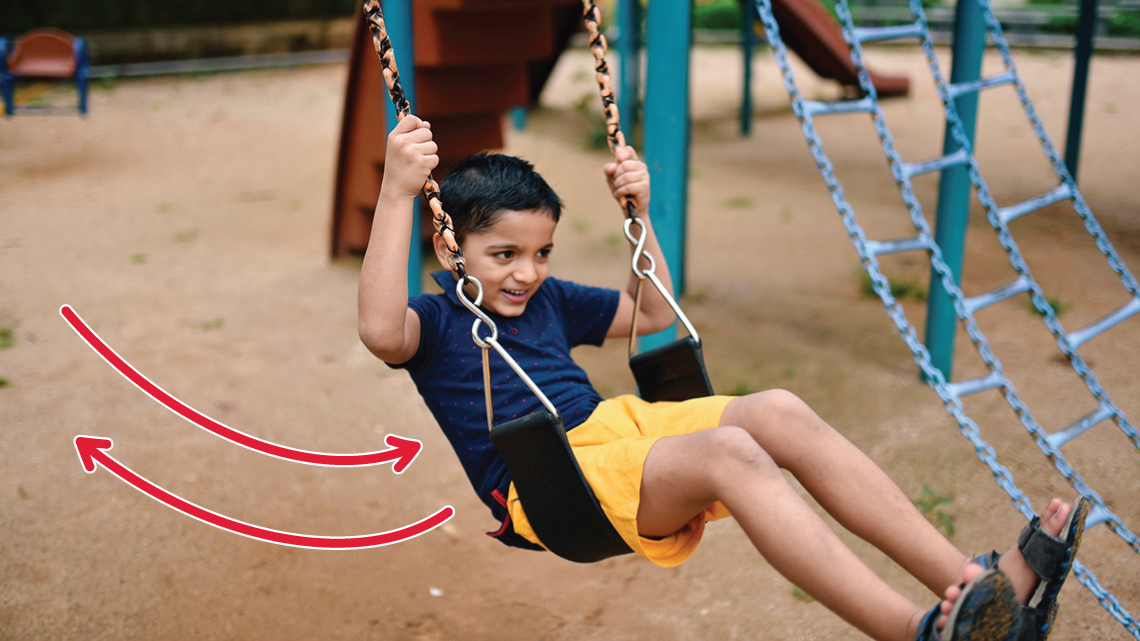
The swing moves back and forth
Simple machines
Simple machines have one or two moving parts.
They help people push and pull which are both forces.
They cannot do all the work, but they certainly can make things easier!
Press ‘Definition’ to learn the meaning of the words push and pull forces.
Push: a force that moves something away from you.
Pull: a force that brings something toward you.
Let’s learn about the simple machines!
Press the following tabs to learn all about the six different simple machines.
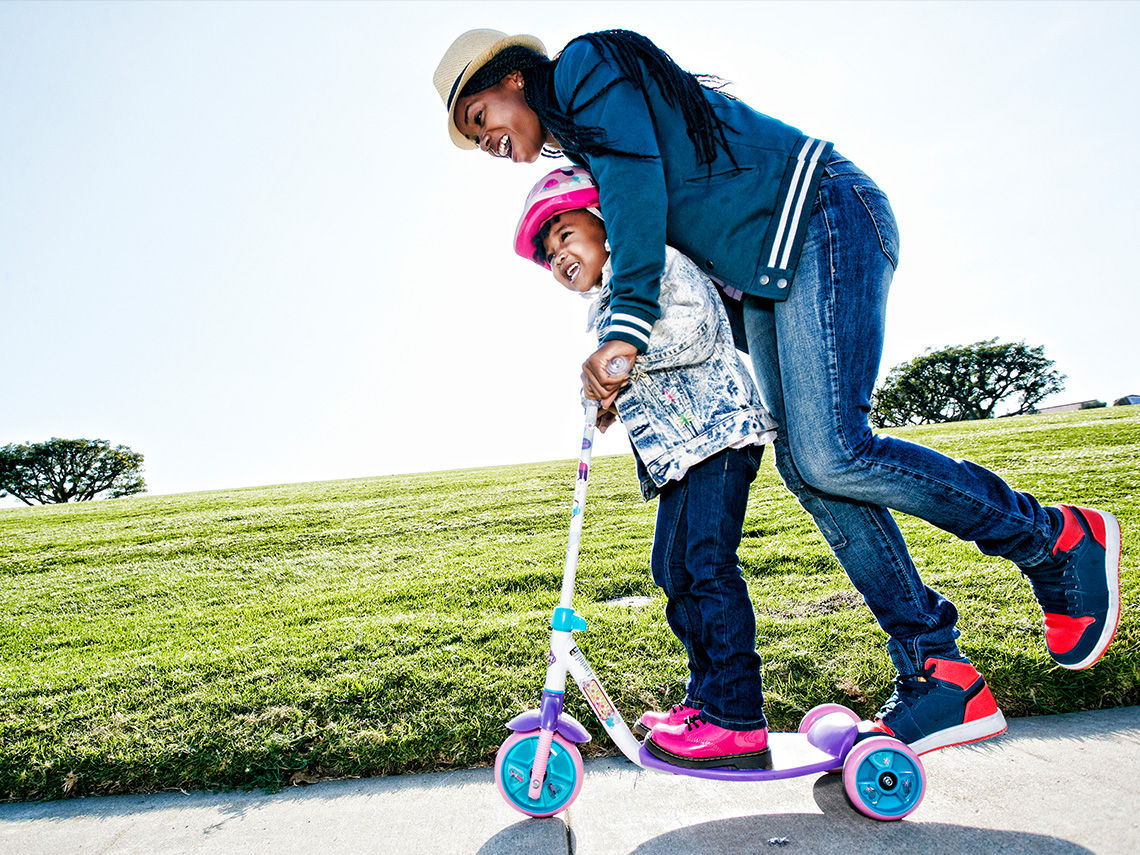
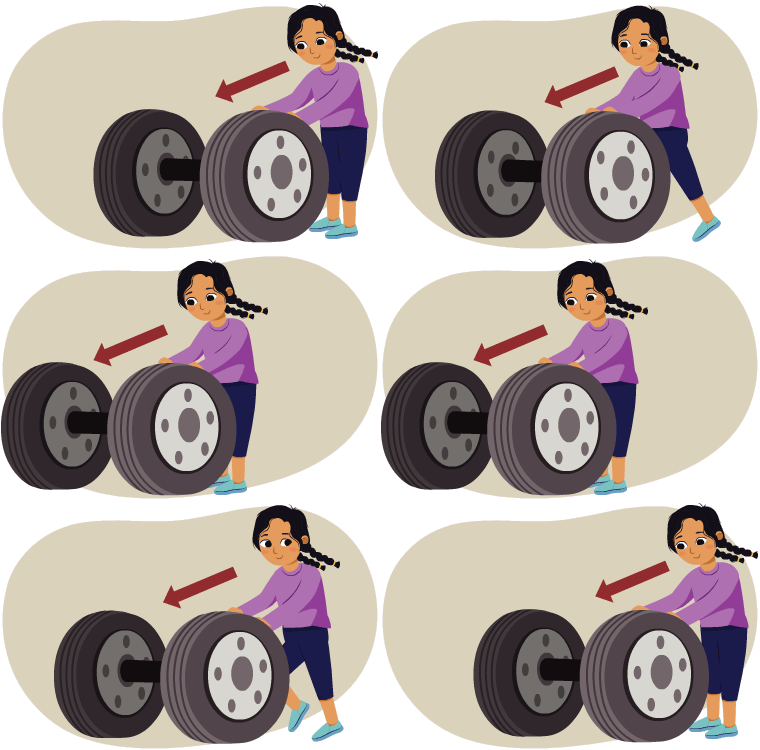
This scooter is a simple machine. It has wheels and axles. A wheel is what makes the scooter go round and round. An axle is a small rod or stick that goes through the wheel and helps move the wheel around. It can be long or short.
Explore the following animation. Do you notice the wheel? Do you notice the axle?
They are working together!
 Description
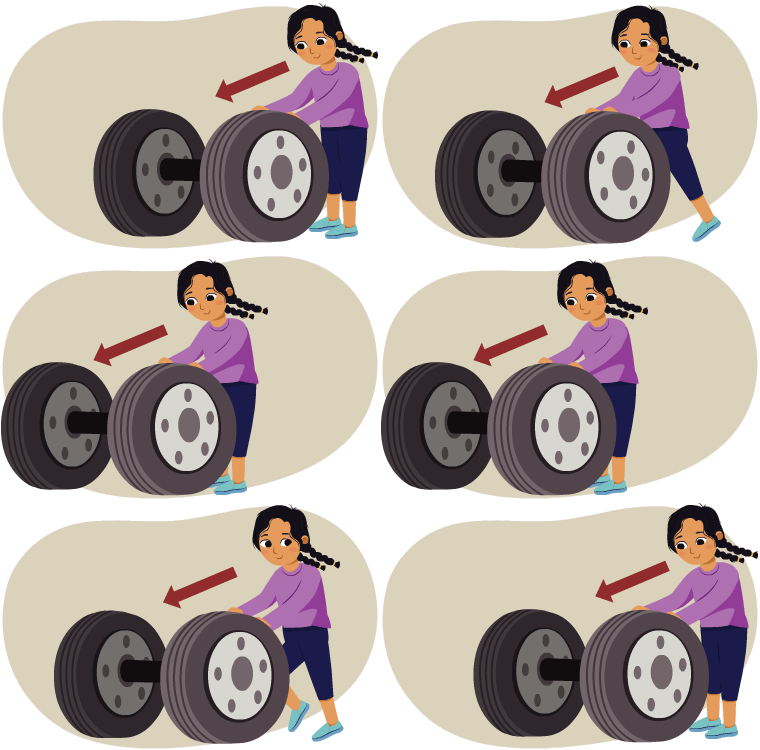
A learner is pushing one of two wheels that are attached to each end of an axle. An arrow shows she is pushing forward. The wheels move easily.
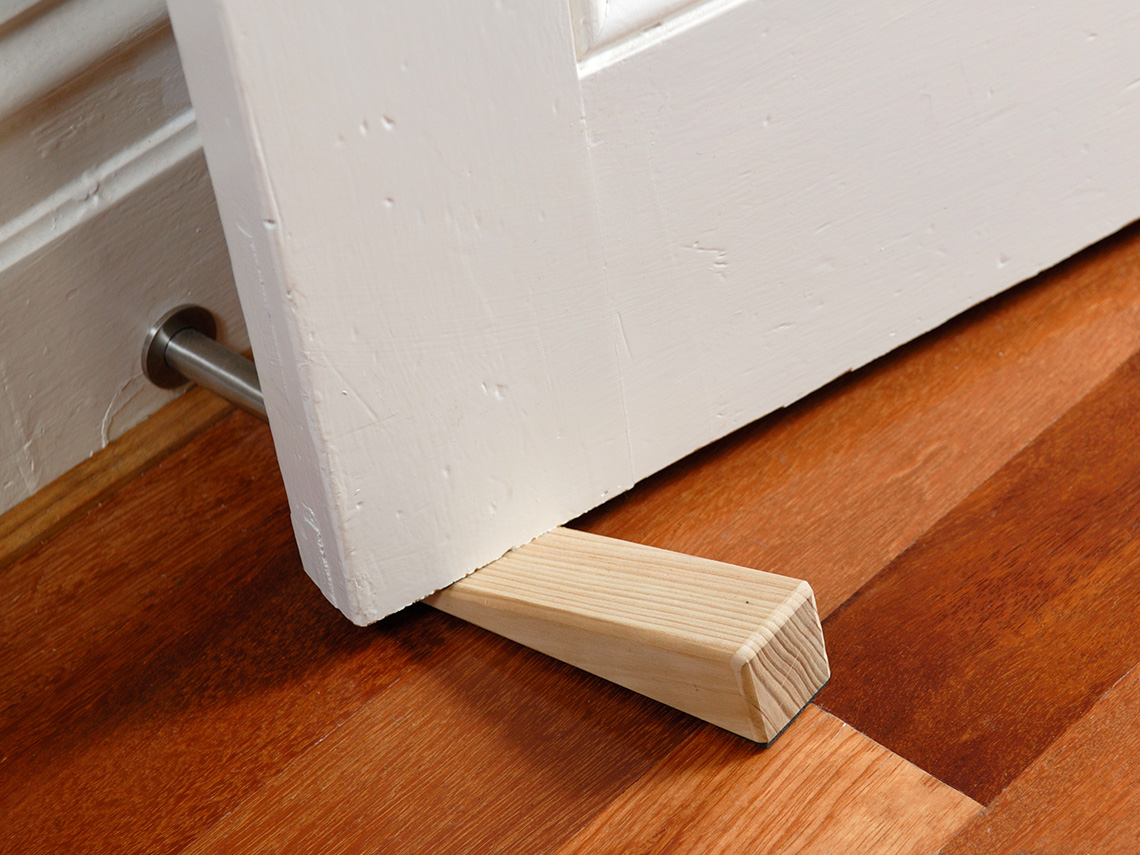
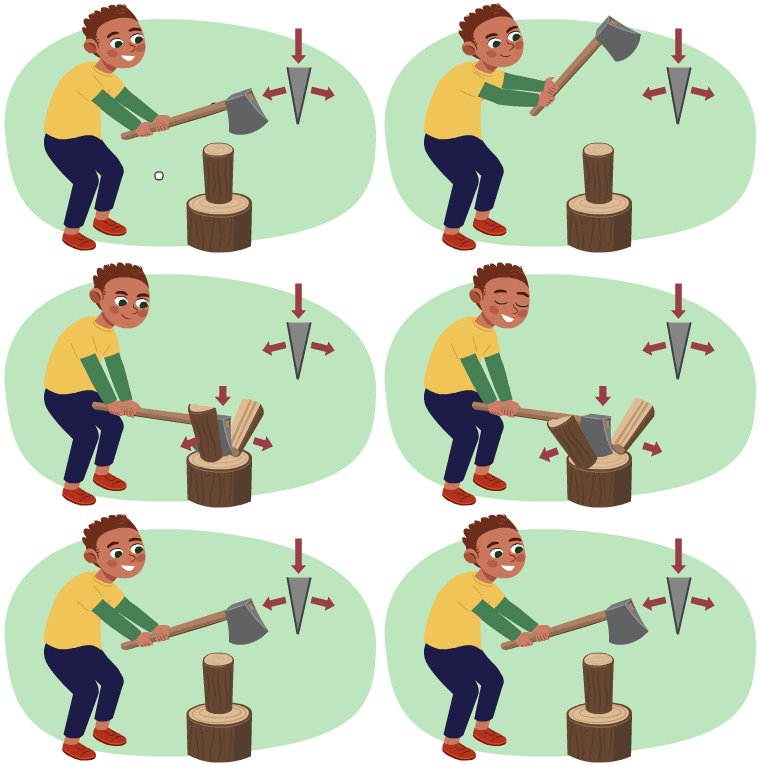
The doorstop is a simple machine. It is a wedge! A wedge has at least one side that is slanted. A wedge can hold something in its place or pull something apart.
Explore the animation. Do you notice a slanted side? Is the wedge pulling something apart or holding something in its place?
 Description
A person is using an axe to cut a log into two pieces. An arrow shows the downward direction of the axe. Two arrows, one to the right and one to the left, show the direction the chopped pieces of wood fall.
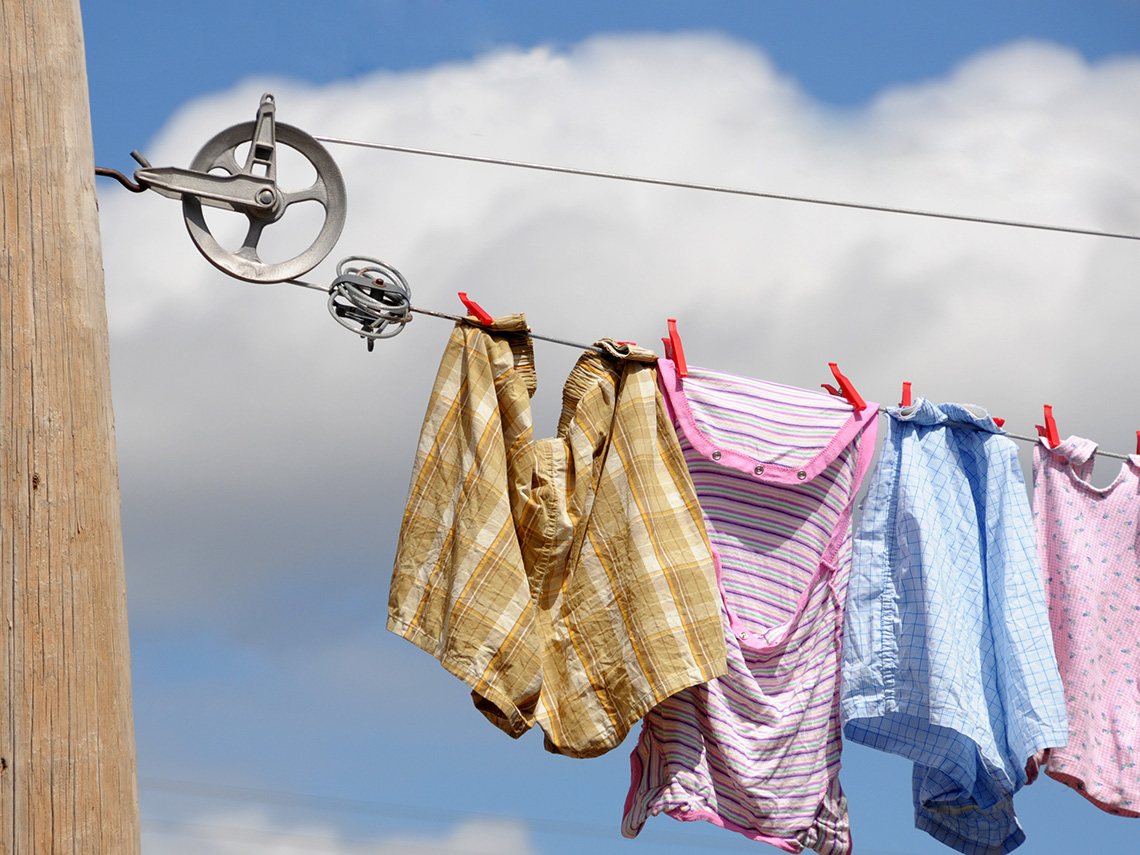
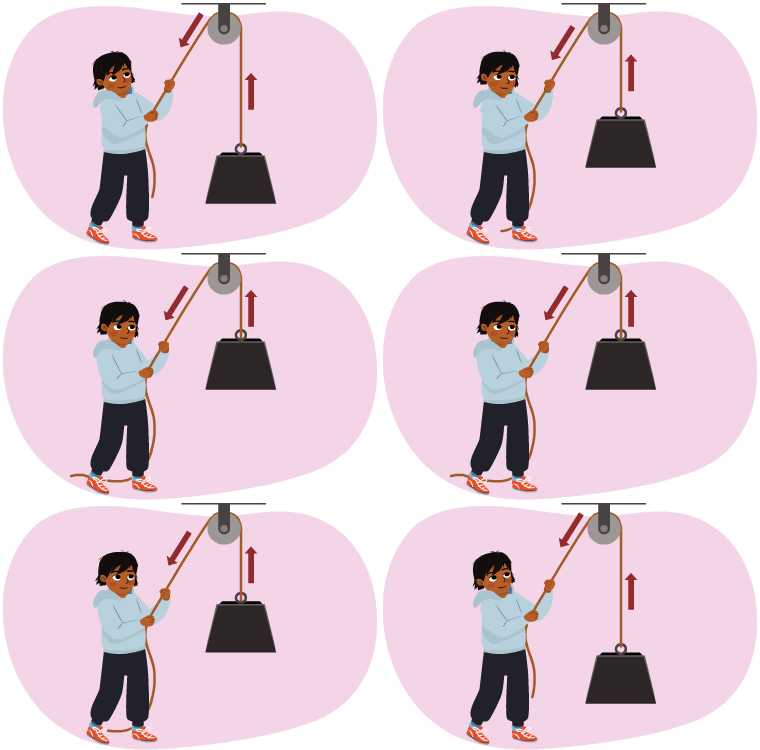
A clothesline is a simple machine. It is a pulley! A pulley uses a wheel and a rope to move and object. It can also pull an object up or pull it down.
Explore the animation. Do you notice the rope? Do you notice the wheel?
They are working together!
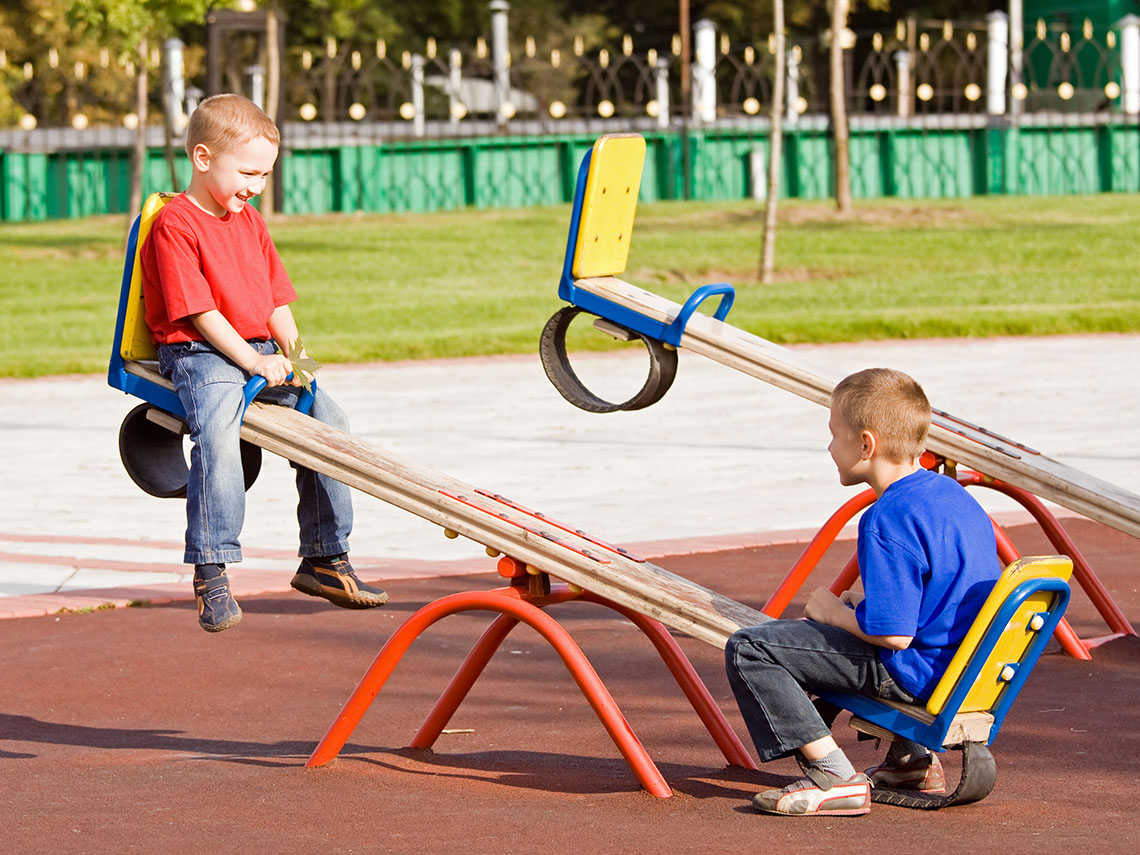
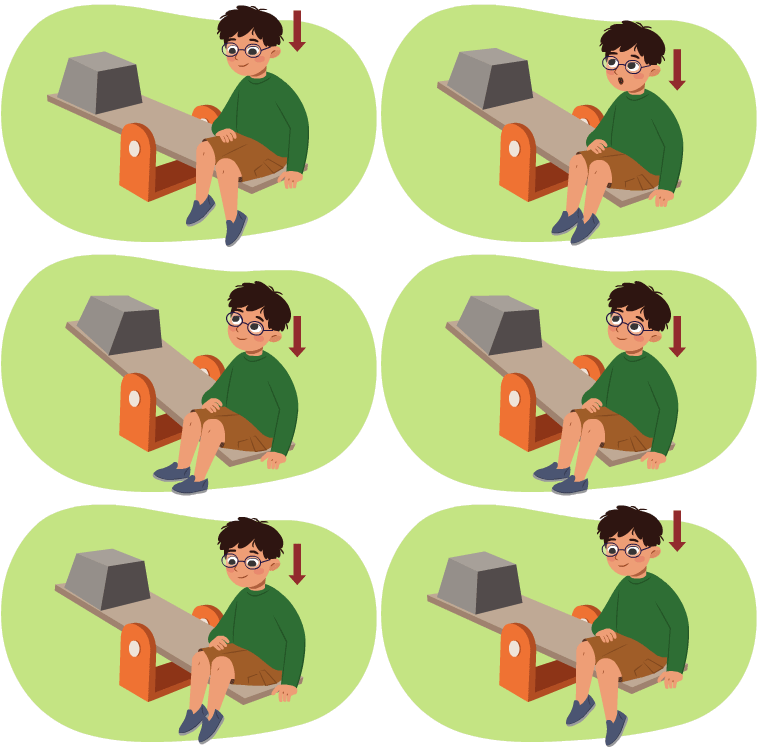
A teeter totter is a simple machine. It is a lever! A lever is a bar that has a piece in the middle of it. It’s called a fulcrum. It makes the bar move up and down.
Explore the animation. Do you notice the bar? Do you notice the fulcrum?
They are working together!
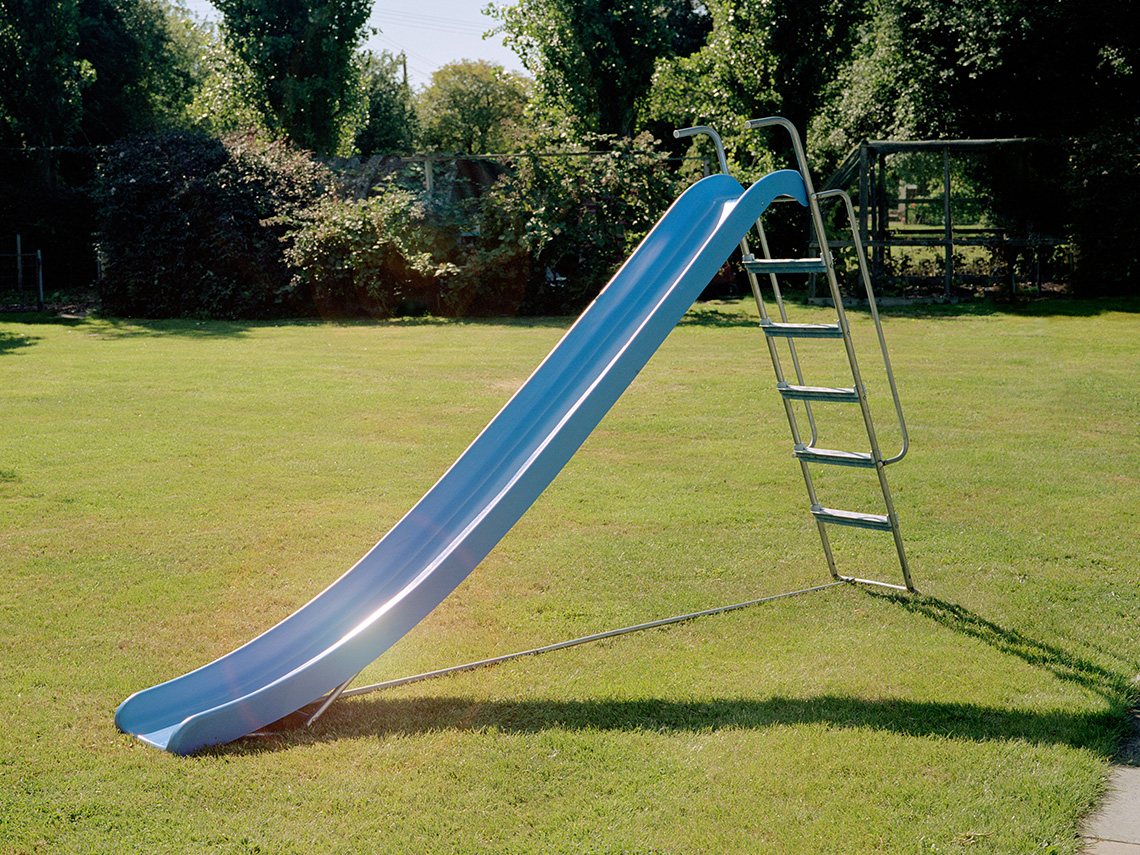
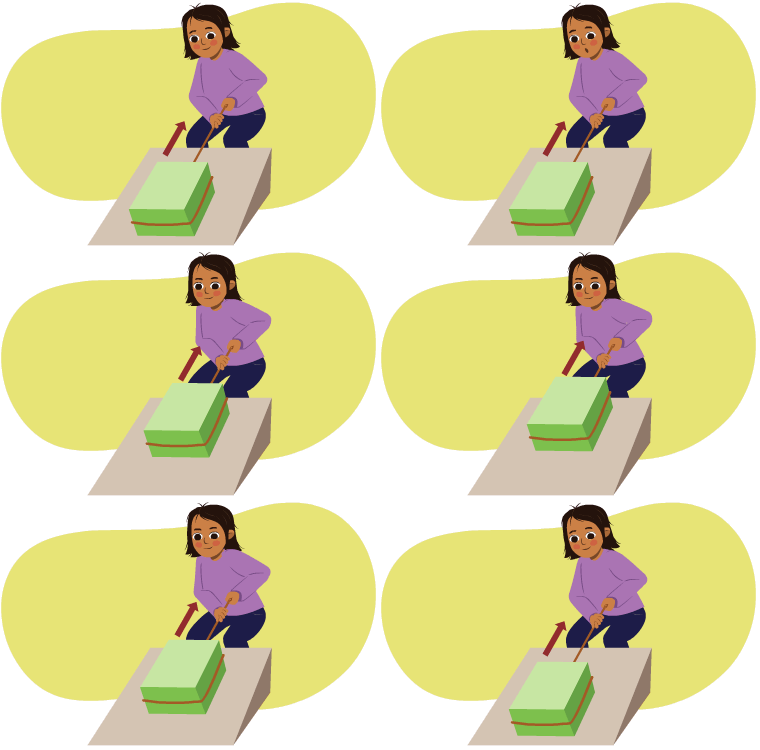
A slide is a simple machine. It is called an inclined plane! An inclined plane is a thing that is slanted which means it is not flat. There is a lower point and a higher point. This makes it easier to move something. A slide that was flat just wouldn’t work!
Explore the animation. Do you notice the inclined plane? Does it have a lower point? And a higher point?
This makes it easier to move something.
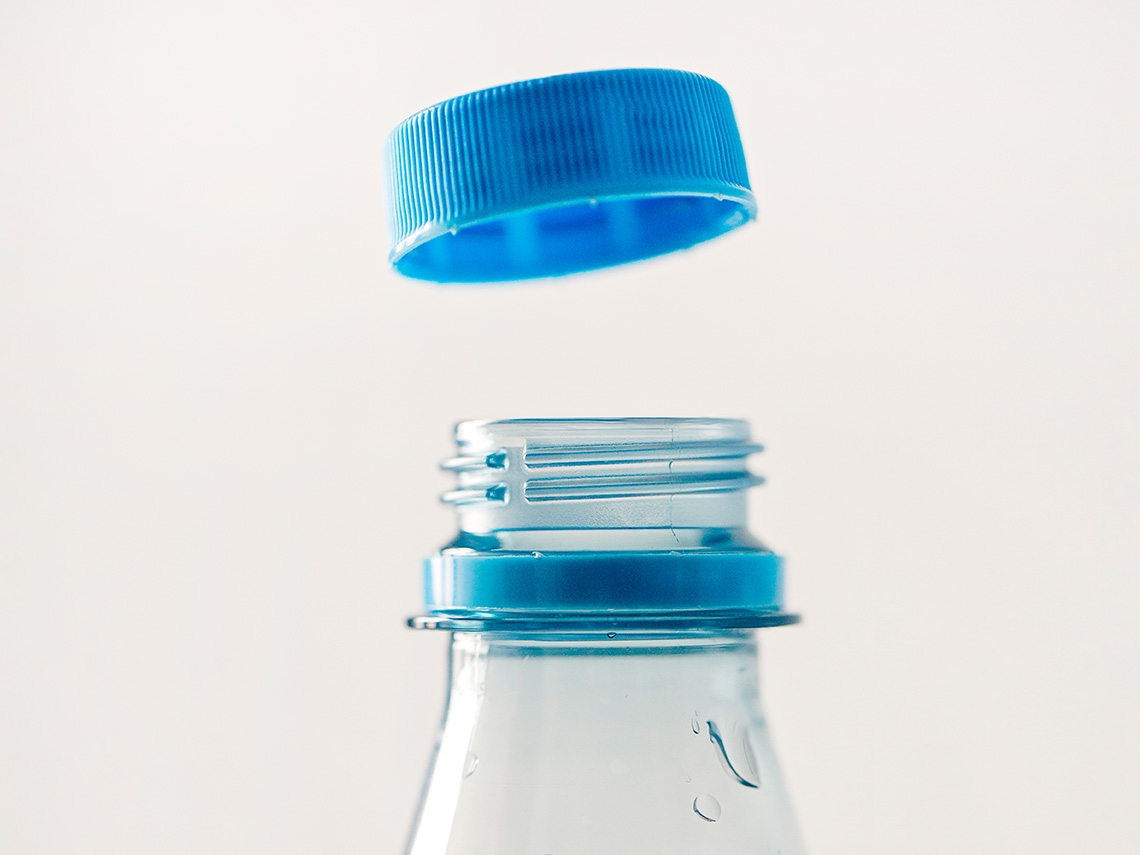
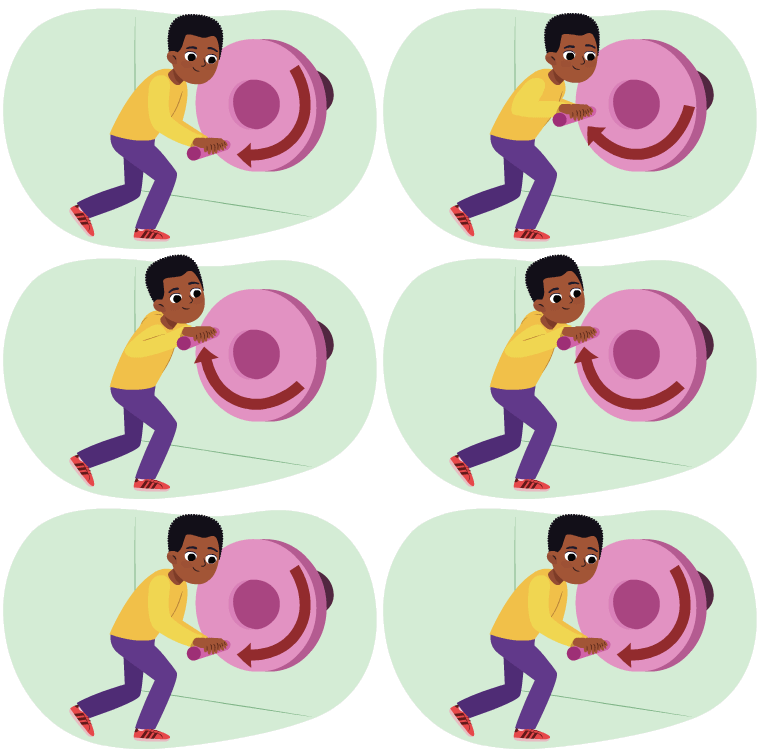
The water bottle cap is a simple machine. It is a screw! A screw holds things together. It has ridges around it called threads. The water bottle also has ridges around it and when you put the cap on, they match up. You can make a screw tighter by turning it one way and looser by turning it the other way.
Explore the animation. Do you notice the screw? How is it being turned?
Let’s think!
Examine the following images.
Do you think they are they simple machines? Explain your thinking.
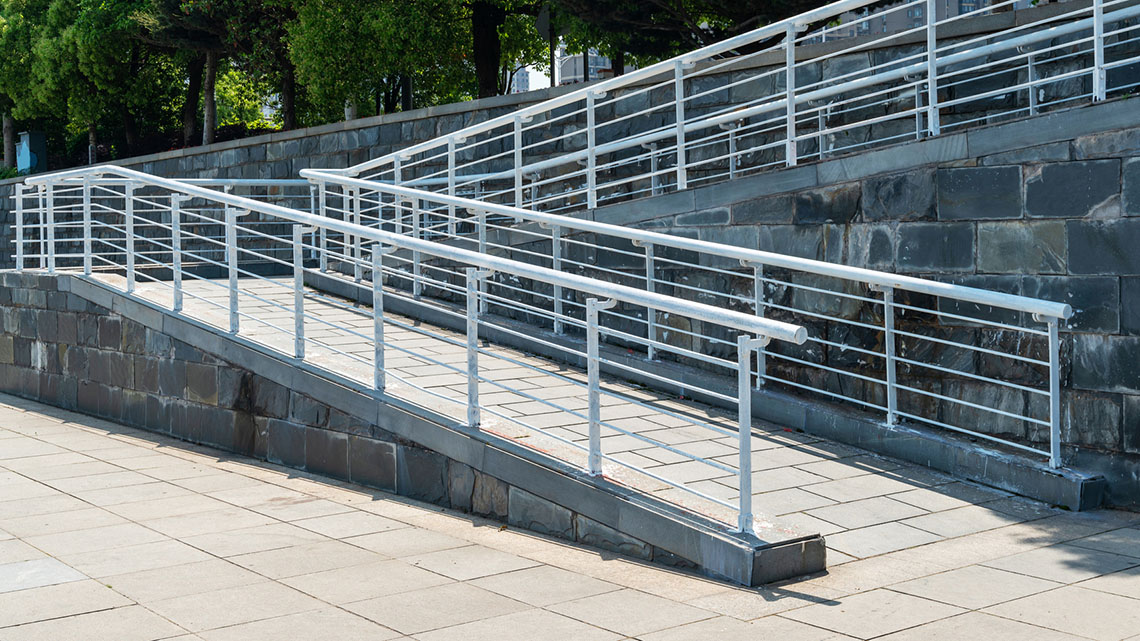
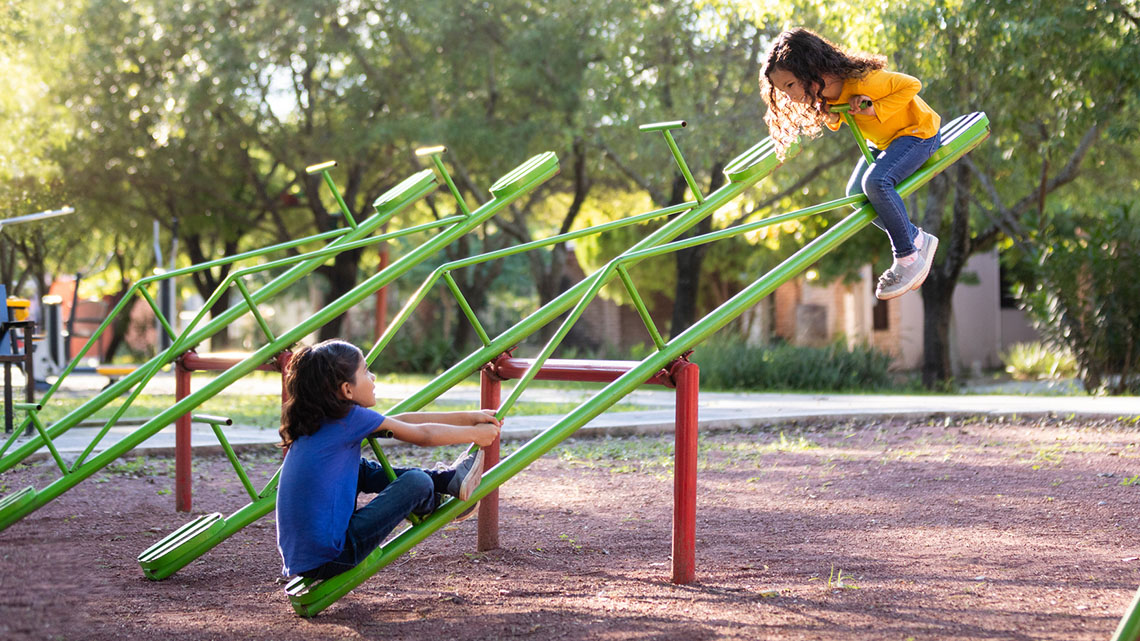
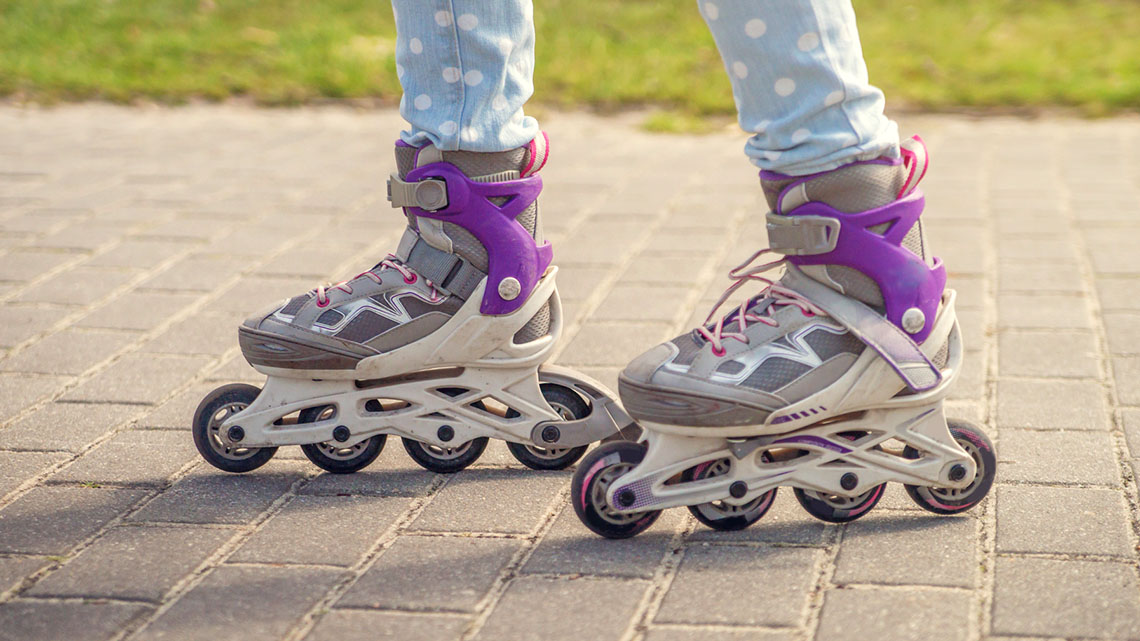
Press ‘Answer’ to learn whether the images are simple machines or not.
A ramp, a teeter-totter, and rollerblades are examples of simple machines.
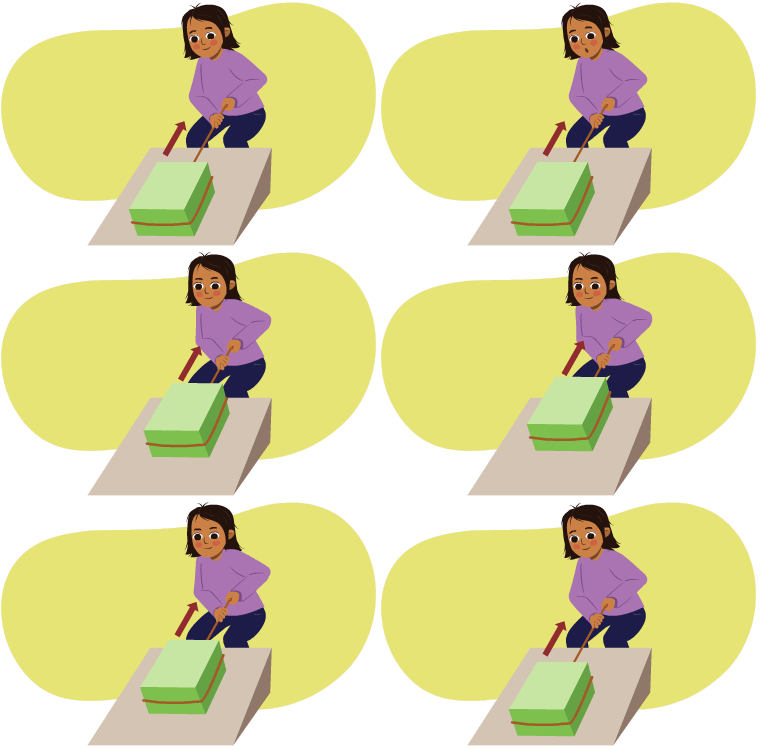
A ramp is an inclined plane.
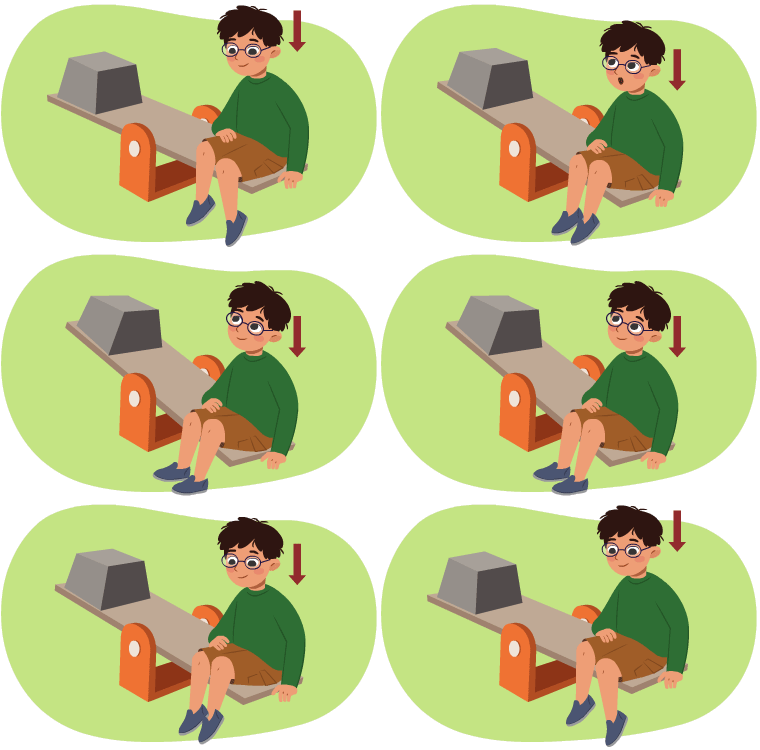
A teeter-totter is a lever.
Rollerblades are a wheel and axle.
 Description
A learner is pushing one of two wheels that are attached to each end of an axle. An arrow shows she is pushing forward. The wheels move easily.
Check your learning!
Explore how each simple machine works and makes work easier.
Match the object to the description.
Designing your own playground equipment
Your task is to design a piece of playground equipment that helps people do work and have fun!
Parks and Recreation Ontario would like to add a new structure to one of their playgrounds.
Design a piece of playground equipment that makes work easier.
It needs to:
- move or help someone move
- include a simple machine
- make work easier
You can come up with your own playground equipment design or you can use the following image and modify a piece of equipment that is already there.
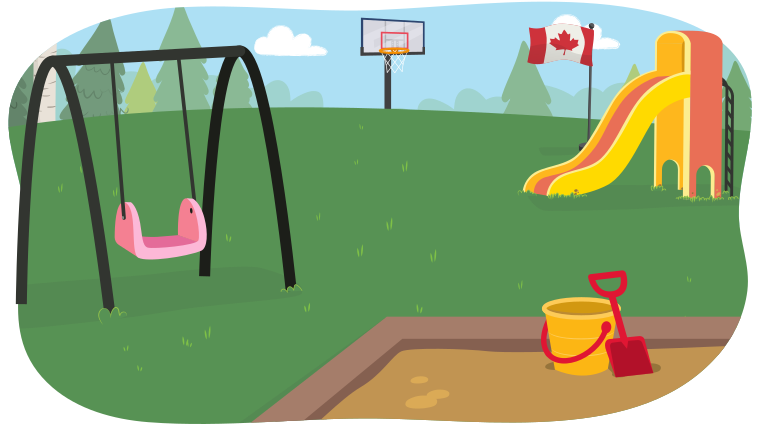
Now that you have a task, explore the rest of the steps for designing a piece of playground equipment!

Brainstorm
Let's consider a problem!
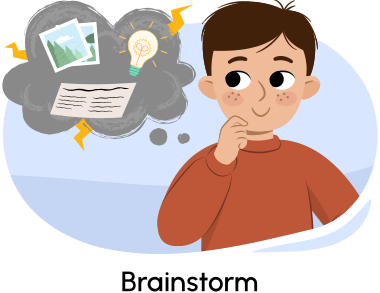
Brainstorming is when you think about ideas like how to solve a problem.
Your next step is to brainstorm possible ideas for your playground structure.
What materials might you use to build your model?
Possible materials
Plan your design
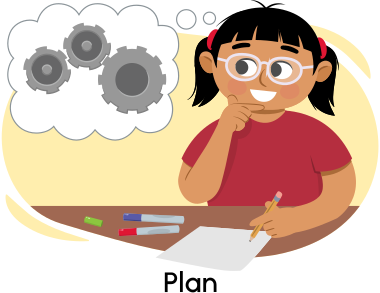
When you plan something, you think about the steps you will follow and the materials you will need.
Use pictures and words to describe your playground structure and the simple machine(s) it uses.
Consider the following questions:
- How does your playground structure work?
- How does it move?
- How might someone move on your structure?
- What simple machine(s) does it use? Why?
Press ‘Hint’ to access a hint about how objects move in different ways.
Objects move in different ways including:
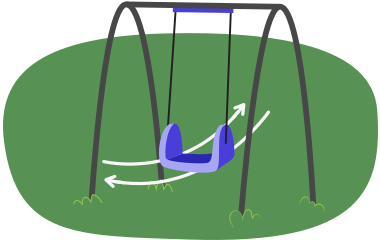
swinging
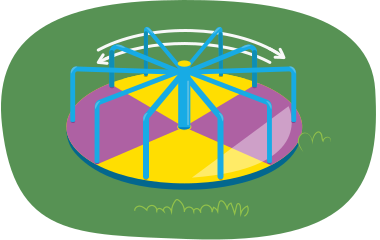
turning
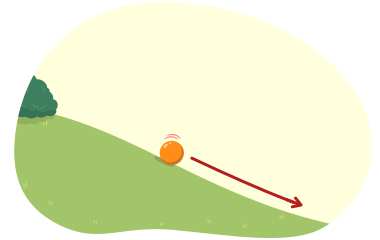
rolling
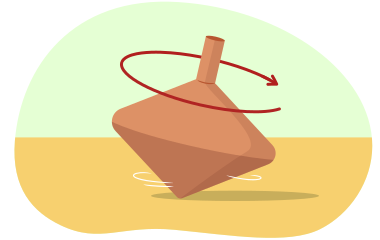
spinning
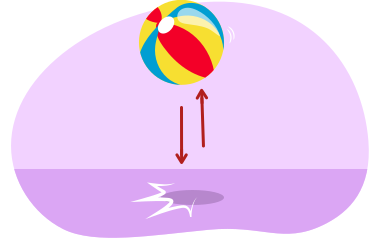
bouncing

sliding
Please note, if you choose to recreate or change a structure on the playground, consider the following questions:
- Which structure did you choose to recreate? Why?
- What did you change? Why?
Complete the Plan Your Design chart in your notebook or using the following fillable and printable document. If you would like, you can use speech-to-text or audio recording tools to record your thoughts.
|
Use pictures and words to describe your playground structure: |
Use pictures and words to describe the simple machine in your design: |
|---|---|
Press the ‘Activity’ button to access Plan Your Design.

Pause and Reflect
Pause and reflect
Use the following questions to reflect about your playground equipment design.
Record your responses digitally, orally, or on paper.
- What is your structure? How does it work?
- How does it move? How might it help someone move?
- What simple machine(s) does it use?
- How does the simple machine help someone do work?
Consolidation
How does it work?
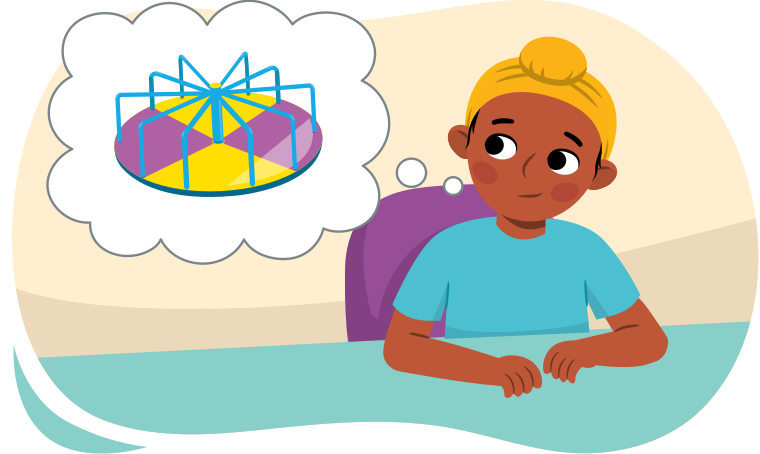
Examine the following example of a playground structure.
Respond to the following questions:
- How do you think this playground structure works?
- How does it move? How might the structure help someone move?
- What simple machine(s) does it use? Explain your thinking.
- How does it make work easier?
- What might you change about this design? Explain your thinking.
Record your ideas digitally, orally, or on paper.

Reflection
How do you feel about what you have learned in this activity? Which of the next four sentences best matches how you are feeling about your learning? Press the button that is beside this sentence.
I feel…
Now, record your ideas about your feelings using a voice recorder, speech-to-text, or writing tool.