Learning goals
We are learning to…
- compare differences in fiction and nonfiction texts
- analyze a nonfiction text and identify nonfiction text features
- explain how nonfiction text features are helpful to comprehend texts
- capitalize titles, including headings and subheadings
- make connections with nonfiction text features in other school subjects and everyday life
Success criteria
I am able to...
- compare and contrast fiction and nonfiction texts
- identify nonfiction text features
- explain how nonfiction text features help me understand texts
- capitalize titles using capitalization rules
- make connections with identifying nonfiction text features to other school subjects and everyday life

Fiction or nonfiction texts

Today’s vocabulary!
Notice and wonder
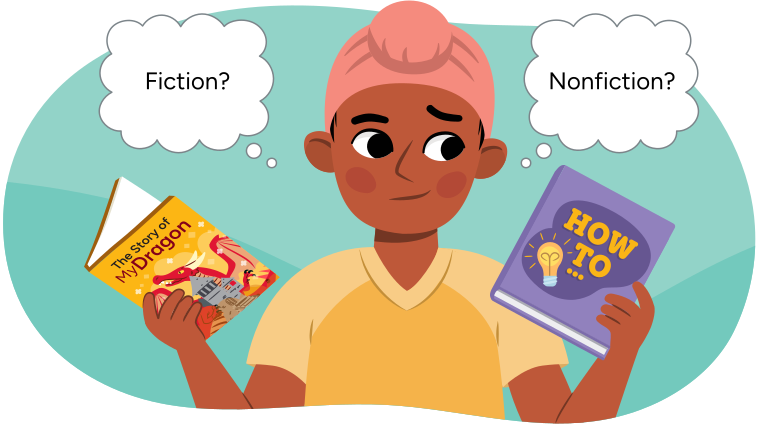
Explore the following book covers. Do you think they are fiction or nonfiction texts? What are your clues?
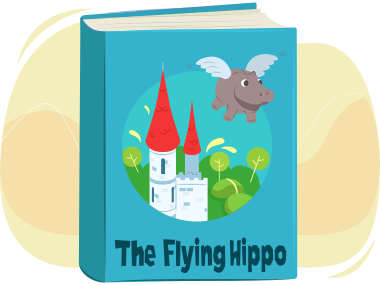
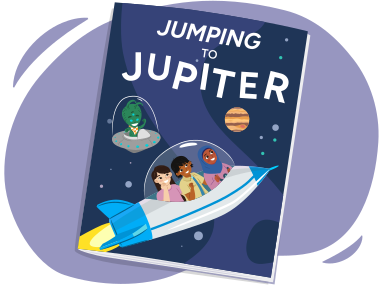
Press Possible Answers button to learn more.
Clues that these books are fiction:
- Hippos can’t fly.
- There are kids in a spaceship travelling to Jupiter.
- There’s an alien in the image.
- The pictures on the front covers are not real.
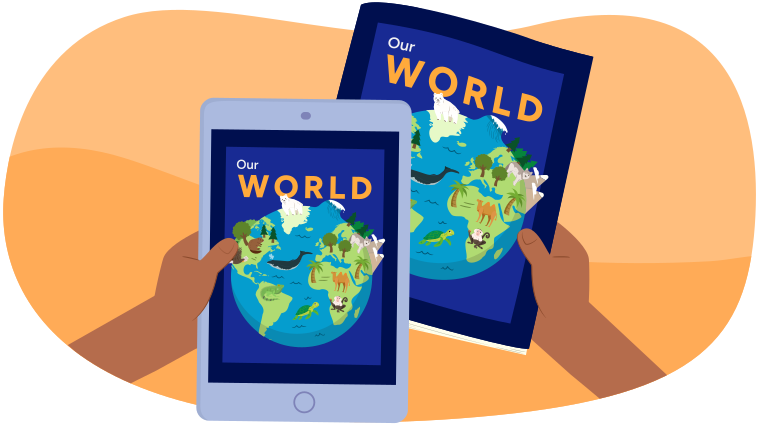
Now let’s explore two more book covers. How are these two covers different from the two explored above?
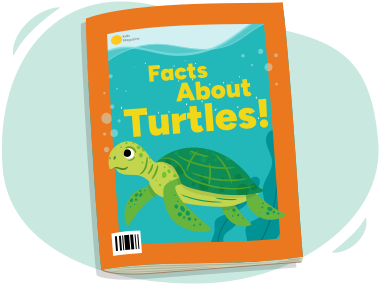
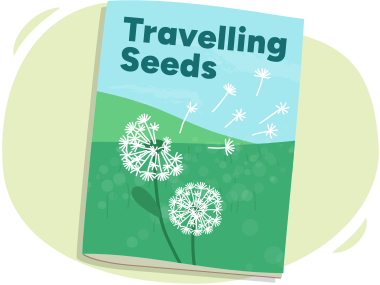
Press Possible Answers to learn more.
Clues
- The topics are about real things.
- The titles and pictures suggest that these texts include facts.
- The book called, “Travelling Seeds,” has a photograph on the front instead of a drawing.
Which texts do you think are nonfiction and which do you think are fiction?
Fiction or nonfiction?
Which texts do you think are fiction and which do you think are nonfiction?
Place the cards into categories that best match. Use the arrow buttons to navigate between cards.
Nonfiction texts
In the Minds On section, you explored how texts with facts and information are considered nonfiction (or informational) texts. There are many types of nonfiction texts that you might already know.

What is the purpose?
It can be hard to tell the difference between fiction and nonfiction texts. One way to identify the differences is to think about the purpose of the text.
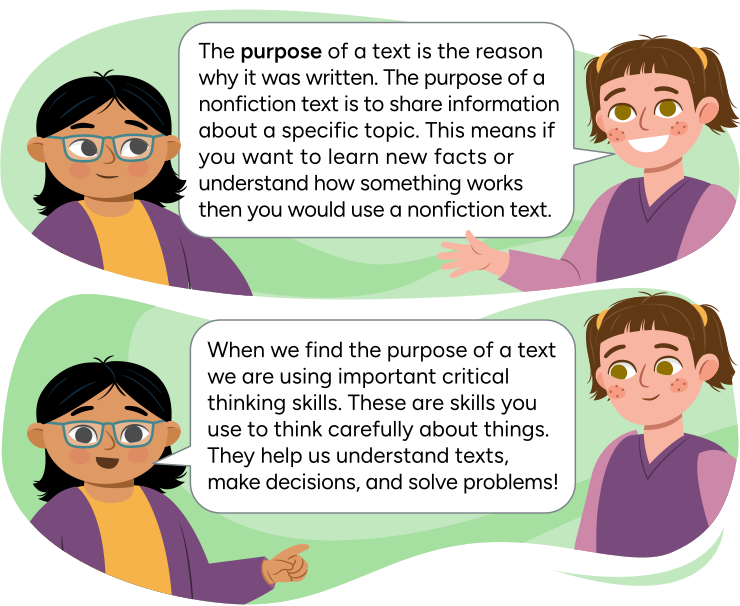
Clara and Ave are talking.
Clara says, "The purpose of a text is the reason why it was written. The purpose of a nonfiction text is to share information about a specific topic. This means if you want to learn new facts or understand how something works then you would use a nonfiction text."
Ava says, "When we find the purpose of a text we are using important critical thinking skills. These are skills you use to think carefully about things. They help us understand texts, make decisions, and solve problems!"
Nonfiction text features
Nonfiction texts have nonfiction text features. These are clues that show the important information in a nonfiction text.
This means that nonfiction text features have two jobs:
- To help you to identify that the text is nonfiction
- To help you understand the most important ideas in the text
| Nonfiction Text Features | Definitions |
|---|---|
| Special font | Words that are important are often underlined, written in bold, or written all in capital letters. |
| Title | Informs the reader what the entire section is about. |
| Headings | Tells the reader what smaller parts of the section is about. |
| Charts, diagrams, graphs, pictures | Helps the reader explain the text using a visual tool. |
| Labels | Helps the reader locate important parts of a picture or illustration. |
| Captions | Short but key information written underneath or near a photo or illustration. |
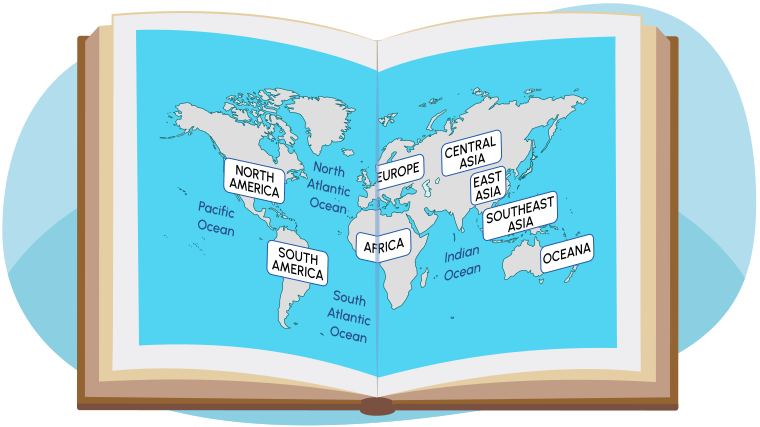
| Maps | Shares information that has to do locations (or where to find things in the world). |
| Table of contents | Helps the reader know which pages topics can be found on. |
| Glossary | A list of words and their definitions so the reader can learn what the words mean. |

Student Success
Think
Finding the most important ideas in a text is called evaluating information.
Let’s think about the word evaluate. Do you notice any parts of this word that might help you understand its meaning?
Press Possible Answer to learn more.
The meaning of this word comes from the root word “value” which means something that is important.
When we evaluate information, we are deciding its value or importance.

Student Wellness
Take a break!
Nonfiction text feature definitions
Examine the following example of nonfiction text features, followed by their definitions.
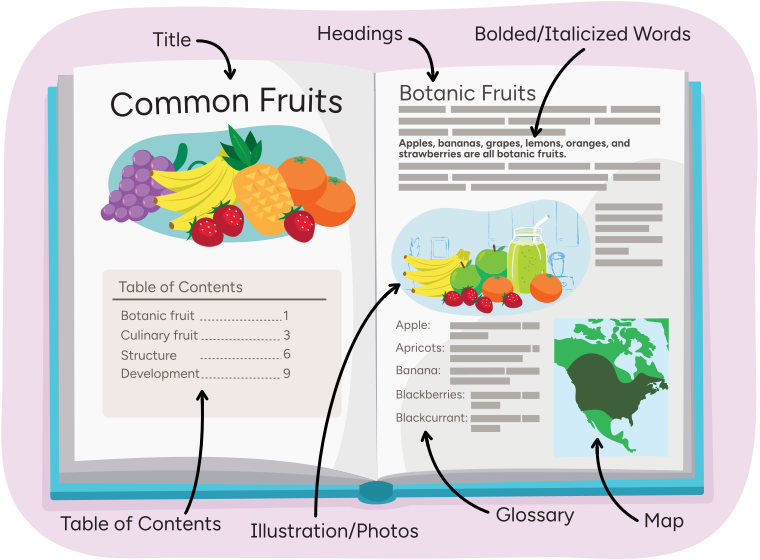
Nonfiction book with different text features. The features are the title, a table of contents, headings, bolded words, italicized words, illustrations, photos, a glossary, and maps.
Examine the following chart and graphics for definitions of some nonfiction text features.
Access the following Nonfiction Text Features to download a copy for reference.
| Nonfiction text features | Definition |
|---|---|
| Special font | Words that are important are often underlined, written in bold, or written all in capital letters. |
| Title | Informs the reader what the entire section is about. |
| Headings | Tells the reader what smaller parts of the section are about. |
| Charts, diagrams, graphs, pictures | Helps the reader explain the text using a visual tool. |
| Labels | Helps the reader locate important parts of a picture or illustration. |
| Captions | Short but key information written underneath or near a photo or illustration. |
Maps |
Shares information that has to do locations (or where to find things in the world). |
| Table of contents | Helps the reader know which pages topics can be found on. |
| Glossary | A list of words and their definitions so the reader can learn what the words mean. |
Press the Activity button to access Nonfiction Text Features.
Text feature detective
Let’s explore this nonfiction text about fossil fuels.
How many nonfiction text features can you find? Why do you think the author used them?
Press Student Tip to learn more.
Use the Nonfiction Text Features Definitions to help you with this activity.
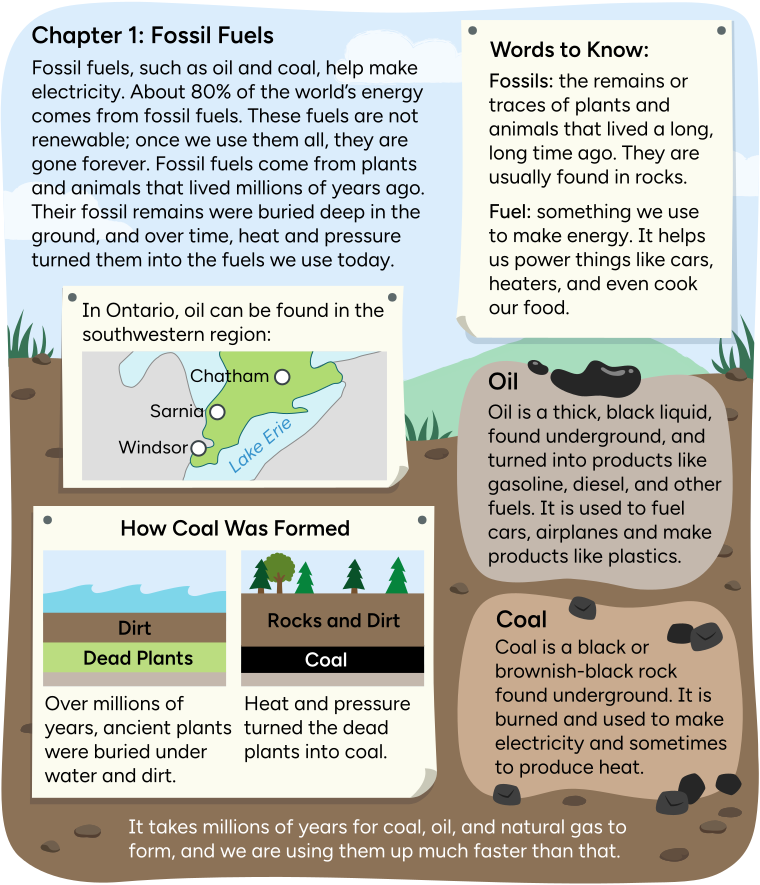
A nonfiction infographic with text features including a title, headings, bolded words, illustrations, a glossary, and a map.
The title is 'Chapter 1: Fossil Fuels.'
The first section says, 'Fossil fuels help make the electricity we need to use many machines in our lives today. We use them to heat our homes and power our cars. About 80% of the world's energy comes from fossil fuels. These fuels are not renewable, which means that once we use them all, they are gone forever. Fossil fuels come from plants and animals that lived millions of years ago. Their fossil remains were buried deep in the ground, and over time, heat and pressure turned them into the fuels we use today.'
The second section is a map with the caption, 'In Ontario, oil can be found in the southwestern region:' The map shows the location of Windsor, Sarnia, and Chatham, which are near Lake Erie in Ontario.The third section is titled, 'How coal was formed' and has two illustrations. The first illustration shows different layers of earth under water, labelled 'dirt' and 'dead plants.' The caption says, 'Over millions of years, ancient plants were buried under water and dirt.
'The second illustration is layers of earth under trees, labelled 'rocks and dirt' and 'coal.' The caption says, 'Heat and pressure turned the dead plants into coal.'
The glossary is bolded and titled, 'Words to Know:' and says, 'Fossils: the remains or traces of plants and animals that lived a long, long time ago. They are usually found in rocks.
Fuel: something we use to make energy. It helps us power things like cars, heaters, and even cook our food.'
The next section has the bolded heading, 'Oil' and says, 'Oil is a thick, black liquid, found underground, and turned into products like gasoline, diesel, and other fuels. It is used to fuel cars, airplanes and make products like plastics.'The next section has the bolded heading, 'Coal' and says, 'Coal is a black or brownish-black rock found underground. It is burned and used to make electricity and sometimes to produce heat.
The final section says, 'It takes millions of years for coal, oil, and natural gas to form, and we are using them up much faster than that.'

Did You Know?
Did you know?
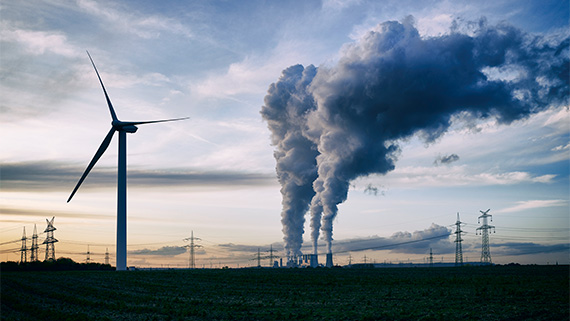
We use fossil fuels for many things like transportation, fueling factories, and making things like paper and plastic. Once fossil fuels are used, they cannot be replaced and are gone forever.
Complete the first two columns of the Nonfiction Text Features Chart in your notebook or using the following fillable and printable document.
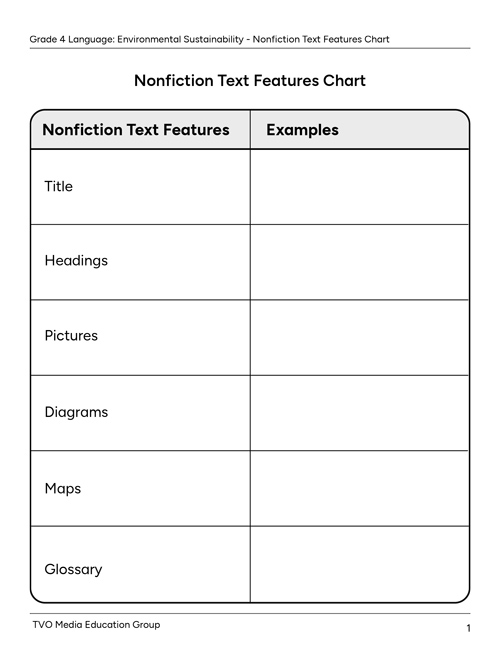
Press the Activity button to access the Nonfiction Text Features Chart.
Activity(Opens in a new tab)Press Sample Answer to learn more.
| Nonfiction text features | Examples from fossil fuels text | How did this feature help you better understand the text? |
|---|---|---|
| Title | Chapter 1: Fossil Fuels | |
| Headings | How Coal Was Formed, Words to Know, Oil, and Coal | |
| Pictures and Diagrams | 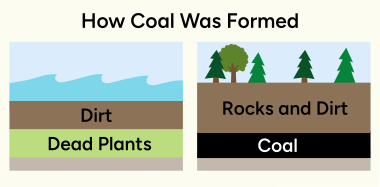 |
|
| Maps | 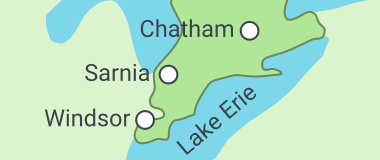 |
|
| Glossary |
Words to know:
|
Complete in your notebook or using the following fillable and printable document.
Press the Activity button to access the Nonfiction Text Features Chart.
How does each feature help you understand the text?
Each text feature has a specific purpose in nonfiction texts.
For example, the heading, "Chapter 1: Fossil Fuels," tells the reader that this part of the text belongs to the first chapter of a book that has information about fossil fuels.
Now that you have practiced identifying nonfiction text features, think about how each feature helps you understand the text.
Return to your Nonfiction Text Features Chart template to complete the third column labelled, “How this feature helped me understand the text.”
You can also record your ideas using another method of your choice.
Press Possible Answer to compare the answers with your own.
| Nonfiction text features | Examples from Fossil Fuels Text | How This Feature Helped Me Understand the Text |
|---|---|---|
| Title | Chapter 1: Fossil Fuels | Before reading the text, the heading shows what information will be shared. |
| Headings | How Coal Was Formed, Words to Know, Oil, and Coal | The subheadings organize the information and make the text easier to read. |
| Pictures and Diagrams | 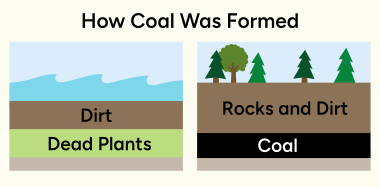 |
Captions and pictures help explain information and keep you interested. |
| Maps | 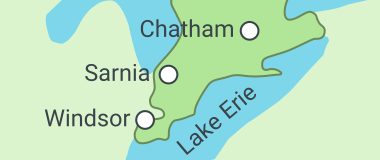 |
Maps can be used to locate where things are found and better understand information. |
| Glossary |
Words to know:
|
Definitions can be read before exploring a text to help you understand new any new information. |
Complete in your notebook or using the following fillable and printable document.
Press the Activity button to access the Nonfiction Text Features Chart.
Let’s build our skills!
An important nonfiction text feature is headings and subheadings. All types of titles, including headings and subheadings, need to be capitalized.
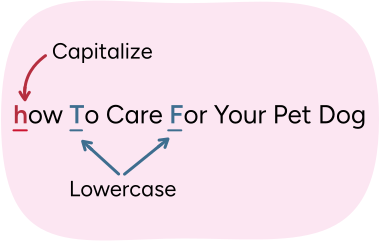
A sample heading with incorrect capitalization. The heading says, 'how To Care For Your Pet Dog.' A arrow points out that the 'h' in 'how' should be capitalized. Two arrows point out that the 'T' in 'To' and the 'F' in 'For' should be lowercase.
Rules for capitalizing titles
- Always capitalize the first and last words. For example: “How to Care for Your Pet Dog”
- Capitalize major words in the title (nouns, pronouns, verbs, adjectives, and adverbs). For example: “How to Care for Your Pet Dog”
- Do not capitalize small words unless they are the first or last word. For example, in the title Harry Potter and the Goblet of Fire, notice how the small words are not capitalized.
Let’s practice!
Choose the heading with the correct capitalization and place the cards into categories that best match. Use the arrow buttons to navigate between cards.
Cursive practice
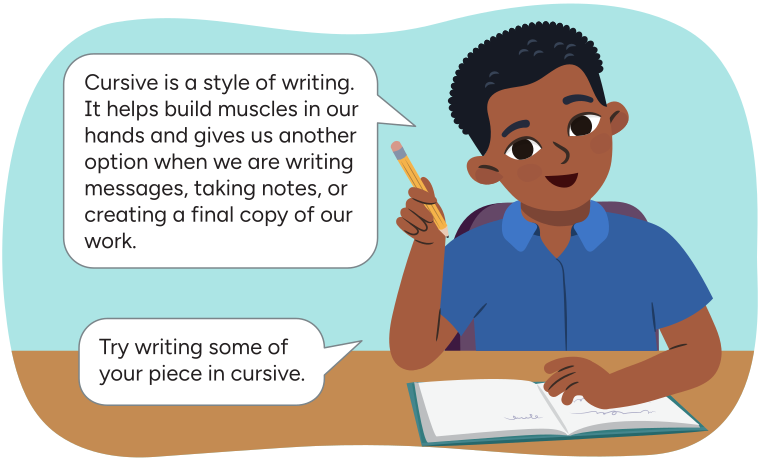
Arthur says, 'Cursive is a style of writing. It helps build muscles in our hands and gives us another option when we are writing messages, taking notes, or creating a final copy of our work.Let's practice writing a few words in cursive.'
| and | about |
already |
animals |
Tips for cursive letters

- When we write in lowercase, we always begin at the bottom.
- When we write in uppercase we can start from the top or the bottom.
- Try to keep the pencil on the page until you are done the word.
- Create a finger space before you continue to the next word.
- Try to press gently as you write so that your hand can move easily across the page.
- Take your time to make sure that you are writing clearly and evenly.
Review your learning
Select the correct answer, then press Check Answer to see how you did.
Extend your learning
Now that you have learned about nonfiction text features, you might start noticing them in nonfiction texts in other school subjects or everyday life.
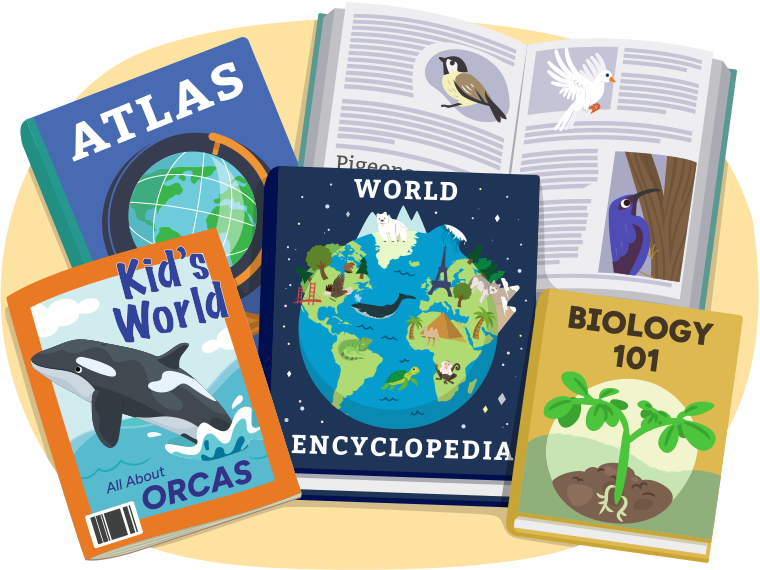
For the next part of this activity, you are going to select a nonfiction text of your choice.
Press Hint to learn more.
Here are some examples of nonfiction texts that you might already have explored. Always ask a trusted adult about exploring any texts listed below.
- A school subject textbook
- A webpage that shares facts and information about a specific topic
- Digital magazines
- Online encyclopedias
- A world atlas
After selecting a nonfiction text of your choice, identify the nonfiction text features you notice and explain how they help you understand the text.
Press Hint to learn more.
Not all nonfiction text will include all text features.
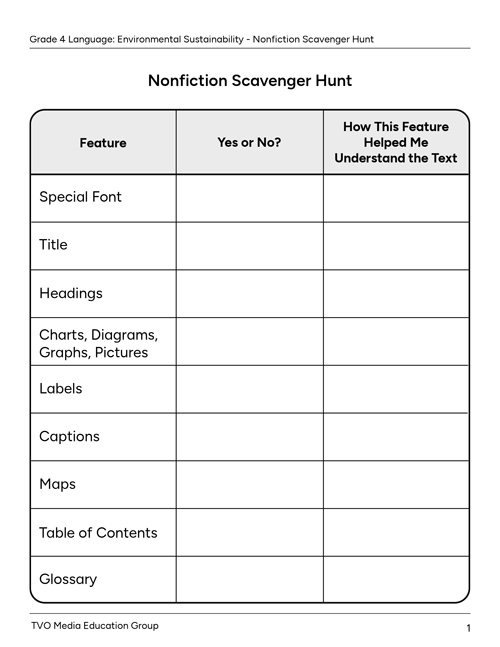
Complete the fillable and printable Nonfiction Scavenger Hunt in your notebook or using the following document. If you would like, you can use speech-to-text or audio recording tools to record your thoughts.

Pause and Reflect
Pause and reflect
Use the following questions to reflect on your learning. You can record your responses using a method of your choice.
- How do text features help you better understand a nonfiction book?
- What are three different text features you use the most? Which ones do you use the least? Explain your thinking.
Reflection
As you read through these descriptions, which sentence best describes how you are feeling about your understanding of this learning activity? Press the button that is beside this sentence.
I feel...
Now, record your ideas using a voice recorder, speech-to-text, or writing tool.