Learning goals
We are learning to…
- analyze and explain how the knowledge and skills developed in this grade support learning in various subject areas and in everyday life
- use precise and descriptive word choice, a variety of sentence types, and the active or passive voice as appropriate during formal and informal communication, to support audience comprehension
- identify the narrator’s point of view, including first, second, or third person, in a variety of texts, providing evidence, and explain how using an alternative point of view would change each story
- identify the point of view, perspectives, and bias conveyed in their texts, and explain how their messages might be interpreted by audiences with different perspectives
Success criteria
I am able to…
- identify first, second, and third (limited or omniscient) point of view in a text
- identify an author’s perspective on sustainability and provide text evidence to support my answer
- write a letter about sustainability, edit and revise for word choice, sentence types, and voice, and share that letter orally focusing on reading fluency
- reflect on my own sustainable practices and how I can contribute to a more sustainable future

What is sustainability?
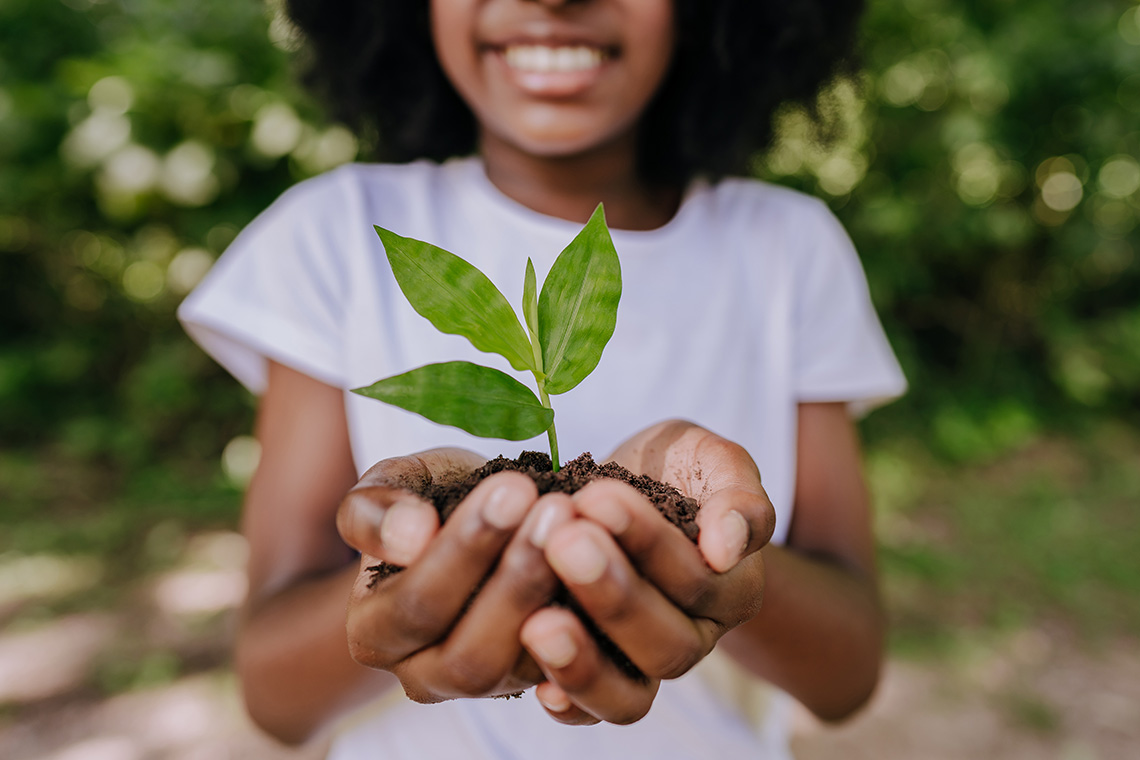
Sustainability is the idea that humans must interact with the environment in a way that ensures there will be enough resources left for future generations.
Natural resources, such as water, food, plants, and minerals, all come from the environment, and if we continue to overconsume those resources, Earth will not be able to sustain us. Similarly, Earth will not be able to sustain us if we don’t treat it properly and take care of it. This all comes down to sustainable practices!
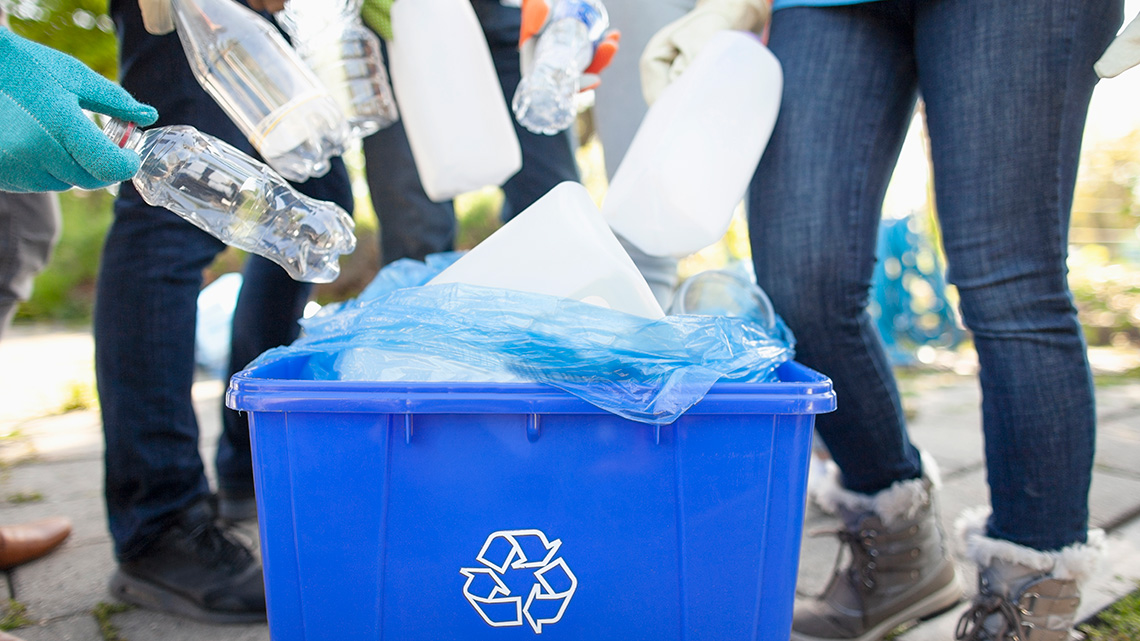
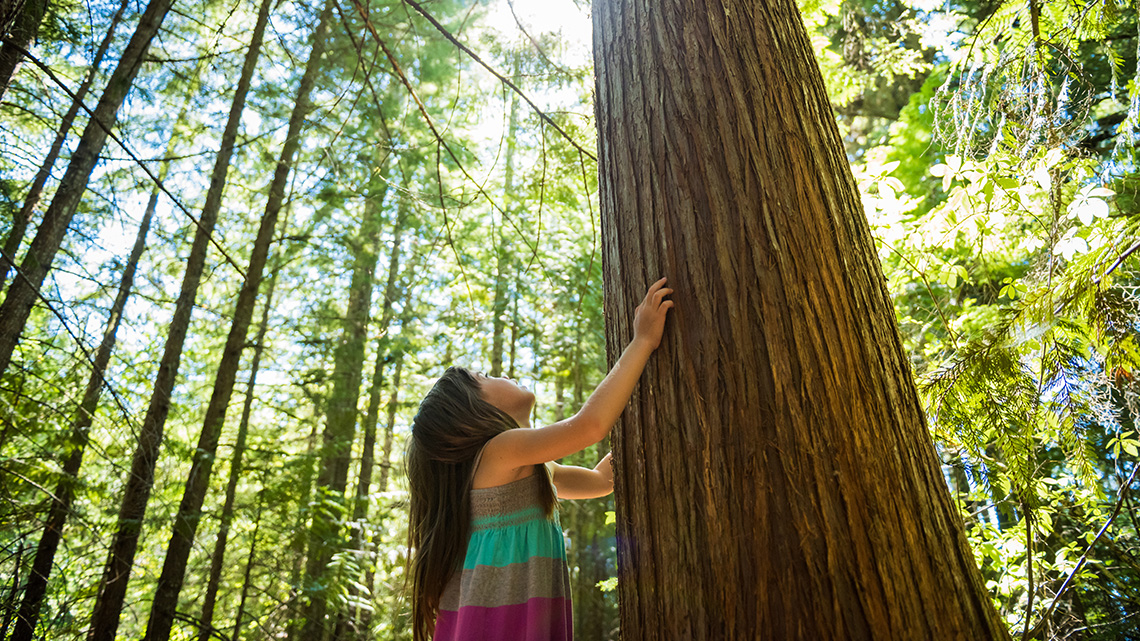
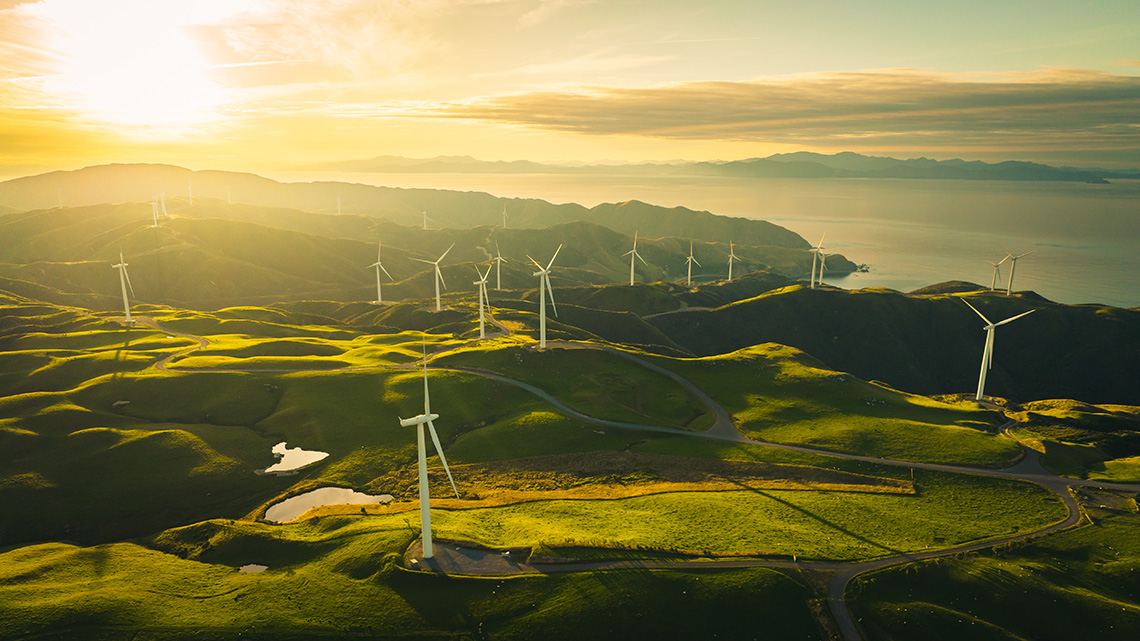
Explore the following carousel of images. In your notebook, or another method of your choice, record ideas for sustainable practices.


If possible, share your list with someone else and compare. Now, compare your ideas with the list below.
Press Possible Answers button to learn more.
You may have recorded ideas, such as:
- reduce, reuse, recycle
- eliminate the use of single-use plastics
- consider food sources (i.e., locally grown, no pesticides)
- eco-friendly packaging, materials, clothing
- renewable energy sources (i.e., solar panels, wind turbines)
- electric cars
- no more burning of fossil fuels
- community gardens
- connecting with nature/taking care of nature
- planting trees
- sustainable agricultural methods
In this learning activity you will be exploring perspectives on sustainability. Let’s dive in!
Exploring point of view
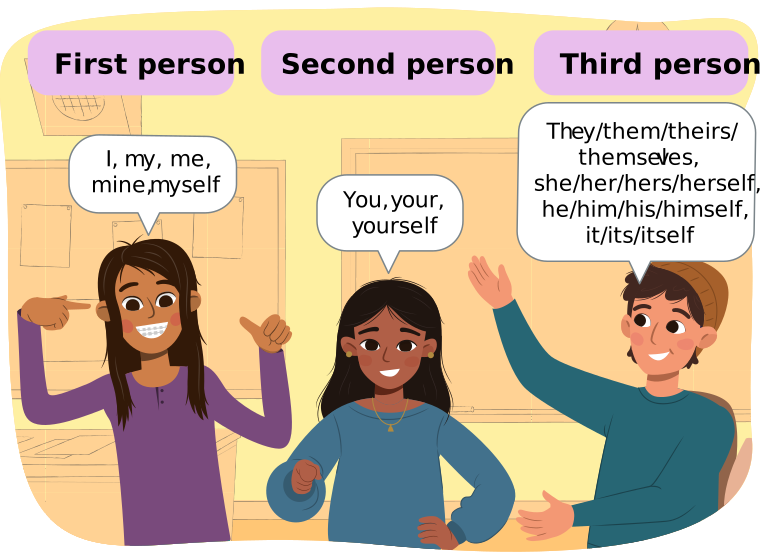
In both fiction and non-fiction texts, the story is always told from a specific point of view. This allows you to ask yourself: who is telling the story?
Begin by exploring the following tabs that explain these different points of view, and the keywords that you can use to help you determine which point of view is being used.
Press the following tabs to find out more.
The text is told from the point of view of one of the characters, usually the main character.
Keywords: I, me, we, my, our(s)
The author or narrator is telling the story to you, the reader.
Keywords: You, your(s)
The narrator is telling the story but is not part of it. It focuses on the thoughts and feelings of one character.
Keywords: He, she, it, they, them (or character’s names)
The narrator is telling the story, including the thoughts and feelings of all characters.
Keywords: He, she, it, they, them (or character’s names)
Explore the following sentences about sustainability and decide what point of view that story is being told from.
Analyzing perspectives on sustainability
Point of view and perspective are related but have different meanings.
The point of view refers to who is telling the story or what type of narrator is being used to guide the narrative.
The perspective is a particular attitude, opinion, or way of regarding a specific situation, event, or issue. It is shaped by personal experiences, beliefs, values, and backgrounds.
Examining the perspective and point of view of a text can help you to determine biases, assumptions, and motives that may influence the author’s viewpoint. It can help you to understand different perspectives about the same situation, event, or issue, and therefore make informed decisions.
In this section of the learning activity, you are going to be exploring three different text forms about sustainability: an Indigenous perspective, a business owner perspective, and an environmental advocate perspective.
As you explore, you are going to identify:
- The point of view the story is told from (first, second, third).
- The perspective the story is told from (i.e., who is the author, how do they feel about sustainability).
- Provide text evidence to support your ideas (how do you know they feel this way?)
You can use the fillable, printable chart, or another method of your choice to record your ideas. If you would like, you can use speech-to-text or audio recording tools to record your thoughts.
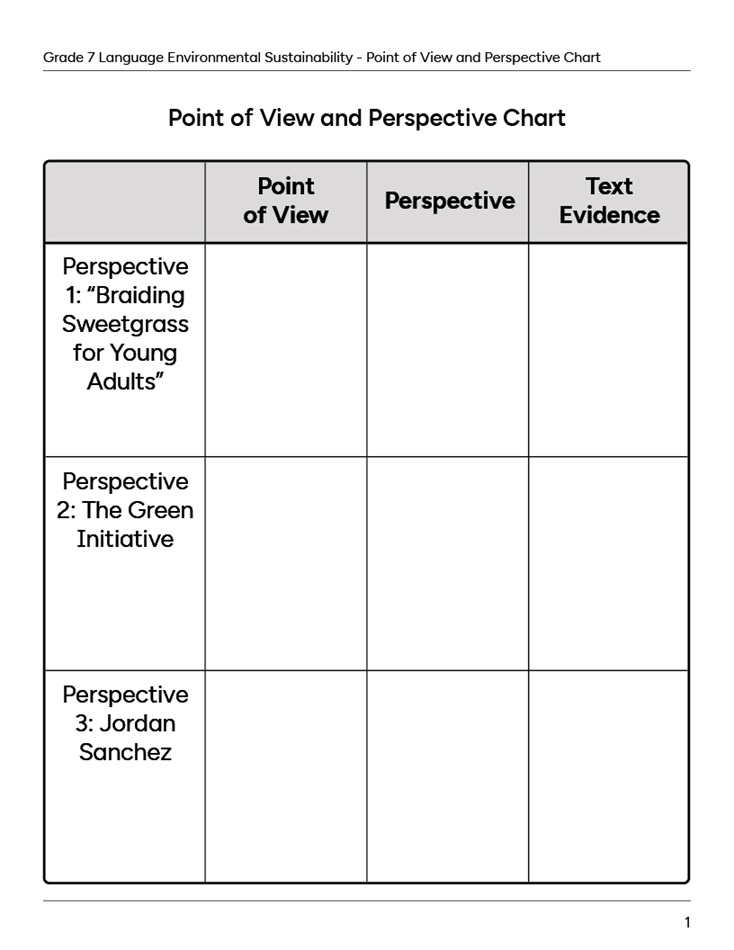
Press the Activity button to access the Point of View and Perspective Chart.
Activity(Opens in a new tab)Begin by exploring the example provided, based on one of the short texts you explored earlier.
Press Hint button to see an example.
The group of students, including Sam and Liv, both enrolled in the “Sustainable Futures” course at school because they wanted to make a difference. Together they decided to opt for public transportation each day, tend to a rooftop garden at school, and advocate for environmental justice. They both felt overjoyed to have a positive influence on others.
| Point of view | Perspective | Text evidence | |
|---|---|---|---|
| Example | Third person (omniscient) | Sam and Liv are two students who believe that by implementing changes at their school, they can make a positive difference towards a sustainable future. They feel they have the ability to positively influence others. |
The text states that “they wanted to make a difference” which shows they want to work towards a more sustainable future. The text says that they opted for “public transportation … a rooftop garden … and [to] advocate for environmental justice” which are all different ways they are practicing sustainability. The text also says that they “felt overjoyed to have a positive influence on others”. |
Perspective 1: Braiding Sweetgrass for Young Adults
Braiding Sweetgrass for Young Adults is a book that was adapted from Braiding Sweetgrass: Indigenous Wisdom, Scientific Knowledge, and the Teachings of Plants by Robin Wall Kimmerer. Kimmerer is a member of the Citizen Potawatomi Nation. She is a writer and scientist who believes in restoring relationships with the land and cultivating a more sustainable future.
Before you begin, explore the following vocabulary words that you will encounter in the excerpt.
Press Vocabulary button to learn more.
- Metaphor: a figure of speech in which a word or phrase is applied to something imaginatively but not literally applicable (e.g. "heart of gold")
- Gratitude: the feeling or quality of being grateful or giving thanks
- Reciprocity: behaviour in which two groups give each other help, or a mutual relationship
- Evolutionary: relating to the way in which living things develop over millions of years
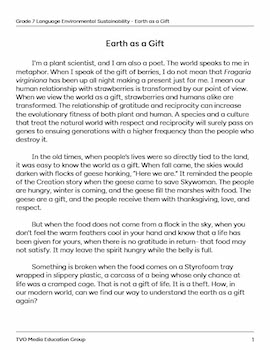
Explore the following except from Kimmerer’s novel Braiding Sweetgrass for Young Adults and consider her perspective on sustainability.
Let’s check!
Take a moment to reflect on what you have just read. Respond to the following true or false questions to check your comprehension.
Select the correct answer, then press Check Answer to see how you did.
Complete the first part of point of view and perspective chart, then check your answer below.
Press Answer button to learn more.
| Point of view | Perspective | Text evidence | |
|---|---|---|---|
| Perspective 1 | First Person | The perspective is Indigenous author Robin Wall Kimmerer’s. They believe that if we treat the Earth with respect and reciprocity, it will be able to sustain humans for future generations. There needs to be a mutual relationship between humans and the resources that the Earth provides to create a sustainable future. | In the text, the author wrote “The relationship of gratitude and reciprocity can increase the evolutionary fitness of both plant and human,” which indicates that a relationship with mutual respect will be mutually beneficial for the Earth and humans. |
Perspective 2: The Green Initiative
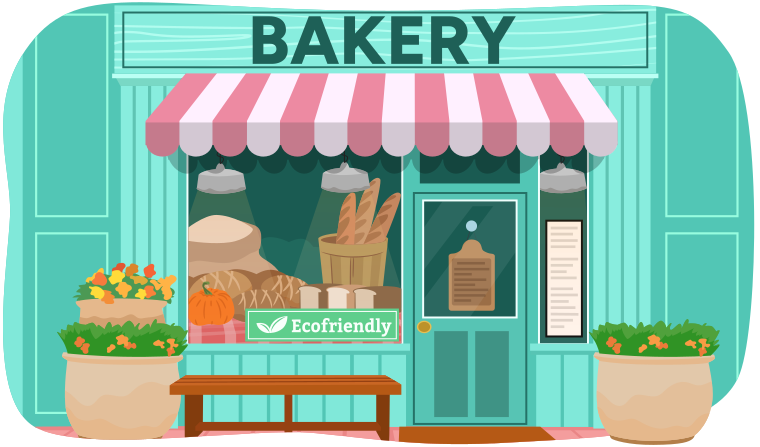
Read the following fictional story about a small family business. As you read, consider the perspective of the family on sustainable practices.
|
Once upon a time, in the bustling city of Kingston, Ontario, a small family owned a bakery called “Sweet Delights”. The bakery had been in the family for generations and was well known in the area for its delicious treats. As the city began to expand in size, and businesses started developing around the bakery, the family became concerned about the environmental impacts of their business and those around them. The youngest daughter, Emily, decided she needed to make a change and start a green initiative to combine both of her passions – baking and environmental conservation – for a more sustainable future. First, Emily did some research about sustainable business options that exists and presented the ideas to her family. Her family raised some concerns about the cost of making such big changes to their bakery. So, Emily decided to fundraise! Once she was finished fundraising, and her family agreed to some changes, they invested first in energy-efficient lighting and appliances. Not only will this reduce energy consumption, contributing to sustainability, but her family realized it would also lower their utility bill. Then, Emily began to investigate where the products they used for their baked goods, and looked for more locally grown and sustainable ingredients where possible. She was then supporting nearby farmers and reducing carbon emissions associated with transporting goods from far away. Lastly, Emily asked her family about eco-friendly packaging made from recycled materials. At first, her family disagreed because the initial cost was so much. However, when Emily explained that the customers could bring back their reusable containers for takeout orders, they began to consider it. Emily partnered with a local organization to sell unsold baked items to those in need at a reduced price. This cut down on food waste, supported those in the community, and generated extra income for their business. Despite the initial concerns about the additional costs associated with sustainable measure, it was soon discovered there were long term benefits for the bakery and the environment. Once the word got out about Sweet Delight’s changes, other businesses started to take notice and implementing sustainable measures too. In the end, Emily realized that embracing sustainability wasn’t just about reducing the bakery’s environmental impact, but also about creating a better future for her community and future generations. |
|---|
Press the Activity button to access the The Green Initiative document.
Take a moment to reflect on what you have just read. Complete the following sorting activity to check your comprehension.
Complete the point of view and perspective chart for this text, then check your answer below.
Press Answer button to learn more.
| Point of view | Perspective | Text evidence | |
|---|---|---|---|
| Perspective 2 | Third person (limited) | The perspective is from a person or family who owns a business. When considering sustainable practices, a business owner must consider both the cost or investment and the benefits for themselves and the greater community. | The author mentioned there being concern over the initial cost of sustainable practices, “Her family raised some concerns about the cost of making such big changes to their bakery” and “her family disagreed because the initial cost was so much.” However, in the long run, these saved the business money and contributed to a sustainable future. This was clear when the author wrote, “Not only will this reduce energy consumption, contributing to sustainability, but her family realized it would also lower their utility bill” and “there were long term benefits for the bakery and the environment.” |
Perspective 3: Jordan Sanchez
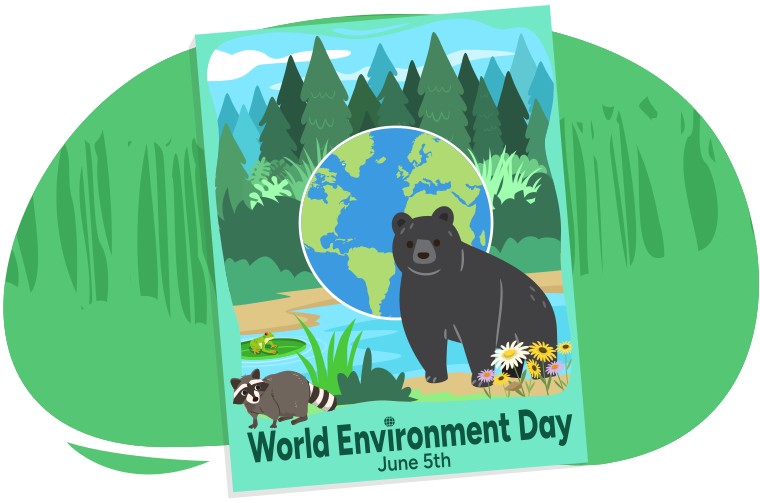
Jordan Sanchez is a Black and Hispanic woman of Puerto Rican, Congolese, and Togolese descent. Sanchez is concerned about environmental justice and wrote a World Environment Day poem to inspire people to take action and contribute to a more sustainable future for generations to come.
Check out Sanchez’s poem in the following video clip.
What do you think Jordan’s overall message was in the poem?
Press Answer button to learn more.
Now, complete the point of view and perspective activity, then check your answer below.
Press Answer button to learn more.
| Point of view | Perspective | Text evidence | |
|---|---|---|---|
| Perspective 3 | Second Person | In this poem, Jordan presents the perspective of an environmentalist who is advocating for change. She acknowledges the harm that has been done to the planet and encourages others to make a change. |
In the poem, she says “all we’ve known is to destroy” and shows hands crumpling a tree, which explains the harm humans have caused to the planet so far. In the poem, she emphasizes the importance of taking care of Earth when she says, “she is our only lifeline”, referring to Mother Earth. Lastly, she speaks of restoring Earth together when she says, “no one can do this alone” and “what will you stand for?” |

Social Emotional Learning
Social emotional
Great work! Take a break before continuing onto the next part!
My perspective on sustainability
In this section of the learning activity, you are going to be engaging in a few components of the writing process. First, you will draft a letter about sustainability. Then, you will edit the letter for word choice. Lastly, you will reflect on the letter that you wrote and your overall message.
Check out the following video to learn more about the writing process.
Drafting your letter
Based on what you’ve learned, your experiences, and your background knowledge about sustainability – your task is to write a letter that highlights your perspective on sustainability.
You could choose to write your letter to a peer, family member, teacher, the government, a business owner, or someone else. You may consider and use information that you’ve learned so far and incorporate these ideas with ideas of your own.
Before getting started on drafting the letter, complete the following grammar routine exercise to ensure that you’re aware of certain conventions for writing a formal letter.

Salutations
Did you know that letters can be addressed “To Whom It May Concern”?
This is a general greeting that is used when a letter is addressed to no one in particular and the writer is unsure who will read the letter.
However, it is considered formal to include a colon ( : ) after this phrase in a letter or memo salutation. You must capitalize every word in the phrase and follow it with a colon at the beginning of the letter.
Based on this, can you guess the correct salutation from the following options?
- To whom it may concern;
- Dear Whoever it may Concern:
- To Who It May Concern:
- To Whom It May Concern:
Press Answer button to check your answer.
As you create your piece, use the following checklist to guide your thinking.
Sustainability Letter
Editing your letter

Before your letter is ready to be rehearsed orally, you will be editing your work to include precise and descriptive words, varied sentence types, and an active voice to help support audience comprehension.
Let’s begin by exploring these concepts further, and then you can edit your letter to reflect them.
Press the following tabs to find out more.
Word choice is the careful selection of words use to communicate a message or establish a particular voice or writing style. Word choice plays a key role in establishing correctness, clearness, or effectiveness.
In this instance, you are going to be editing your letter to ensure you have the best words to express your ideas on sustainability. When writing, and speaking, you want to choose precise words that paint a vivid and accurate picture for the audience. You want to ensure that the words you are using clearly communicate your overall message.
Re-read your letter, and adjust words where needed. Consider the following when making your changes:
- Have you considered your audience? Will they understand all of the words you’ve included?
- Have you included precise words – active verbs, concrete nouns, specific adjectives – to help your readers and listeners understand your sentences?
- Do the words you are using convey your main ideas clearly?
- Are your words too vague or too complicated? What could you replace those words with?
- Do your words fit the style and tone of your letter?
- Are there any words that are repetitive and can be changed?
When writing a letter and sharing it orally, it is important to include a variety of different sentence types.
Let’s review the four sentence types:
- Declarative: a sentence that makes a statement.
- Imperative: a sentence that makes a request or gives a command or instruction.
- Interrogative: a sentence that asks a question.
- Exclamatory: a sentence that expresses strong emotion or feelings and ends in an exclamation mark.
Explore the following example of a short paragraph that includes the four sentence types. Can you find them?
Sustainability is essential for preserving our planet for future generations. We must all take action to reduce our carbon footprint and protect the environment. Have you considered the daily choices that you make and how they impact the planet? Have you considered what you might change? The progress we can make towards a sustainable future is truly inspiring!
Press Answer button to learn more.
Sustainability is essential for preserving our planet for future generations. (declarative)
We must all take action to reduce our carbon footprint and protect the environment. (imperative)
Have you considered the daily choices that you make and how they impact the planet? Have you considered what you might change? (interrogative)
The progress we can make towards a sustainable future is truly inspiring! (exclamatory)
Re-read your letter and ensure that you have included varied sentence types within your letter. You can look for clues like an exclamation mark to show an exclamatory sentence or a question mark to show an interrogative sentence.
There are two types of “voices” that can be used in both writing and speaking:
-
Active: the subject performs that action (verb) on the object
Subject + verb + object
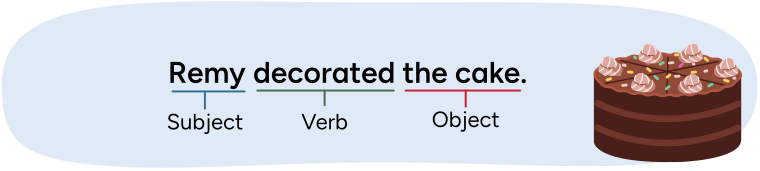
Description A sentence that says Remy decorated the cake. The word "Remy" is underlined and is the subject of the sentence. The word "decorated" is underlined and the verb of the sentence. The words "the cake" are underlined and is the object of the sentence. Next to the sentence is a chocolate cake.
-
Passive: the subject is being acted upon
Object + verb + subject
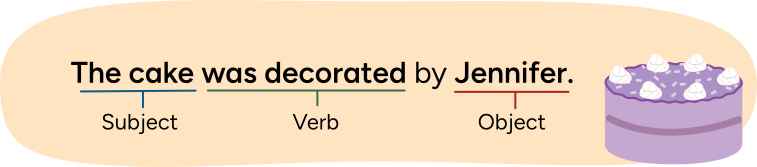
Description A sentence that says, "The cake was decorated by Jennifer". The words "The cake" is underlined and is the subject of the sentence. The words "was decorated" is underlined and is the verb of the sentence. The word "Jennifer" is underlined and is the subject of the sentence.
Check out the following video to learn more about the active and passive voice.
When you want your writing to be clear, persuasive, and concise, you often use an active voice.
Re-read your letter and look for sentences where you may have used a passive voice. Identify in those sentences who or what is performing the action and make that the subject when you rewrite it, then make changes from the passive to the active voice where necessary.
Press Hint button to learn more.
For example, you may have written a passive sentence like “more sustainable options should be implemented by businesses.” The object is “more sustainable options”, the verb is “implemented”, and the subject is “businesses.”
This sentence can be written actively by changing the order to subject + verb + object.
You could write “Businesses should implement more sustainable options.”
Now that you have made changes to your letter that will help make your ideas more understandable, get ready to share it orally!
Use the following Reading Fluency Routine to practise.
Fluency
Fluency is the ability to identify words correctly and read a text at an appropriate rate with ease, pace, automaticity, and expression. With proper phrasing and a focus on punctuation the reader will gain more meaning from the text.
Use the letter that you created about sustainability for this fluency activity. Re-read the letter several times, practicing your reading fluency. When you are reading, record yourself reading the passage, or share it with someone else, and use the checklist provided to self-assess your own fluency.
Fluency checklist
Based on the checklist, choose one area of fluency to focus on and set a goal for yourself. What strategies could you use to help you achieve this goal?
Putting it all together

Throughout this learning activity, you have had the opportunity to explore different perspectives on environmental sustainability. You also considered your own position on sustainability, and went through the process of drafting, editing, and reciting a letter that highlights your perspective on the topic.
Now that you have finished producing a letter and have a stronger overall understanding of how people perceive environmental sustainability, respond to the following questions in your notebook. You may also use another method of your choice.
- Why is it important to consider multiple perspectives on the same topic?
- How do you think your message and perspective is conveyed in the letter you completed? Do you think it could be interpreted differently than you intended?
- How did the drafting and editing process help to enhance the quality of your letter?
- Do you think there are any other perspectives that are still left to be examined?
- What will YOU do in your personal life to create a more sustainable future?
Reflection
As you read the following descriptions, select the one that best describes your current understanding of the learning in this activity. Press the corresponding button once you have made your choice.

I feel...
Now, expand on your ideas by recording your thoughts using a voice recorder, speech-to-text, or writing tool.
When you review your notes on this learning activity later, reflect on whether you would select a different description based on your further review of the material in this learning activity.