Learning goals
We are learning to…
- read informational texts for meaning and explore vocabulary connected to them
- apply critical thinking skills about issues and ideas connected to human rights
- use information from texts and persuasive language to influence our audience in our writing
- write formal letters with proper grammar and punctuation
Success criteria
I am able to…
- identify three or more human rights and explain them using real-world examples
- analyze information and explain my thoughts on different questions connected to human rights in a reflection journal
- draft a five-part formal persuasive letter with detailed supporting facts and properly punctuated greetings and transitions
- self-assess, edit, then publish my letter advocating for the human right to education using fluent cursive or typing skills
Reflecting on human rights
Have you heard the term human rights? This very important term will be the focus of this learning activity.

Reflection journal
In a notebook, or using another method of your choice, begin a reflection journal with your thoughts on these questions:
- What does the term “human rights” mean?
- Can you think of any examples of human rights?
As you work through this learning activity, you will find more “reflection journal” prompts. When you do, make sure to record your thinking in whatever format you choose for your reflection journal.
Examples of human rights
Examine the following flashcards. Each image represents a human right. Try to identify the human right before you flip the flashcard.
If these flashcards have changed or added to your understanding of human rights, add to the answers you have already recorded in your reflection journal.
Defining human rights
According to the United Nations, the term “human rights” refers to the rights and freedoms that belong to all humans everywhere in the world – regardless of race, sex, gender, nationality, religion, ethnicity, language, or any other status.

Pause and Reflect
Consider this question…
Why do you think it’s important to know about human rights?
In this learning activity, you will learn about some specific examples of human rights. You will also make connections to global communities, your local community, and the lived experiences of individuals.
What are human rights?
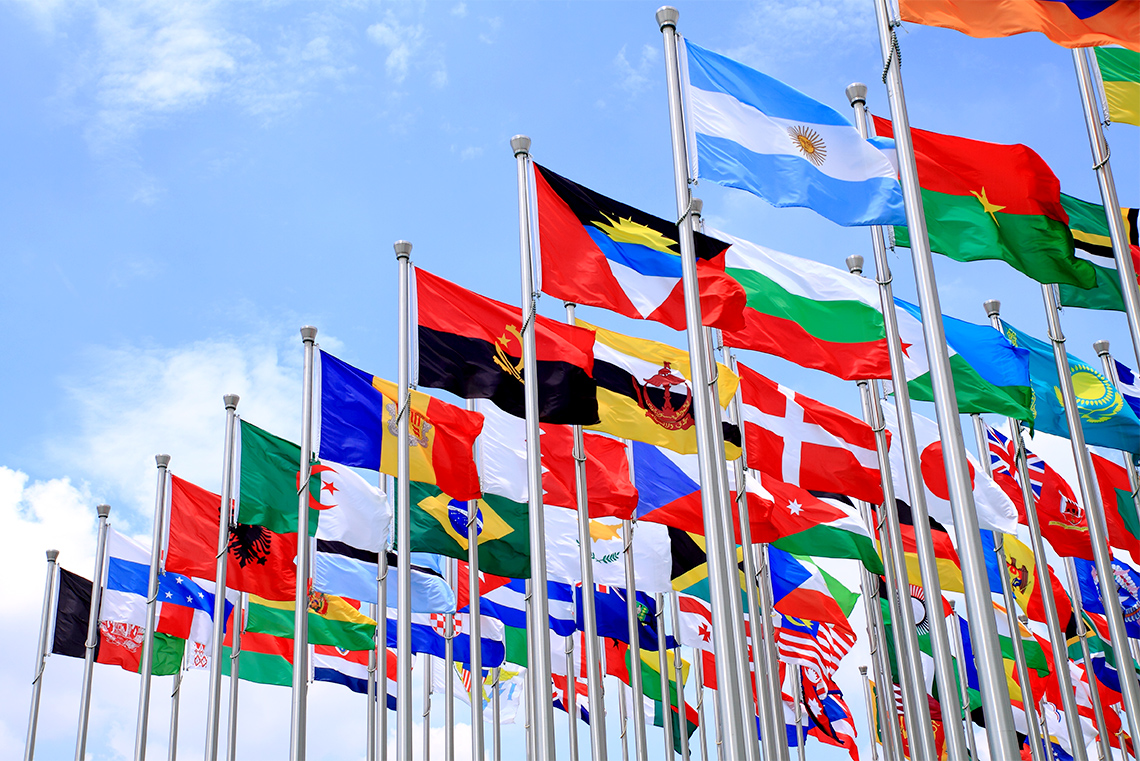
Human rights are the things that every human deserves to have simply because they are alive.
Human rights are universal , which means they belong to every human, and they should not change based on where in the world someone lives, what age they are, what their race is, what gender identity they have, or any other aspect of identity.
Human rights do not have to be earned, and they can’t be taken away. Sometimes, human rights are described as inalienable rights. Inalienable means something that cannot be transferred to someone else, given away, or taken away.
Unfortunately, it has taken a really long time for most of the world to develop a full and equitable understanding of what human rights are and who they apply to. For example, in Canada, women did not always have the same rights as men. It wasn’t until 1916 that Canadian women began to win the right to vote in government elections. A more recent example is Afghanistan, the only country in the world that still doesn’t allow girls to attend school after the primary level.
Universal human rights

The concept of “universal human rights” – rights for everyone everywhere – is much more recent. As global citizens, we care about equality and justice not just for ourselves, but also for others in our communities and around the world. To advocate for human rights, we first need to know about our rights and the rights of others, and how they came to be.
You may have noticed these vocabulary words: universal, inalienable, and equitable. Take a minute and add these terms to your vocabulary notebook. If you haven’t started a vocabulary notebook yet, now would be a great time to do so! Check out the following two examples of formats that you could use to get you started.

Vocabulary routine!
To understand a new word or term, it’s not enough for us to just read a definition. To really understand, our brains need to think about it in different ways.
Choose one of the following graphic organizers, or another method of your choice, to record and explore the terms universal, inalienable, and equitable.
This task will form part of your vocabulary notebook.
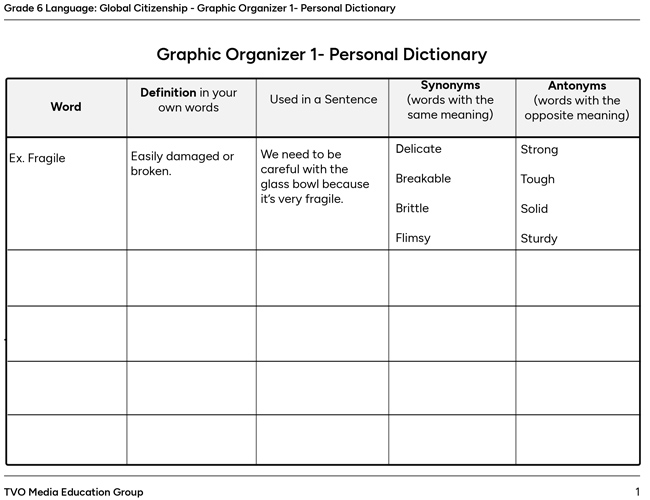
Press the Activity button to access the Graphic Organizer 1- Personal Dictionary.
Activity(Opens in a new tab)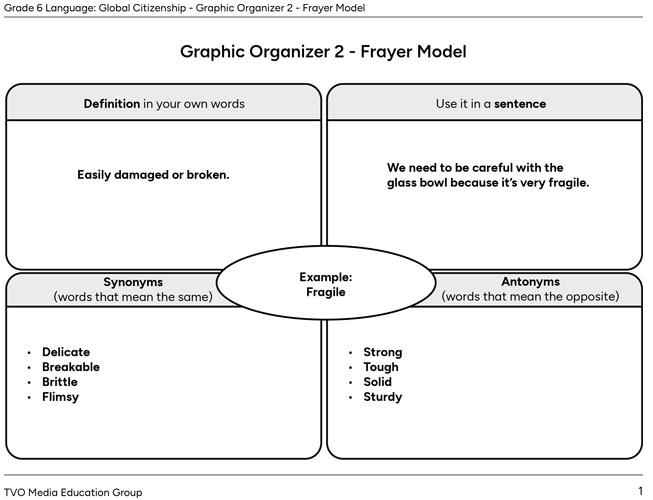
Press the Activity button to access the Graphic Organizer 2- Frayer Model.
Activity(Opens in a new tab)The Universal Declaration of Human Rights
Founded in 1945, the United Nations (UN for short) is an organization made up of political leaders from 193 countries and states of the world. It is the world’s largest intergovernmental organization, meaning many different governments work together to address concerns and issues across the world.
In 1948, the UN created a document called the Universal Declaration of Human Rights (UDHR for short). This document outlines the fundamental rights that all human beings are entitled to, and that are to be protected by all governments around the world. These are called human rights for short.
The articles
The Universal Declaration of Human Rights (UDHR) lists 30 separate rights that all humans all over the world should have. In the UDHR document, these 30 rights are called articles. Each article is assigned its own number from 1 to 30.
Let’s explore some of the articles from the UDHR. Please note: the wording used to describe each article is a simplified, student-friendly version of the original text.
Press the following tabs to find out more.
All humans are born free and equal. Everyone is worth the same and everyone has the same rights. Everyone is born with the ability to think and to know right from wrong and should act toward others in a friendly way.
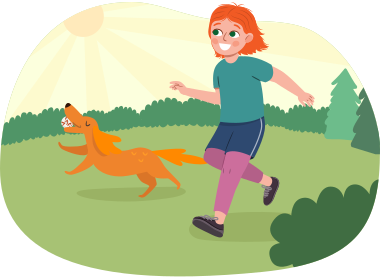
Everyone has the right to life, to live in freedom, and to feel they are safe.
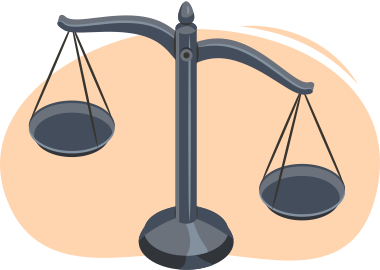
Everyone is to be treated equally by the law, with the same rules, and be given the same protection by the law. No one should be treated unfairly, and no one should encourage treating others unfairly.
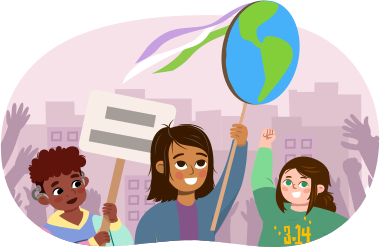
Everyone has the right to have their own thoughts and opinions and to say what they think. They can also share ideas and learn from others, no matter where they are or how they do it. They can express themselves how they choose.
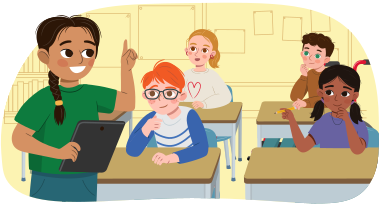
Everyone has the right to an education. Education should be required for all young children and should be free of charge. Older children and adults should have equal access to pick from more specialized kinds of schools for anyone who wants it and is able to do it.
Now you will consider a question connected to Article 26.

Student Success
Article 26
Why do you think it’s important for everyone to have an education?
When you have recorded your thoughts, check your answer by pressing the Possible Answer button.
Education helps a person learn to read, write, speak, and listen. Having a good education gives people a chance at better lives, and helps reduce poverty and hunger.
A closer look at education
In the world today, there are over 250 million children who are not in school.
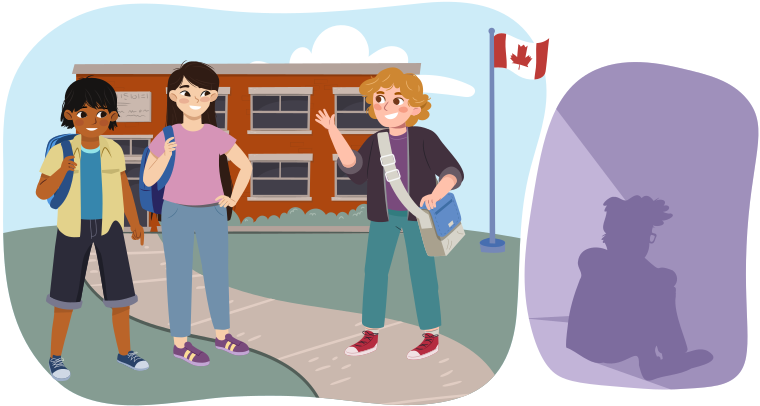
In the world today, one in four primary-aged children is not in school.
Let’s explore some of the reasons why children in the world may not be in school and why there is such a need for Article 26 to exist.
Press the following tabs to learn more.
Poverty prevents many children from being able to go to school and learn. It is the number one reason why many children are not in school.
Communities that are experiencing poverty often don’t have learning materials, teachers, or even locations they can use as schools. Children experiencing poverty have a harder time focusing and paying attention because of hunger. Families and caregivers who are experiencing poverty might not think that education is important. Instead, they might encourage children to work or leave the home to help with finances.
Research shows that if all children could go to school, it would help reduce poverty.
In many regions of the world, the closest school might be very far away, and transportation to help kids get there may be limited or not exist at all. Walking might also not be an option for some kids because of safety concerns or weather conditions. This makes it next to impossible for some children to physically get to school.
Across the globe, many barriers make it harder for girls than for boys to access education.
In some locations, it's really hard for girls to move around cities safely, which makes it tough for them to go to school. Child marriage also makes it hard for girls to get an education. Some families prioritize boys getting an education because they believe it's more important for them. And in some places, schools don't have clean washrooms or running water for girls to meet their needs connected to puberty.
Depending on where children live, there may not be a school or a space that could be used for learning. In some places where there are possible spaces or locations for learning, there may not be any washrooms or running water, which causes health concerns. In some parts of the world that do have school facilities, the classrooms may not be big enough to hold all the students, so the spaces become hot and overcrowded. It’s tough to learn in these conditions.
Providing help
Reflection journal
In a notebook, or using another method of your choice, answer the following questions:
- How do you think the Canadian government helps with global issues connected to human rights, such as children not being able to attend school?
- Why do you think it’s important for the Canadian government to get involved in issues like these?
If possible, share your thoughts with a partner.
The Government of Canada provides assistance related to different issues in Canada and around the world, based on what the most urgent needs are. These issues may be connected to safe drinking water, sanitation services, health care, food, shelter, and education. This usually means providing financial support to humanitarian organizations that are responding to the concern, such as United Nations agencies, the Red Cross, or non-governmental organizations (NGOs).
Being an advocate
Standing up for our rights and the rights of others is an example of advocating. Advocating is important because it can often lead to much-needed change.

Writing letters
One way to advocate is by writing a persuasive letter to your elected representatives in government asking them to take action on a particular issue. This is a formal method of communication that requires a professional tone and word choice.
Let’s explore an example of a persuasive letter written by student Gabby to her elected representative in government.
|
January 5, 2024 Dear Mrs. Davenport, My name is Gabby Y., and I consider myself a youth advocate for human rights. I am writing to you today to raise awareness and hopefully get your support in fighting for the rights of children everywhere. Firstly, did you know that many humanitarian support organizations report that there are more than 1 in 5 children in the world participating in child labour? On top of this shocking fact, many of these children are not paid for their work. Secondly, a lot of the work that these children do is considered unsafe and harmful to the health and well-being of a child. Children have the right to feel safe and cared for. They should not knowingly be put in unsafe situations by adults. Finally, because these children are working, that means that they are not in school. The Universal Declaration of Human Rights says that everyone has the right to an education and that young children in particular should have to go school to learn the basic skills and concepts they need to be successful in life. I ask that you think about the frightening facts I have listed. I urge you to consider what actions are in your power as a Member of Parliament and a caring citizen of the world. Please share this information and start making change. Thank you for your consideration in helping to make the world a better place. Sincerely, Gabby Y. |
Analyzing the letter
Now reread Gabby’s letter, and ask yourself the following questions:
- Does it have a formal or informal tone? How do you know?
- What can you tell about the person writing the letter, their message, and the recipient of the letter?
Once you have recorded your thoughts, press Analyzing Gabby’s Letter to see some ideas.
The letter has a formal tone. We know this because it is written in a structured way with very clear sections and paragraphs. It also uses formal language, such as the recipient’s title (Mrs. Davenport).
Gabby, the person writing the letter, is clearly very passionate about the topic and is trying to convince the recipient to help out. She uses persuasive language such as “I am writing to you today,” “frightening facts,” and “I urge you to consider.”
The recipient is clearly someone who is in a position of power and could offer help. Gabby refers to the person by a formal title (Mrs. Davenport), and uses formal language to communicate professionalism.
Persuading through a formal letter
Let’s learn more about how to format a formal letter.
Examine the following interactive image to learn about the five parts of a standard formal letter.
Good job! You now know how to format a letter. Now you’ll look at what to say, and how to say it.
Persuasive writing: Tips
Let’s explore some persuasive-writing tips and techniques!
Press the following tabs to learn more.
Present strong evidence such as facts. Readers are more likely to be convinced if your ideas are backed up with evidence. Consider starting each paragraph by listing a new fact using words like “Firstly,” “Secondly,” “Next,” “Finally,” or “Lastly.” These transitional words are followed by a comma.
Use relevant examples that are based on observations or the author’s experience.
Use persuasive (convincing) language, such as the following words and phrases:
| Persuasive words | ||
|---|---|---|
|
unquestionable |
phenomenal |
vivid |
|
Persuasive phrases Note: Many of these examples are transitional phrases, meaning they help the flow from one paragraph or thought to another. Always place a comma after a transitional word or phrase. |
||
|
|
|
Press the Activity button to print or download the Persuasive Language table for reference.
Let’s get writing!
Now that you are familiar with letter-writing and some articles of the Universal Declaration of Human Rights, you are going to write your own letter.
Write a letter to a Member of Parliament or other government official asking them to take action to support the human right to education.
Your persuasive letter should follow a formal letter-writing format with at least three body paragraphs. It should include explanations of why the human right to education is important and reasons why the government needs to take more action to support this human right.
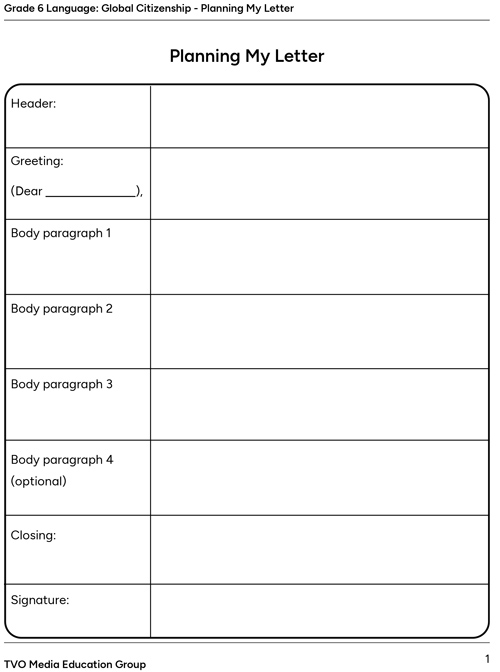
Draft your letter in a notebook or using another method of your choice. If you choose, you may use the graphic organizer Planning My Letter to organize your thoughts. This document is fillable and printable.
Putting it all together
In this learning activity, you learned about what human rights are, and why they are so important. As a global citizen, you need to understand your rights and those of other people. You also practised advocating for human rights by writing a formal persuasive letter.
To consolidate your learning, use the following checklist to assess the draft of your letter before you complete the finished product.
Complete the fillable and printable Checklist: Draft of Letter in your notebook or using the following document. If you would like, you can use speech-to-text or audio recording tools to record your thoughts.
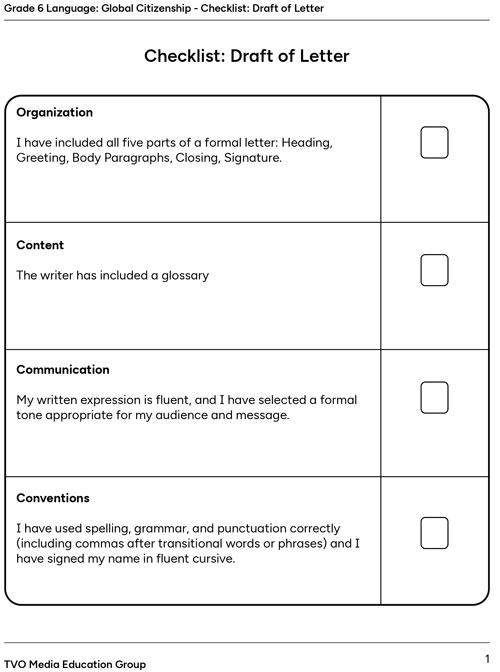
Make any edits you need to meet all of the criteria in the checklist. Consider asking someone to proofread your letter and suggest edits.
Letter: Final copy
When you have finished your edits, create the final copy of your letter by writing it in cursive or typing it up. Sign your name in cursive.
Cursive practice
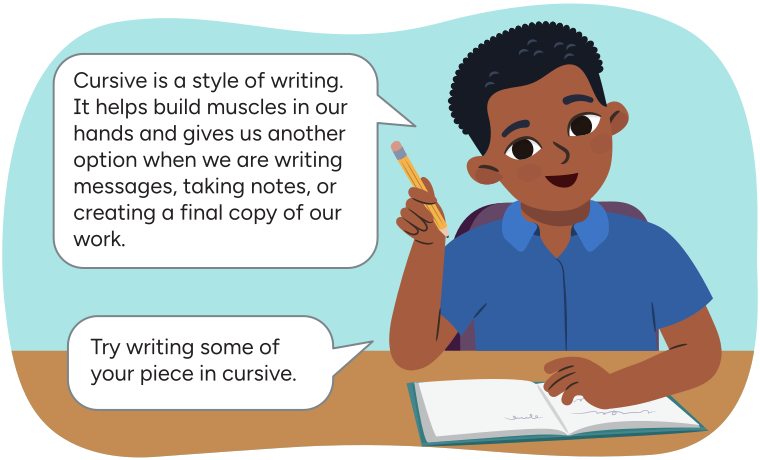
Arthur saying: Cursive is a style of writing. It helps build muscles in our hands and gives us another option when we are writing messages, taking notes, or creating a final copy of our work. Try writing some of your piece in cursive.
Let’s review cursive writing!
Check out the following animation of how the word “universal” is written in cursive, then review the tips for cursive writing.
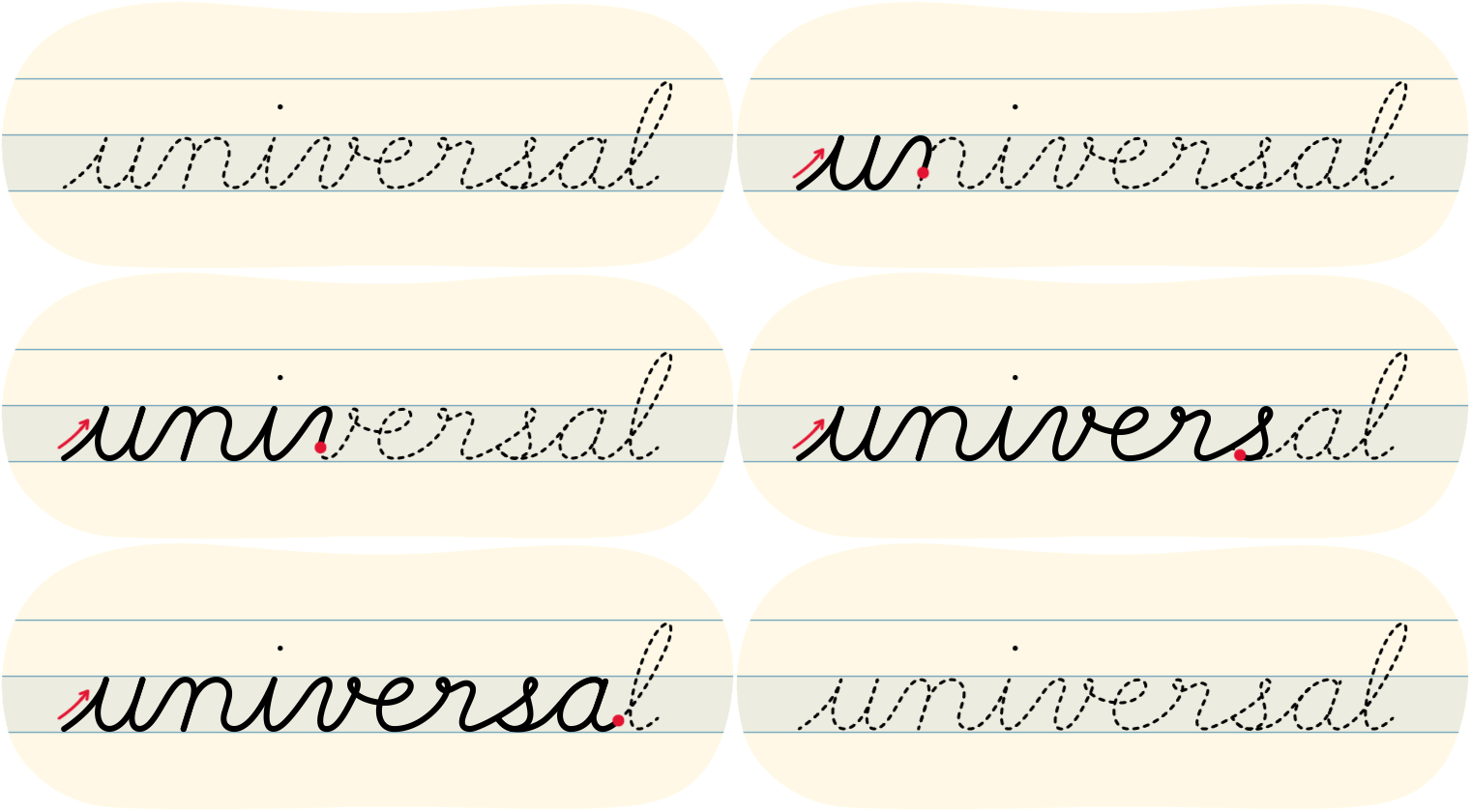
Tips for cursive letters
- When we write in lowercase, we always begin at the bottom
- When we write in uppercase we can start from the top or the bottom
- Try to keep the pencil on the page until you are done the word
- Try to press gently as you write so that your hand can move easily across the page
- Take your time to make sure that you are writing clearly and evenly
Left-handed tips for cursive writing

Explore the video on Left-handed tips to learn more.

Typing Practice
Typing is a great skill to develop! When we need to use a computer or tablet keyboard, knowing how to type helps us:
- take notes
- respond to messages
- create final drafts of our work
Explore the following image to see what fingers are used to type each letter or number.
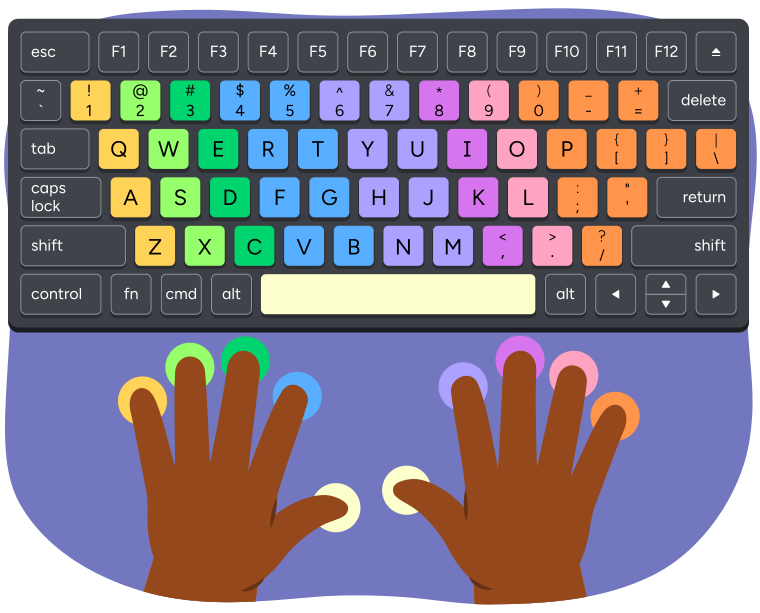
A keyboard and hands showing which fingers are used to press each key when typing.
The left pinky finger presses the keys 1, Q, A, and Z.
The left ring finger presses the keys 2, W, S, and X.
The left middle finger presses the keys 3, E, D, and C.
The left index finger presses the keys 4, 5, R, T, F, G, V, and B.
The left or right thumb presses the space bar.
The right index finger presses the keys 6, 7, Y, U, H, J, N, and M.
The right middle finger presses the keys 8, I, K, and comma.
The right ring finger presses the keys 9, O, L, and period.
The right pinky finger presses the keys 0, minus, equal, P, open bracket, closed bracket, backslash, semicolon, apostrophe, and forward slash.
We use specific muscles in our hands to type! It’s important to practise so that it becomes easier to type correctly without putting too much pressure on our hands and our wrist.
For additional typing practice, check out the game “Keyboard Climber 2”!

Reading fluency routine
As we have learned throughout this learning activity, one way of taking action as a global citizen is by speaking up and using our voice to share information, spread awareness, or advocate for ourselves, other people, and/or causes.
Practise using your voice now by reading your persuasive letter as if you were delivering a speech. You could read it to another person, practise reading it in front of a mirror, or record your voice and listen to it afterward.
Use the following checklist to assess your reading.
Checklist: Reading fluency
Does your reading have the following?
Reflection
As you read through these descriptions, which sentence best describes how you are feeling about your understanding of this learning activity? Press the button that is beside this sentence.

I feel...
Now, record your ideas using a voice recorder, speech-to-text, or writing tool.