Learning goals
We are learning to…
- apply language and literacy skills to cross-curricular learning and make personal connections to texts
- demonstrate an understanding of a variety of explicitly taught words and phrases
- identify and construct various sentence types and forms and show our understanding of parts of speech in sentences
- create a variety of texts
Success criteria
I am able to…
- communicate my understanding of mental health and anxiety and ways to support positive mental health in myself and others
- work with specific vocabulary on the topic of mental health in a variety of ways such as in a vocabulary notebook
- create sentences that use correlative conjunctions to connect words and ideas that are related
- draft a journal response or letter on the topic of mental health that expresses my thoughts, feelings, and opinions
Exploring mental health
What is mental health?
Check out the following video clip to start thinking more about this question.
Think about…
- What questions did the video ask?
- Do you know any of the answers to them?
- What is mental health?
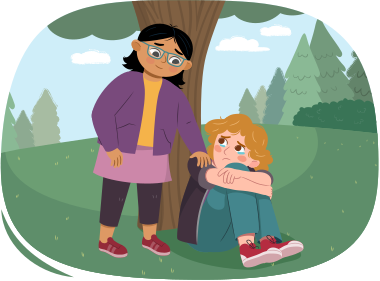
Mental health is a term used to describe how good someone feels overall, or their social and emotional well-being. It involves taking care of our brain and emotions like we take care of our bodies. It’s about being happy, handling stress, and dealing with problems.
When our mental health is good, we feel positive and can manage our emotions. If we're feeling really sad, worried, or stressed a lot, it’s important to talk to someone and get support. Taking care of our mental health helps us feel better and handle life’s ups and downs.
A mental health disorder or illness is something a doctor diagnoses. Even if someone has a diagnosed mental illness, they can still be mentally healthy if they work with their doctors to take care of themselves and feel well overall.

Brainstorm
Brainstorm
Brainstorm some ways that someone might take care of themselves and their mental health.
Record your thinking in a notebook or using another method of your choice. If possible, share your thoughts with a partner.
Building vocabulary is important
Throughout this learning activity you will explore many vocabulary terms such as the term mental health in the Minds On section.
Whether you’ve heard these terms before or not, working with important vocabulary or “key terms” is a very useful tool in understanding new topics and texts.
To understand a new word or term, it’s not enough for us to just read a definition. To really understand, our brains need to think about it in different ways.
Choose one of the following graphic organizers, or another method of your choice, to record the vocabulary terms as you come across them to explore more about their meanings.
Start with the term mental health.
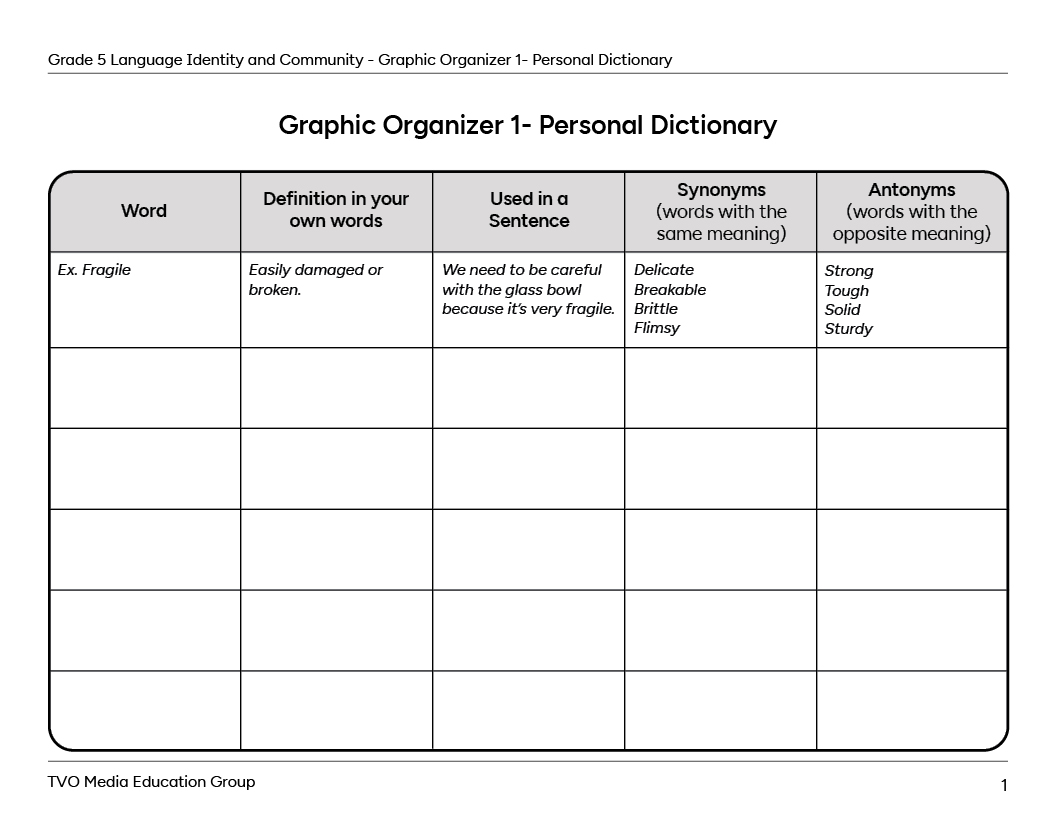
Press the Activity button to access the Graphic Organizer 1 - Personal Dictionary.
Activity (Open PDF in a new tab)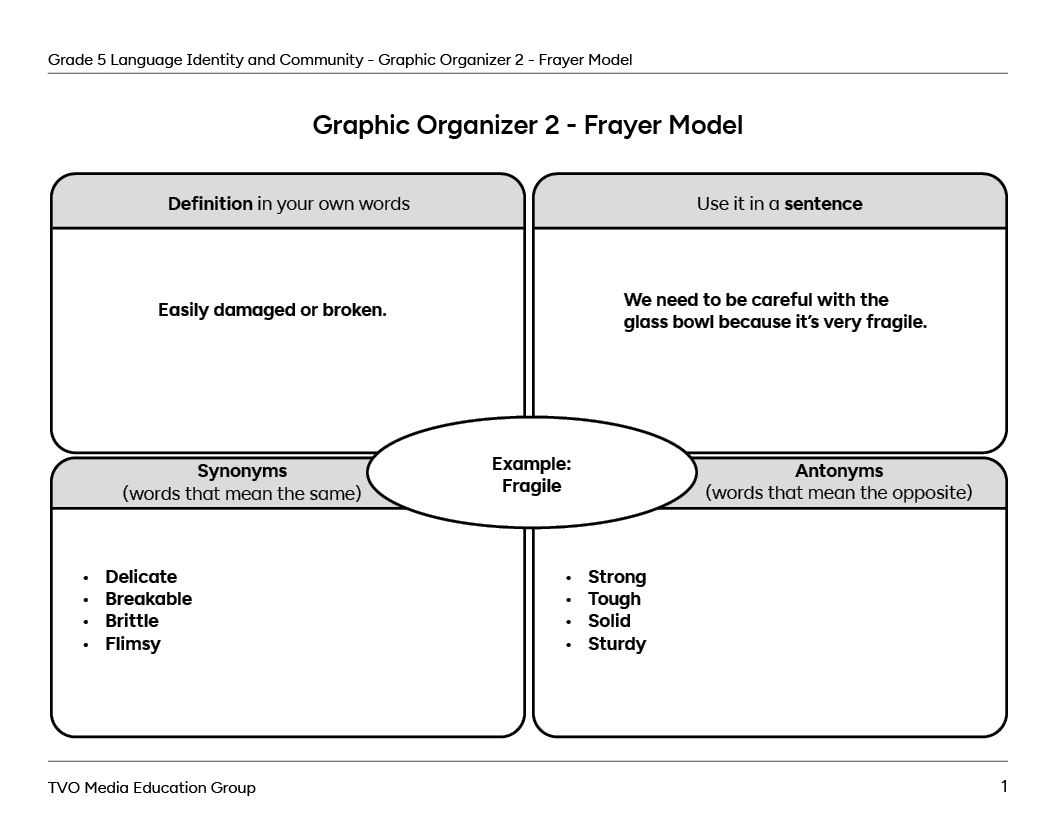
Press the Activity button to access the Graphic Organizer 2 - Frayer Model.
Activity(Opens in a new tab)Mental health and anxiety
Anxiety is one of the most common mental health concerns for both children and adults. According to Anxiety Canada, it impacts more than 20% of kids and teenagers throughout their lives.
Source: Anxiety in children. (2024, June 25). Anxiety Canada. https://www.anxietycanada.com/learn-about-anxiety/anxiety-in-children/
Anxiety is a feeling of extreme and uncontrollable worry. Anxiety is often accompanied by a faster heart rate and unpleasant thoughts that won’t go away. Anxiety happens to all of us at one point or another in our lives.
Explore the following video made by Anxiety Canada to learn more about anxiety and what it is.
The video introduced three terms or actions that our brains jump to in response to feeling anxious: fight, flight, to freeze.
To explore the meaning of these three terms, complete the following matching activity. Match each term to its corresponding definition.

Take a minute and record the following key terms in your vocabulary notebook or using another method of your choice:
- anxiety
- fight
- flight
- freeze

Living with Viola
Let’s explore a text about one person’s experience and perspective on living with anxiety. Can you relate to any of the feelings expressed in the text?
Check out the following excerpt from Living with Viola. This award-winning graphic novel is the first book published by Toronto-based author Rosena Fung.
Access the following comic Living With Viola to explore the excerpt.
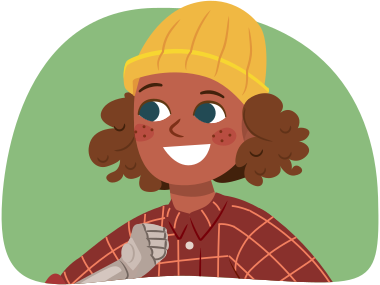
Living with Viola by Rosena Fung is a graphic novel. These are books that tell a story from beginning to end in a graphic, or visual, way. Unlike traditional novels (which are all text), graphic novels use minimal text to tell their stories. Instead, they use a lot of images to show what’s happening.

Student Success
Post-reading
After reading the text, consider the following questions. If possible, share your thoughts with a partner.
- Choose one part of the graphic novel Living with Viola and use it to explain how the author uses pictures and words together to hook their audience and tell the story.
- How is Olivia’s anxiety shown, or represented, in the book? What impact does this representation have on the audience?
- How does the representation of anxiety in Living with Viola compare to the representation of anxiety in the video you explored from Anxiety Canada?
Both the book and the video use the literary technique of personification to represent the characters’ anxiety.
Personification is when something abstract is represented as a person or a human figure.
In Living with Viola, Oliva’s anxiety is personified using the character of Viola who looks like Olivia but is not a real person. Doing this helps the audience feel the realness of Olivia’s anxiety and big emotions.

Grammar routine
Let’s reexamine the first sentence of the last paragraph, noticing the sentence structure of it as we do:
“Both the book and the video use the literary technique of personification to represent the characters’ anxiety.”
The words “both” and “and” at the beginning of the sentence are used to compare two items that share a connection – the book and the video. This is an example of a correlative conjunction!
Correlative conjunctions:
- are used to make a statement that shows the similarity or connection between two things
- work in pairs to join words and phrases that are of equal importance in a sentence
Explore the following list of some common correlative conjunctions:
- either... or
- not only... but also
- both... and
- if... then
- whether... or
Learning check!
Complete the following fill-in-the blank activity with the missing correlative conjunctions. For each sentence, select the missing word from the drop-down menu.
Press Check Answer to see how you did.

Try It
Now you try!
Choose three different pairs of correlative conjunctions and create your own sentences with them on any topic. Record your three sentences in a notebook or using another method of your choice.
When to ask for help
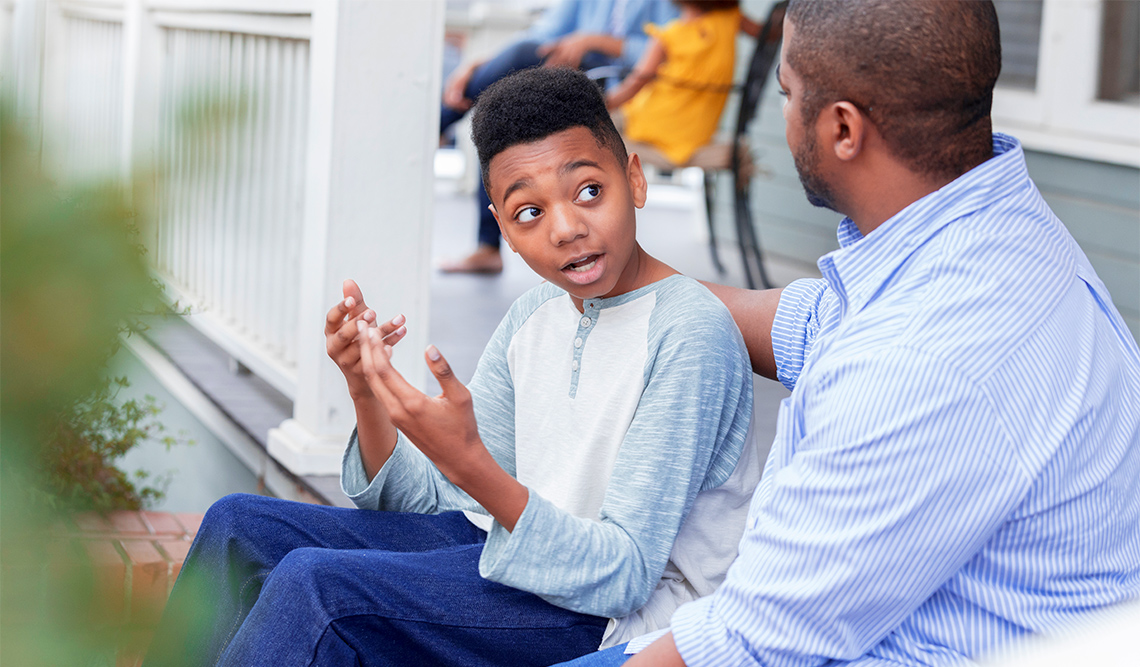
Anxiety can happen to anyone and sometimes people experience feelings that they are not able to manage on their own.
When this happens, it is time to get help from a professional. There are people who are trained to provide support to those who are experiencing serious mental health concerns or who have a diagnosed mental illness.
Talking with someone about problems can help us consider things from different perspectives. Sometimes we need to get help to deal with overwhelming feelings or stress. It can be hard to know where to turn.
Explore the following checklist for some good places to start.
Support Checklist
Putting it all together

The same way we take care of our physical health, we must do the same with our mental health because mental health affects the way we feel, think, and act. It can be more difficult to take care of your mental health versus your physical health as you cannot see it.
Journaling is one way people can take care of their mental health.
Sometimes writing down and naming our feelings and emotions helps our brains work through them and let go of worry and fear.
Writing for positive mental health
Choose one of the following options to complete in a notebook in cursive writing, or digitally using a method of your choice.
Press the following tabs to check out your options.

Create a journal entry about your own feelings and/or mental health.
Consider writing about a specific situation of event that you found difficult, or when you felt a little bit anxious or maybe stressed. What did you do to work through your feelings and emotions? What could you have done tried differently?

Write a letter to a friend offering them advice for taking care of their own mental health. Give them suggestions for what they could do in specific situations or when they are feeling slightly anxious or stressed.

Pause and Reflect
Pause and reflect
In a notebook or using another method of your choice, answer the following questions:
- Did you learn something new about yourself throughout this learning activity?
- How do you work toward your own positive mental health?
- How can the skills you learned and applied in this learning activity help you in other areas of your life?
Reflection
As you read through these descriptions, which sentence best describes how you are feeling about your understanding of this learning activity? Press the button that is beside this sentence.
I feel...
Now, record your ideas using a voice recorder, speech-to-text, or writing tool.