Learning goals
We are learning to…
- recognize the importance of media literacy
- understand the different categories and conventions of media
- explain how different media use conventions, purpose, and target audiences to achieve their goals
- organize and record information using different tools and strategies
Success criteria
I am able to…
- identify the different categories and forms of media
- determine the target audience of a media text
- analyze the characteristics, purpose, and target audience of a media text
- organize information from a text using a graphic organizer

Media literacy
What do the words “media” and “literacy” mean to you? What does it mean when you put the two words together?
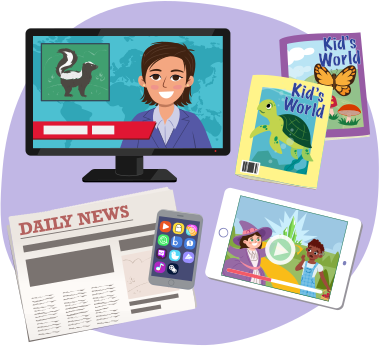
Media are the different forms or ways that messages and stories get communicated (for example, the internet or a magazine). Each media has unique characteristics that help deliver the message.

Brainstorm
Different types of media
Take a moment to brainstorm different types of media. How many can you think of? Record your thinking in a notebook or using another method of your choice.
If possible, share your thoughts with a partner.
When you are ready press Sample Answers to check your answers.
Sample answers: TV, internet, billboards, advertisements, podcasts, websites, newspapers, brochures, radio, movies, magazines, video games, music, books, etc.

Check your understanding!
For each term select the corresponding description.
Check out the following video that outlines some of the key concepts of media literacy. In a method of your choice, explain what media literacy means to you. If possible, discuss your answers with a partner.

Classifying media
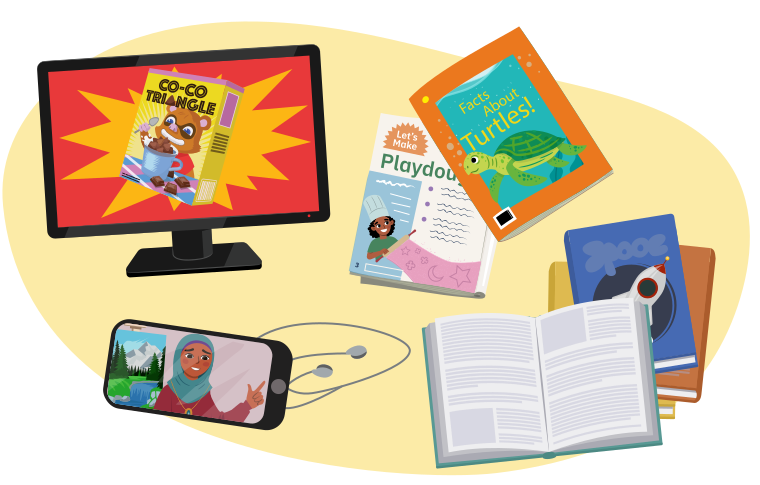
Media can usually be sorted or classified into three categories: print, broadcasting, and internet media.
- Print or print-based media includes media printed on paper or other materials: books, magazines, newspapers, billboards, and brochures.
- Broadcasting media communicates through video and/or audio: TV, movies, and radio.
- Internet media includes information delivered over the internet: websites, social media sites, applications, podcasts, and discussion boards.

Did you notice how colons were used in the previous section?
A colon (:) can be used at the end of a full sentence to introduce a list.
Review the previous sections about the different types of media to see examples of colons used in this way.
While these classifications of media are helpful, it’s important to note that the separation between these three types of media is not always clear. For example, a newspaper has historically been a print media printed on paper. Of course, that still exists, but now newspapers are also found on internet media sources.
The creator of the media will choose which method of delivery helps to deliver the message most effectively.
The following are images that show different media forms. Record your answers to the following questions in a notebook or using a method of your choice. If possible, share your thoughts with a partner.
- How would you classify each media? Does it fit the print category, broadcasting category, or internet category? Remember, some media fit into more than one category.
- What are some of the characteristics of this media? Are there any sounds, images, text, or strategies that are typically used?

Billboards in downtown Toronto

Creating podcasts
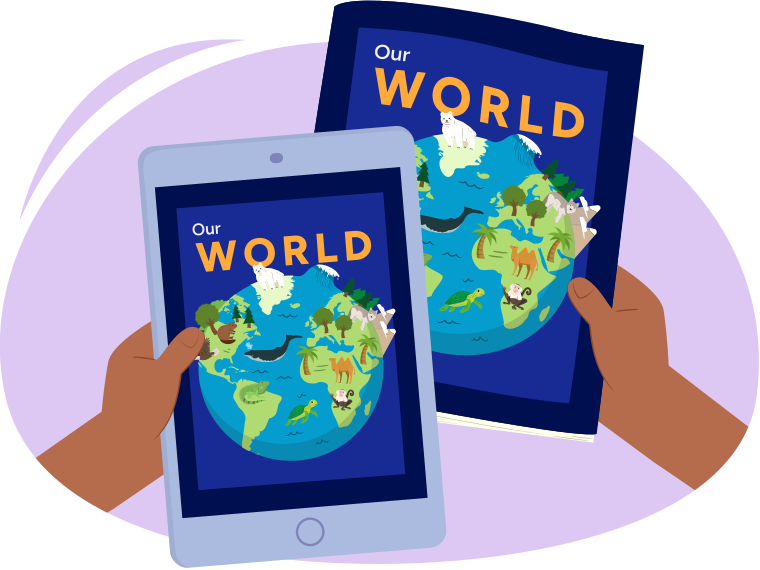
Magazines

Social media

TVO’s online video game
When you are ready, access the following document Different Media Forms Answer Guide to check your work.
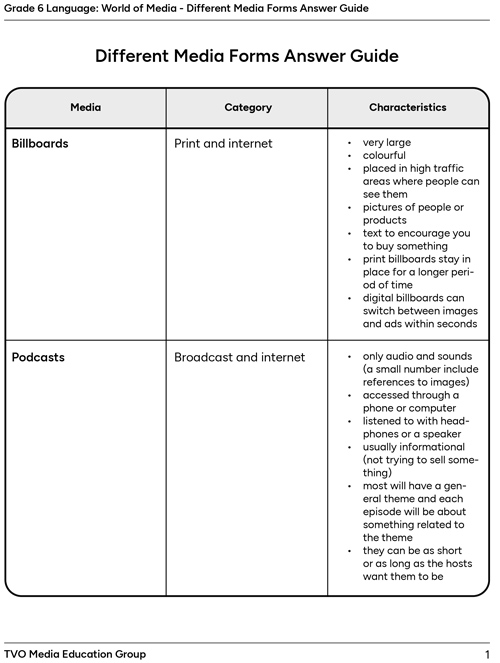
Press the Activity button to access the Different Media Forms Answer Guide.
Activity(Opens in a new tab)Identifying purpose
Most media messages are created to carry out at least one of three purposes:
- to inform or instruct
- to entertain
- to persuade
Some are created to carry out all three! For example, the main purpose of an advertisement may be to persuade someone to buy something. However, it can also educate and entertain.
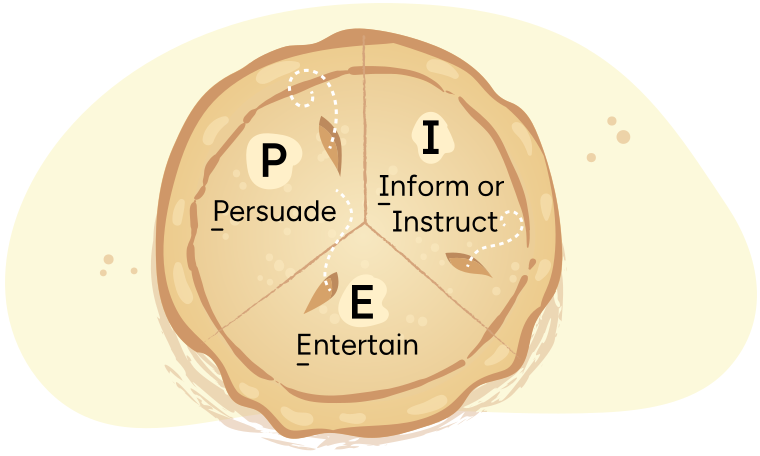
Take a moment to examine each of the following topics listed. Consider which type of media you would use to inform people about each topic (e.g., print, broadcasting, or internet) then determine the purpose of the media form (e.g., to inform, to entertain, or to persuade).
A sample answer is provided for the first topic. Record your ideas in the following document, a notebook, or a method of your choice.
| Media and Purpose | ||
|---|---|---|
| Topic | Which media would you choose? | Purpose (inform, entertain, or persuade) |
| Selling a new cleaning product | I would choose a broadcast media advertisement (e.g., commercial on TV). | Persuade someone to buy something |
| Someone found a lost cat | ||
| Comedy about aliens arriving in Ottawa | ||
| Teach people about different types of Canadian trees | ||
| A new wildlife fund focusing on polar bear habitat | ||
Complete in your notebook or using the following fillable and printable document.
Press the Activity button to access Media and Purpose.
When you’re done recording your answers, press the Sample Answers button to review some possible responses.
| Media and Purpose | ||
|---|---|---|
| Topic | Which media would you choose? | Purpose (inform, entertain, or persuade) |
| Selling a new cleaning product | I would choose a broadcast media advertisement (e.g., commercial on TV). | Persuade someone to buy something |
| Someone found a lost cat | I would choose a print media flyer | Inform |
| Comedy about aliens arriving in Ottawa | I would choose broadcast media (TV show) | Entertain |
| Teach people about different types of Canadian trees | I would choose broadcast media (podcast) |
Entertain Educate Possibly persuade if it encourages people to save trees |
| A new wildlife fund focusing on polar bear habitat | I would choose internet media (Website) |
Entertain Persuade people to donate to the wildlife fund |
Creators and audience
Media is created by people for other people.
For creators of media, it is very important to understand the target audience so you can create media that appeals to them. For example, if your purpose is to sell dog treats to dog owners (i.e., persuade them to buy your dog treats), you will not create media that appeals to cat owners. You will want to create media that appeals to dog owners. Dog owners are your target audience.
Check out the following media example for selling dog treats.
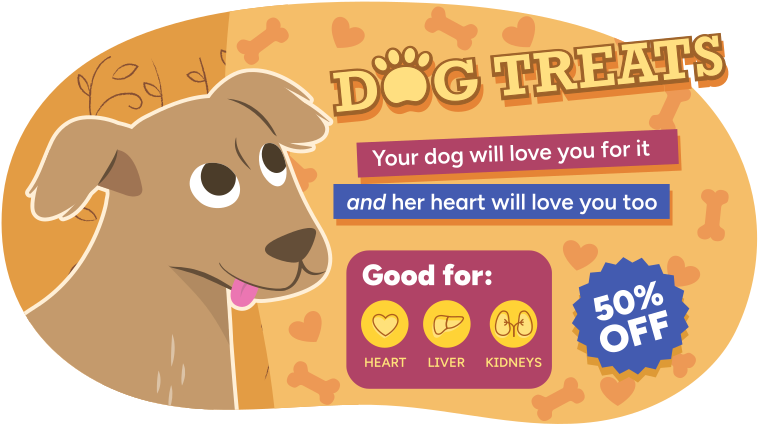
A media example of a product selling dog treats. An image of a dog with its tongue sticking out. To the right of the dog, text reads: "Your dog will love you for it and her heart will love you too." Other text elements in the example read: "Good for: heart, liver, kidneys" and "50 percent off."
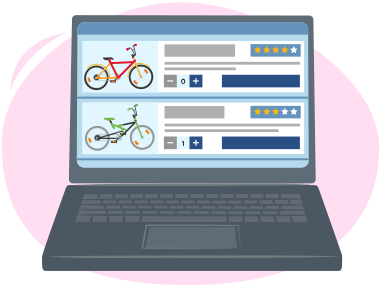
For the audience, it’s also very important to understand who created the media. You need to know what their purpose is to decide if you can trust them. For example, would you trust a company that makes one kind of bicycle to tell you which brand of bicycles on the market is the best? Probably not. The bicycle manufacturer’s purpose is to sell their own bicycle, so they are more interested in persuading you to buy their bicycle than showing you other brands.
Learning check!
Can you match the creator with the target audience?
Putting it all together
To reach more people, some media creators are very skilled at targeting multiple audiences at once. Often people don’t even realize that they are part of a target audience! It is important to be able to think critically about the media we are exposed to. This allows us to categorize the media and to be able to identify its purpose, creators, and target audience.
When we analyze the media in this way, we can make more informed decisions.
Let’s examine a media example by asking ourselves the following questions:
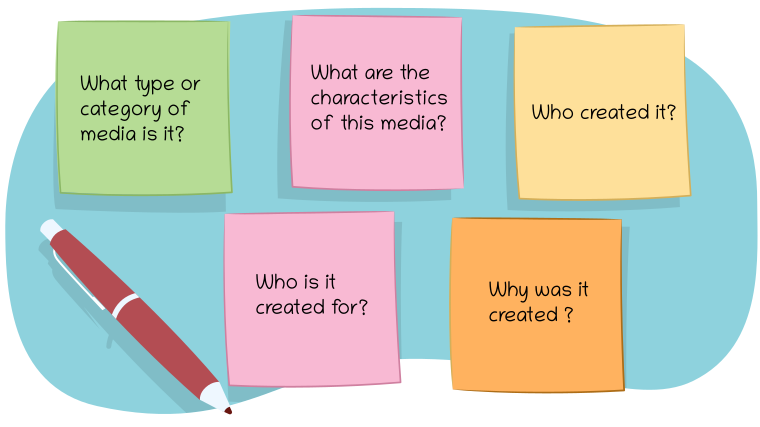
Let’s explore each of these elements in more detail as we analyze the following TVO news article from tvo.org.
Access the following First Nations legislator makes history at Queen’s Park with speech in Oji-Cree to complete the activity.
Press the Article button to access the First Nations legislator makes history at Queen’s Park with speech in Oji-Cree.
Article(Opens in a new tab)Learning check!
Press the following tabs to check your understanding of the article.
It is an internet media (website) as well as a print media format (newspaper).
- title of the news story
- the date of the article
- “by line” that tells us who wrote it
- Image that relates to the story
- a caption under the image that describes the photo
- text for the reader to learn more about the story
- Liam Casey and Allision Jones (reporters with The Canadian Press)
- The Canadian Press (Canada’s national independent news agency)
- TVO created the website
- The article was created for the people of Ontario, Canada, or anyone interested in Ontario politics and Indigenous Peoples, languages, or reconciliation.
- Anyone in the world can access the TVO website.
The purpose of this news article is to inform people about an historic event: an Indigenous language being officially spoken in the Ontario Legislature for the first time.

Pause and Reflect
Pause and reflect
Why is it important to analyze the media that we are exposed to and think critically about its purpose? How does this connect to being a good digital citizen?

Your turn!

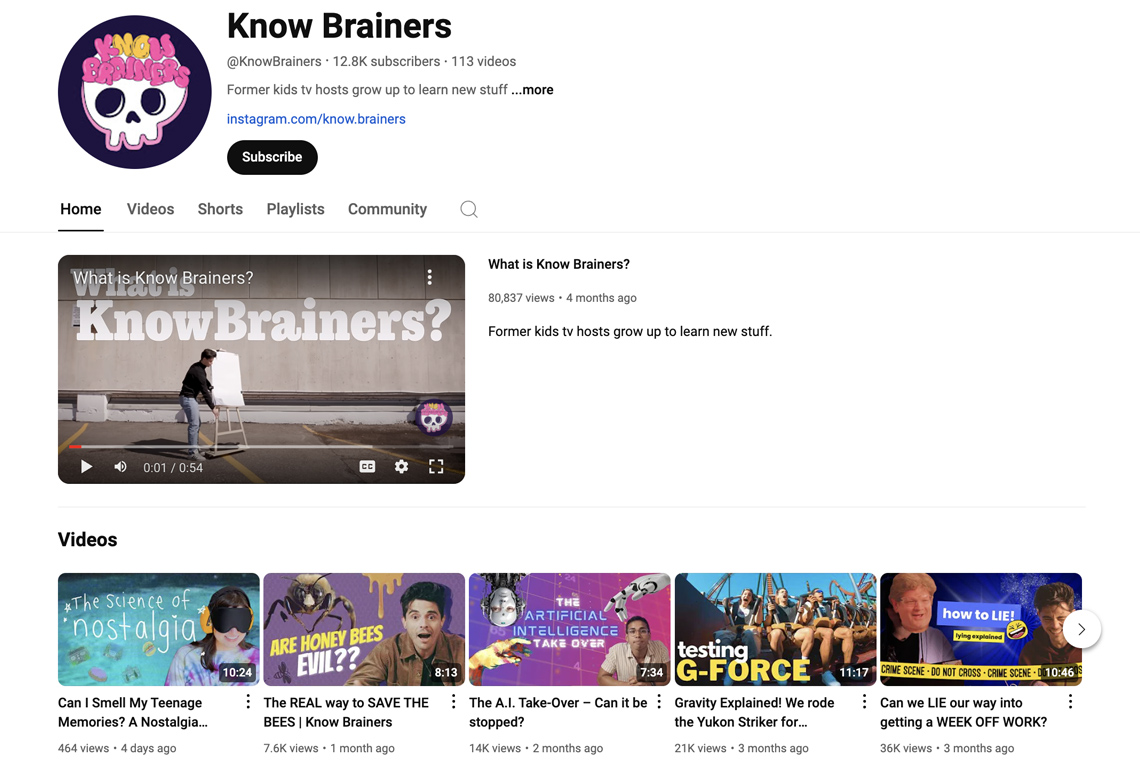
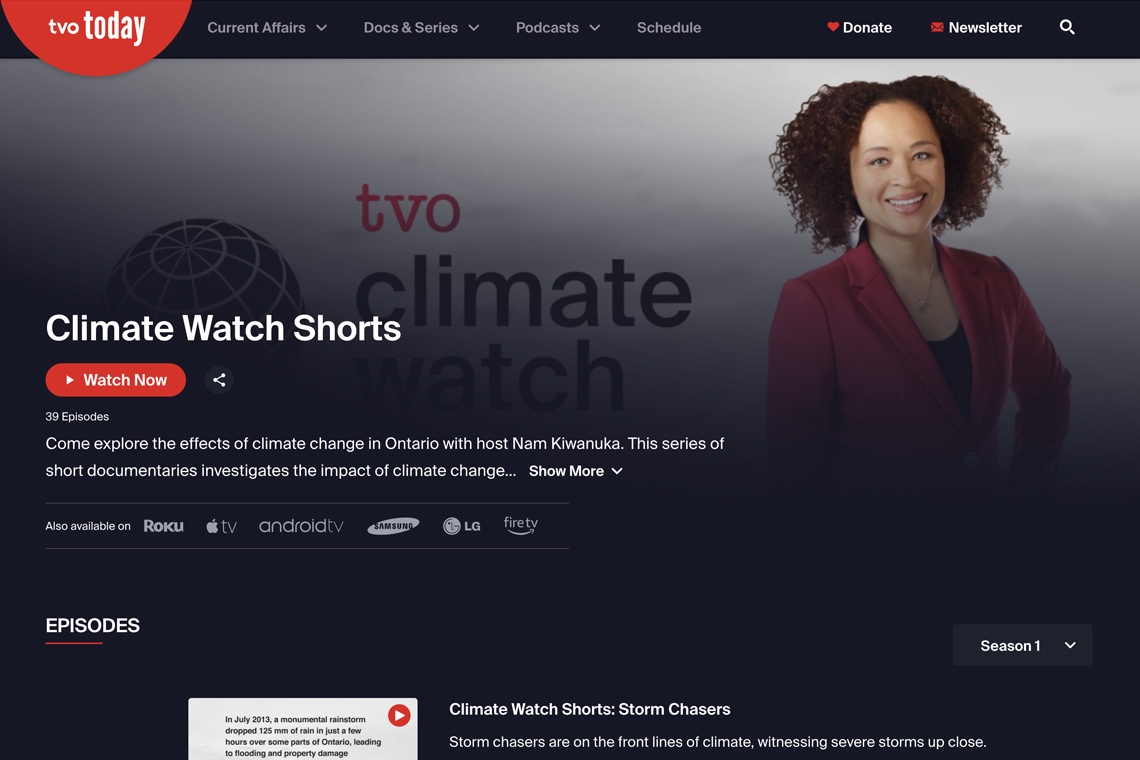
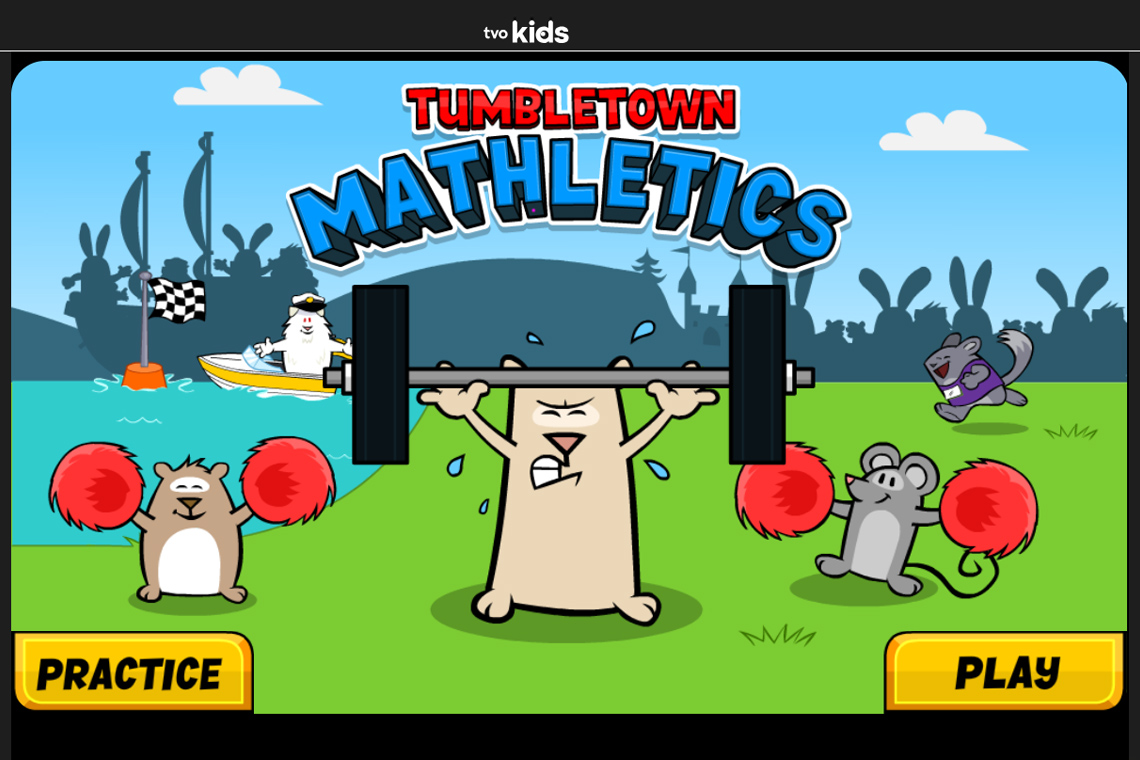
Now it’s your turn to analyze the form and purpose of media. Choose one of the following images and answer the following questions.
- What type of media is it (print, broadcast, or internet) and what are its characteristics (i.e., sounds, text, pictures, etc.)?
- Who created it (i.e., who wrote, created, and/or paid for the message)?
- Who is it created for (i.e., the target audience)?
- Why was it created (i.e., the purpose of the message)?
You can record your answers using the following fillable and printable Analyzing Form and Purpose of Media document or another method of your choice.
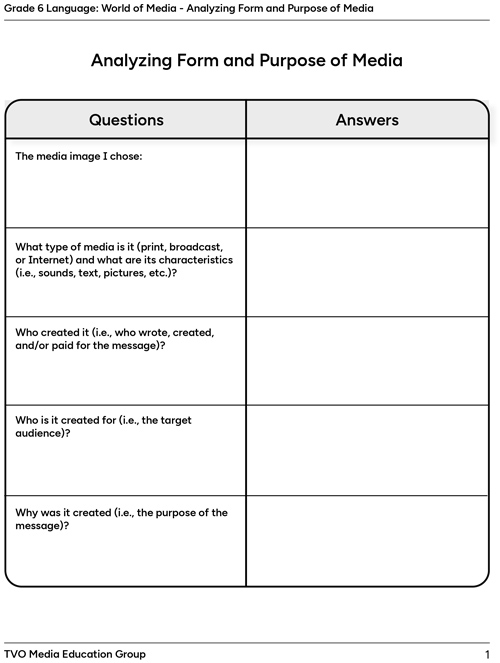
Press the Activity button to access the Analyzing Form and Purpose of Media.
Activity(Opens in a new tab)
Pause and Reflect
Pause and reflect
Reflect on the following questions. If possible, discuss with a partner.
- What have you learned about the types of media forms?
- Is there a media form you find most effective?
- How does analyzing the purpose and target audience of media make you a more informed digital citizen?
- Why is media literacy important as you use and interact with different media forms?
Reflection
As you read through these descriptions, which sentence best describes how you are feeling about your understanding of this learning activity? Press the button that is beside this sentence.

I feel...
Now, record your ideas using a voice recorder, speech-to-text, or writing tool.